EN
16.3.4 - Neutral Platform and a Safe Space for Various Political Stakeholders
Bahçeşehir University (BAU) provides a neutral, inclusive, and academically independent platform where individuals and institutions representing diverse political perspectives, ideological positions, and professional backgrounds can engage in open, respectful, and constructive dialogue on national and international challenges.
Grounded in its commitment to academic freedom, institutional neutrality, and intellectual openness, the University creates opportunities for policymakers, lawmakers, government representatives, political stakeholders, academics, civil society organizations, and other public-sector actors to exchange perspectives, examine competing policy approaches, and discuss complex or contested issues within a shared academic environment.
Through long-standing educational programmes, political dialogue platforms, international forums, conferences, and institutional partnerships, BAU facilitates engagement among stakeholders whose political affiliations, institutional responsibilities, and approaches to public policy may differ. The University supports non-partisan dialogue, respectful disagreement, evidence-based discussion, and mutual understanding.
By providing a safe academic environment for the expression and examination of differing viewpoints, BAU contributes to inclusive political dialogue, constructive engagement across institutional and ideological boundaries, and informed public debate. These activities support SDG 16 (Peace, Justice and Strong Institutions) by strengthening opportunities for dialogue, participation, and cooperation among diverse political stakeholders.
The following examples from the 2024–2025 reporting period demonstrate how Bahçeşehir University serves as a neutral and inclusive convening institution, bringing together individuals and organizations with different political and institutional perspectives to discuss shared challenges openly and constructively.
1- Bahcesehir University Politics School: A Safe and Neutral Platform for Cross-Political Dialogue and Capacity Building
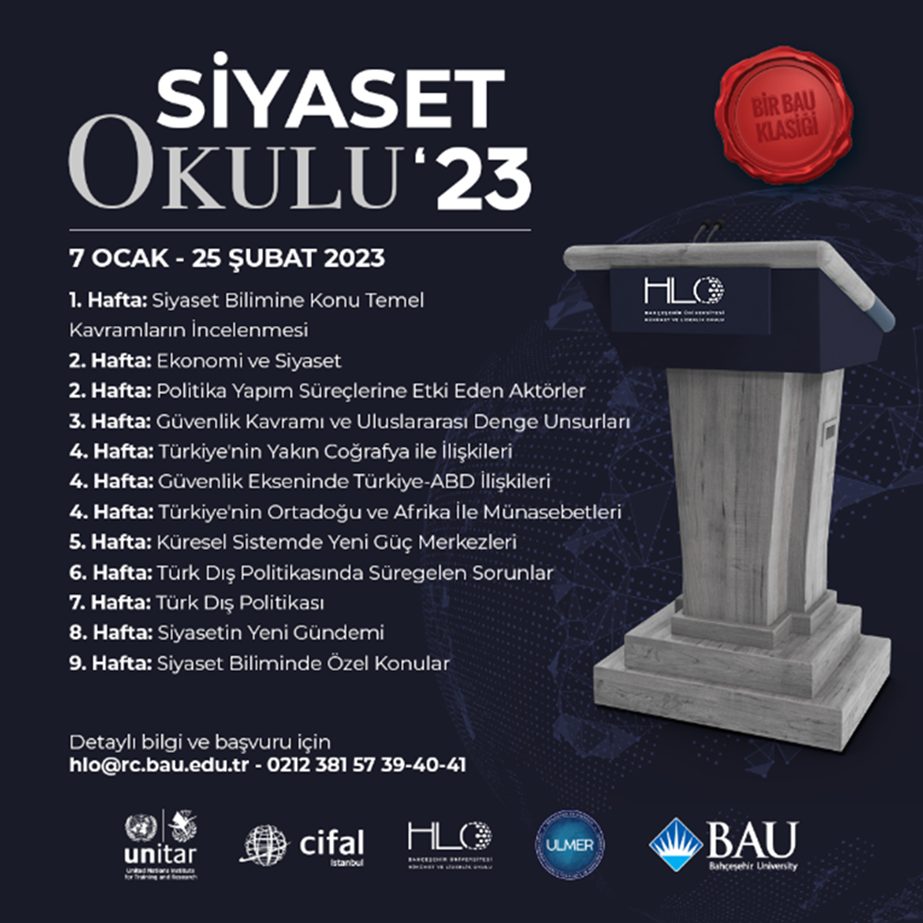
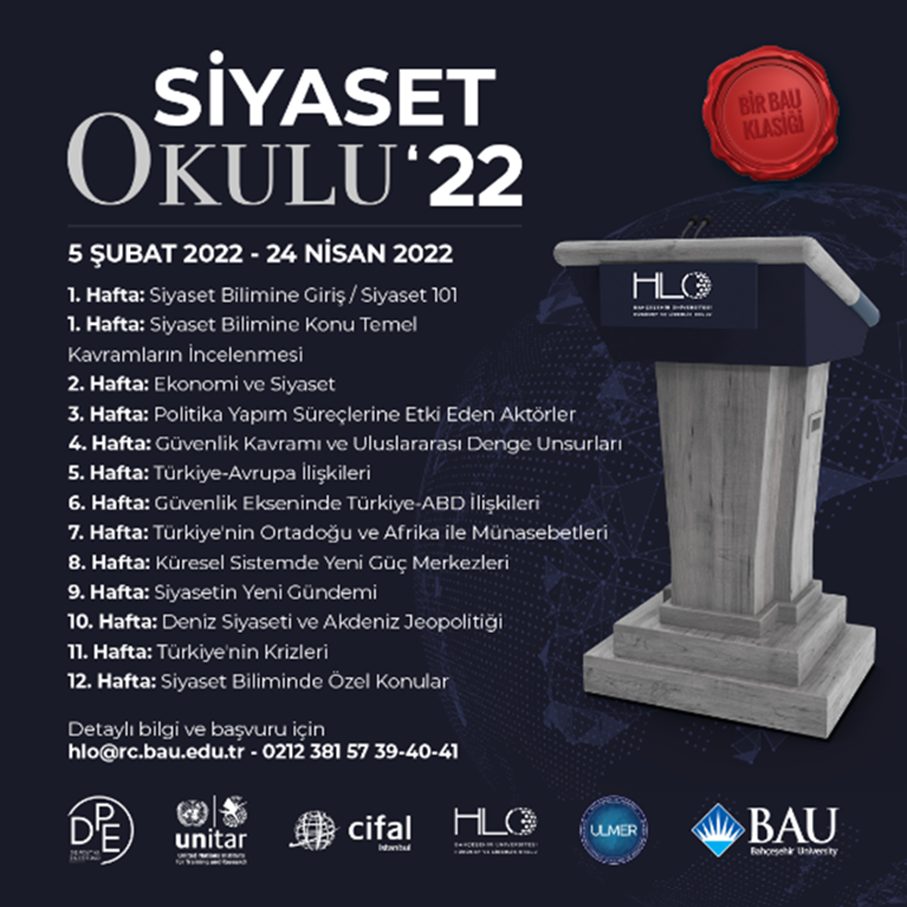
The images below highlight selected promotional posters and programme announcements from BAU Politics School, illustrating the range of topics addressed and the School's ongoing commitment to political dialogue, policy-oriented education, and leadership development within a neutral academic environment.
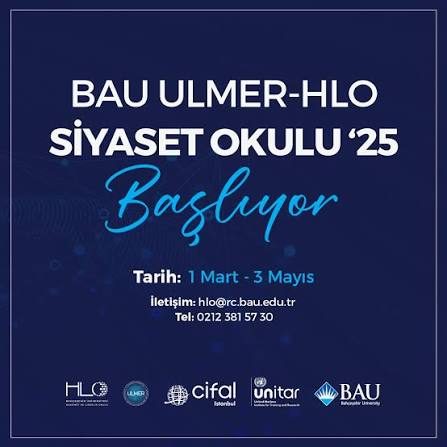
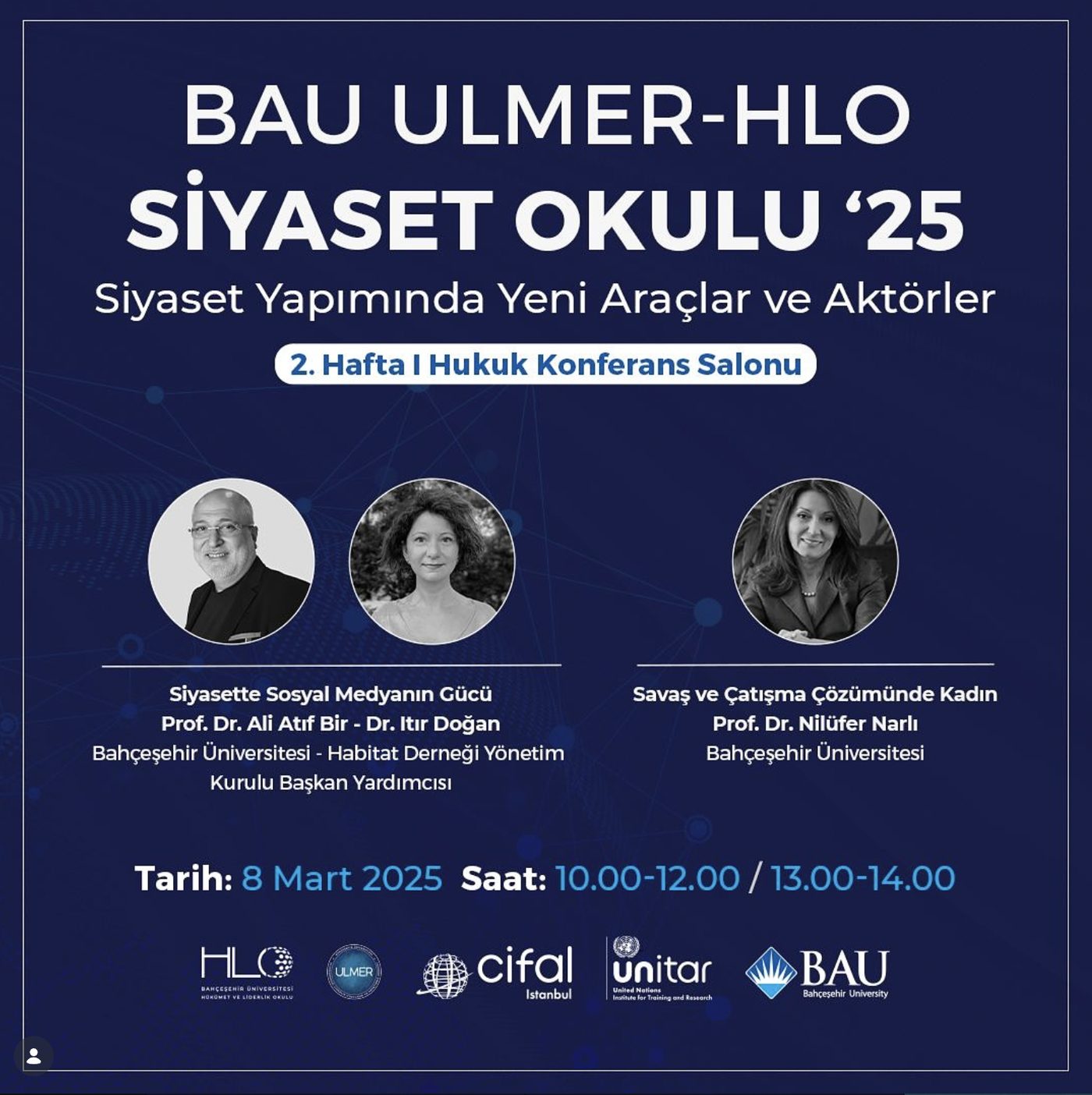
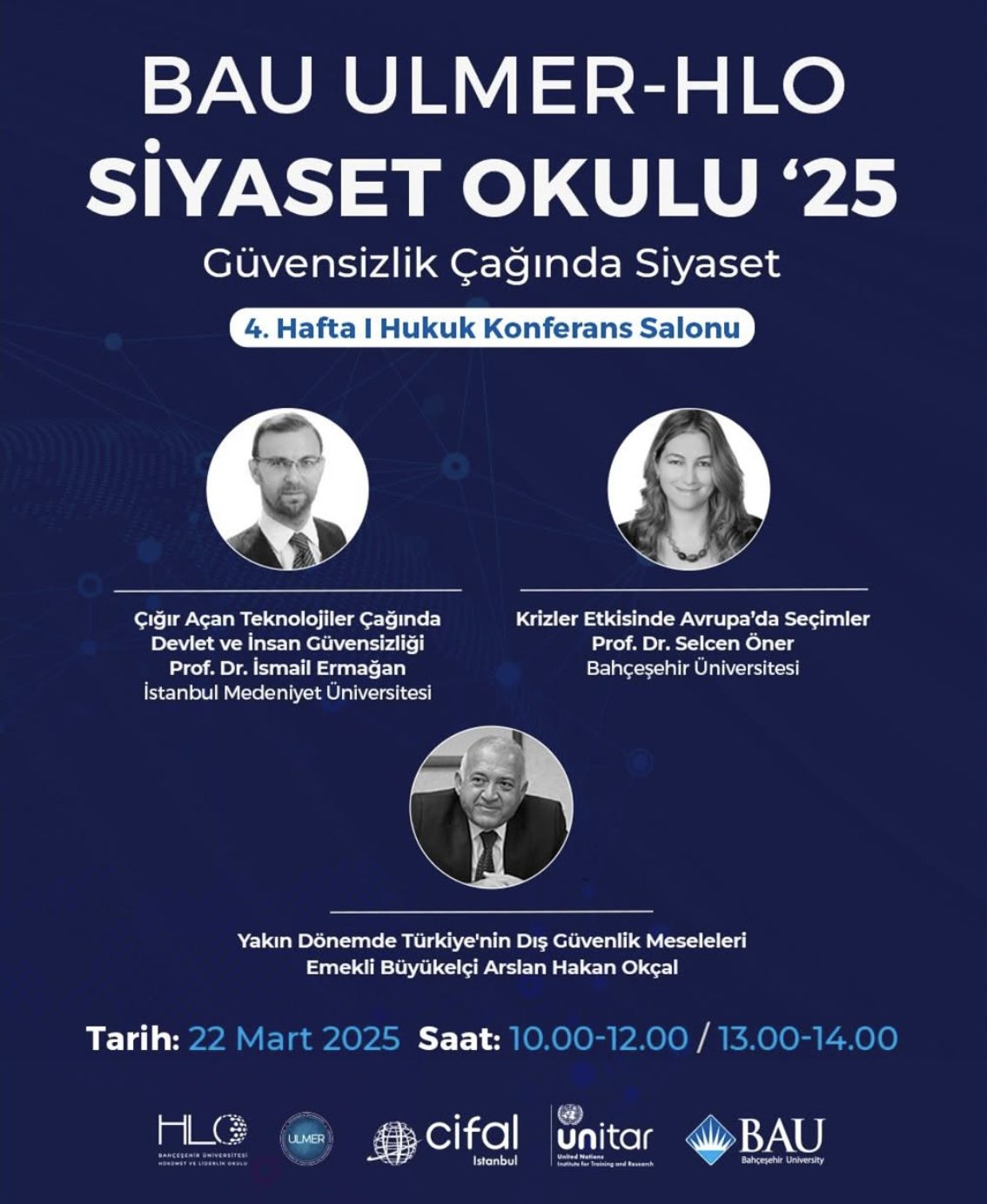
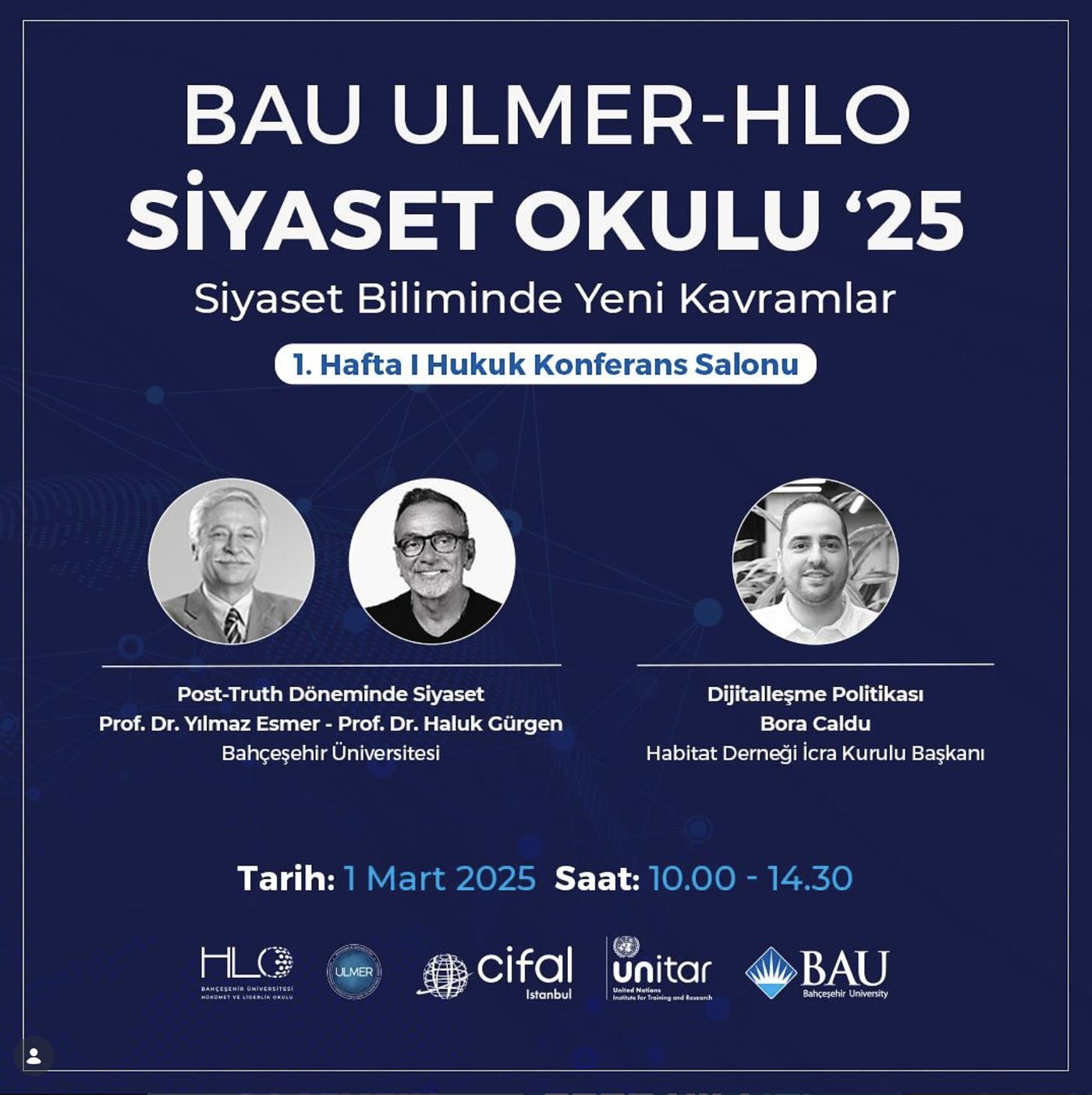
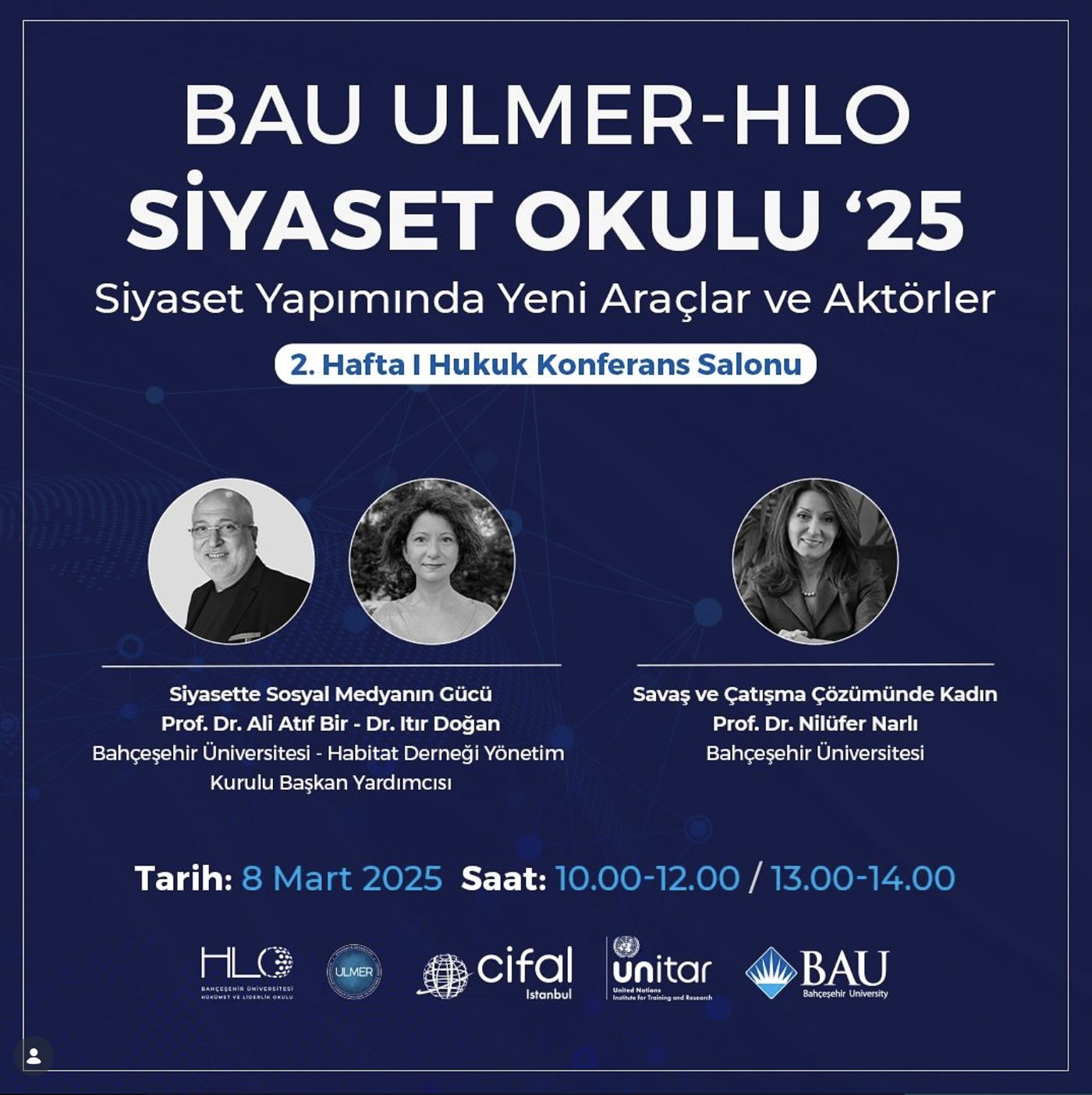
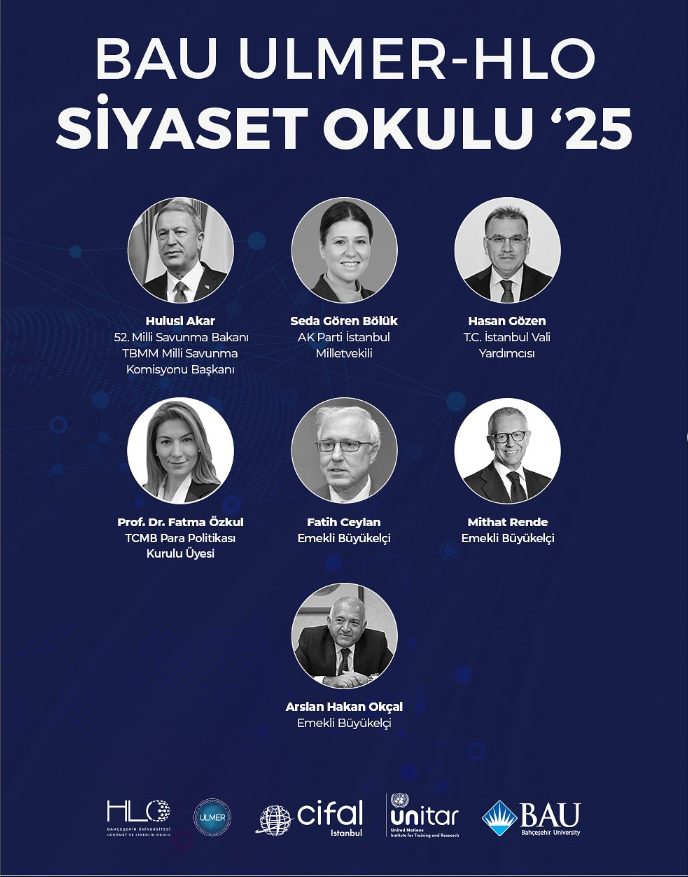
Established under Bahçeşehir University's International Leadership Practice and Research Center (ULMER), the BAU Politics School, operating within the framework of the Government Leadership School, has been a pioneering initiative in Türkiye for over two decades. As one of the country's longest-standing university-based political education and leadership programmes, it provides a neutral, academically grounded, inclusive, and safe environment for political dialogue, policy-oriented learning, and leadership development.
The programme serves two complementary purposes: providing a non-partisan platform where individuals representing different political perspectives can engage in constructive dialogue, and strengthening the knowledge, analytical skills, and policy-making capacities of current and future political and public-sector leaders. By integrating these functions within a university setting, BAU Politics School contributes to informed public debate, professional development, and the exchange of ideas across political and institutional boundaries.
Importantly, the School is not limited to conventional classroom-based education. Its distinctive approach combines academic learning with structured opportunities for dialogue, allowing participants to move beyond theoretical knowledge and engage with different political interpretations, competing policy priorities, and alternative approaches to public challenges. The educational component provides a shared foundation for discussion, while the dialogue component creates space for different viewpoints to be expressed, questioned, and considered within a neutral academic setting.
A Neutral, Safe and Non-Partisan Platform for Political Dialogue
One of the most distinctive features of BAU Politics School is its ability to bring together politicians, lawmakers, policymakers, public officials, academics, and thought leaders from across Türkiye's diverse political spectrum. The programme provides an academically independent and non-partisan environment in which different perspectives can be expressed, examined, and discussed through respectful and evidence-based dialogue.
The concept of a safe and neutral platform is central to the School's institutional identity. Its university-based setting provides common ground for individuals whose political affiliations, ideological positions, or approaches to public policy may differ substantially. Within this environment, participants can engage with sensitive and contested issues without the programme endorsing any particular political perspective or requiring agreement among those involved.
The School promotes academic freedom, openness to differing viewpoints, mutual respect, and constructive engagement, creating opportunities for participants to exchange ideas on complex and sometimes sensitive political, economic, and international issues. Its university-based structure offers a shared educational setting where political differences do not prevent discussion, learning, or professional interaction.
A particularly important feature of the programme is the interaction that follows its academic and expert-led sessions. The issues introduced through lectures and presentations provide a basis for discussion, enabling participants to examine the same policy challenges through different political, institutional, and professional perspectives. These exchanges create opportunities to question assumptions, compare policy alternatives, identify areas of disagreement and shared concern, and develop a more comprehensive understanding of complex public issues.
The value of these discussions lies not in producing a single political position or predetermined consensus, but in enabling different perspectives to contribute to a shared process of critical reflection. In this respect, the programme supports dialogue-based outcomes such as the identification of alternative policy approaches, the exchange of practical experience, and a deeper understanding of the considerations shaping public decisions.
Over the years, BAU Politics School has welcomed distinguished figures including presidents, prime ministers, ministers, ambassadors, members of parliament, and senior bureaucrats. Its extensive alumni network includes 30 members of parliament, 9 ministers, and numerous deputy ministers and senior civil servants representing different political backgrounds.
The participation of individuals from diverse political and professional backgrounds demonstrates the programme's long-standing role as a trusted, cross-partisan platform for dialogue and knowledge exchange. By facilitating encounters between individuals who may hold different views on national and international issues, the School encourages cross-ideological understanding, constructive debate, and engagement with alternative policy perspectives.
Beyond its role as a platform for dialogue, BAU Politics School provides structured policy-oriented education and leadership development relevant to lawmakers, policymakers, political professionals, and public-sector decision-makers.
Through its annually updated curriculum, the programme connects academic knowledge with contemporary governance challenges, developments in political science, international relations, economic transformation, environmental sustainability, and the changing dynamics of public decision-making.
The programme seeks to strengthen participants' capacity to understand complex policy challenges, critically evaluate competing perspectives, interpret political and economic developments, and engage in informed policy discussions. Its educational approach encourages analytical thinking, interdisciplinary understanding, strategic assessment, and the ability to consider the broader societal implications of political decisions.
The learning process extends beyond the delivery of academic content. Expert-led sessions provide the conceptual and analytical foundation, while subsequent discussions encourage participants to apply this knowledge to real-world political and governance challenges. By considering how different political actors interpret the same issues and propose different responses, participants can strengthen their ability to assess policy alternatives, articulate evidence-based arguments, and engage constructively with perspectives other than their own.
By creating direct opportunities for engagement between academic experts, experienced political figures, and participants from different professional backgrounds, the School also supports the exchange of practical experience and academic insight. This combination of academic instruction, expert-led discussion, and cross-sectoral interaction contributes to the continuing education and professional development of individuals involved in, or preparing for, political leadership and public policy processes.
Accordingly, the School's capacity-building contribution is closely connected to its function as a neutral dialogue platform: participants develop not only subject-specific knowledge but also the analytical, deliberative, and communication skills needed to navigate political differences and participate in informed policy discussions.
The 2025 Programme: Contemporary Policy Challenges and Emerging Political Dynamics
During 2025, BAU Politics School continued its policy-oriented educational activities through a curriculum addressing emerging political concepts, new approaches to policymaking, global economic developments, international relations, and major governance challenges. The programme provided an academic framework for examining contemporary issues while encouraging dialogue among participants with differing perspectives and professional experiences.
The curriculum covered nine interconnected areas:
New Concepts in Political Science: Exploring emerging theoretical approaches and conceptual frameworks for understanding contemporary political systems, governance, and societal transformation.
New Tools and Actors in Policymaking: Examining the changing instruments, institutions, stakeholders, and mechanisms influencing political processes and public policy development.
Emerging Trends in the Global Economy: Assessing international economic transformations and their implications for national policy priorities, governance, and strategic decision-making.
Politics in an Age of Insecurity: Discussing political uncertainty, evolving security concerns, and the challenges these developments present for governance and institutional resilience.
Politics in the Shadow of the Climate Crisis: Exploring the political and policy implications of climate change, environmental sustainability, and the transition towards more resilient societies.
Global Energy Balances and Politics: Examining international energy dynamics, energy transitions, and their implications for economic, environmental, and foreign policy.
Türkiye and Transatlantic Relations: Analysing Türkiye's relations with transatlantic actors and institutions within the context of changing international political dynamics.
Türkiye's Regional Policies: Evaluating regional developments, diplomatic priorities, and Türkiye's evolving role in its surrounding geopolitical environment.
Special Topics in Turkish Politics: Providing opportunities to examine selected contemporary issues in Türkiye's political landscape through academic analysis and discussion.
The breadth of the 2025 curriculum reflects the School's commitment to addressing issues directly relevant to contemporary policymaking and public leadership. In particular, its focus on new policymaking tools and actors, global economic change, climate governance, energy politics, and international relations supports participants in developing a more comprehensive understanding of the factors shaping public policy and government decision-making.
Crucially, these topics also provide the starting point for dialogue. Academic presentations and expert contributions establish a common knowledge base, while the discussions that follow allow participants to explore how different political perspectives shape interpretations of the same challenges and lead to different policy responses.
For example, discussions concerning climate policy and global energy balances offer opportunities to consider differing approaches to environmental responsibility, economic development, and energy transition. Similarly, sessions addressing political insecurity, transatlantic relations, and regional policies provide a basis for examining contrasting assessments of international developments and their implications for public decision-making.
Through this combination of learning and dialogue, the programme creates opportunities for participants to compare competing arguments, examine policy trade-offs, and consider alternative responses to contemporary challenges. These deliberative processes represent an important dimension of the School's contribution beyond formal education, helping connect academic knowledge with the diversity of perspectives involved in political and public life.
At the same time, the inclusion of complex and potentially contested political subjects creates opportunities for open, respectful, and academically grounded discussion across differing perspectives, reinforcing the programme's role as a neutral educational forum.
BAU Politics School contributes to SDG 16 (Peace, Justice and Strong Institutions) through its complementary functions as a safe and neutral platform for political dialogue and a university-based capacity-building programme for political and public-sector leadership.
As a safe and non-partisan platform, the School facilitates dialogue among individuals representing different political perspectives and institutional backgrounds. Its emphasis on academic independence, respectful discussion, and the exchange of ideas helps sustain an environment in which complex governance and policy issues can be explored without requiring political consensus.
The programme's contribution extends beyond providing a physical or institutional meeting space. By combining academic presentations with opportunities for cross-political discussion, it creates a structured setting for the exchange of different viewpoints, the examination of competing policy approaches, and the identification of issues that warrant further consideration. Its value as a neutral platform is reflected in its ability to accommodate disagreement while maintaining a shared commitment to informed and respectful dialogue.
As a policy education and capacity-building initiative, the School strengthens access to academic knowledge, expert perspectives, and structured learning opportunities relevant to political leadership, legislative processes, governance, and public policy development. Its longstanding engagement with politicians, lawmakers, ministers, and senior public officials reinforces the connection between higher education and the professional development of public-sector leaders.
The integration of academic learning and dialogue also supports the development of skills relevant to public leadership, including critical analysis, evidence-based reasoning, consideration of alternative policy options, and constructive engagement across political differences. In this way, the School contributes to both the knowledge base and the deliberative capacities of individuals involved in political and public-sector environments.
The programme also contributes to SDG 4 (Quality Education) through continuing education and lifelong learning opportunities, and SDG 17 (Partnerships for the Goals) by fostering interaction and knowledge exchange among academic, political, and institutional stakeholders.
Through more than two decades of sustained activity, Bahçeşehir University Politics School demonstrates the University's commitment to providing a trusted academic environment where political diversity, constructive dialogue, policy education, and leadership development can coexist. Its continuing programme in 2025 illustrates how universities can contribute simultaneously to safe and neutral political dialogue and the development of informed, capable, and analytically equipped political and public-sector leaders.
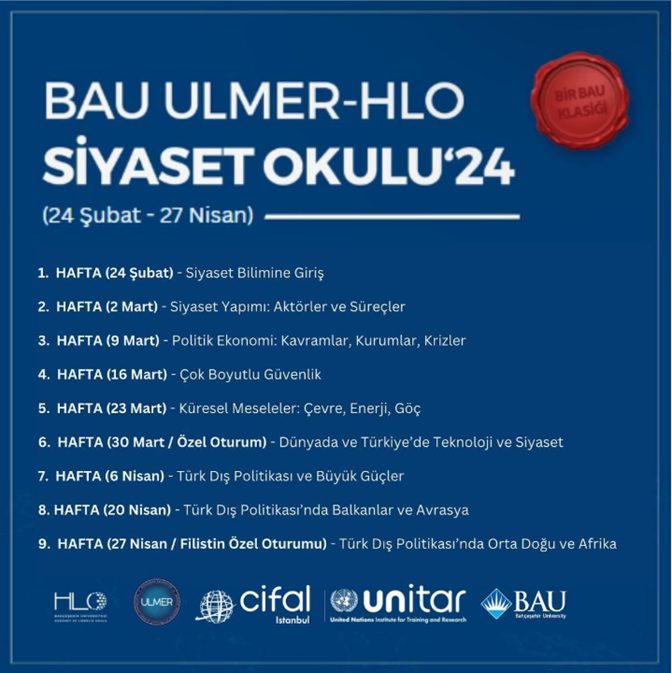
The images below show official promotional posters and the contents of Bahcesehir University’s Politics School for previous years.
2- Bahcesehir University Rotary Peace Center – A Neutral Platform for Peacebuilding and Policy Development in the MENA Region
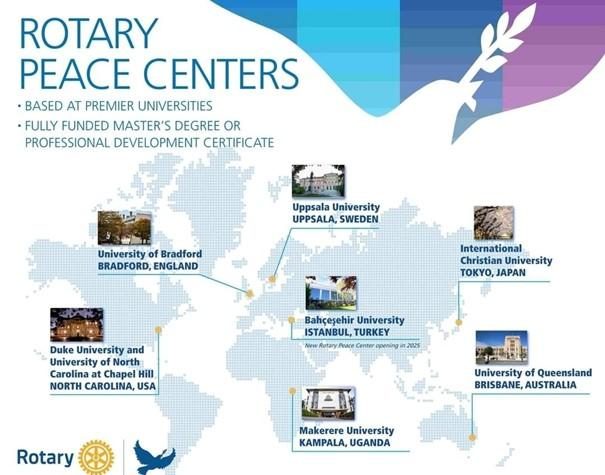
The image below shows a screenshot from the official Rotary International website listing Bahcesehir University as one of the Rotary Peace Centers, serving as a neutral platform for peacebuilding and policy development in the MENA region.

Bahçeşehir University (BAU) plays an active role in advancing peacebuilding, inclusive governance, international policy dialogue, and institutional capacity development through the BAU Otto and Fran Walter Rotary Peace Center, established at the University in partnership with Rotary International. The Centre's work is further supported by BAU's institutional partnership with the United Nations Institute for Training and Research (UNITAR) through CIFAL Istanbul. Serving the Middle East and North Africa (MENA) region, the Centre positions BAU as an international academic platform where policymakers, government representatives, civil society leaders, academics, international organizations, and peacebuilding professionals can engage in constructive dialogue on complex regional and global challenges.
The Centre reflects BAU's commitment to providing a safe, inclusive, and politically neutral environment for dialogue among individuals representing different countries, religious beliefs, cultural identities, political perspectives, ideological backgrounds, and professional experiences. Now welcoming its third cohort, the Centre brings together policymakers, political figures, public officials, emerging leaders, and professionals from Türkiye and participating countries, who spend three months within BAU's neutral academic environment, learning, exchanging experiences, and engaging in open discussions on international relations, global challenges, peace, and governance.
Participants arrive with different national experiences, interpretations of global developments, and sometimes contrasting political and ideological positions, reflecting the diverse perspectives of their respective countries and communities. The programme creates a safe space in which they can be openly expressed, respectfully challenged, and constructively explored. Through sustained interaction over three months, participants have opportunities to listen to perspectives that differ from their own, question assumptions, develop mutual understanding, and engage in dialogue across political, religious, cultural, and national boundaries.
An important objective of the programme is to cultivate peace ambassadors: individuals equipped with the knowledge, dialogue skills, cross-cultural understanding, and commitment to peaceful engagement needed to promote mutual respect, bridge differences, and contribute to constructive dialogue within their own countries and professional communities. By bringing together current and emerging political and public-sector leaders in a shared learning environment, the Centre seeks to strengthen their capacity to approach complex international challenges through dialogue, cooperation, and peaceful conflict resolution.
The Centre's ten-week certificate programme has brought together Rotary Peace Fellows from the Philippines, Egypt, Iraq, the United States, Italy, India, Canada, Brunei, Syria, and Indonesia, including professionals engaged in policy development, law-making, public administration, and institutional decision-making in their respective countries. Through a MENA-focused curriculum addressing displacement, refugee diplomacy, migration and refugees, humanitarian diplomacy, climate-related challenges, sustainable development, conflict resolution, and post-conflict institution building, BAU provides targeted capacity building for policymakers and legal professionals, strengthening their abilities in evidence-informed policy formulation, regulatory development, institutional governance, policy implementation, and cross-sectoral coordination. While studying these interconnected issues in Türkiye, the Fellows contribute comparative legal, political, and institutional perspectives from their own national contexts. This reciprocal exchange enables BAU to strengthen policy-oriented dialogue and institutional capacity within Türkiye while extending its impact internationally, as Fellows return to their countries equipped to adapt the knowledge, analytical tools, and governance approaches developed through the programme to their own laws, policies, public institutions, and communities.
The Centre's distinctive contribution lies not only in bringing diverse individuals together, but in enabling them to remain in meaningful dialogue despite their differences, without requiring agreement or imposing a particular political viewpoint. In this way, BAU provides a trusted, non-partisan platform that promotes respect for diversity, peaceful coexistence, cross-cultural understanding, and constructive engagement, while developing a network of peace-oriented leaders who can carry these principles into their institutions and communities. This approach contributes to the broader objectives of conflict resolution, sustainable governance, and SDG 16 (Peace, Justice and Strong Institutions).
Through its academic programmes, BAU combines capacity building, policy-oriented education, expert consultations, and practical field engagement. The Centre brings together Rotary Peace Fellows and professionals from across the MENA region, equipping participants with knowledge and practical skills in peacebuilding, conflict transformation, humanitarian diplomacy, migration, climate resilience, community development, and sustainable governance. Its academic coursework, workshops, seminars, and field-based projects strengthen participants' abilities to address complex challenges and contribute to informed institutional and policy responses.
A major milestone in 2025 was the Rotary Presidential Peace Conference, “Healing in a Divided World,” held in Istanbul on 20–22 February 2025. Organized under the leadership of Rotary International President Stephanie Urchick, with Bahcesehir University playing a prominent institutional and academic hosting role through the BAU Otto and Fran Walter Rotary Peace Center, the conference brought together more than 1,000 participants from over 80 countries, including international leaders, policymakers, peacebuilding practitioners, academic experts, NGO representatives, and stakeholders from diverse political and institutional backgrounds.
The conference provided an international platform for dialogue across differing perspectives, enabling participants to exchange experiences, examine shared challenges, and explore collaborative responses to issues affecting peace, governance, and sustainable development. Discussions addressed conflict prevention, social polarization, reconciliation, climate diplomacy, environmental challenges, and the role of institutions and communities in building sustainable peace.
BAU contributed directly to the conference's international academic and policy dialogue. BAU Rector Prof. Dr. Esra Hatipoğlu delivered a keynote address, while Prof. Dr. Esra Albayrakoğlu, Academic Director of the BAU Otto and Fran Walter Rotary Peace Center, contributed a session on Climate Diplomacy, connecting environmental challenges with international cooperation and peacebuilding strategies.
Beyond facilitating dialogue, the conference and the Centre's continuing activities support policy development and institutional capacity building by connecting academic research, policymaking perspectives, and practical experience. These exchanges create opportunities to identify emerging policy priorities, examine institutional and governance challenges, share evidence-informed approaches, and strengthen the capacity of participants to contribute to policy formulation and implementation within their respective organizations and communities.
The Centre also serves as a mechanism for international knowledge exchange and cross-sectoral cooperation, bringing together stakeholders who may hold different political positions or represent institutions with distinct priorities. Through this inclusive approach, BAU promotes constructive engagement, mutual learning, and collaborative problem-solving, reinforcing the importance of dialogue and institutional cooperation in addressing interconnected global challenges.
At the regional and global levels, BAU's participation in Rotary International's peacebuilding network, alongside its wider cooperation with UNITAR, strengthens its international engagement in sustainable development, peace education, and institutional capacity building. These partnerships support knowledge exchange among academic institutions, international organizations, governments, and NGOs and reinforce BAU's contribution to policy-oriented discussions on peace and sustainable governance.
Through the BAU Otto and Fran Walter Rotary Peace Center and its active participation in the 2025 Rotary Presidential Peace Conference, Bahçeşehir University contributes simultaneously to international policy dialogue, peacebuilding capacity development, inclusive stakeholder engagement, and evidence-informed approaches to sustainable governance. The initiative demonstrates BAU's role as a trusted academic convenor that connects individuals and institutions across different backgrounds, strengthens their capacity to address complex challenges, and supports cooperation on shared sustainable development priorities.
This engagement contributes directly to SDG 16 (Peace, Justice and Strong Institutions) through peacebuilding, inclusive dialogue, and institutional governance; SDG 17 (Partnerships for the Goals) through international cooperation and multi-stakeholder engagement; and SDG 4 (Quality Education) through professional education and capacity development. It also supports SDG 10 (Reduced Inequalities) through inclusive participation and dialogue across diverse backgrounds, and SDG 13 (Climate Action) through climate diplomacy and discussions connecting environmental challenges with peacebuilding and international cooperation.
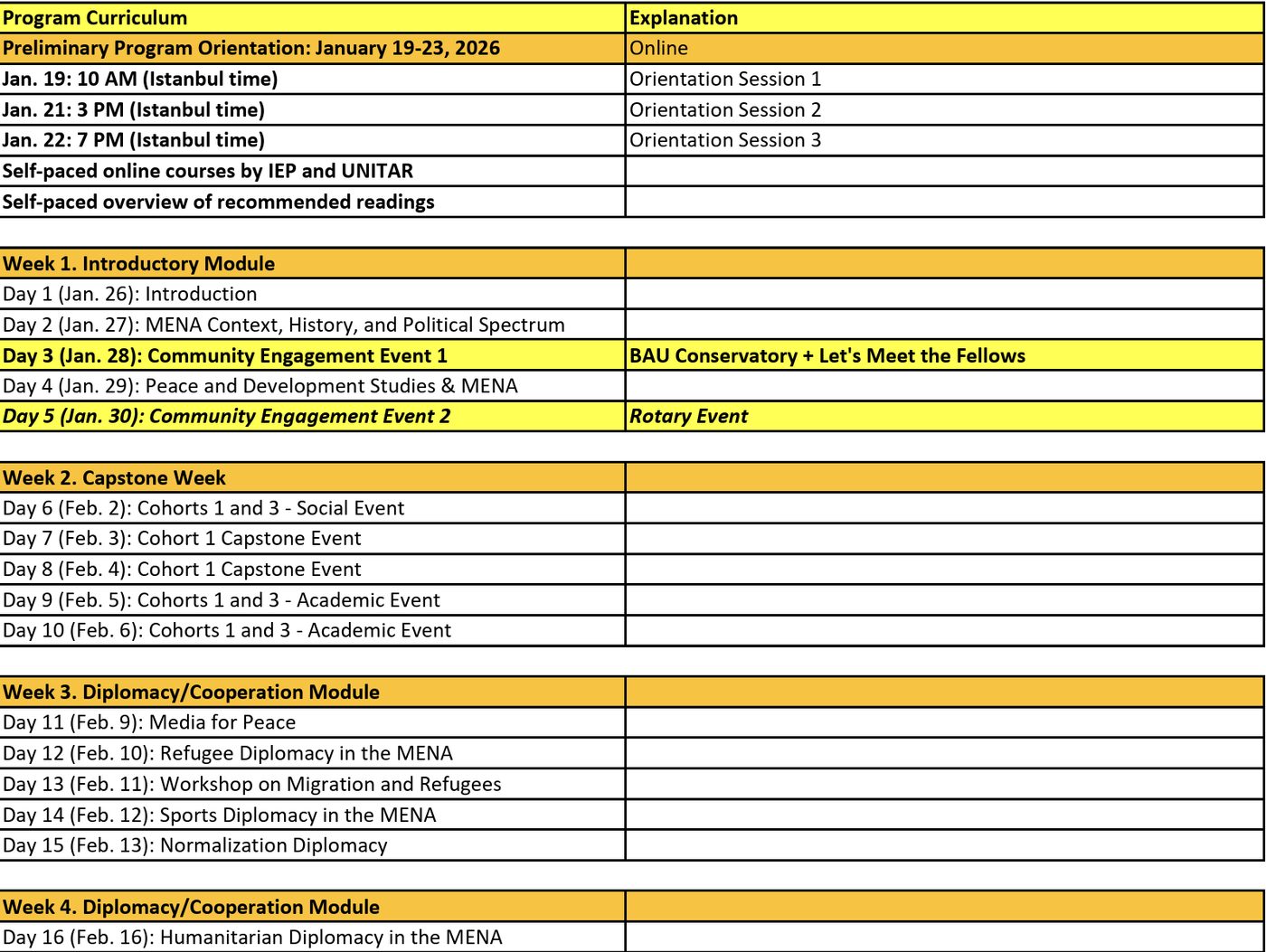
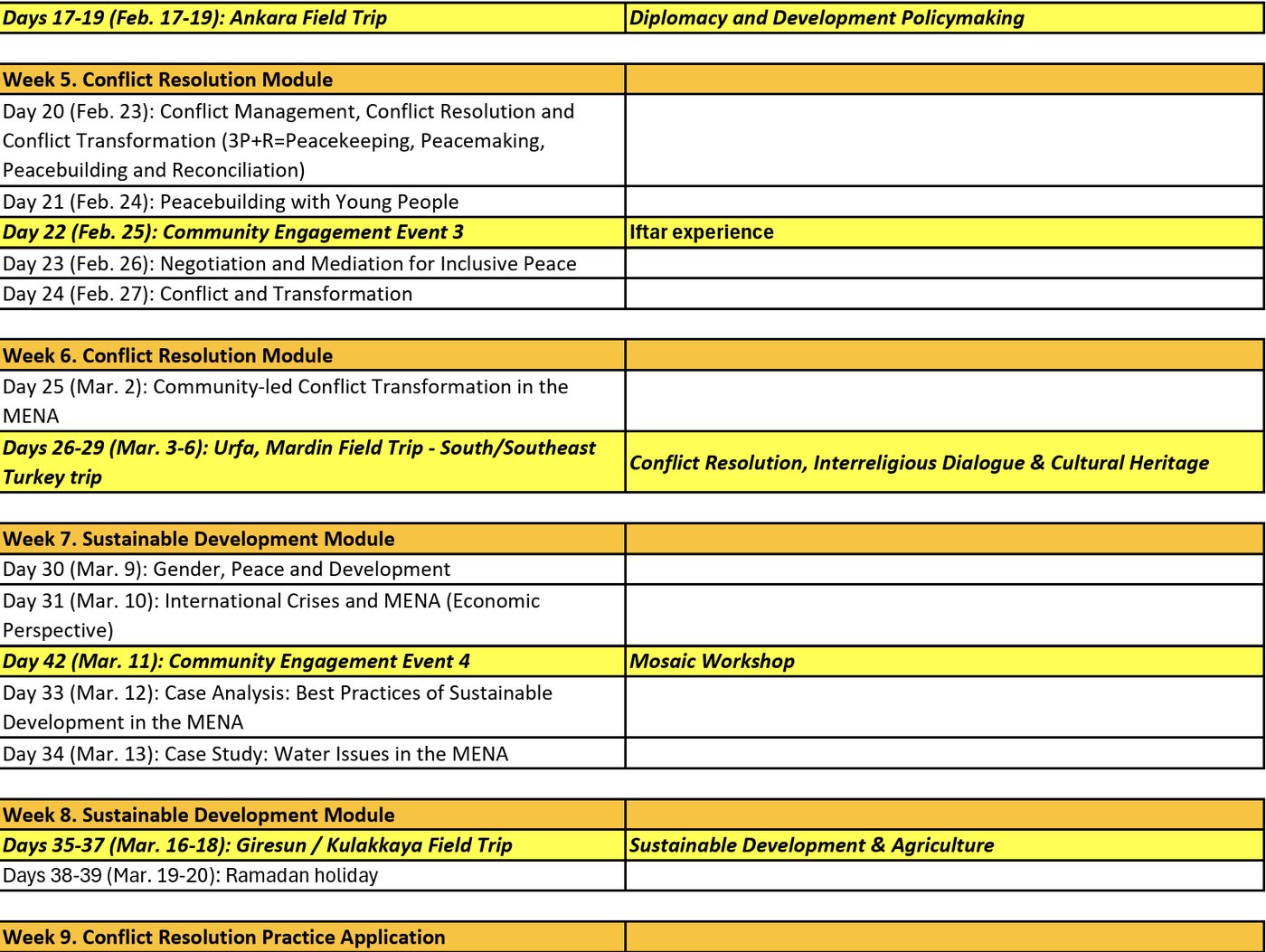
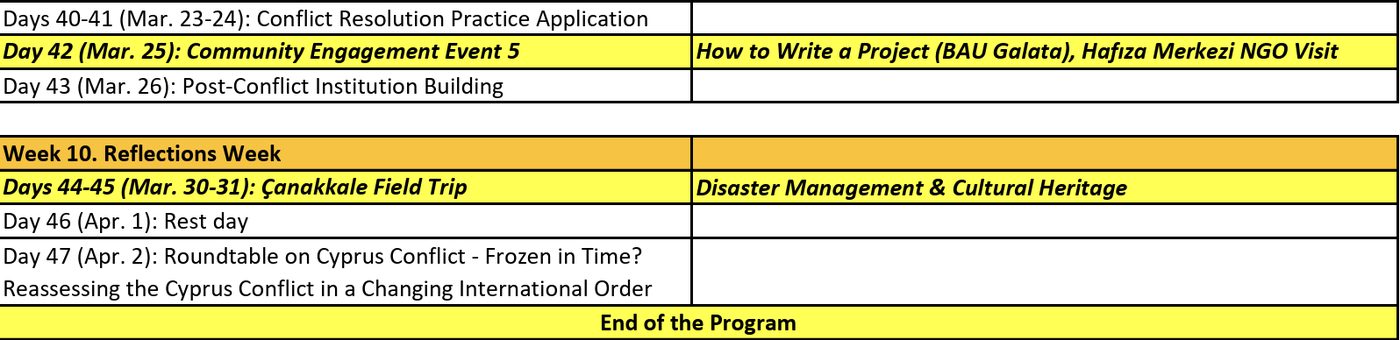
The images below represents the official 10-week curriculum, including modules which focused on displacement, refugee diplomacy, migration and refugees, humanitarian diplomacy, climate-related challenges, sustainable development, conflict resolution, and post-conflict institution building
3- Bahcesehir University Diplomat School: Capacity Building and Safe and Neutral Dialogue on Global Challenges
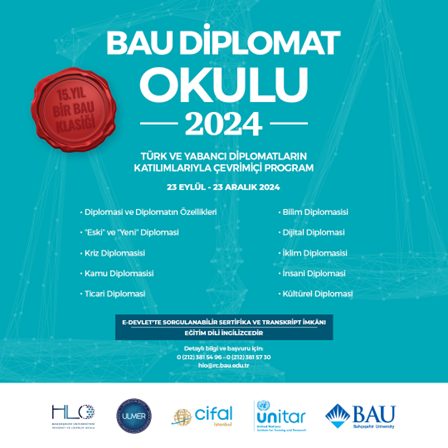
The image below shows the official poster and content of BAU Diplomat School.
During the 2024–2025 academic year, Bahçeşehir University (BAU), through its International Leadership Practice and Research Center (ULMER) and the Government Leadership School, continued to deliver the BAU Diplomat School, a long-standing educational initiative designed to strengthen the knowledge, professional competencies, and policymaking capacities of policymakers, diplomats, public officials, senior administrators, and professionals engaged in international relations and public governance.
Celebrating its 15th year, the Diplomat School serves two complementary institutional purposes: providing structured education, professional upskilling, and capacity building for policymakers and public officials, while also offering a neutral, inclusive, and academically guided platform where individuals representing different political perspectives, ideologies, institutional affiliations, and professional backgrounds can engage in open and constructive dialogue.
Over the years, the programme has brought together ministers, ambassadors, members of parliament, senior bureaucrats, policy advisors, academics, and public-sector professionals, creating opportunities for individuals with different political identities and approaches to public policy to exchange knowledge, challenge assumptions, and examine complex national and international issues within a shared academic environment.
A defining feature of the BAU Diplomat School is its commitment to political neutrality and intellectual openness. The programme provides a non-partisan academic setting in which participants with differing and sometimes conflicting viewpoints can discuss sensitive, complex, and contested policy issues. The University facilitates respectful disagreement, constructive debate, and the exchange of diverse perspectives, supporting an environment in which participants can express their views and engage with opposing arguments without political or ideological exclusion.
This approach is particularly important when addressing subjects such as international conflicts, diplomatic crises, humanitarian challenges, climate and energy policy, and changing geopolitical relationships, where perspectives may differ significantly. By bringing different political stakeholders into the same educational and safe, neutral discussion environment, BAU supports informed dialogue across political and institutional boundaries and contributes to mutual understanding on issues of public significance.
For the 2024–2025 academic year, the Diplomat School delivered its 14-week online programme, with weekly sessions held on Mondays from 08:30 to 11:30. The structured curriculum provided sustained opportunities for professional learning, knowledge exchange, and discussion of contemporary diplomatic challenges.
The updated curriculum covered climate and energy diplomacy, humanitarian and cultural diplomacy, the characteristics and responsibilities of diplomats, traditional and contemporary diplomacy, crisis diplomacy, public and commercial diplomacy, and science and digital diplomacy.
Through these specialized modules, the programme strengthened participants' understanding of international policy frameworks, diplomatic negotiation, crisis management, climate governance, cross-border cooperation, and emerging technological challenges. It supported the development of analytical, diplomatic, and decision-making competencies relevant to effective policy formulation and implementation.
Importantly, the programme's educational and dialogue functions reinforce one another. Participants not only gain knowledge and professional competencies but also encounter alternative interpretations of complex policy challenges, engage with differing political perspectives, and develop the ability to approach disagreement through evidence-based and respectful discussion. This combination of professional education and open dialogue strengthens the University's contribution to both institutional capacity development and inclusive democratic discourse.
Through the BAU Diplomat School, the University therefore contributes to two interconnected dimensions of effective governance: strengthening the capabilities of policymakers and public officials, and maintaining a neutral academic space where political stakeholders with different perspectives can come together to discuss challenging issues openly and constructively.
The initiative contributes primarily to SDG 16 (Peace, Justice and Strong Institutions) by advancing policymaker education, institutional capacity building, political dialogue, and inclusive governance. It also supports SDG 17 (Partnerships for the Goals) through diplomatic cooperation and cross-sector knowledge exchange, and SDG 4 (Quality Education) through structured professional education and lifelong learning.
4- Bahçeşehir University as a Safe and Neutral Platform for Dialogue Between the Judiciary, Media and Public Institutions
The images below show the official poster and program schedule of Justice and Media Relations at BAU.
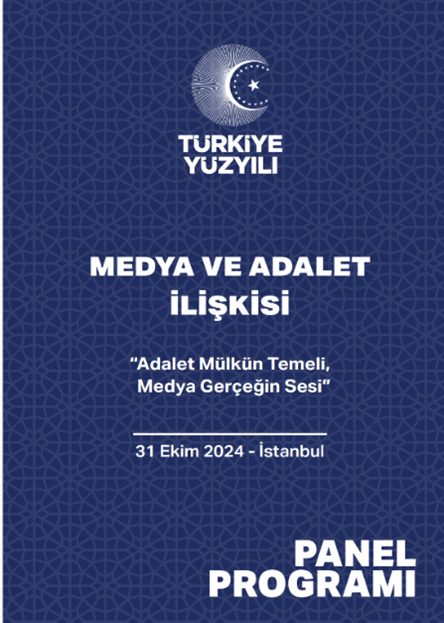
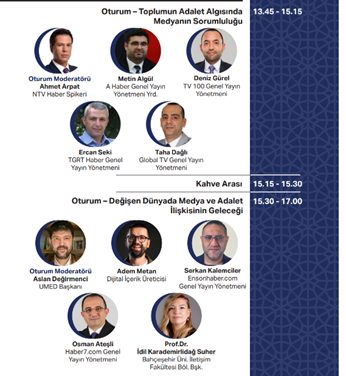
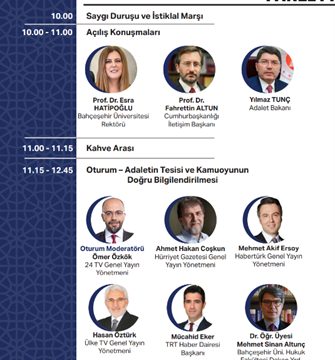
During the 2024–2025 academic year, Bahçeşehir University (BAU) reinforced its commitment to providing a safe, inclusive, and politically neutral platform for dialogue through the national panel titled “Justice and Media Relations: Justice as the Foundation of the State, Media as the Voice of Truth,” held at BAU's Beşiktaş Campus.
The event brought together government officials, representatives of the justice sector, media professionals representing diverse political perspectives, academics, and students, creating an opportunity for dialogue among stakeholders with different institutional responsibilities, professional experiences, and viewpoints.
The Rector of Bahçeşehir University, Prof. Dr. Esra Hatipoglu, also delivered an address during the event, demonstrating the University's institutional commitment at the highest leadership level to facilitating open dialogue on issues concerning justice, media, and public governance. The Rector's participation underscored BAU's role not simply as the host institution, but as an active supporter of constructive engagement between public authorities, media professionals, academics, and the wider university community.
Beyond serving as a conventional academic panel, the event provided a neutral university-based setting in which potentially sensitive and contested issues could be openly examined without promoting a particular political or institutional position. Discussions centred on the relationship between justice and the media, including the importance of freedom of expression, responsible journalism, access to accurate information, transparency, and public trust in institutions.
The participation of representatives from different sectors and political perspectives was central to the event's role as a safe platform for dialogue. By facilitating respectful exchanges between public authorities, media representatives, scholars, and the university community, BAU created space for differing interpretations of the relationship between judicial institutions, media responsibility, and the public interest to be considered within a shared academic environment.
The panel encouraged constructive discussion, mutual understanding, and the exchange of diverse viewpoints, demonstrating the value of bringing together institutions and individuals whose perspectives and responsibilities may not always align. The dialogue offered opportunities to examine common challenges, consider different approaches, and deepen understanding of the relationship between the judiciary, media, and society.
By bringing together representatives of the judiciary, public institutions, and the media within a shared academic setting, BAU facilitated dialogue among stakeholders with different institutional responsibilities and perspectives on issues of public significance.
Through this initiative, Bahçeşehir University demonstrated its role as an independent academic convener, providing a safe and non-partisan space for dialogue across political and institutional boundaries. The event contributed to SDG 16 (Peace, Justice and Strong Institutions) by promoting inclusive discussion, freedom of expression, institutional transparency, and constructive engagement among stakeholders concerned with justice, media, and public governance.
5- Bahçeşehir University Global Leadership Forum: Ongoing Leadership Development and a Neutral Platform for International Dialogue Since 2021
The images below show highlight pictures of BAU Global Leadership Forum.
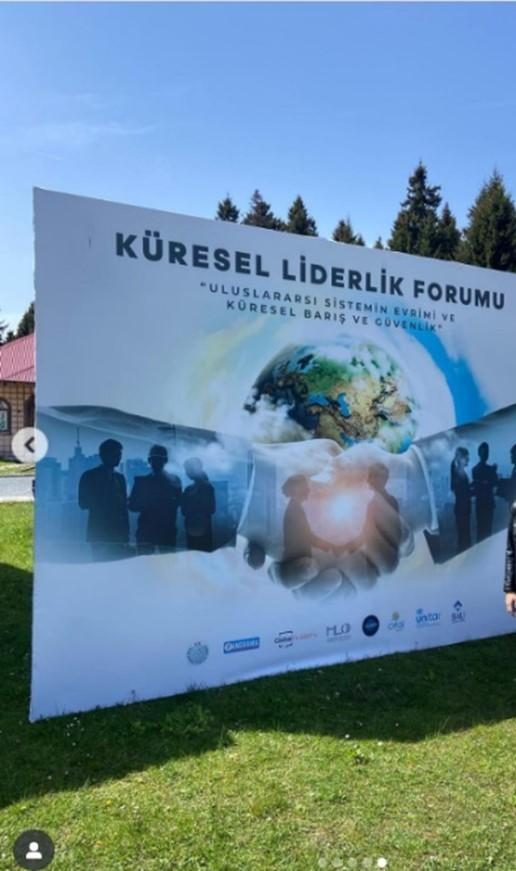
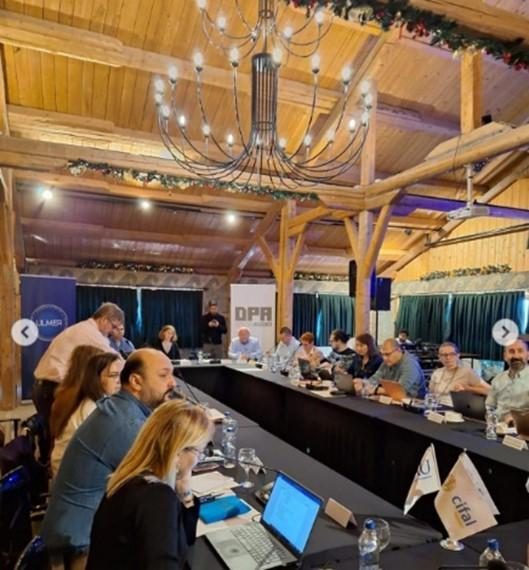
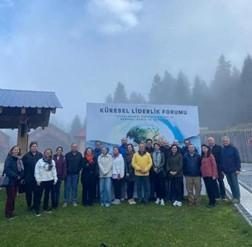
Since its establishment in 2021, Bahçeşehir University (BAU) has developed the Global Leadership Forum as an ongoing platform for policy-oriented education, leadership development, and inclusive dialogue on international affairs, governance, peace, and security. Led by BAU's International Leadership Practice and Research Center (ULMER) and Government and Leadership School (HLO), the initiative reflects the University's sustained commitment to connecting academic expertise with the professional development of policymakers, public officials, and individuals engaged in public affairs, while providing an academic environment for the exchange of diverse perspectives on international and political issues.
Organized in cooperation with academic and institutional partners, including Global Akademi, and supported across its documented editions by organizations such as the Council on International Relations (UİK), Panorama Portal, and UNITAR-affiliated CIFAL Istanbul, the forum brings together policymakers, local government representatives, diplomats, academics, and experts from diverse professional, institutional, academic, and political backgrounds. By facilitating engagement among individuals representing different institutions, experiences, and perspectives, the forum creates opportunities for dialogue across professional and political viewpoints. This collaborative approach also supports SDG 17 (Partnerships for the Goals) through institutional cooperation, interdisciplinary knowledge exchange, and engagement across academic, public-sector, and international networks.
The Global Leadership Forum is structured around evolving themes that reflect emerging international developments and changing policy priorities. Its thematic agenda encompasses the transformation of the international system, the emergence of a new world order, shifting global power dynamics, regional peace and stability, and contemporary challenges to international security. Discussions also explore the changing balance between global and regional powers, the future of multilateral cooperation, geopolitical uncertainty, and the implications of these developments for international governance and public policy. By addressing different dimensions of global leadership and international relations, the forum provides an academic platform for examining complex policy challenges from multiple perspectives.
These thematic discussions are closely connected to SDG 16 (Peace, Justice and Strong Institutions), particularly through their focus on peace, international stability, governance, and the challenges facing public institutions. The forum encourages participants to examine different approaches to international cooperation, conflict resolution, and institutional responses to complex geopolitical developments, contributing to a deeper understanding of issues relevant to effective governance and policymaking.
A central objective of the forum is to strengthen the knowledge, analytical capabilities, and strategic competencies of policymakers, public officials, and policy practitioners. Through expert-led presentations, policy analysis, and interactive discussions, participants engage with issues concerning international governance, conflict resolution, institutional resilience, and global cooperation. The forum's educational approach connects academic knowledge with contemporary policy challenges, contributing to professional upskilling and capacity building in areas relevant to effective leadership and evidence-informed policymaking.
This educational dimension also contributes to SDG 4 (Quality Education) by extending university-based learning opportunities to professional audiences and supporting interdisciplinary knowledge exchange and continuing professional development.
A Neutral and Inclusive Platform for Dialogue Across Diverse Perspectives
Beyond its educational function, the Global Leadership Forum provides an academically guided, inclusive, and politically neutral environment for dialogue among stakeholders representing different perspectives, institutional interests, and professional backgrounds. The forum creates opportunities for individuals with diverse political viewpoints, academic approaches, and institutional experiences to engage in constructive discussions on international affairs, governance, peace, and security.
An important characteristic of the forum is its emphasis on open academic exchange. Participants are encouraged to examine different interpretations of international developments, challenge assumptions, exchange arguments, and engage respectfully with perspectives that may differ from their own. This approach is particularly relevant when discussing sensitive and contested issues such as geopolitical tensions, regional conflicts, international security, and global governance.
By bringing together individuals from different professional, institutional, and political backgrounds, BAU provides an academic setting in which diverse and potentially contrasting viewpoints can be expressed, examined, and discussed through constructive dialogue. The forum's emphasis on respectful disagreement, critical reflection, and mutual understanding supports meaningful engagement across differences while maintaining an educational and academically grounded approach.
The forum's contribution as a neutral platform lies in creating opportunities for participants from different institutional and professional backgrounds to examine contrasting approaches to international governance, security, and public policy within a shared academic environment, without requiring agreement on contested issues.
This dialogue-oriented dimension strengthens the forum's relevance to SDG 16 (Peace, Justice and Strong Institutions) by encouraging peaceful engagement, mutual understanding, and informed discussion on international and governance-related challenges. It also reinforces SDG 17 (Partnerships for the Goals) by facilitating communication, cooperation, and knowledge exchange among stakeholders from different institutional and professional backgrounds.
The combination of policy-oriented education and dialogue across political, institutional, and professional perspectives supports leadership development while strengthening connections between academia, public institutions, and international organizations. Through this ongoing initiative, BAU promotes knowledge exchange, institutional cooperation, and informed approaches to complex governance challenges.
Overall, the Global Leadership Forum contributes to three interconnected Sustainable Development Goals: SDG 16 (Peace, Justice and Strong Institutions), through policy education, professional capacity building, peaceful dialogue, and governance-related discussions; SDG 17 (Partnerships for the Goals), through institutional cooperation and knowledge exchange across diverse stakeholders; and SDG 4 (Quality Education), through interdisciplinary learning and professional development. Together, these dimensions reflect BAU's broader commitment to supporting informed leadership, international understanding, and constructive academic dialogue on contemporary global challenges.
6- Bahçeşehir University Hosts the Codes of the New Global Order Conference: A Neutral and Safe Platform for Open Dialogue among Diverse Political and Institutional Perspectives
The images below display highlights from the Codes of the New Global Order Conference; one showcasing a panel in action, and the other one showcasing Nikhil Seth, former United Nations Assistant Secretary-General and Executive Director of UNITAR, giving his speech
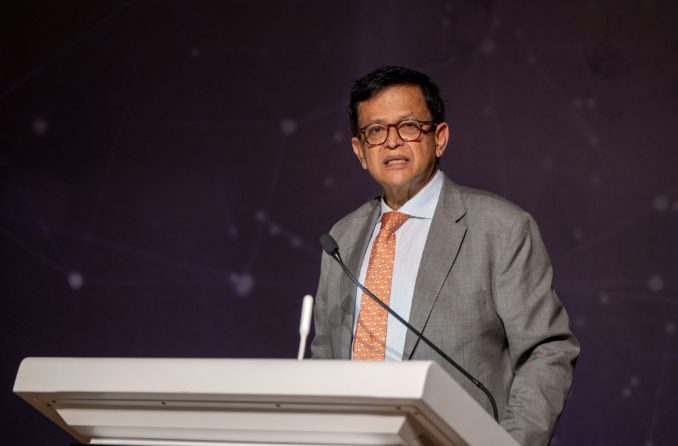
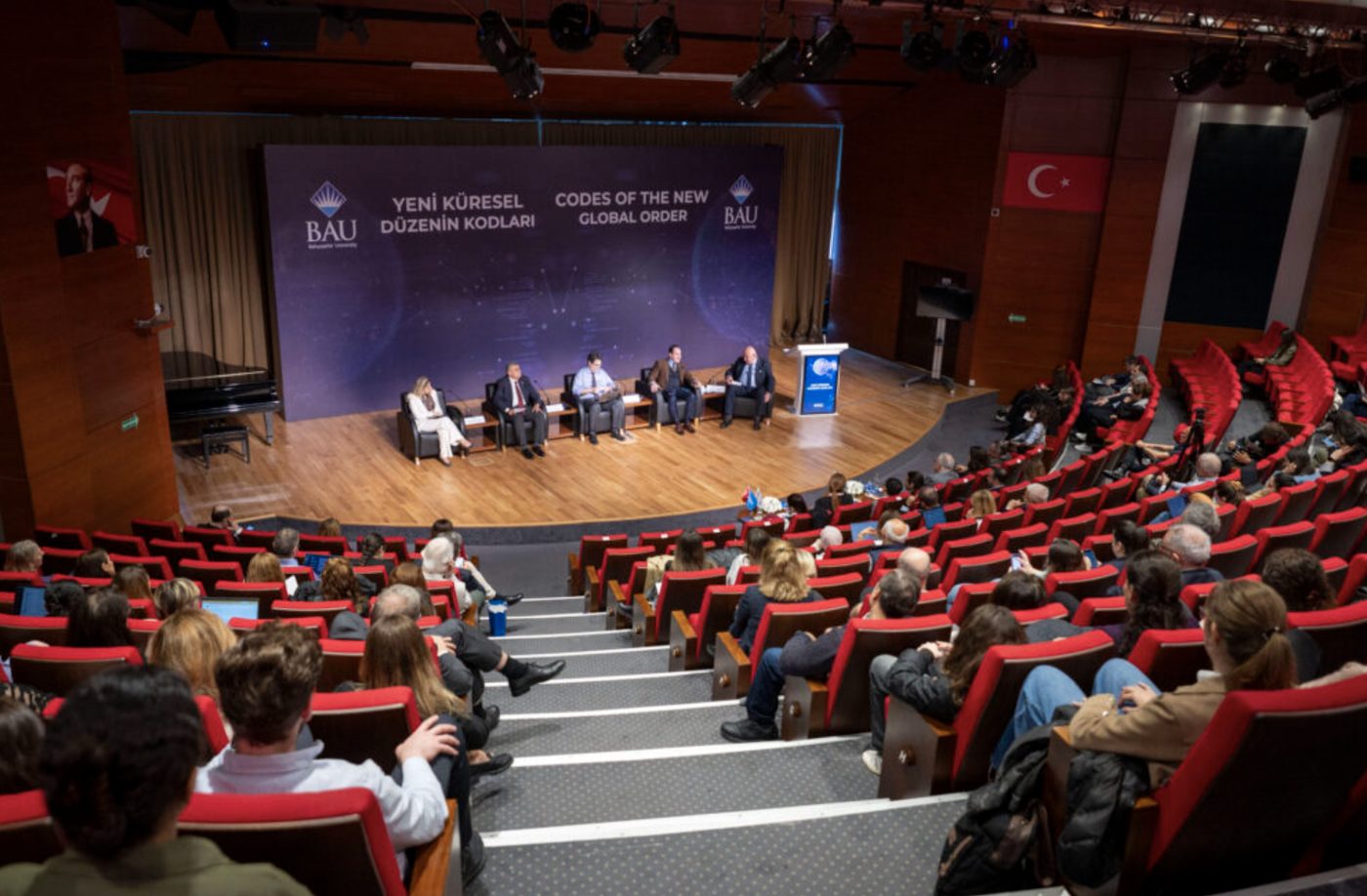
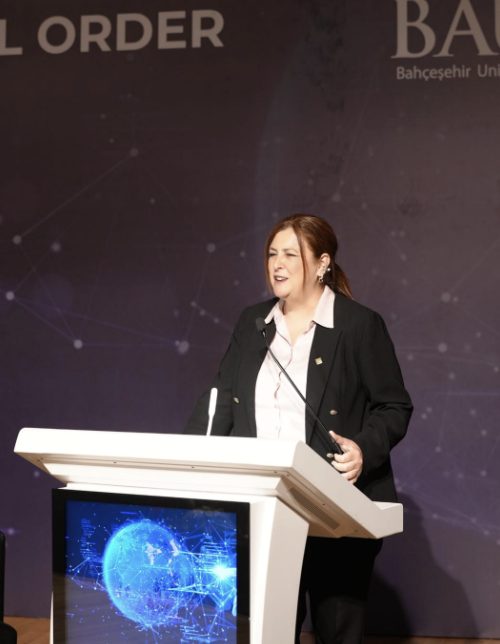
Hosted by Bahçeşehir University on March 26, 2025, the “Codes of the New Global Order” Conference created a neutral academic platform where academics, policymakers, international representatives and experts from different sectors could come together to discuss rapidly changing political and economic conditions. The conference opened with addresses by BAU Rector Prof. Dr. Esra Hatipoğlu and Nikhil Seth, former United Nations Assistant Secretary-General and Executive Director of UNITAR. By convening participants with different areas of expertise and institutional perspectives, BAU provided a safe and non-partisan environment for frank discussion of global governance, geopolitical transformation and the future of international cooperation.
The conference was structured around four panels addressing economic nationalism, tariffs and trade wars, the effects of social media on international commerce, and the global consequences of United States trade policy. These subjects involve competing national interests, conflicting political interpretations and differing approaches to global economic governance. Bahçeşehir University offered an open and academically grounded space in which these disagreements could be examined through evidence, expert analysis and constructive exchange. This capacity to bring different political and professional voices into the same conversation strengthened dialogue across institutional and ideological boundaries.
The neutral character of the conference was particularly important at a time when established security arrangements, economic relations and bilateral agreements were being questioned. Nikhil Seth described the international environment as a period of uncertainty in which the effectiveness of international organisations and institutions is increasingly contested. Against this background, BAU’s role extended beyond hosting a conventional academic event: the University created a trusted forum where participants could openly identify institutional weaknesses, explore emerging risks and consider how international structures might respond more effectively. The conference thus enabled difficult global challenges to be discussed candidly within a respectful and inclusive setting.
BAU’s safe dialogue space also supported the participation of voices from different disciplines and sectors. Seth emphasised the value of hearing experts from diverse academic fields when addressing interconnected issues such as security, economics and inclusion. By facilitating exchange among participants who approached the emerging world order from different standpoints, the University encouraged comprehensive and non-exclusionary thinking. The conference enabled contrasting assessments to be heard, questioned and evaluated, reinforcing the importance of pluralism and informed deliberation in addressing complex governance challenges.
The discussion of artificial intelligence further demonstrated the value of this open and balanced environment. Participants considered both AI’s potential to advance peace, prosperity, security and inclusion and the risk that it could be used to impose restrictions, deepen divisions or exclude particular groups. By allowing the opportunities and dangers of technological change to be examined together, Bahçeşehir University provided a neutral setting for responsible debate on how emerging technologies should be governed. This approach encouraged dialogue on the ethical and institutional safeguards required to ensure that technological development serves people and strengthens inclusive societies.
By convening academics, international representatives, policymakers, and sectoral experts within a shared academic environment, BAU facilitated open discussion of competing perspectives on global economic governance, international cooperation, and emerging geopolitical challenges.
The conference contributed directly to SDG 16: Peace, Justice and Strong Institutions by establishing Bahçeşehir University as a neutral convening institution where diverse political, academic and professional stakeholders could meet safely and discuss shared challenges with openness. Through respectful debate on international institutions, multilateral diplomacy, economic conflict, technological change, peace, security and inclusion, BAU supported participatory dialogue and the exchange of competing perspectives. The event demonstrated how a university can strengthen democratic and institutional culture by offering an independent, trusted and intellectually open space in which disagreement can be expressed constructively and possible responses to global challenges can be explored collectively. The participation of Nikhil Seth, former United Nations Assistant Secretary-General and Executive Director of UNITAR, alongside academics, policymakers and sectoral experts also connected the conference to SDG 17: Partnerships for the Goals by fostering dialogue between higher education, international institutions and wider professional communities around shared global challenges.
The image below displays a highlight from the conference, showcasing Prof. Esra Hatipoğlu, Rector of Bahçeşehir University, giving her opening speech