EN
16.2.2 - Bahçeşehir University Independent Students' Union
Institutional Recognition and Student Representation
The Bahçeşehir University Student Council (BAU Student Union), formally recognized by the University, serves as the official, democratically elected representative body of Bahçeşehir University students. Its primary mission is to advocate for student rights, strengthen communication between students and the university administration, and ensure that student voices are actively included in institutional decision-making processes.
Bahçeşehir University's recognition of the Student Council is established through the Bahçeşehir University Student Council Directive (Bahçeşehir Üniversitesi Öğrenci Konseyi Yönergesi), which formally regulates the Council's establishment, representative mechanisms, elections, responsibilities, and organizational structure.
The Directive recognizes the Council's own decision-making bodies and establishes mechanisms through which student representatives can identify concerns, determine priorities, adopt decisions, and communicate student interests to university authorities.
The University also provides institutional support for the Council's activities. Under the Directive, appropriate space, equipment, and resources are made available to facilitate the Council's operations, while the University provides financial allocations to support its activities.
This combination of formal recognition, democratic representation, defined student decision-making responsibilities, and institutional support enables the Council to carry out its representative functions within an established governance framework.
Operating through a faculty-based representative system, the Student Council maintains an inclusive and participatory approach, reflecting the diversity of the University community. Recognized formally by Bahçeşehir University through its Student Council Directive, it plays a vital role in promoting student welfare, supporting academic and social engagement, and fostering a positive, inclusive campus culture.
The University's official Student Council Directive defines the Council as a student union established by students themselves through democratic procedures. This institutional recognition provides a formal foundation for student representation and establishes the Council's responsibilities, representative structure, election procedures, and decision-making mechanisms.
Through this framework, students are provided with an organized representative body that can articulate their collective interests, raise concerns, develop initiatives, and communicate directly with the University's relevant governing bodies.
Democratic Elections and Representative Structure
The Student Council operates through a multi-level representative system designed to connect students across academic departments, programmes, faculties, and schools.
Student representatives at the department and programme levels are elected by students from among their peers. Faculty and school representatives are subsequently selected from among these elected representatives, establishing a democratic process of representation across the University.
This structure ensures that student representation originates within the student community and provides formal channels through which student concerns and priorities can be communicated from individual academic units to the University-wide Student Council.
The election procedures and representative responsibilities are formally regulated under the Bahçeşehir University Student Council Directive, reinforcing the institutional recognition and democratic basis of the Council.
Student-Led Governance and Decision-Making
The Student Council has its own organizational and decision-making structure, consisting of a General Assembly, an Executive Board, and a Supervisory Board.
The General Assembly serves as the Council's highest decision-making body. It is responsible for electing the Council's governing and supervisory bodies, adopting decisions concerning student issues, and determining the Council's priorities and objectives.
The Executive Board is responsible for implementing the decisions of the General Assembly, identifying student concerns, communicating student perspectives to the University's relevant governing bodies, and coordinating initiatives that support student participation and welfare.
The Supervisory Board provides an internal accountability mechanism by overseeing the activities of the Executive Board in accordance with the Council's governing framework.
These arrangements establish formal opportunities for students to participate in the organization, governance, and oversight of their representative body, strengthening student-led decision-making within the University's institutional framework. Through its elected governing bodies, the Student Council determines its own priorities and organizes its representative activities within the framework established by the University’s Student Council Directive.
Core Responsibilities of the Student Council
The Bahçeşehir University Student Council undertakes the following core responsibilities:
Representation: Advocate for the interests and needs of students across faculties, ensuring their perspectives are reflected in university policies and governance.
Dialogue and Participation: Maintain constructive communication channels between students and the university administration, contributing to decision-making processes that shape academic and campus life.
Community and Engagement: Organize and support academic, cultural, and social activities that enhance student life and encourage active participation in the University community.
Advocacy and Inclusion: Provide a platform for students to voice their concerns and promote equal access to opportunities, services, and resources.
Collaboration and Development: Encourage student participation in university committees and advisory boards, while supporting initiatives that promote leadership, social responsibility, and sustainable development.
In accordance with the Student Council Directive, these responsibilities also include identifying student concerns, communicating them to the relevant university authorities, coordinating student activities, and strengthening communication between students and academic and administrative units.
The Council is also authorized to develop initiatives in collaboration with civil society organizations, encourage participation in national and international educational and youth programmes, and establish relationships with student organizations beyond the University.
Student Welfare, Advocacy and Campus Engagement
Student welfare is a central component of the Council's representative responsibilities. The Student Council Directive explicitly provides for the establishment of working groups addressing matters such as food services, transportation, accommodation, cafeterias, student clubs, scholarships, education, arts, culture, and sports.
These areas reflect the Council's role in addressing both the academic and broader welfare interests of students, providing opportunities to identify concerns and develop initiatives relevant to their university experience.
The Council's representative structure also enables student concerns to be communicated to the relevant institutional authorities, supporting dialogue and constructive engagement on matters affecting student life.
Through its participation in student activities, social responsibility initiatives, and community engagement, the Council contributes to a university environment that values student involvement, collective responsibility, and active participation.
Participation in University Governance
Student representation at BAU extends beyond the internal activities of the Student Council and includes formal opportunities to engage with the University's academic and administrative governance processes.
Under the Student Council Directive, student representatives are responsible for identifying issues affecting the students they represent and communicating these matters to the relevant governing bodies. Representatives may also participate in academic and administrative meetings to which they are invited when student-related matters are discussed.
The Student Council President may participate in University Senate and University Executive Board meetings when invited to discussions concerning student-related matters, providing a formal channel for student perspectives to be communicated at the institutional level.
These mechanisms strengthen communication between students and university leadership and support the inclusion of student perspectives in discussions affecting academic and campus life.
Contribution to Democratic Participation and Inclusive University Life
Through these activities, the Bahçeşehir University Student Council strengthens democratic participation within the University, ensuring that students have a voice in shaping the educational and social environment of BAU.
The Council provides a structured platform for student representation, advocacy, dialogue, and collective participation, connecting students' experiences and priorities with the University's institutional decision-making processes.
By recognizing the Student Council and providing a formal framework for its representative and organizational responsibilities, BAU demonstrates its commitment to student participation, accountable governance, and the protection of student interests.
These arrangements contribute to the University's broader commitment to SDG 16 (Peace, Justice and Strong Institutions), particularly through the promotion of participatory, inclusive, and representative institutional governance.
Bahçeşehir University Student Council Directive
The Bahçeşehir University Student Council operates in accordance with the Bahçeşehir University Student Council Directive (Bahçeşehir Üniversitesi Öğrenci Konseyi Yönergesi).
This directive comprehensively defines the structure, responsibilities, and operational framework of the Student Council, outlining its representative mechanisms, election procedures, and participation principles in university governance.
In particular, the Directive provides documentary evidence of:
The University's formal recognition of the Student Council as a democratically established student union (Article 4).
Democratic election procedures and representative mechanisms at the department, programme, faculty, and school levels (Articles 5, 7, and 9).
The establishment of the Council's General Assembly, Executive Board, and Supervisory Board, together with their respective responsibilities (Articles 13–18).
Formal mechanisms for communicating student concerns and participating in relevant university governance discussions (Articles 8, 10, 12, and 16).
Responsibilities relating to student welfare, social engagement, and collaboration with external organizations (Article 16).
Institutional provision of space, equipment, and financial resources to support Council activities (Articles 19 and 23).
Together, these provisions demonstrate that student representation at Bahçeşehir University is supported by a formally recognized, democratically constituted student organization with defined responsibilities, internal governance mechanisms, and established channels for participation in university affairs.
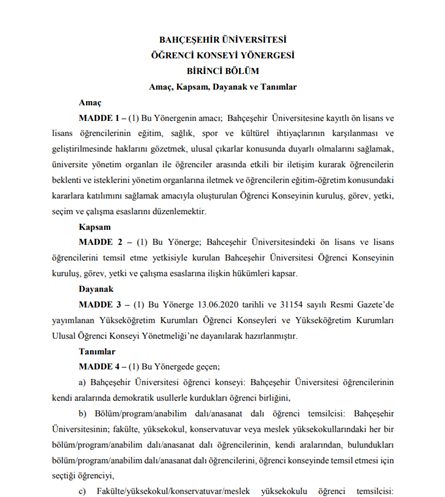
The image below presents the first page of the Bahçeşehir University Student Council Directive, which formally recognizes the Student Council as a democratically established student representative body and defines the institutional framework for student representation, governance, and participation in university decision-making processes.
The images below show promotion posters of various BAU Student Council events that took place during the 2024-2025 academic year.




Students in Decision-Making Processes
In addition to the formally recognized Student Council and student-led clubs, Bahçeşehir University provides multiple participatory channels that enable students to take an active role in institutional dialogue and decision-making processes and contribute to shaping the University's academic and social environment.
The “Rektörle Biz Bize Sohbetler” (“Candid Conversations with the Rector”) initiative, first introduced in the 2023–2024 academic year and continued throughout 2025, represents an ongoing commitment to inclusive governance and transparent communication. Through this initiative, BAU Rector Prof. Dr. Esra Hatipoğlu has met directly with students across university campuses, listening to their suggestions, expectations, and concerns in person.
By creating regular opportunities for direct dialogue between students and the University's highest executive leadership, the initiative enables student perspectives to be communicated directly to institutional decision-makers and considered in discussions concerning university policies, services, and campus life.
Together with the Student Council and student clubs, such participatory mechanisms reinforce BAU's commitment to student-centered governance, transparent communication, and the meaningful inclusion of student perspectives in institutional decision-making.
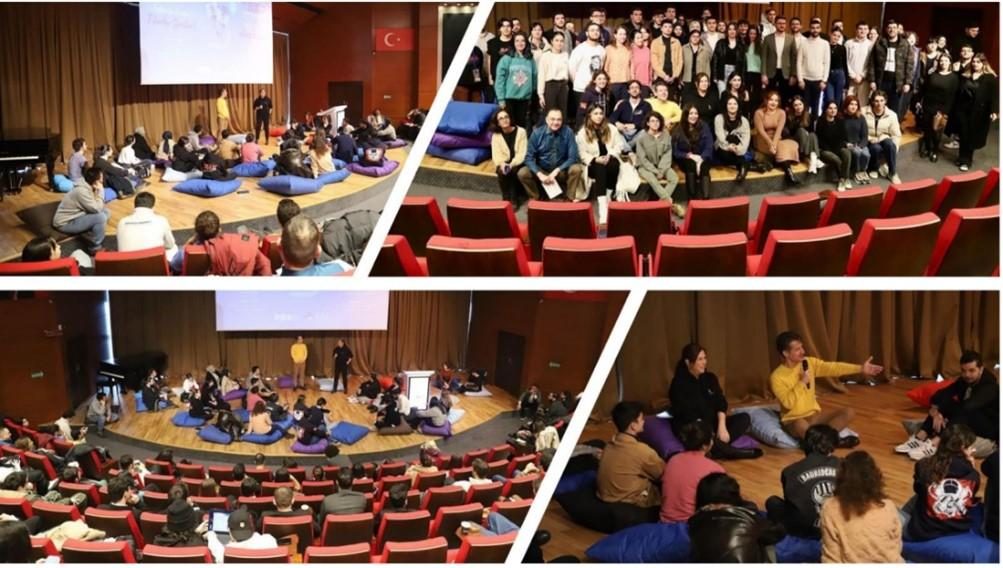
The images below present the official event poster and photographs from the “Rektörle Biz Bize Sohbetler” (“Candid Conversations with the Rector”) meetings, illustrating opportunities for direct dialogue between BAU students and the Rector on student experiences, suggestions, and campus life.

Student Clubs, Student-Led Governance and Campus Engagement
Student participation at Bahçeşehir University is further strengthened through a vibrant student club ecosystem and a range of student-led boards, councils, and initiatives.
Student clubs operate within formally recognized, student-led governance structures that promote transparency, accountability, and democratic participation in their activities. These structures enable students to manage their own initiatives, elect club executives, and make collective decisions regarding events, projects, and organizational priorities.
Under the Bahçeşehir University Student Club/Society Directive, each student club has its own General Assembly, Executive Board, and Supervisory Board. The General Assembly, composed of active club members, serves as the club's highest decision-making body and elects its governing and supervisory boards. It also approves annual activity programmes and amendments to the club's internal by-laws.
The Executive Board is elected by the General Assembly and is responsible for coordinating club activities, while the Supervisory Board provides an internal accountability mechanism. Academic advisors support clubs through guidance and coordination, with their responsibilities formally distinguished from the direct management of club activities.
Through these representative and organizational mechanisms, student clubs provide an additional channel for students to develop proposals, communicate their priorities, and engage with the Office of the Dean of Students on matters relating to student activities and campus life. Their engagement with the University's relevant administrative units creates opportunities for student perspectives and initiatives to be considered within institutional discussions, planning, and decision-making processes.
These arrangements provide an institutional framework for student leadership, democratic elections, collective decision-making, accountability, and constructive dialogue between students and university administration.
In October 2025, Bahçeşehir University adopted an updated Student Club/Society Directive, further formalizing the governance, democratic election procedures, accountability mechanisms, and operational responsibilities of student clubs.
The detailed framework regulating the organization, operation, and governance of student clubs can be accessed through the following official directive:
Bahçeşehir University Student Club/Society Directive (Bahçeşehir Üniversitesi Öğrenci Kulüp/Topluluk Yönergesi)
Bahçeşehir University has demonstrated continued growth in its student club ecosystem, reflecting the University's commitment to student engagement and students' active involvement in academic, cultural, social, and extracurricular activities.
As of 2025, the number of officially recognized student clubs at BAU reached 92, representing a 1.09% increase compared to the previous year. These comprise 41 social and cultural clubs, 11 sports clubs, and 40 academic clubs, offering students diverse opportunities to pursue their interests, develop leadership skills, and engage with the wider university community.
Student club membership increased from 10,538 to 12,935, representing approximately 22.7% growth compared to the previous reporting period.
During the 2024–2025 academic year, a total of 650 student activities were organized at BAU, compared to 371 in the previous academic year, representing an increase of approximately 75.2%.
These activities encompassed a broad range of academic, cultural, social, artistic, and recreational initiatives, providing students with opportunities to collaborate, exchange ideas, develop organizational and leadership skills, and contribute actively to campus life.
The expansion in student participation and activities demonstrates the growing role of student-led initiatives in shaping the University's academic and social environment. Beyond participation in individual events, student clubs provide platforms through which students can develop their own projects, organize collective activities, and engage with their peers around shared interests and priorities.
Together with the formally recognized Student Council, BAU's student club ecosystem strengthens opportunities for student representation, collective decision-making, leadership development, and active participation in university life.
Student Club Governance and Activities
The Bahçeşehir University Student Club/Society Directive provides formal evidence of student-led governance mechanisms, including:
Student club General Assemblies as the highest decision-making bodies (Article 11).
Democratic election of Executive Boards and Supervisory Boards by club members (Articles 11–13).
Student participation in approving activity programmes and internal by-laws (Article 11).
Internal oversight and accountability through elected Supervisory Boards (Article 13).
Academic advisory support focused on guidance and coordination (Article 14).
Formal coordination between student clubs and the Office of the Dean of Students concerning activity planning, organizational processes, and institutional support (Articles 5, 9, and 14).
The accompanying 2024–2025 student activity records document 650 activities, providing additional evidence of the scale, diversity, and continuity of student engagement across BAU's student club ecosystem.
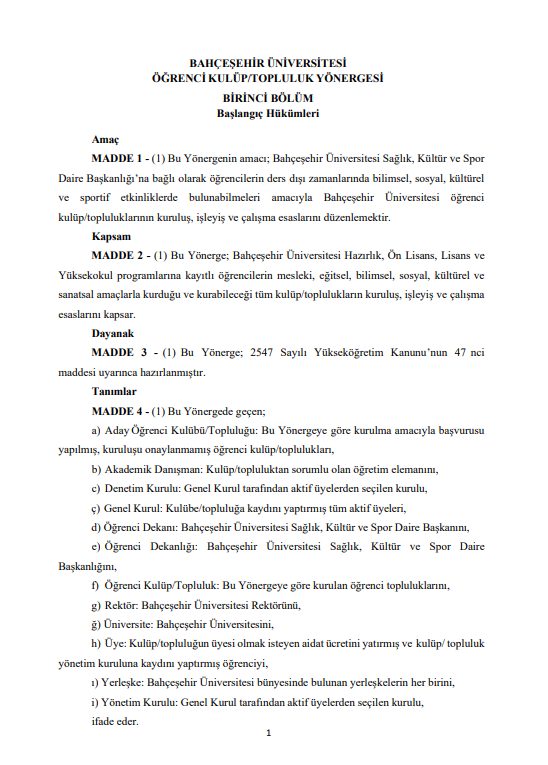
The image below presents the first page of the Bahçeşehir University Student Club/Society Directive, updated in October 2025, which formally establishes the institutional framework for student-led club governance, democratic representation, and student participation in the organization and management of extracurricular activities.
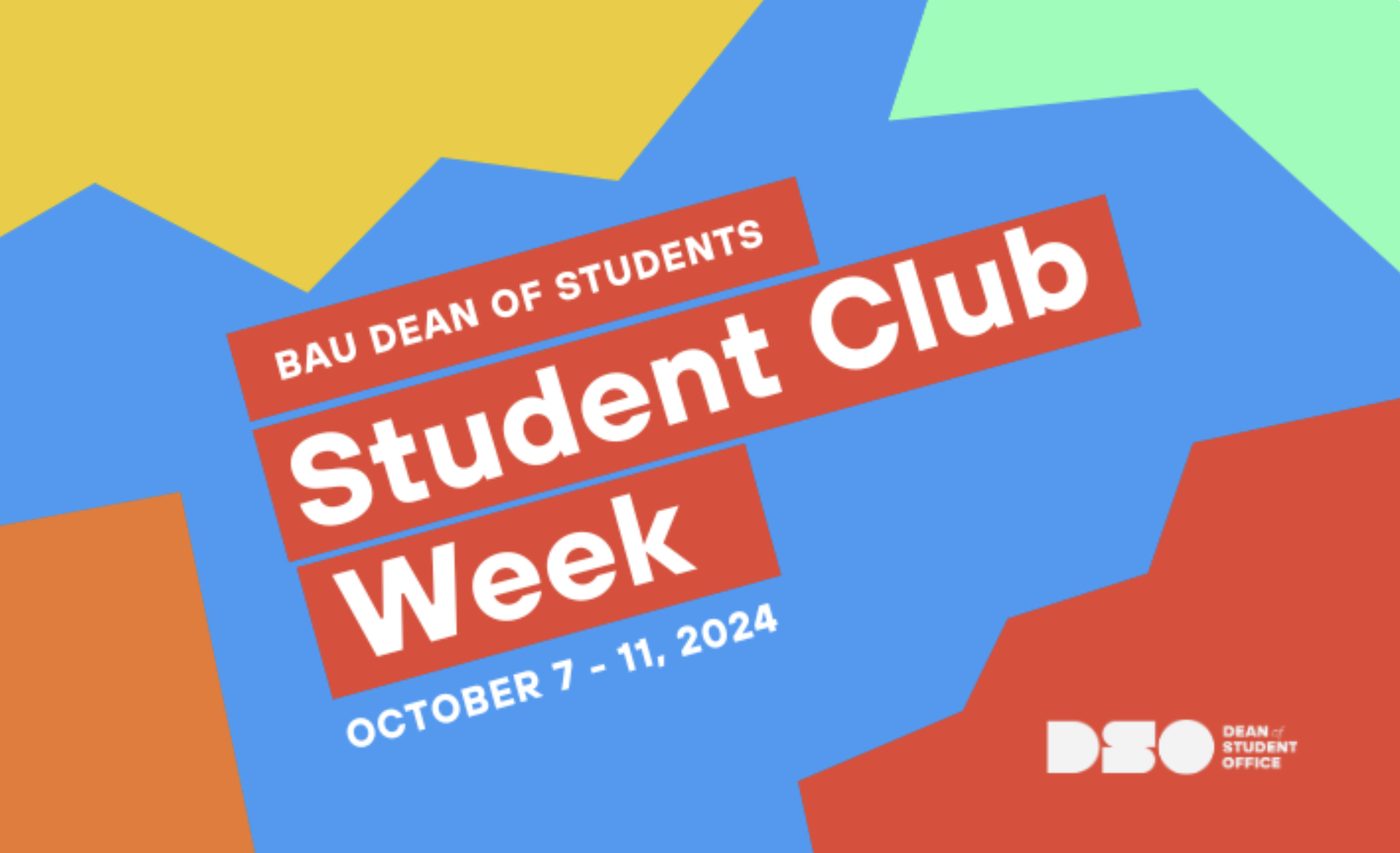
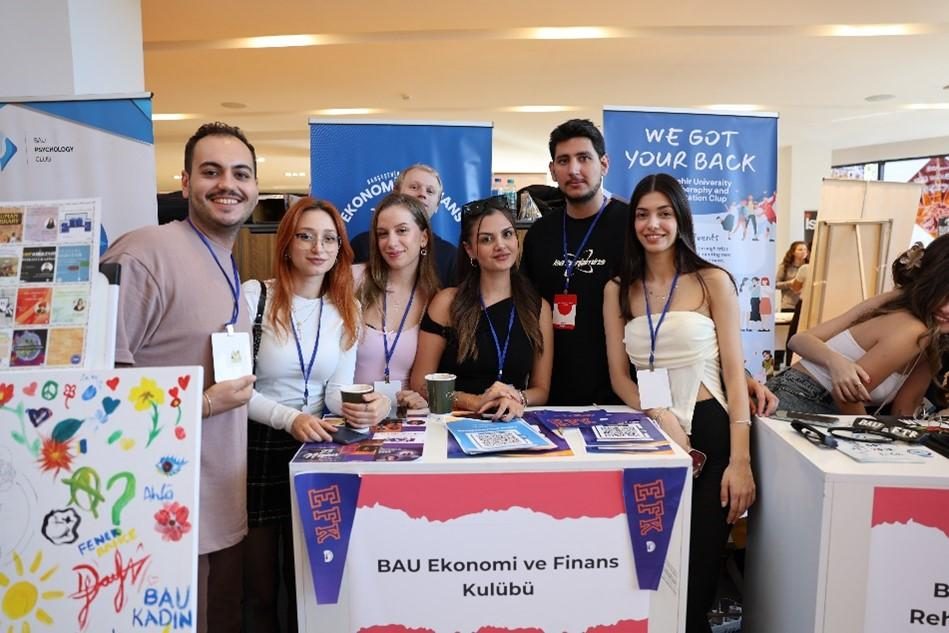
The images below show the promotional poster and highlights from the BAU Student Clubs Week and the Annual Student Clubs Awards, which both took place during the 2024-2025 academic year