EN
15.4.3 - BAHÇEŞEHİR UNIVERSITY POLICY ON WASTE MANAGEMENT AND THE SAFE DISPOSAL OF HAZARDOUS MATERIALS
Policy Information
Institution: Bahçeşehir University
Policy framework: Bahçeşehir University Zero Waste Policy, adopted by
Senate Decision No. 2023/03/01 dated 24 January 2023Policy Update:
2025
Supporting institutional document: Zero Waste Project Process
Handbook
Institutional coordination: Zero Waste Management Commission, Zero Waste
Executive Board and campus implementation teams
1. Purpose
The purpose of this policy is to establish an institutional framework for preventing and reducing waste and ensuring the safe management of waste containing hazardous materials generated through Bahçeşehir University’s academic, research, healthcare, technical and administrative activities.
The policy addresses the identification, segregation, collection, internal transfer, temporary storage and subsequent treatment or disposal of hazardous waste. It aims to protect human health, prevent environmental contamination and reduce risks to soil, water, biodiversity and terrestrial ecosystems.
2. Scope
This policy applies across the University’s campuses and facilities, including laboratories, teaching and technical workshops, healthcare facilities, the dental hospital, offices, accommodation facilities and service areas.
It covers academic and administrative staff, students, researchers, contractors and external service providers whose activities generate waste or involve its handling. Particular attention is given to chemical waste, medical waste, waste batteries, electrical and electronic equipment, and other waste requiring separate handling because of its hazardous characteristics.
3. Definitions
Hazardous waste refers to waste whose properties may present a risk to human health or the environment, including waste with toxic, corrosive, flammable, reactive, carcinogenic or other harmful characteristics.
Medical waste refers to waste arising from healthcare and related laboratory activities that requires a dedicated collection and management process.
Temporary storage refers to the controlled holding of separately collected waste in designated areas before its transfer for recovery, treatment or disposal.
Waste classification and handling requirements are determined according to applicable requirements and the characteristics of the waste concerned.
4. Fundamental Principles
The University adopts the following principles:
Preventing waste generation and reducing waste at its source.
Promoting resource efficiency and safe reuse where appropriate.
Identifying hazardous waste streams and separating them from general waste and ordinary recyclables.
Maintaining designated collection and temporary storage arrangements.
Assigning clear responsibilities for waste handling and coordination.
Arranging recovery, treatment or disposal through appropriately authorized services.
Supporting implementation through staff training, documentation and review.
Recovery and recycling are pursued where appropriate to the waste concerned, without compromising environmental protection or safety.
5. Waste Identification and Source Segregation
Units generating waste are responsible for identifying the types of waste arising from their activities and following the relevant institutional procedures. Hazardous and medical waste require separate collection from general waste.
Laboratory and workshop personnel are responsible for informing the campus implementation officer when waste requiring special handling is generated. Waste batteries and electrical and electronic equipment are collected through dedicated arrangements.
The University prohibits the discharge of hazardous waste into soil, drains, sewer systems, surface water or other receiving environments, and its mixing with general waste. Collection, internal transfer, temporary storage and subsequent treatment or disposal must be organized to prevent leakage, uncontrolled release and exposure.
6. Chemical and Laboratory Waste
Chemical waste requires separate accumulation in containers appropriate to its characteristics and management under the supervision of the responsible laboratory personnel.
The University’s Zero Waste Project Process Handbook documents the collection of liquid chemical waste in blue containers pending internal transfer to the North Campus Hazardous Waste Temporary Storage Area. Laboratory managers and campus implementation officers coordinate this process.
Teaching and technical workshops follow the corresponding hazardous waste procedures for waste arising from their activities.
7. Medical Waste
Medical waste generated in University healthcare facilities and relevant laboratories follows a dedicated management process, including separate collection and transfer to designated medical waste storage areas.
The institutional handbook records separate medical waste arrangements at North Campus and the annual renewal of Medical Waste Acceptance Certificates for infirmaries and laboratories. Balmumcu Campus and the dental hospital also have designated temporary storage areas.
Medical waste must remain separate from general waste and other waste streams throughout handling and storage.
8. Batteries and Electrical and Electronic Waste
Waste batteries are collected separately through designated collection units. Electrical and electronic waste also requires separate collection because its components may contain heavy metals or other substances requiring special management.
The handbook documents the transfer of these waste streams to the North Campus Hazardous Waste Temporary Storage Area. Their subsequent management is determined by their classification and suitability for authorized recovery or treatment.
9. Internal Transfer and Temporary Storage
Responsible campus personnel coordinate internal waste movements using designated procedures and appropriate precautions.
Hazardous and medical waste require storage in their respective temporary storage areas. Storage arrangements must preserve segregation, prevent leakage or dispersal, and limit exposure to personnel and the surrounding environment.
Reviews of campus needs and the introduction of new facilities or activities include consideration of the provision and condition of waste storage infrastructure.
10. Recovery Treatment and Final Disposal
Waste requiring specialized management must be transferred to services authorized to handle the relevant waste category. The selected recovery, treatment or disposal route is determined by the waste’s characteristics and applicable requirements.
Responsible units are required to retain relevant contracts, acceptance documents and transfer or treatment records, as applicable. These records support traceability beyond temporary storage and enable the University to demonstrate how waste is managed after leaving its facilities.
11. Governance and Responsibilities
The Zero Waste Management Commission and Zero Waste Executive Board provide institutional coordination within the University’s Zero Waste framework.
Campus implementation officers coordinate local arrangements and guide personnel responsible for collection, temporary holding and internal transfer. Laboratory, workshop and healthcare personnel identify waste generated within their units and initiate the relevant procedures.
Contractors and external service providers are responsible for following the waste management requirements relevant to their activities and coordinating with the responsible University personnel.
12. Training Documentation and Monitoring
The University supports implementation through guidance and training for personnel involved in waste generation and handling. Training addresses segregation, collection, internal transfer and the procedures relevant to individual roles.
The handbook documents training provided to cleaning, laboratory and workshop personnel, together with institutional communications explaining the Zero Waste system.
Within the University’s institutional framework, waste-generating units are responsible for identifying their waste streams, maintaining relevant records and documenting collection, storage and transfer arrangements. Responsible campus personnel oversee implementation, identify deficiencies and coordinate corrective actions with the relevant units.
Monitoring also covers collection infrastructure, storage needs and service arrangements. Identified deficiencies inform corrective actions and resource planning.
13. Legal and International Framework
Implementation of this policy is subject to applicable national requirements governing waste management, hazardous waste, medical waste, waste batteries, and electrical and electronic waste.
The policy also supports the University’s contribution to the Sustainable Development Goals through responsible materials management, pollution prevention, protection of water resources and conservation of terrestrial ecosystems.
14. Policy Review
Periodic review forms part of this policy’s implementation. Changes in institutional activities, campus infrastructure, waste streams or applicable requirements also trigger a review where revision is necessary.
Reviews consider implementation experience, documentation, training needs and opportunities to improve waste prevention, safe handling and traceability.
Bahçeşehir University is committed to integrating responsible waste management into its institutional operations and protecting human health and ecosystems through the safe management of hazardous materials.
From Policy to Practice: Hazardous Waste Management Procedures Across BAU Campuses
Bahçeşehir University implements its Zero Waste Policy through a documented institutional waste management system covering its campuses and operational facilities. The University’s Zero Waste Project Process Handbook, prepared by the Zero Waste Executive Board, brings together the organizational structure, assigned responsibilities, waste management procedures, campus-specific workflow diagrams, collection infrastructure, temporary storage arrangements and staff training activities. It establishes how different waste streams are managed across academic, administrative, research, healthcare and service settings, including laboratories, workshops, infirmaries, offices, cafeterias and accommodation facilities.
The handbook defines procedures for the waste streams generated through these activities, including paper, plastic, glass, general waste, waste oils, batteries, electrical and electronic equipment, chemical waste and medical waste. Campus-specific workflows identify the collection and transfer arrangements, while designated campus implementation officers and operational personnel coordinate their execution. This documented division of responsibilities provides an institutional process for waste management across the University, including waste containing hazardous materials.
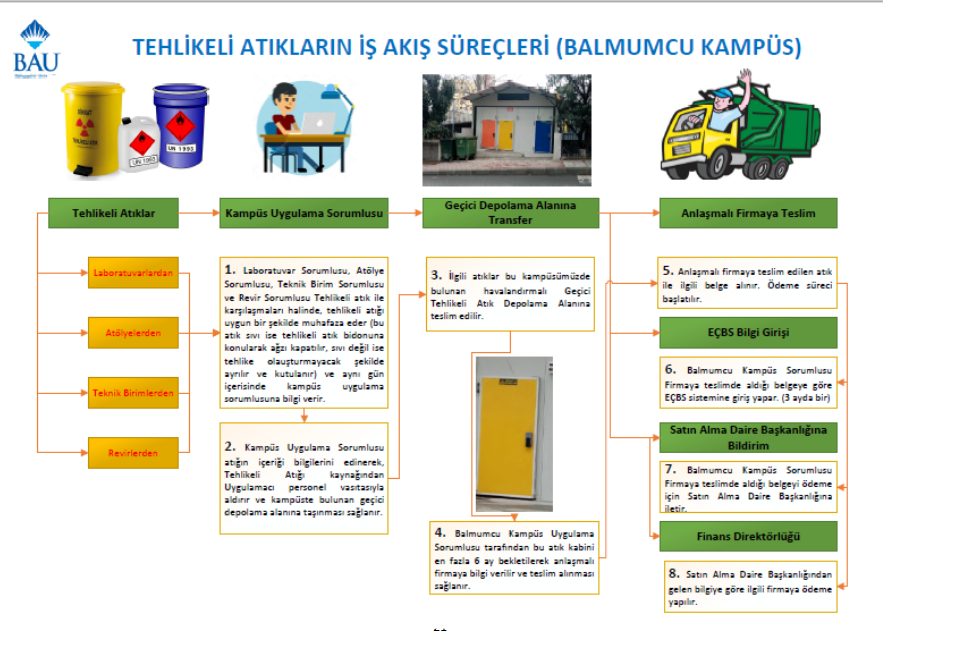
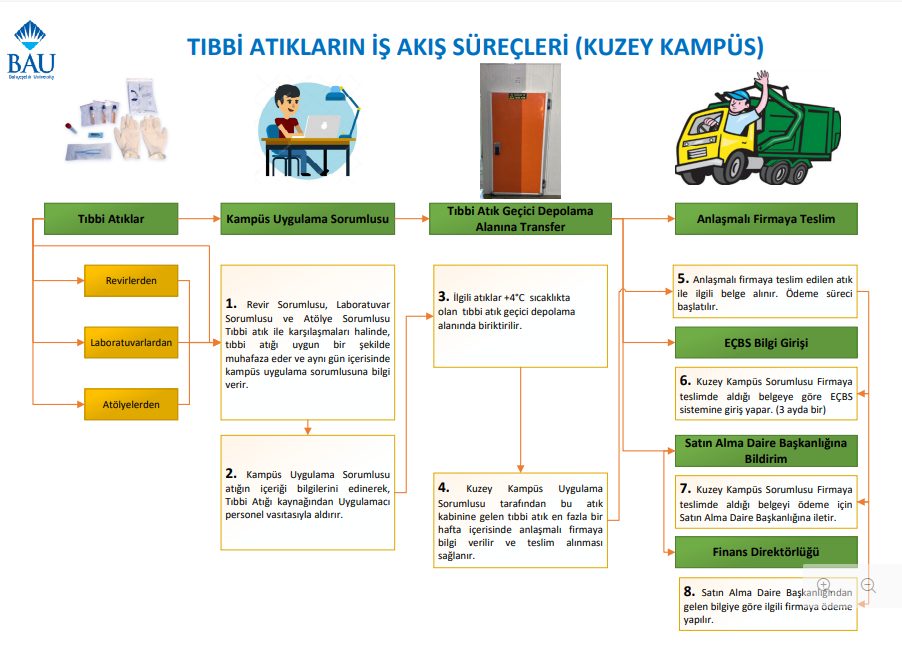
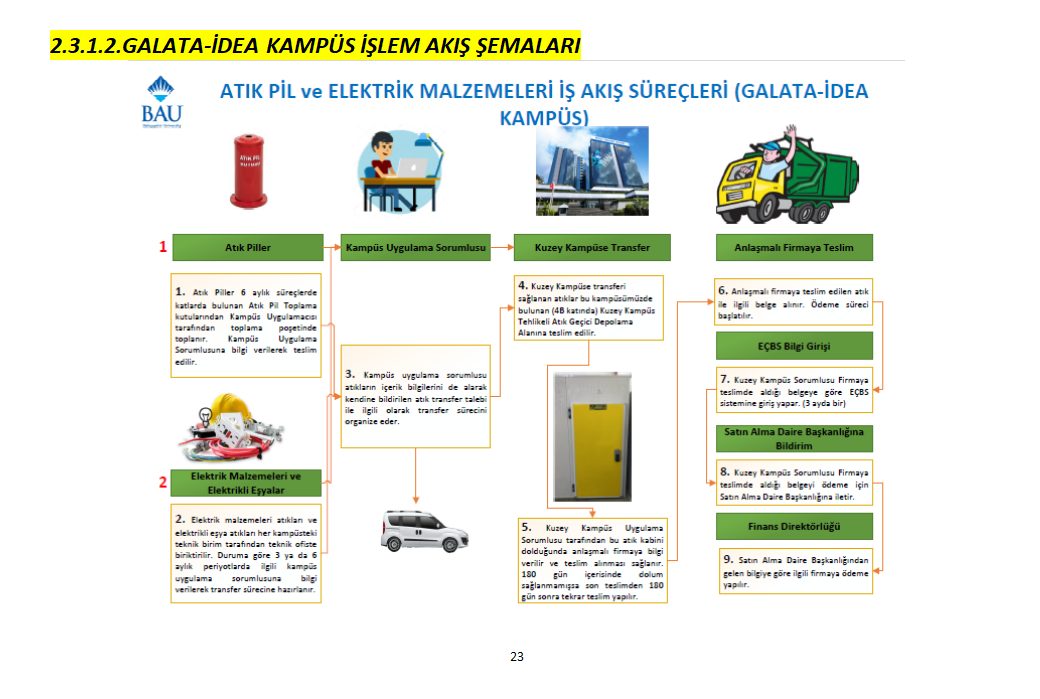
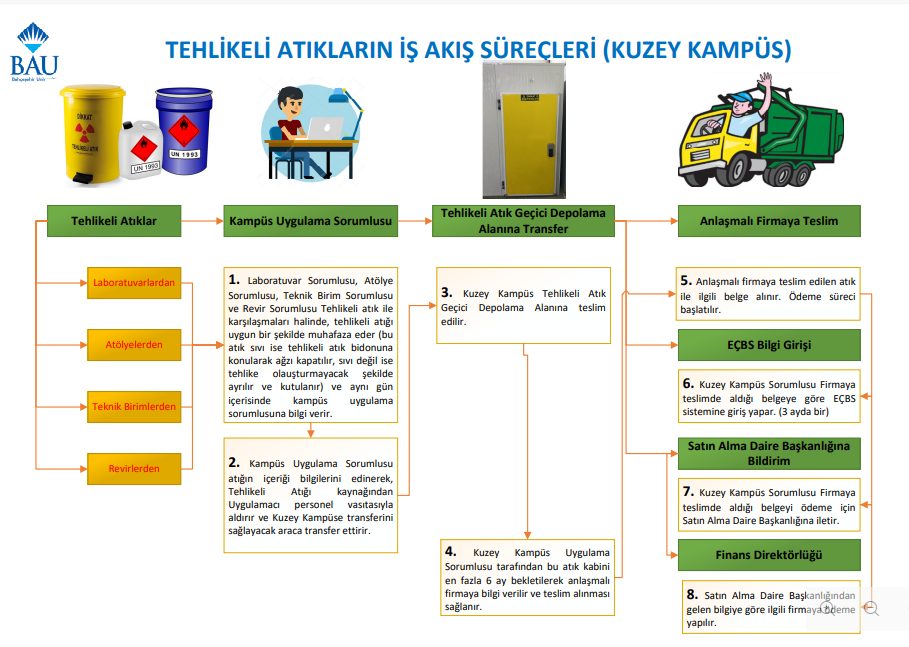
Hazardous waste is explicitly addressed within this system. Laboratory and workshop personnel notify the relevant campus implementation officer when waste requiring special handling is generated. Liquid chemical waste is accumulated separately in blue containers before being transferred, with the precautions described in the handbook, to the North Campus Hazardous Waste Temporary Storage Area. Waste batteries and electrical and electronic equipment are also collected separately and transferred to the designated hazardous waste storage area. Medical waste follows a distinct collection, transfer and temporary storage process, and Medical Waste Acceptance Certificates are renewed annually for the University’s infirmaries and laboratories. The handbook also documents separate temporary storage facilities for hazardous and medical waste at Balmumcu Campus, serving the campus and its dental hospital.
These procedures are supported by training for cleaning, laboratory and workshop personnel and by guidance provided to campus implementation teams. Together, the handbook, assigned responsibilities, campus workflows and designated infrastructure demonstrate that the University’s waste management framework includes defined processes and practices for handling hazardous materials.
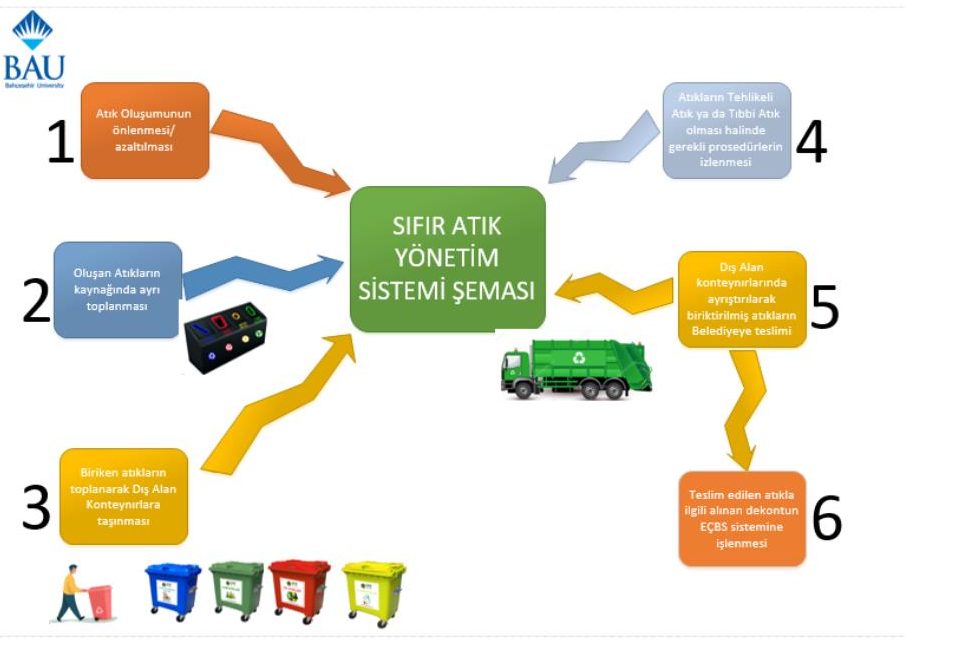
The workflow diagrams and photographs below are extracts from the handbook, illustrating the campus-level procedures and infrastructure through which this institutional framework is implemented.
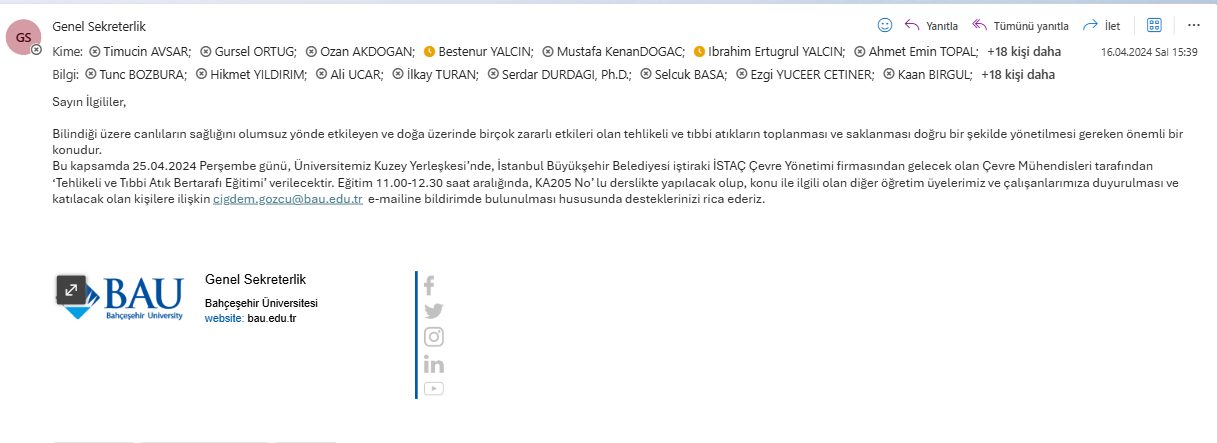
The University also supports implementation through staff training on hazardous and medical waste management. The announcement below, circulated by the General Secretariat on 16 April 2024, invited staff to a training session on hazardous and medical waste disposal, scheduled for 25 April 2024 at North Campus and to be delivered by environmental engineers from İSTAÇ, Istanbul Metropolitan Municipality’s environmental management company.