EN
15.4.2 - BAHÇEŞEHİR UNIVERSITY POLICY ON THE REDUCTION OF PLASTIC WASTE ON CAMPUS
Policy Area: Environmental Sustainability and Waste
Management
Responsible Authority: University Rectorate
Implementation: Relevant Academic and Administrative
Units
Policy Date: 2024
Policy Update: 2026
1. PURPOSE
Bahçeşehir University (BAU) recognizes the reduction of plastic waste as an essential component of its institutional commitment to environmental sustainability, responsible resource consumption and pollution prevention.
This policy establishes an institutional framework for reducing plastic consumption and waste generation across University campuses and facilities, with particular emphasis on preventing unnecessary plastic use, limiting single-use plastic products, promoting reusable alternatives and improving the management of unavoidable plastic waste.
The policy supports the efficient use of resources, the prevention of environmental pollution and the transition towards more sustainable consumption and waste management practices. It contributes to the objectives of the United Nations Sustainable Development Goals, particularly SDG 12: Responsible Consumption and Production, SDG 14: Life Below Water and SDG 15: Life on Land.
2. SCOPE
This policy applies to all Bahçeşehir University campuses, academic and administrative buildings, educational facilities, research spaces, common areas and University-managed activities.
The scope includes:
Academic and administrative operations.
Campus food and beverage services, cafeterias and catering activities.
University meetings, conferences, ceremonies and institutional events.
Procurement, purchasing and supply processes.
Teaching, research and laboratory activities, where relevant.
Campus maintenance, cleaning and facilities management.
Waste collection, segregation, storage and disposal processes.
Activities undertaken by contractors and service providers operating on behalf of the University.
The policy addresses plastic products, packaging materials and plastic waste generated through University operations, with particular attention to unnecessary and single-use plastic items.
Its provisions apply to relevant University units and individuals acting on behalf of the University, including contractors and service providers undertaking University-commissioned activities.
3. FUNDAMENTAL PRINCIPLES
Bahçeşehir University adopts the following principles in its approach to reducing plastic waste.
3.1. Waste Prevention and Reduction
The University prioritizes preventing unnecessary plastic consumption and reducing plastic waste at its source, supported by responsible waste collection, segregation, recovery and recycling practices.
3.2. Reduction of Single-Use Plastics
The policy promotes the progressive reduction of avoidable single-use plastic products and packaging in University operations and campus services.
3.3. Reuse and Resource Efficiency
The University encourages reusable, refillable and durable alternatives to disposable plastic products wherever practical and appropriate.
3.4. Sustainable Procurement
Environmental considerations, including plastic content, packaging requirements, reusability and waste generation, form part of relevant institutional purchasing and supply decisions.
3.5. Responsible Waste Management
Plastic waste that cannot reasonably be prevented is managed according to appropriate segregation, collection, recovery and recycling principles.
3.6. Environmental Awareness and Shared Responsibility
Reducing plastic waste forms part of the shared environmental responsibility of the University community and relevant service providers.
3.7. Continuous Improvement
The University promotes the periodic assessment of plastic consumption and waste management practices to identify opportunities for further reduction and improvement.
4. REDUCTION OF PLASTIC CONSUMPTION AND WASTE GENERATION
Bahçeşehir University integrates plastic waste prevention and reduction principles into relevant institutional operations, campus services and resource management processes.
4.1. Prevention of Unnecessary Plastic Use
University operations and purchasing decisions consider opportunities to avoid plastic products and packaging that are unnecessary for the intended purpose.
The policy encourages the reduction of disposable items and excessive packaging wherever practical alternatives are available.
4.2. Reduction of Single-Use Plastic Products
The University promotes the progressive reduction of avoidable single-use plastic items, including:
Disposable plastic cups, plates and cutlery.
Plastic straws and stirrers.
Single-use plastic bottles and beverage containers.
Disposable plastic bags.
Unnecessary plastic packaging and wrapping.
Other disposable plastic items used in routine campus operations.
Reduction measures take into account hygiene, accessibility, health and safety requirements and the availability of suitable alternatives.
4.3. Promotion of Reusable Alternatives
The policy encourages the use of reusable and durable products in place of disposable plastic items.
Relevant approaches include reusable drinking containers, refillable products, reusable food service items and other practical alternatives that reduce repeated plastic consumption.
4.4. Reduction of Plastic Packaging
Institutional procurement and supply processes consider opportunities to reduce excessive or unnecessary plastic packaging.
Preference is given, where feasible, to products and supply arrangements that minimize packaging waste, support reuse or provide environmentally responsible packaging alternatives.
4.5. Reduction of Plastic Waste in Institutional Events
University meetings, conferences, ceremonies and other institutional events incorporate plastic waste reduction considerations into relevant planning and purchasing decisions.
The policy encourages reusable service materials, reduced disposable packaging and responsible waste management arrangements.
5. SUSTAINABLE PROCUREMENT AND CAMPUS SERVICES
Bahçeşehir University recognizes procurement and campus service arrangements as important mechanisms for reducing plastic consumption and waste generation.
5.1. Environmentally Responsible Purchasing
Relevant purchasing decisions consider the environmental implications of plastic products and packaging, including product durability, reusability, packaging volume and waste management requirements.
5.2. Food and Beverage Services
Food and beverage service arrangements promote opportunities to reduce avoidable single-use plastics and encourage suitable reusable or lower-waste alternatives.
Relevant considerations include beverage containers, takeaway packaging, disposable utensils and the provision of drinking water.
5.3. Supplier and Contractor Engagement
The University communicates its plastic waste reduction objectives to relevant suppliers, contractors and campus service providers and integrates applicable environmental expectations into procurement and service arrangements.
Relevant environmental expectations are considered in service arrangements and procurement processes where appropriate.
5.4. Office and Administrative Operations
Administrative and office operations incorporate plastic waste reduction principles into the purchasing and use of stationery, supplies, packaging and other consumable materials.
5.5. Research and Laboratory Activities
Research and laboratory activities consider opportunities to reduce avoidable plastic consumption where such measures are compatible with scientific integrity, hygiene, biosafety and occupational health and safety requirements.
Plastic materials necessary for safe or technically appropriate laboratory procedures are managed according to applicable safety and waste management requirements.
6. PLASTIC WASTE COLLECTION, SEGREGATION AND RECOVERY
The University promotes responsible management of plastic waste that cannot reasonably be prevented or eliminated.
6.1. Waste Segregation
Plastic waste is addressed within relevant campus waste segregation arrangements to support appropriate collection, recovery and recycling.
6.2. Collection and Recycling
The policy supports the separate collection of recyclable plastic materials and their transfer through appropriate waste management and recovery channels.
6.3. Prevention of Plastic Pollution
Campus waste management practices emphasize preventing plastic litter, inappropriate disposal and the release of plastic waste into surrounding environments.
6.4. Management of Non-Recyclable and Special Waste
Plastic materials that cannot be recycled through conventional channels are managed according to applicable waste management requirements.
Contaminated, hazardous or laboratory-related plastic waste is subject to relevant health, safety and environmental regulations and is not treated as ordinary recyclable plastic waste where inappropriate.
6.5. Waste Management Hierarchy
The University applies the principles of the waste management hierarchy, prioritizing prevention and reduction, followed by reuse, recycling, other appropriate recovery options and environmentally responsible disposal.
7. ENVIRONMENTAL AWARENESS AND PARTICIPATION
Bahçeşehir University recognizes the importance of institutional awareness and participation in achieving sustained reductions in plastic waste.
7.1. Awareness and Information
The policy promotes communication and awareness activities concerning plastic pollution, responsible consumption, waste prevention, reuse and recycling.
7.2. Student and Staff Participation
Students, academic staff and administrative personnel are encouraged to contribute to plastic waste reduction through responsible consumption choices and participation in relevant institutional sustainability activities.
7.3. Sustainable Campus Practices
The University encourages the integration of plastic waste reduction principles into everyday campus practices, including food and beverage consumption, office activities, events and shared facilities.
7.4. Collaboration
The policy supports cooperation among relevant University units, campus service providers and external stakeholders to identify and promote practical approaches to plastic waste reduction.
8. INSTITUTIONAL RESPONSIBILITIES
8.1. University Rectorate
The Rectorate provides institutional oversight of the policy and supports its integration into University governance, environmental sustainability and relevant operational processes.
8.2. Administrative and Facilities Management Units
Relevant administrative and facilities management units incorporate plastic waste reduction, waste segregation and responsible resource management principles into campus operations and maintenance activities.
8.3. Procurement and Purchasing Units
Units responsible for procurement and purchasing consider opportunities to reduce unnecessary plastic products and packaging and promote reusable or lower-waste alternatives in relevant purchasing decisions.
8.4. Academic and Research Units
Academic and research units support responsible plastic consumption and waste management practices in teaching, research and laboratory activities, consistent with applicable scientific and safety requirements.
8.5. Campus Service Providers
Food and beverage operators, cleaning contractors and other relevant service providers contribute to the application of plastic waste reduction and responsible waste management principles within their operational responsibilities.
8.6. Institutional Sustainability Coordination
The units responsible for sustainability coordination support the organization of plastic waste reduction information, implementation monitoring, environmental awareness and institutional sustainability reporting.
9. IMPLEMENTATION AND MONITORING FRAMEWORK
The policy establishes five interconnected stages for reducing plastic waste across University campuses and operations.
Stage 1 — Identification of Plastic Consumption and Waste Sources
Identification of relevant plastic products, single-use materials, packaging and waste generation sources associated with campus operations.
Stage 2 — Assessment of Reduction Opportunities
Evaluation of avoidable plastic consumption, opportunities for reuse, procurement alternatives and relevant operational requirements.
Stage 3 — Plastic Waste Reduction Planning
Consideration of appropriate reduction priorities, responsible units, reusable alternatives, procurement practices and waste management arrangements.
Stage 4 — Implementation of Reduction and Waste Management Measures
Integration of relevant plastic reduction, reuse, segregation, collection and recycling measures into University operations and campus services.
Stage 5 — Monitoring and Continuous Improvement
Periodic assessment of plastic consumption patterns, reduction measures, waste management practices and implementation progress to inform improvements in institutional environmental performance.
9.1. Monitoring and Evaluation
The monitoring framework considers relevant indicators, where data are available, including:
Consumption of single-use plastic products.
Procurement of disposable plastic materials and packaging.
Adoption of reusable alternatives.
Quantities of separately collected plastic waste.
Plastic waste recovery and recycling information.
Participation in relevant environmental awareness activities.
Monitoring findings support the identification of further reduction opportunities and improvements in campus resource management.
10. LEGAL AND INTERNATIONAL FRAMEWORK
This policy is guided by internationally recognized environmental sustainability and responsible consumption frameworks and is implemented in accordance with applicable national legislation, including:
United Nations Sustainable Development Goal 12: Responsible Consumption and Production.
United Nations Sustainable Development Goal 14: Life Below Water.
United Nations Sustainable Development Goal 15: Life on Land.
Republic of Türkiye Environmental Law No. 2872.
Republic of Türkiye Zero Waste Regulation.
Republic of Türkiye Regulation on Packaging Waste Management.
Republic of Türkiye Waste Management Regulation.
Relevant national regulations concerning plastic waste, waste segregation, recycling, resource recovery and environmental protection.
11. POLICY REVIEW AND REVISION
The policy is reviewed at least once every two years as part of the University's institutional sustainability and environmental management processes.
Additional reviews are initiated where necessary in response to:
Changes in relevant national legislation or environmental frameworks.
Developments in plastic waste reduction and sustainable material alternatives.
Significant changes in University operations, procurement or campus services.
Monitoring findings indicating additional plastic waste reduction opportunities.
Recommendations arising from institutional assessments and evaluations.
Policy revisions are submitted to the authorized University governing body for approval.
Bahçeşehir University Institutional Initiatives and Examples of Practices for Plastic Waste Reduction
Beyond its institutional policy, Bahçeşehir University (BAU) supports the reduction of plastic waste through campus-wide environmental management practices, sustainable infrastructure and student engagement initiatives. These efforts combine waste prevention, the promotion of reusable alternatives, responsible resource management and sustainability awareness, translating institutional commitments into practical measures across the University.
The following evidence documents BAU's official Zero Waste Certifications, the introduction of campus water purification systems to reduce dependence on plastic water containers, and the distribution of reusable bottles and cloth bags through sustainability education programmes. Together, these initiatives demonstrate how BAU integrates plastic waste reduction into campus operations and encourages environmentally responsible consumption within its University community.
1- BAU University-Wide Zero Waste Certification and Institutional Plastic Waste Reduction
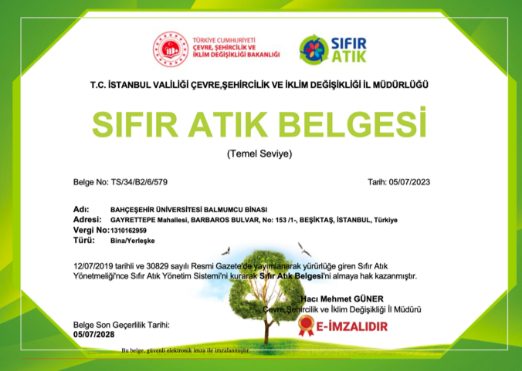
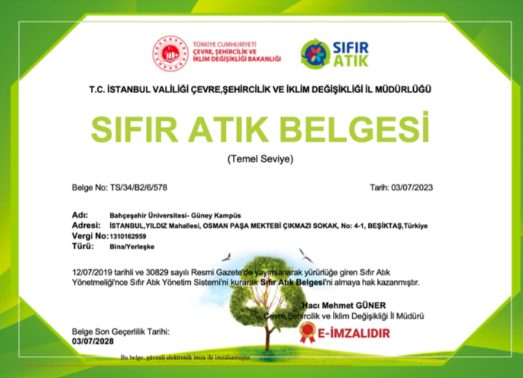
Bahçeşehir University (BAU), the first foundation university in Türkiye to obtain Zero Waste Certification, demonstrates its institutional commitment to waste reduction and environmental sustainability through the implementation of a university-wide Zero Waste Management System.
Under the coordination of the University's Zero Waste Executive Board, a comprehensive institutional process was undertaken to establish and document waste management practices across all campuses and buildings where educational activities are conducted. The Board coordinated the preparation and submission of reports required by the relevant environmental authorities, organized on-site inspections and technical visits, and ensured collaboration among campus managers, administrative units and support services.
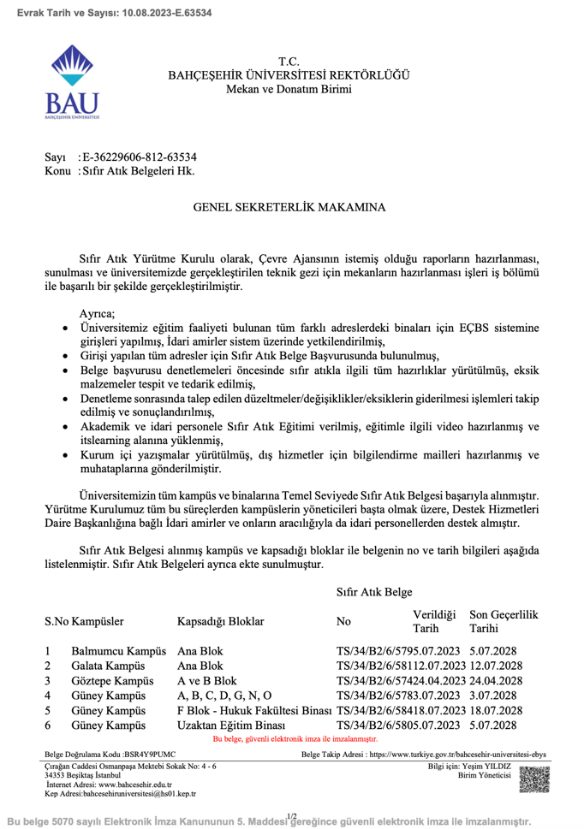
As part of this process, each campus and building was registered in Türkiye's Environmental Information System (EÇBS), and responsible administrative personnel were authorized to manage the relevant procedures. Zero Waste Certification applications were submitted for all locations, while necessary infrastructure preparations, material procurement and corrective actions were completed in accordance with inspection requirements and feedback.
Importantly, Türkiye's Zero Waste Management System is founded on the principles of waste prevention, reduction, reuse, recycling and responsible resource management, directly encompassing the reduction of plastic waste at its source. Beyond the separate collection and recycling of plastic materials, the Zero Waste approach prioritizes minimizing unnecessary waste generation, promoting efficient resource consumption and encouraging practices that reduce reliance on disposable materials. The national certification requirements also include appropriate waste segregation and collection infrastructure, responsible management of recyclable materials, and institutional awareness and training. Accordingly, BAU's Zero Waste Certifications demonstrate the University's implementation of a nationally recognized waste management framework that incorporates plastic waste reduction as a fundamental objective.
Institutional implementation was further supported by dedicated Zero Waste Training for academic and administrative staff. An instructional video was also developed and made available through the University's digital learning platform, extending access to guidance on responsible waste management practices.
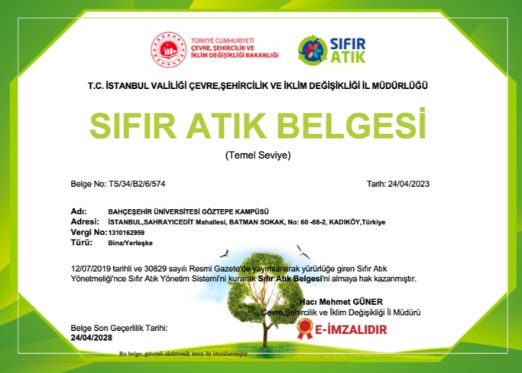
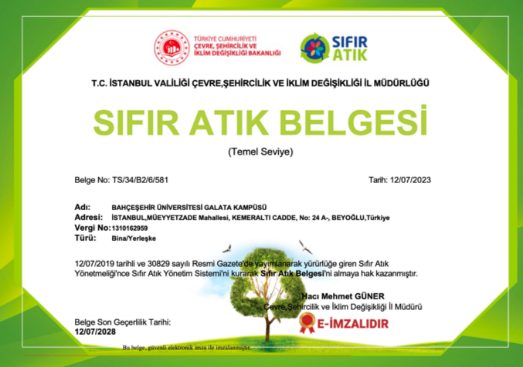
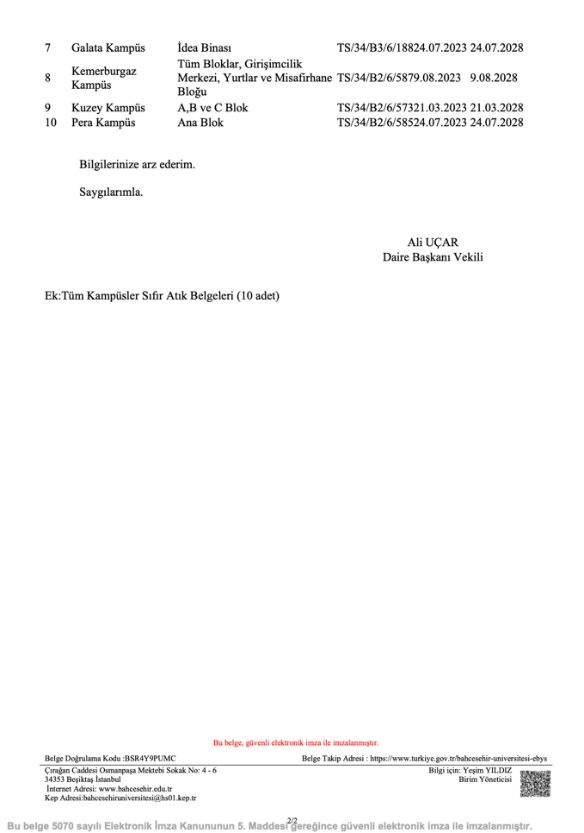
As a result, Bahçeşehir University obtained a total of ten official Zero Waste Certificates, covering all campuses and buildings where educational activities take place. The certificates, together with the official institutional correspondence confirming their issuance, document the University's compliance with Türkiye's national Zero Waste Management System requirements.
These achievements provide supporting evidence for BAU's Policy on the Reduction of Plastic Waste on Campus, particularly its provisions concerning the prevention and reduction of plastic waste at its source, responsible consumption, waste segregation, recycling, staff awareness and institution-wide implementation.
Through this coordinated approach, BAU reinforces the institutional mechanisms necessary to minimize unnecessary plastic consumption, reduce plastic waste generation and support continuous environmental improvement across its campuses.
The images presented below include Bahçeşehir University's official Zero Waste Certificates and institutional correspondence documenting the certification of its campuses and educational buildings. These documents provide supporting evidence of the University's implementation of Türkiye's Zero Waste Management System, including its commitment to plastic waste prevention, reduction, segregation and responsible management.
2- Reducing Single-Use Plastic Waste through Bahçeşehir
University Campus Water Purification Systems
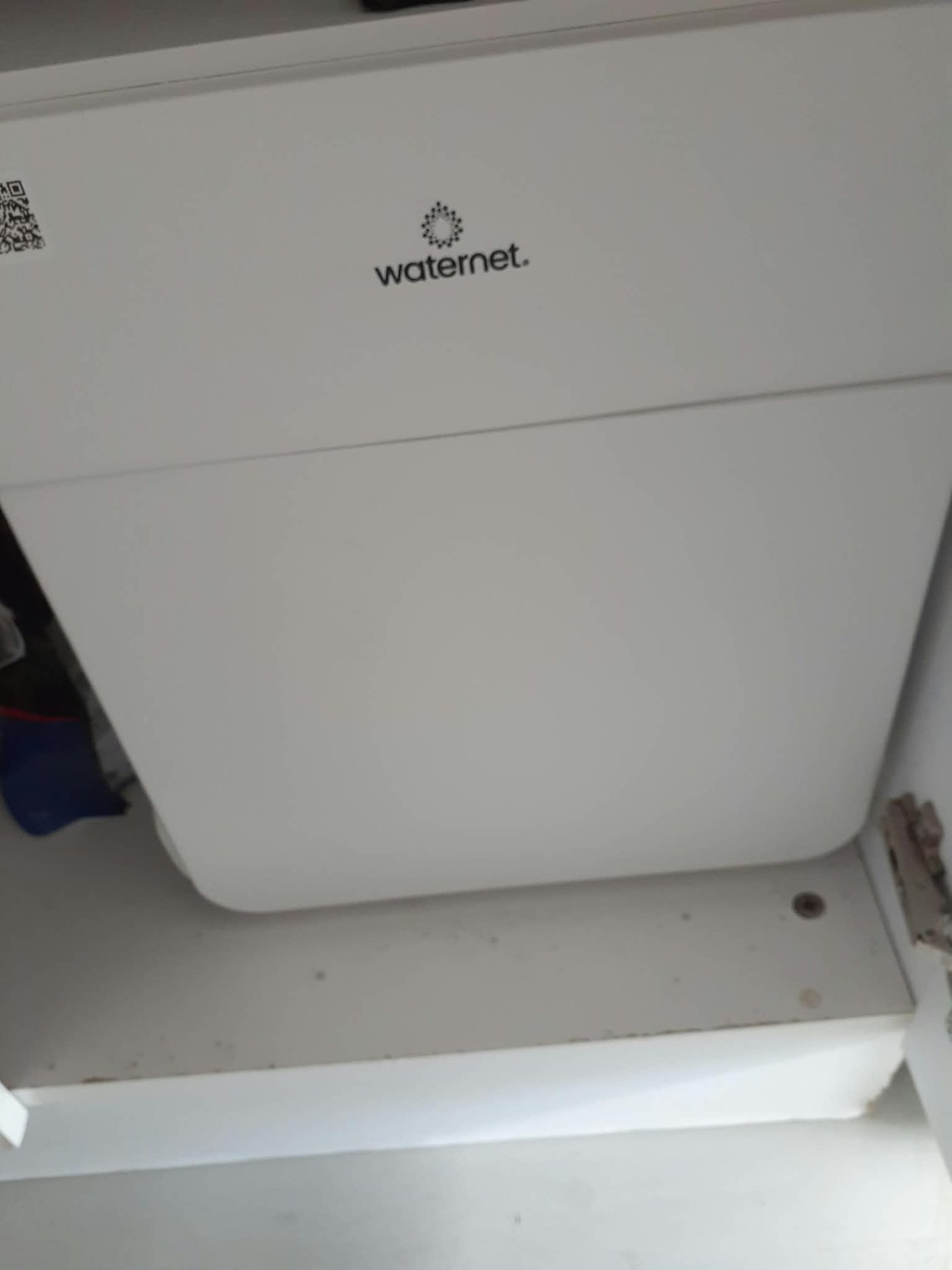
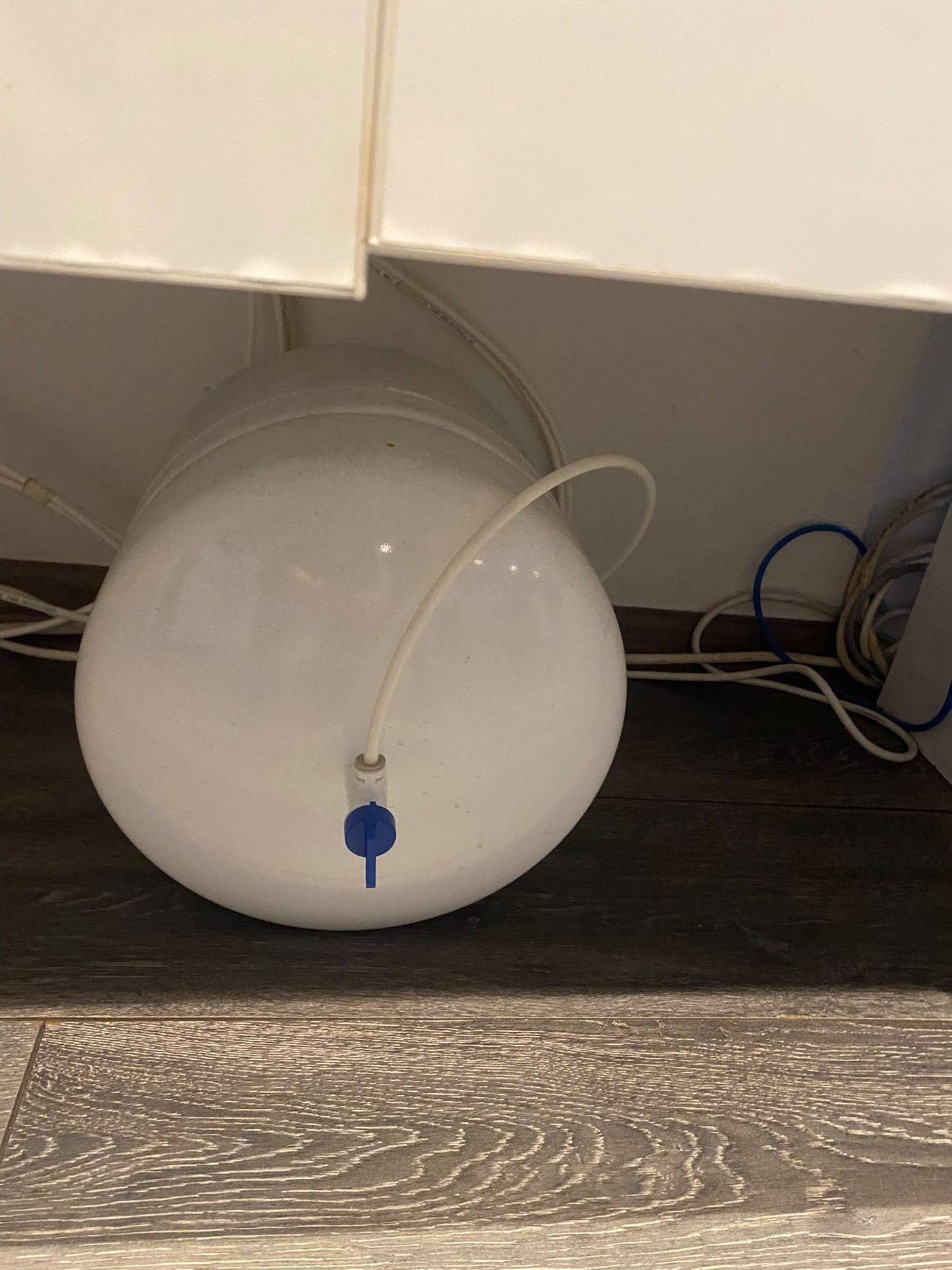
Bahçeşehir University (BAU) has introduced water purification systems across its campus facilities, replacing conventional bottled-water dispensers as part of its institutional efforts to reduce plastic consumption and waste generation. This transition represents a practical measure to prevent plastic waste at its source by reducing reliance on bottled drinking water and the associated plastic packaging.
By integrating water purification systems into campus infrastructure, BAU has established an alternative to the regular procurement, delivery and replacement of large plastic water bottles. Treating drinking water at the point of use reduces the need for plastic water containers and the packaging associated with their distribution, supporting the University's commitment to waste prevention and responsible resource management.
The initiative also encourages a shift away from single-use plastic drinking water bottles by making purified drinking water accessible to students, academic staff and administrative personnel. The availability of shared drinking water facilities supports the use of reusable bottles and refill practices, helping reduce dependence on disposable plastic containers in everyday campus life.
Beyond reducing plastic waste, the transition contributes to more sustainable campus operations by limiting the procurement, transportation and handling requirements associated with bottled-water supply. It demonstrates how infrastructure and purchasing decisions can address plastic waste generation at its source.
The implementation of campus water purification systems has also contributed to measurable reductions in the procurement of bottled drinking water, helping prevent plastic waste generation at its source and reduce transportation requirements associated with water deliveries.
Based on consumption and procurement data for the period, the transition to water purification systems resulted in the following quantities of bottled water and water containers no longer being purchased:
0.33-litre PET bottles: 3,960 units
0.50-litre PET bottles: 2,952 units
5-litre PET bottles: 320 units
19-litre water containers: 10,232 units
In total, these figures represent 17,464 plastic bottles and water containers whose procurement was avoided during the five-month period. This provides quantitative evidence of the University's efforts to reduce plastic consumption, prevent waste generation, and promote more sustainable campus operations.
This initiative provides practical supporting evidence for BAU's Policy on the Reduction of Plastic Waste on Campus, particularly its provisions concerning the reduction of single-use plastics, the promotion of reusable alternatives, sustainable procurement and waste prevention. It directly supports SDG 12: Responsible Consumption and Production, while also contributing to SDG 6: Clean Water and Sanitation through the provision of purified drinking water within the University.
Through this transition, Bahçeşehir University demonstrates how changes in everyday campus infrastructure can help prevent unnecessary plastic consumption, encourage reusable drinking habits and support the long-term reduction of plastic waste.
The images below show water purification equipment installed at Bahçeşehir University to reduce reliance on bottled drinking water and its associated plastic packaging. These systems support plastic waste prevention at source by providing an alternative to regularly purchased plastic water bottles and containers.
3- Bahçeşehir University Promoting Reusable Alternatives to Single-Use Plastics and a Shared Culture of Sustainability
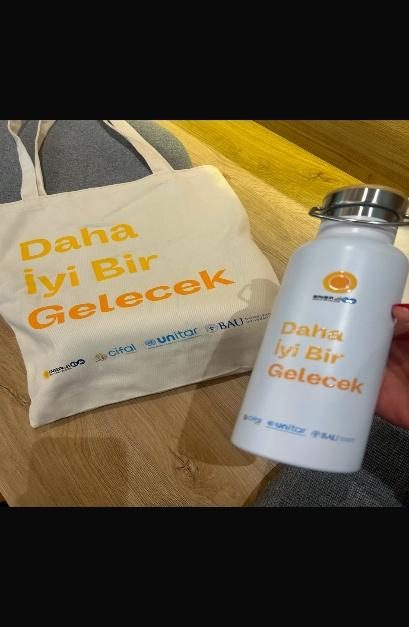
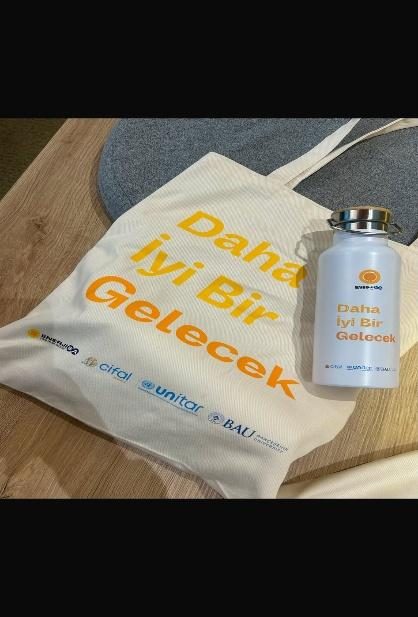
As part of its sustainability education initiatives, Bahçeşehir University (BAU), in collaboration with CIFAL Istanbul, the United Nations Institute for Training and Research (UNITAR), and institutional partners, promotes the reduction of single-use plastic consumption by providing students participating in sustainability-focused educational programmes with reusable water bottles and cloth tote bags.
These items offer practical alternatives to commonly used disposable plastic products. Reusable water bottles encourage students to refill their drinking water rather than rely on single-use plastic bottles, while cloth tote bags provide a durable alternative to disposable plastic shopping bags. By integrating reusable products into its educational programmes, BAU connects sustainability learning with everyday choices that can help prevent plastic waste at its source.
Beyond their practical function, the reusable items carry the message “Daha İyi Bir Gelecek” (“A Better Future”), alongside the logos of BAU, CIFAL Istanbul and UNITAR. This shared visual identity reinforces the connection between students and the broader sustainability mission of the institutions involved.This shared visual identity reinforces the connection between participating students and the institutions' sustainability commitments, fostering a sense of belonging, shared responsibility and active engagement in environmentally responsible practices.
By carrying and using these items in everyday campus life, students can make sustainable choices more visible within the University community. The initiative therefore combines waste prevention with awareness, student engagement and the promotion of a shared culture in which environmentally responsible behaviour becomes part of campus identity.
This practice provides supporting evidence for BAU's Policy on the Reduction of Plastic Waste on Campus, particularly its provisions concerning the reduction of single-use plastics, promotion of reusable alternatives, environmental awareness and student participation. It also contributes to SDG 12: Responsible Consumption and Production by encouraging resource-efficient consumption and waste prevention.
Through the combination of sustainability education, practical reusable alternatives and a shared institutional message, Bahçeşehir University seeks to strengthen students' connection to sustainability while encouraging everyday habits that reduce dependence on disposable plastics.
The photographs below show the reusable water bottle and cloth tote bag bearing the message “Daha İyi Bir Gelecek” (“A Better Future”) and the logos of BAU, CIFAL Istanbul, UNITAR and programme partner Enerjisa Enerji. Distributed as part of the sustainability education initiative, these items demonstrate the University's efforts to promote reusable alternatives to single-use plastics while fostering a shared sense of environmental responsibility among students.