EN
15.4.1 - BAHÇEŞEHİR UNIVERSITY POLICY ON WATER DISCHARGE QUALITY STANDARDS AND ENVIRONMENTAL PROTECTION
Policy Area: Environmental Sustainability and Water
Management
Responsible Authority: University Rectorate
Implementation: Relevant Academic and Administrative
Units
Policy Date: 2025
Policy Update: 2026
1. Purpose
Bahçeşehir University (BAU) recognizes the protection of water quality as an essential component of environmental sustainability, ecosystem conservation and public health.
This policy establishes the University's institutional principles and guidelines for managing wastewater discharges generated through its academic, administrative, research and operational activities.
It aims to prevent water pollution, maintain appropriate discharge quality standards, protect aquatic and terrestrial ecosystems, safeguard wildlife and human health, and ensure compliance with applicable national and local environmental regulations.
2. Scope
This policy applies to all University campuses, facilities and activities that generate, manage or discharge wastewater, including academic buildings, research laboratories, administrative facilities, food services and other University-operated activities.
It covers domestic wastewater, laboratory-related wastewater and other wastewater streams arising from University operations, taking into account their characteristics and potential environmental impacts.
The policy applies to relevant University units and individuals acting on behalf of the University, including contractors undertaking University-commissioned activities.
3. Fundamental Principles
Bahçeşehir University adopts the following principles in managing water discharges:
3.1. Protection of Water Quality: Preventing the introduction of pollutants into wastewater systems and natural water environments.
3.2. Regulatory Compliance: Maintaining compliance with applicable wastewater discharge standards, environmental requirements and relevant permits.
3.3. Pollution Prevention at Source: Prioritizing the prevention and reduction of wastewater contamination before treatment or discharge.
3.4. Ecosystem and Biodiversity Protection: Minimizing risks to aquatic ecosystems, wildlife, habitats and the ecological functions of receiving water bodies.
3.5. Human Health and Welfare: Preventing wastewater-related risks to public health, campus communities and surrounding populations.
3.6. Institutional Accountability: Integrating wastewater management responsibilities into relevant University operations and decision-making processes.
4. Water Discharge Quality Standards
4.1. Compliance with Applicable Discharge Limits
Bahçeşehir University adopts the wastewater discharge quality standards established by the competent national and local authorities as the minimum requirements governing its operations.
For facilities within the jurisdiction of the Istanbul Water and Sewerage Administration (İSKİ), wastewater discharged into the public sewerage system is subject to the applicable provisions of the İSKİ Regulation on the Discharge of Wastewater into Sewerage Systems
For facilities operating outside İSKİ's jurisdiction, the University follows the discharge requirements established by the relevant local water and sewerage authority and applicable national legislation.
4.2. Wastewater Quality Parameters
Where applicable to the characteristics of the wastewater and the relevant regulatory requirements, discharge quality is assessed with reference to parameters including:
pH and temperature;
Chemical Oxygen Demand (COD);
Suspended solids;
Oil and grease;
Heavy metals and other potentially toxic substances;
Other chemical, physical or biological pollutants subject to applicable discharge standards.
The University recognizes the relevant regulatory limit values and discharge conditions as the basis for determining wastewater acceptability.
4.3. Discharge into Natural Receiving Environments
Any wastewater discharge into natural receiving environments, including surface waters or other regulated water bodies, is subject to the applicable provisions of Türkiye's Water Pollution Control Regulation (Su Kirliliği Kontrolü Yönetmeliği) and relevant environmental authorization requirements.
Discharge into natural environments is not treated as equivalent to discharge into a public sewerage system. Each is governed by its respective legal and technical requirements.
5. Prevention of Water Pollution
Bahçeşehir University prioritizes the prevention of wastewater contamination at its source.
The University's institutional guidelines include:
5.1. Preventing the disposal of hazardous chemicals, toxic substances, oils, solvents and other prohibited materials through sinks, drains or sewerage systems.
5.2. Promoting the responsible use, handling and disposal of substances that may adversely affect wastewater quality.
5.3. Supporting appropriate wastewater management practices in laboratories, research facilities, food service operations and other relevant activities.
5.4. Preventing the intentional dilution of contaminated wastewater for the purpose of meeting regulatory discharge limits.
5.5. Encouraging operational practices that minimize pollutant generation and reduce risks to water quality.
6. Laboratory and Hazardous Wastewater Management
The University recognizes that laboratory and research activities may involve substances requiring specific precautions to prevent water pollution.
Accordingly:
6.1. Chemical and hazardous liquid wastes are managed through appropriate collection, storage and disposal procedures to prevent their discharge into ordinary wastewater systems where such discharge is prohibited.
6.2. Laboratory personnel and relevant units are responsible for following applicable chemical safety and waste management procedures.
6.3. Wastewater containing potentially harmful substances is evaluated in accordance with relevant environmental regulations and the characteristics of the materials involved.
6.4. Where required by applicable legislation, appropriate treatment, authorization or specialized waste management procedures are applied before disposal or discharge.
These principles support the prevention of chemical contamination and the protection of aquatic ecosystems and human health.
7. Wastewater Infrastructure and Operational Management
Bahçeşehir University incorporates water discharge quality considerations into the management of campus infrastructure and operational facilities.
This includes:
7.1. Maintaining wastewater connections and associated infrastructure in accordance with applicable technical and regulatory requirements.
7.2. Preventing unauthorized connections or discharges that may compromise wastewater infrastructure or receiving water quality.
7.3. Applying appropriate measures for wastewater streams that require special handling or pretreatment under applicable regulations.
7.4. Considering pollution prevention and wastewater management requirements in relevant facility planning, maintenance and operational decisions.
8. Monitoring, Documentation and Compliance
The University recognizes the importance of monitoring and documenting wastewater management practices in accordance with applicable legal obligations.
The institutional framework includes:
8.1. Identifying wastewater sources and relevant discharge requirements according to the nature of University activities.
8.2. Conducting or facilitating wastewater sampling, testing and analysis where required by competent authorities, applicable permits or the characteristics of the discharge.
8.3. Maintaining relevant permits, inspection records, analytical results and compliance documentation in accordance with applicable requirements.
8.4. Cooperating with authorized public institutions and local water and sewerage administrations in regulatory inspections and compliance processes.
8.5. Addressing identified non-compliance through appropriate corrective measures and coordination among responsible University units.
9. Protection of Ecosystems, Wildlife and Human Health
Bahçeşehir University recognizes that wastewater pollution may adversely affect water resources, biodiversity, ecological processes and human welfare.
The University therefore integrates environmental protection considerations into its water discharge management approach by:
9.1. Preventing the release of substances that may damage aquatic habitats and wildlife.
9.2. Supporting the protection of surface water, groundwater and associated ecosystems from contamination.
9.3. Minimizing potential risks to human health arising from inappropriate wastewater disposal.
9.4. Promoting responsible wastewater management as part of its broader commitment to environmental sustainability and the United Nations Sustainable Development Goals, particularly SDG 6: Clean Water and Sanitation, SDG 14: Life Below Water, and SDG 15: Life on Land.
10. Institutional Responsibilities
The University Rectorate provides institutional oversight of this policy.
Relevant academic and administrative units are responsible for incorporating applicable wastewater discharge requirements into their activities and operational procedures.
Units responsible for campus facilities, infrastructure, laboratories, environmental management and support services contribute to the implementation of this policy within their respective areas of responsibility.
Personnel and contractors involved in activities that may affect wastewater quality are expected to comply with relevant institutional procedures and applicable environmental regulations.
11. Legal and Regulatory Framework
This policy is guided by the principles of environmental protection, pollution prevention and sustainable water resource management and is implemented in accordance with applicable national and local legislation, including:
Turkish Environmental Law No. 2872
Water Pollution Control Regulation
İSKİ Regulation on the Discharge of Wastewater into Sewerage Systems for facilities within its jurisdiction;
Applicable wastewater discharge, environmental authorization, hazardous waste management and water infrastructure requirements issued by competent authorities.
Where regulatory requirements are amended, the University recognizes the applicable provisions in force.
12. Policy Review and Revision
This policy is reviewed every two years, or earlier where necessary, to reflect developments in environmental legislation, institutional operations and water quality management requirements.
Revisions are coordinated through the relevant University governance and administrative processes and submitted for approval by the competent institutional authority.
Bahçeşehir University Institutional Regulatory Compliance, Wastewater Quality Standards and Ecosystem Protection
Alignment with Istanbul Water and Sewerage Administration İSKİ Wastewater Discharge Regulations and National Environmental Legislation
1. Institutional Regulatory Framework
Bahçeşehir University (BAU) integrates wastewater quality protection and regulatory compliance into its institutional approach to environmental sustainability and campus operations.
As an institution operating within Istanbul, BAU is subject to the applicable provisions of the Istanbul Water and Sewerage Administration (İSKİ) Regulation on the Discharge of Wastewater into Sewerage Systems, alongside Türkiye's national environmental legislation.
The İSKİ regulation establishes legally binding requirements for wastewater discharges, including pollution prevention, restrictions on hazardous substances, wastewater quality parameters, sewerage infrastructure, inspections and environmental protection.
BAU's Policy on Water Discharge Quality Standards and Environmental Protection incorporates these regulatory requirements into an institutional framework designed to safeguard water resources, ecosystems, wildlife and human health.
2. Compliance with Specific İSKİ Regulatory Provisions
Article 1 – Purpose and Scope
Article 1 establishes the protection of wastewater infrastructure, regulation of wastewater discharges and prevention of water pollution as the fundamental objectives of the regulation. Its scope includes domestic and industrial wastewater sources within İSKİ's jurisdiction.
These objectives provide the regulatory foundation for BAU's institutional approach to responsible wastewater management.
Article 4 – General Provisions
Article 4 establishes requirements concerning wastewater connections, the management of industrial wastewater where applicable, and the prevention of discharges that may damage sewerage infrastructure or obstruct wastewater flow.
It also prohibits the dilution of wastewater with rainwater, cooling water or less polluted water for the purpose of meeting discharge standards.
BAU incorporates these principles into its institutional guidelines for wastewater disposal, infrastructure management and pollution prevention.
Article 5 – Substances Prohibited from Sewerage Systems
Article 5 prohibits the discharge of hazardous, toxic, harmful, flammable and explosive substances, as well as solid materials and certain sludges that may adversely affect wastewater infrastructure.
These restrictions are particularly relevant to university laboratories, research facilities, maintenance activities and other operations involving potentially harmful substances.
BAU's institutional policy emphasizes the prevention of inappropriate chemical disposal and the responsible management of hazardous liquid wastes.
Article 6 – Wastewater Pretreatment Requirements
Article 6 establishes procedures and obligations concerning wastewater pretreatment where required by the nature and characteristics of industrial wastewater.
BAU recognizes the application of appropriate treatment and specialized disposal procedures wherever such requirements apply to its activities.
Article 10 – Wastewater Discharge Authorization
Article 10 regulates the procedures associated with wastewater discharge authorization and related institutional approvals for activities falling within its scope.
The University's compliance framework recognizes the importance of obtaining and maintaining applicable authorizations where required.
Article 12(1) – Regulatory Inspection and Oversight
Article 12(1) establishes the authority of İSKİ personnel to undertake relevant inspections, examinations and wastewater sampling.
BAU's institutional approach recognizes cooperation with competent regulatory authorities and the maintenance of appropriate inspection and compliance documentation as essential elements of environmental accountability.
Article 12(8) – Wastewater pH Monitoring
Article 12(8) establishes requirements concerning pH measurements and compliance with applicable discharge limits.
These requirements support the prevention of wastewater discharges that may adversely affect sewerage infrastructure, treatment processes and environmental quality.
Article 12(17) – Grease Management
Article 12(17) establishes grease-trap requirements for food production businesses and specified vehicle-washing operations.
This provision is relevant to food preparation facilities operating within the University where the regulatory conditions apply, supporting the prevention of oil and grease accumulation in wastewater systems.
3. Wastewater Quality Standards: Table I
Table I – Wastewater Discharge Limits establishes measurable quality requirements for wastewater discharged into wastewater infrastructure systems.
The parameters include:
pH: Permitted range of 6–12;
Temperature: Maximum 50°C;
Chemical Oxygen Demand (COD): Limits determined by the applicable wastewater infrastructure category;
Suspended Solids: Limits determined by the applicable wastewater infrastructure category;
Oil and Grease: Limits determined by the applicable wastewater infrastructure category;
Heavy Metals and Toxic Substances: Specific regulatory limits for substances including lead, cadmium, chromium, mercury, copper, nickel and other regulated pollutants.
These standards provide an objective regulatory basis for preventing the discharge of wastewater that may compromise treatment processes, environmental quality and ecosystem health.
BAU's institutional policy recognizes the applicable discharge limits established by competent authorities as the minimum standards governing relevant University activities.
4. Institutional Environmental Compliance and Accountability
Bahçeşehir University approaches environmental regulatory compliance as an integral component of responsible institutional governance.
The University's wastewater management framework emphasizes the prevention of prohibited discharges, appropriate handling of hazardous substances, responsible management of campus infrastructure and cooperation with competent environmental authorities.
BAU integrates wastewater management requirements into its broader institutional commitment to environmental stewardship, pollution prevention and the protection of surrounding communities.
This approach supports the integration of environmental responsibilities into relevant academic, administrative and operational activities.
5. Protection of Water Resources, Ecosystems and Human Health
The İSKİ regulatory framework and national environmental legislation provide safeguards intended to prevent pollutants from entering wastewater systems and ultimately affecting natural receiving environments.
By incorporating these requirements into its institutional policy, BAU connects wastewater discharge quality standards with the protection of aquatic ecosystems, biodiversity, wildlife and public health.
This approach contributes particularly to SDG 6: Clean Water and Sanitation, while supporting the environmental protection objectives of SDG 14: Life Below Water and SDG 15: Life on Land.
6. Supporting Regulatory Documentation
The following official regulatory documents establish the legal and technical framework referenced in BAU's institutional policy:
1. İSKİ Regulation on the Discharge of Wastewater into Sewerage Systems
Relevant provisions: Articles 1, 4, 5, 6, 10, 12(1), 12(8), 12(17) and Table I.
2. Turkish Environmental Law No. 2872
National legal framework governing environmental protection and pollution prevention.
3. Water Pollution Control Regulation
National regulatory framework addressing water pollution prevention, protection of water resources and applicable wastewater discharge requirements.
Together, these documents demonstrate the legally established water quality standards and regulatory requirements underpinning BAU's institutional approach to wastewater discharge management and ecosystem protection.
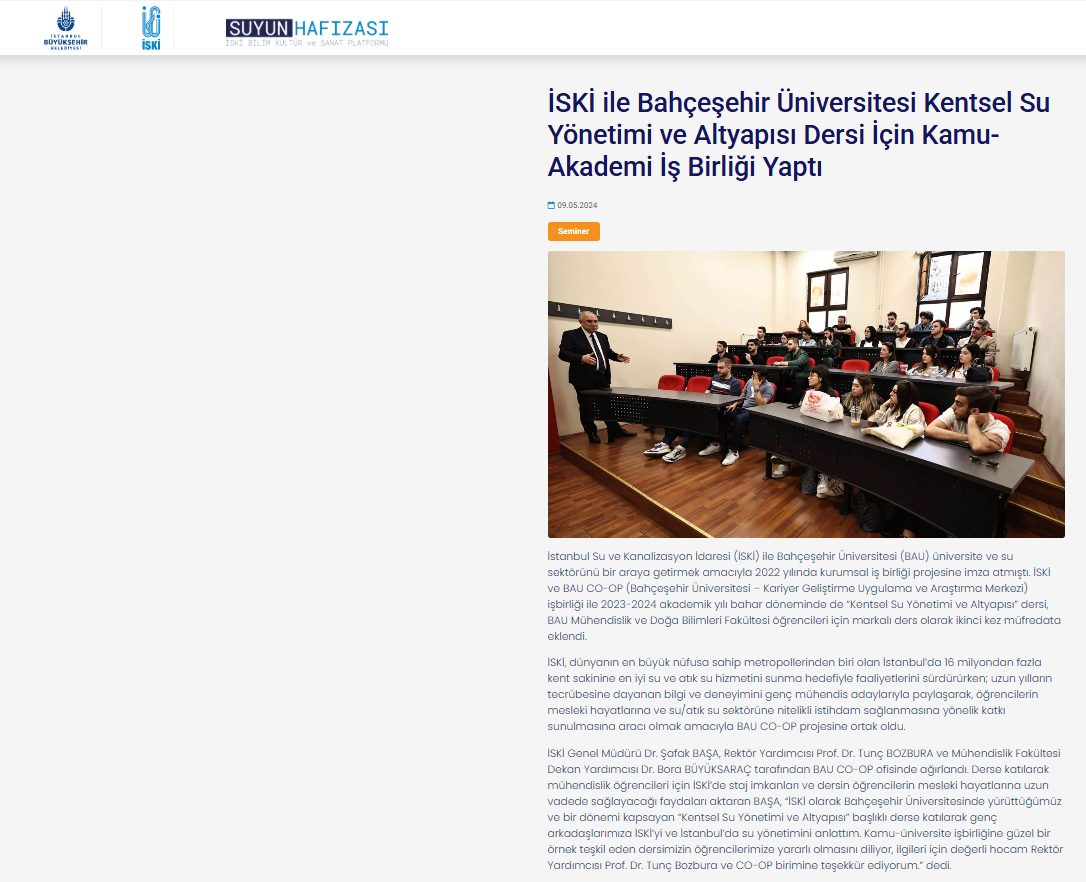
Strengthening Institutional Water Management Awareness through Collaboration with Istanbul Water and Sewerage Administration: Urban Water Management and Infrastructure Course
Bahçeşehir University (BAU), in collaboration with the Istanbul Water and Sewerage Administration (İSKİ), offered the Urban Water Management and Infrastructure course during the 2024–2025 academic year as part of its CO-OP branded course programme. This longstanding collaboration brings together academic expertise and the public authority responsible for Istanbul's water and wastewater infrastructure, strengthening institutional engagement with sustainable water management and environmental protection.
Jointly developed by BAU's Faculty of Engineering and Natural Sciences and İSKİ experts, the 14-week course addressed water treatment, wastewater management, urban flood control, environmental monitoring and integrated watershed management. Lectures delivered by İSKİ professionals and senior managers were complemented by technical field visits to water and wastewater treatment facilities, including the İkitelli and Ataköy facilities.
Of particular relevance to water discharge quality and ecosystem protection, the course introduced students to the technical and environmental considerations underlying wastewater treatment, water quality monitoring and the protection of urban water resources. Direct engagement with İSKİ professionals provided practical insight into the infrastructure and management processes through which public authorities seek to prevent water pollution and safeguard environmental and public health.
Beyond its educational objectives, the collaboration demonstrates BAU's engagement with the public institution responsible for regulating and managing Istanbul's water and wastewater systems. It complements the University's Policy on Water Discharge Quality Standards and Environmental Protection by promoting technical knowledge, environmental awareness and cooperation with relevant water management authorities.
Through this initiative, BAU contributes to developing future professionals equipped to address wastewater management challenges, protect aquatic ecosystems and support sustainable urban water infrastructure.
The screenshot below shows the official announcement titled “İSKİ ile Bahçeşehir Üniversitesi Kentsel Su Yönetimi ve Altyapısı Dersi İçin Kamu-Akademi İş Birliği Yaptı” (“İSKİ and Bahçeşehir University Collaborate on the Urban Water Management and Infrastructure Course”), published on İSKİ’s official website.