EN
15.3.5 - Collaboration for Shared Land Ecosystems
Bahçeşehir University (BAU) collaborates with local communities, civil society organizations, municipal authorities, and international partners to support the protection and maintenance of shared land ecosystems. Through institutional partnerships, joint research, educational programmes, capacity building, and practical conservation activities, the University connects academic expertise with community participation and shared environmental responsibilities.
These collaborations encompass afforestation, forest conservation, sustainable land management, soil protection, sustainable agriculture, and awareness of disaster-related ecological risks. By combining knowledge exchange and public engagement with tangible environmental action, BAU supports collective efforts to conserve biodiversity, protect natural resources, and strengthen the long-term resilience of landscapes on which local communities depend.
The following examples demonstrate how BAU translates this commitment into collaborative action through partnerships with local authorities, civil society organizations, national institutions, and international networks. From afforestation and forest protection to sustainable agriculture, land management, and community engagement, these initiatives highlight the University's contribution to collective efforts aimed at protecting biodiversity, maintaining shared land ecosystems, and strengthening their long-term sustainability.
1- Bahçeşehir University Forest in Partnership with the Aegean Forest Foundation: 30,000 Trees Supporting Afforestation and Shared Land Ecosystem Conservation in Soma
Bahçeşehir University (BAU), in collaboration with the Aegean Forest Foundation (Ege Orman Vakfı) and Tazefikir Group, implemented an innovative sustainability initiative connecting education in emerging digital technologies with environmental responsibility and tangible afforestation efforts.
Through the university's Metaverse Certificate Programme, participants were encouraged to contribute to tree planting through sapling donations associated with their programme registration. A distinctive feature of the initiative was the voluntary contribution of Bahçeşehir University's academic staff, who delivered the Metaverse Certificate Programme without receiving any teaching fees. Instead of conventional registration fees, participants enrolled by making sapling donations to the Aegean Forest Foundation, directly linking access to education with environmental action. This innovative model transformed the certificate programme into a collective sustainability initiative, raising awareness of environmental responsibility while demonstrating how academic expertise, volunteerism, and educational participation can be mobilised to generate tangible benefits for terrestrial ecosystems.
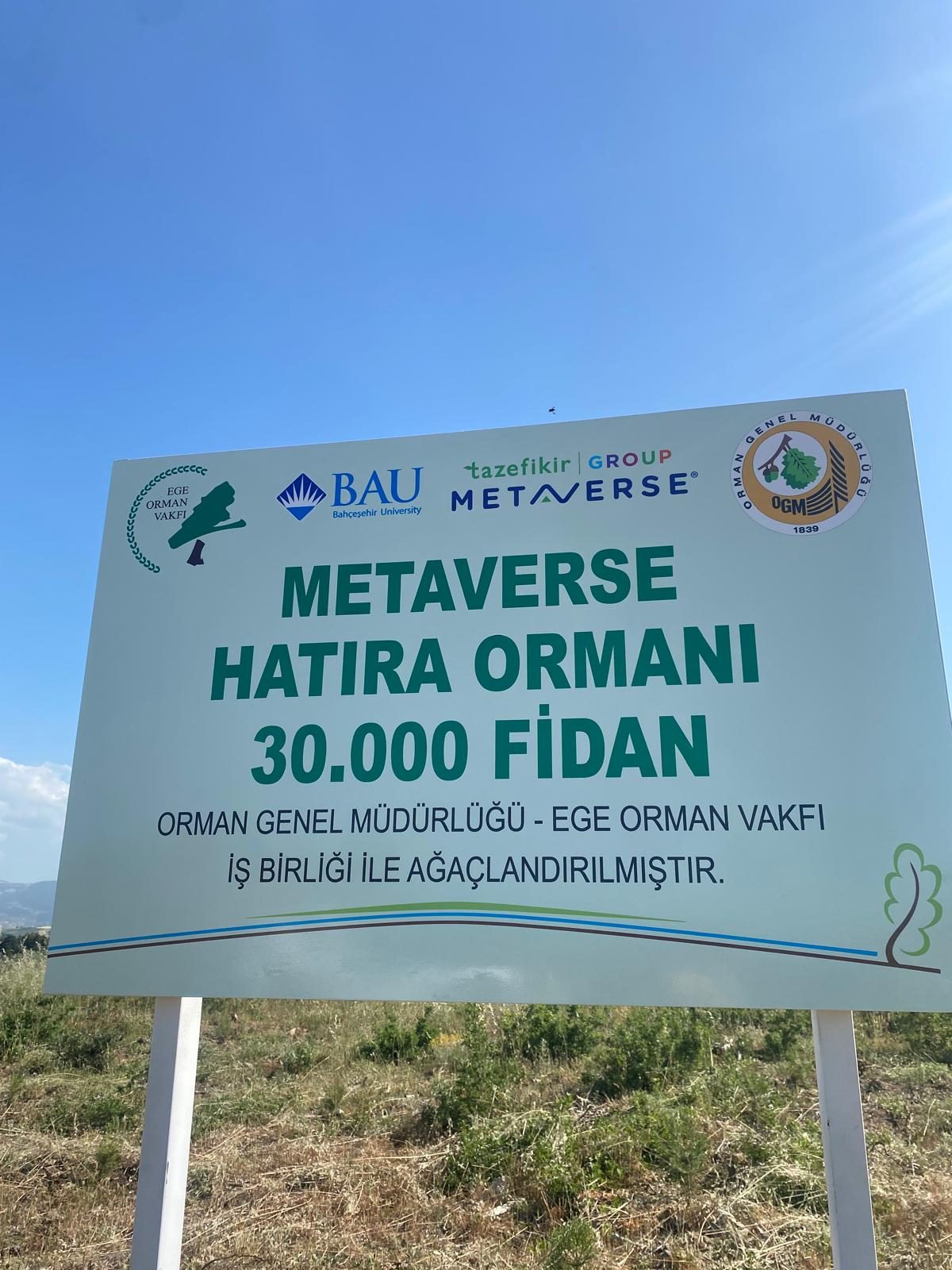
The initiative resulted in the establishment of a 30,000-tree forest in Soma, Manisa, with 15,000 trees provided through programme-linked donations and an additional 15,000 trees contributed directly by Bahçeşehir University.
The location of the initiative adds particular environmental significance to the project. Soma is one of Türkiye's established coal-mining and coal-based energy production regions, where decades of industrial activity have placed substantial pressures on the surrounding natural environment. Academic research has documented environmental challenges associated with mining and thermal power generation in the district, including forestland degradation, impacts on agricultural soils, and air, water, and soil pollution. Against this regional background, the establishment of a 30,000-tree forest represents a meaningful contribution to afforestation in an area where environmental protection and the long-term sustainability of natural landscapes are particularly important.
The project was developed around the principle that technological progress and environmental sustainability should advance together. While the Metaverse Certificate Programme introduced participants to emerging digital technologies and their implications for society and business, the associated afforestation initiative encouraged reflection on the environmental responsibilities accompanying digital transformation.
By linking educational participation with sapling donations and matching those contributions through its own institutional support, Bahçeşehir University transformed a technology-focused learning programme into a collective environmental initiative. The project demonstrates how universities can mobilise their educational activities, institutional resources, and external partnerships to support environmental objectives beyond campus boundaries.
The initiative makes a particularly significant contribution to the protection and maintenance of shared land ecosystems through institutional collaboration with the Aegean Forest Foundation, directly supporting afforestation in Soma, a district facing longstanding environmental pressures associated with coal extraction and energy production.
The establishment of a 30,000-tree forest represents a measurable contribution to tree planting in a region where the protection of forest cover, soil resources, and terrestrial ecosystems is especially relevant. Afforestation, when accompanied by appropriate ecological planning and long-term maintenance, can support vegetation development, soil protection, and the resilience of terrestrial landscapes.
The initiative is particularly aligned with collaborative efforts to maintain shared land ecosystems through sustainable forest management, the restoration of degraded forests, and increased afforestation and reforestation. It is also relevant to land conservation and soil protection, addressing desertification, land degradation, and the restoration of degraded land and soil.
The project's significance lies not only in the number of trees planted but also in directing institutional and individual environmental contributions towards a region with documented land-use and ecological challenges. Through this initiative, BAU extended its commitment to terrestrial ecosystem protection beyond academic research and environmental awareness into a concrete afforestation activity.
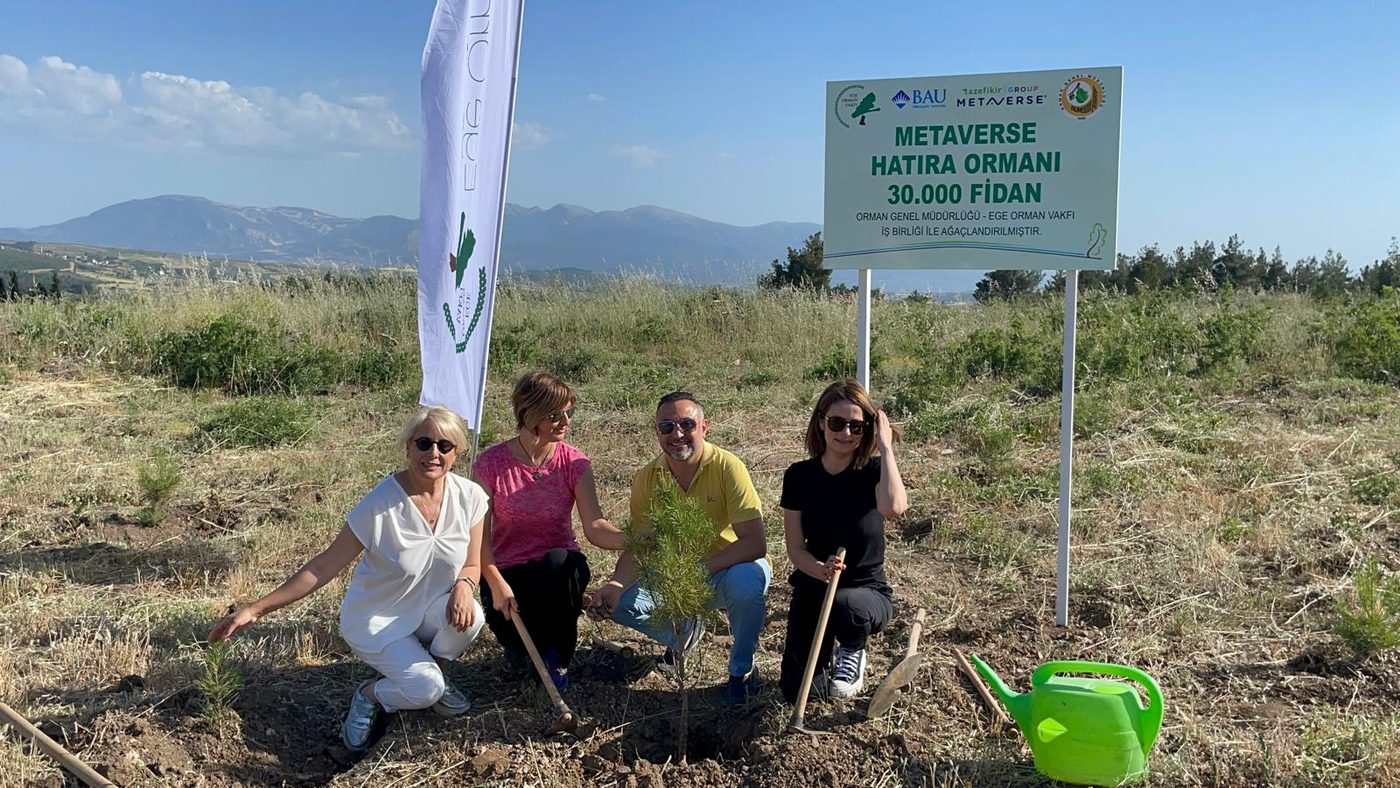
Representing Bahçeşehir University, Prof. Dr. Çisil Sohodol visited Soma, Manisa, and personally participated in the tree-planting activities alongside representatives of the Aegean Forest Foundation (Ege Orman Vakfı). Her participation reflected the university's direct institutional engagement in the initiative, extending its commitment beyond financial contributions to active involvement in the afforestation process. The visit also reinforced the partnership between BAU and the Foundation, highlighting the importance of collaborative environmental action in a region facing longstanding ecological pressures associated with coal mining and energy production.
Bahçeşehir University's commitment to the forest extends beyond the initial tree-planting activities, with the university continuing to support the long-term care, maintenance, and preservation of the forest in cooperation. This ongoing commitment reflects BAU's approach to environmental sustainability as a long-term institutional responsibility rather than a one-time initiative. By supporting the continued development and protection of the planted trees, the university reinforces its contribution to maintaining shared land ecosystems through sustained partnership with the Aegean Forest Foundation, collaborative forest conservation, and the long-term protection of afforested land.
The images below show the 30,000-sapling commemorative forest in Soma and tree-planting activities carried out through Bahçeşehir University’s collaboration with the Aegean Forest Foundation, illustrating their joint contribution to afforestation and the protection of shared land ecosystems.
2- Growing Roots for the Future: BAU Young TEMA Club Tree Planting Initiative with Pendik Municipality
The images below show the official promotional poster of the event as well as a selected highlight.
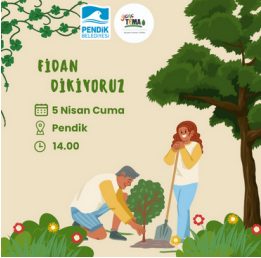
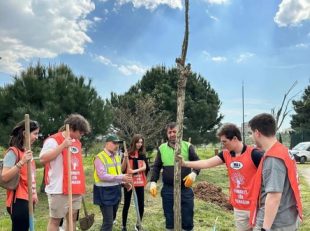
Bahçeşehir University (BAU), through its Young TEMA Student Club, collaborated with Pendik Municipality to organize a tree planting initiative aimed at supporting the restoration and long-term sustainability of terrestrial ecosystems.
As part of the initiative, BAU students actively participated in planting tree saplings in Pendik, Istanbul, contributing directly to the expansion of local tree cover and the regeneration of green spaces. Through hands-on involvement, students gained practical experience in tree planting, soil care, and the importance of maintaining healthy vegetation within existing terrestrial environments.
Tree planting plays an important role in strengthening terrestrial ecosystems by supporting vegetation growth, improving environmental conditions, and creating opportunities for the development of habitats for birds, insects, and other wildlife. Such activities are particularly relevant in urban and peri-urban areas, where development pressures can affect green spaces and the ecological conditions necessary to sustain biodiversity.
The initiative directly supports SDG 15: Life on Land, reflecting BAU's commitment to maintaining and extending terrestrial ecosystems through practical environmental action. By planting saplings and contributing to local environmental regeneration, students participated in an activity that can support the long-term development of plant cover and associated wildlife habitats.
Beyond its immediate environmental contribution, the initiative demonstrates how Bahçeşehir University engages its student community in tangible ecosystem protection activities, encouraging environmental responsibility and active participation in preserving natural environments.
Through this collaboration with Pendik Municipality, BAU contributed to a joint effort to expand local tree cover and support the ecological condition of green spaces in Pendik, connecting student participation with municipal environmental work
3- Protecting Forest Ecosystems and Biodiversity through Direct Participation in Wildfire Response Operations with Türkiye's General Directorate of Forestry
Forest fires represent a significant threat to terrestrial ecosystems and biodiversity in Türkiye, particularly in the Mediterranean and Aegean regions, where extensive forest landscapes are increasingly exposed to wildfire risks. Beyond the immediate destruction of trees and vegetation, severe wildfires can result in the loss and fragmentation of wildlife habitats, threaten native plant and animal species, damage forest soils, and disrupt essential ecological processes. The destruction of vegetation cover can also increase soil erosion, reduce ecosystem resilience, and compromise the capacity of affected landscapes to sustain biodiversity over time.
Protecting existing forest ecosystems from wildfire damage is therefore an essential component of maintaining terrestrial biodiversity and preventing further land degradation. Effective wildfire response contributes not only to limiting the immediate destruction of forest areas but also to safeguarding the ecological conditions necessary for the survival of wildlife, the preservation of vegetation, and the long-term functioning of forest ecosystems.
In 2025, as part of Bahçeşehir University's (BAU) ongoing commitment to forest ecosystem protection, representatives of BAU participated in forest firefighting volunteer training organized in cooperation with Türkiye's General Directorate of Forestry (OGM). This training strengthened their preparedness to contribute to wildfire response activities and reflected the University's commitment to translating environmental awareness into practical conservation efforts.
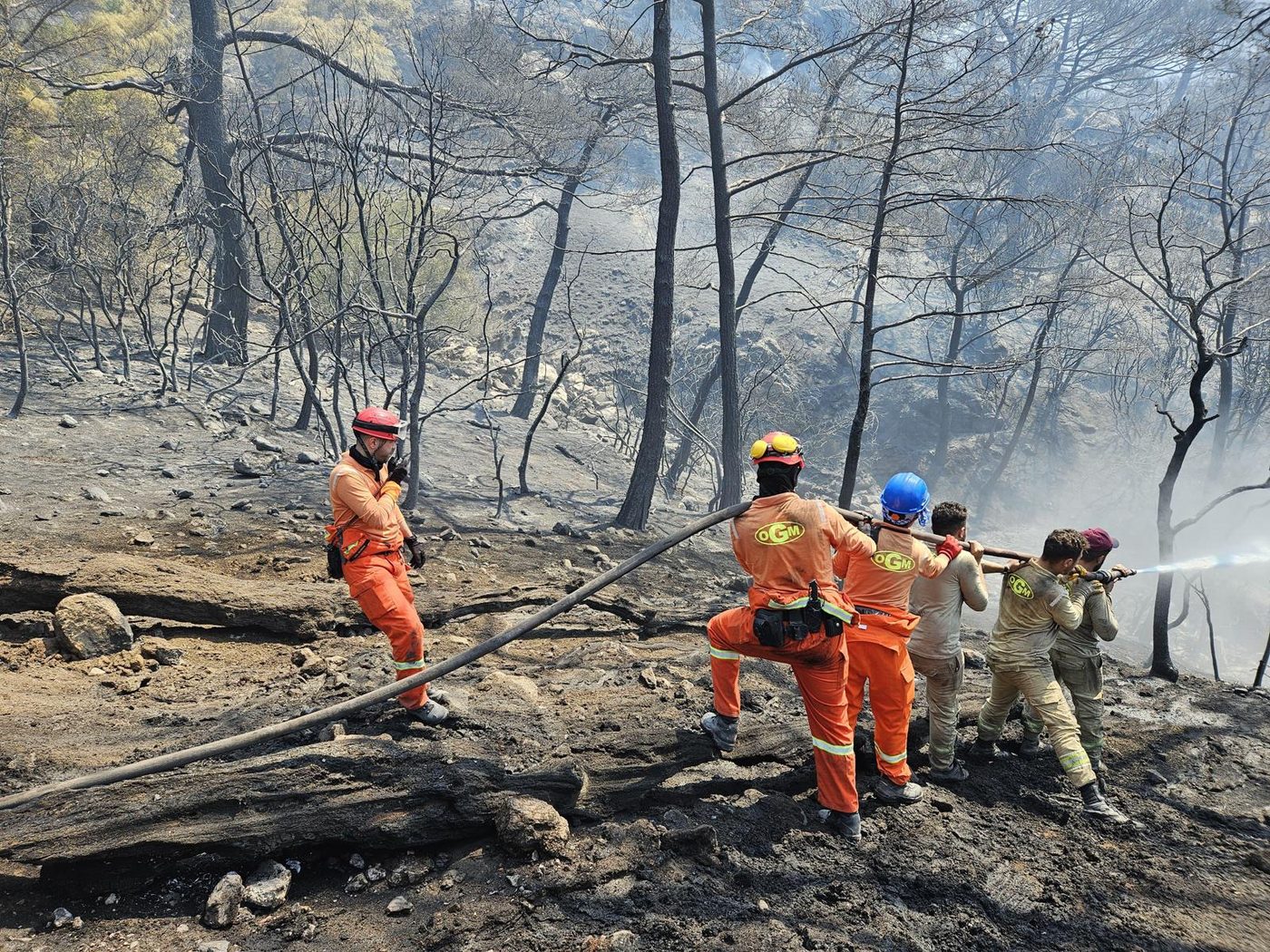
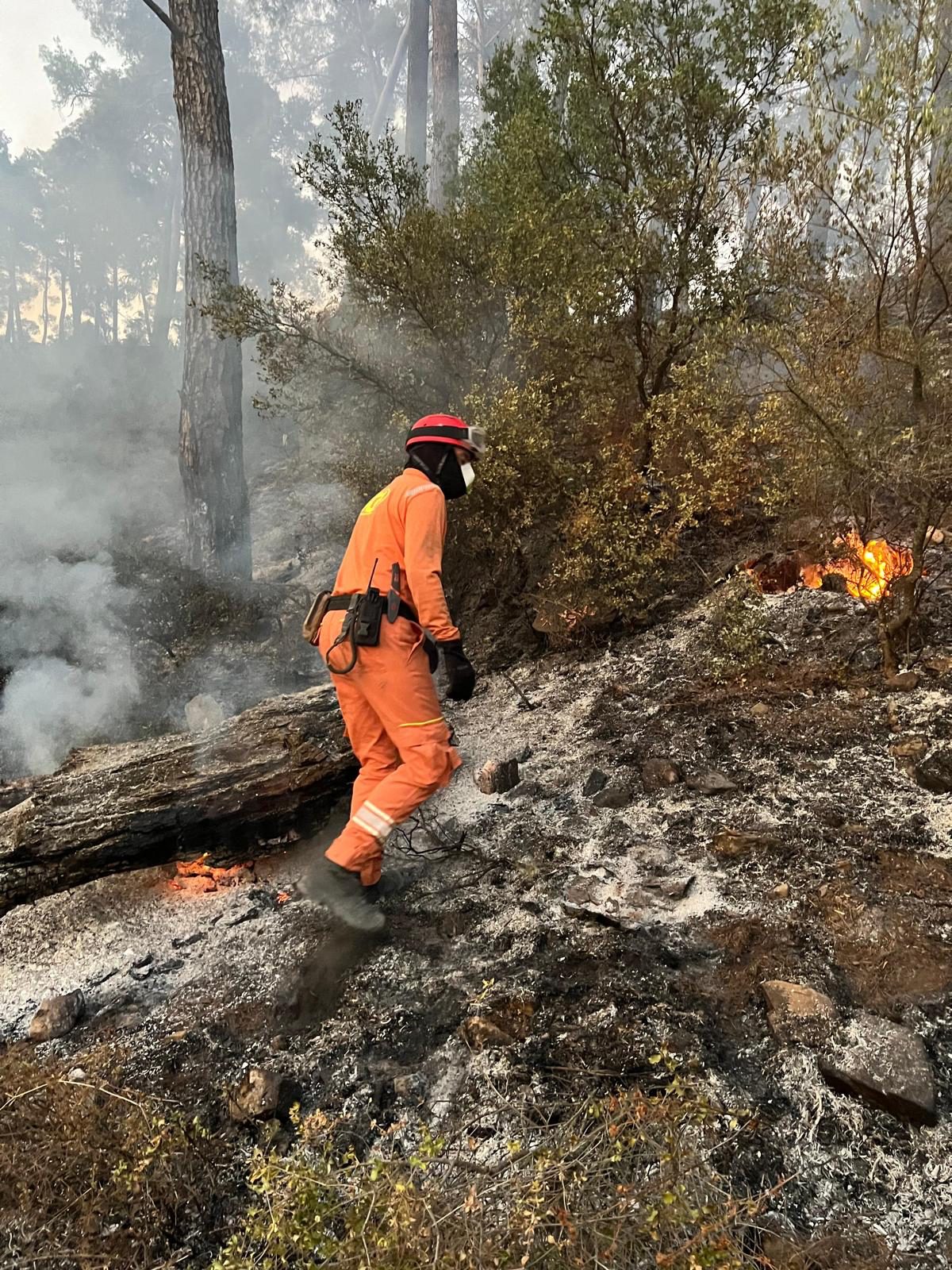
In 2025, building on this commitment, Bahçeşehir University team representatives voluntarily participated in wildfire response operations in Çanakkale and Muğla Yatağan with Türkiye's General Directorate of Forestry (OGM) working alongside local emergency response and forestry teams. Through direct involvement in firefighting efforts, the representative contributed to operations aimed at containing wildfires, limiting damage to existing forest areas, and protecting terrestrial ecosystems facing immediate environmental threats.
These activities are particularly relevant to the protection of biodiversity in Türkiye, where forest ecosystems provide essential habitats for numerous plant and animal species. By contributing to efforts to prevent the further spread of wildfires, BAU supported practical interventions intended to reduce habitat destruction, protect existing vegetation, and preserve the ecological integrity of threatened forest landscapes.
The significance of this initiative lies in Bahçeşehir University's direct participation in protecting existing ecosystems, complementing its environmental education and awareness-raising activities with practical conservation efforts. BAU, connected volunteer preparedness with active field engagement, demonstrating how institutional commitment can translate into practical action to protect forests and their biodiversity.
This initiative provides evidence of BAU's direct engagement in maintaining and protecting existing terrestrial ecosystems and their biodiversity, particularly in forest areas threatened by wildfires. By supporting wildfire response operations and cooperating with forestry and emergency response teams, the University contributed to collective efforts aimed at preventing further ecosystem degradation and safeguarding natural habitats.
The images below include Eren Yalınkaya, BAU representative, during wild-fire fighting.
4- Partnerships for Sustainable Land Management and Shared Ecosystem Conservation: Bahçeşehir University within the FABLE Consortium
Bahçeşehir University (BAU) contributes to collaborative efforts for sustainable land management and the conservation of shared land ecosystems through its participation in the Food, Agriculture, Biodiversity, Land-Use, and Energy (FABLE) Consortium. This global research network develops national pathways for sustainable food and land-use systems, connecting scientific expertise with policy engagement to address the relationships between agricultural production, biodiversity, and environmental sustainability.
In Türkiye, the FABLE country team is led by the BAU Research Center for Sustainable Food Systems (BAU SUGAM), which brings together the University’s partnerships and projects concerning food and agriculture. The Center serves as an inclusive, multidisciplinary hub for relevant stakeholders, supporting cooperation across the food system from agricultural production to waste disposal. This institutional framework provides a basis for knowledge exchange on the sustainable use of land and the natural resources on which local communities depend. Through BAU SUGAM, the University brings together its food and agriculture partnerships within a multidisciplinary framework, connecting academic expertise with stakeholder engagement. Its participation in FABLE supports science-based pathways for sustainable land management, providing a framework for addressing agricultural production alongside biodiversity conservation and the protection of shared land ecosystems.
Within the wider FABLE framework, country teams develop bottom-up pathways for sustainable food and land-use systems and engage with national governments to encourage ambitious sustainability policies. BAU’s participation connects its institutional partnerships with this science-based approach, supporting consideration of biodiversity conservation, ecosystem resilience, and sustainable land use within food-system planning.
Together, these partnerships demonstrate BAU’s institutional contribution to the knowledge and cooperation needed to maintain shared land ecosystems. Their relevance to local communities lies in supporting approaches that consider agricultural livelihoods alongside the protection of the land and ecosystems that sustain them.
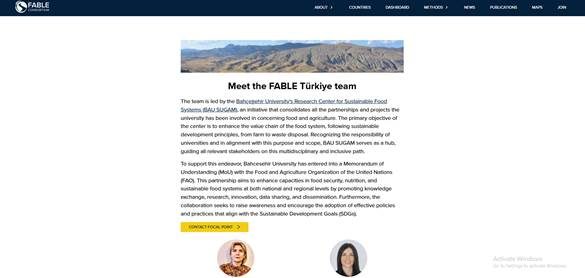
The image below shows the FABLE Consortium’s Türkiye team page, featuring Pınar Özuyar, Müge Kesici, and Zeynep Tacer Caba from BAU SUGAM, highlighting Bahçeşehir University’s academic contribution to collaborative work on sustainable food and land-use systems.
5- Collaborating for Sustainable Agriculture and Shared Land Ecosystems through the Agroecology Coalition
Bahçeşehir University (BAU) supports collaborative approaches to sustainable land management, biodiversity conservation, and ecosystem resilience through its membership in the Agroecology Coalition. Established following the 2021 United Nations Food Systems Summit, the Coalition brings together countries, academic institutions, civil society organizations, and other stakeholders to advance the transformation of food systems through agroecology. Its work is guided by the 13 Principles of Agroecology defined by the High-Level Panel of Experts for Food Security and Nutrition (HLPE-FSN) under the Committee on World Food Security (CFS), aligned with the 10 Elements of Agroecology adopted by the FAO Council in 2019.
Agroecology connects sustainable agricultural production with the protection of the ecosystems that sustain it. Its emphasis on soil health, biodiversity, resource efficiency, and participatory knowledge sharing provides a framework for addressing the relationship between agricultural livelihoods and the maintenance of shared land ecosystems. Collaboration and the exchange of knowledge are central to this approach, enabling scientific research to inform practices relevant to farmers and local communities.
As an official member of the Coalition, BAU participates in working groups on Policies; Research, Innovation and Education; and Implementation. These platforms connect the University with a wider network of partners working to advance agroecological approaches. Through research-driven dialogue and the exchange of expertise, BAU contributes academic perspectives to collective discussions on sustainable agriculture and land-use practices.
The Coalition’s focus on co-creation of knowledge, capacity building, and technical collaboration is particularly relevant to community participation in ecosystem management. These mechanisms support the exchange of scientific and practical knowledge needed to develop approaches that consider both ecological conditions and the needs of communities dependent on agricultural land.
Through its participation, BAU strengthens institutional partnerships that support sustainable food production and the conservation of land ecosystems. This engagement provides a collaborative foundation for connecting academic knowledge with broader efforts to protect biodiversity, sustain soil resources, and promote the responsible management of landscapes that support local livelihoods.
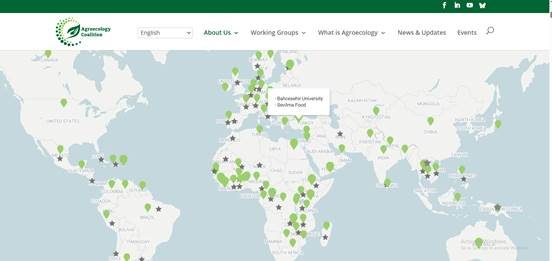
The image below, taken from the Agroecology Coalition’s website listing its members, shows Bahçeşehir University’s membership in the Coalition, demonstrating its participation in this collaborative network for agroecological transformation.
6- Institutional Collaboration with Food and Agriculture Organization of the United Nations for Sustainable Agriculture and Community Engagement
Since May 2022, Bahçeşehir University (BAU) and the Food and Agriculture Organization of the United Nations (FAO) have maintained a strategic institutional partnership to advance sustainable food systems, agricultural innovation, and rural development. Formalized through a Memorandum of Understanding (MoU), this cooperation provides a long-term framework for connecting academic expertise, international experience, and community engagement around sustainable agricultural development and responsible natural resource use.
The partnership establishes a Learning, Research, and Application Platform, supporting knowledge exchange, research, institutional capacity development, and practical cooperation. Its areas of collaboration include conserving land ecosystems, sustainable agriculture, digital transformation, rural women’s empowerment, and responsible resource management. These interconnected priorities are relevant to maintaining shared land ecosystems, where agricultural livelihoods depend on the long-term health of soil, biodiversity, and other natural resources.
The BAU–FAO partnership continued throughout 2025, with the two institutions jointly conducting events, training programmes, and research activities to advance knowledge, raise awareness, and strengthen collaborative efforts on sustainable food and land systems.
Through these shared activities, the partnership addresses topics such as the maintenance of shared land ecosystems, soil sustainability, sustainable and ethical agriculture, responsible resource management, and land conservation. By combining BAU’s academic expertise with FAO’s international experience, the cooperation supports the exchange of knowledge and practices relevant to protecting agricultural landscapes and the natural resources on which local communities depend.
Beyond individual activities, the partnership provides an ongoing institutional mechanism for SDG-related policy engagement, knowledge exchange, and the development of evidence-informed approaches to sustainable agriculture, food security, land conservation, soil health, the maintenance of shared land ecosystems, digital transformation, and rural development. Through its collaboration with FAO, BAU contributes academic expertise and facilitates stakeholder engagement relevant to the identification of policy priorities, the exchange of good practices, and the consideration of inclusive, technology-driven, and gender-sensitive agricultural strategies.
The continued cooperation also demonstrates how universities and international organizations can work together to connect global sustainable development agendas with national and local priorities, bringing academic knowledge, international expertise, civil society perspectives, private-sector participation, and community-level experience into discussions relevant to sustainable development policies.
This ongoing collaboration provides an institutional framework for bringing together researchers, agricultural stakeholders, civil society, and local communities around shared sustainability priorities. Through education, research, and stakeholder engagement, BAU and FAO promote collective responsibility for sustainable land management, supporting collaborative approaches that consider rural livelihoods alongside soil health, biodiversity protection, and the long-term resilience of shared land ecosystems.
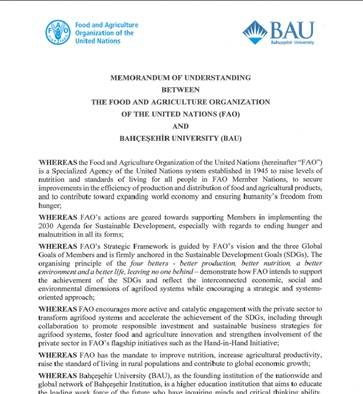
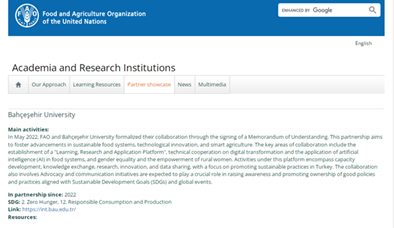
The images below show the opening page of the Memorandum of Understanding signed between Bahçeşehir University and FAO and a screenshot from the “Academia and Research Institutions” section of FAO’s website, listing Bahçeşehir University as a partner and documenting the formal institutional cooperation between the two organizations.
7- Cooperation with Istanbul Metropolitan Municipality and Istanbul Fire Department for Ecosystem Conservation and Disaster Preparedness
Bahçeşehir University (BAU) signed a cooperation protocol with Istanbul Metropolitan Municipality and Istanbul Fire Department, establishing an institutional framework for joint projects, public awareness activities, and capacity building to support land conservation efforts and raise awareness of the protection of shared land ecosystems in times of disasters and emergencies. The partnership focuses particularly on children and the wider local community, strengthening awareness of ecosystem conservation, land protection, and shared responsibilities for safeguarding natural spaces against disaster-related threats.
Under the protocol, the partners committed to identifying challenges, developing collaborative projects, and conducting educational activities to address disaster-related ecological risks. BAU will also provide capacity-building training for relevant municipal officials, connecting academic expertise with local government responsibilities and community needs.
This cooperation provides a framework through which community awareness and institutional preparedness can support the protection of shared land ecosystems, particularly where disasters and fires threaten vegetation, habitats, and the natural spaces used by local communities. By strengthening collaboration between the University and municipal services, the protocol offers a basis for addressing the connections between public safety, environmental protection, and the resilience of shared landscapes.
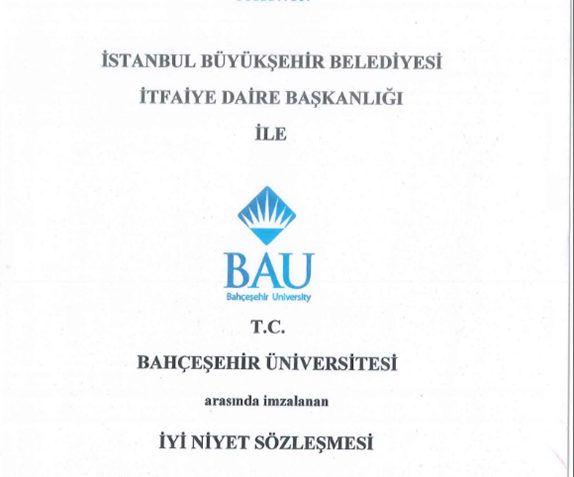
The image below shows the cover page of the cooperation agreement signed between Bahçeşehir University and the Istanbul Metropolitan Municipality’s Fire Department, documenting their formal institutional partnership.
8- Partnership with Habitat Association for Environmental Awareness and Community Engagement in Ecosystem Conservation
In 2025, Bahçeşehir University (BAU) strengthened its collaboration with civil society through a cooperation protocol with Habitat Association, a Turkish non-governmental organization working on sustainable development, community capacity building, and environmental awareness. The partnership connects BAU’s academic expertise and educational resources with Habitat Association’s experience in community-based programmes, providing an institutional framework for joint sustainability education and stakeholder engagement.
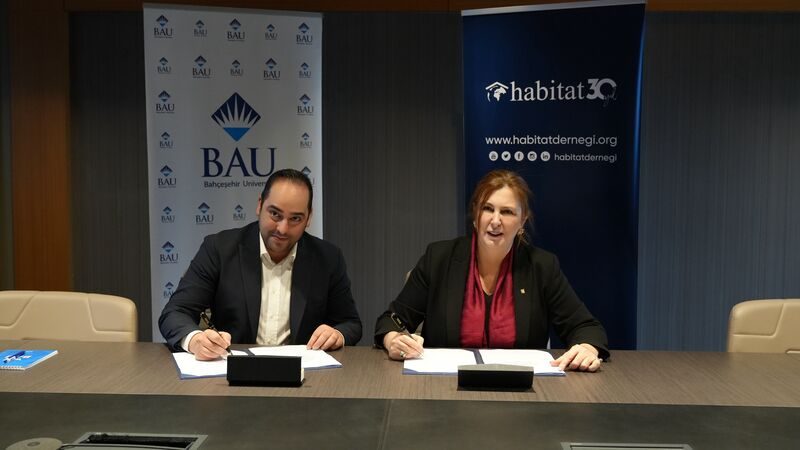
Signed by BAU Rector Prof. Dr. Esra Hatipoğlu and Habitat Association Executive Board President Bora Caldu, the protocol establishes cooperation on educational programmes, sustainability training, and capacity development. These areas provide a foundation for strengthening public understanding of environmental protection, responsible natural resource use, and the conservation of shared land ecosystems.
Habitat Association’s work includes promoting environmental awareness, sustainable living practices, and the protection of natural resources. This experience brings a relevant community perspective to the partnership, supporting the connection between sustainability education and the environmental responsibilities of individuals and communities.
By combining university-based knowledge with civil society outreach, the cooperation creates opportunities to address land conservation, ecosystem protection, and sustainable resource management through educational activities and knowledge exchange. Its community-oriented approach provides a basis for encouraging local participation and shared responsibility for maintaining the natural spaces and land ecosystems on which communities depend.
Through this institutional partnership, BAU strengthens university–NGO collaboration relevant to the maintenance of shared land ecosystems, supporting the environmental awareness, community engagement, and collective learning needed for their long-term protection.
The photograph below shows the signing ceremony of the cooperation protocol between Bahçeşehir University and Habitat Association, attended by Prof. Dr. Esra Hatipoğlu and Bora Caldu, documenting their formal institutional partnership.