EN
15.2.1 - Events Promoting Land Conservation and Sustainable Land Use
Bahçeşehir University (BAU) organises and supports events that promote the conservation and sustainable use of land, including forests and natural areas. These activities address biodiversity protection, the ecological value of terrestrial habitats, and the relationship between responsible land use and ecosystem health, supporting SDG 15: Life on Land.
Through workshops, seminars, student-led events and participatory learning activities, BAU connects academic knowledge with environmental awareness and practical engagement. These events provide opportunities for participants to understand pressures on terrestrial ecosystems and explore approaches to conserving biodiversity and using land resources responsibly.
The examples below demonstrate how BAU translates this commitment into concrete educational, participatory, and community-oriented activities promoting forest conservation, biodiversity protection, ecological restoration, sustainable agricultural land management, and responsible land use. Through these initiatives, the University connects environmental knowledge with practical engagement, public awareness, and collaborative action to protect terrestrial ecosystems.
1- Green Dialogue Meeting: Sustainable Land Use, Forest Ecosystem Protection and Ecological Restoration
The event poster is presented below as supporting evidence of the programme and its activities.
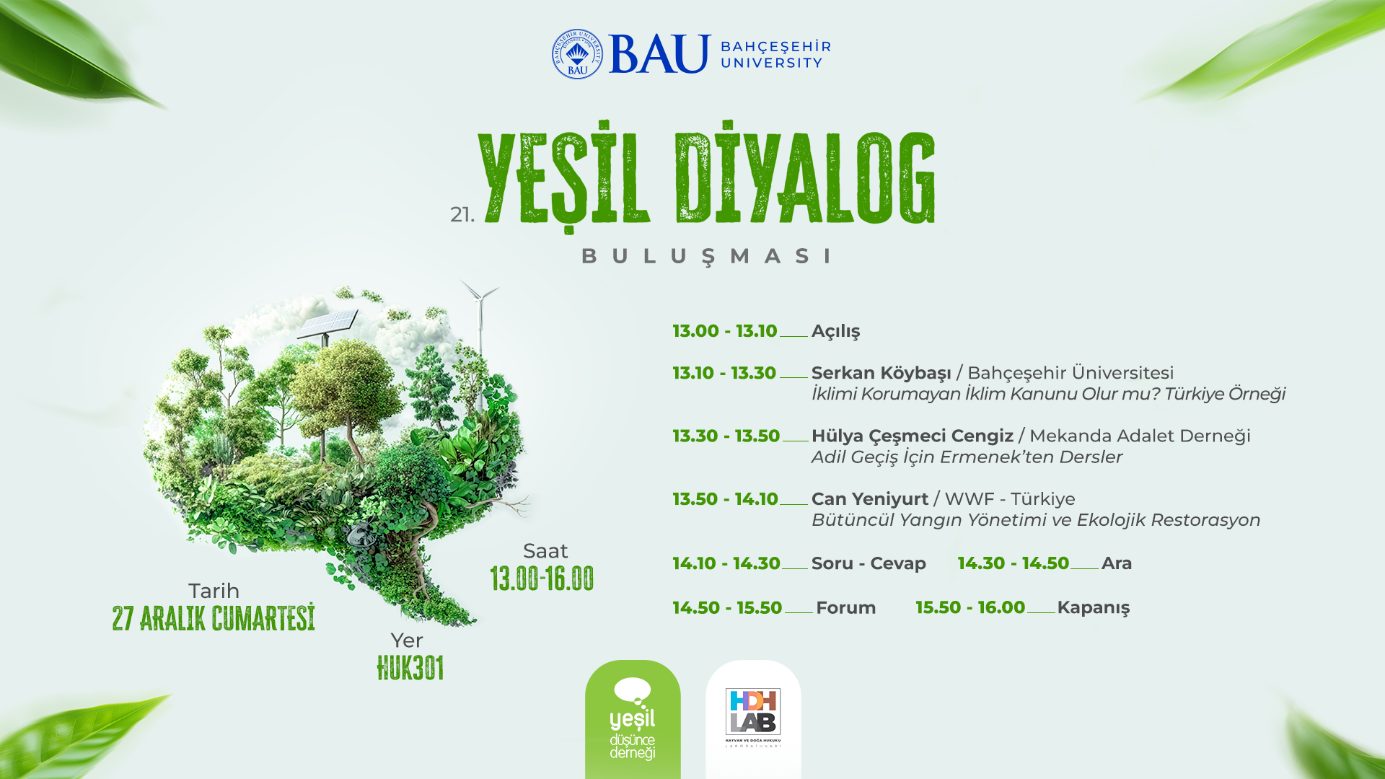
In 2025, Bahçeşehir University (BAU) organized the Green Dialogue Meeting (Yeşil Diyalog Buluşması), bringing together academic, legal, and environmental perspectives on climate governance, sustainable land management, and ecological restoration. The event provided a platform for discussing how environmental policies and conservation approaches can contribute to the long-term protection and sustainable use of terrestrial ecosystems, in alignment with SDG 15: Life on Land.
A central component of the programme was the session “Integrated Fire Management and Ecological Restoration” (Bütüncül Yangın Yönetimi ve Ekolojik Restorasyon), delivered by Can Yeniyurt of WWF-Türkiye (World Wide Fund for Nature). The session addressed a topic directly relevant to the sustainable management of forest landscapes: the relationship between wildfire management, ecological restoration, and the protection of terrestrial ecosystems. It highlighted the importance of considering ecosystem recovery and long-term ecological resilience within approaches to managing fire-affected landscapes.
The meeting also featured Serkan Köybaşı of Bahçeşehir University, who presented “Climate Law from the Perspective of Public Administration: The Case of Türkiye,” and Hülya Çeşmeci Cengiz of Mekanda Adalet Derneği, who discussed “Climate Justice for a Fair Transition.” These contributions situated ecosystem protection within the broader context of environmental governance, public policy, and social responsibility, emphasizing the importance of coordinated approaches to sustainable development.
Through the participation of WWF-Türkiye and other stakeholders, BAU facilitated public engagement with issues concerning sustainable land use, forest ecosystem protection, and ecological restoration. By incorporating integrated fire management and ecosystem recovery into an interdisciplinary environmental dialogue, the University supported knowledge-sharing and awareness of the challenges affecting terrestrial ecosystems.
The event provided an educational and public engagement platform addressing the sustainable use and management of land, particularly the protection and restoration of forest ecosystems. It also supported SDG 13: Climate Action through discussions of climate governance and environmental resilience.
2- Before It Burns: BAU Young TEMA Student Club Meeting on Forest and Wild Land Conservation
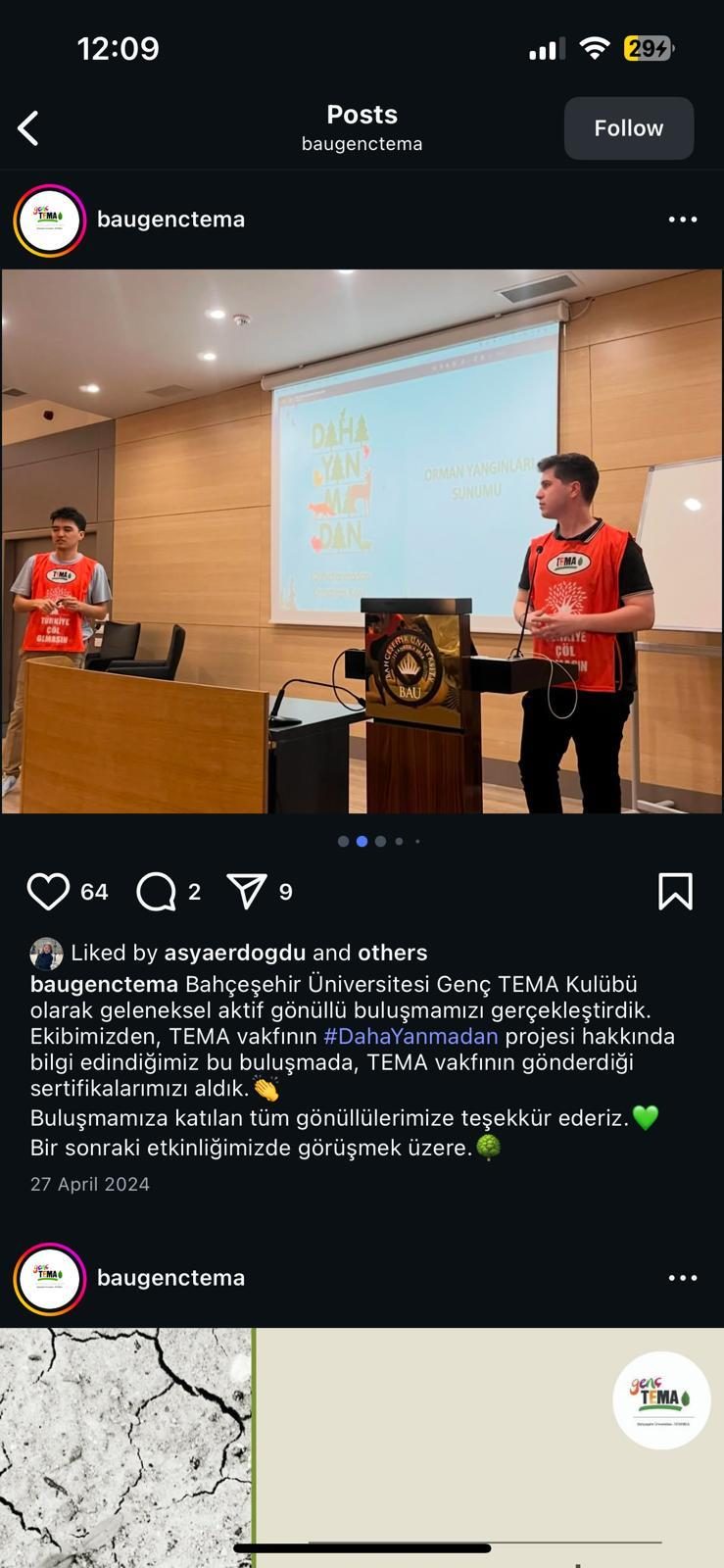
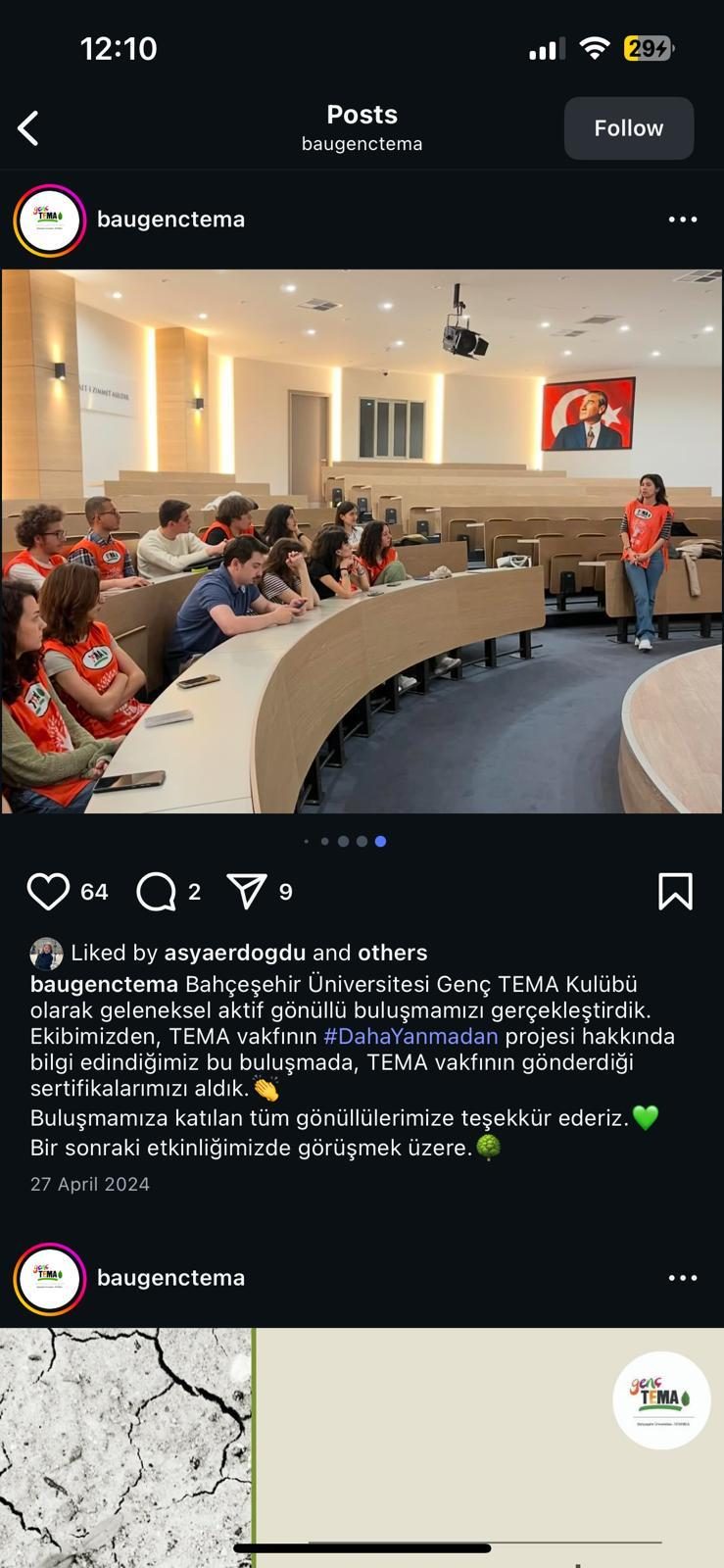
Bahçeşehir University (BAU) Young TEMA Student Club organised its traditional Active Volunteer Meeting, centred on the TEMA Foundation’s “Before It Burns” initiative. The event promoted forest and wild land conservation by raising awareness of wildfire risks and encouraging students to take an informed, responsible role in protecting natural environments. Through this student-led meeting, BAU supported environmental education focused on preventing forest degradation and safeguarding terrestrial habitats.
The session examined the causes and impacts of forest fires, alongside strategies to prevent large-scale environmental damage. Participants discussed community-based fire prevention methods and the importance of early intervention, connecting individual awareness with collective responsibility for forest protection. These discussions highlighted the importance of addressing fire risks before they damage trees, vegetation, and wildlife habitats, reinforcing prevention as an essential component of conserving forest ecosystems.
Students also received certificates of appreciation from the TEMA Foundation in recognition of their volunteer efforts and commitment to environmental protection. This recognition reinforced the value of student participation in conservation initiatives and encouraged continued engagement with forest protection. The meeting strengthened awareness of disaster preparedness, environmental responsibility, and collective action to protect natural ecosystems.
Through the activities of its Young TEMA Student Club, BAU supported SDG 15: Life on Land by providing a platform for learning and volunteer engagement centred on forest conservation and the prevention of habitat degradation. The meeting connected knowledge of wildfire risks with community-based approaches to protecting forests and wild land, encouraging students to recognise their role in safeguarding terrestrial ecosystems for future generations.
The images below show moments from the BAU Young TEMA Student Club’s “Before It Burns” meeting, promoting wildfire awareness and forest conservation.
3- Protecting Forests, Safeguarding the Future: BAU Wildfire Volunteer Training Programme for Forest and Wild Land Conservation
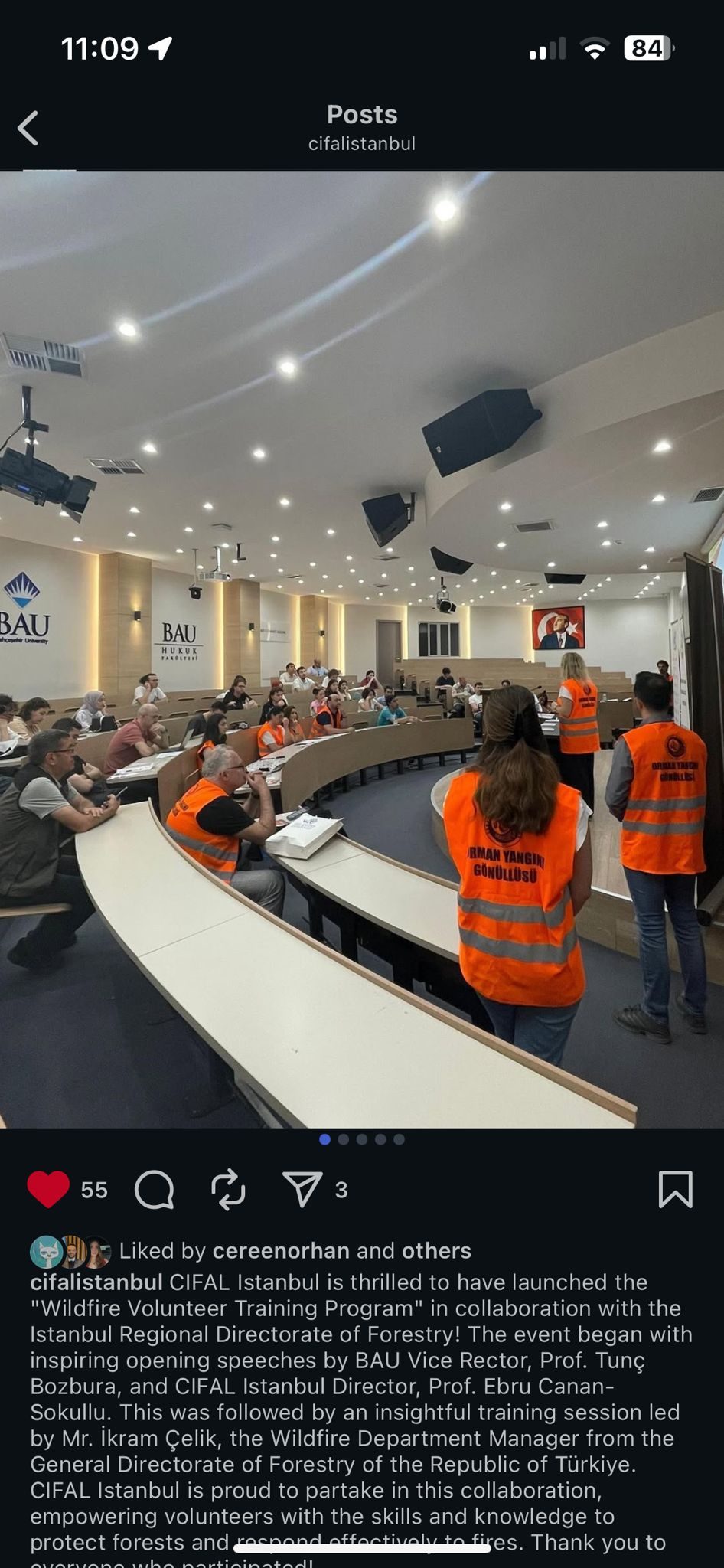
Bahçeşehir University (BAU), in collaboration with the Istanbul Regional Directorate of Forestry (OGM), CIFAL Istanbul, and the United Nations Institute for Training and Research (UNITAR), organised the “Wildfire Volunteer Training Programme” to promote forest and wild land conservation through environmental education and community participation. Designed as a community-oriented initiative, the programme brought together forestry expertise and public engagement to strengthen awareness of wildfire threats and empower citizens to contribute responsibly to protecting forests, natural habitats, and terrestrial biodiversity.
Hosted at BAU, the programme strengthened public preparedness, early response capabilities, and collective responsibility in preventing and responding to forest fires. Expert-led sessions on wildfire prevention equipped participants with knowledge for supporting forest protection efforts, emphasising forest and wild land conservation and the importance of reducing fire risks before they cause damage to habitats, vegetation, and wildlife. The training also addressed climate resilience, and community-based environmental protection, connecting practical preparedness with the long-term conservation of forest ecosystems. Discussions highlighted how protecting forests and wild land safeguards biodiversity, soil stability, and ecological resilience, helping maintain the environmental conditions that support terrestrial life. Through these interconnected themes, BAU encouraged informed community participation in forest conservation and the protection of natural landscapes for future generations.
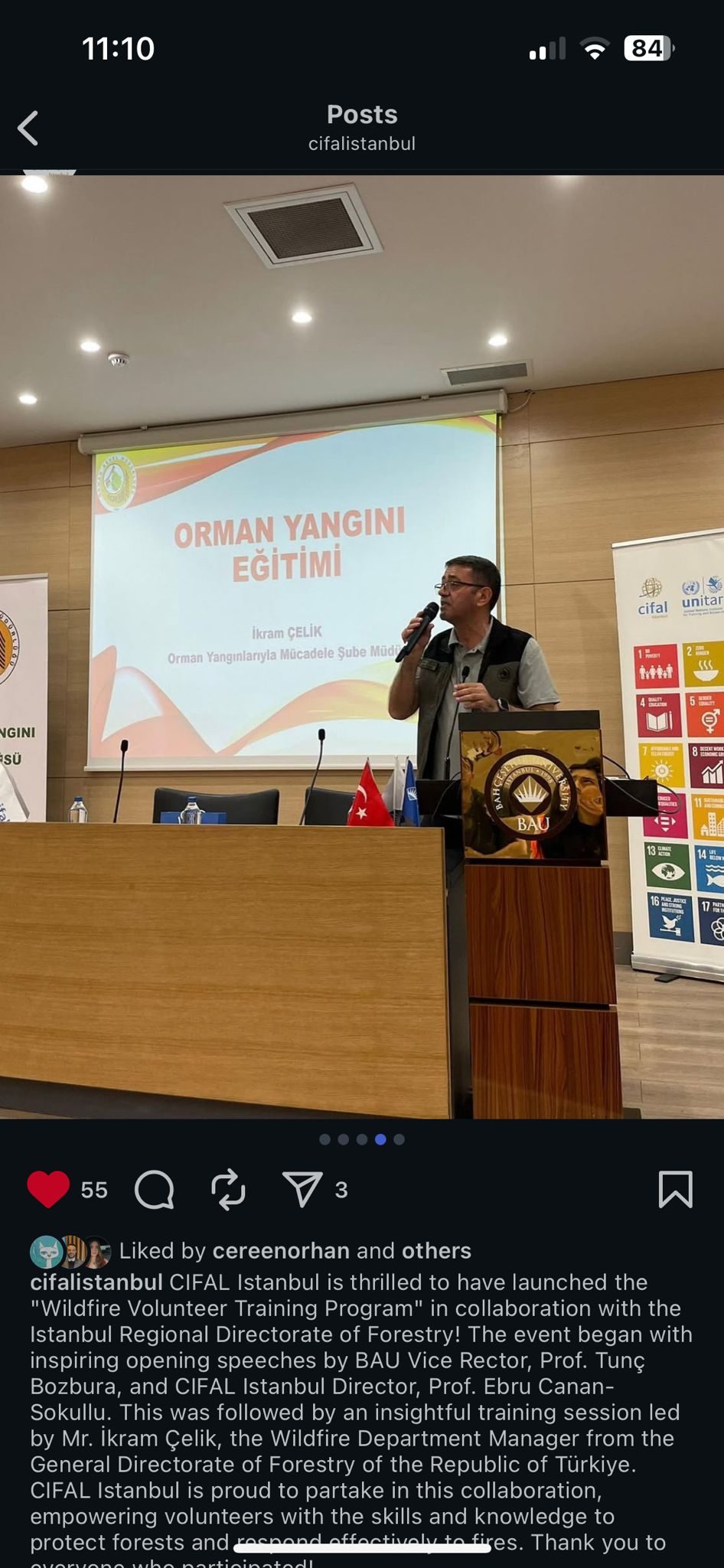
Opening remarks were delivered by Prof. Tunç Bozbura, Vice Rector of Bahçeşehir University, and Prof. Ebru Canan-Sokullu, followed by a technical session led by Mr. İkram Çelik, Head of the Wildfire Department of the Istanbul Regional Directorate of Forestry. Bringing specialist forestry knowledge into a university-hosted training setting enabled BAU to connect professional expertise with community learning on forest and wild land conservation. Participants who completed the programme received official certificates of participation jointly issued by BAU, CIFAL Istanbul, UNITAR, and OGM, recognising their commitment to environmental volunteerism and sustainable development.
The programme directly supported SDG 15: Life on Land through education and capacity-building focused on forest protection, biodiversity conservation, and the prevention of ecosystem degradation. Its emphasis on preventing fire-related damage was relevant to SDG Target 15.1, concerning the conservation and restoration of terrestrial ecosystems, including forests, and SDG Target 15.2, particularly its objectives concerning forest protection and the restoration of degraded forests. By strengthening knowledge of wildfire risks and responsible community participation, the training supported awareness and preparedness relevant to safeguarding forest habitats and reducing threats to life on land.
Through collaboration between academia, public institutions, and civil society, BAU provided a platform for translating conservation awareness into informed community engagement. The programme connected the immediate challenges of wildfire prevention and response with the enduring need to protect forests, wild land, and the biodiversity they sustain. By equipping individuals with knowledge, practical guidance, and ethical awareness, BAU reinforced forest and wild land conservation as a collective responsibility and demonstrated its commitment to protecting terrestrial ecosystems through accessible education and public participation.
The photographs below show moments from BAU’s Wildfire Volunteer Training Programme, promoting forest and wild land conservation.
4- BAU Young TEMA Student Club: Acorn Collection and Awareness of Oak Ecosystem Conservation
The image below portrays the official promotional poster of the event:
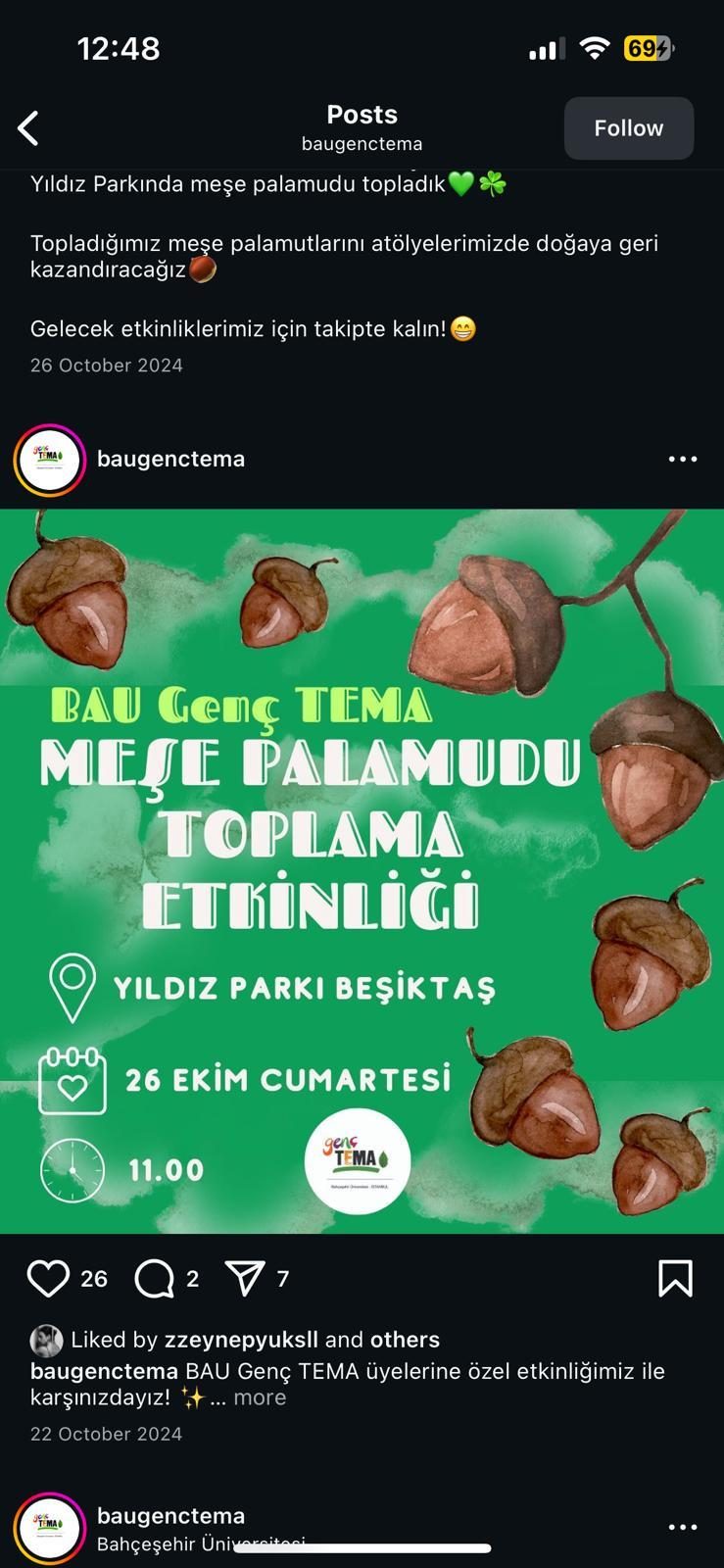
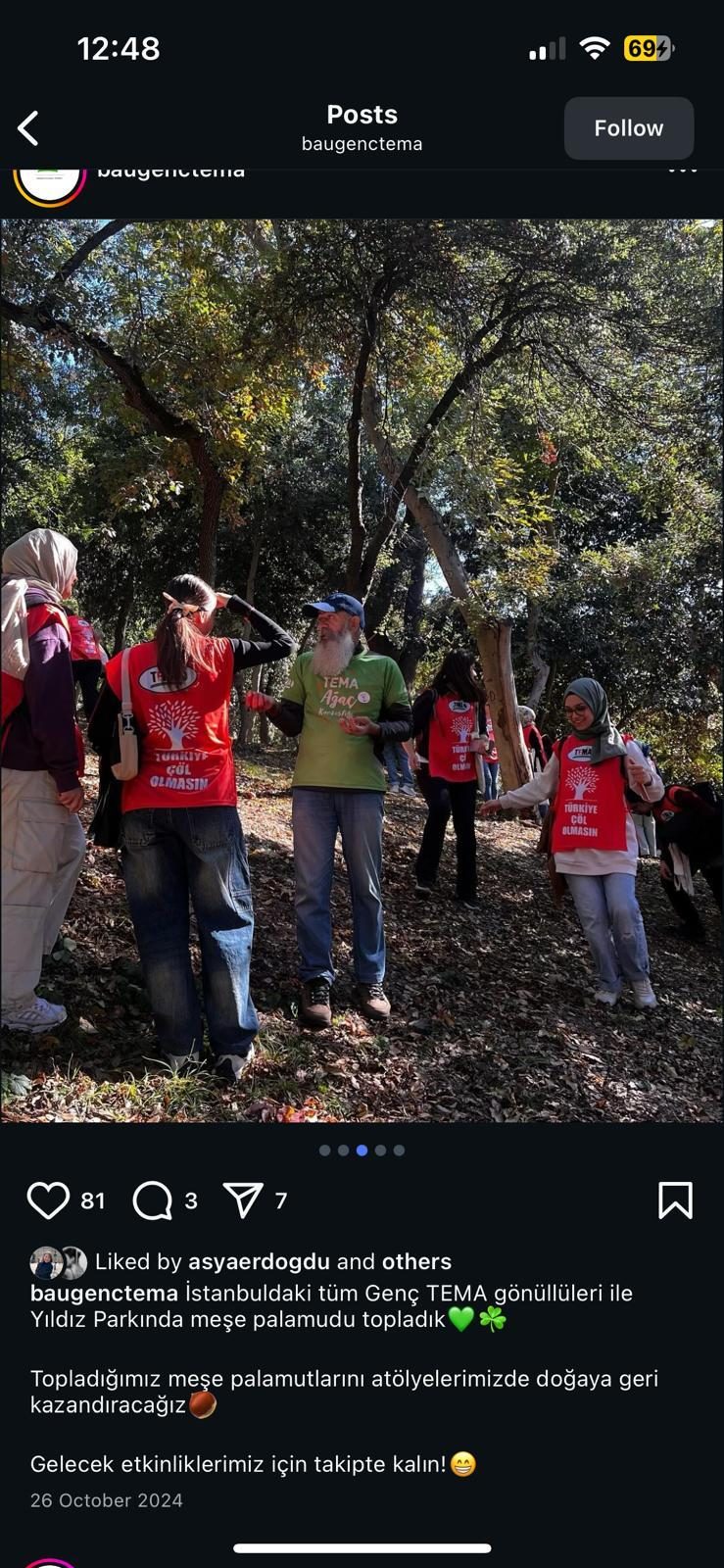
During the 2024–2025 academic year, BAU Young TEMA, the Bahçeşehir University student club affiliated with TEMA Foundation—the Turkish Foundation for Combating Soil Erosion, for Reforestation and the Protection of Natural Habitats—organised an Acorn Collection Activity in Yıldız Park. Bringing students together through a practical activity in nature, the initiative promoted participation in practices that support ecosystem sustainability and the conservation of terrestrial habitats. Participants collected acorns for use in future biodiversity-focused workshops and educational projects, connecting the activity with further opportunities for environmental learning.
Alongside collecting acorns, students discussed the importance of protecting oak trees and the habitats they support, particularly their role in providing food and shelter for animals and sustaining biodiversity. These discussions highlighted the ecological significance of oak trees within Türkiye’s ecosystems, encouraging participants to understand their value as part of interconnected habitats that support a variety of species. The activity therefore combined hands-on participation with awareness of how conserving trees and their surrounding environments helps maintain ecological balance and protect life on land.
Through direct engagement with nature, participants contributed to preparations for future environmental restoration and educational efforts while learning about sustainable resource use, habitat protection, and collective responsibility for conserving natural areas. By organising the activity through its student community, Bahçeşehir University (BAU) encouraged students to connect environmental knowledge with practical engagement in the conservation and sustainable use of land and forest resources.
The initiative supported SDG 15: Life on Land by raising awareness of oak habitat conservation, biodiversity protection, and the importance of maintaining healthy terrestrial ecosystems. By linking acorn collection with discussions of animal habitats and Türkiye’s ecological diversity, BAU promoted an understanding of conservation that recognises the relationships between trees, wildlife, and the wider environment.
The event’s selected photographic highlight from the Oak Ecosystem Conservation is presented below.
5- Roundtable with Civil Society: Integrating Terrestrial Ecosystem Protection into Türkiye’s Environmental Policy Dialogue Towards COP
The poster of the roundtable is presented below.
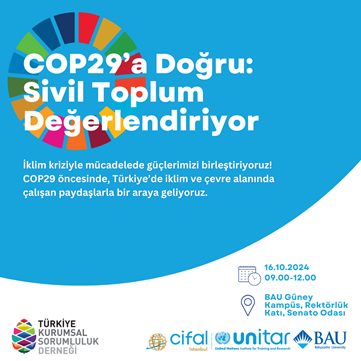
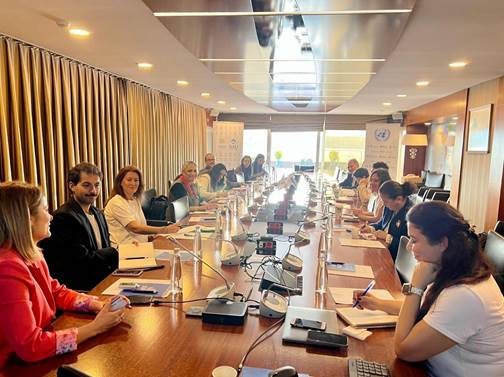
During the 2024–2025 academic year, Bahçeşehir University (BAU) and CIFAL Istanbul, UNITAR, in collaboration with the Corporate Social Responsibility Association of Türkiye (CSR Turkey) and several leading environmental non-governmental organisations, jointly organised a high-level roundtable titled “Towards COP29: Civil Society Evaluates.” Bringing together civil society representatives, academics, and policy experts, the meeting assessed Türkiye’s environmental and climate change agenda following previous COP discussions and contributed to dialogue on national strategies ahead of COP29. The event provided an opportunity to consider how the protection of terrestrial ecosystems and the sustainable use of land can be incorporated into broader environmental policy pathways.
The roundtable provided a policy dialogue platform for examining the role of civil society in advancing climate action, the transition to renewable energy, and the integration of sustainability into national development frameworks. Expert contributions from Özlem Katısöz, Climate and Energy Policy Coordinator at CAN Europe, and Barış Doğru, Editor-in-Chief of EkoIQ, offered analytical insights into Türkiye’s evolving climate policy landscape, highlighting both progress and challenges in meeting international commitments. Within this broader discussion, attention to terrestrial ecosystem protection, biodiversity conservation, and sustainable land management highlighted the importance of considering the ecological implications of development and environmental policy decisions.
Participants collectively emphasised the need for a realistic roadmap to reduce dependence on fossil fuels and expand renewable energy investments. Recognising the interdependence between climate change and ecosystem degradation, the dialogue also highlighted the value of policy approaches that address these pressures together. Integrating the conservation of forests, natural habitats, and other terrestrial environments into national sustainability strategies helps connect environmental policy with the long-term protection and responsible use of land resources. The event concluded with a shared commitment to strengthen cooperation between academia, civil society, and the private sector, supporting evidence-based policymaking and inclusive environmental governance.
Through its role as a joint organiser, BAU supported an event that connected national environmental policy discussions with SDG 15: Life on Land. The roundtable promoted awareness of the importance of safeguarding terrestrial ecosystems and incorporating biodiversity conservation and sustainable land management into wider policy frameworks. These themes are relevant to Target 15.1, concerning the conservation, restoration, and sustainable use of terrestrial and inland freshwater ecosystems, and Target 15.5, concerning the reduction of natural habitat degradation and the protection of biodiversity. By facilitating dialogue among civil society organisations, academics, and policy experts, BAU encouraged shared consideration of ecosystem protection within Türkiye’s environmental and development priorities.
A photograph from the event is presented below.
6- National Policy Forum on Artificial Intelligence and Technology in Hazelnut Farming: Advancing the Sustainable Utilisation of Land
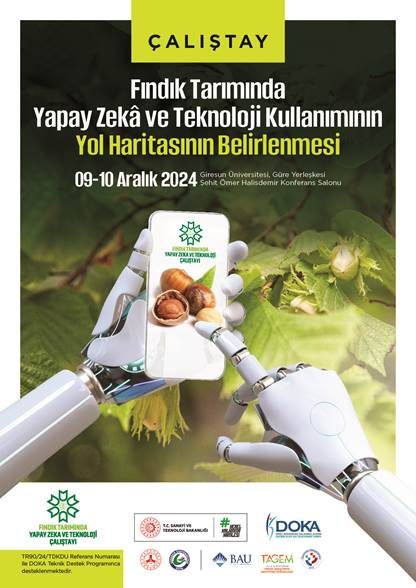
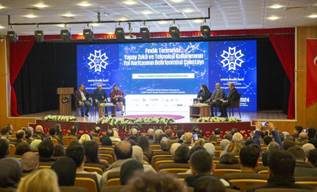
Held in Giresun during the 2024–2025 academic year, under the coordination of the Ministry of Agriculture and Forestry and the Giresun Governorship, the National Policy Forum on Artificial Intelligence and Technology in Hazelnut Farming brought together Bahçeşehir University (BAU), Giresun University, the Eastern Black Sea Development Agency (DOKA), and representatives from public institutions, academia, and the private sector. The forum provided a platform for examining how integrating artificial intelligence and digital technologies into hazelnut farming can promote more efficient agricultural land use and the sustainable utilisation of land and natural resources.
The forum focused on developing a national roadmap for agricultural digitalisation, particularly in hazelnut farming, an important source of income and employment for rural communities in Türkiye. BAU contributed its expertise in AI applications, sustainable food systems, and policy innovation to discussions on improving agricultural productivity, resource efficiency, and long-term resilience. A central connection between these themes was the potential of AI-supported farming to help producers make better-informed decisions about how agricultural land is managed, enabling more efficient production while taking account of environmental conditions and the long-term productive capacity of the soil.
By bringing together agricultural policymakers, researchers, technology specialists, and industry representatives, the forum explored how emerging technologies can support the transition towards more sustainable and efficient use of existing agricultural land. Integrating AI systems into hazelnut farming can help align cultivation practices with the conditions and needs of particular areas, supporting more precise use of agricultural inputs and reducing unnecessary resource consumption. Its policy-oriented approach therefore connected technological innovation with food security, environmental protection, rural economic development, and the sustainable utilisation of land, highlighting how agricultural modernisation can support productivity while helping to maintain the ecological functions on which farming depends.
From the perspective of SDG 15: Life on Land, the relevance of agricultural digitalisation lies in its potential to improve the relationship between production and land stewardship. Data-driven approaches can support the monitoring of environmental conditions and inform decisions concerning soil management, agricultural inputs, and resource allocation. When applied with environmental considerations, these tools can help farmers use land more efficiently while reducing avoidable pressures on soil and surrounding terrestrial ecosystems. The forum offered a setting for discussing these possibilities and strengthening awareness of how AI integration can support responsible agricultural land management.
For regions such as Giresun, where hazelnut farming is closely connected to the surrounding natural environment, the sustainable utilisation of agricultural land is essential to both ecosystem health and the continuity of rural livelihoods. The forum’s emphasis on resource efficiency and sustainable agricultural practices provided a context for considering how digital technologies can help maintain productive land use without overlooking the need to protect soil and natural resources. These discussions are relevant to SDG Target 15.3, particularly its focus on combating land degradation. The forum contributed through policy dialogue and knowledge exchange on approaches that can inform more sustainable land management.
The relationship between agricultural innovation and rural economic resilience was also an important dimension of the discussions, particularly for households whose incomes depend heavily on agricultural production. Improving the efficiency with which land and other resources are used can support the long-term viability of hazelnut farming while encouraging greater attention to the environmental foundations of agricultural livelihoods. Through its academic contribution, BAU supported a national dialogue on integrating AI into hazelnut farming as a means of advancing sustainable land use, connecting technological expertise with the objectives of SDG 15: Life on Land and the responsible management of productive terrestrial environments.
The event poster and a selected photographic highlight from the event are presented below.
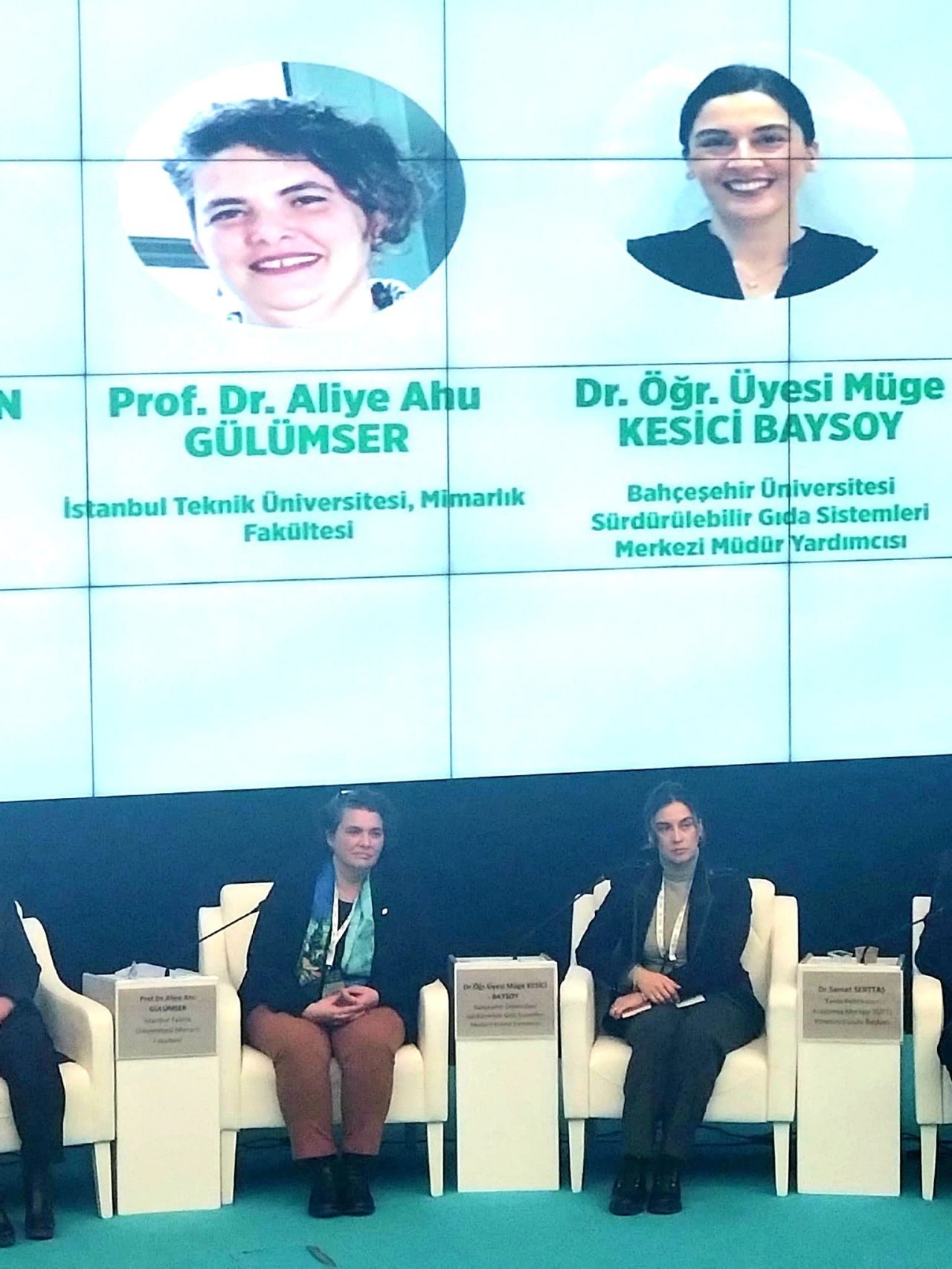
7- IV Agriculture and Forestry Council: BAU SÜGAM Contribution to Sustainable Land Use in Rural Areas
During the 2024–2025 academic year, the “Workshop on Sustainable Living in Rural Areas,” held as part of the IV Agriculture and Forestry Council organised by the Ministry of Agriculture and Forestry of the Republic of Türkiye, brought together experts, academics, and policymakers to discuss innovative approaches to sustainable rural development. Bahçeşehir University (BAU) contributed to the workshop through Assistant Professor Dr. Müge Kesici Baysoy, Deputy Director of the Bahçeşehir University Sustainable Food Systems Application and Research Center (BAU SÜGAM). Representing the Center, Dr. Baysoy delivered a presentation titled “Innovative Technologies in Rural Areas” within the session “Resilience in Rural Areas,” connecting technological innovation with the sustainable utilisation of agricultural land and natural resources.
In her presentation, Dr. Baysoy highlighted the potential of technological innovation, digital transformation, and data-driven agricultural practices to improve agricultural productivity, strengthen rural livelihoods, and support sustainable natural resource management. These approaches can enable more informed decisions about cultivation practices and resource allocation, helping agricultural communities use productive land more efficiently while taking account of environmental conditions. The discussion emphasised that the future of rural development depends not only on increasing agricultural output but also on ensuring that farming systems remain environmentally sustainable, economically viable, and resilient to changing climatic and ecological conditions.
A central connection with SDG 15: Life on Land concerned the relationship between agricultural modernisation and the responsible management of terrestrial ecosystems. Sustainable rural development depends on maintaining the environmental foundations of agricultural production, including healthy soils, productive land, biodiversity, and natural resources. By supporting more precise resource management, monitoring environmental conditions, and informing agricultural decisions, innovative technologies can help reduce pressures on land and surrounding ecosystems. This perspective positions the sustainable utilisation of land as an essential component of rural resilience, linking the continuity of agricultural livelihoods with the long-term protection of the resources on which they depend.
The workshop’s focus on resource conservation and sustainable agricultural practices was relevant to SDG Target 15.3, particularly its objective of combating land degradation. Connecting technological innovation with environmental responsibility encouraged consideration of agricultural development strategies that balance food production with soil protection and the long-term health of terrestrial ecosystems. Through BAU SÜGAM’s institutional academic contribution, BAU supported knowledge exchange within a national policy forum, promoting awareness of how innovative agricultural practices can advance sustainable land management and SDG 15: Life on Land.
A selected photographic highlight from Dr. Müge Kesici Baysoy’s presentation is presented below.
8- Seed Ball Workshop: Promoting Land Conservation through Environmental Education in Malatya
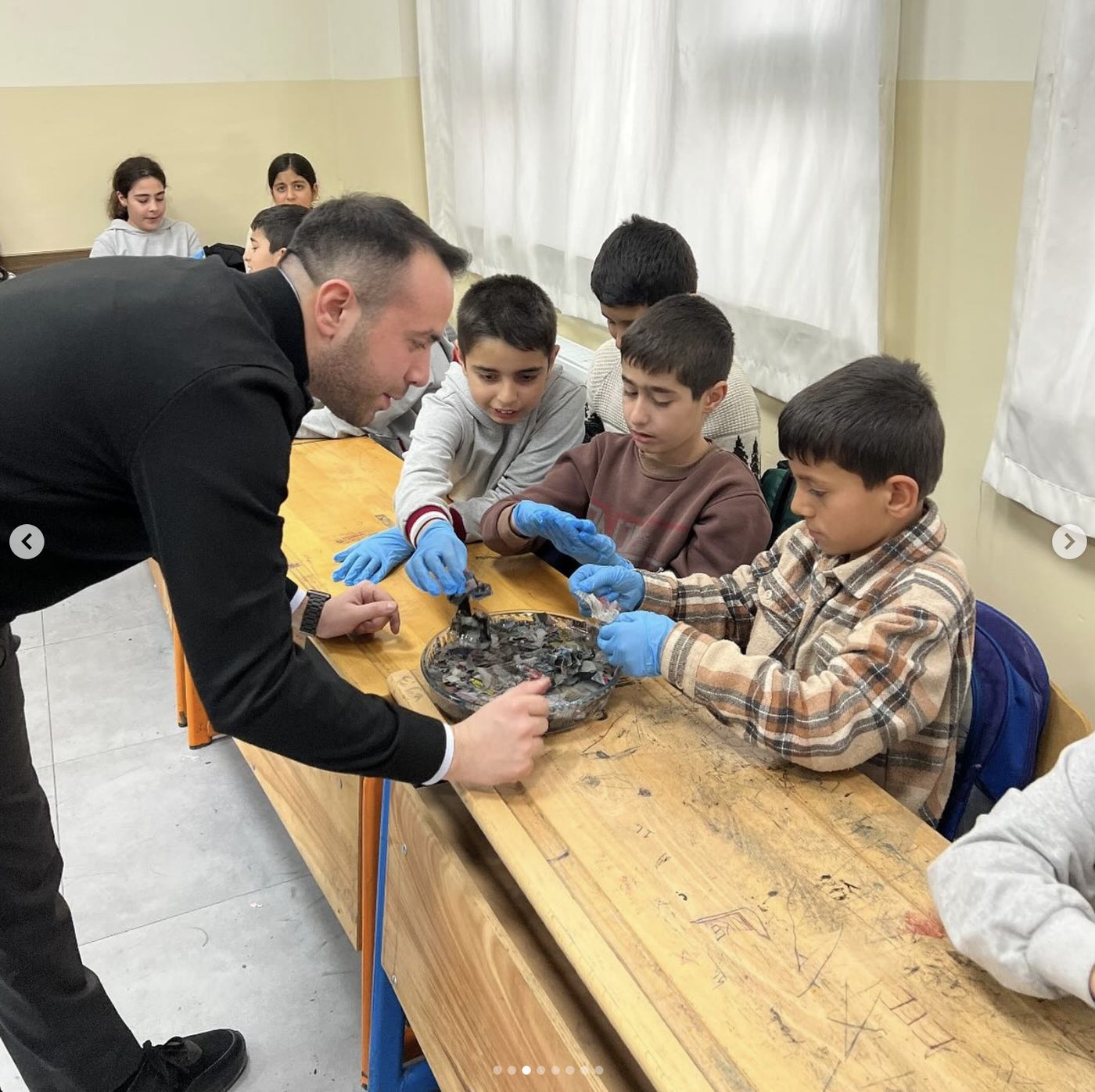
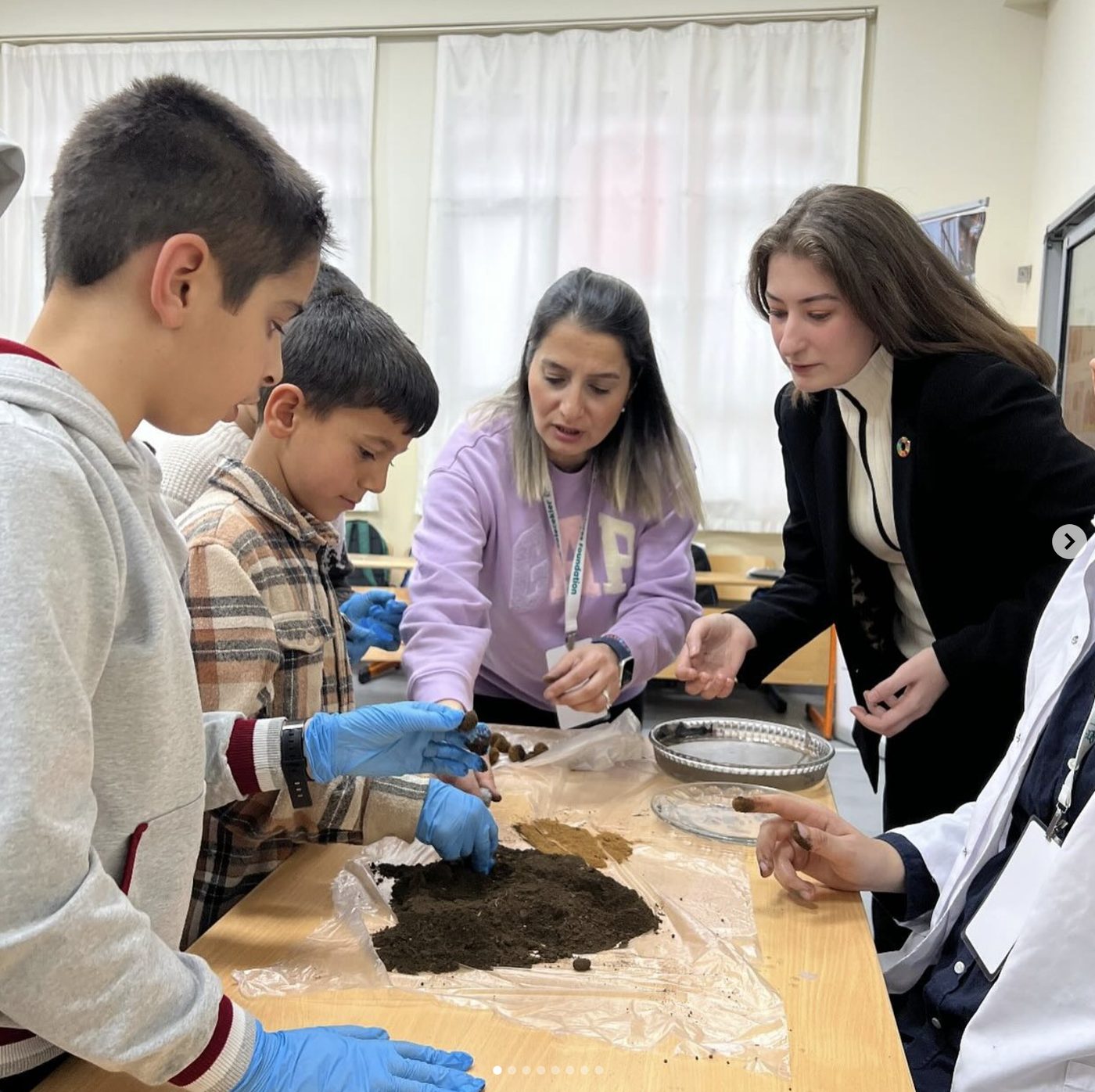
During the 2024–2025 academic year, the CIFAL Istanbul team from Bahçeşehir University (BAU) travelled to Malatya to organise activities encouraging the protection of the local natural environment following the devastating earthquakes. In collaboration with Bright Futures Foundation, the team held a Seed Ball Workshop at Malatya Şehit Aytaç Altunörs Secondary School, engaging primary school children in an activity designed to promote environmental responsibility, biodiversity awareness, and the conservation of land through direct interaction with natural materials.
With guidance and support from the team, students prepared seed balls using recycled newspaper, flower seeds, soil, and cinnamon powder. The children wrapped flower seeds in moistened newspaper before coating them with soil and cinnamon powder. Repurposing waste newspapers introduced participants to environmentally conscious production methods and demonstrated how everyday materials can be incorporated into creative activities that encourage care for nature. The workshop connected responsible resource use with an accessible introduction to seeds, soil, and plant life.
Through this hands-on experience, children were encouraged to recognise soil as a resource that supports plant growth and terrestrial life. Preparing seed balls provided a practical starting point for discussing the importance of protecting natural environments, preserving biodiversity, and living in harmony with nature. In the context of post-disaster recovery, the activity also sought to support hope and resilience by helping children reconnect with nature, while nurturing awareness of a sustainable future from an early age.
Through this workshop, BAU, through CIFAL Istanbul, promoted SDG 15: Life on Land by making land conservation and ecological awareness accessible to young learners. Combining environmental education with participation, the event encouraged children to develop a sense of responsibility for the soil, plants, and natural spaces around them. It reflected the understanding that early experiences of caring for nature can help build a lasting commitment to protecting terrestrial environments.
Some selected photographic highlights from the workshop are presented below.
9- Sapling Planting Event: Encouraging Children’s Participation in Land Conservation in Malatya
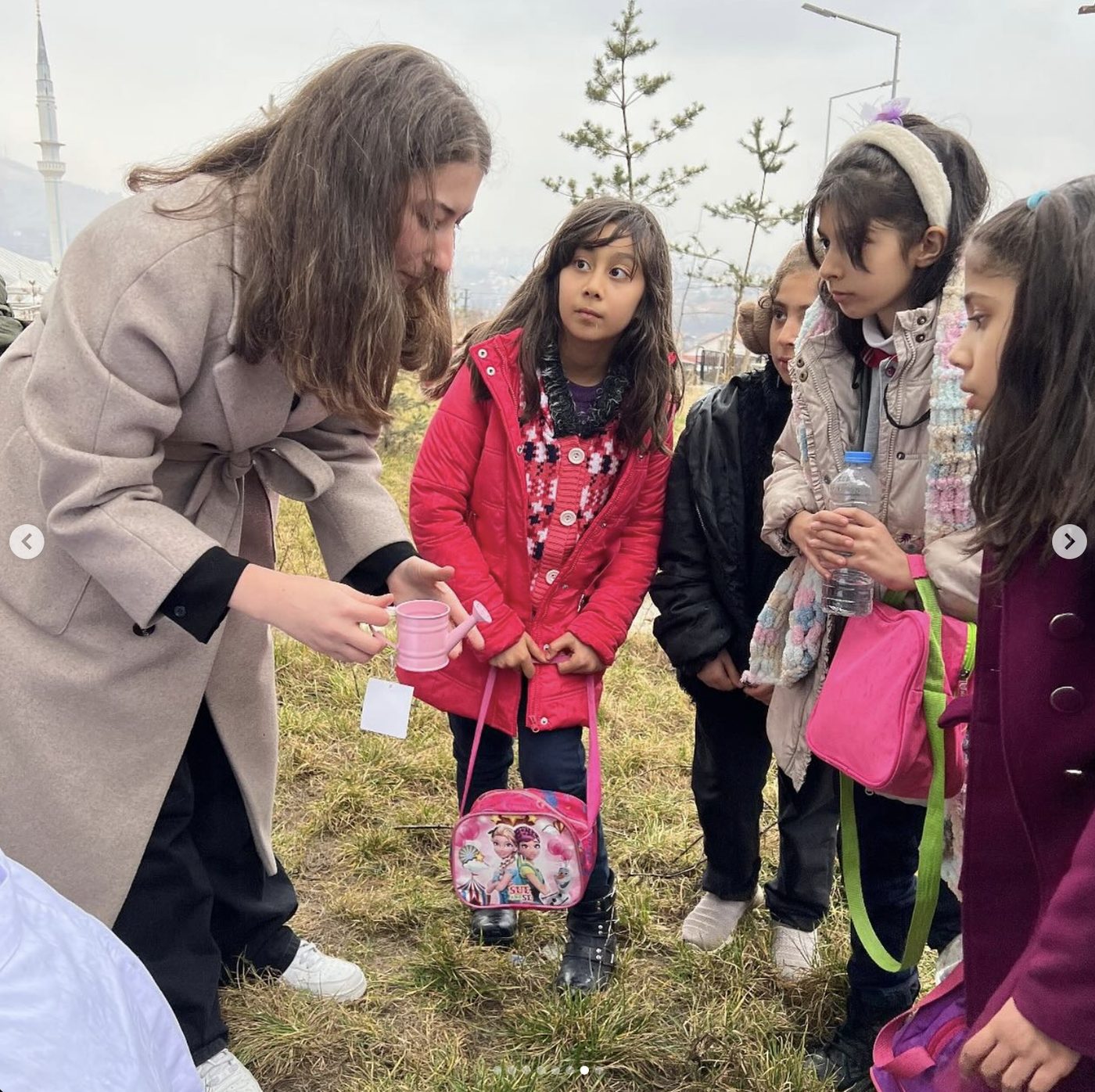
During the 2024–2025 academic year, as part of its visit to Malatya following the devastating earthquakes, the CIFAL Istanbul team from Bahçeşehir University (BAU) collaborated with Bright Futures Foundation to organise a Sapling Planting Event at Malatya Şehit Aytaç Altunörs Secondary School. The event formed part of a wider effort to promote the protection of the local natural environment and engage children in caring for the land during the post-disaster recovery process.
Following the Seed Ball Workshop, primary school children planted their own saplings in the school’s backyard with support from the team. This practical activity gave participants an opportunity to engage directly with the soil and contribute to greening their school environment. By taking an active role in planting, children strengthened their connection with nature and were encouraged to see the protection of trees and the land that sustains them as a shared responsibility.
The event combined participation in planting with awareness of ecosystem protection, biodiversity, and environmental sustainability. It encouraged children to appreciate the relationship between soil, trees, and other living organisms, while developing a sense of care for the natural spaces in their everyday surroundings. Reconnecting with nature also served as a means of supporting hope, resilience, and collective engagement following the disaster, linking environmental responsibility with a positive, shared experience of caring for their school grounds.
Through this initiative, BAU, through CIFAL Istanbul, supported SDG 15: Life on Land by organising an activity that promoted land conservation through environmental education and direct participation in sapling planting. The event encouraged children to live in harmony with nature and recognise their own role in protecting terrestrial environments. By bringing young learners closer to the soil and involving them in greening a familiar space, the initiative sought to nurture an enduring commitment to a healthier and greener future.
Some selected photographic highlights from the event are presented below.
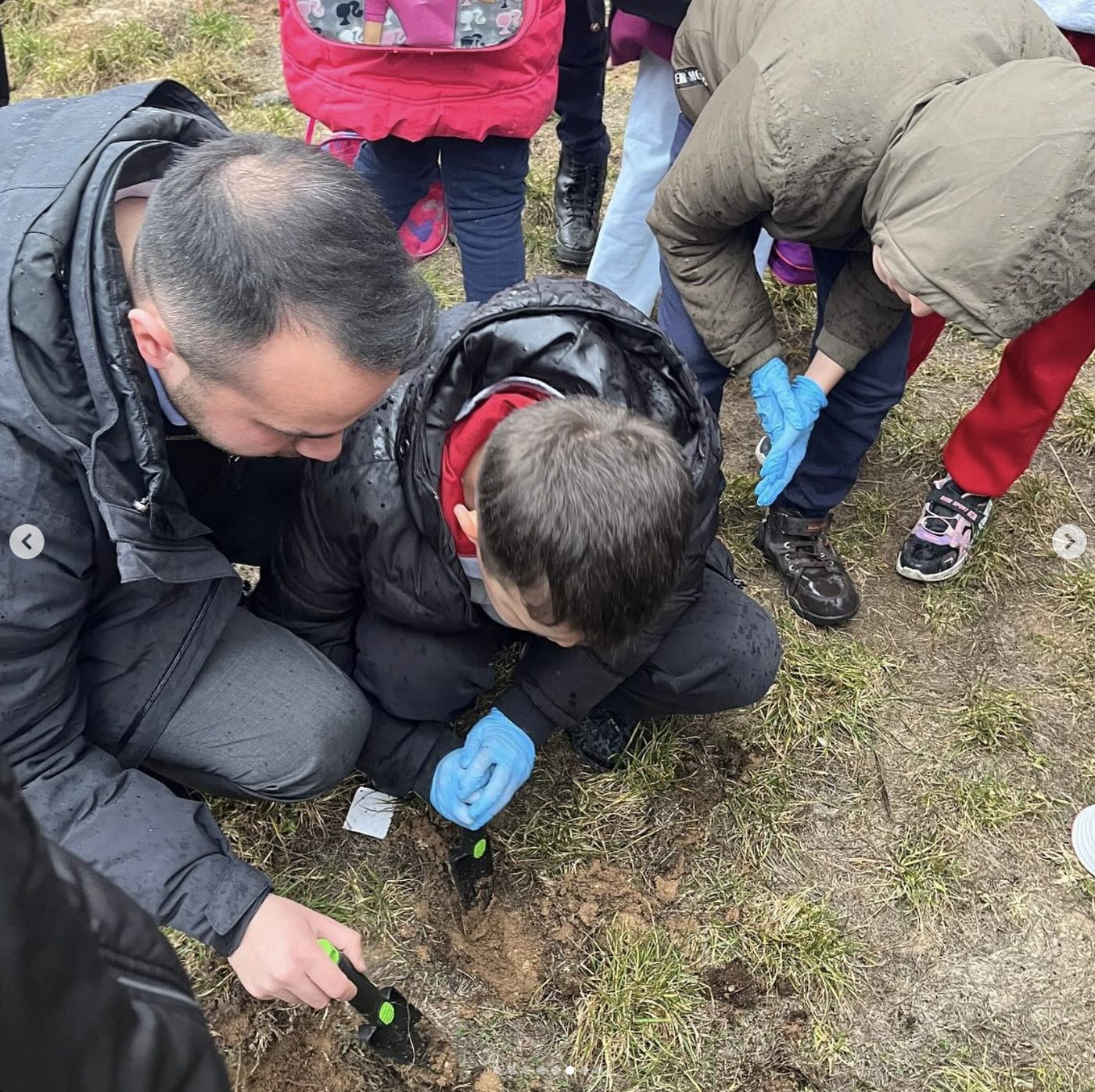
10- Promoting Sustainable Agricultural Land Management through Community Outreach: The Future of Türkiye's Hazelnut Production
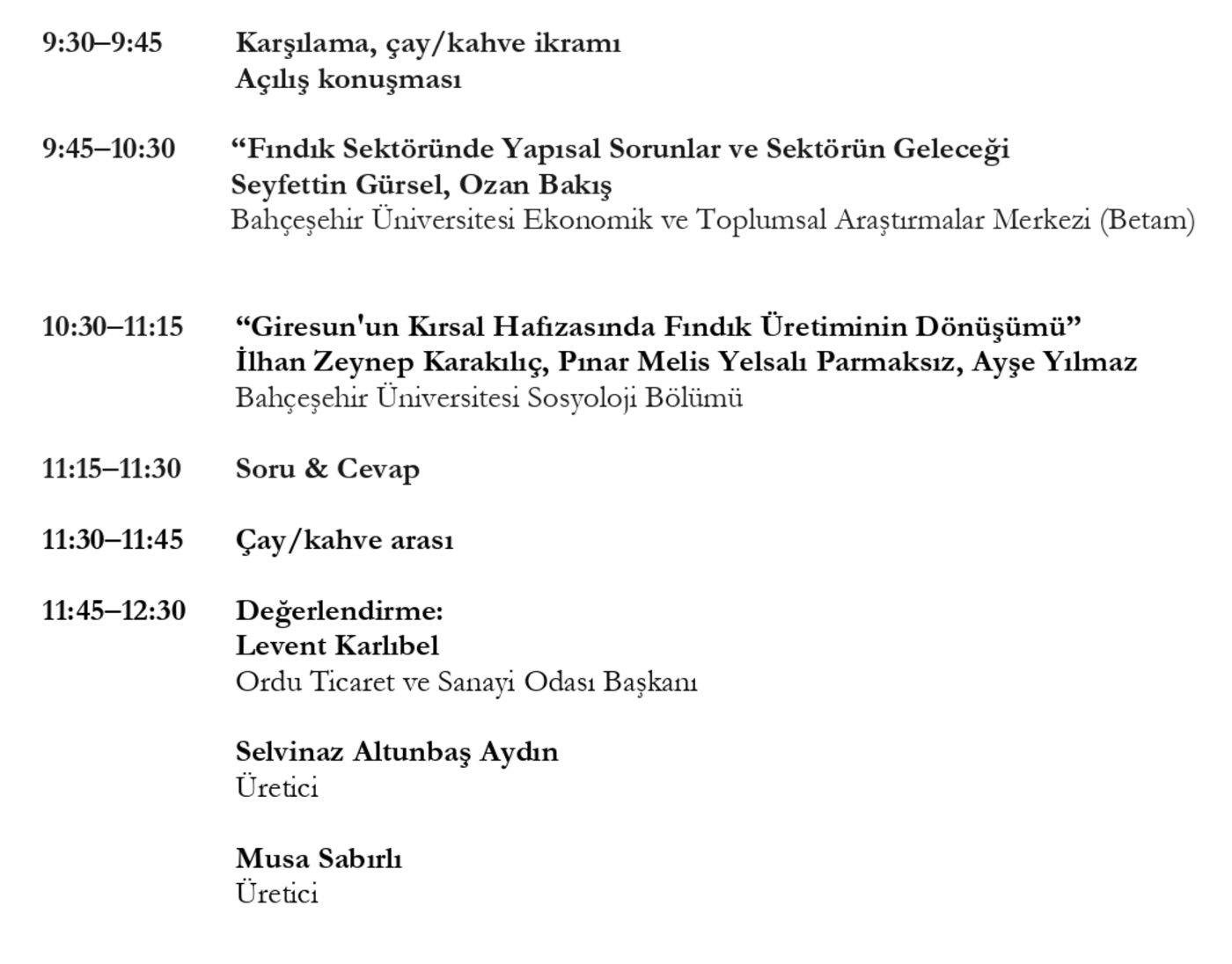
Bahçeşehir University’s Center for Economic and Social Research (BETAM) and Department of Sociology jointly organised the conference “Economic and Social Challenges and Transformations in Türkiye’s Hazelnut Production” at the BAU Beşiktaş Campus. The programme presented findings from two complementary reports: Türkiye’de Fındık Sektörünün Geleceği ve Sorunları (The Future and Problems of Türkiye’s Hazelnut Sector) and Giresun’un Kırsal Hafızasında Fındık Üretiminin Dönüşen Hikâyesi (The Changing Story of Hazelnut Production in Giresun’s Rural Memory). By bringing together quantitative economic research, qualitative field-based evidence, and stakeholder evaluations, BAU created a platform for discussing the future of hazelnut farming in relation to the sustainable utilisation of agricultural land, soil conservation, and the resilience of rural livelihoods.
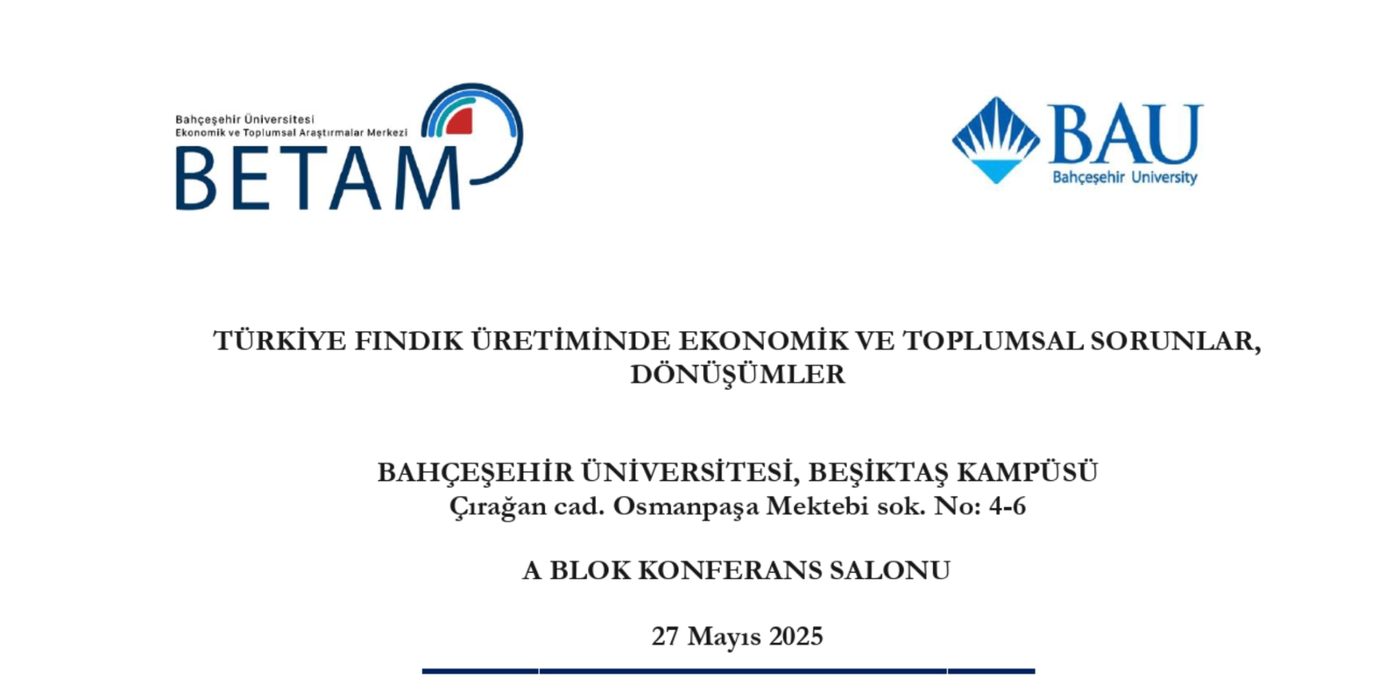
On 27 May 2025, Bahçeşehir University's Center for Economic and Social Research (BETAM) and Department of Sociology jointly organized the conference “Economic and Social Challenges and Transformations in Türkiye's Hazelnut Production”, providing a platform for sharing research findings and engaging stakeholders in discussions on sustainable agricultural land management.
The conference presented two complementary studies examining challenges facing Türkiye's hazelnut sector, including soil degradation, climate-related pressures, agricultural productivity, changing cultivation practices, and the loss of traditional farming knowledge in Giresun.
Drawing on field observations, producer interviews, and economic analysis, the programme highlighted the importance of protecting agricultural soils, maintaining productive land, and strengthening knowledge exchange between farmers and agricultural specialists. Particular attention was given to the need for locally appropriate agricultural guidance and sustainable cultivation practices that support the long-term resilience of hazelnut-growing landscapes.
Through the dissemination of research findings and stakeholder dialogue, BAU contributed to educational outreach on sustainable agricultural land management, connecting scientific knowledge with practical challenges affecting farming communities.
The conference’s consideration of these issues was particularly relevant to SDG Target 15.3, which addresses land degradation and the restoration of degraded land and soil. By presenting evidence on soil-related challenges and land management practices, BAU supported informed discussion of approaches that can help maintain the long-term productive capacity of agricultural land. Bringing the two reports together demonstrated that sustainable hazelnut production requires attention to economic viability, soil conditions, environmental change, agricultural knowledge, and the social structures that sustain farming communities.
Through this jointly organised event, BAU promoted awareness of land conservation and the sustainable utilisation of agricultural land, connecting academic research with stakeholder perspectives on the future of rural production systems. The conference reinforced the interdependence of productive farming systems, healthy soils, biodiversity-supporting environments, and the continuity of rural knowledge. In doing so, it supported SDG 15: Life on Land by placing responsible land management and the protection of the environmental foundations of agriculture within a broader dialogue on rural resilience and long-term food security.
The images below show the conference programme, including the presentation sessions and stakeholder discussions.
11- Bahçeşehir University Farm Visit with FAO Türkiye: Promoting Sustainable Land Use and Land Stewardship
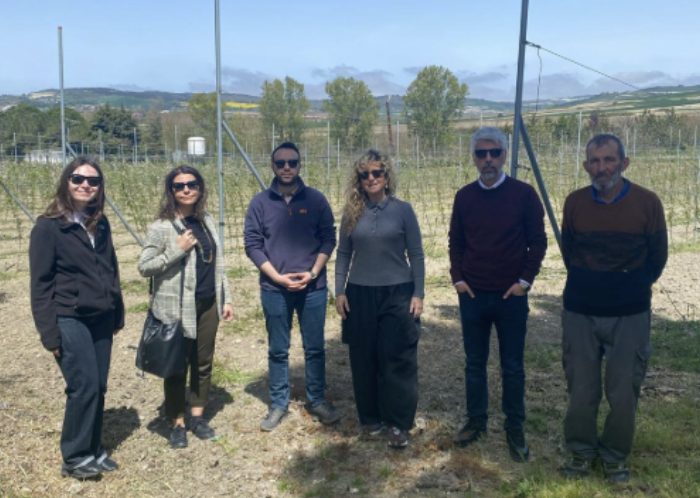
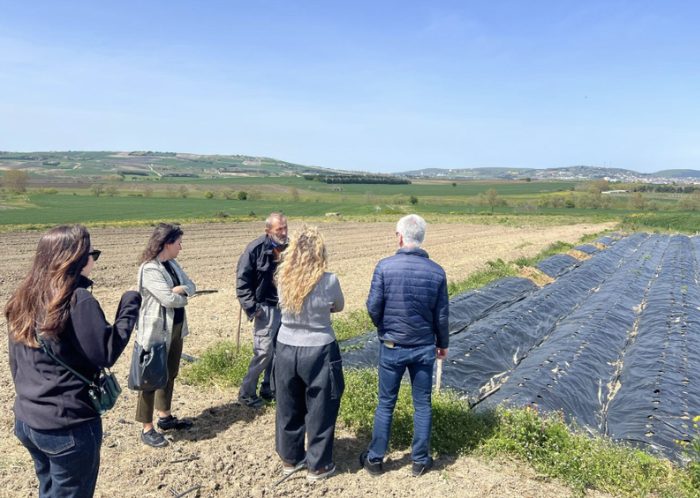
On 17 April 2025, CIFAL Istanbul, UNITAR, organised a field visit and hosted representatives of Food and Agriculture Organization of the United Nations (FAO) Türkiye at the Bahçeşehir University (BAU) Agricultural Farm in Çatalca, Istanbul. Bringing together the CIFAL Istanbul team and FAO Türkiye representatives, the visit provided an opportunity for on-site observation and discussion of sustainable agricultural practices, efficient natural resource management, and the responsible utilisation of agricultural land. By connecting international agricultural expertise with a university farming setting, BAU supported an exchange on the environmental responsibilities of agricultural production and the long-term management of productive landscapes.
Discussions focused on the relationship between sustainable farming and the protection of the natural resources on which agriculture depends. Soil health, land conservation, climate awareness, and resource efficiency were considered as interconnected elements of agricultural sustainability. The farm setting enabled participants to relate these themes to practical agricultural contexts, highlighting the importance of maintaining the ecological functions that sustain cultivation. The exchange reinforced the understanding that productive land must be managed with attention to both current agricultural needs and the prevention of soil and resource degradation over time.
The visit also provided a platform for discussing potential future joint projects between CIFAL Istanbul and FAO Türkiye concerning sustainable agriculture and responsible land management. These discussions explored opportunities to connect academic knowledge, agricultural expertise, and practical experience through collaborative initiatives. Considering possible areas of cooperation extended the visit’s focus beyond immediate observations towards opportunities for further work on sustainable farming and the conservation of agricultural resources.
Through its organisation of this field visit, BAU, through CIFAL Istanbul, promoted SDG 15: Life on Land by facilitating on-site learning and expert dialogue on land stewardship, soil protection, and the sustainable utilisation of land. The engagement with FAO Türkiye highlighted the value of knowledge exchange in developing approaches that maintain agricultural productivity while caring for terrestrial ecosystems. It also reinforced the importance of integrating environmental considerations into farming practices and future collaborative projects.
The photographs below show the CIFAL Istanbul team and FAO Türkiye representatives during their visit to the BAU Agricultural Farm in Çatalca.
12- Who Will Save the World? Planetary Nursing: Raising Awareness of Ecosystem and Biodiversity Conservation
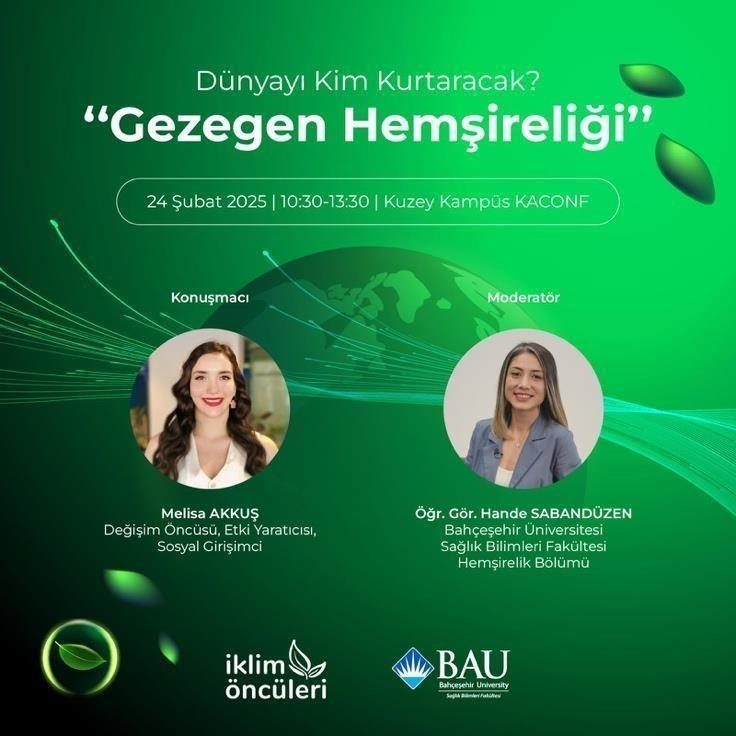
On 24 February 2025, Bahçeşehir University (BAU), in collaboration with Climate Pioneers Association , organised “Who Will Save the World? Planetary Nursing,” an event exploring the connections between human health and the natural environment. The programme introduced participants to planetary health and the emerging field of planetary nursing, emphasising that human well-being depends on healthy ecosystems and the protection of biodiversity. Through this educational platform, BAU promoted awareness of the conservation of terrestrial environments as a shared responsibility extending across professional disciplines.
The programme examined how excessive resource consumption, climate change, pollution, and biodiversity loss generate growing risks for physical and mental health, particularly among environmentally vulnerable communities. By considering these pressures together, the event highlighted the relationship between environmental degradation and the conditions that sustain healthy lives. Its emphasis on ecosystem and biodiversity protection encouraged participants to recognise the importance of conserving terrestrial habitats and using natural resources responsibly, connecting care for human health with care for life on land.
Drawing on the foundational principles of the nursing profession, the event positioned nurses as important advocates for planetary health. It emphasised that healthcare professionals can contribute through patient care, environmental education, sustainable practices within healthcare systems, and preventive approaches that address the environmental determinants of health. Responsible resource use and environmental awareness were presented as areas in which professional practice can support broader efforts to reduce environmental pressures. This perspective encouraged nurses to consider ecosystem protection within their educational and advocacy roles.
Through this jointly organised event, BAU supported SDG 15: Life on Land by promoting understanding of the importance of protecting terrestrial ecosystems, safeguarding biodiversity, and conserving the natural environments on which human and animal life depend. Linking planetary nursing with environmental responsibility provided an opportunity to engage health professionals and participants in conservation awareness. The event reinforced the value of multidisciplinary cooperation in protecting both human and planetary well-being, while encouraging informed advocacy for healthier ecosystems and the responsible use of natural resources.
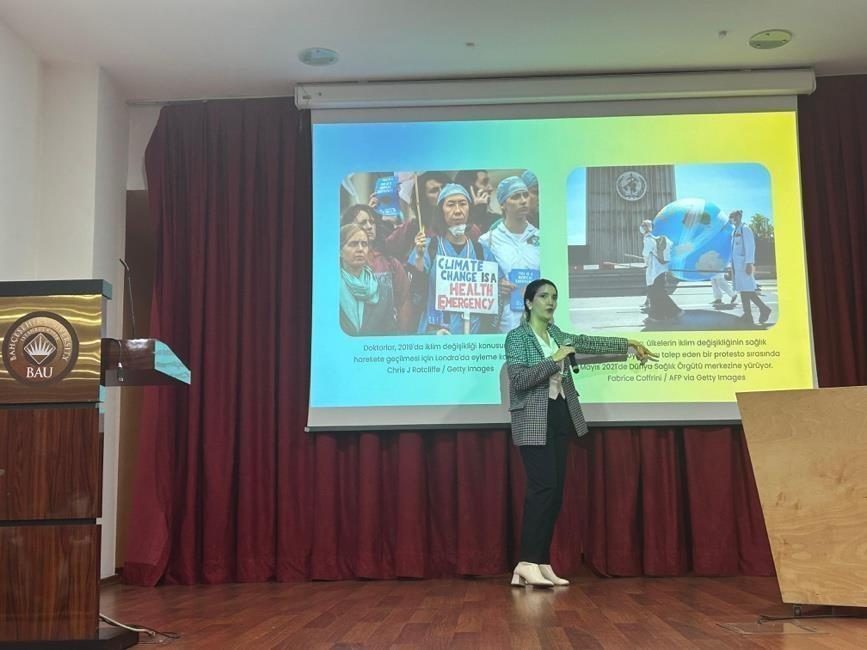
The images below show the event poster and a photograph from “Who Will Save the World? Planetary Nursing,” jointly organised by BAU and İklim Öncüleri Derneği.
13- AI-Integrated Soil and Resource Management in Mediterranean Olive Cultivation: Sustainable Land Use and Ecosystem Maintenance
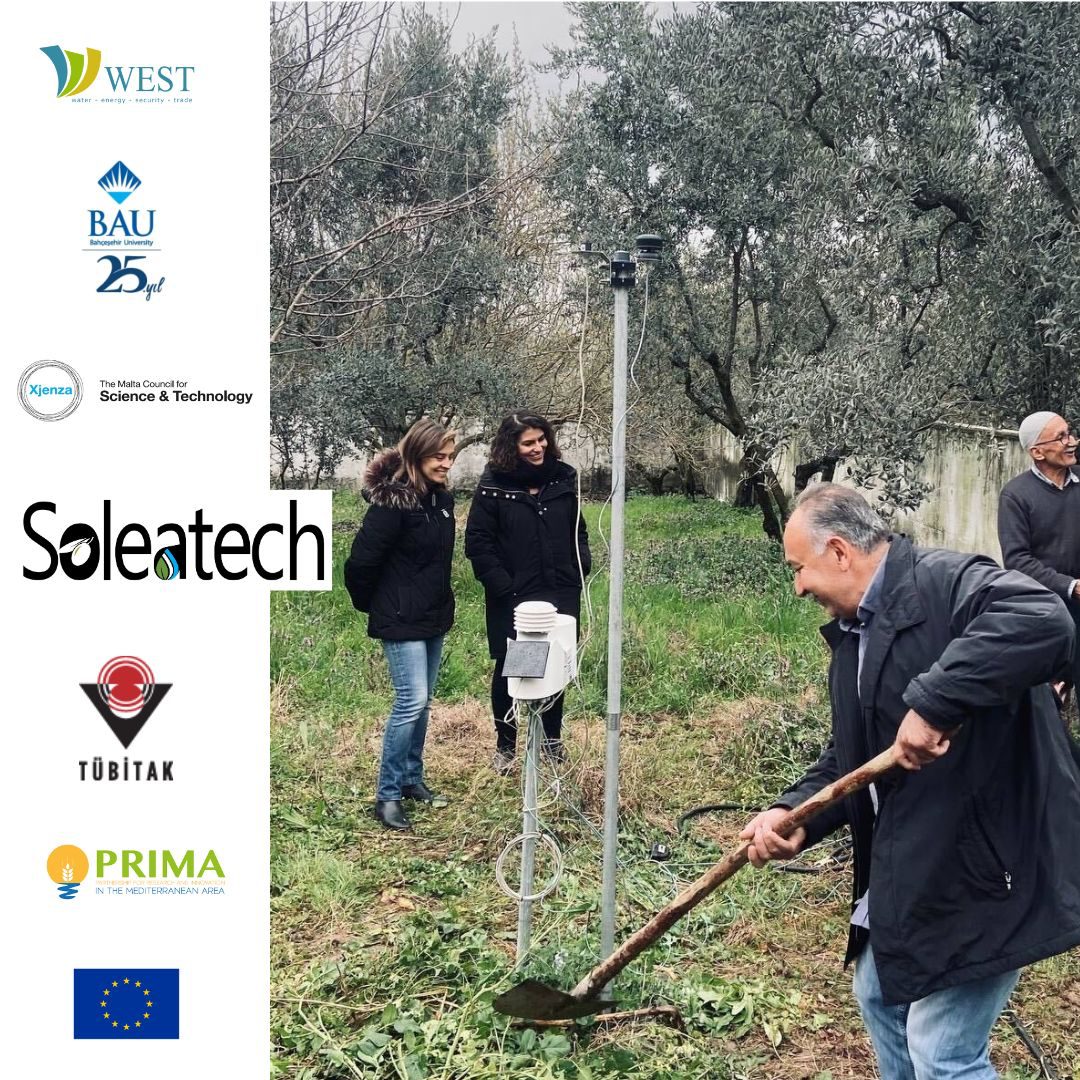
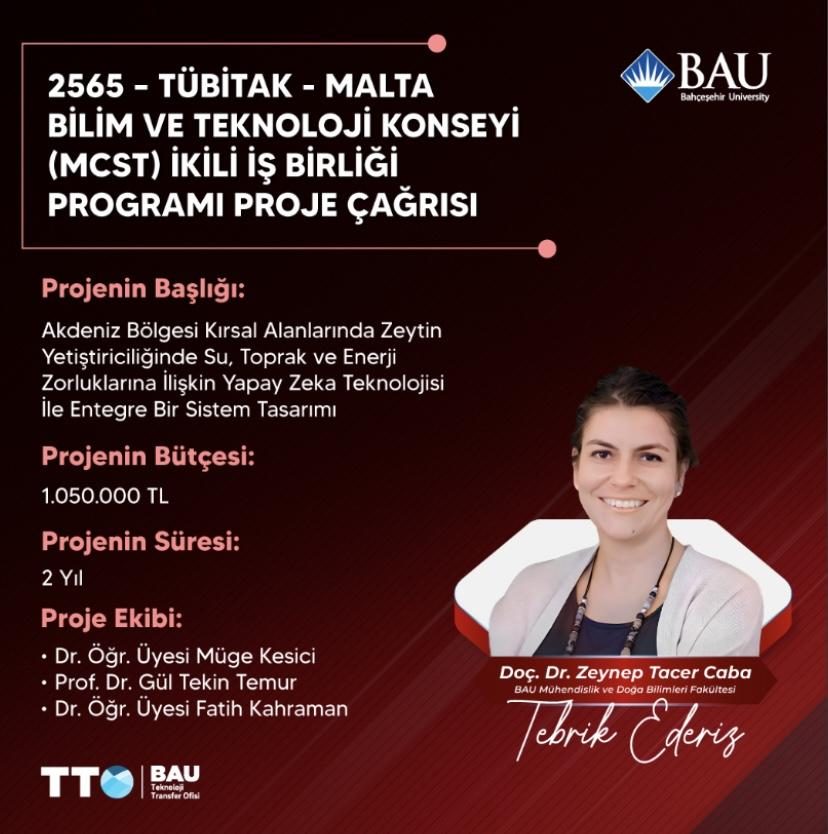
Bahçeşehir University (BAU) contributes to international research on sustainable agricultural land management through the project “Designing an Integrated System Using Artificial Intelligence Technology to Address Water, Soil, and Energy Challenges in Olive Cultivation in Rural Areas of the Mediterranean Region.” Jointly led by Assoc. Prof. Dr. Zeynep Tacer Caba from BAU, Türkiye, and Barbara Bracone, Director of Malta Wes Trade Ltd., Malta, the project brings together research expertise and practical experience from two Mediterranean countries. Its focus on AI-integrated soil and resource management in olive cultivation connects the sustainable utilisation of agricultural land with the maintenance of the ecological conditions that support existing olive-growing ecosystems.
Supported through the Bilateral Cooperation Support Program by the Scientific and Technological Research Council of Türkiye (TÜBİTAK) and the Malta Council for Science and Technology (MCST), the initiative aims to develop an AI-driven sustainable agricultural model incorporating climate-smart practices to optimise water, soil, and energy management. The partners evaluate and implement best practices from both countries, comparing cultivation methods, resource management approaches, and technological applications. This process seeks to identify effective, internationally transferable approaches that support productive olive cultivation while addressing shared environmental and agricultural challenges.
In relation to 15.2.1, the project’s emphasis on the conservation and sustainable utilisation of land provides a foundation for examining how AI-supported agricultural decisions can improve the management of existing olive-growing areas. Integrating information on soil and environmental conditions support more precise resource allocation and better-informed cultivation practices, helping align agricultural production with the long-term capacity of the land. Through its contribution, BAU connects technological innovation with soil conservation, resource efficiency, and responsible agricultural land stewardship, generating knowledge that can inform educational exchanges and the promotion of sustainable farming practices.
Through comparative research, data-driven modelling, and applied field studies, the collaboration jointly assesses, adapts, and develops approaches to water efficiency, soil management, and energy use. Drawing on the expertise and local innovations of Türkiye and Malta, the partners seek to generate scalable solutions for sustainable rural development across the Mediterranean region. The resulting research-based approaches are intended to inform agricultural practices in other Mediterranean contexts facing similar environmental pressures, supporting the continued productive use of land while seeking to prevent further degradation.
The institutional framework is significant because the research addresses areas directly relevant to public policy, including sustainable agriculture, water resource management, climate adaptation, rural development, and technological innovation. Through their support for collaborative research, TÜBİTAK and MCST facilitate the development of scientific knowledge and technological solutions relevant to national and regional sustainability priorities. Within this framework, BAU contributes evidence and expertise concerning how agricultural landscapes can remain productive while their soil and natural resources are conserved.
The project’s applied field studies and evaluation of soil management practices provide a basis for its relevance to 15.2.3, concerning direct work to maintain and extend existing ecosystems and their biodiversity. Olive-growing landscapes depend on functioning soils, appropriate water management, and ecological processes that sustain cultivation. By developing and evaluating practices intended to improve soil health and reduce environmental pressures, the project seeks to support the maintenance and resilience of existing agricultural ecosystems. Its contribution in this area centres on field-based work and ecosystem maintenance; any extension of habitats or demonstrated biodiversity improvements would depend on the practices implemented and the outcomes documented.
Through AI-driven monitoring, comparative analysis of soil management practices, and resource-efficient cultivation approaches, the partners investigate ways to reduce pressures on Mediterranean agricultural ecosystems. Field-based implementation links technological research with practical land management, enabling the assessment of approaches intended to protect soil conditions and sustain ecosystem functioning. In this context, the project connects the responsible utilisation of agricultural land with the protection of the environmental foundations on which both cultivation and associated biodiversity depend.
A central dimension of the collaboration is the comparative evaluation, exchange, and application of best practices between Türkiye and Malta. Bringing together technological expertise, local innovations, and practical experience supports mutual learning and the development of approaches adapted to comparable agricultural and environmental conditions. This cross-border exchange contributes to the identification, development, and potential dissemination of sustainability-related best practices, strengthening the capacity of participating institutions to address shared challenges in sustainable food production, soil conservation, ecosystem protection, and resource management.
Across these complementary dimensions, BAU supports SDG 15: Life on Land through research and applied innovation aimed at improving soil health, preventing land degradation, and maintaining agricultural landscapes. These objectives are particularly relevant to SDG Target 15.3, which addresses desertification and the restoration of degraded land and soil, including land affected by drought. By combining artificial intelligence, environmental science, comparative research, and cross-border policy dialogue, the project seeks to develop an agricultural model that advances the sustainable utilisation of land while supporting the long-term ecological health of Mediterranean olive-growing ecosystems.
The announcement poster of the project and a selected photographic highlight from the project are presented below.
14- BAU and CIFAL Istanbul Participation in Reforestation: Conserving Forest Land and Supporting Ecosystem Recovery
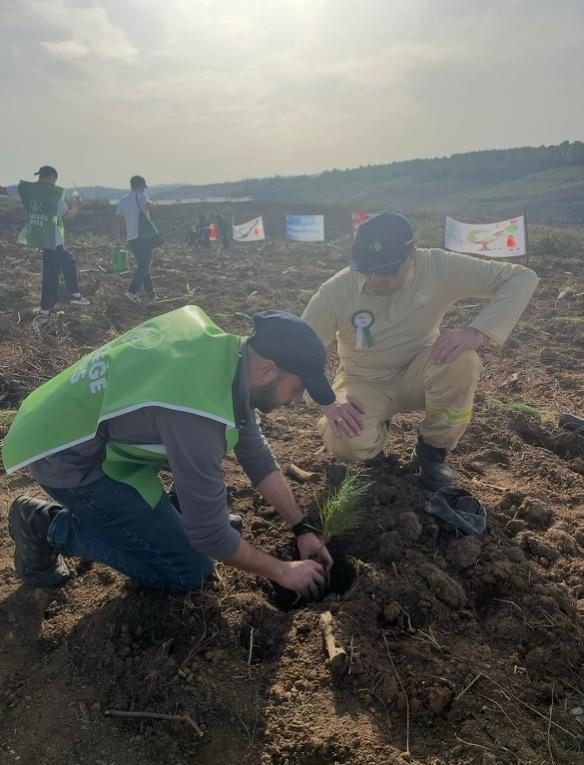
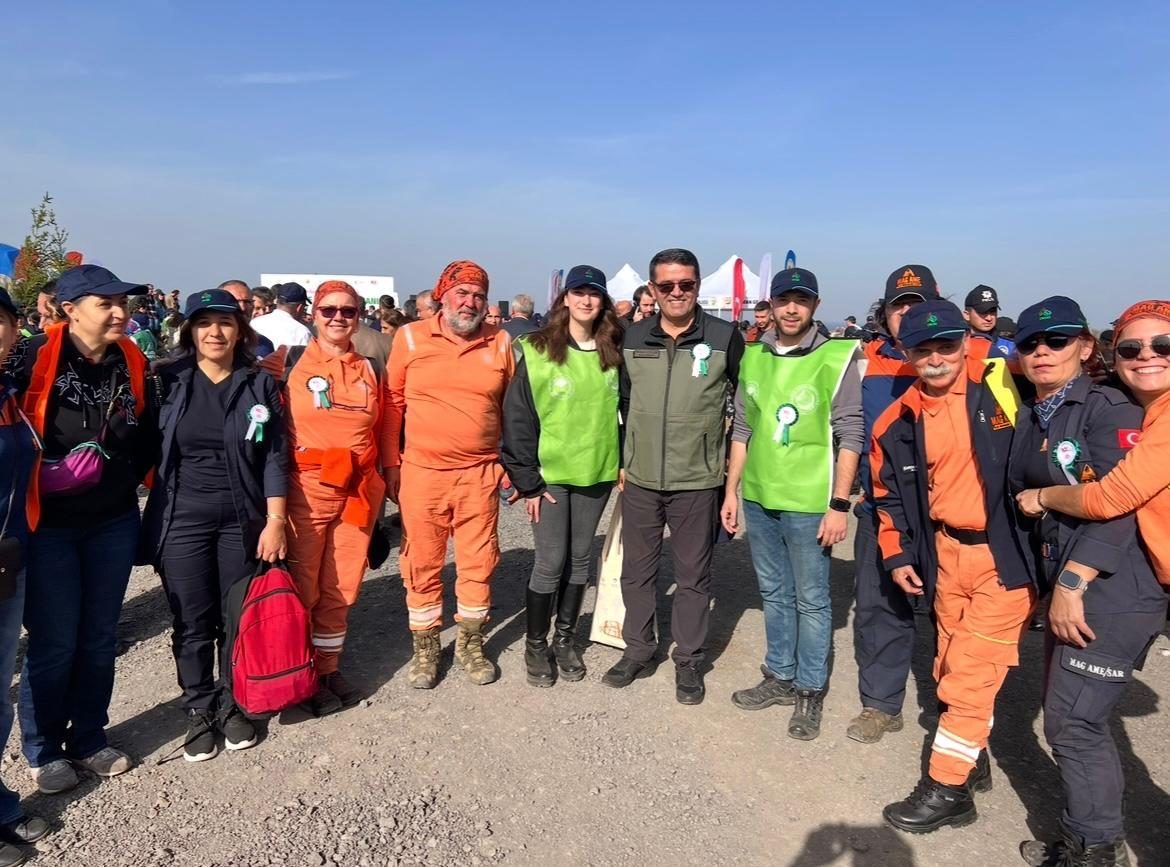
During the 2024–2025 academic year, Bahçeşehir University (BAU) and CIFAL Istanbul team members participated in a reforestation initiative in a forest area of Istanbul severely damaged by wildfires. Their participation supported ongoing recovery efforts aimed at rehabilitating fire-affected land and restoring forest ecosystems. Through the involvement of its team members, BAU contributed to a collective environmental activity connecting the conservation of land and forests with practical efforts to recover damaged terrestrial habitats.
In relation to 15.2.1, the initiative provided a concrete opportunity for BAU and CIFAL Istanbul to support an activity promoting forest and wild land conservation. Participation in reforestation connected environmental awareness with hands-on engagement, reinforcing collective responsibility for protecting natural landscapes. The activity also drew attention to the long-term environmental consequences of forest degradation and the importance of sustained involvement in the rehabilitation of fire-affected areas.
The initiative addressed the need to support forest recovery following wildfire damage. Forest fires affect not only trees but also the habitats and ecological relationships that sustain terrestrial life. Reforestation forms part of a longer-term recovery process intended to re-establish tree cover and support the renewal of forest environments. By participating in these efforts, BAU and CIFAL Istanbul team members contributed directly to an organised rehabilitation activity focused on restoring vegetation within an existing forest landscape.
This practical involvement also establishes a connection with 15.2.3, concerning work to maintain and extend existing ecosystems and their biodiversity. Within this framework, the team’s contribution centred on supporting the recovery of an existing ecosystem through reforestation of its fire-damaged areas. Re-establishing vegetation can help rebuild the conditions needed for habitat recovery and the continuity of ecological processes. The activity therefore supported ecosystem maintenance and rehabilitation, with its contribution to the recovery of forest cover forming part of the broader effort to strengthen the damaged landscape.
A central long-term aim of the initiative was to support biodiversity and ecosystem resilience. As vegetation becomes established, forest rehabilitation can contribute to habitat availability, soil protection, and the environmental conditions on which wildlife depends. These are recovery objectives requiring time and continued care, rather than immediate outcomes of a single planting activity. BAU’s participation supported this longer-term process by contributing to collective action directed towards the restoration of degraded forest land.
The activity also promoted public awareness and shared responsibility for conserving forests and natural habitats. Participation offered an opportunity to connect the visible consequences of wildfire damage with practical action for ecosystem recovery. In this way, the initiative brought together the awareness and engagement dimension relevant to 15.2.1 and the direct participation in ecosystem rehabilitation relevant to 15.2.3, linking the promotion of conservation with work undertaken in the affected landscape.
Through this engagement, BAU and CIFAL Istanbul supported SDG 15: Life on Land, particularly Target 15.2, through participation in reforestation and the restoration of degraded forests. The initiative reflected the University’s commitment to the conservation of land and forests, the maintenance of existing ecosystems, and the protection of biodiversity. By contributing to recovery efforts through its team members, BAU reinforced the importance of collective action and continued stewardship in safeguarding forest landscapes for future generations.
The photographs below show BAU and CIFAL Istanbul team members participating in reforestation efforts to support forest conservation and the recovery of a wildfire-damaged ecosystem in Istanbul.
15- Clean Steps for a Greener Future: BAU Young TEMA Student Club Environmental Cleanup in Burgazada
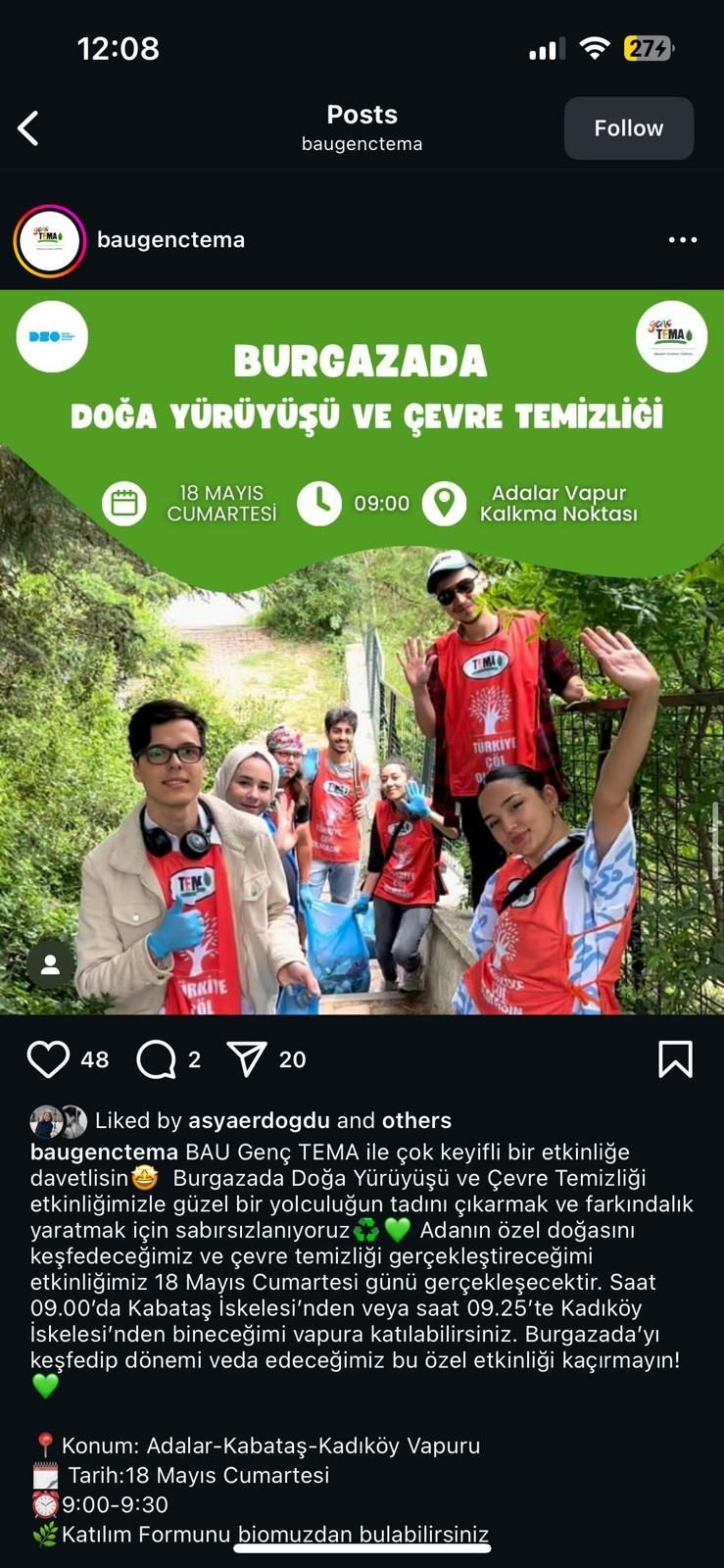
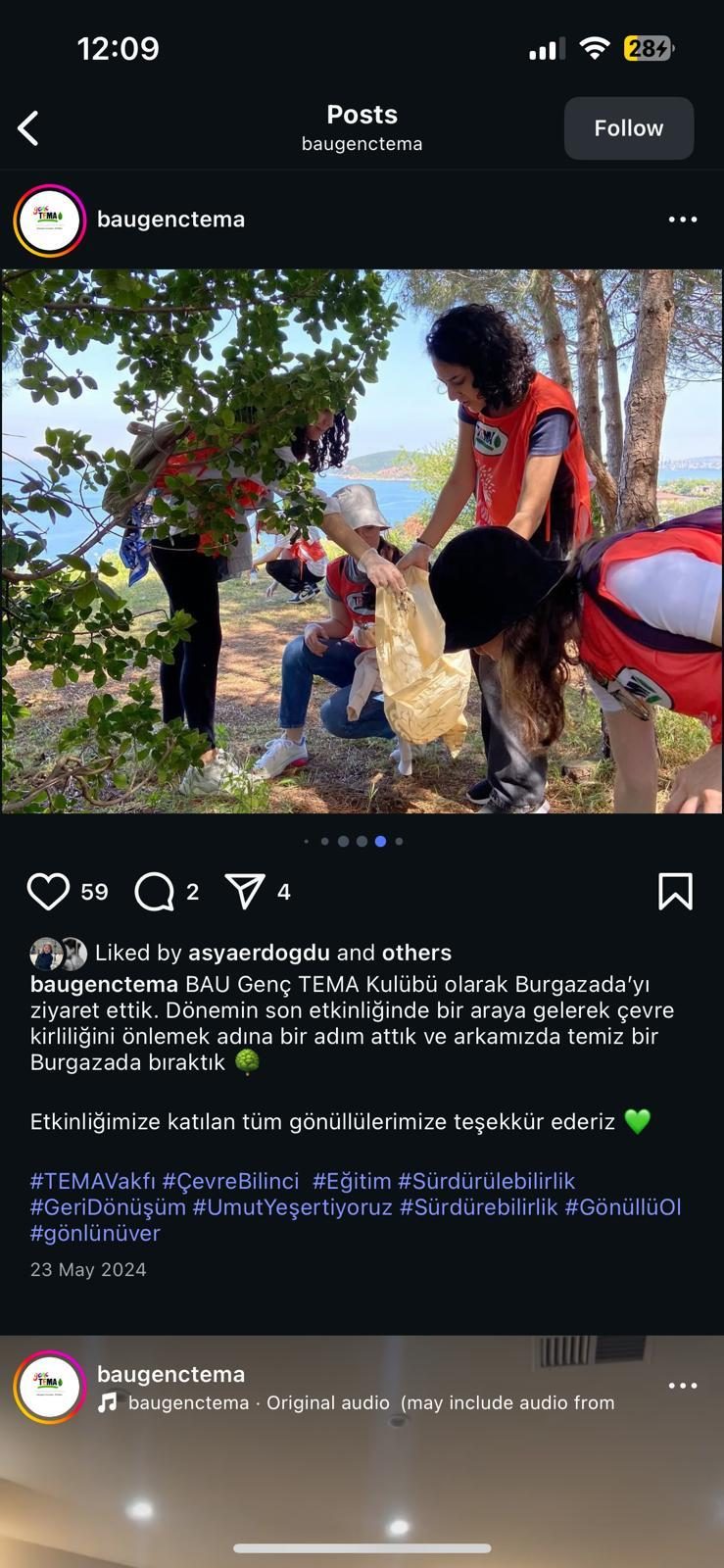
Members of the Bahçeşehir University (BAU) Young TEMA Student Club organised an Environmental Cleanup in Burgazada, engaging student volunteers in the protection of the island’s natural areas. The activity combined practical waste collection with environmental awareness, encouraging participants to take an active role in land conservation and the protection of terrestrial habitats. Through this student-led initiative, BAU supported community engagement with the care of natural landscapes.
Volunteers collected waste from the island’s natural surroundings, helping remove litter and reduce pollution pressures on the areas covered by the cleanup. The activity highlighted the importance of keeping natural habitats free from discarded materials and preventing waste from accumulating in environments that support plant and animal life. By directly participating in the cleanup, students connected environmental responsibility with practical action to protect land and preserve the condition of existing ecosystems.
At the end of the activity, participants sorted the collected waste by type to support recycling and circular economy practices. This step extended the focus from removing litter to considering the responsible management of the materials collected. The event encouraged students to adopt sustainable habits, reduce their environmental impact, and recognise how everyday choices and collective action can contribute to the protection of natural areas.
Through this initiative, BAU promoted SDG 15: Life on Land by supporting an organised activity focused on preventing land pollution, conserving natural habitats, and strengthening awareness of terrestrial ecosystem protection. The Burgazada cleanup provided students with an opportunity to contribute directly to caring for the island’s environment while reinforcing a shared responsibility for safeguarding natural landscapes and the biodiversity they support.
The images below show the event poster and a photograph from the BAU Young TEMA Student Club’s environmental cleanup in Burgazada.
16- BAU Radio Fest: Seminar on Animal Welfare in the Context of the Sustainable Development Goals
The poster for the event “Animal Welfare in the Context of the Sustainable Development Goals” is presented below.
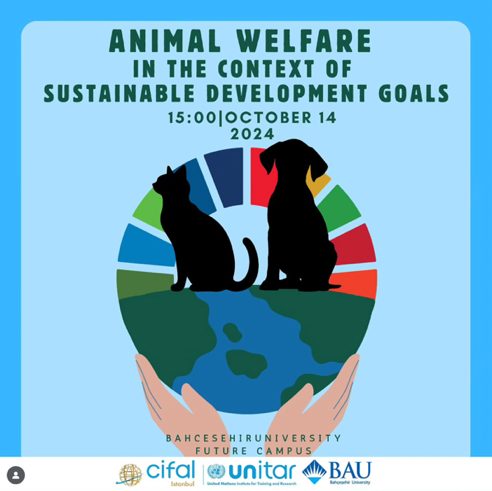
During the 2024–2025 academic year, as part of BAU Radio Fest, Bahçeşehir University (BAU), in collaboration with CIFAL Istanbul, UNITAR, and HAÇİKO – Association for the Protection of Animals from Desperation and Indifference, hosted a publicly accessible seminar titled “Animal Welfare in the Context of the Sustainable Development Goals (SDGs).” The event brought together students, academics, civil society representatives, and the general public, providing an inclusive platform for dialogue on ethical responsibility, environmental sustainability, and compassionate coexistence. Through this event, BAU encouraged participants to consider animal protection within the broader context of conserving terrestrial environments and promoting responsible use of shared land and natural resources.
The seminar explored the interconnection between animal welfare and sustainable development, emphasising that the well-being of animals is integral to a balanced and equitable future for all living beings. Speakers highlighted how ethical awareness, empathy, and civic engagement can transform societal attitudes towards animals and encourage policies and behaviours that support coexistence, respect for life, and environmental harmony. By connecting these principles with the environments in which animals live, the discussions strengthened awareness of the relationship between animal welfare, habitat protection, and the conservation of life on land.
Discussions focused on the protection of stray animals, urban biodiversity, and the ecological role of companion animals in creating healthier, more liveable cities. Participants examined how responsible urban planning, waste management, and environmental education can support animal welfare while encouraging the protection and sustainable use of urban land and green spaces. These themes connected SDG 11: Sustainable Cities and Communities with SDG 15: Life on Land through their emphasis on protecting ecosystems, reducing human-wildlife conflicts, and strengthening the moral foundations of sustainability. The seminar encouraged participants to recognise that the management of shared environments requires consideration of the needs of both people and other living beings.
By hosting this seminar, BAU reaffirmed its commitment to ethical sustainability, environmental education, and social inclusion, while providing an opportunity for public engagement with animal welfare and terrestrial ecosystem awareness. Through collaboration with civil society and international partners, the University raised awareness of how protecting animal welfare is inseparable from protecting the planet. The event reflected BAU’s holistic approach to SDG 15: Life on Land, encouraging a culture of care for animals, biodiversity, and their habitats, in which every living being is recognised as part of a shared ecological future.
The event’s selected photographic highlight from the seminar are presented below as supporting evidence of the event.