EN
5.3.4 - WOMEN SUPPORT in SUBJECTS WHERE THEY ARE UNDERREPRESENTED
Encouraging Applications by Women in Subjects Where They Are Underrepresented
Bahçeşehir University (BAU) is committed to advancing gender equality and encouraging women to pursue higher education in academic disciplines where they are traditionally underrepresented, particularly engineering, technology, natural sciences, and other male-dominated fields.
Through targeted university outreach activities, collaborations with schools, NGOs, community organisations, and industry partners, BAU actively seeks to inspire prospective female students to apply to degree programmes in these disciplines. These efforts introduce women and girls to educational opportunities, connect them with female role models and mentors, challenge gender stereotypes, and encourage them to consider academic pathways they might otherwise overlook.
Complementing these outreach initiatives, BAU provides scholarship opportunities, including its APPLY BAU scholarship system, to help reduce barriers to accessing higher education.
The following examples highlight BAU's outreach initiatives, partnerships, programmes, and activities during the 2024–2025 academic year aimed at encouraging applications by women to subjects in which they remain underrepresented.
Bahcesehir University Full PhD Science Scholarships: A Special Initiative Commemorating the 100th Anniversary of the Republic of Türkiye
In the 2023–2024 academic year, Bahçeşehir University (BAU) launched the Science Scholarship PhD Program as a special scholarship initiative commemorating the 100th anniversary of the Republic of Türkiye. Established to mark this historic milestone through investment in scientific knowledge and the next generation of researchers, the program reflects BAU’s commitment to supporting doctoral education, advancing scientific research, and promoting equal opportunities for women and men in academia.
Within the scope of this special initiative, 77 doctoral students received science scholarships in the 2023–2024 academic year, 40 of whom were women (51.9%). The participation of women as a majority of scholarship recipients demonstrates the program’s contribution to supporting female researchers and expanding opportunities for women to pursue advanced academic qualifications.
Importantly, although the scholarship initiative was introduced to commemorate the Republic’s centennial, its financial support was not limited to the anniversary year. The scholarships were designed to cover the duration of doctoral education, typically extending over approximately four years, thereby providing beneficiaries with sustained support throughout their doctoral studies.
Accordingly, scholarship support under this special centennial initiative continued into 2025 for eligible recipients. This continuity demonstrates BAU’s long-term commitment to supporting the academic progress of doctoral students beyond the initial year of scholarship allocation.
For female doctoral students in particular, sustained scholarship support can help reduce financial barriers to advanced education, facilitate continued participation in research, and contribute to the completion of doctoral qualifications. The program therefore supports not only women's access to doctoral education but also their continued academic development and progression toward research careers.
By prioritizing women’s access to opportunities in STEM and science and supporting their academic advancement through long-term financial and institutional assistance, Bahçeşehir University reinforces its commitment to gender equality, inclusivity, and the empowerment of women in science.
By combining a commemorative investment in scientific advancement with long-term educational support, the Science Scholarship PhD Program contributes to SDG 4 (Quality Education) and SDG 5 (Gender Equality), reflecting BAU’s commitment to expanding educational opportunities and supporting women’s participation in advanced academic study.
The table below presents the distribution of doctoral students receiving science scholarships, demonstrating BAU’s proactive approach in supporting female scholars and ensuring balanced participation in research fields traditionally dominated by men.
| 1 | BUĞRA | TAŞDEMİR | BİLGİSAYAR MÜHENDİSLİĞİ (İNGİLİZCE, DOKTORA) |
|---|---|---|---|
| 2 | MERVE | KARA | EĞİTİM TEKNOLOJİSİ (İNGİLİZCE, DOKTORA) |
| 3 | LARA | ÖZER | EĞİTİM TEKNOLOJİSİ (TÜRKÇE, DOKTORA) |
| 4 | VESİLE DERYA | ÇAKIR | EĞİTİM TEKNOLOJİSİ (TÜRKÇE, DOKTORA) |
| 5 | ARİFE CEREN | GÜRSOY | EĞİTİM TEKNOLOJİSİ (TÜRKÇE, DOKTORA) |
| 6 | Margrit | Yeşiltepe | EĞİTİM TEKNOLOJİSİ (TÜRKÇE, DOKTORA) |
| 7 | ÖZLEM | BAYRAKTAR GÖKŞEN | EKONOMİ VE FİNANS (İNGİLİZCE, DOKTORA) |
| 8 | KENAN | PELVAN | EKONOMİ VE FİNANS (İNGİLİZCE, DOKTORA) |
| 9 | SEZGİN CUMHUR | ÖRNEK | EKONOMİ VE FİNANS (İNGİLİZCE, DOKTORA) |
| 10 | SERDAR | KAYA | ENDÜSTRİ MÜHENDİSLİĞİ (İNGİLİZCE, DOKTORA) |
| 11 | ŞÜKRAN ECE | ESİRGEN | ENDÜSTRİ MÜHENDİSLİĞİ (İNGİLİZCE, DOKTORA) |
| 12 | HANDE BESNA | GÖÇEN | FİZYOTERAPİ VE REHABİLİTASYON (TÜRKÇE, DOKTORA) |
| 13 | HAVVA EZGİ | ALBAYRAK | FİZYOTERAPİ VE REHABİLİTASYON (TÜRKÇE, DOKTORA) |
| 14 | ŞENOL | SÖĞÜT | İNGİLİZ DİLİ EĞİTİMİ (İNGİLİZCE, DOKTORA) |
| 15 | CEMRENUR | MANGIR | İNGİLİZ DİLİ EĞİTİMİ (İNGİLİZCE, DOKTORA) |
| 16 | NİHANSU | YURTSEVEN AKIŞ | İNGİLİZ DİLİ EĞİTİMİ (İNGİLİZCE, DOKTORA) |
| 17 | MUSA DUHAN | MUSAOĞLU | İNGİLİZ DİLİ EĞİTİMİ (İNGİLİZCE, DOKTORA) |
| 18 | ALPAY | GÖKÇE | İŞLETME (İNGİLİZCE, DOKTORA) |
| 19 | BEKİR | POLAT | İŞLETME (İNGİLİZCE, DOKTORA) |
| 20 | HASAN | KARAMAN | İŞLETME MÜHENDİSLİĞİ (TÜRKÇE, DOKTORA) |
| 21 | RAGIP | ŞENGÜL | ÖZEL HUKUK (TÜRKÇE, DOKTORA) |
| 22 | BEYHAN | ÖZEREN | ÖZEL HUKUK (TÜRKÇE, DOKTORA) |
| 23 | NİHAN | KALKAN | REHBERLİK VE PSİKOLOJİK DANIŞMANLIK (TÜRKÇE, DOKTORA) |
| 24 | İREM | HATTAT | REKLAMCILIK VE HALKLA İLİŞKİLER (TÜRKÇE, DOKTORA) |
| 25 | RAFET FATİH | ÖZGÜR | REKLAMCILIK VE HALKLA İLİŞKİLER (TÜRKÇE, DOKTORA) |
| 26 | ÖMER BATUHAN | ÖZMEN | REKLAMCILIK VE HALKLA İLİŞKİLER (TÜRKÇE, DOKTORA) |
| 27 | HAMDİ | APALI | SİNEMA VE MEDYA ARAŞTIRMALARI (İNGİLİZCE, DOKTORA) |
| 28 | ÖMER FARUK | CANDAL | SİNİRBİLİM (TÜRKÇE, DOKTORA) |
| 29 | MUSTAFA FATİH | ÇETİNTAŞ | SİNİRBİLİM (TÜRKÇE, DOKTORA) |
| 30 | AKIN | AKYÜZ | SİNİRBİLİM (TÜRKÇE, DOKTORA) |
| 31 | AHMET ERTUĞRUL | AKYOL | SİYASET BİLİMİ VE ULUSLARARASI İLİŞKİLER (İNGİLİZCE, DOKTORA) |
| 32 | BÜŞRANUR | TENİK | SİYASET BİLİMİ VE ULUSLARARASI İLİŞKİLER (İNGİLİZCE, DOKTORA) |
| 33 | EMEL | TOPÇU | EĞİTİM TEKNOLOJİSİ (İNGİLİZCE, DOKTORA) |
| 34 | SELİN | ÖZDEMİR | EĞİTİM TEKNOLOJİSİ (İNGİLİZCE, DOKTORA) |
| 35 | DİLA | SÜZAN | EĞİTİM TEKNOLOJİSİ (İNGİLİZCE, DOKTORA) |
| 36 | BERRİN | KEMAHLI | EĞİTİM TEKNOLOJİSİ (İNGİLİZCE, DOKTORA) |
| 37 | SEHLA | ERTAN | EĞİTİM TEKNOLOJİSİ (TÜRKÇE, DOKTORA) |
| 38 | ZEYNEP | AYDEMİR | EĞİTİM TEKNOLOJİSİ (TÜRKÇE, DOKTORA) |
| 39 | MERVE | SERT ORHAN | EĞİTİM TEKNOLOJİSİ (TÜRKÇE, DOKTORA) |
| 40 | CEM | TAŞDEMİR | EĞİTİM TEKNOLOJİSİ (TÜRKÇE, DOKTORA) |
| 41 | OKTAY | ÇETİN | ENDÜSTRİ MÜHENDİSLİĞİ (İNGİLİZCE, DOKTORA) |
| 42 | MEHMET | ÖZ | ENDÜSTRİ MÜHENDİSLİĞİ (İNGİLİZCE, DOKTORA) |
| 43 | CANSU | DEMİR | FİZYOTERAPİ VE REHABİLİTASYON (TÜRKÇE, DOKTORA) |
| 44 | GÖRKEM | AÇAR | FİZYOTERAPİ VE REHABİLİTASYON (TÜRKÇE, DOKTORA) |
| 45 | YUSUF | YAŞASIN | FİZYOTERAPİ VE REHABİLİTASYON (TÜRKÇE, DOKTORA) |
| 46 | BEYZA | ÇOBAN | FİZYOTERAPİ VE REHABİLİTASYON (TÜRKÇE, DOKTORA) |
| 47 | BETÜL | ÜNAL | FİZYOTERAPİ VE REHABİLİTASYON (TÜRKÇE, DOKTORA) |
| 48 | İLKER CAN | BÜYÜKKIRLI | FİZYOTERAPİ VE REHABİLİTASYON (TÜRKÇE, DOKTORA) |
| 49 | ÖZNUR | KAYA SAĞLAM | FİZYOTERAPİ VE REHABİLİTASYON (TÜRKÇE, DOKTORA) |
| 50 | ZERRİN | YILMAZ | FİZYOTERAPİ VE REHABİLİTASYON (TÜRKÇE, DOKTORA) |
| 51 | KÜBRA | CAN | HEMŞİRELİK (TÜRKÇE, DOKTORA) |
| 52 | BARIŞ | ÖZDERE | HEMŞİRELİK (TÜRKÇE, DOKTORA) |
| 53 | MELİKE | UBUZ | İNGİLİZ DİLİ EĞİTİMİ (İNGİLİZCE, DOKTORA) |
| 54 | NİHAL | OZDEMİR | İNGİLİZ DİLİ EĞİTİMİ (İNGİLİZCE, DOKTORA) |
| 55 | SEÇİL | CENGİZ | İNGİLİZ DİLİ EĞİTİMİ (İNGİLİZCE, DOKTORA) |
| 56 | KAAN | ÖZKORKMAZ | İŞLETME (İNGİLİZCE, DOKTORA) |
| 57 | MEHMET RAŞİT | ÖZDOĞLAR | İŞLETME (İNGİLİZCE, DOKTORA) |
| 58 | ÖZGÜR VOLKAN | ŞAHİN | İŞLETME MÜHENDİSLİĞİ (TÜRKÇE, DOKTORA) |
| 59 | TAHA | TAŞDEMİR | İŞLETME MÜHENDİSLİĞİ (TÜRKÇE, DOKTORA) |
| 60 | BURAK | ŞAHİN | İŞLETME MÜHENDİSLİĞİ (TÜRKÇE, DOKTORA) |
| 61 | AFŞİN BURAK | UMAR | KAMU HUKUKU (TÜRKÇE, DOKTORA) |
| 62 | Mariame | Bentaibi | MİMARLIK VE TASARIM (İNGİLİZCE, DOKTORA) |
| 63 | RAGIP | ŞENGÜL | ÖZEL HUKUK (TÜRKÇE, DOKTORA) |
| 64 | BUĞRA | ÖZTÜRK | REHBERLİK VE PSİKOLOJİK DANIŞMANLIK (TÜRKÇE, DOKTORA) |
| 65 | NESLİGÜL DENİZ | KOLAŞİNLİ | REKLAMCILIK VE HALKLA İLİŞKİLER (TÜRKÇE, DOKTORA) |
| 66 | MURAT | GÖLLÜ | REKLAMCILIK VE HALKLA İLİŞKİLER (TÜRKÇE, DOKTORA) |
| 67 | SİBEL | ELALTUNTERİN | SİNEMA VE MEDYA ARAŞTIRMALARI (İNGİLİZCE, DOKTORA) |
| 68 | BEGÜM | LAVKOR | SİNEMA VE MEDYA ARAŞTIRMALARI (İNGİLİZCE, DOKTORA) |
| 69 | BALIM | İSLAMOĞLU | SİNEMA VE MEDYA ARAŞTIRMALARI (İNGİLİZCE, DOKTORA) |
| 70 | BERKE | DOĞANOĞLU | SİNEMA VE MEDYA ARAŞTIRMALARI (İNGİLİZCE, DOKTORA) |
| 71 | MUSTAFA | TÜRKAN | SİNEMA VE MEDYA ARAŞTIRMALARI (İNGİLİZCE, DOKTORA) |
| 72 | BANU | TOPÇU DİREN | SİNEMA VE MEDYA ARAŞTIRMALARI (İNGİLİZCE, DOKTORA) |
| 73 | EHSAN | SAYYAH | SİNİRBİLİM (TÜRKÇE, DOKTORA) |
| 74 | BAHAR | KILIÇ | SİYASET BİLİMİ VE ULUSLARARASI İLİŞKİLER (İNGİLİZCE, DOKTORA) |
| 75 | FATMA | UÇURUM | SOSYOLOJİ (İNGİLİZCE, DOKTORA) |
| 76 | PINAR | KARAKAYA | SOSYOLOJİ (TÜRKÇE, DOKTORA) |
| 77 | AKIN | MUTLU | SOSYOLOJİ (TÜRKÇE, DOKTORA) |
APPLY BAU Scholarship Program and Support for Women Students (Including STEM and Engineering Fields)
Implemented through the ApplyBAU system, Turkey’s first and most innovative university admissions and scholarship platform introduced by Bahçeşehir University in 2013, these programs are designed to promote women’s equitable access to higher education by providing financial, academic, and social support mechanisms.
Unlike conventional exam-based admissions, the ApplyBAU model evaluates candidates holistically—considering their skills, interests, talents, motivation, and potential—thereby opening pathways for women whose capabilities may not be fully reflected in standardized testing systems.
Within the ApplyBAU framework, Bahçeşehir University allocates specific scholarship quotas for women across departments every academic year. This ensures that women have dedicated opportunities to access quality education, particularly in academic fields where female representation has historically been limited.
All applications and awards are systematically tracked and analyzed by the University’s central admissions office to monitor women’s application, acceptance, and scholarship success rates. This evidence-based approach enables BAU to adjust scholarship criteria and outreach strategies to further increase women’s participation and success in higher education.
By combining financial assistance, the ApplyBAU scholarship system not only enhances women’s access to university education but also strengthens their academic retention, graduation, and career development outcomes, contributing directly to gender equality (SDG 5) and reduced inequalities (SDG 10) in Turkey and beyond.
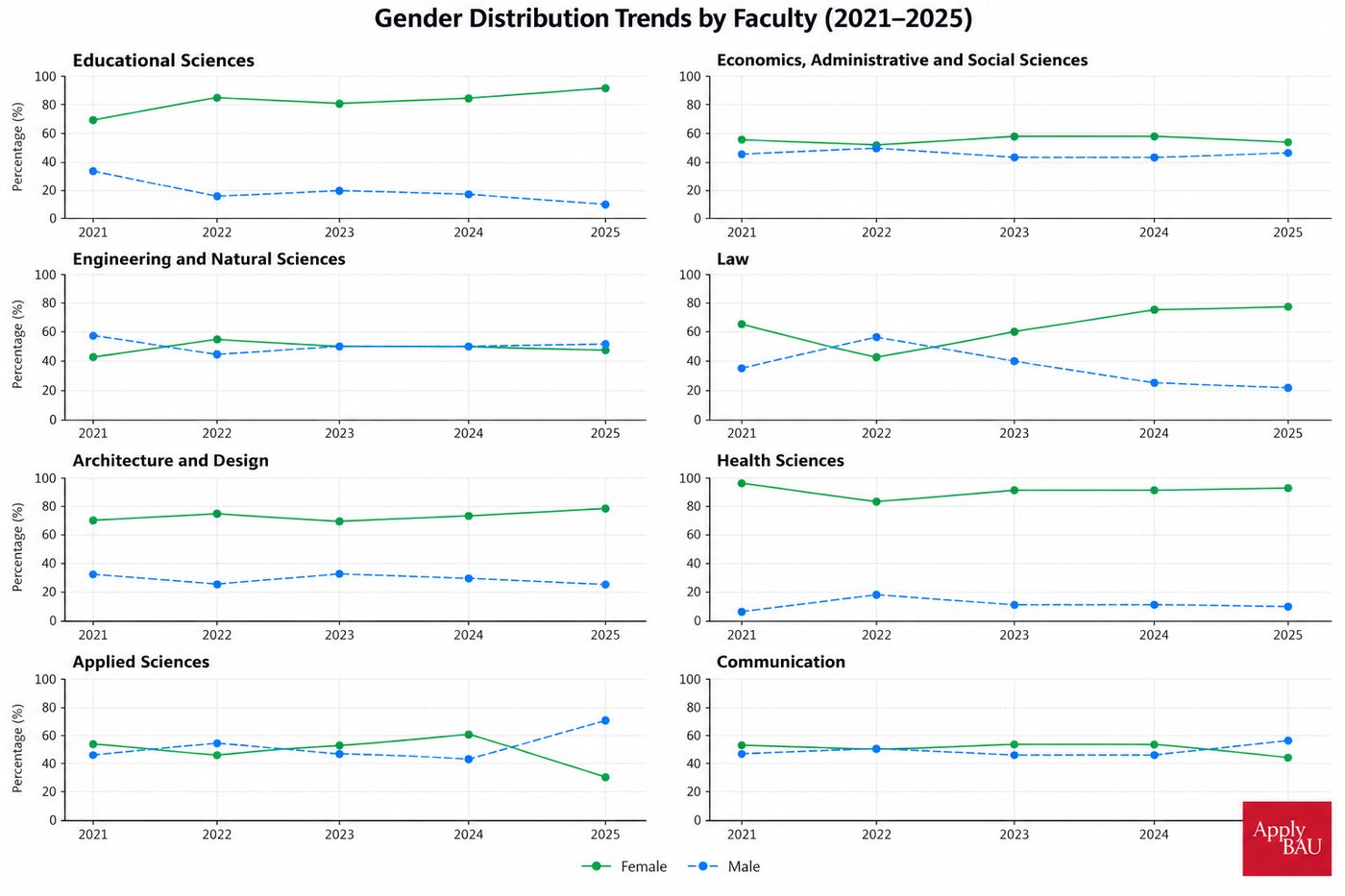
Through the ApplyBAU digital platform, Bahçeşehir University systematically monitors gender representation across faculties to ensure that both application and scholarship processes support gender equality. Between 2021 and 2025, the University has consistently tracked female applicants’ scholarship application and award success rates, using this data to inform evidence-based revisions to admission and financial aid policies.
The 2025 data demonstrate continued strong female representation among scholarship recipients in several faculties, alongside important variations across academic disciplines.
The Faculty of Engineering and Natural Sciences is particularly significant in the context of BAU’s efforts to improve women’s access to traditionally male-dominated academic disciplines, particularly science, technology, engineering, and mathematics (STEM).
Over the five-year period from 2021 to 2025, the proportion of ApplyBAU scholarships awarded to female students in the Faculty of Engineering and Natural Sciences increased from approximately 43% to 49%, demonstrating progress toward greater gender balance in scholarship opportunities within STEM-related fields.
This increase is particularly meaningful given the persistent underrepresentation of women in engineering and certain STEM disciplines. By providing scholarship opportunities to female students in these fields, ApplyBAU contributes to reducing financial barriers to entry, encouraging women’s participation in technical and scientific education, and supporting more equitable access to academic disciplines that have historically been dominated by men.
Across all eight faculties and schools, women accounted for an average of 63.71% of ApplyBAU scholarship recipients in 2025, compared with 36.29% for men, based on the average gender distribution across the faculties and schools. While this demonstrates strong female representation across the University's scholarship opportunities, the progress observed in Engineering and Natural Sciences is especially relevant to BAU’s efforts to address gender disparities in underrepresented fields and advance SDG 5 (Gender Equality).
The graphs below show the annual gender distribution of ApplyBAU scholarship recipients across Bahçeşehir University's faculties and schools from 2021 to 2025,including those in engineering (STEM-related disciplines) where women have been traditionally underrepresented.
BAU Graduate School – Master’s Scholarships and Women’s Support Program (Includes STEM and Engineering)
BAU actively promotes gender equality and women’s participation in graduate education through dedicated scholarship programs. Within the BAU Graduate School, women pursuing master’s degrees receive financial and academic support to strengthen their representation in higher education and research. These scholarships aim to empower women scholars, encourage academic excellence, and contribute to a more inclusive and equitable academic environment in line with the Sustainable Development Goals (SDG 4 – Quality Education, SDG 5 – Gender Equality, and SDG 10 – Reduced Inequalities).
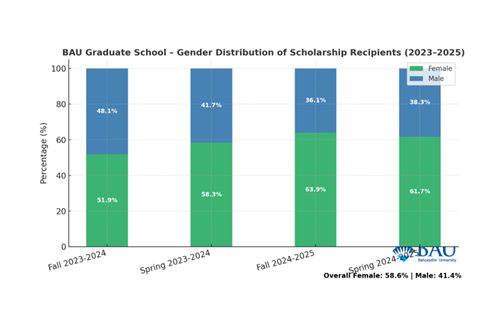
The graph below illustrates the overall proportion of female and male students enrolled in graduate programs, along with their respective scholarship rates.
Across the two academic years, the overall distribution indicates that 58.6% of scholarships were awarded to female students, while 41.4% were granted to male students. This consistent gender balance reinforces BAU’s commitment to equitable funding policies and gender-sensitive approaches to postgraduate education, particularly in STEM and engineering areas.
The graph below illustrates the overall proportion of female and male scholarship recipients in graduate schools, along with their respective scholarship rates.
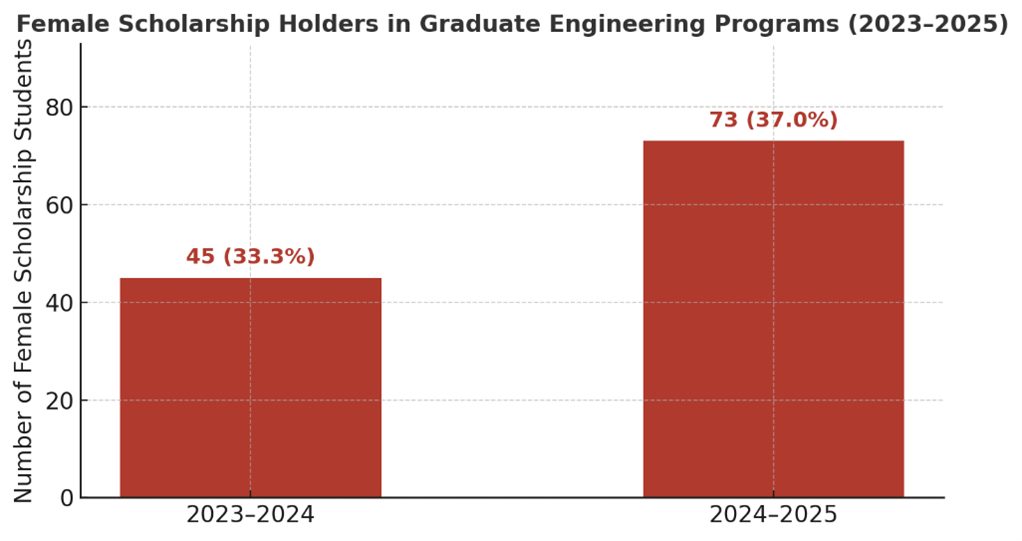
Between the 2023–2024 and 2024–2025 academic years, female enrollment in BAU’s graduate engineering programs increased significantly, reflecting growing participation of women in advanced engineering education and related STEM fields.
Over the same period, the proportion of female students receiving scholarships increased from 33.3% to 37.0%. This positive trend highlights BAU’s continued efforts to expand scholarship opportunities for women in traditionally male-dominated disciplines, helping reduce financial barriers to postgraduate education and supporting greater gender equality in engineering and STEM-related fields.
The figure below illustrates the increase in scholarship rates among female students enrolled in BAU’s graduate engineering and STEM-related programs, from 33.3% in 2023–2024 to 37.0% in 2024–2025, highlighting progress in women’s access to financial support in traditionally male-dominated academic fields.
Bahçeşehir University’s Equal Opportunity in Technology Program: Advancing Women’s Participation in Underrepresented STEM Fields Through UNITAR and Private-Sector Partnerships
The image below shows the official promotional poster of the BAU “Equal Opportunity in Technology Certification Program”.
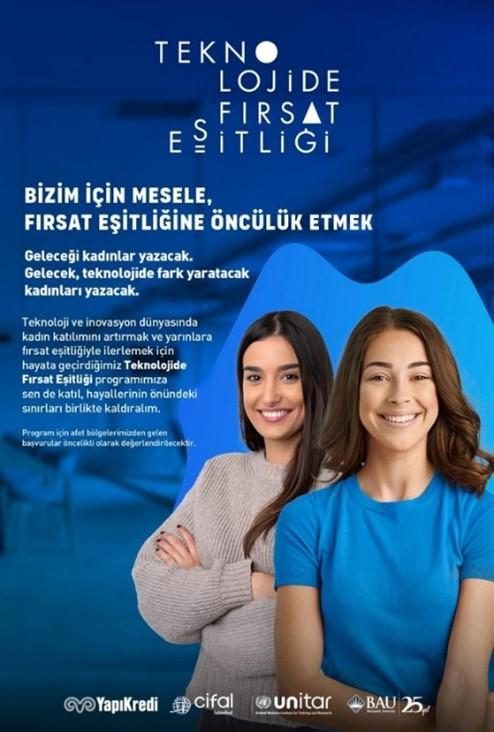
Bahçeşehir University (BAU), in partnership with the United Nations Institute for Training and Research (UNITAR), CIFAL Istanbul, and Yapı Kredi Bank, implements the Equal Opportunity in Technology Certification Program (Teknolojide Fırsat Eşitliği). UNITAR serves as a direct international institutional partner of the initiative, while CIFAL Istanbul, a UNITAR-affiliated training centre within the global CIFAL Network hosted by BAU, contributes to its international educational and capacity-building framework. Launched in 2023, this large-scale initiative aims to empower women through free and inclusive access to technology education, address gender disparities in technology-related fields, and extend university-level learning opportunities to individuals beyond formal higher education enrollment.
Importantly, the programme also serves as a collaborative educational outreach initiative that actively encourages women to pursue learning opportunities in science, technology, engineering, and other STEM-related disciplines in which they remain underrepresented. Through cooperation between the University, an international organization, and the private sector, the initiative seeks to inspire women to consider further education and professional pathways in these fields.
The programme responds to the persistent underrepresentation of women in technology, digital innovation, and other traditionally male-dominated fields, where unequal access to technical knowledge, professional networks, and development opportunities can limit women's educational and career prospects. By providing accessible technology training, the initiative seeks to strengthen women's digital competencies, encourage their participation in emerging technological sectors, and support greater gender equality in education and employment.
By inviting women from diverse educational and professional backgrounds to participate in technology-focused training, the programme provides a practical entry point into fields where female participation remains comparatively limited. It also encourages women who may not previously have considered technical or STEM-related studies to explore further educational opportunities and develop the confidence and foundational knowledge needed to pursue them.
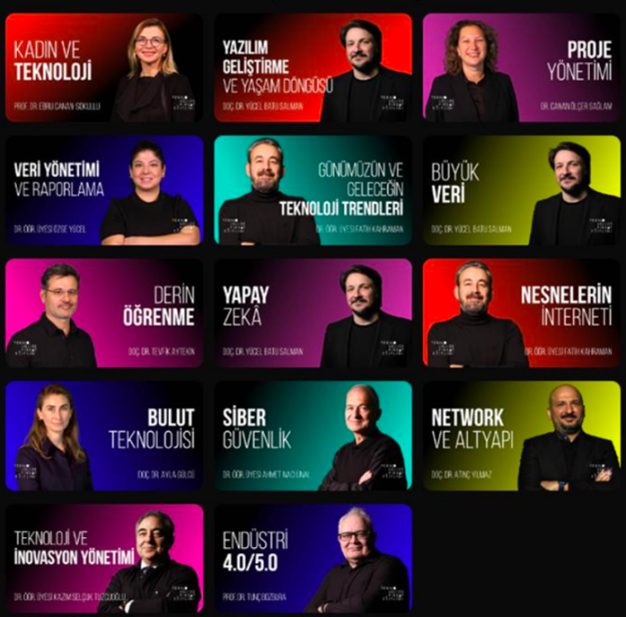
A central feature of the programme is its open and tuition-free educational model. All training is delivered by Bahçeşehir University's academic staff, extending the University's educational resources and academic expertise to the wider public. The curriculum covers six areas of digital transformation: Big Data, Artificial Intelligence, Cloud Technologies, Cybersecurity, the Internet of Things (IoT), and Industry 5.0. These modules provide participants with foundational technological knowledge and skills relevant to an increasingly digital economy, while promoting lifelong learning and professional development.
In 2025, the programme expanded its eligibility criteria to all women aged 15 and above, without an upper age limit or any requirement for university enrollment or affiliation. This inclusive approach enables women from different generations, educational backgrounds, employment situations, and socioeconomic circumstances to participate, including those who may otherwise face barriers to accessing technology education. By removing tuition fees and formal university admission requirements, BAU makes academic learning opportunities available to women beyond its own student community.
In 2025, the programme further expanded its international reach by opening participation to women in Azerbaijan, creating opportunities for cross-border educational engagement and the exchange of technological knowledge across national boundaries. This development strengthened the initiative's international dimension and demonstrated how cooperation among higher education, the private sector, and international education networks can support wider access to learning.
The programme also incorporates a dedicated inclusion measure for communities affected by the Kahramanmaraş-centered earthquakes. Individuals of any gender residing in the “Hope Cities” established by Koç Holding are eligible to participate free of charge. This provision extends educational outreach to disaster-affected communities and reflects BAU's commitment to reducing inequalities in access to learning opportunities among populations facing additional social and economic challenges.
Participants who successfully complete the training and achieve a minimum score of 70 in the final assessment are eligible to receive an e-Government-verifiable Certificate of Achievement through the programme's certification framework involving BAU and UNITAR. Participants who complete at least 75% of the coursework may receive a Certificate of Participation. These certification opportunities recognize acquired competencies and support participants in demonstrating their learning achievements for personal and professional development.
The initiative represents a significant example of cross-sectoral cooperation and international partnership for sustainable development, bringing together Bahçeşehir University as a higher education institution, UNITAR as a United Nations organization and direct international programme partner, Yapı Kredi Bank as a private-sector partner, and CIFAL Istanbul as a UNITAR-affiliated training centre hosted by BAU. This institutional partnership connects academic expertise, international capacity-building resources, and corporate engagement to expand access to technology education and promote gender equality. The programme's expansion to Azerbaijan in 2025 further strengthens its international outreach and cross-border educational cooperation, demonstrating how partnerships across sectors and national boundaries can contribute to shared Sustainable Development Goals.
Since its launch in 2023, the programme has achieved substantial measurable impact. By the end of 2025, a total of 34,563 women had successfully completed the training and received certificates. With activities planned to continue through 2027, the initiative demonstrates a sustained commitment to expanding women's access to technology education and strengthening digital inclusion over time.
Through the Equal Opportunity in Technology Certification Program, BAU demonstrates how universities can extend educational opportunities beyond campus boundaries, address women's underrepresentation in technology, reduce barriers to lifelong learning, and contribute to international cooperation for sustainable development.
The programme contributes directly to several interconnected Sustainable Development Goals:
SDG 4 – Quality Education: By providing free, open-access technology education to individuals outside formal university enrollment, expanding educational outreach, and supporting lifelong learning and professional skills development.
SDG 5 – Gender Equality: By addressing women's underrepresentation in technology-related and traditionally male-dominated fields, strengthening digital competencies, and promoting more equitable opportunities for participation in technological innovation and employment.
SDG 10 – Reduced Inequalities: By removing financial and institutional barriers to education, extending participation across age groups and socioeconomic backgrounds, and providing additional access for disaster-affected communities.
SDG 17 – Partnerships for the Goals: By establishing a direct international partnership with UNITAR and strengthening cooperation among academia, the private sector, and the CIFAL Global Network, supporting cross-sectoral engagement, international educational outreach, and cross-border participation through the programme's expansion to Azerbaijan.
SDG 8 – Decent Work and Economic Growth: By developing digital and technological competencies that can support employability, professional development, and participation in the evolving labour market.
The image below presents the training curriculum of the Equal Opportunity in Technology Certification Program, illustrating the program's educational content, training modules, and free participation opportunities.
International Women's Day Game Jam: Encouraging Women's Participation in the Male-Dominated Game Development and Technology Education and Sector
The image below illustrates the official promotional poster of the International Women’s Day Game Jam

Games for Change Türkiye is the Turkish chapter of the global nonprofit organisation Games for Change, which promotes the use of games to advance positive social change. The platform connects game creators, educators, civil society organisations, and other contributors to explore how games can address social challenges through education, public engagement, and creative collaboration. Its activities provide opportunities to connect game development with issues such as gender equality, women's empowerment, and community participation.
The game development industry, particularly its technical disciplines such as game programming, software development, and digital game technologies, remains an area in which women are underrepresented. Gender disparities in these fields can limit women's access to technical education, professional networks, industry experience, and opportunities to contribute to technological innovation. Encouraging women to enter game development is therefore an important component of broader efforts to address gender imbalances in technology and STEM-related disciplines.
Within this framework, Bahçeşehir University (BAU) hosted the International Women's Day Game Jam at its Galata Campus on 7–9 March 2025, in collaboration with Games for Change Türkiye and the Hack the Loop community, with support from İBB Medya AŞ and OGEM.
Participation was exclusively open to women, making the event a targeted outreach initiative designed to encourage women's participation in game design, digital technologies, and game development, fields in which women have historically been underrepresented.
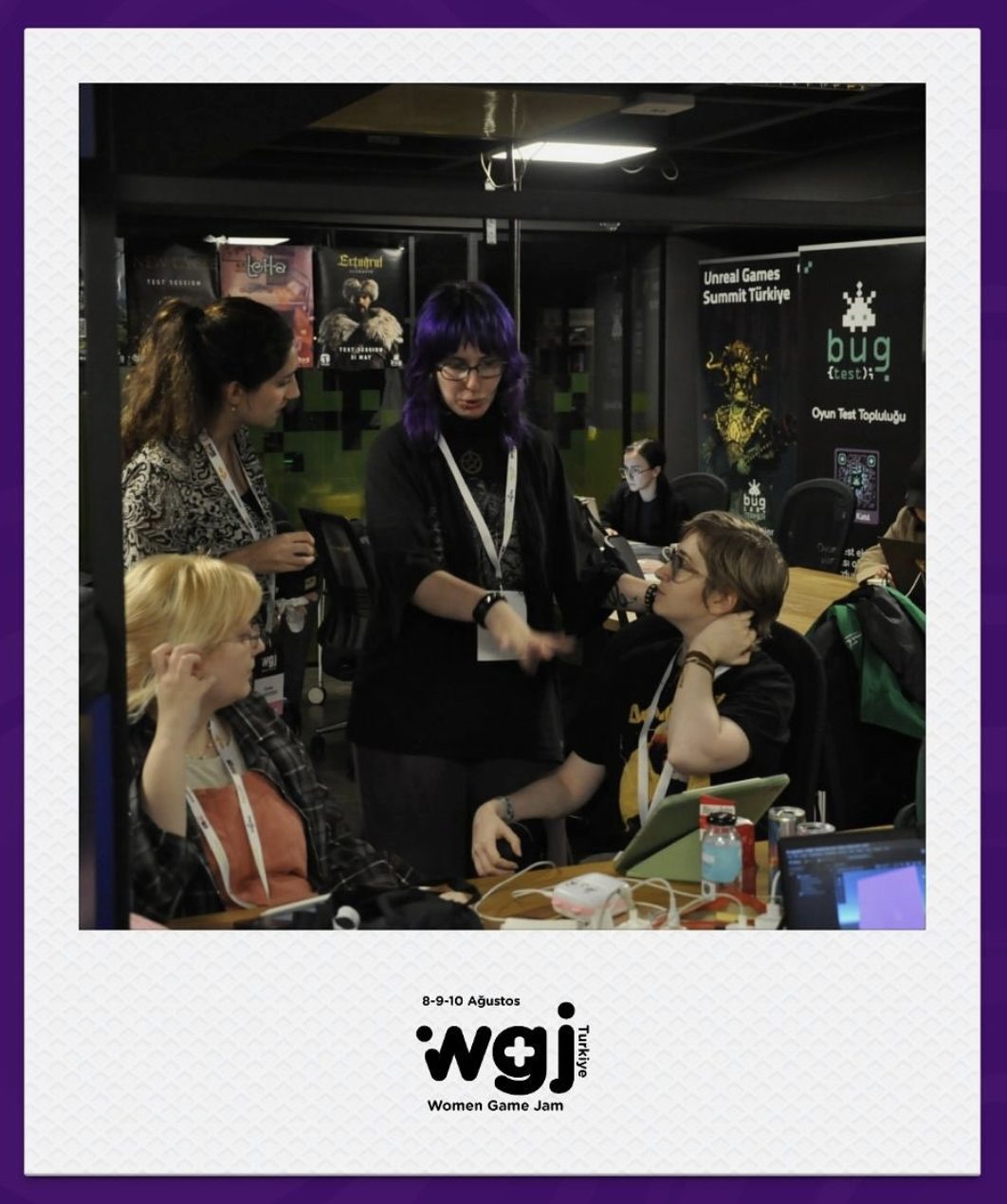
Held in celebration of International Women's Day, the event brought together 50 women aged 18–45 from diverse backgrounds for a 48-hour game development experience. Participants worked collaboratively to design and develop games addressing gender equality and women's rights, with guidance and support from expert mentors throughout the creative and technical development process.
By introducing women to game design and development through hands-on experience, expert mentorship, and collaboration with industry professionals, the initiative aimed to inspire prospective female students to consider applying to higher education programmes in game development, software engineering, and related technology fields where women remain underrepresented. Through this targeted outreach activity, BAU sought to broaden women's awareness of academic opportunities and encourage them to pursue educational pathways they might not otherwise have considered.
By providing women with direct experience in a sector where female participation remains limited, the event sought to reduce barriers that can discourage women from pursuing education and careers in game development. The combination of hands-on production, expert mentorship, and collaborative learning offered participants an opportunity to explore technical and creative roles, develop their capabilities, and consider further education or specialised training in game-related disciplines.
The programme also supported the development of competencies relevant to the digital and creative industries, including game design, creative thinking, teamwork, problem-solving, and digital production. For female students and aspiring developers, this practical experience offered an opportunity to strengthen their confidence, develop new skills, and establish connections with peers and professionals in the game development community.
Through collaboration with nonprofit organisations, community networks, and industry-related partners, BAU demonstrated how university outreach and cross-sector partnerships can help address women's underrepresentation in game development and technology. The initiative expanded access to practical learning and mentorship opportunities beyond conventional classroom settings, encouraging women to explore educational pathways and professional opportunities in technical and creative disciplines traditionally dominated by men.
The International Women's Day Game Jam contributes to SDG 5 (Gender Equality) by encouraging women's participation in traditionally male-dominated technological and creative fields, SDG 4 (Quality Education) through experiential learning and mentorship, and SDG 17 (Partnerships for the Goals) through cooperation between the University, nonprofit organisations, community networks, and supporting institutions.
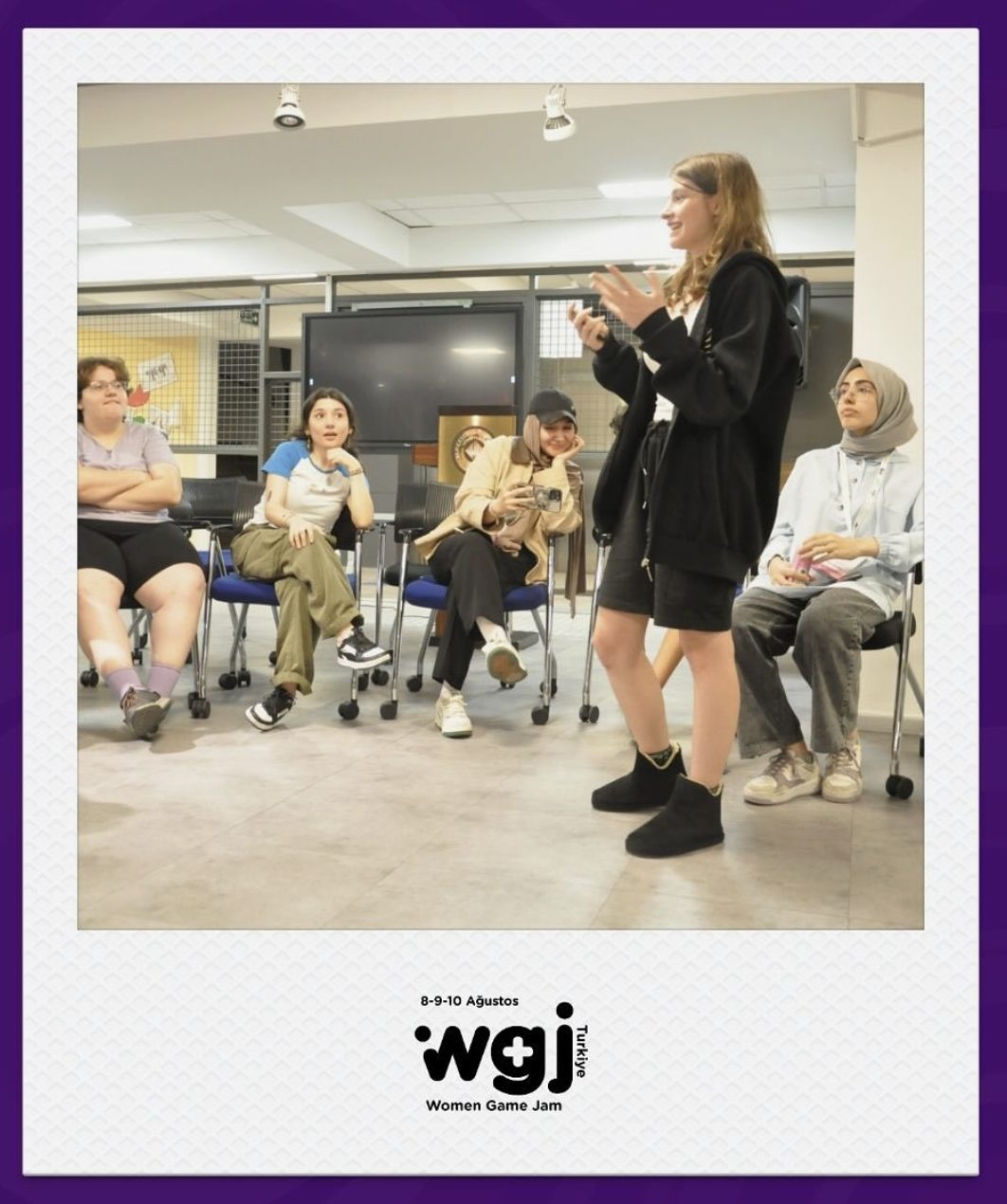
The photographs below present highlights from the International Women's Day Game Jam held at BAU's Galata Campus on 7–9 March 2025, alongside the event's official promotional poster. They illustrate women's active participation in collaborative game development, hands-on creative activities, and mentor-supported learning sessions aimed at encouraging greater female representation in the digital gaming education and sector.

Bahcesehir University “Women and Technology – Inspiring Women’s Participation in Tech and Innovation” Online Training and Educational Material
The images below feature both the cover of the BAU “Women and Technology – Inspiring Women’s Participation in Tech and Innovation” Online Training and its educational content.
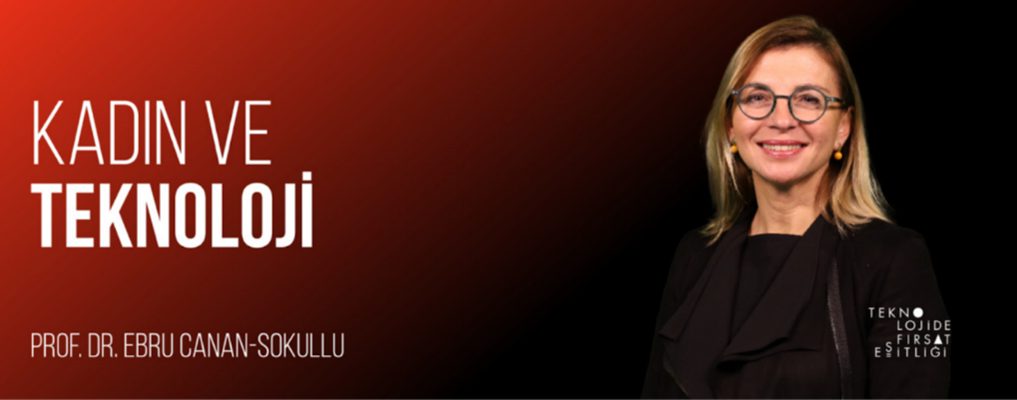
In line with its commitment to promoting gender equality and increasing women's participation in traditionally male-dominated fields, Bahçeşehir University (BAU), through BAUGO, implemented the training program “Women and Technology: Discover Your Role and Enhance Your Potential.”
The initiative forms part of BAU's educational outreach efforts to encourage women to pursue further education and career opportunities in technology, engineering, innovation, and other STEM-related disciplines, where women have historically been underrepresented.
By raising awareness of gender disparities and highlighting women's contributions to science and technology, the training seeks to challenge stereotypes, strengthen women's confidence in their academic and professional potential, and encourage greater female participation in technical and scientific fields.
The training covers seven key areas:
Scope and Content of the Equal Opportunity in Technology Project
Historical Perspective on Equality of Opportunity in Technology
Equal Opportunity and the International Community
Gender and Equal Opportunity
Statistics on Women's Place in the World of Technology and Science
Support for Women's Role in the World of Technology and Science
The Role of Women in the World of Science and Technology in Türkiye
Through this outreach initiative, BAU aims to address informational and social barriers that may discourage women from considering STEM-related educational pathways. By increasing awareness of opportunities in technology and highlighting female role models and contributions, the program encourages women to explore academic fields in which they remain underrepresented.
The initiative supports SDG 5 (Gender Equality) and SDG 4 (Quality Education) by promoting women's access to educational opportunities and encouraging their participation in science, technology, and engineering.
Bahcesehir University “Women’s Leadership and Governance in Sports – Encouraging Women’s Participation in Sports Governance
The image below shows the official promotional poster for the BAU “Women’s Leadership and Governance in Sports – Encouraging Women’s Participation in Sports Governance” event.
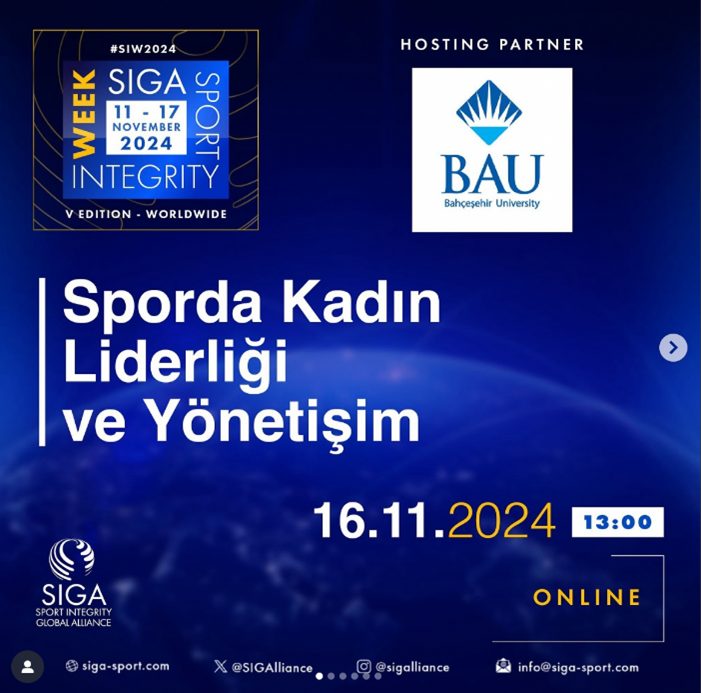
During the 2024–2025 academic year, Bahçeşehir University (BAU) organized the online event “Women’s Leadership and Governance in Sports” in collaboration with the Sport Integrity Global Alliance (SIGA).
The event formed part of BAU’s efforts to encourage women to pursue educational and professional opportunities in fields where they remain underrepresented, particularly sports management, leadership, and governance. The session aimed to inspire female students and early-career professionals to consider academic and career pathways in sports administration, policy, and institutional leadership, areas traditionally dominated by men.
Bringing together academics, professionals, and industry representatives, the event addressed structural barriers to women's participation in sports governance and explored strategies to strengthen women's representation, visibility, and decision-making roles in national and international sports institutions.
Particular emphasis was placed on the importance of education, mentorship, networking, and access to professional opportunities in encouraging more women to enter and advance within sports-related disciplines. Discussions also highlighted integrity, transparency, and inclusivity as essential principles of effective sports governance.
Through this collaborative outreach initiative, BAU and SIGA contributed to raising awareness of educational and leadership opportunities for women in a traditionally male-dominated sector, encouraging female students and young professionals to explore pathways in sports management and governance.
The initiative contributes to SDG 5 (Gender Equality) by encouraging women's participation in underrepresented fields, while supporting SDG 10 (Reduced Inequalities) and SDG 17 (Partners
Bahçeşehir University’s Equal Opportunity in Technology Programme in Azerbaijan: Encouraging Women in STEM Through International University and Private-Sector Partnerships
The photographs below highlight the official certificate ceremony of the Equal Opportunity in Technology Certification Programme held in Baku, Azerbaijan, recognising the achievements of female participants from eight Azerbaijani universities.
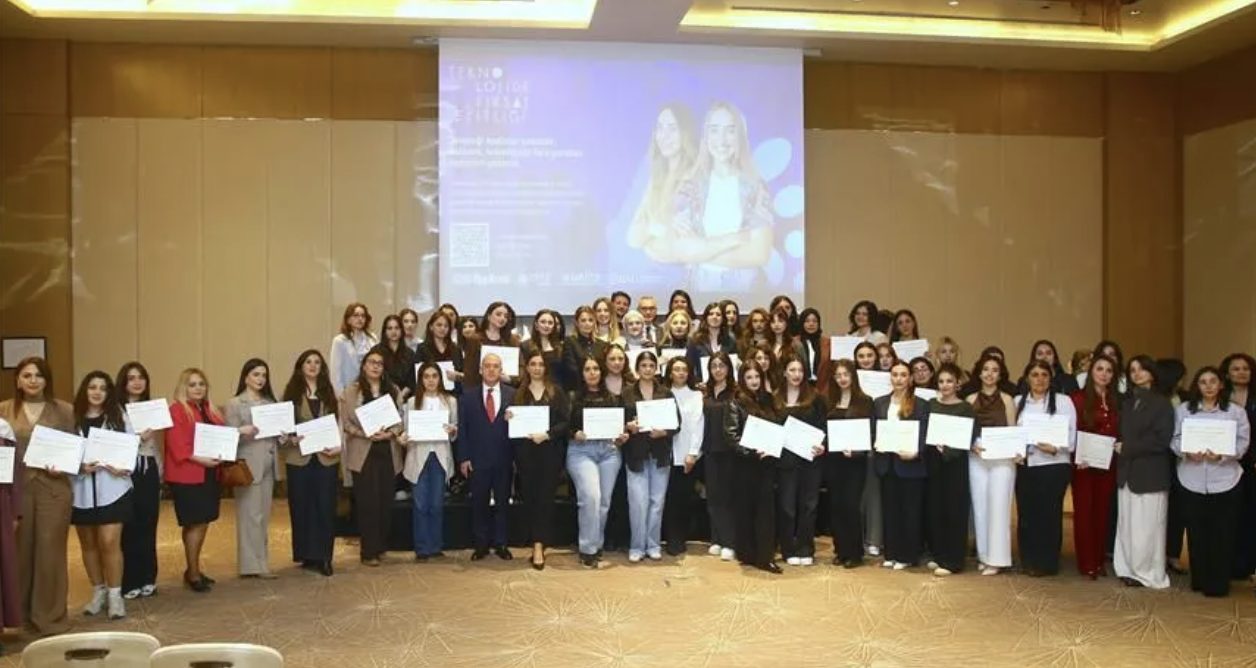
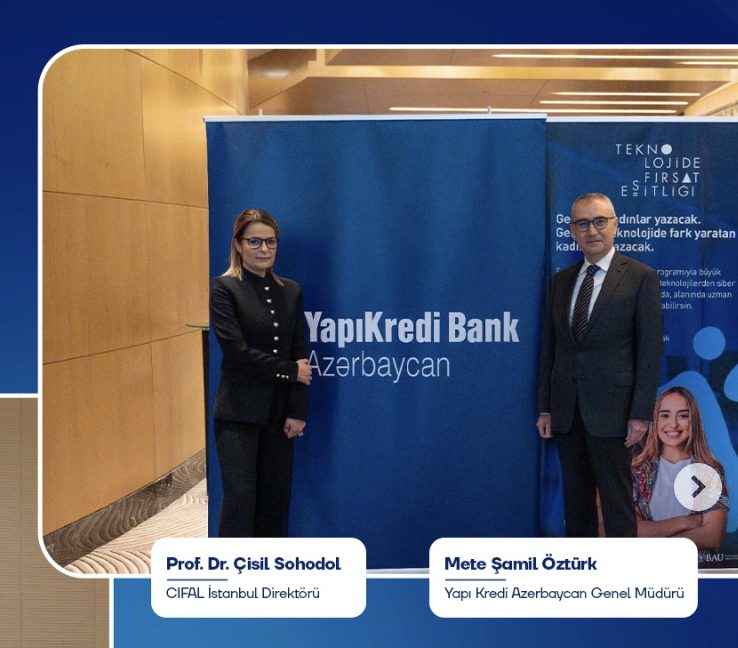
In 2025, the Equal Opportunity in Technology (Teknolojide Fırsat Eşitliği) Certification Programme expanded to Azerbaijan, marking its first implementation outside Türkiye. Building on its work supporting women's development in technology in Türkiye, the programme extended these opportunities to female students at eight universities in Azerbaijan. Through this international educational outreach initiative, Bahçeşehir University (BAU) sought to encourage more women to explore educational and professional pathways in science, technology, engineering, and other STEM-related fields where they remain underrepresented. The expansion supported Azerbaijani women's access to knowledge and skills relevant to the digital economy.
Participants received 14 hours of free training covering Big Data, Artificial Intelligence, Cloud Technologies, Cybersecurity, the Internet of Things, and emerging technology trends. By introducing female university students to these rapidly developing technological disciplines, the programme aimed to stimulate interest in further education, specialised training, and career opportunities in fields traditionally dominated by men. The programme also reduced financial barriers to specialised technology education, providing participants with foundational knowledge to explore future academic and professional pathways. Participants who successfully completed the programme received certificates at an official ceremony in Baku.
The Azerbaijan expansion connected technology education with the wider objective of increasing women's representation in technical professions and leadership. Prof. Dr. Çisil Sohodol, Director of CIFAL Istanbul and a faculty member at Bahçeşehir University's Faculty of Communication, participated in the activities in Baku and highlighted the importance of women's representation in these roles. By increasing awareness of opportunities in emerging technologies and encouraging female students to recognise their potential in STEM-related fields, the initiative contributed to challenging gender stereotypes and broadening women's educational and professional aspirations.
Implemented through international cooperation among Bahçeşehir University, CIFAL Istanbul, the United Nations Institute for Training and Research (UNITAR), Yapı Kredi Bank, and Yapı Kredi Bank Azerbaijan, the programme demonstrates how partnerships between higher education institutions, international organisations, and the private sector can encourage women's participation in underrepresented academic and professional fields. Its engagement with eight universities in Azerbaijan further extended this collaborative outreach directly to female university students.
The initiative contributes to SDG 5 (Gender Equality) by encouraging women's participation in fields where they are underrepresented, SDG 4 (Quality Education) by expanding access to free technology education, and SDG 17 (Partnerships for the Goals) through international university and private-sector cooperation. By combining targeted educational outreach with practical technology training, the programme supports BAU's institutional efforts to encourage women to pursue further learning and professional opportunities in STEM-related disciplines.
Bahcesehir University MOVE UP Capacity Building and Training Programme: Encouraging Young Women to Pursue STEM Education and Careers
The images below feature the official promotional poster of the BAU MOVE UP Programme, alongside photographs from the training sessions in which Bahçeşehir University academics addressed women's participation in technology, gender equality in digital transformation, and opportunities for young women in STEM-related fields.
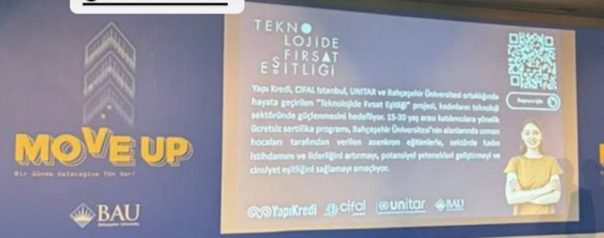
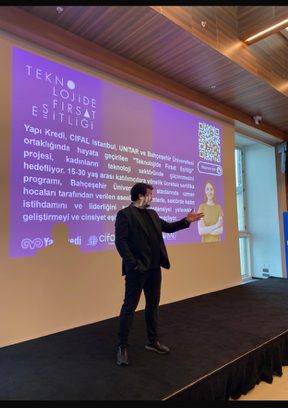
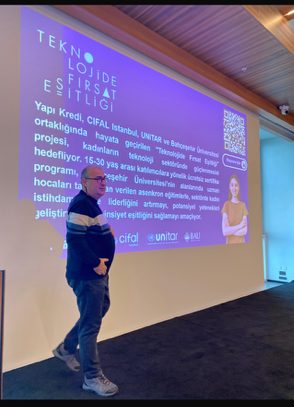
As part of its commitment to promoting gender equality and diversity in education, Bahçeşehir University (BAU) integrates gender-inclusive approaches into its outreach and capacity-building programmes. One of the most impactful examples of this commitment is the BAU MOVE UP Capacity Building and Training Programme, which not only provides free, high-quality learning opportunities to high school students across Türkiye but also focuses on encouraging young women to pursue studies and careers in fields where they are historically underrepresented, particularly technology and STEM disciplines.
Launched in 2019, the MOVE UP Programme continues to expand its reach, empowering hundreds of high school students each year from diverse regions, including Istanbul, Antalya, Izmir, and Bursa.
During the 2024–2025 academic year, the programme included a series of workshops dedicated to women's participation in technology, addressing themes such as gender equality in digital transformation, women's leadership in innovation, and equal access to technology-driven education and careers.
Delivered by Bahçeşehir University's distinguished academics and experts, these interactive sessions aimed to inspire female participants to explore their potential in science, technology, engineering, and digital fields — areas where women remain underrepresented both in academia and the workforce.
By introducing female high school students to emerging technological fields and highlighting women's contributions to innovation and digital transformation, the programme also encouraged participants to consider future university applications in STEM-related disciplines. These activities aimed to challenge gender stereotypes, broaden students' awareness of educational opportunities, and strengthen their confidence in pursuing academic pathways traditionally dominated by men.
The training also promoted critical 21st-century competencies such as digital literacy, innovation, communication, and leadership, empowering young women to become confident contributors to Türkiye's technological and social development. These competencies are particularly relevant to preparing female students for further education and future professional opportunities in technology-driven sectors.
Reflecting BAU's mission to ensure equal access to education and opportunity, the MOVE UP Programme is entirely free of charge and open to high school students across the country. By integrating gender equality and inclusion into its outreach initiatives, Bahçeşehir University encourages and supports women's applications and participation in STEM and other underrepresented disciplines, aligning its efforts with SDG 4 (Quality Education) and SDG 5 (Gender Equality) to build a more inclusive and sustainable future.
FUTURE WOMEN: Creating New Opportunities for Women in Digital and STEM Economies Project
The image below displays the official logo and the home page of the FUTURE WOMEN Project:
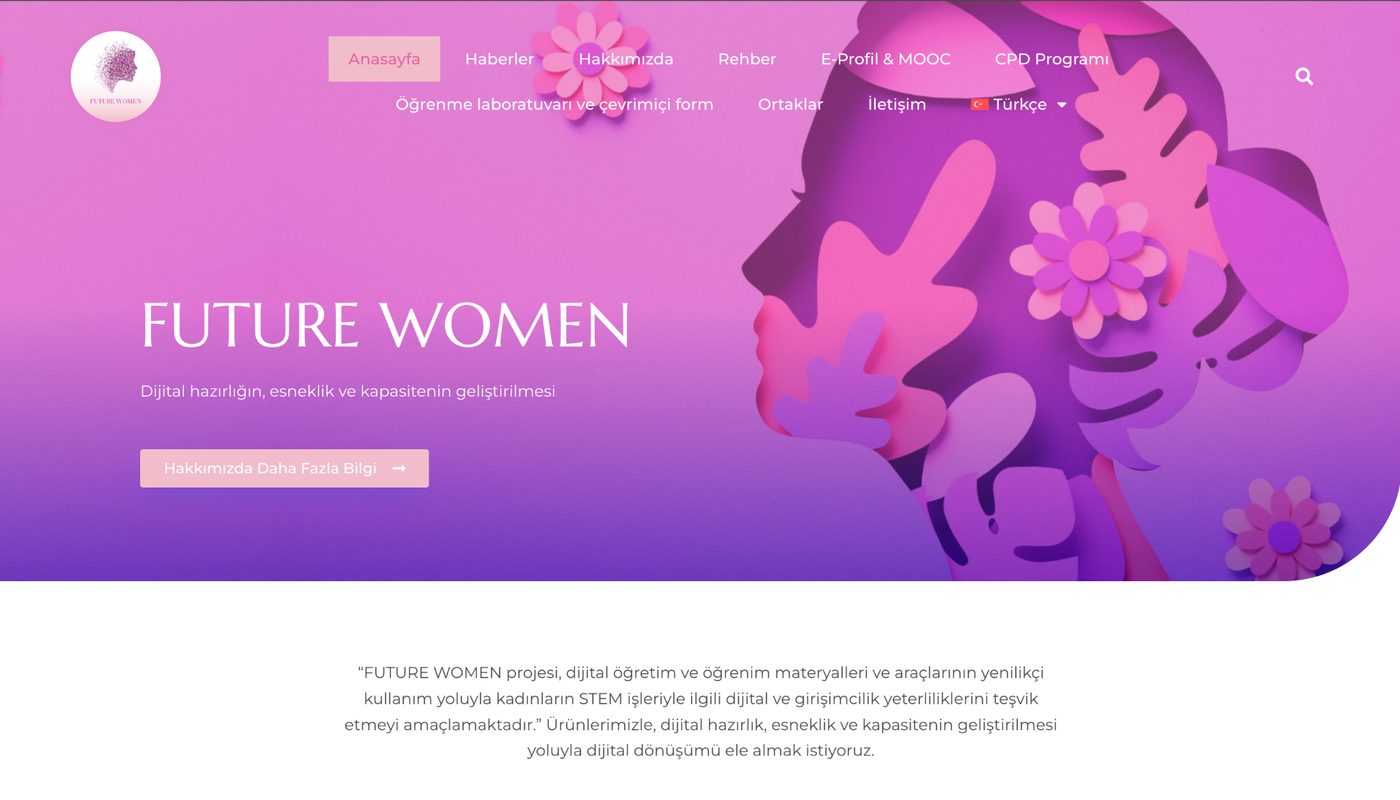
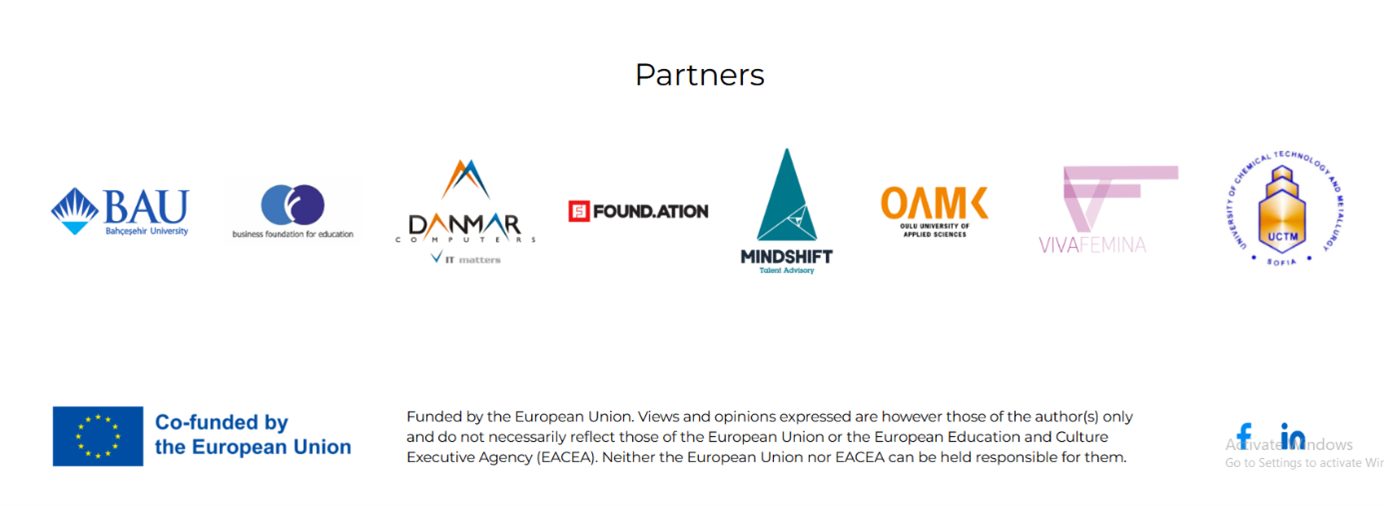
The Future Women Project is an international research and best practice development initiative, supported by the European Union’s Erasmus+ Programme, The project is implemented in partnership with Bahçeşehir University (Türkiye), Business Foundation for Education (Bulgaria), Danmar Computers (Poland), Found.ation (Greece), Mindshift Talent Advisory (Portugal), Oulu University of Applied Sciences (Finland), VivaFemina (Poland), and the University of Chemical Technology and Metallurgy (Bulgaria).
The image below presents a screenshot from the official website of the Future Women Project, featuring the sponsors of the initiative.
The CPD Programme includes five key learning modules:
Career Counselling for the Digital Economy and STEM Careers
Integrating Academic and Career Development
Gender Issues and Career Planning
New Career Methods and Techniques
Social Media in Career Guidance
Through its dual focus on research and practical implementation, Future Women contributes directly to SDG 5 (Gender Equality), SDG 8 (Decent Work and Economic Growth), and SDG 17 (Partnerships for the Goals) by promoting inclusive participation, evidence-based policymaking, and gender-responsive innovation in education and employment.
New Media BAP Project: Gender Inequality in Sports Media in the Digital Age—Barriers, Opportunities and Strategic Solutions
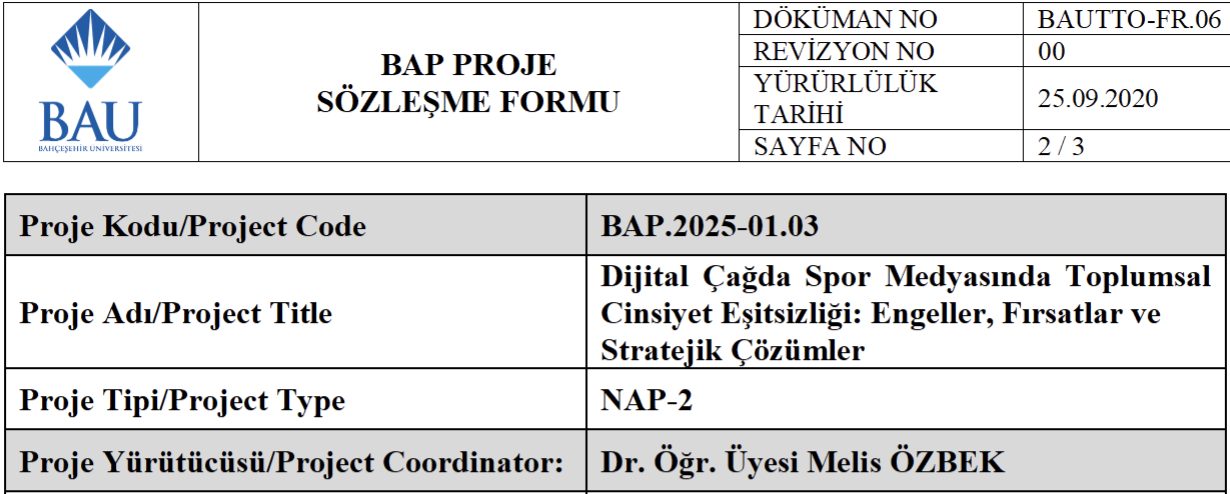
In 2025, Bahçeşehir University (BAU) provided institutional research support through its Scientific Research Projects (BAP) programme to Asst. Prof. Melis Özbek for project BAP.2025-01.03, titled “Gender Inequality in Sports Media in the Digital Age: Barriers, Opportunities and Strategic Solutions.”
The project examines women's underrepresentation in sports media, a traditionally male-dominated professional field, focusing on the structural and professional barriers affecting women's visibility, participation, and opportunities as sports journalists, commentators, media producers, and decision-makers.
By identifying barriers and exploring potential strategies to improve women's representation in sports media, the research contributes to a better understanding of the conditions that may discourage women from pursuing education and professional careers in this field. Its findings can provide an evidence base for future educational outreach and initiatives aimed at encouraging greater female participation in sports journalism, media production, and related communication disciplines.
Through its support for this research, BAU demonstrates its commitment to addressing gender disparities in fields where women remain underrepresented and advancing knowledge that can inform more inclusive educational and professional opportunities.
The project contributes to SDG 5 (Gender Equality) by investigating barriers to women's representation and participation in sports media and identifying potential approaches to improving gender equality in the sector.
The image below portrays the official TÜBİTAK Scientific Research Project Contract Form for the Gender Inequality in Sports Media in the Digital Age—Barriers, Opportunities and Strategic Solutions Project:
BAU’s Contribution to STEM4HER: Increasing Diversity and Empowering Girls and Young People in Science, Technology, Engineering and Mathematics
The image below showcases the official promotional poster of the STEM4HER Event:
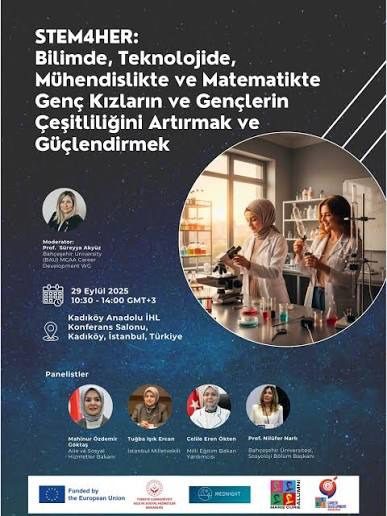
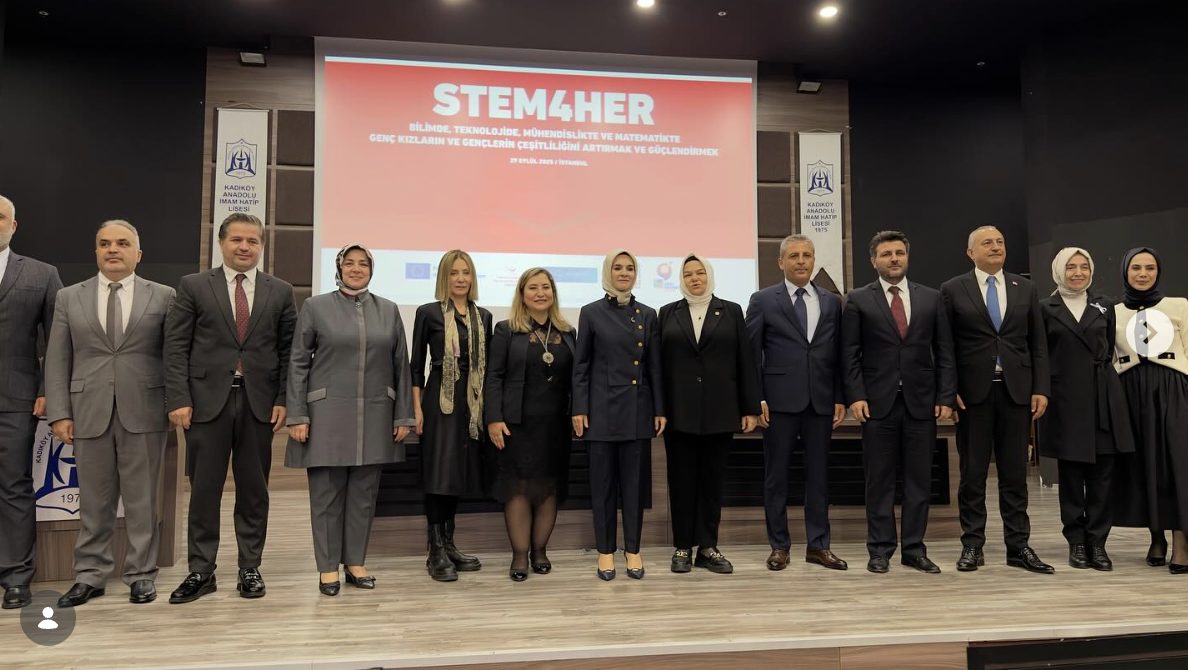
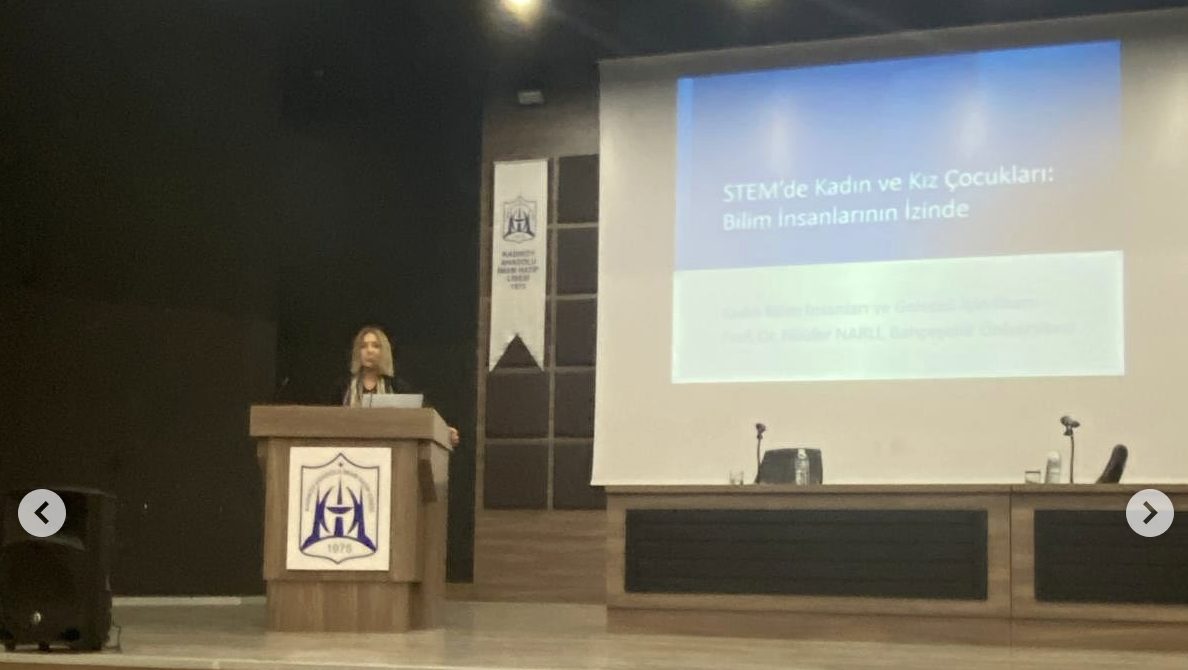
Bahçeşehir University (BAU) contributed to the STEM4HER event at Kadıköy Anadolu İmam Hatip High School through the participation of Prof. Dr. Nilüfer Narlı, Head of BAU's Department of Sociology and Founding Director of TOSAM, as a panellist. The event aimed to promote gender diversity and encourage girls and young women to pursue educational and career opportunities in science, technology, engineering, and mathematics (STEM), fields in which women remain underrepresented. The event also featured contributions from Mahinur Özdemir Göktaş, Tuğba Işık Ercan, and Celile Eren Ökten, bringing together academic and public-sector perspectives.
During the session “Women and Girls in STEM Education and the Forgotten History of Women Scientists,” Prof. Narlı highlighted the achievements of women scientists whose contributions have historically been overlooked. By introducing female students to inspiring role models, she challenged gender stereotypes surrounding scientific careers and encouraged girls to recognise their own potential in traditionally male-dominated disciplines.
Prof. Narlı also emphasised the importance of mentorship in overcoming barriers to women's participation in STEM, highlighting how guidance, encouragement, and access to professional networks can support young women in making informed educational and career choices.
Through this school-based outreach activity, BAU sought to inspire prospective female university applicants to consider STEM-related degree programmes and encourage applications to academic disciplines in which women are underrepresented. By connecting female students with academic role models and highlighting pathways into science and technology, the initiative contributed to broadening their educational aspirations and confidence in pursuing STEM studies.
The event supported SDG 5 (Gender Equality) by challenging gender stereotypes and encouraging women's participation in underrepresented disciplines, and SDG 4 (Quality Education) by promoting more inclusive access to STEM education.
The pictures below show relevant highlights from the STEM4HER Event:
Bahcesehir University 2025 Legacies of Women Forum – Istanbul: Inspiring Young Women to Pursue Education and Careers in Underrepresented Fields
The image below portrays the official promotional poster of the 2025 Legacies of Women Forum organized by and held in Bahçeşehir University:
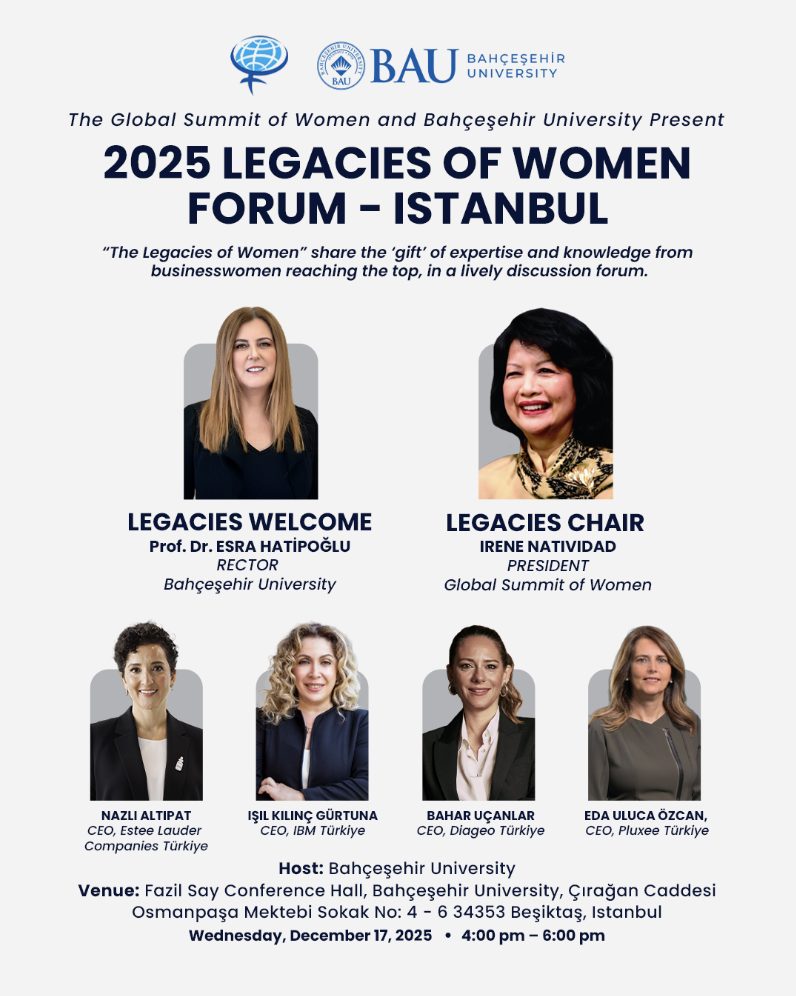
Bahçeşehir University (BAU) hosted the 2025 Legacies of Women Forum – Istanbul at its Fazıl Say Conference Hall in collaboration with the Global Summit of Women, BAU Branding, CIFAL Istanbul, and UNITAR. Bringing together prominent women leaders from different industries, the forum aimed to inspire young women to pursue educational and professional pathways in fields and leadership positions where women remain underrepresented, particularly technology, business management, and corporate leadership.
The forum opened with remarks by Prof. Dr. Esra Hatipoğlu, Rector of Bahçeşehir University, followed by Irene Natividad, President of the Global Summit of Women, who chaired the discussion. Natividad presented global data on women's representation in management and emphasised the importance of increasing the visibility of women leaders and connecting younger generations with successful female role models.
The panel featured Nazlı Altıpat, CEO of Estée Lauder Companies Türkiye; Işıl Kılınç Gürtuna, CEO of IBM Türkiye; Bahar Uçanlar, CEO of Diageo Türkiye; and Eda Uluca Özcan, CEO of Pluxee Türkiye. The speakers shared their professional journeys, challenges, and experiences in leadership, while discussing artificial intelligence, technological transformation, evolving leadership models, and the future of business.
By introducing female students to accomplished women in senior positions, particularly in technology-driven industries, the forum sought to challenge gender stereotypes and encourage young women to consider academic pathways leading to fields in which women remain underrepresented. The opportunity to engage with successful female role models helped broaden students' awareness of educational and career possibilities, including technology-related disciplines and business leadership.
The discussions also addressed the glass ceiling and structural barriers to women's advancement, highlighting the importance of equal access to professional networks, mentorship, and decision-making opportunities. Through this university-hosted outreach initiative and its international partnerships, BAU promoted greater awareness of women's potential in traditionally male-dominated professional environments.
The forum contributed to SDG 5 (Gender Equality) by promoting women's representation and leadership, SDG 4 (Quality Education) by inspiring students to explore broader educational pathways, and SDG 8 (Decent Work and Economic Growth) by addressing equal opportunities for women's professional advancement.
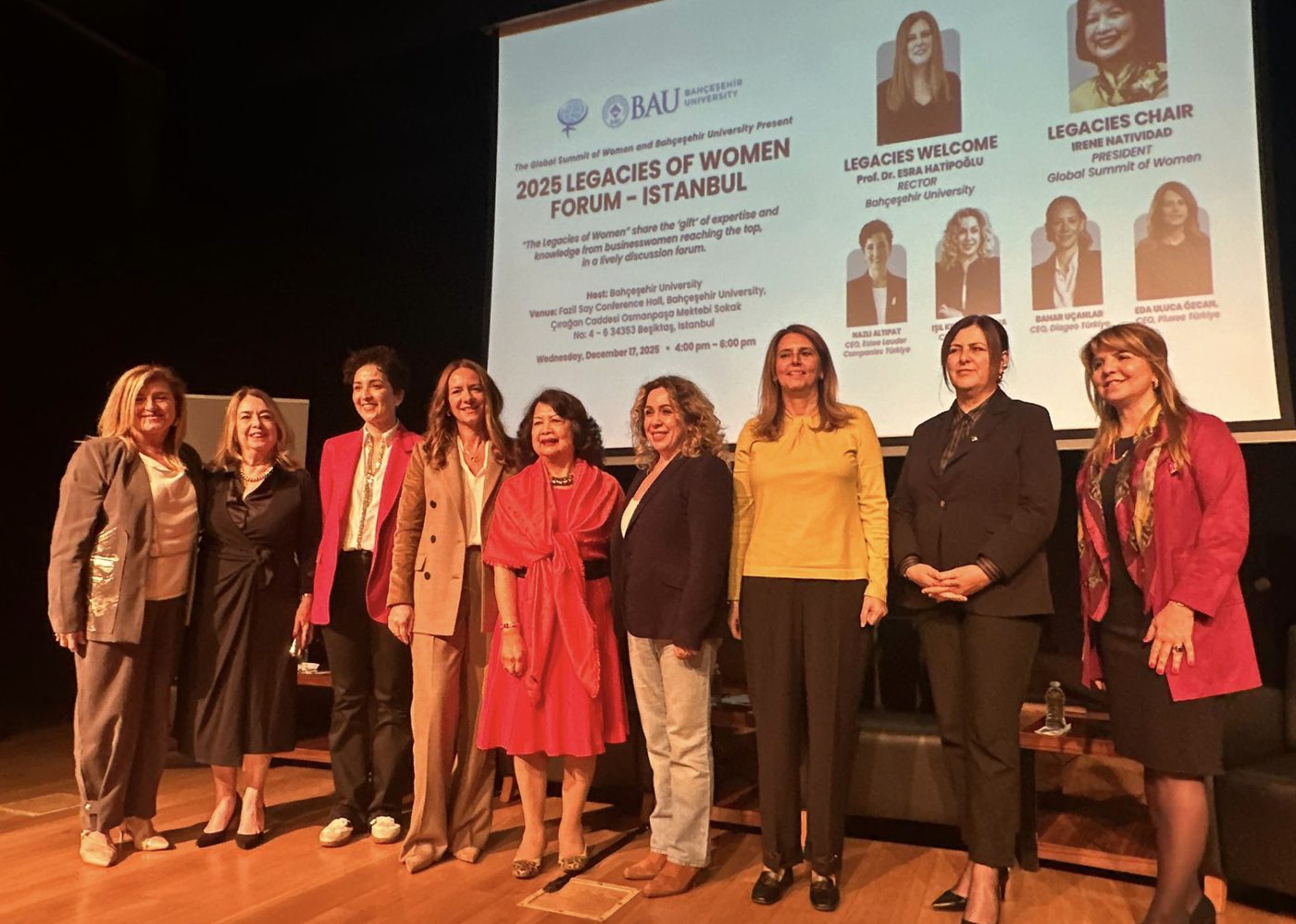
The photographs below present highlights from the 2025 Legacies of Women Forum – Istanbul, showcasing the participating women leaders and discussions on gender equality, leadership, and career opportunities.
The pictures below display highlights from the 2025 Legacies of Women Forum:
Encouraging Women's Participation in Animation: ANİKA and CIFAL Istanbul and Bahcesehir University’s “Share What You Know” Initiative
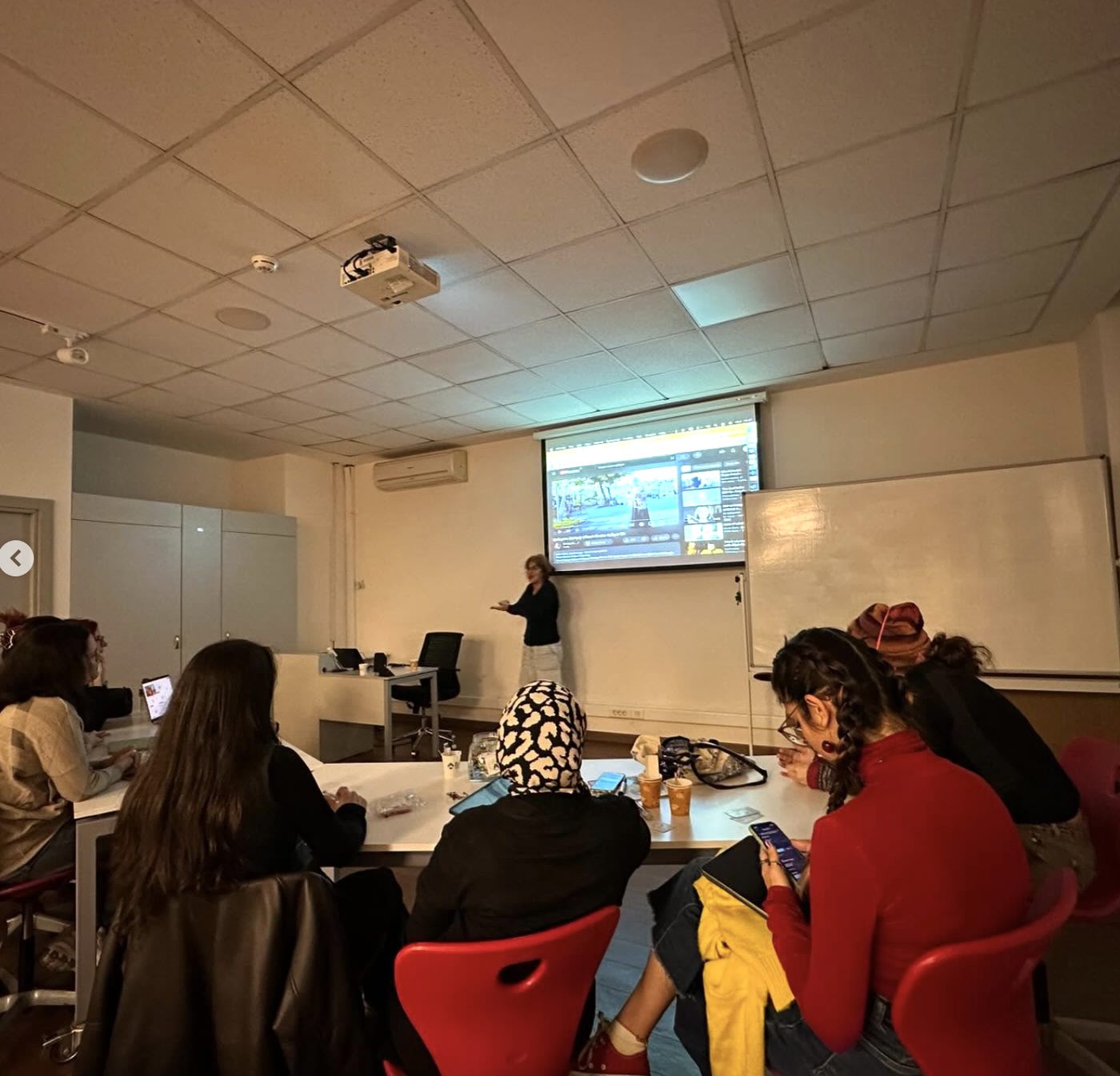
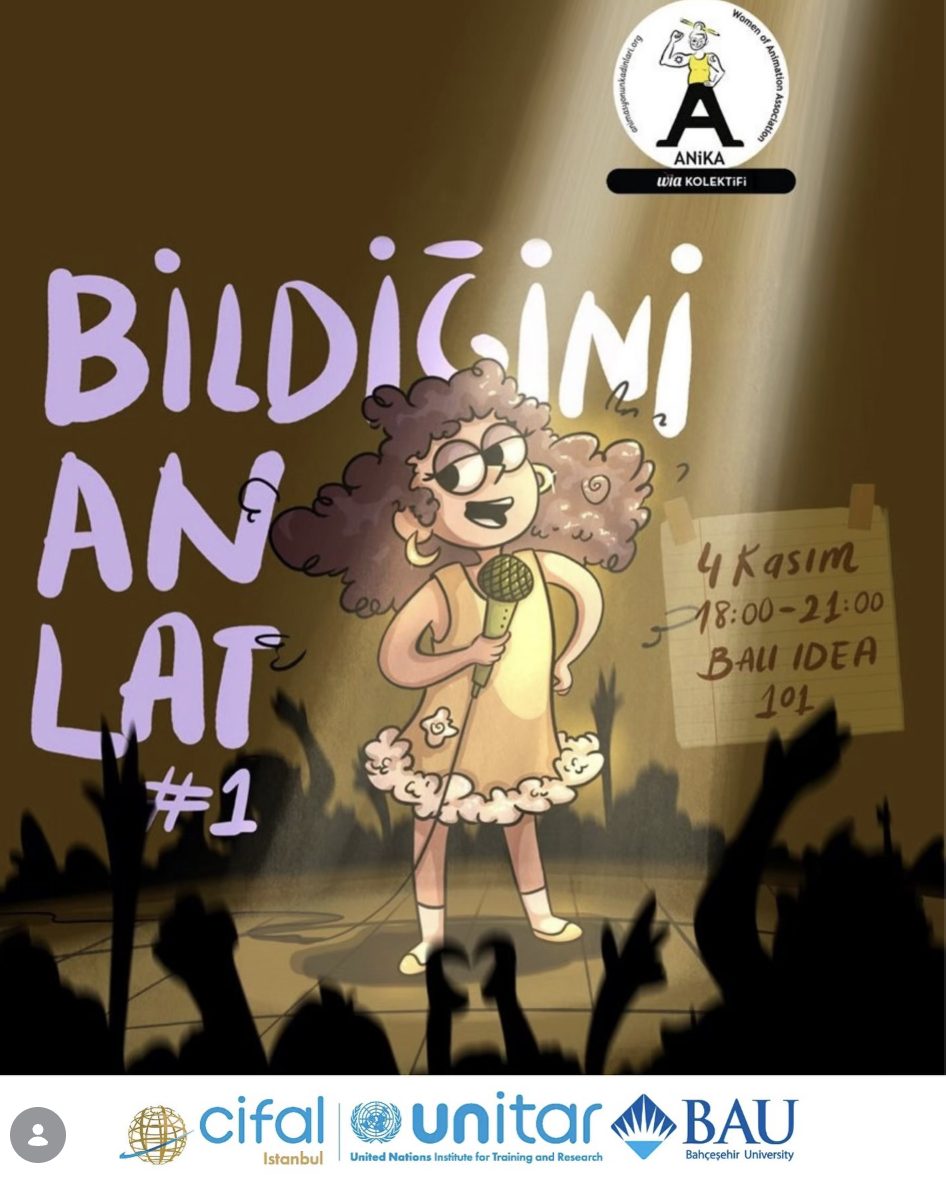
The visual below displays the official promotional poster of the Share What You Know event:
ANİKA – Women of Animation in Türkiye is an association and WIA Collective dedicated to increasing the visibility and recognition of women's contributions to the animation industry, a field in which women have historically been underrepresented. Through professional profiles, interviews, archives, and other resources, ANİKA highlights women's achievements as writers, designers, producers, and creative professionals, challenging gender stereotypes and promoting greater female participation in animation.
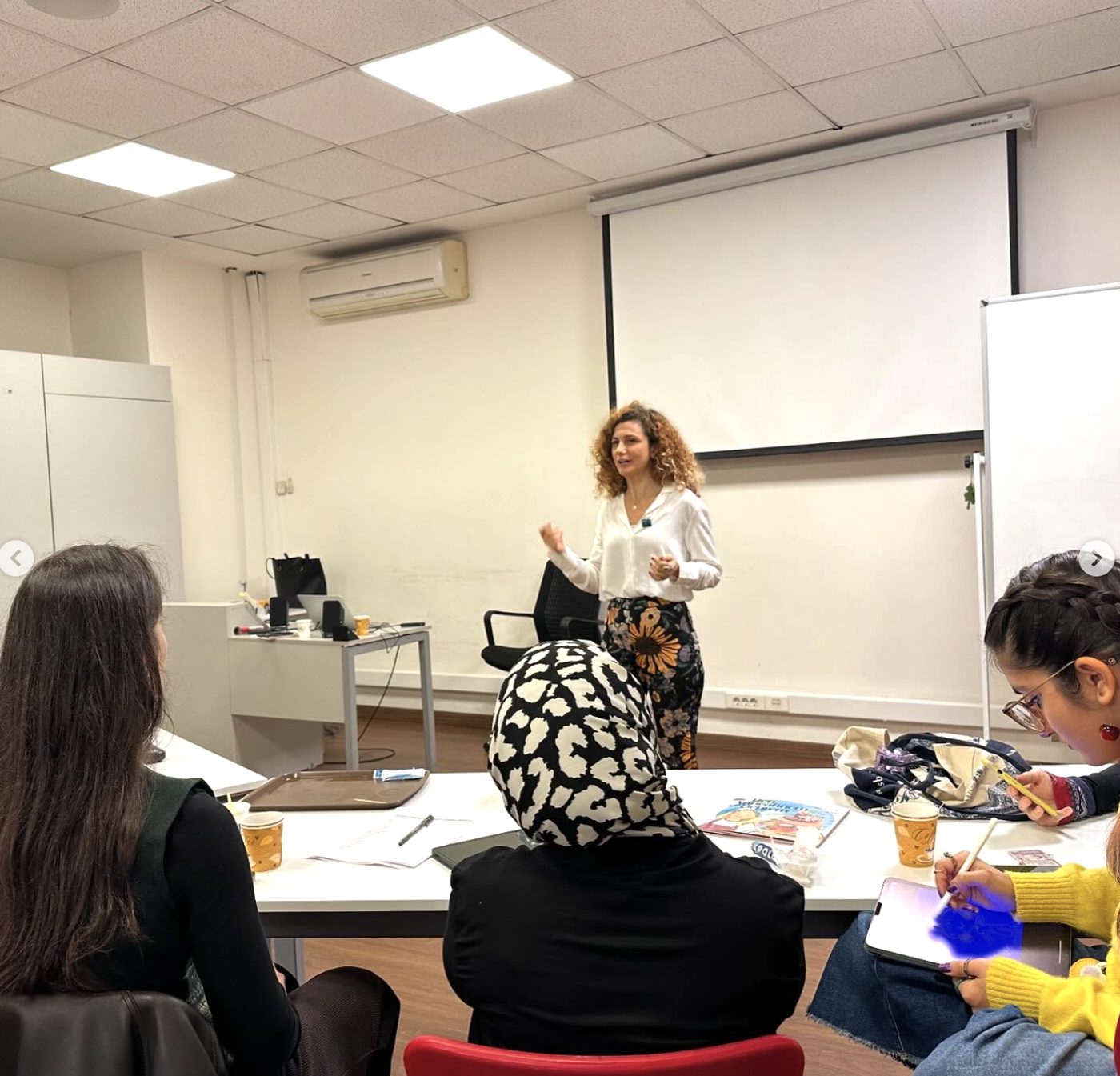
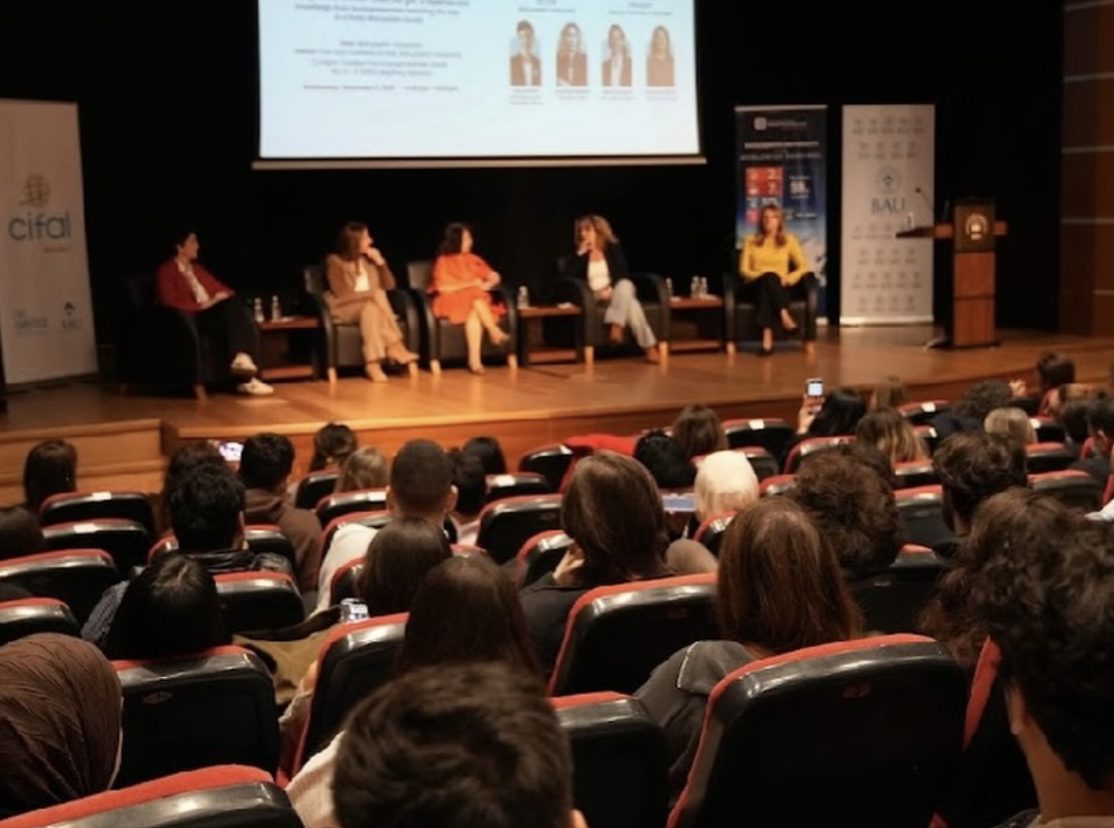
During the 2024–2025 academic year, CIFAL Istanbul, hosted by Bahçeşehir University (BAU) and affiliated with UNITAR, collaborated with ANİKA to organise the first “Bildiğini Anlat” (“Share What You Know”) event, bringing together 23 members and guests, including women students and emerging animators.
The event featured Arzu Demirel, screenwriter and author, and Begüm Varbil, producer and designer, who shared their professional experiences and provided guidance to women interested in pursuing education and careers in animation.
Demirel explored the influence of Turkish literature, poetry, theatre, dramaturgy, and cultural experiences on animated storytelling, drawing on the film Alma and her experiences in Latin America. Her contribution demonstrated how different educational backgrounds and creative disciplines can provide pathways into animation.
Varbil discussed her experiences in the gaming and animation industries, addressing audience engagement, production budgets, industry decision-making, and the use of Anatolian folklore in storytelling. She also offered practical advice on protecting financial interests and developing sustainable creative careers.
By connecting women students and aspiring animators with experienced female professionals, the initiative sought to inspire prospective female students to consider higher education and specialised training in animation, digital design, and related creative technology disciplines where women remain underrepresented. The exchange provided visible female role models, practical industry knowledge, and professional connections that could help participants identify educational pathways and overcome barriers to entering the field.
Through this collaboration with a professional women's association, BAU and CIFAL Istanbul supported outreach aimed at encouraging greater female participation in traditionally male-dominated creative and digital disciplines, contributing to SDG 5 (Gender Equality) through women's empowerment, SDG 4 (Quality Education) through knowledge sharing and mentorship, and SDG 17 (Partnerships for the Goals) through institutional and community collaboration.
The pictures below portray highlights from the event: