





 EN
5.3.3 - Women's Access Schemes
In alignment with the United Nations Sustainable Development Goal 5 (Gender Equality) and Bahçeşehir University’s (BAU) institutional commitment to inclusive and equitable education, the University provides dedicated women's access schemes, including scholarships, mentorship programmes, and academic and professional support initiatives, to promote women’s participation in higher education across all academic disciplines.
BAU recognizes that gender equality in education requires both equal access to opportunities and continuous support throughout academic life. Through these initiatives, the University aims to reduce financial, academic, and social barriers to women’s entry, retention, and success in higher education, while supporting their academic development and future career opportunities.
The following sections present BAU’s women’s access schemes implemented and available during 2025.
1- Scholarship Programs for Female Students
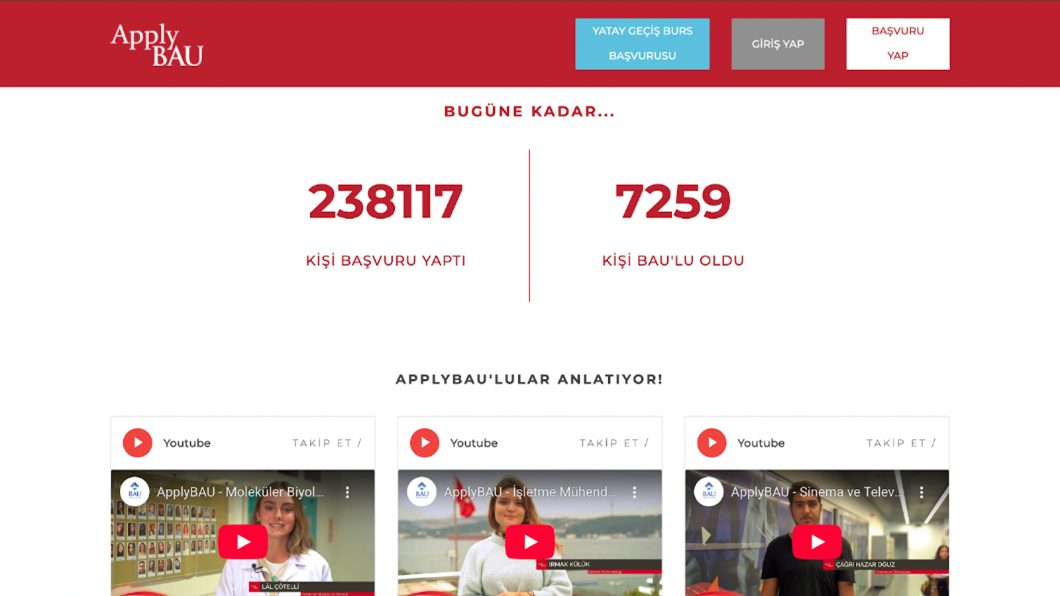
Implemented through the ApplyBAU system, Turkey’s first and most innovative university admissions and scholarship platform introduced by Bahçeşehir University in 2013, these programs are designed to promote women’s equitable access to higher education by providing financial, academic, and social support mechanisms.
Unlike conventional exam-based admissions, the ApplyBAU model evaluates candidates holistically—considering their skills, interests, talents, motivation, and potential—thereby opening pathways for women whose capabilities may not be fully reflected in standardized testing systems.
Within the ApplyBAU framework, Bahçeşehir University allocates specific scholarship quotas for women across departments every academic year. This ensures that women have dedicated opportunities to access quality education, particularly in academic fields where female representation has historically been limited.
All applications and awards are systematically tracked and analyzed by the University’s central admissions office to monitor women’s application, acceptance, and scholarship success rates. This evidence-based approach enables BAU to adjust scholarship criteria and outreach strategies to further increase women’s participation and success in higher education.
By combining financial assistance, the ApplyBAU scholarship system not only enhances women’s access to university education but also strengthens their academic retention, graduation, and career development outcomes, contributing directly to gender equality (SDG 5) and reduced inequalities (SDG 10) in Turkey and beyond.
Through the ApplyBAU digital platform, Bahçeşehir University systematically monitors gender representation across faculties to ensure that both application and scholarship processes support gender equality. Between 2021 and 2025, the University has consistently tracked female applicants’ scholarship application and award success rates, using this data to inform evidence-based revisions to admission and financial aid policies.
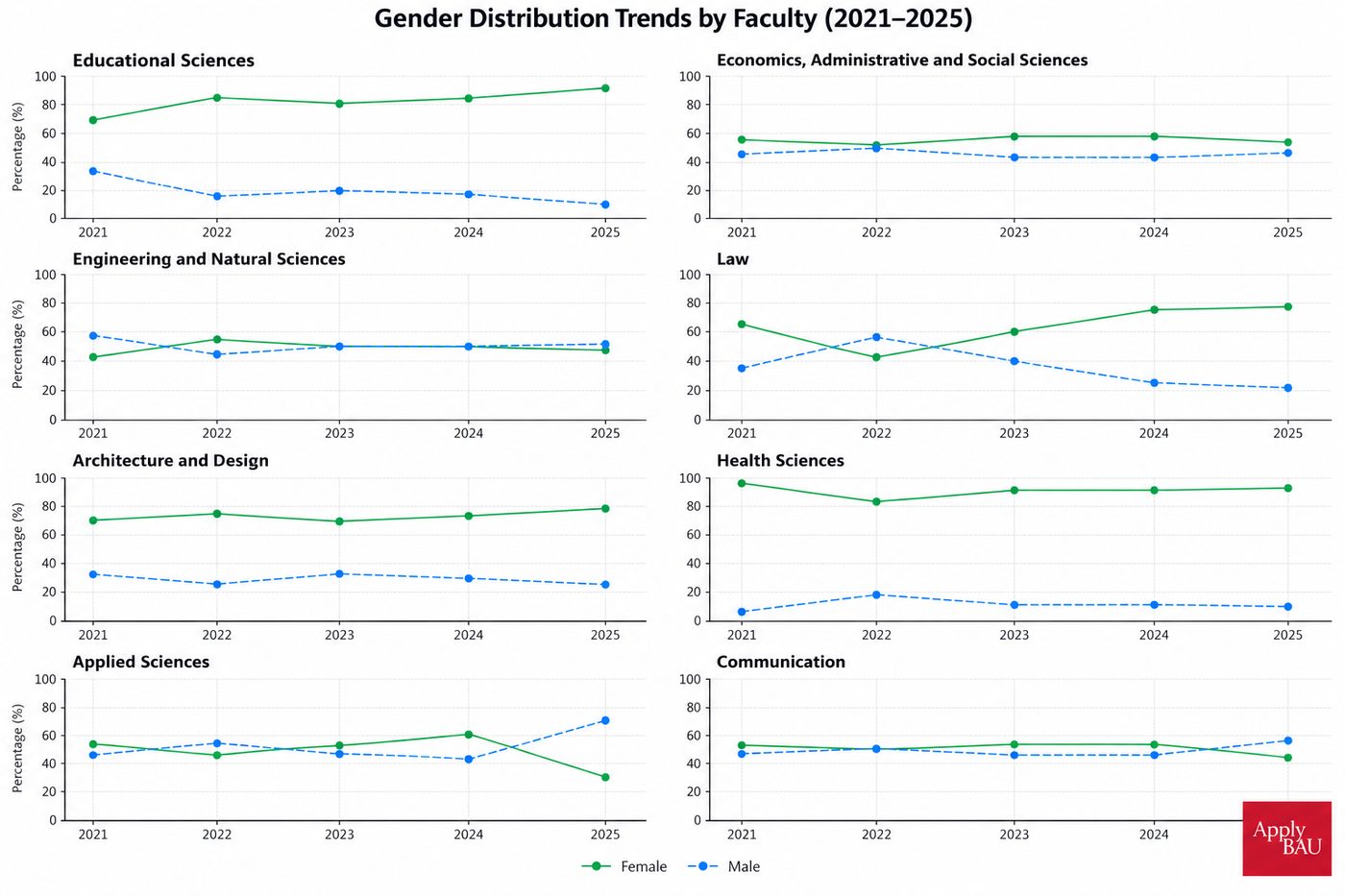
The 2025 data demonstrate continued strong female representation among scholarship recipients in several faculties, alongside important variations across academic disciplines. In the Faculty of Educational Sciences, women accounted for 88.89% of scholarship recipients in 2025, compared to approximately 82% in 2024. Similarly, the Faculty of Health Sciences maintained a particularly high proportion of female recipients, reaching 90.91% in 2025. The Faculty of Architecture and Design also recorded substantial female representation, with women accounting for 75.86% of scholarship recipients.
The Faculty of Law demonstrated one of the most notable developments over the five-year period. Female representation increased from approximately 65% in 2021 to 77.27% in 2025, reflecting a sustained upward trend despite fluctuations in earlier years. In the Faculty of Engineering and Natural Sciences, female representation reached 49% in 2025, compared to approximately 43% in 2021, indicating progress toward a more balanced gender distribution in a traditionally male-dominated field.
In the Faculty of Economics, Administrative and Social Sciences, women accounted for 53.45% of scholarship recipients in 2025, maintaining a relatively balanced distribution. These variations highlight the importance of continuously monitoring gender patterns across different academic disciplines and identifying areas where additional efforts to promote women’s access may be beneficial.
Overall, in 2025, women represented an average of 63.71% of ApplyBAU scholarship recipients across the eight faculties and schools, compared to 36.29% for men. This reflects strong female representation among ApplyBAU scholarship beneficiaries and highlights the University's continued commitment to supporting women's access to higher education through scholarship opportunities.
The graphs below illustrate the annual gender distribution of ApplyBAU scholarship recipients across Bahçeşehir University's faculties and schools from 2021 to 2025, providing a comparative overview of female and male representation over the five-year period.
2- Bahcesehir University Full PhD Scholarships: A Special Initiative Commemorating the 100th Anniversary of the Republic of Türkiye
In the 2023–2024 academic year, Bahçeşehir University (BAU) launched the Science Scholarship PhD Program as a special scholarship initiative commemorating the 100th anniversary of the Republic of Türkiye. Established to mark this historic milestone through investment in scientific knowledge and the next generation of researchers, the program reflects BAU’s commitment to supporting doctoral education, advancing scientific research, and promoting equal opportunities for women and men in academia.
Within the scope of this special initiative, 77 doctoral students received science scholarships in the 2023–2024 academic year, 40 of whom were women (51.9%). The participation of women as a majority of scholarship recipients demonstrates the program’s contribution to supporting female researchers and expanding opportunities for women to pursue advanced academic qualifications.
Importantly, although the scholarship initiative was introduced to commemorate the Republic’s centennial, its financial support was not limited to the anniversary year. The scholarships were designed to cover the duration of doctoral education, typically extending over approximately four years, thereby providing beneficiaries with sustained support throughout their doctoral studies.
Accordingly, scholarship support under this special centennial initiative continued into 2025 for eligible recipients. This continuity demonstrates BAU’s long-term commitment to supporting the academic progress of doctoral students beyond the initial year of scholarship allocation.
For female doctoral students in particular, sustained scholarship support can help reduce financial barriers to advanced education, facilitate continued participation in research, and contribute to the completion of doctoral qualifications. The program therefore supports not only women's access to doctoral education but also their continued academic development and progression toward research careers.
By combining a commemorative investment in scientific advancement with long-term educational support, the Science Scholarship PhD Program contributes to SDG 4 (Quality Education) and SDG 5 (Gender Equality), reflecting BAU’s commitment to expanding educational opportunities and supporting women’s participation in advanced academic study.
The table below presents the list of doctoral students who received scholarships under the Science Scholarship PhD Program, launched to commemorate the 100th anniversary of the Republic of Türkiye. The scholarships were awarded in the 2023–2024 academic year, with financial support continuing into 2025 for eligible recipients.
| 1 | BUĞRA | TAŞDEMİR | BİLGİSAYAR MÜHENDİSLİĞİ (İNGİLİZCE, DOKTORA) |
|---|---|---|---|
| 2 | MERVE | KARA | EĞİTİM TEKNOLOJİSİ (İNGİLİZCE, DOKTORA) |
| 3 | LARA | ÖZER | EĞİTİM TEKNOLOJİSİ (TÜRKÇE, DOKTORA) |
| 4 | VESİLE DERYA | ÇAKIR | EĞİTİM TEKNOLOJİSİ (TÜRKÇE, DOKTORA) |
| 5 | ARİFE CEREN | GÜRSOY | EĞİTİM TEKNOLOJİSİ (TÜRKÇE, DOKTORA) |
| 6 | Margrit | Yeşiltepe | EĞİTİM TEKNOLOJİSİ (TÜRKÇE, DOKTORA) |
| 7 | ÖZLEM | BAYRAKTAR GÖKŞEN | EKONOMİ VE FİNANS (İNGİLİZCE, DOKTORA) |
| 8 | KENAN | PELVAN | EKONOMİ VE FİNANS (İNGİLİZCE, DOKTORA) |
| 9 | SEZGİN CUMHUR | ÖRNEK | EKONOMİ VE FİNANS (İNGİLİZCE, DOKTORA) |
| 10 | SERDAR | KAYA | ENDÜSTRİ MÜHENDİSLİĞİ (İNGİLİZCE, DOKTORA) |
| 11 | ŞÜKRAN ECE | ESİRGEN | ENDÜSTRİ MÜHENDİSLİĞİ (İNGİLİZCE, DOKTORA) |
| 12 | HANDE BESNA | GÖÇEN | FİZYOTERAPİ VE REHABİLİTASYON (TÜRKÇE, DOKTORA) |
| 13 | HAVVA EZGİ | ALBAYRAK | FİZYOTERAPİ VE REHABİLİTASYON (TÜRKÇE, DOKTORA) |
| 14 | ŞENOL | SÖĞÜT | İNGİLİZ DİLİ EĞİTİMİ (İNGİLİZCE, DOKTORA) |
| 15 | CEMRENUR | MANGIR | İNGİLİZ DİLİ EĞİTİMİ (İNGİLİZCE, DOKTORA) |
| 16 | NİHANSU | YURTSEVEN AKIŞ | İNGİLİZ DİLİ EĞİTİMİ (İNGİLİZCE, DOKTORA) |
| 17 | MUSA DUHAN | MUSAOĞLU | İNGİLİZ DİLİ EĞİTİMİ (İNGİLİZCE, DOKTORA) |
| 18 | ALPAY | GÖKÇE | İŞLETME (İNGİLİZCE, DOKTORA) |
| 19 | BEKİR | POLAT | İŞLETME (İNGİLİZCE, DOKTORA) |
| 20 | HASAN | KARAMAN | İŞLETME MÜHENDİSLİĞİ (TÜRKÇE, DOKTORA) |
| 21 | RAGIP | ŞENGÜL | ÖZEL HUKUK (TÜRKÇE, DOKTORA) |
| 22 | BEYHAN | ÖZEREN | ÖZEL HUKUK (TÜRKÇE, DOKTORA) |
| 23 | NİHAN | KALKAN | REHBERLİK VE PSİKOLOJİK DANIŞMANLIK (TÜRKÇE, DOKTORA) |
| 24 | İREM | HATTAT | REKLAMCILIK VE HALKLA İLİŞKİLER (TÜRKÇE, DOKTORA) |
| 25 | RAFET FATİH | ÖZGÜR | REKLAMCILIK VE HALKLA İLİŞKİLER (TÜRKÇE, DOKTORA) |
| 26 | ÖMER BATUHAN | ÖZMEN | REKLAMCILIK VE HALKLA İLİŞKİLER (TÜRKÇE, DOKTORA) |
| 27 | HAMDİ | APALI | SİNEMA VE MEDYA ARAŞTIRMALARI (İNGİLİZCE, DOKTORA) |
| 28 | ÖMER FARUK | CANDAL | SİNİRBİLİM (TÜRKÇE, DOKTORA) |
| 29 | MUSTAFA FATİH | ÇETİNTAŞ | SİNİRBİLİM (TÜRKÇE, DOKTORA) |
| 30 | AKIN | AKYÜZ | SİNİRBİLİM (TÜRKÇE, DOKTORA) |
| 31 | AHMET ERTUĞRUL | AKYOL | SİYASET BİLİMİ VE ULUSLARARASI İLİŞKİLER (İNGİLİZCE, DOKTORA) |
| 32 | BÜŞRANUR | TENİK | SİYASET BİLİMİ VE ULUSLARARASI İLİŞKİLER (İNGİLİZCE, DOKTORA) |
| 33 | EMEL | TOPÇU | EĞİTİM TEKNOLOJİSİ (İNGİLİZCE, DOKTORA) |
| 34 | SELİN | ÖZDEMİR | EĞİTİM TEKNOLOJİSİ (İNGİLİZCE, DOKTORA) |
| 35 | DİLA | SÜZAN | EĞİTİM TEKNOLOJİSİ (İNGİLİZCE, DOKTORA) |
| 36 | BERRİN | KEMAHLI | EĞİTİM TEKNOLOJİSİ (İNGİLİZCE, DOKTORA) |
| 37 | SEHLA | ERTAN | EĞİTİM TEKNOLOJİSİ (TÜRKÇE, DOKTORA) |
| 38 | ZEYNEP | AYDEMİR | EĞİTİM TEKNOLOJİSİ (TÜRKÇE, DOKTORA) |
| 39 | MERVE | SERT ORHAN | EĞİTİM TEKNOLOJİSİ (TÜRKÇE, DOKTORA) |
| 40 | CEM | TAŞDEMİR | EĞİTİM TEKNOLOJİSİ (TÜRKÇE, DOKTORA) |
| 41 | OKTAY | ÇETİN | ENDÜSTRİ MÜHENDİSLİĞİ (İNGİLİZCE, DOKTORA) |
| 42 | MEHMET | ÖZ | ENDÜSTRİ MÜHENDİSLİĞİ (İNGİLİZCE, DOKTORA) |
| 43 | CANSU | DEMİR | FİZYOTERAPİ VE REHABİLİTASYON (TÜRKÇE, DOKTORA) |
| 44 | GÖRKEM | AÇAR | FİZYOTERAPİ VE REHABİLİTASYON (TÜRKÇE, DOKTORA) |
| 45 | YUSUF | YAŞASIN | FİZYOTERAPİ VE REHABİLİTASYON (TÜRKÇE, DOKTORA) |
| 46 | BEYZA | ÇOBAN | FİZYOTERAPİ VE REHABİLİTASYON (TÜRKÇE, DOKTORA) |
| 47 | BETÜL | ÜNAL | FİZYOTERAPİ VE REHABİLİTASYON (TÜRKÇE, DOKTORA) |
| 48 | İLKER CAN | BÜYÜKKIRLI | FİZYOTERAPİ VE REHABİLİTASYON (TÜRKÇE, DOKTORA) |
| 49 | ÖZNUR | KAYA SAĞLAM | FİZYOTERAPİ VE REHABİLİTASYON (TÜRKÇE, DOKTORA) |
| 50 | ZERRİN | YILMAZ | FİZYOTERAPİ VE REHABİLİTASYON (TÜRKÇE, DOKTORA) |
| 51 | KÜBRA | CAN | HEMŞİRELİK (TÜRKÇE, DOKTORA) |
| 52 | BARIŞ | ÖZDERE | HEMŞİRELİK (TÜRKÇE, DOKTORA) |
| 53 | MELİKE | UBUZ | İNGİLİZ DİLİ EĞİTİMİ (İNGİLİZCE, DOKTORA) |
| 54 | NİHAL | OZDEMİR | İNGİLİZ DİLİ EĞİTİMİ (İNGİLİZCE, DOKTORA) |
| 55 | SEÇİL | CENGİZ | İNGİLİZ DİLİ EĞİTİMİ (İNGİLİZCE, DOKTORA) |
| 56 | KAAN | ÖZKORKMAZ | İŞLETME (İNGİLİZCE, DOKTORA) |
| 57 | MEHMET RAŞİT | ÖZDOĞLAR | İŞLETME (İNGİLİZCE, DOKTORA) |
| 58 | ÖZGÜR VOLKAN | ŞAHİN | İŞLETME MÜHENDİSLİĞİ (TÜRKÇE, DOKTORA) |
| 59 | TAHA | TAŞDEMİR | İŞLETME MÜHENDİSLİĞİ (TÜRKÇE, DOKTORA) |
| 60 | BURAK | ŞAHİN | İŞLETME MÜHENDİSLİĞİ (TÜRKÇE, DOKTORA) |
| 61 | AFŞİN BURAK | UMAR | KAMU HUKUKU (TÜRKÇE, DOKTORA) |
| 62 | Mariame | Bentaibi | MİMARLIK VE TASARIM (İNGİLİZCE, DOKTORA) |
| 63 | RAGIP | ŞENGÜL | ÖZEL HUKUK (TÜRKÇE, DOKTORA) |
| 64 | BUĞRA | ÖZTÜRK | REHBERLİK VE PSİKOLOJİK DANIŞMANLIK (TÜRKÇE, DOKTORA) |
| 65 | NESLİGÜL DENİZ | KOLAŞİNLİ | REKLAMCILIK VE HALKLA İLİŞKİLER (TÜRKÇE, DOKTORA) |
| 66 | MURAT | GÖLLÜ | REKLAMCILIK VE HALKLA İLİŞKİLER (TÜRKÇE, DOKTORA) |
| 67 | SİBEL | ELALTUNTERİN | SİNEMA VE MEDYA ARAŞTIRMALARI (İNGİLİZCE, DOKTORA) |
| 68 | BEGÜM | LAVKOR | SİNEMA VE MEDYA ARAŞTIRMALARI (İNGİLİZCE, DOKTORA) |
| 69 | BALIM | İSLAMOĞLU | SİNEMA VE MEDYA ARAŞTIRMALARI (İNGİLİZCE, DOKTORA) |
| 70 | BERKE | DOĞANOĞLU | SİNEMA VE MEDYA ARAŞTIRMALARI (İNGİLİZCE, DOKTORA) |
| 71 | MUSTAFA | TÜRKAN | SİNEMA VE MEDYA ARAŞTIRMALARI (İNGİLİZCE, DOKTORA) |
| 72 | BANU | TOPÇU DİREN | SİNEMA VE MEDYA ARAŞTIRMALARI (İNGİLİZCE, DOKTORA) |
| 73 | EHSAN | SAYYAH | SİNİRBİLİM (TÜRKÇE, DOKTORA) |
| 74 | BAHAR | KILIÇ | SİYASET BİLİMİ VE ULUSLARARASI İLİŞKİLER (İNGİLİZCE, DOKTORA) |
| 75 | FATMA | UÇURUM | SOSYOLOJİ (İNGİLİZCE, DOKTORA) |
| 76 | PINAR | KARAKAYA | SOSYOLOJİ (TÜRKÇE, DOKTORA) |
| 77 | AKIN | MUTLU | SOSYOLOJİ (TÜRKÇE, DOKTORA) |
3- Bahcesehir University (BAU) Graduate School – Master’s Scholarships and Women’s Support Program
BAU actively promotes gender equality and women’s participation in graduate education through dedicated scholarship programs. Within the BAU Graduate School, women pursuing master’s degrees receive financial and academic support to strengthen their representation in higher education and research.
These scholarships aim to empower women scholars, encourage academic excellence, and contribute to a more inclusive and equitable academic environment in line with the Sustainable Development Goals (SDG 4 – Quality Education, SDG 5 – Gender Equality, and SDG 10 – Reduced Inequalities).
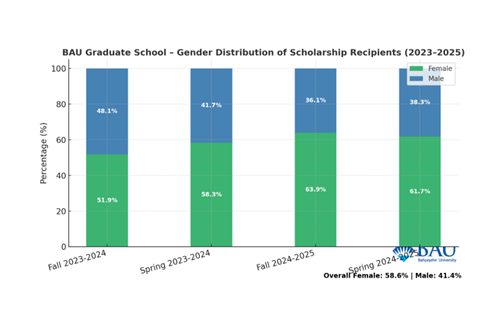
Across the two academic years examined, women accounted for 58.6% of master’s scholarship recipients, compared to 41.4% for men. The higher proportion of female scholarship beneficiaries demonstrates the significant participation of women in BAU’s graduate-level financial support opportunities.
These scholarship opportunities contribute to reducing financial barriers to postgraduate education and supporting women’s continued academic development, including their participation in research-oriented and professionally focused graduate programs.
The graph below presents the gender distribution of master’s scholarship recipients across the two academic years, illustrating the proportion of female and male students benefiting from BAU’s graduate scholarship opportunities.
4- Bahçeşehir University Women Students Mentorship Program
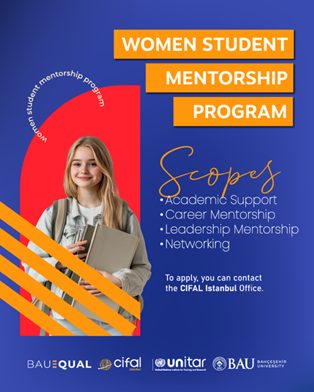
The image below portrays a promotional poster for the Women Students Mentorship Program
Institutional Commitment and Programme Overview
Bahçeşehir University (BAU) recognizes that advancing gender equality in higher education requires not only equal admission opportunities but also an inclusive educational environment in which women can pursue their academic ambitions, develop professional competencies, access meaningful networks, and prepare for future careers.
The Bahçeşehir University Women Students Mentorship Program is a structured, university-wide initiative connecting female undergraduate and postgraduate students with experienced women professionals, entrepreneurs, and academics. Coordinated by CIFAL Istanbul, BAU EQUAL, and the BAU Social Impact and Responsibility Directorate, the programme provides individualized guidance, leadership development, professional knowledge exchange, and intergenerational learning opportunities.
CIFAL Istanbul, hosted by Bahçeşehir University as a training centre affiliated with the United Nations Institute for Training and Research (UNITAR), contributes its educational and professional networks. BAU EQUAL reinforces the University's commitment to gender equality and inclusion, while the BAU Social Impact and Responsibility Directorate supports programme coordination and implementation.
The initiative recognizes that women's academic and professional advancement depends not only on educational achievement but also on access to role models, mentoring relationships, professional networks, and opportunities to build confidence and leadership capabilities. By bringing students together with accomplished women from diverse professional backgrounds, the programme supports their academic development and transition into professional life.
Through its inclusive mentoring model, the initiative contributes to SDG 5 (Gender Equality) and SDG 4 (Quality Education) by expanding women's access to structured development opportunities across academic disciplines.
Programme Objectives and Women's Empowerment
The primary objective of the Women Students Mentorship Program is to strengthen female students' academic, personal, and professional development through sustained mentoring relationships with experienced women.
The programme aims to:
Expand access to educational, professional, and leadership opportunities through mentoring and professional networks.
Support informed decisions about academic development, career pathways, and future aspirations.
Strengthen confidence, communication, networking, leadership, and decision-making skills.
Increase students' understanding of professional environments, organizational cultures, workplace expectations, and career development.
Connect participants with accomplished women role models who can share practical insights into professional advancement.
Help students identify and navigate gender stereotypes, limited professional networks, and unequal access to opportunities.
Encourage intergenerational knowledge exchange, mutual learning, and solidarity among women.
Support students in identifying their strengths, interests, development needs, and long-term goals.
Recognizing that female students face different challenges depending on their academic disciplines, individual circumstances, and professional ambitions, the programme emphasizes personalized guidance. Direct engagement with experienced women helps participants broaden their perspectives, recognize their potential, and develop confidence in pursuing their ambitions.
Eligibility, Applications, and Mentor–Mentee Matching
Mentee Eligibility and Access
The programme is open to female undergraduate and postgraduate students across all academic disciplines at Bahçeşehir University, ensuring that mentoring opportunities are not restricted to particular faculties, departments, or fields of study.
While acknowledging additional barriers women may encounter in certain disciplines or professional sectors, the initiative supports participants regardless of their educational backgrounds or career aspirations.
Interested students apply through the online application process announced for each programme cycle. Application forms collect information about academic backgrounds, interests, motivations, previous mentoring experiences, career aspirations, and expectations. These details help the coordinating team assess individual development needs and identify suitable mentors.
Mentor Eligibility and Responsibilities
Mentors are women professionals, entrepreneurs, or academics with at least five years of relevant professional experience. They represent diverse fields, including academia, business, entrepreneurship, public institutions, and other professional sectors. Experienced women from BAU's alumni network and wider professional community may also participate.
Mentors support students by:
Sharing professional experiences, career journeys, and lessons learned.
Providing guidance on academic and career-related decisions.
Discussing workplace expectations, organizational cultures, and professional challenges.
Supporting leadership, communication, networking, and decision-making skills.
Encouraging students to recognize their strengths and explore opportunities.
Offering perspectives on navigating challenges and making informed choices.
Promoting mutual learning, professional solidarity, and constructive dialogue.
The involvement of accomplished women role models enables participants to explore different career pathways and leadership opportunities.
Mentor–Mentee Matching Process
The matching process is coordinated by CIFAL Istanbul, BAU EQUAL, and the BAU Social Impact and Responsibility Directorate.
Prospective mentors and mentees complete structured application forms covering their backgrounds, experience, interests, motivations, previous mentoring involvement, and expectations. The coordinating team reviews this information and identifies suitable pairings based on the alignment between mentors' professional expertise and students' academic interests, career aspirations, and development needs.
Each participating female student is assigned one designated mentor, while individual mentors may support more than one mentee depending on their availability and capacity.
This structured process is designed to establish meaningful mentoring relationships. Application forms and matching documentation provide supporting evidence of the programme's organized implementation.
Programme Structure, Duration, and Mentoring Activities
Fourteen-Week Mentoring Framework
The programme operates through a structured 14-week mentoring framework, providing sustained engagement.
Each mentor–mentee pair is expected to complete at least four individual meetings, each lasting a minimum of one hour. Meetings may take place in person or online, according to participants' availability and preferences.
This flexible arrangement accommodates academic, professional, and personal responsibilities while maintaining a consistent mentoring structure. Throughout the programme, participants can establish development objectives, discuss challenges, explore solutions, receive feedback, and reflect on their progress.
Individual Mentorship and Academic Guidance
Individual mentoring sessions form the programme's central component. Students can discuss their educational experiences, academic interests, professional ambitions, career planning, and personal development goals.
Mentors provide guidance informed by their professional experience, helping mentees explore different approaches to academic and career-related decisions. These interactions are tailored to each student's circumstances, interests, and aspirations.
Leadership and Professional Development
The programme supports the development of competencies relevant to women's academic progression and professional participation.
Mentoring discussions may address leadership, communication, decision-making, professional confidence, networking, career preparation, and the transition from university to employment.
Through these exchanges, students gain insight into professional expectations, develop greater awareness of their strengths, and strengthen their ability to articulate and pursue career ambitions.
Group Events and Engagement with Women Role Models
Alongside individual mentoring, the programme incorporates group events and collective engagement opportunities with women leaders from academia, industry, and entrepreneurship.
These activities expose participants to diverse career journeys, leadership experiences, and professional perspectives while creating opportunities for networking, peer interaction, and knowledge exchange.
By extending connections beyond individual mentor–mentee relationships, group activities contribute to a broader community of learning and solidarity among women.
Intergenerational Knowledge Exchange and Professional Networks
The programme enables female students to engage directly with experienced women from different professional fields, exchange practical knowledge, discuss workplace challenges, and understand the relationship between academic learning and professional practice.
It also encourages connections among participating students, strengthening peer solidarity and creating a supportive environment for shared learning.
Together, individualized guidance, group engagement, and intergenerational exchange expand students' professional perspectives and development opportunities.
Application Process and Institutional Coordination
The Women Students Mentorship Program is implemented through a coordinated institutional process covering applications, mentor engagement, matching, participant communication, and programme delivery.
Mentee Applications
Female students apply through the designated online application form, providing information about their academic backgrounds, motivations, professional interests, and expectations. These applications enable the organizing team to identify development needs and facilitate appropriate mentor matching.
Mentor Applications
CIFAL Istanbul coordinates mentor engagement through its institutional and professional networks. Prospective mentors provide information about their experience, expertise, professional backgrounds, and availability.
Matching and Participant Communication
CIFAL Istanbul, BAU EQUAL, and the BAU Social Impact and Responsibility Directorate review applications and contribute to the matching process according to their respective responsibilities.
Following matching, the organizing team communicates mentor–mentee assignments and provides participants with the information needed to initiate their mentoring relationships.
Institutional Collaboration
CIFAL Istanbul supports programme coordination and communication with mentors, mentees, and stakeholders. BAU EQUAL contributes its expertise in equality and inclusion, while the BAU Social Impact and Responsibility Directorate participates in coordination and implementation.
The initiative also draws on BAU's academic community, alumni, external professionals, and institutional networks. Other University units may contribute complementary professional development and networking activities within their respective areas of responsibility.
This collaborative structure translates BAU's institutional commitment to gender equality into practical mentoring opportunities for female students.
Addressing Barriers to Women's Academic and Professional Advancement
BAU recognizes that women may face barriers extending beyond formal access to higher education, including limited professional networks, insufficient exposure to experienced women role models, gender stereotypes, uncertainty about career pathways, and unequal professional development opportunities.
Additional challenges may arise from socioeconomic circumstances, disability, family responsibilities, or other intersecting forms of disadvantage.
The Women Students Mentorship Program addresses these barriers by providing accessible mentoring relationships, individualized guidance, and opportunities for professional knowledge exchange across academic disciplines.
The programme recognizes their diverse circumstances and development needs.
Through engagement with experienced professionals, participants can strengthen confidence, broaden their professional perspectives, develop personal agency, and make informed decisions about their futures.
The benefits extend beyond immediate career guidance by supporting professional relationships and leadership capabilities that may remain valuable after graduation.
Programme Feedback and Continuous Improvement
Bahçeşehir University recognizes the importance of reviewing participant experiences and identifying opportunities to improve the quality and relevance of mentoring activities.
Feedback from mentors and mentees may provide insights into matching effectiveness, the relevance of mentoring discussions, programme accessibility, and individual development needs.
These findings can inform improvements in communication, mentor engagement, professional networking opportunities, and future programme cycles.
The University also recognizes the importance of monitoring participation trends to assess the programme's reach among female students.
Through continued evaluation and institutional coordination, BAU seeks to maintain a mentoring framework responsive to students' evolving academic and professional aspirations.
Contribution to SDG 5: Gender Equality
The Women Students Mentorship Program demonstrates Bahçeşehir University's commitment to SDG 5 (Gender Equality) and SDG 4 (Quality Education) through university-wide access to structured mentoring, individualized guidance, sustained engagement, and professional networks.
By connecting female students with experienced women role models, the initiative strengthens opportunities to develop confidence, leadership capabilities, professional competencies, and meaningful relationships.
The programme recognizes that gender equality involves not only access to higher education but also women's ability to benefit from educational opportunities, participate in professional networks, and pursue their academic and career ambitions.
The expansion in reported female student beneficiaries between 2020 and 2025 further demonstrates the University's continued investment in mentoring and women's development.
Through this initiative, BAU supports women across academic disciplines in accessing guidance, building professional connections, and developing the capabilities needed for academic and professional advancement.
In doing so, the University reinforces its institutional commitment to women's empowerment and more equitable participation in higher education and professional life.
5- Bahçeşehir University Career and Long-Term Internship Program Supporting Women Students
Advancing Women's Equal Access to Professional Development and Career Opportunities
Bahçeşehir University (BAU) recognizes that achieving gender equality in higher education requires not only equitable access to academic programmes but also meaningful opportunities for women to develop professional competencies, gain practical experience, and prepare for successful transitions into employment.
Within this framework, BAU's CO-OP Education Model and COOPER Program provide an institutional mechanism for supporting women's access to long-term internships, career development opportunities, professional networks, and workplace experience.
The programme forms part of the University's broader commitment to SDG 5 (Gender Equality) by promoting women's equal participation in professional development activities and helping address barriers that may affect their transition from higher education into the labour market.
An Integrated Career Development and Long-Term Internship Model
The BAU CO-OP Education Model integrates academic learning with practical professional experience through long-term internships and complementary career development activities.
The programme provides students with access to career counselling, professional development workshops, mock job interviews, seminars, industry mentorship, and opportunities to engage directly with employers.
These activities are designed to strengthen students' professional competencies, confidence, career planning abilities, and understanding of workplace expectations.
For female students, this integrated approach is particularly important in expanding access to professional environments, developing networks, and strengthening their readiness to pursue career opportunities across different sectors.
The programme supports women students across all academic disciplines and professional interests, while recognizing the importance of additional encouragement in sectors and positions where women have historically been underrepresented.
Application, Selection, and Placement Process
The BAU CO-OP Career Center coordinates long-term internship placements in collaboration with the Human Resources departments of partner companies.
The placement process follows a structured model that reflects professional recruitment practices.
It includes:
Internship Announcements: Long-term internship opportunities are communicated to eligible students through relevant programme channels.
Student Applications: Interested students apply for available opportunities according to the requirements of the relevant positions.
Candidate Evaluation: Applications are reviewed in relation to the qualifications, competencies, and expectations associated with each internship.
Interviews and Shortlisting: Candidates participate in relevant selection procedures, including interviews and shortlisting conducted in cooperation with partner companies.
Internship Placement: Selected students are placed in professional environments where they can gain practical experience and develop workplace competencies.
Administrative Coordination: Relevant administrative and insurance procedures are managed by the University under the supervision of the CO-OP team.
By participating in these stages, students gain direct experience of professional recruitment processes before graduation.
Promoting Women's Equal Access and Participation
Ensuring equal access for women students is a central principle of BAU's COOPER Program.
The University is committed to providing female students with fair opportunities to apply for and participate in long-term internships and career development activities.
BAU actively encourages women's participation across all sectors and professional fields, ensuring that opportunities are not limited to particular disciplines or traditionally female-dominated occupations.
Within this university-wide approach, additional attention is given to encouraging female participation in sectors and positions where women remain underrepresented.
The programme supports women's career development through:
Equal access to long-term internship opportunities and transparent application procedures.
Career counselling and guidance to support informed professional decisions.
Workshops and mock interviews that strengthen career readiness and confidence.
Industry mentorship and engagement with experienced professionals.
Opportunities to establish professional networks and gain workplace experience.
Encouragement to explore diverse career pathways, including sectors where women have historically faced barriers to participation.
Through these activities, BAU seeks to strengthen women's professional independence, confidence, and capacity to pursue their career ambitions.
Collaboration with Industry and Professional Networks
A defining feature of the CO-OP Education Model is its collaboration with partner companies and their Human Resources departments.
These partnerships enable students to engage with professional recruitment procedures and experience workplace environments relevant to their academic backgrounds and career aspirations.
For women students, access to these partnerships creates opportunities to develop professional networks, gain practical experience, and engage with employers before graduation.
The programme also complements academic learning by connecting students with industry expectations and helping them develop competencies that support future employability.
By facilitating women's access to professional environments and employer networks, BAU contributes to reducing barriers between higher education and career opportunities.
BAU systematically monitors female students' participation and placement outcomes within the COOPER Program as part of its commitment to gender equality.
Gender-disaggregated programme data are used to assess participation patterns and evaluate women's access to long-term internship opportunities.
Relevant monitoring includes the number of participating female and male students, their representation among internship placements, and changes in participation across academic years.
The programme's monitoring approach supports the identification of potential gender disparities and informs efforts to encourage women's participation across different professional fields.
Programme data from previous years have indicated higher participation among female students than male students, demonstrating women's substantial engagement with the opportunities provided through the COOPER model.
These findings provide a basis for continued evaluation of women's access to internships and professional development opportunities.
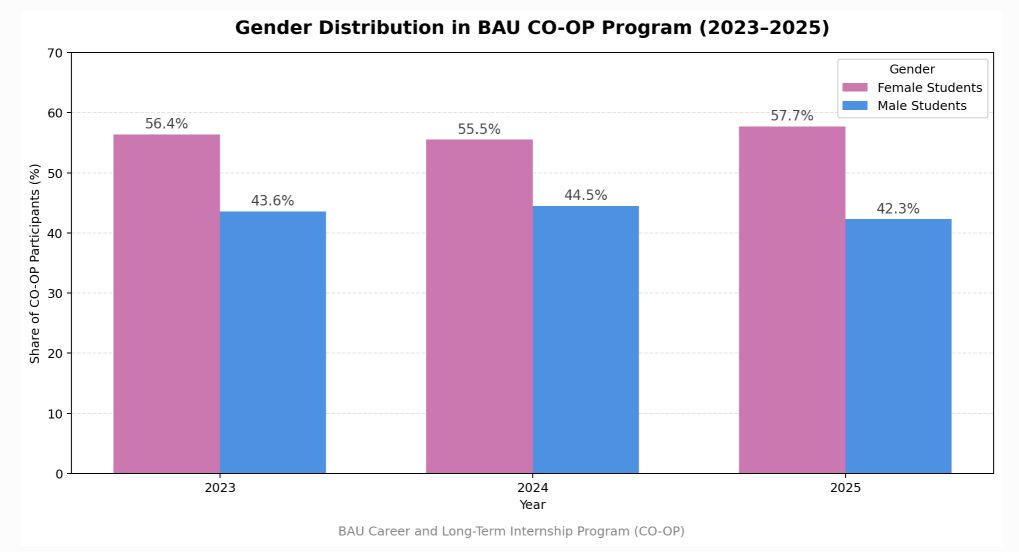
In 2023, female students represented 56.4% of all CO-OP participants, while male students accounted for 43.6%. This upward trend in female participation continued into 2024, with women comprising 55.5% and men 44.5% of the total participants.
In 2025, female students accounted for 57.7% of CO-OP participants, compared to 42.3% male students. This represents an increase of 2.2 percentage points in female participation compared to the previous year, further demonstrating the sustained engagement of women in BAU's experiential learning and professional development opportunities.
These figures demonstrate that female students continue to actively engage in experiential learning and long-term internship opportunities, benefiting from BAU’s inclusive approach to career-oriented education.
The graph below illustrates the gender distribution of participants in BAU’s CO-OP Program from 2023 to 2025, highlighting the University’s ongoing commitment to promoting equal access to practical training, experiential learning, and professional development opportunities for all students.
Through these inclusive practices, Bahçeşehir University continues to align its education and employment strategies with SDG 4 (Quality Education), SDG 5 (Gender Equality), and SDG 8 (Decent Work and Economic Growth) — fostering an equitable, diverse, and empowered new generation of professionals.
6- BAU: “Equal Opportunity Model” Certified University
The image below displays the announcement poster for Bahçeşehir University gaining the “Equal Opportunity Model” Certifications
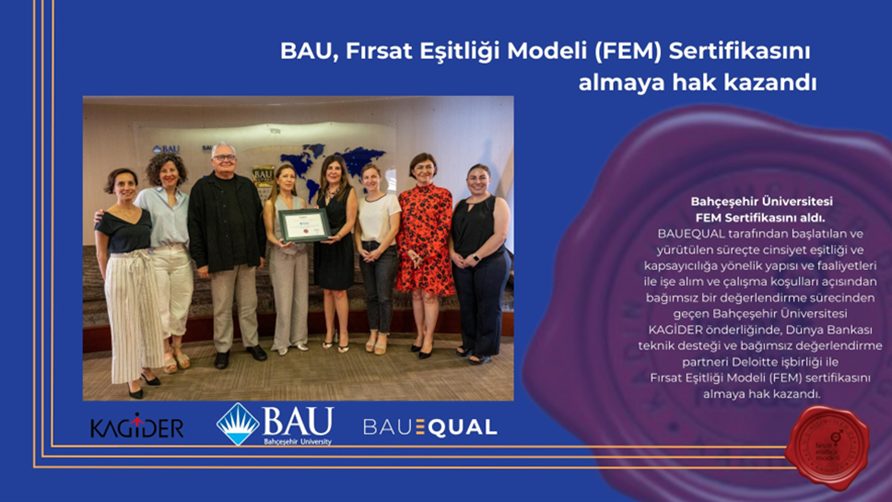
Bahçeşehir University (BAU) has been officially recognized as an Equal Opportunity Model (FEM) Certified University, a distinction developed and implemented by the Women Entrepreneurs Association of Türkiye (KAGİDER) with the support of the World Bank. This certification reflects BAU’s strong institutional commitment to promoting gender equality, diversity, and women’s empowerment in education and employment.
The Equal Opportunity Model (FEM) is designed to identify and address inequalities in organizational processes such as recruitment, training, career development, and promotion, promoting equal opportunities regardless of gender. The program—developed under the leadership of KAGİDER, with technical support from the World Bank and in collaboration with PricewaterhouseCoopers (PwC) and Ernst & Young (EY)—provides a structured framework for assessing and strengthening gender equality and inclusion in organizational practices.
Following an independent evaluation and audit process, Bahçeşehir University achieved certification by demonstrating gender-sensitive practices and governance mechanisms across its institutional structure. This achievement reflects BAU’s sustained efforts to create a fair, inclusive, and equitable working environment for all, reinforcing its commitment to SDG 5 (Gender Equality) and SDG 8 (Decent Work and Economic Growth).
Although the FEM certification primarily addresses institutional practices and employment-related equality, it also reflects the broader organizational commitment to gender inclusion that underpins BAU’s approach to educational access and participation. In the context of women’s access to higher education, the certification provides complementary evidence of the University’s institutional commitment to reducing gender-based barriers and promoting an inclusive environment.
By attaining the FEM certification, Bahçeşehir University demonstrates how higher education institutions can incorporate equal opportunity principles into their operational and human resources systems, translating institutional commitments to gender equality into concrete organizational practices and processes.











