EN
4.3.4 - Educational Outreach Activities
Bahçeşehir University (BAU) actively extends its educational mission beyond its campuses through a diverse range of educational outreach initiatives designed to engage the wider community, promote lifelong learning, and expand access to knowledge and skills development.
Through tailored lectures, educational seminars, certificate courses, practical demonstrations, workshops, training programmes, and community-based learning activities, BAU shares its academic expertise with individuals and communities beyond its enrolled student population. These initiatives are organized both on an ad-hoc and a programmed basis, enabling the University to respond to emerging educational needs while maintaining ongoing engagement with different segments of society.
Implemented by BAU's academic departments, research centres, academic staff, and student volunteers, often in collaboration with public institutions, educational organizations, and community partners, these activities provide learning opportunities for diverse audiences, including school students, educators, professionals, and members of the general public. By delivering educational initiatives beyond the university campus, BAU contributes to reducing barriers to learning, strengthening community engagement, and making higher education resources more accessible to society.
The following sections present selected examples of educational outreach activities conducted beyond BAU's campuses during the 2024 – 2025 academic year reporting period. These initiatives demonstrate the University's commitment to SDG 4 (Quality Education) by promoting inclusive educational opportunities, knowledge sharing, and lifelong learning across different communities.
Supporting evidence, including official promotional materials, event photographs, and documentation of individual outreach activities, is provided alongside the examples presented below.
1- Expanding Access to Free Education and Youth Empowerment: Common Solutions to Social Problems Certificate Programme with Bahçeşehir University, CIFAL Istanbul, UNITAR and Zeren Group Holding
The image below shows the promotional poster and the registration portal for the program:
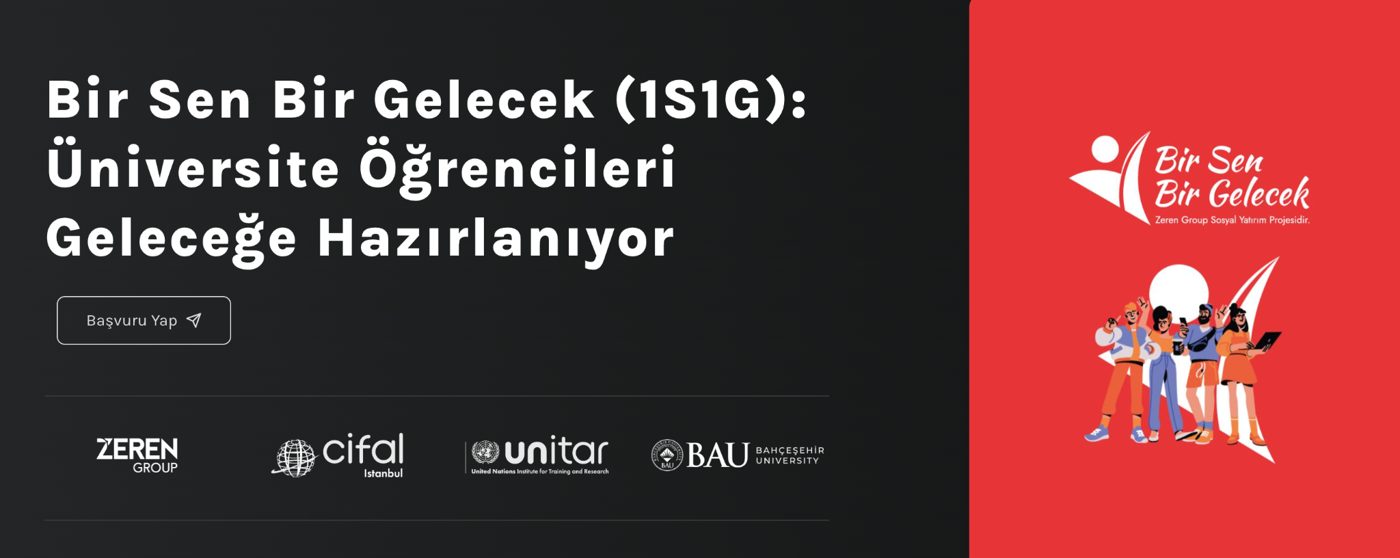
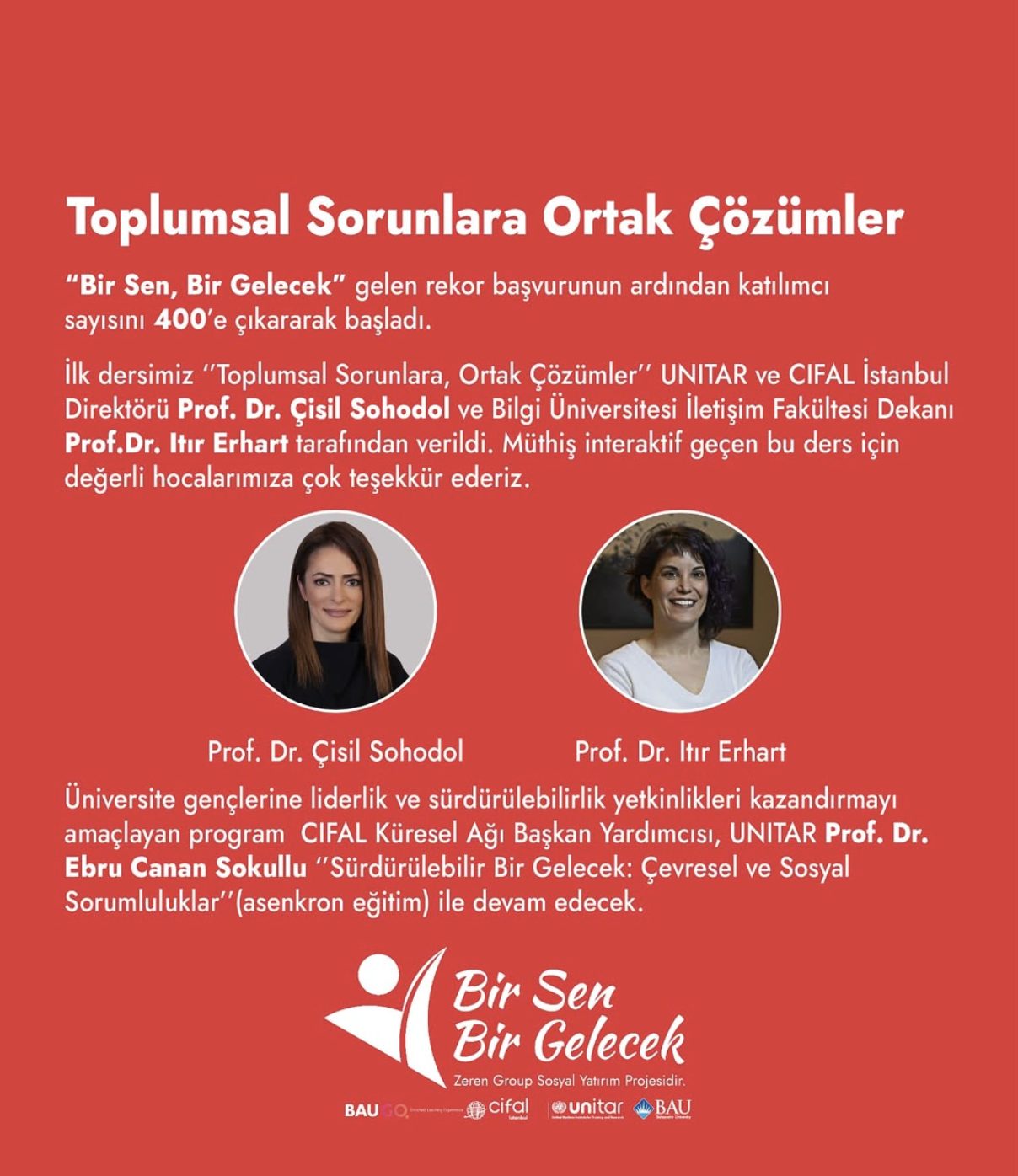
In 2025, Bahçeşehir University (BAU), in collaboration with CIFAL Istanbul, the United Nations Institute for Training and Research (UNITAR), Zeren Group Holding, and BAUGO, implemented “Bir Sen Bir Gelecek”, (One You, One Future) a completely free certificate programme designed to empower young people through education, sustainability awareness, professional development, and social innovation. The programme's 2025 theme, “Common Solutions to Social Problems,” focused on encouraging young people to develop innovative and collaborative approaches to addressing societal challenges.
The initiative reflects a shared commitment to expanding educational opportunities beyond traditional university curricula, strengthening youth participation in society, and encouraging innovative approaches to contemporary social challenges. By connecting education with personal development, professional competencies, and social responsibility, the programme seeks to equip young people with the knowledge and skills needed to contribute meaningfully to their communities.
In 2025, the programme welcomed 400 university students from higher education institutions across Türkiye, including participants from rural areas and disadvantaged backgrounds, extending educational opportunities beyond BAU's own student community. Through accessible online learning, participants received interdisciplinary training in sustainability, the United Nations Sustainable Development Goals (SDGs), leadership, communication, digital literacy, critical thinking, and social responsibility. The sustainability-focused modules introduced participants to global development challenges and encouraged them to consider how individual and collective action can contribute to achieving the SDGs.
Through this nationwide approach, students from different institutions and geographical regions were provided with opportunities to benefit from BAU's academic expertise and the educational resources of the collaborating organizations.
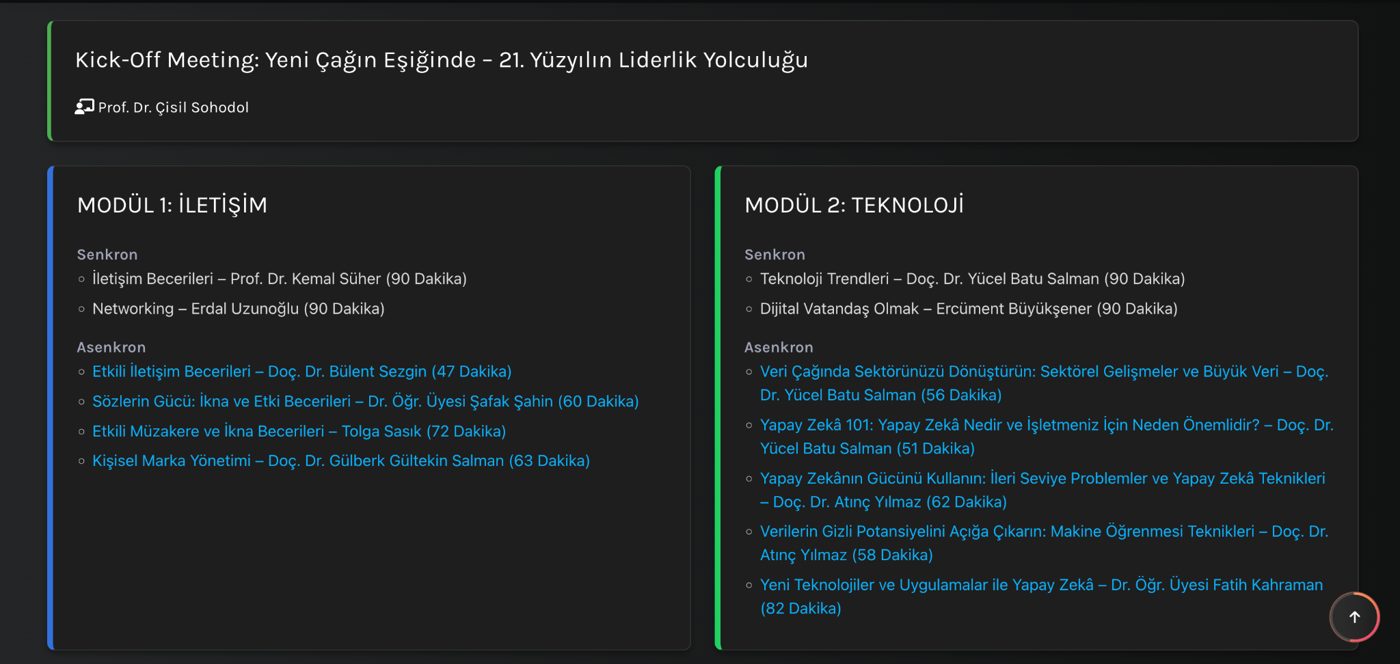
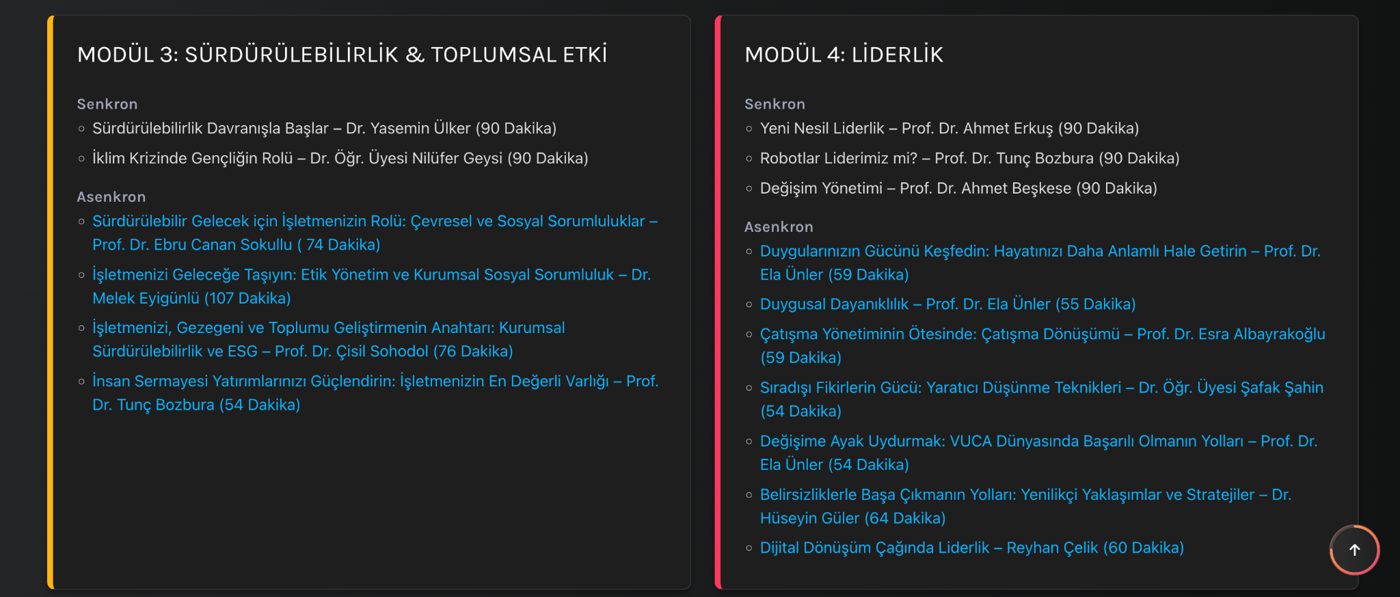
A defining feature of Bir Sen Bir Gelecek is its commitment to providing completely free educational opportunities, removing financial barriers that might otherwise limit access to professional and personal development. The programme offers an interdisciplinary learning experience covering leadership, effective communication, digital literacy, critical thinking, technology, sustainability, ethical decision-making, and social responsibility. These learning areas are designed to strengthen participants' ability to understand complex societal issues, develop innovative ideas, and respond constructively to emerging professional and social challenges.
Bahçeşehir University contributes academic expertise and educational guidance, while BAUGO supports the programme's digital learning infrastructure and educational delivery. Through CIFAL Istanbul, the initiative also draws on UNITAR's international approach to capacity building, sustainable development education, and lifelong learning. The collaboration brings together complementary institutional strengths to create an educational model that connects academic knowledge with practical competencies and social impact.
The programme incorporates synchronous and asynchronous learning activities, enabling participants to engage with educational content through a flexible learning environment. This approach is particularly important for educational outreach, as it enables Bahçeşehir University to deliver educational activities to students across Türkiye, reaching learners in different geographical regions and educational communities through accessible digital learning environments. By reducing geographical and scheduling barriers, the initiative broadens participation in university-supported educational activities and contributes to more inclusive access to knowledge.
Beyond its structured certificate courses, Bir Sen Bir Gelecek encourages participants to recognize their individual potential and translate their knowledge into ideas that address real societal needs. Its educational framework incorporates mentorship, experiential learning, and project development opportunities, supporting creativity, entrepreneurial thinking, collaboration, and active citizenship.
An important component of the initiative is the “Bir Sen Bir Gelecek Hayal Atölyesi” (Dream Workshop), through which selected participants are offered opportunities to develop innovative projects and present their ideas to relevant stakeholders. This component reinforces the programme's central theme of developing common solutions to social problems, encouraging young people to move beyond theoretical learning and explore how their knowledge and creativity can contribute to positive social change.
Participants who successfully complete the required educational activities are eligible to receive participation certificates through CIFAL Istanbul and UNITAR, providing formal recognition of their learning experience and engagement in the programme.
Through its combination of free education, interdisciplinary learning, digital accessibility, mentorship, and social innovation, Bir Sen Bir Gelecek represents a comprehensive example of Bahçeşehir University's commitment to extending educational opportunities beyond its institutional boundaries.
The initiative contributes directly to SDG 4 (Quality Education) by providing free educational programmes to students from different higher education institutions, expanding access to academic knowledge, and promoting inclusive learning opportunities beyond BAU's campus. The admission of 400 university students in 2025 demonstrates the programme's educational reach and its contribution to making university-supported learning opportunities accessible to a wider population.
The programme also supports SDG 10 (Reduced Inequalities) by eliminating financial barriers to participation and facilitating access to education across geographical regions. It contributes to SDG 8 (Decent Work and Economic Growth) by developing employability, leadership, communication, and future-oriented competencies, while its emphasis on socially meaningful projects and youth participation supports SDG 11 (Sustainable Cities and Communities).
Furthermore, the joint implementation of the programme by Bahçeşehir University, CIFAL Istanbul, UNITAR, Zeren Group Holding, and BAUGO reflects SDG 17 (Partnerships for the Goals) by demonstrating how collaboration among higher education institutions, international organizations, and the private sector can expand educational access and support sustainable development.
Through Bir Sen Bir Gelecek, Bahçeşehir University demonstrates its commitment to educational outreach beyond campus, inclusive lifelong learning, youth empowerment, and the development of innovative solutions to societal challenges, reinforcing its role as an institution that makes academic knowledge and educational opportunities accessible to learners beyond its own student community.
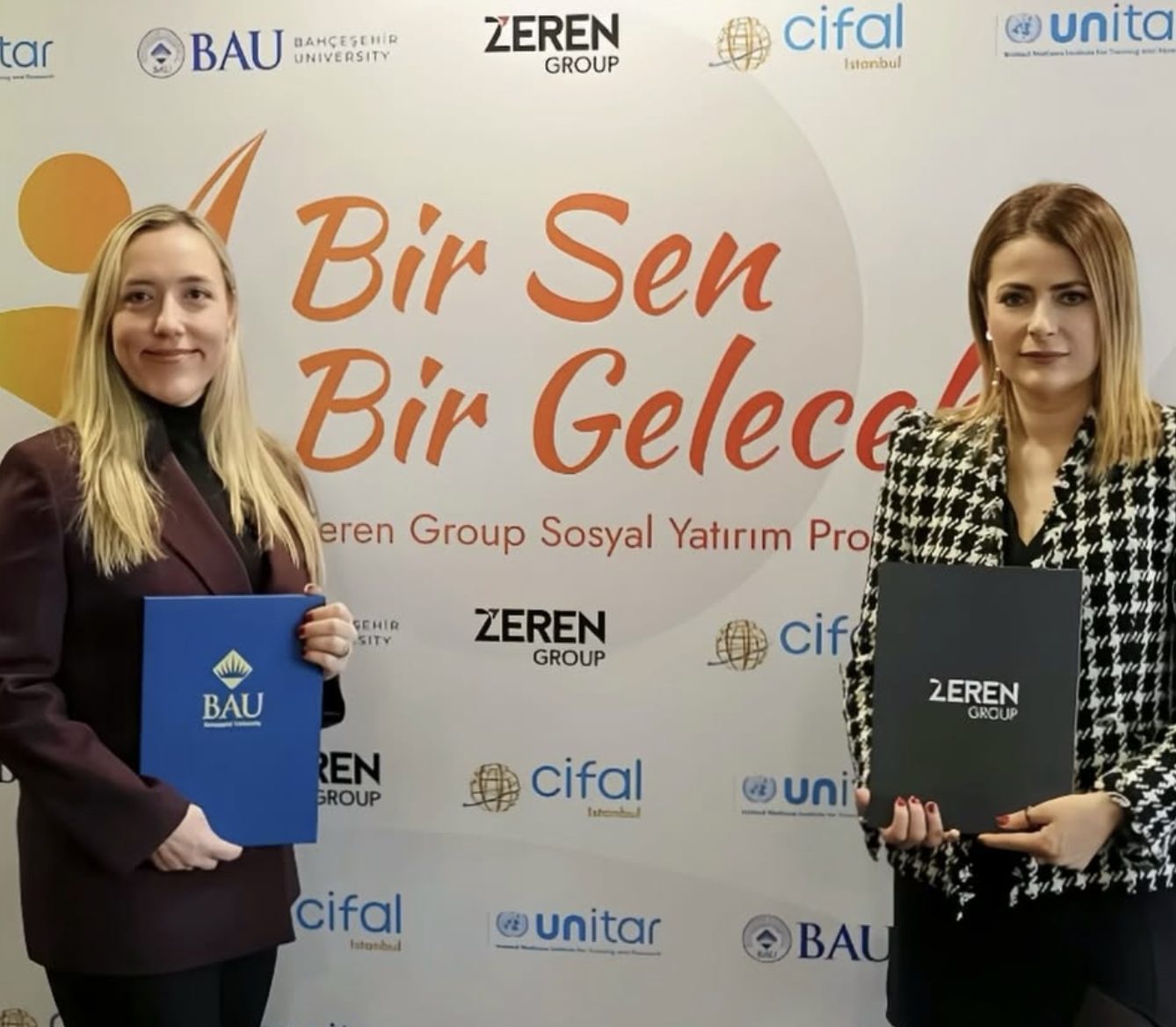
The images below present a photograph from the Memorandum of Understanding (MoU) signing ceremony, documenting the institutional collaboration behind Bir Sen Bir Gelecek, alongside an official promotional poster for one of the certificate courses offered within the programme, illustrating the free educational opportunities made available to university students from across Türkiye.
The images below illustrate the course structure and educational content of the “Bir Sen Bir Gelecek” Certificate Programme:
2- Bahcesehir University CO-OP Responsibility: High School Students Career Development Program with Darüşşafaka Educational Institutions
The image below shows the promotional poster of the Bahcesehir University CO-OP Responsibility: High School Students Career Development Program.
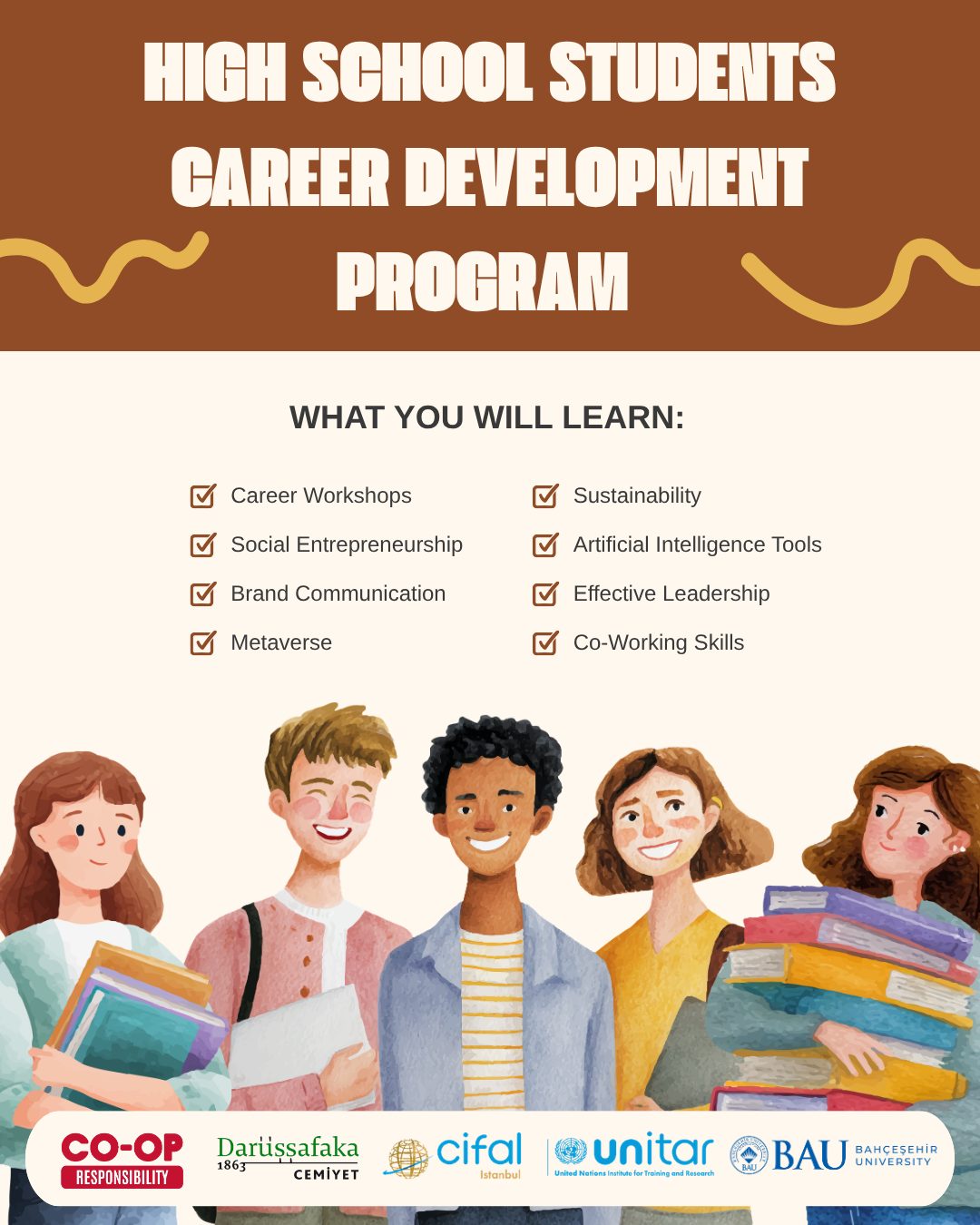
The High School Students Career Development Programme is an educational outreach initiative led by Bahçeşehir University (BAU) under its CO-OP Responsibility framework. The programme reflects BAU's commitment to promoting equal opportunities in education, supporting disadvantaged young people, and extending access to university-level learning experiences beyond its campuses.
In the 2024-2025 academic year, the initiative is specifically designed for students attending Darüşşafaka Educational Institutions, which provide full scholarships and eight years of boarding education to academically talented students who have lost one or both parents and face socioeconomic challenges. By engaging with this student community, Bahçeşehir University contributes to reducing educational inequalities and creating additional opportunities for young people who may otherwise have limited access to university-led career development activities.
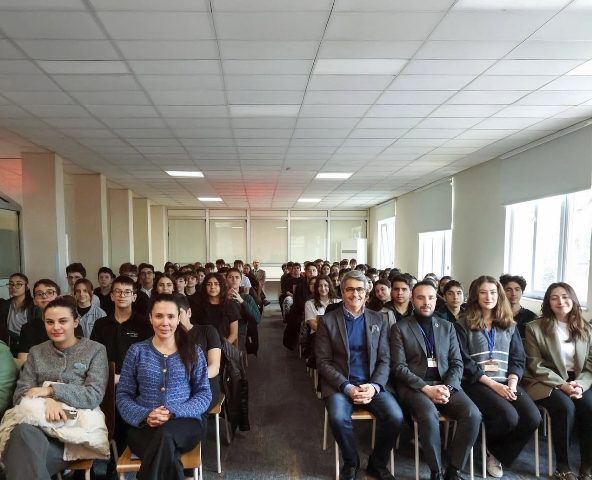
A defining feature of the programme is its direct delivery of educational activities at Darüşşafaka High School. Rather than requiring participants to travel to a university campus, BAU faculty members visit the school premises to deliver lectures and interactive learning sessions on-site, bringing academic knowledge and expertise directly into the students' own educational environment.
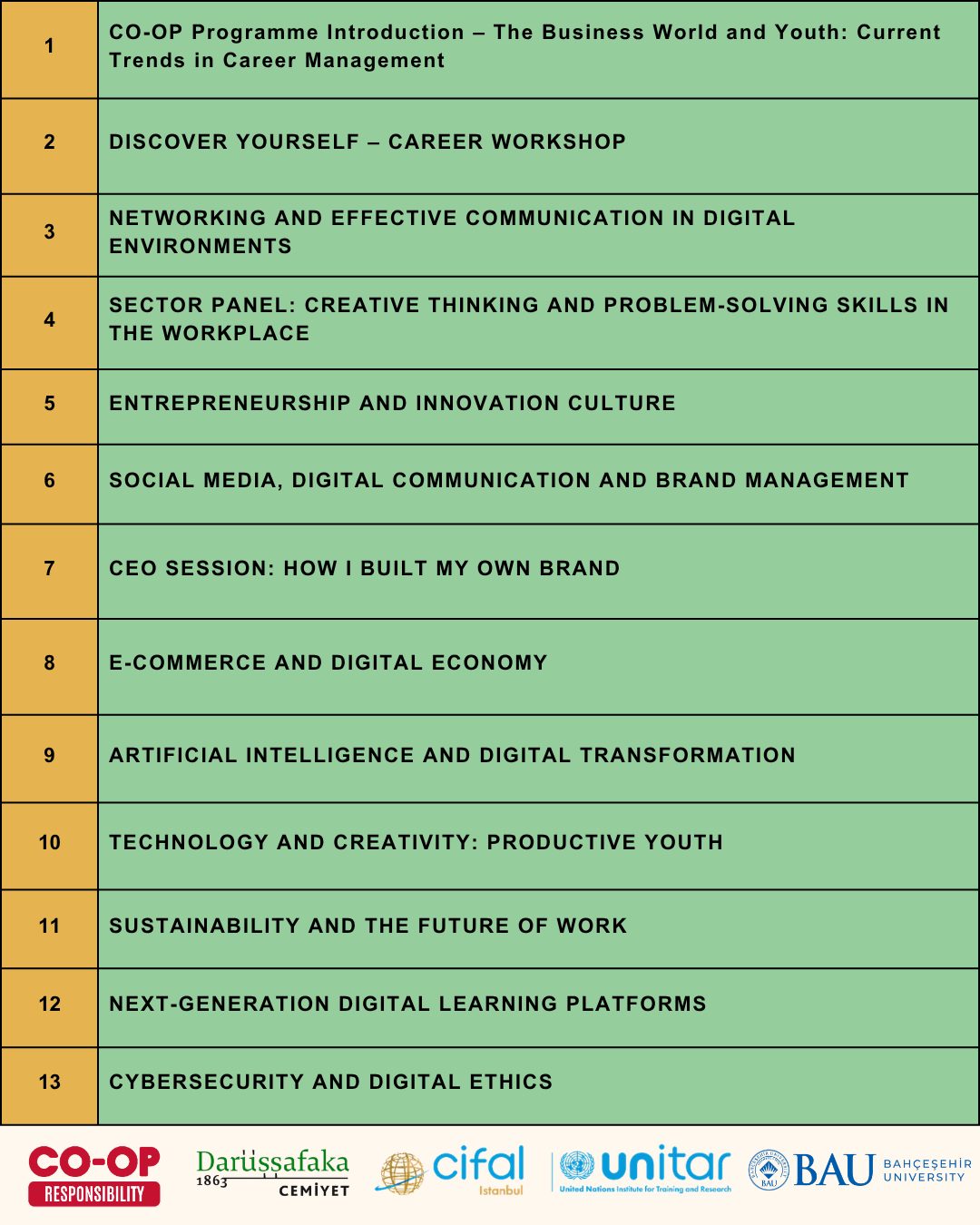
The programme follows a 13-week structured curriculum designed to introduce high school students to contemporary academic disciplines, emerging technologies, and future-oriented professional competencies. Its interdisciplinary educational content covers areas including sustainability, artificial intelligence, creative thinking, digital communication, and career development.
Through these learning activities, participants are encouraged to strengthen their critical thinking, creativity, technological literacy, communication skills, and social awareness. The programme also supports students in identifying their interests and abilities, exploring potential career pathways, and developing the confidence needed to make informed decisions about their educational and professional futures.
Beyond providing subject-specific knowledge, the initiative creates opportunities for meaningful interaction between high school students and university academics. By introducing participants to university-level perspectives and diverse professional fields at an early stage, the programme helps broaden their educational aspirations and strengthens their preparedness for future academic and career transitions.
The programme is organized by Bahçeşehir University in collaboration with CIFAL Istanbul, a UNITAR-affiliated training centre hosted by BAU. This collaboration connects the University's educational outreach activities with broader international objectives related to capacity building, sustainable development, and inclusive education.
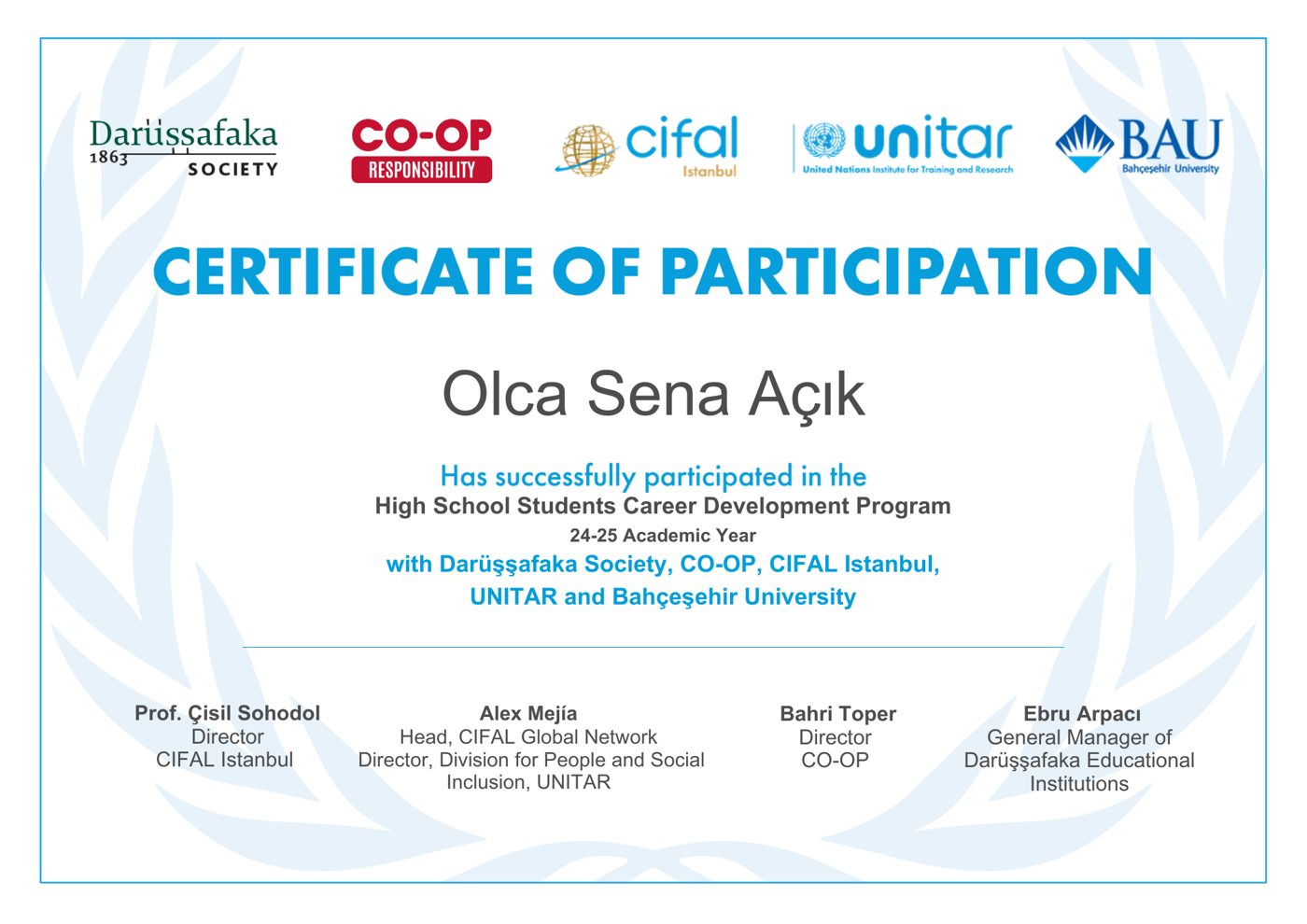
Upon successful completion of the programme, participants receive BAU–UNITAR-approved certificates, formally recognizing their participation and learning achievements. These certificates provide tangible acknowledgment of the students' engagement in a structured university-led educational programme delivered outside the university campus.
The initiative contributes directly to SDG 4 (Quality Education) by expanding access to quality learning opportunities, supporting career development, and delivering university-level educational content to high school students beyond BAU's enrolled student population.
It also strongly supports SDG 10 (Reduced Inequalities) by providing additional educational opportunities to students from socioeconomically disadvantaged backgrounds. Through its emphasis on sustainability, emerging technologies, creativity, and career readiness, the programme further contributes to SDG 8 (Decent Work and Economic Growth) by helping young people develop foundational competencies relevant to their future participation in the workforce.
The collaboration between Bahçeşehir University, CIFAL Istanbul, and Darüşşafaka Educational Institutions also reflects SDG 17 (Partnerships for the Goals), demonstrating how cooperation between higher education institutions and schools can promote educational inclusion and expand access to knowledge.
Through the CO-OP Responsibility: High School Students Career Development Programme, Bahçeşehir University demonstrates its sustained commitment to educational outreach beyond campus, equal educational opportunities, and the empowerment of young people through accessible, future-oriented learning experiences.
The images below present the official programme poster, the 13-week course schedule, photographs documenting educational activities delivered at Darüşşafaka High School, and a sample completion certificate. Together, these materials illustrate the programme's structure, on-site implementation, academic engagement, and recognition of participants' learning achievements.
Highlights from the Program
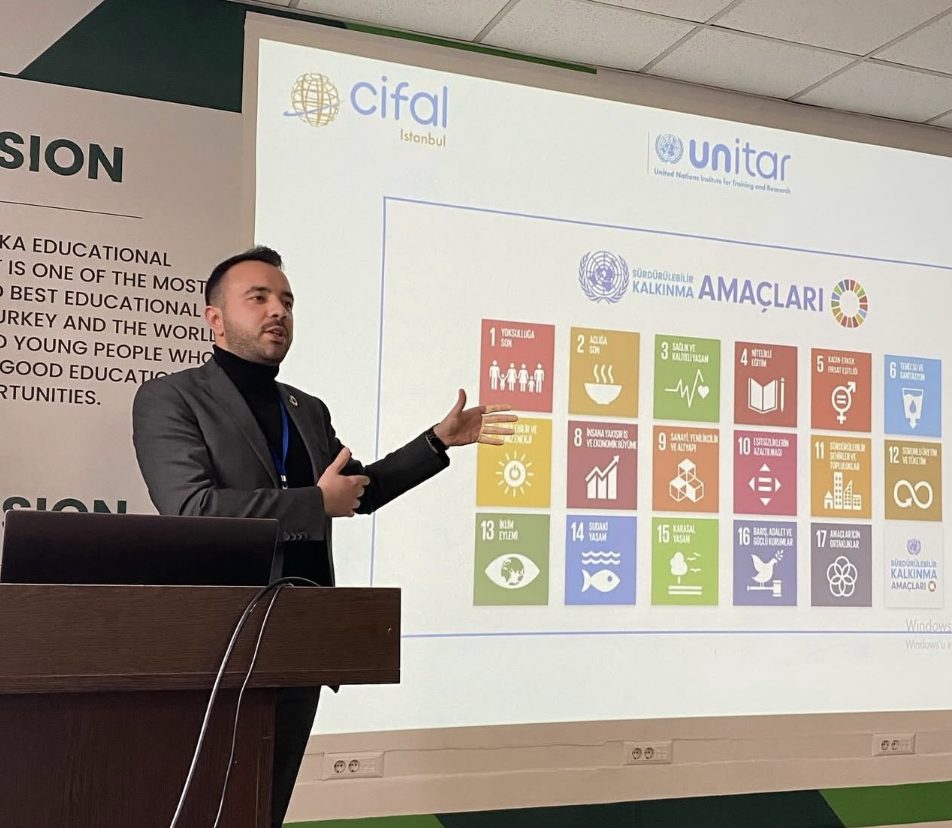
3- Bahcesehir University Team’s Visit and Training Program to the Earthquake Zone in Malatya
The image below shows the poster of the ‘Heroes of Nature: Zero Waste and Recycling Workshop’ organized in Malatya within Bahcesehir University’s training program in the earthquake region.
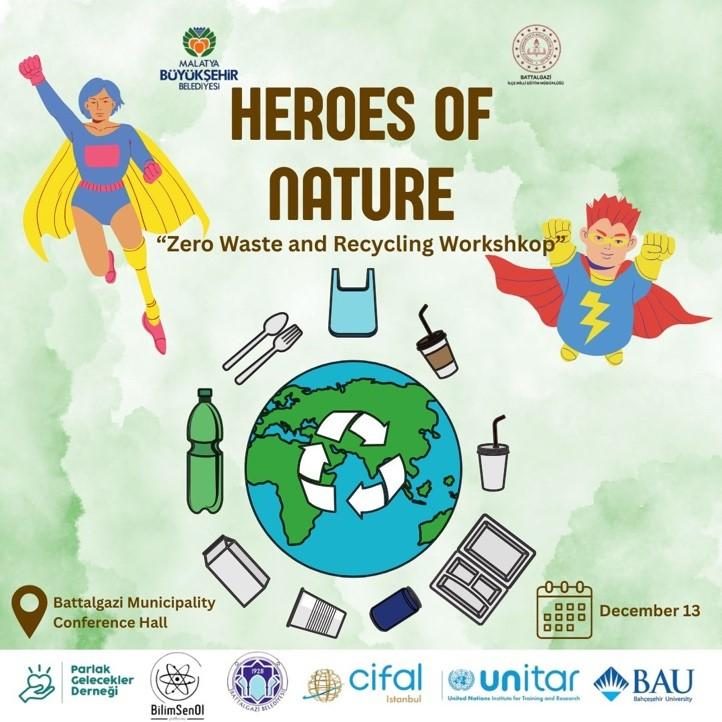
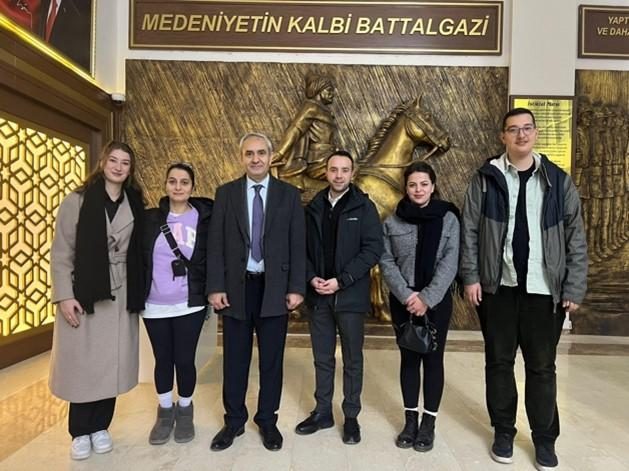
In the 2024-2025 academic year, on 13 December, Bahceşehir University’s (BAU) CIFAL Istanbul, UNITAR team organized a meaningful educational event in Battalgazi, Malatya titled “Heroes of Nature: Raising Awareness on Sustainability,” offering support and inspiration to children and their parents affected by the February 6 earthquakes, as well as providing learning opportunities within the local community.
During the seminar, CIFAL Istanbul personnel introduced participants to the mission and values of the United Nations, explaining how individuals can actively contribute to achieving the Sustainable Development Goals (SDGs). The speakers addressed key topics such as clean water conservation, renewable energy, sustainable cities, climate action, and the protection of natural ecosystems. Presentations focused particularly on waste reduction and the long-term benefits of adopting eco-friendly lifestyles within families and communities. At the conclusion of the event, the CIFAL Istanbul team presented books to the participating children and joined them in a tote bag painting workshop, reinforcing messages of creativity, sustainability, and collective responsibility for the environment. The initiative reflected Bahcesehir University’s dedication to providing quality education beyond its own campus, extending academic expertise to external learning environments.
By engaging directly with local administrations and delivering educational activities on-site, Bahçeşehir University and CIFAL Istanbul continues to expand the social impact of higher education — supporting sustainable recovery and promoting quality learning opportunities in regions most in need.
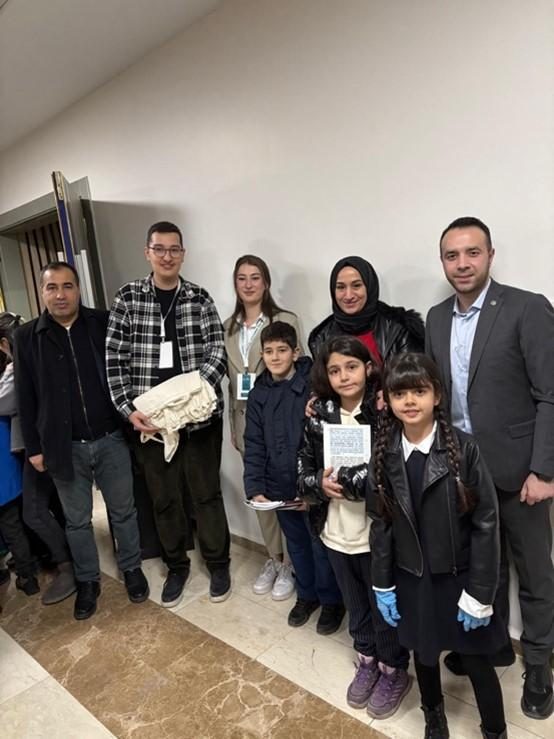
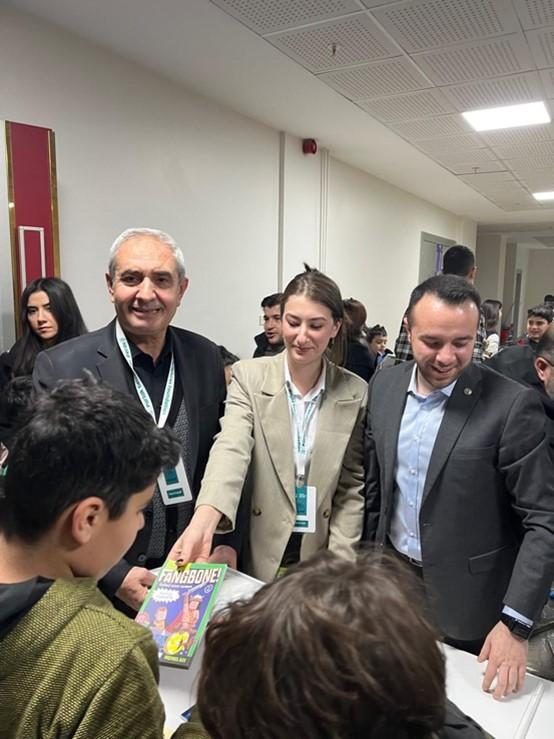
The images below show highlights from Bahcesehir University’s visit and training program in Malatya, including the ‘Heroes of Nature’ workshop with local students
4- Bahcesehir University Kocaeli High School Sustainability Summit’24
The image below shows event photos from the Bahcesehir University Kocaeli High School Sustainability Summit’24.
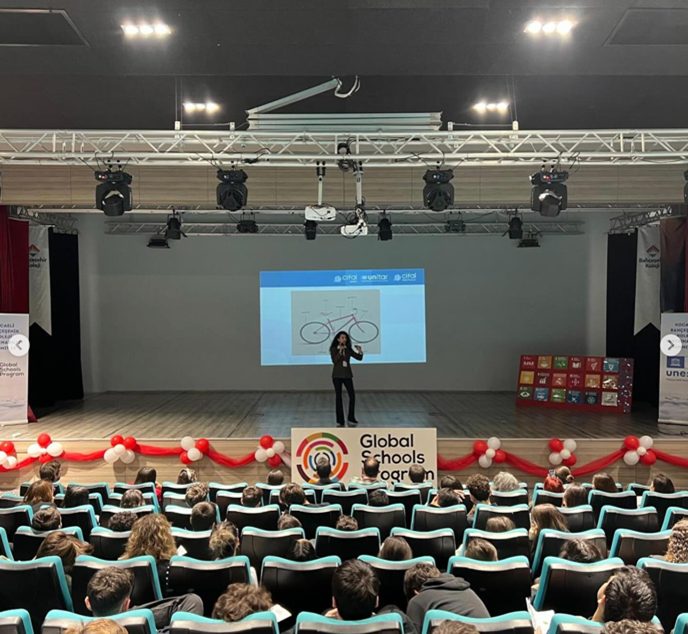
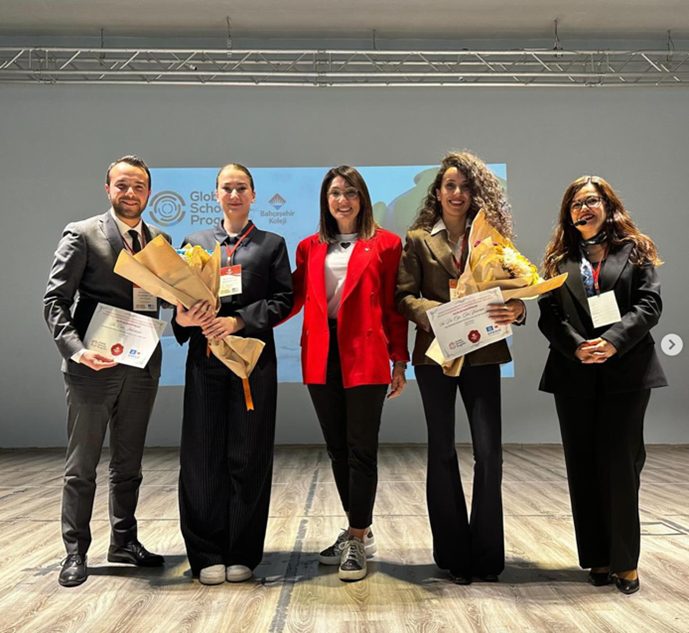
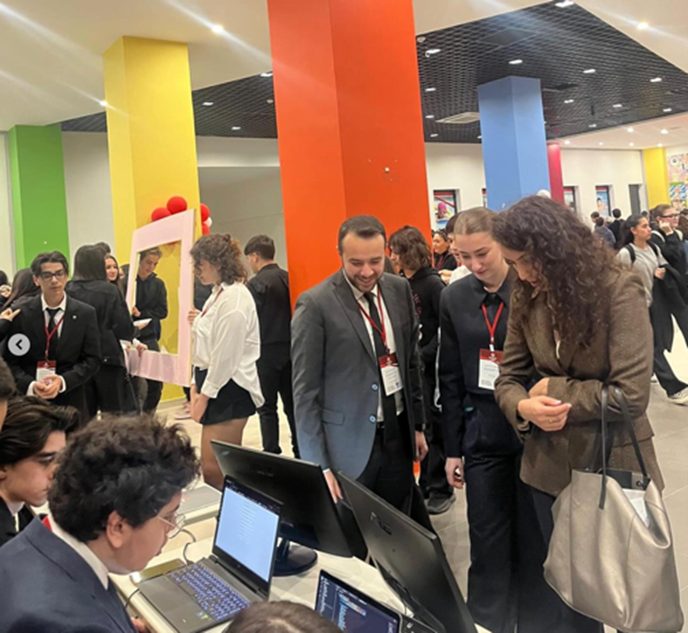
During the 2024–2025 academic year, on 20 November 2024, Bahçeşehir University (BAU), through CIFAL Istanbul center, participated in “Sustainability Summit”, organized by Kocaeli High School as part of the Global Schools Program. The event brought together students, educators, and sustainability experts to raise awareness of the United Nations Sustainable Development Goals (SDGs).
Dr. Yasemin Ülker, a faculty member at Bahçeşehir University’s Faculty of Economics, Administrative and Social Sciences and Deputy Director of CIFAL Istanbul, delivered a presentation on sustainability, highlighting BAU’s youth-focused initiatives, CIFAL Istanbul’s collaborations within the UNITAR Global CIFAL Network, and the role of the CIFAL Istanbul Youth Platform in encouraging young people to contribute to sustainable development. The educational session introduced students to the importance of youth participation in sustainable development, exploring how young people can contribute to addressing environmental and social challenges through awareness, collaboration, and community engagement.
By connecting directly with high school students and educators, Bahçeşehir University, through its CIFAL Istanbul Centre, continues to promote sustainability awareness and foster a culture of learning and responsibility beyond the university environment.
Through this initiative, BAU extended sustainability education beyond its campus, strengthening SDG 4 (Quality Education) and SDG 17 (Partnerships for the Goals) by promoting sustainability literacy, youth engagement, and collaboration with schools.
The images below show event highlights from the Bahcesehir University Kocaeli High School Sustainability Summit’24.
5- Bahcesehir University Students Promote Sustainable Consumption During Local Products Week at Levent Lütfi Banat Primary School
The image below shows event photos from the Bahcesehir University Local Products event.
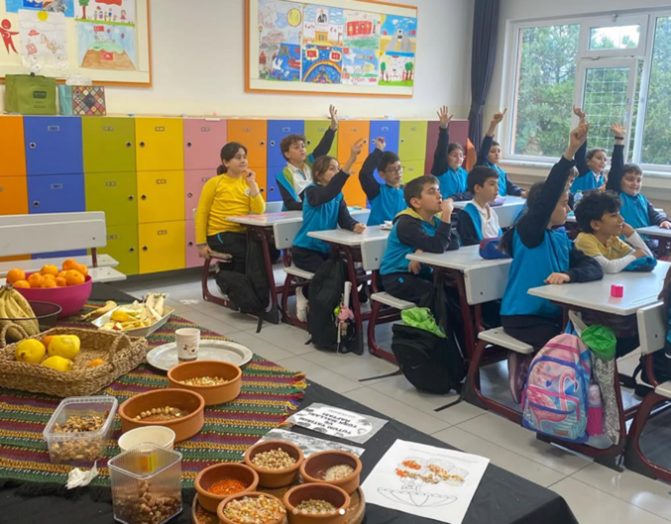
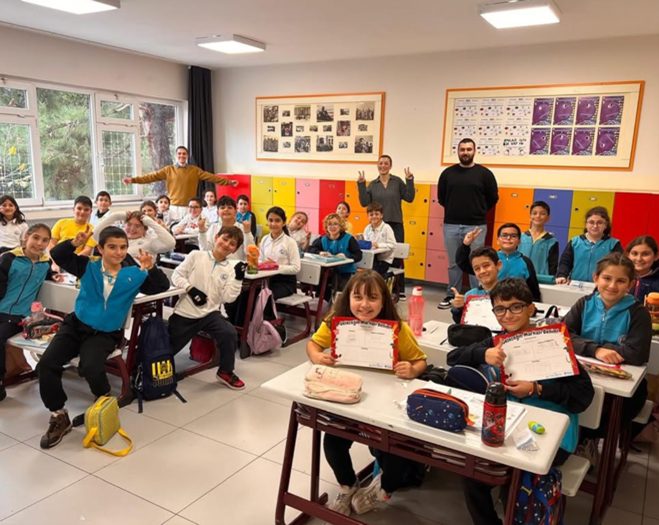
In the 2024–2025 academic year, as part of Local Products Week, Bahçeşehir University (BAU) academics and students, with the support of CIFAL Istanbul and BAU Branding, organized an educational outreach initiative at Levent Lütfi Banat Primary School, bringing university-led learning activities directly into a local school community. The initiative combined sustainability education, consumer awareness, and creative learning to introduce primary school students to the importance of local products and responsible consumption.
Designed specifically for young learners, the programme featured interactive presentations on local products, brand awareness, and responsible consumer behaviour. Through age-appropriate explanations and practical examples, BAU academics and students helped children explore how everyday purchasing decisions relate to local production, resource use, and environmental responsibility.
A central component of the outreach activity was its hands-on educational approach. Through shopping simulations, participating children explored consumer choices and the importance of making informed purchasing decisions. Brand design workshops encouraged students to apply their creativity while developing an introductory understanding of how products are presented, identified, and communicated to consumers. Together, these activities connected classroom learning with everyday experiences, making concepts related to sustainable consumption more accessible and engaging for primary school students.
By actively involving BAU academics and students in the delivery of educational activities outside the university campus, the initiative demonstrated how university expertise and student participation can support learning within local school communities. BAU brought tailored presentations and interactive workshops directly to younger learners, encouraging curiosity, creativity, and greater awareness of responsible consumption.
The initiative contributes to SDG 4 (Quality Education) by expanding access to educational activities beyond the university campus and supporting experiential learning among primary school students. It also supports SDG 12 (Responsible Consumption and Production) by introducing children to local products, conscious consumer choices, and environmentally responsible consumption habits.
Through this school-based educational outreach initiative, Bahçeşehir University connected academic knowledge, student engagement, and practical learning to help younger generations develop an early understanding of sustainability and responsible consumption.
6- Bahçeşehir University and CIFAL Istanbul Co-Organizes Climate Change Summit in Baku
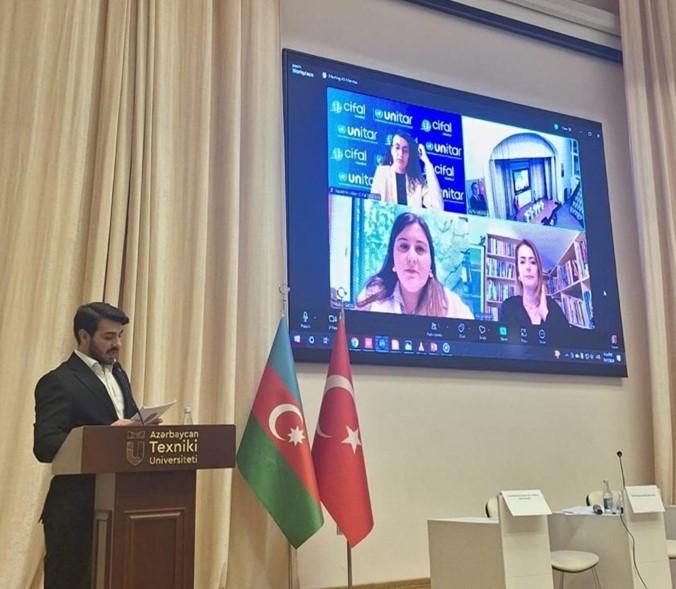
The image below shows the promotional poster of the Climate Change Summit co-organized by Bahcesehir University and CIFAL Istanbul in Baku.
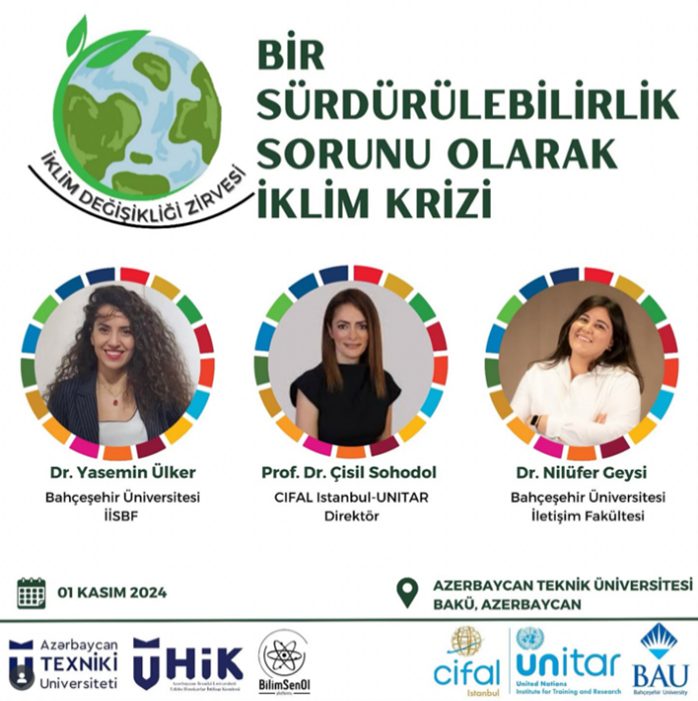
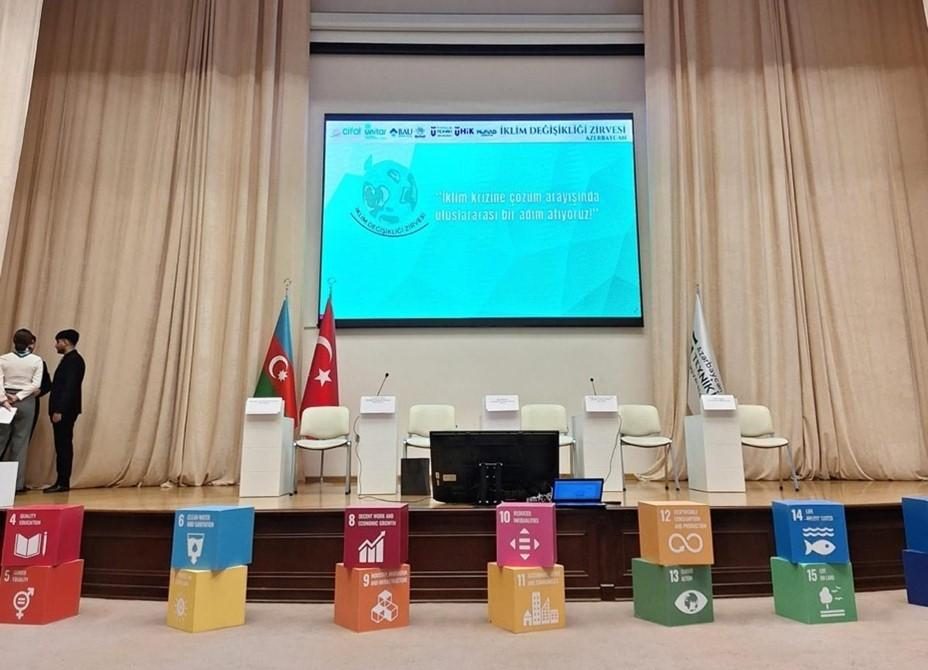
In the 2024-2025 academic year, Bahcesehir University, through its CIFAL Istanbul Centre affiliated with the United Nations Institute for Training and Research (UNITAR), co-organized the “Climate Change Summit: The Climate Crisis from a Sustainability Perspective” in collaboration with Azerbaijan Technical University, the Young Researchers Innovation Club, and BilimSenOl. The summit took place at Azerbaijan Technical University in Baku, exemplifying Bahçeşehir University’s commitment to extending its academic and sustainability initiatives beyond national borders.
With contributions from Dr. Yasemin Ülker, Prof. Dr. Çisil Sohodol, and Prof. Dr. Nilüfer Geysi of Bahcesehir University, the event addressed the urgent global challenges posed by climate change and sustainability. The educational discussions provided participants with insights into the causes and consequences of climate change, the importance of sustainable development, and the role of individual and collective action in addressing environmental challenges. Through expert discussions and knowledge exchange, the summit fostered international academic collaboration, uniting institutions and specialists to share perspectives and explore joint solutions for a more sustainable future.
The images below show pictures from the Climate Change Summit co-organized by Bahcesehir University and CIFAL Istanbul in Baku.
7- Bahcesehir University MOVE UP – Capacity Building and Training Programme for High School Students
The image below shows a picture of Bahcesehir University MOVE UP event.
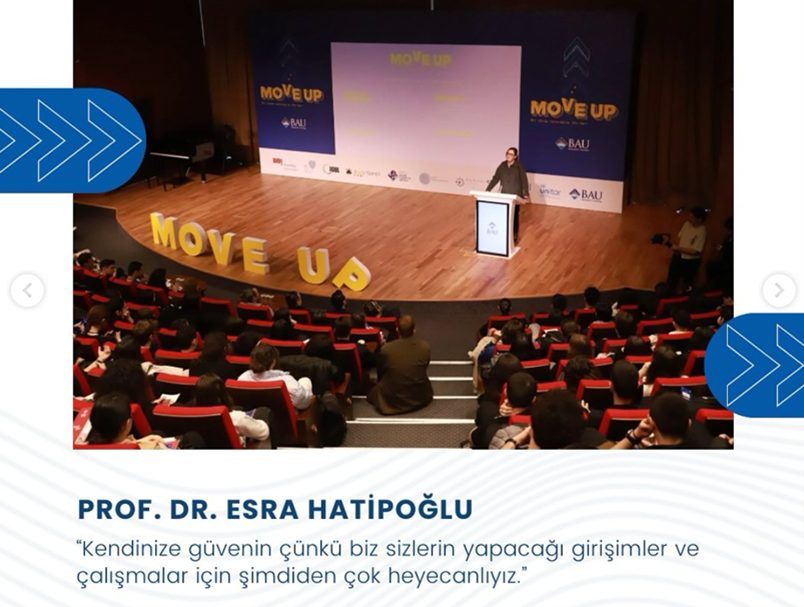
Bahcesehir University (BAU) MOVE UP Capacity Building and Training Program, initiated by Bahçeşehir University, continues to empower high school students across Türkiye by providing free, high-quality learning opportunities designed to enhance their academic, personal, and professional development. Launched in 2019, the program aims to guide young individuals in shaping their future career paths and academic aspirations. In the 2024-2025 academic year, MOVE UP was successfully implemented in Istanbul, Antalya, Izmir, and Bursa, bringing together hundreds of high school students from diverse regions and backgrounds.
Throughout the program, participants took part in interactive sessions and workshops delivered by Bahcesehir University’s distinguished academics, who shared their expertise on a wide range of contemporary themes, including sustainability, technology, digital media, innovation, access to information, and fundamental legal rights. These sessions enabled students to strengthen essential competencies such as critical thinking, problem-solving, communication, and leadership.
Reflecting Bahcesehir University’s mission to make quality education accessible to all, the MOVE UP Program remains free of charge and open to high school students throughout Türkiye, ensuring equal access to transformative educational experiences. By fostering youth capacity development and awareness in key 21st-century skill areas, Bahçeşehir University continues to extend its educational impact beyond the university campus—contributing to the formation of an informed, capable, and socially responsible generation ready to shape a sustainable future
8- Bahcesehir University’s Conference on Sustainability Awareness for High School Students by BAU
The two images below show highlight pictures of Bahcesehir Conference on Sustainability Awareness for High School Students.
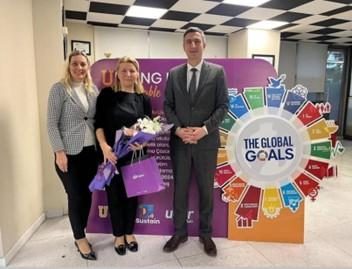
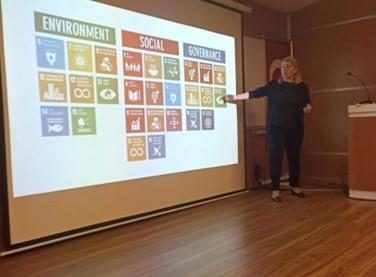
During the 2024–2025 academic year, Bahçeşehir University (BAU) extended its sustainability education and outreach activities to younger generations through an educational conference held at Bakırköy Uğur Anatolian High School. The session was delivered by Assoc. Prof. Dr. Burçak Vatansever Durmaz, a faculty member at BAU’s Faculty of Economics, Administrative and Social Sciences, and brought together approximately 60 high school students.
Focusing on environmental responsibility, conscious consumption, and sustainable lifestyles, the conference combined interactive discussions with real-life examples to help students understand how their everyday choices contribute to broader sustainability challenges and solutions. The session encouraged young participants to develop greater environmental awareness and recognize their individual and collective roles in shaping a more sustainable future.
By extending sustainability education beyond the university campus and engaging high school students, BAU reinforced its commitment to community outreach, public sustainability education, and knowledge sharing. The initiative contributed to SDG 4 (Quality Education) by providing sustainability learning opportunities, SDG 12 (Responsible Consumption and Production) by promoting conscious consumption, and SDG 13 (Climate Action) by encouraging environmentally responsible behaviour.
9- Advancing Sustainability Education and Community Outreach through CIFAL Istanbul–FAO Türkiye Collaboration
The image below showcases a picture taken at FAO Türkiye Headquarters in Ankara from Prof. Sohodol’s visit:
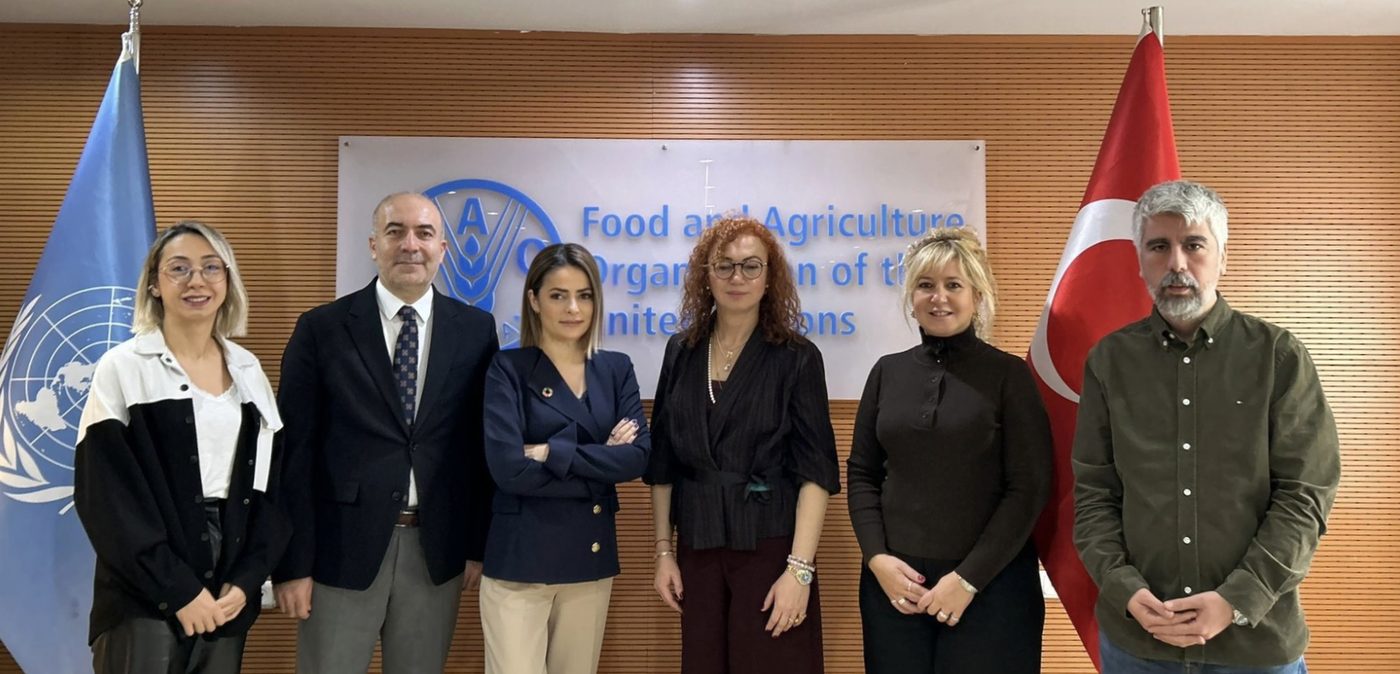
On 8 January 2025, Prof. Dr. Çisil Sohodol, Director of CIFAL Istanbul, visited the Food and Agriculture Organization of the United Nations (FAO) Türkiye Headquarters in Ankara to explore opportunities for strengthening institutional cooperation in sustainable agriculture, food security, and environmental education. Building on the existing partnership between CIFAL Istanbul and FAO Türkiye, the meeting focused on developing collaborative initiatives addressing global sustainability challenges, including regenerative agriculture, biodiversity conservation, responsible natural resource management, and the empowerment of agricultural communities. Particular attention was given to expanding educational awareness and promoting sustainability knowledge beyond academic institutions, emphasizing the importance of making environmental education accessible to different segments of society.
A key educational dimension of the discussions was the shared commitment to promoting sustainability education across all generations, beginning at the primary school level. The participants emphasized the importance of raising awareness about the interconnected roles of water, soil, biodiversity, environmental protection, and food systems in sustaining human life. Through its connection with Bahçeşehir University, CIFAL Istanbul provides a platform for linking academic expertise with community-oriented educational initiatives and international development priorities. The proposed collaboration highlighted opportunities to extend sustainability knowledge beyond university campuses to school communities, agricultural stakeholders, and wider public audiences. Discussions also addressed the potential for educational and capacity-building initiatives supporting women in agricultural cooperatives, particularly by strengthening awareness of sustainable agricultural practices and opportunities for women's participation.
10- Promoting Sustainability Education Through Art and Community Engagement: World Art Day Educational Outreach Programme Beyond Campus
The images below present highlights from the World Art Day educational outreach programme
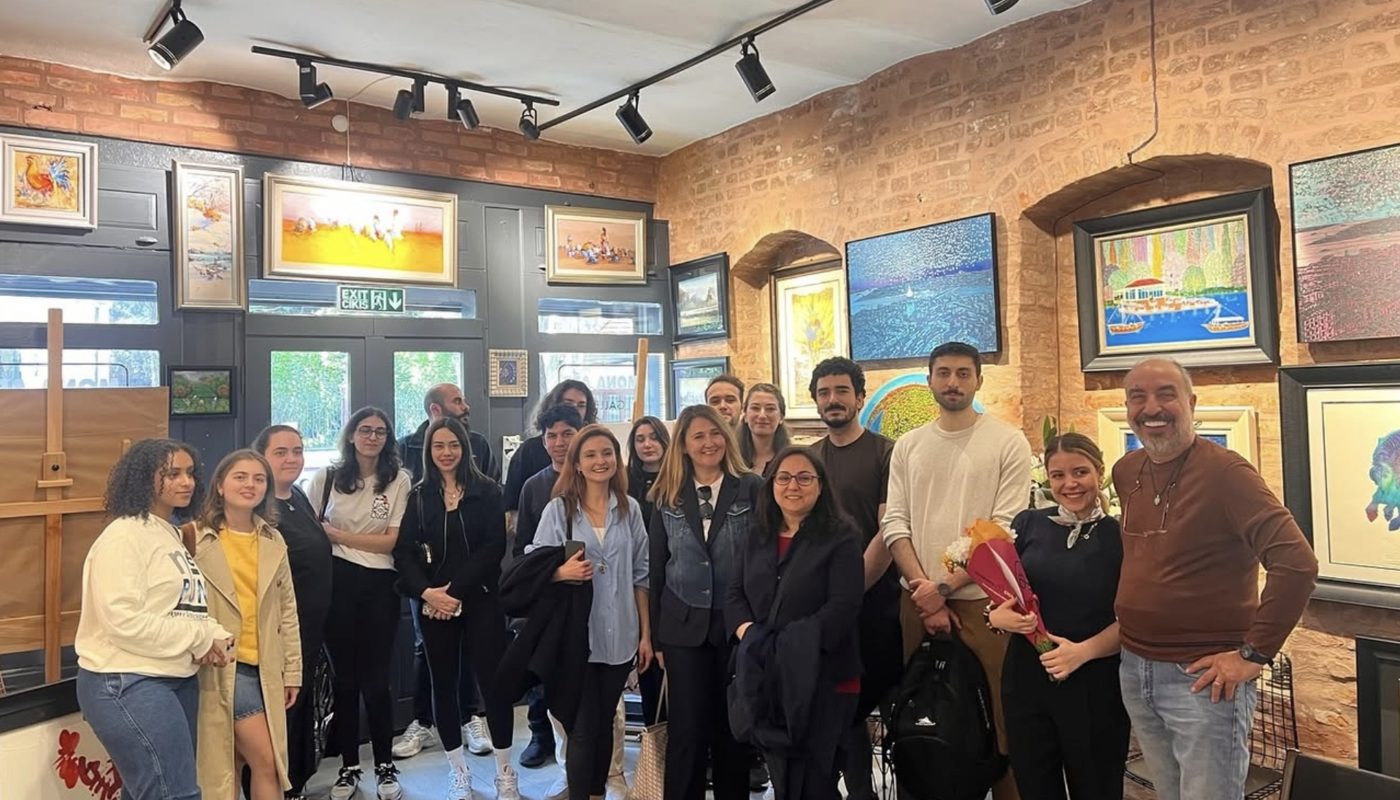
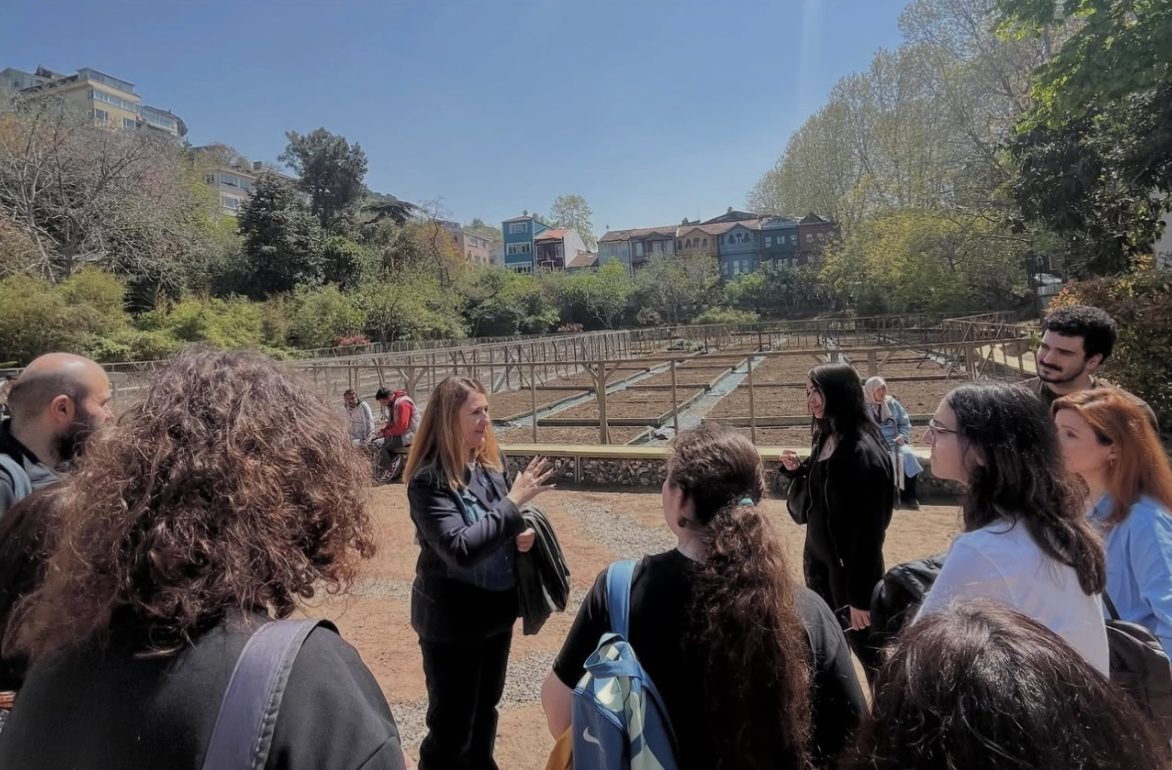
On April 21, 2025, Bahçeşehir University (BAU), through its Departments of International Trade and Business and Economics and Finance, in collaboration with CIFAL Istanbul, organized an interdisciplinary educational outreach programme celebrating World Art Day. The initiative brought together BAU students and academics alongside participants from outside the university, including artists and creative professionals, to explore the connections between artistic expression, environmental sustainability, and the United Nations Sustainable Development Goals (SDGs).
Designed to extend educational activities beyond the university campus, the programme combined arts-based learning, environmental education, and community engagement through visits to cultural and public spaces in Istanbul. By bringing university members and external participants together in shared educational activities, the initiative encouraged participants to examine sustainability challenges from creative, social, and environmental perspectives.
The first component of the programme took place at Mona Art Gallery in Istanbul, where both BAU participants and individuals from outside the university took part in an educational session guided by Architect Sena Özgürcan. Through an exploration of artworks addressing ecological balance, urban transformation, and climate responsibility, participants examined how artistic expression can communicate complex environmental issues and contribute to public awareness.
Interactive discussions encouraged participants to consider the role of art and cultural institutions in promoting sustainability literacy, influencing public perceptions, and encouraging environmentally responsible behaviour. The gallery visit provided an opportunity for interdisciplinary learning by bringing together perspectives from the arts, architecture, economics, business, and sustainable development, while making sustainability-related knowledge accessible to participants beyond BAU's academic community.
The programme continued with an educational field visit to Kuzguncuk Orchard, a community-oriented green space in Istanbul. During the visit, Prof. Dr. Ahu Ergen, Head of BAU's Department of International Trade and Business, delivered an educational session for university members and external participants, introducing them to sustainable urban agriculture, community-based environmental practices, and the importance of protecting green spaces within urban environments.
Through this experiential learning activity, participants explored the relationship between urban sustainability, local food production, environmental stewardship, and community participation. The visit demonstrated how sustainability education can be delivered through direct engagement with community spaces, allowing individuals from both within and outside the university to benefit from academic expertise and practical examples of environmentally responsible urban living.
An important feature of the initiative was its emphasis on educational outreach beyond BAU's campus and academic community. By organizing learning activities at an art gallery and a community orchard, the University provided educational opportunities not only for its own students but also for external participants, facilitating direct knowledge transfer between BAU academics, cultural professionals, and members of the wider community.
The programme also created opportunities for future institutional cooperation. Discussions between CIFAL Istanbul and Mona Art Gallery explored potential collaborations aimed at strengthening sustainability education, public awareness, and community engagement through artistic and cultural activities.
The initiative contributes directly to SDG 4 (Quality Education) by promoting interdisciplinary sustainability education, experiential learning, and educational outreach to participants beyond the university community. Through its combination of guided cultural activities, academic discussions, and community-based field learning, the programme demonstrates BAU's commitment to sharing sustainability knowledge with wider audiences through educational activities conducted in cultural and community settings.
It also supports SDG 11 (Sustainable Cities and Communities) by highlighting the importance of cultural institutions, community green spaces, and sustainable urban practices. Its emphasis on environmental awareness, ecological responsibility, and climate-related themes contributes to SDG 13 (Climate Action).
Furthermore, the collaboration among Bahçeşehir University, CIFAL Istanbul, Mona Art Gallery, and community stakeholders reflects SDG 17 (Partnerships for the Goals) by encouraging cooperation across academic, cultural, and community sectors in support of sustainability education.
Through the World Art Day Educational Outreach Programme, Bahçeşehir University demonstrates its commitment to delivering educational activities to audiences beyond its own student community, connecting academic expertise with cultural and community institutions, and promoting sustainability awareness through inclusive, interdisciplinary learning experiences.
11- Supporting Educational Outreach Beyond Campus Through External Partnerships: Enerjisa's A Better Future Meeting in Gaziantep
The image below shows the promotional poster of the meeting:
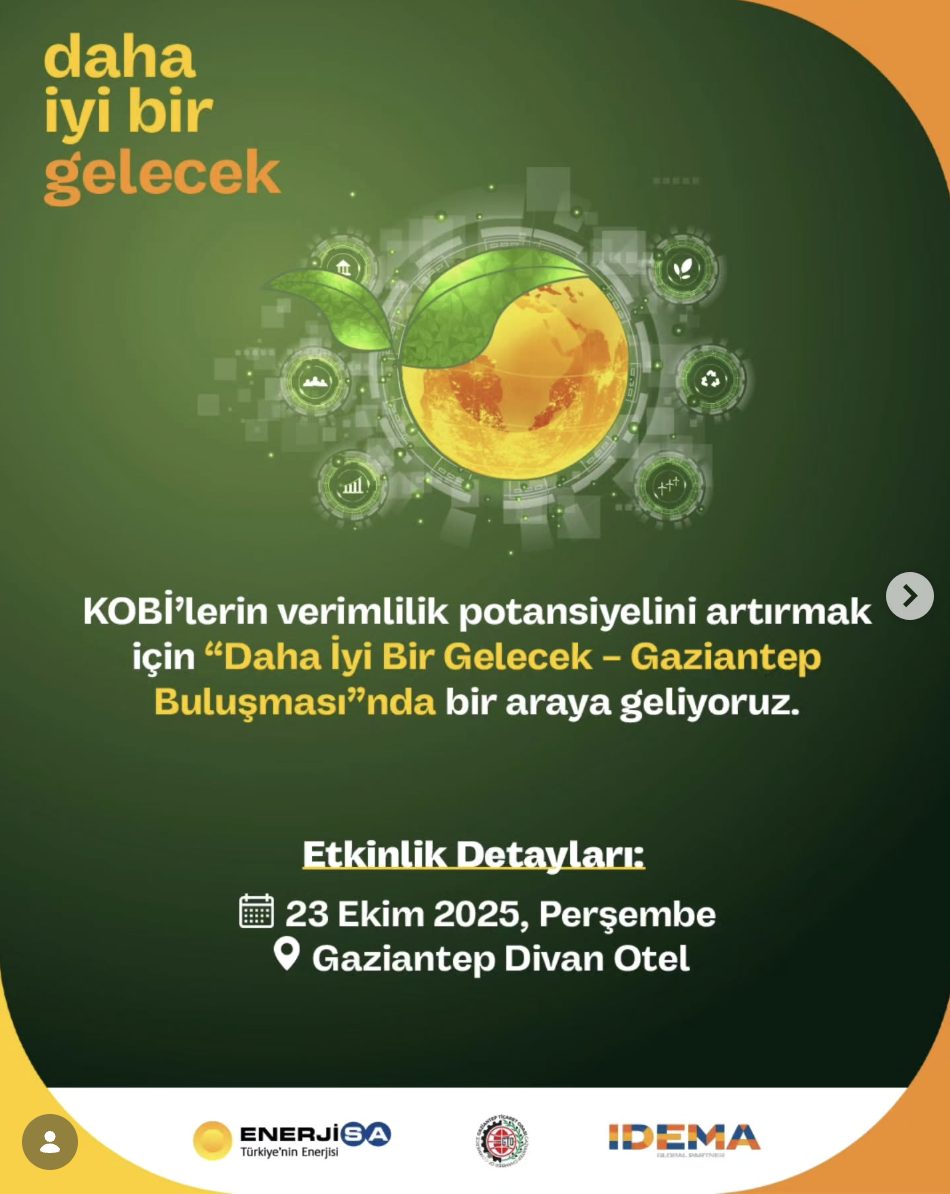
In addition to organizing its own educational outreach activities beyond campus, Bahçeşehir University (BAU) actively contributes to educational initiatives organized by external institutions and partners through the participation of its faculty members and the sharing of academic expertise. These engagements enable the University to extend its educational reach to different communities, professional groups, and geographical regions, supporting knowledge exchange and lifelong learning beyond traditional academic settings.
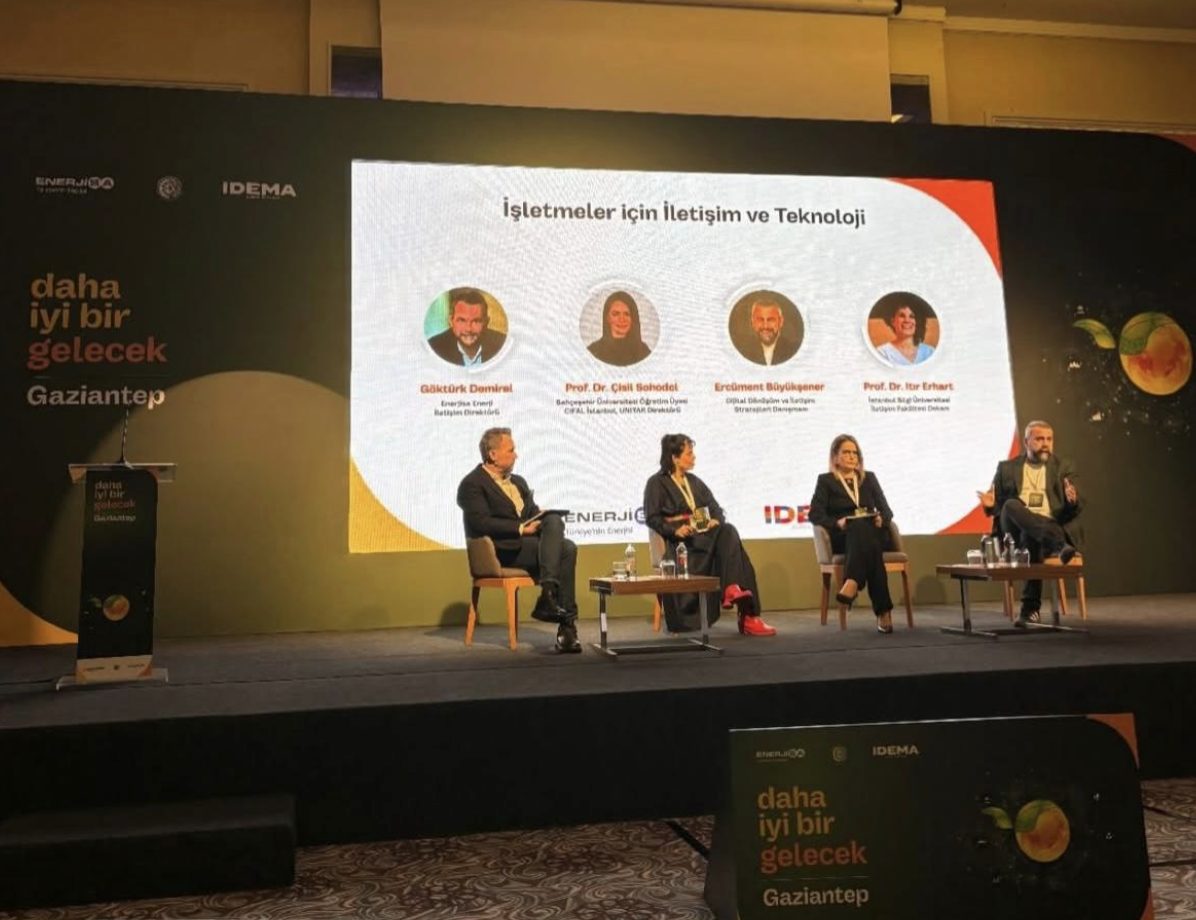
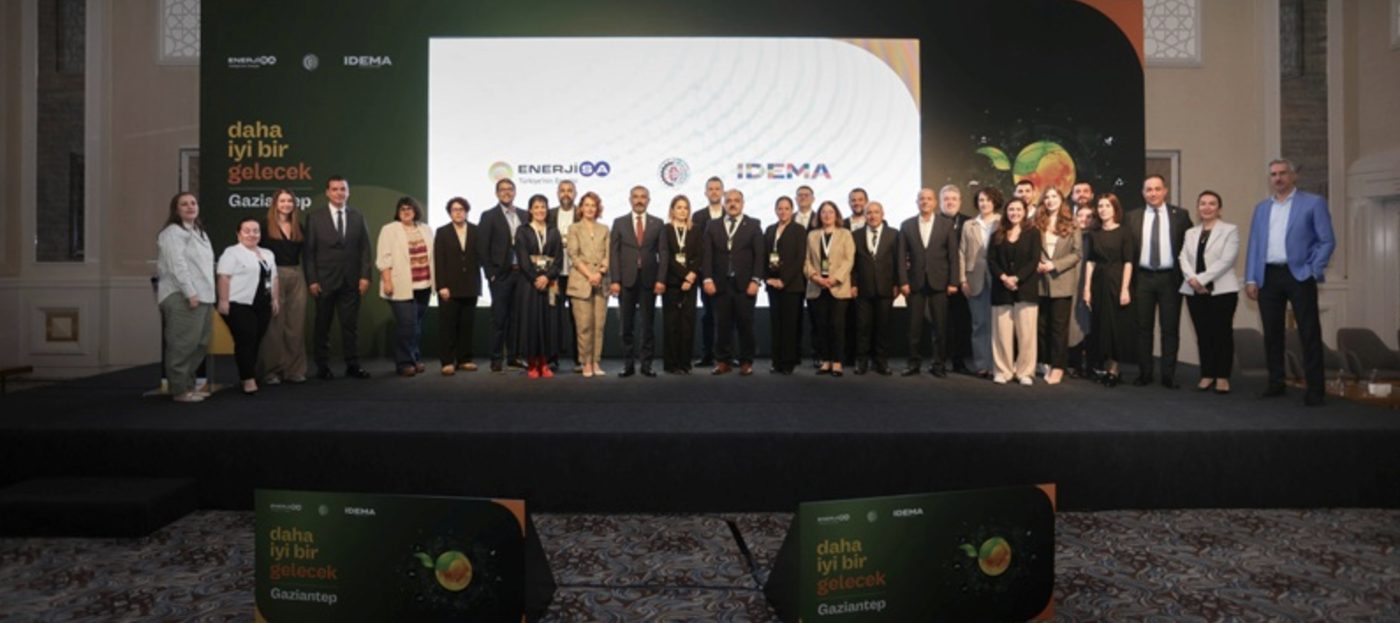
One example of this approach is BAU's contribution to the “Daha İyi Bir Gelecek” (A Better Future) Meeting, held in Gaziantep on October 23, 2025. As a partner member of the Enerjisa A Better Sustainable Future Platform, Prof. Dr. Çisil Sohodol, a faculty member at Bahçeşehir University and Director of CIFAL Istanbul, participated in the event organized by Enerjisa Enerji in collaboration with the Gaziantep Chamber of Commerce and IDEMA.
The meeting brought together more than 200 participants, including representatives from small and medium-sized enterprises (SMEs), academia, public institutions, civil society organizations, and universities. Focusing on economic efficiency, digital transformation, sustainable communication, and energy efficiency, the event provided an opportunity for participants to engage with expert perspectives, exchange practical knowledge, and explore innovative approaches to sustainable business development.
The programme served as an educational outreach and knowledge-sharing platform beyond traditional university settings, connecting academic expertise with the professional development needs of local businesses and community stakeholders. Participants explored strategies for improving operational efficiency, strengthening data-driven decision-making, adopting sustainable business practices, and responding to emerging technological and environmental challenges.
A key component of the meeting was the presentation of FutureBright's SME Data Analytics Report, which highlighted challenges related to data literacy and the importance of developing digital competencies among business professionals. The findings provided a foundation for discussions on how data analytics, digital tools, and continuous professional learning can contribute to more informed business decisions and sustainable organizational development.
The event also introduced participants to educational resources and free training opportunities, encouraging further engagement in skills development and lifelong learning. By bringing together representatives from academia, industry, public institutions, and civil society, the initiative facilitated the exchange of practical knowledge among experts, entrepreneurs, and local stakeholders, contributing to professional capacity-building within the wider community.
Through the participation of Prof. Dr. Sohodol, representing Bahçeşehir University's academic community and CIFAL Istanbul, the initiative also connected international perspectives on sustainability and capacity development with local educational and professional needs. This engagement illustrates how BAU contributes to the dissemination of academic knowledge and sustainability-related expertise through collaborative initiatives conducted outside its own campuses.
Prof. Dr. Sohodol contributed her academic expertise in sustainability communication, emphasizing the importance of integrating sustainability into organizational culture, strengthening stakeholder engagement, and translating sustainability goals into practical business approaches.
Bahçeşehir University's participation in this meeting represents one example of its broader approach to educational outreach beyond campus. Alongside the educational programmes it directly organizes, the University supports external learning initiatives through academic participation, institutional collaboration, and the sharing of specialized knowledge. Such contributions enable BAU to engage with diverse audiences and support educational opportunities in different cities and professional communities.
The initiative contributes to SDG 4 (Quality Education) by supporting educational outreach, promoting digital and data literacy, and facilitating informal learning and professional development opportunities for individuals beyond higher education institutions. It demonstrates how university expertise can contribute to knowledge-sharing activities organized by external stakeholders and delivered in community and professional settings.
The meeting also supports SDG 8 (Decent Work and Economic Growth) by encouraging sustainable business productivity and strengthening professional competencies, and SDG 9 (Industry, Innovation and Infrastructure) through its emphasis on digital transformation, technological innovation, and data-driven business practices.
Through its contribution to initiatives such as the A Better Future Meeting in Gaziantep, Bahçeşehir University reinforces its commitment to educational outreach beyond campus, extending academic knowledge to wider communities, and supporting accessible learning opportunities that address contemporary economic, technological, and sustainability challenges.
The images below showcase pictures from the meeting:
12- Advancing Sustainability Education Beyond Campus: Bahçeşehir University's SME Sustainability Transformation Training and Consultancy Programme in Manisa
The images below illustrate highlights from the launch of the training program:
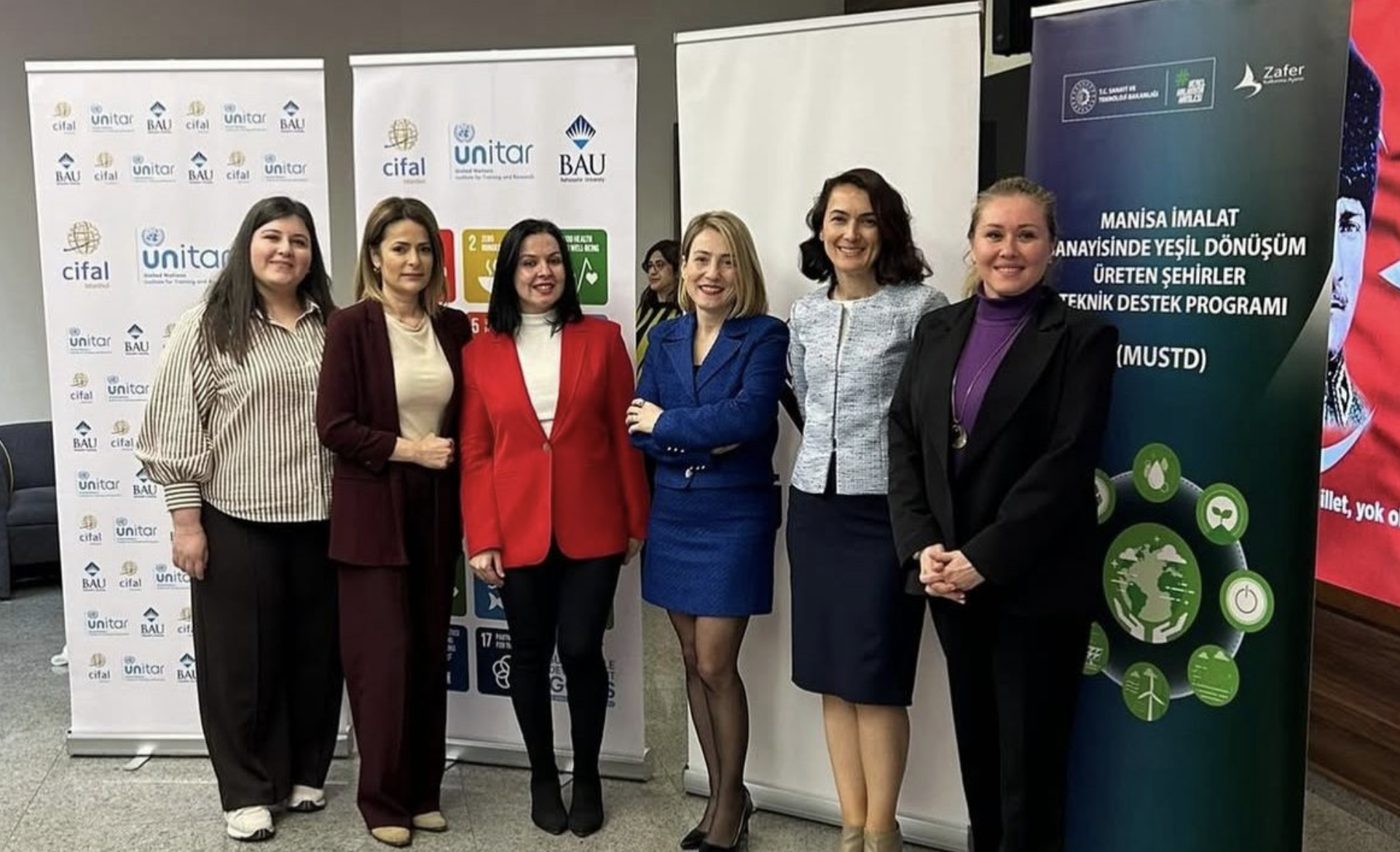
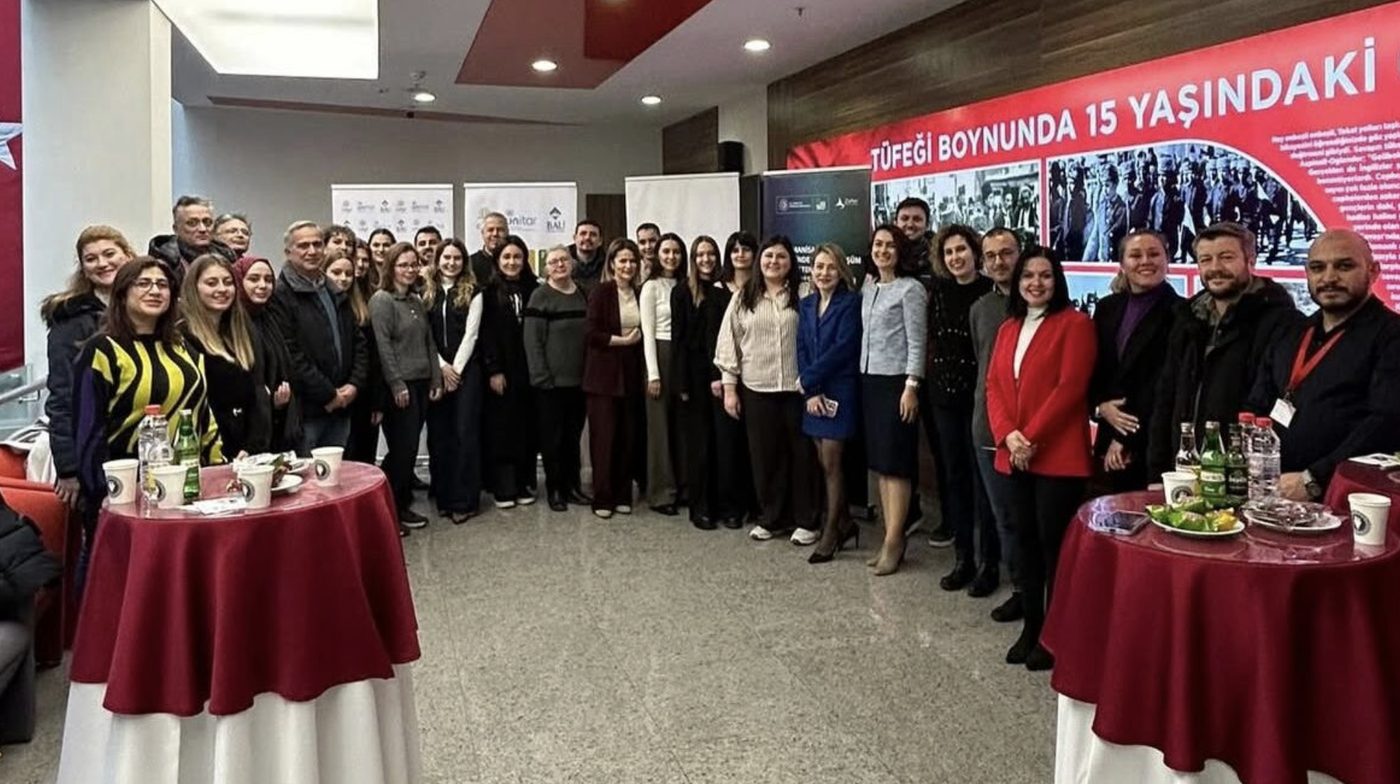
During the 2024–2025 academic year, Bahçeşehir University (BAU), in collaboration with CIFAL Istanbul, the United Nations Institute for Training and Research (UNITAR), TÜBİTAK Marmara Research Center (MAM), Zafer Development Agency, and Manisa Celal Bayar University, implemented the “Training and Consultancy Programme for the Sustainability Transformation of Small and Medium-Sized Enterprises (SMEs)” in Manisa, Türkiye. The programme officially kicked off on 12 February 2025, followed by an extensive 90-hour training and capacity-building programme delivered to local SME representatives and business professionals.
Designed specifically for local SMEs, entrepreneurs, and business professionals in Manisa, the programme aimed to strengthen sustainability competencies and support the transition towards more responsible, environmentally conscious, and resilient business practices. By delivering specialized education directly to the local business community, BAU extended its academic expertise beyond campus and its enrolled student population, promoting lifelong learning and practical knowledge transfer.
The programme brought together BAU academics from different disciplines to deliver an extensive curriculum addressing key aspects of sustainable business transformation, including:
Environmental Sustainability: Sustainable production management, green transformation, carbon and water footprint assessment, and environmental responsibility.
Economic Sustainability: Sustainable economics, financial management, ESG principles, and sustainability performance measurement.
Social Sustainability: Gender equality, human resources management, occupational health and safety, and corporate social responsibility.
Governance and Management: Sustainability management systems, legal and regulatory frameworks, quality management, and organizational transformation.
Communication and Strategic Development: Sustainability communication, stakeholder engagement, and the role of SMEs in sustainable development.
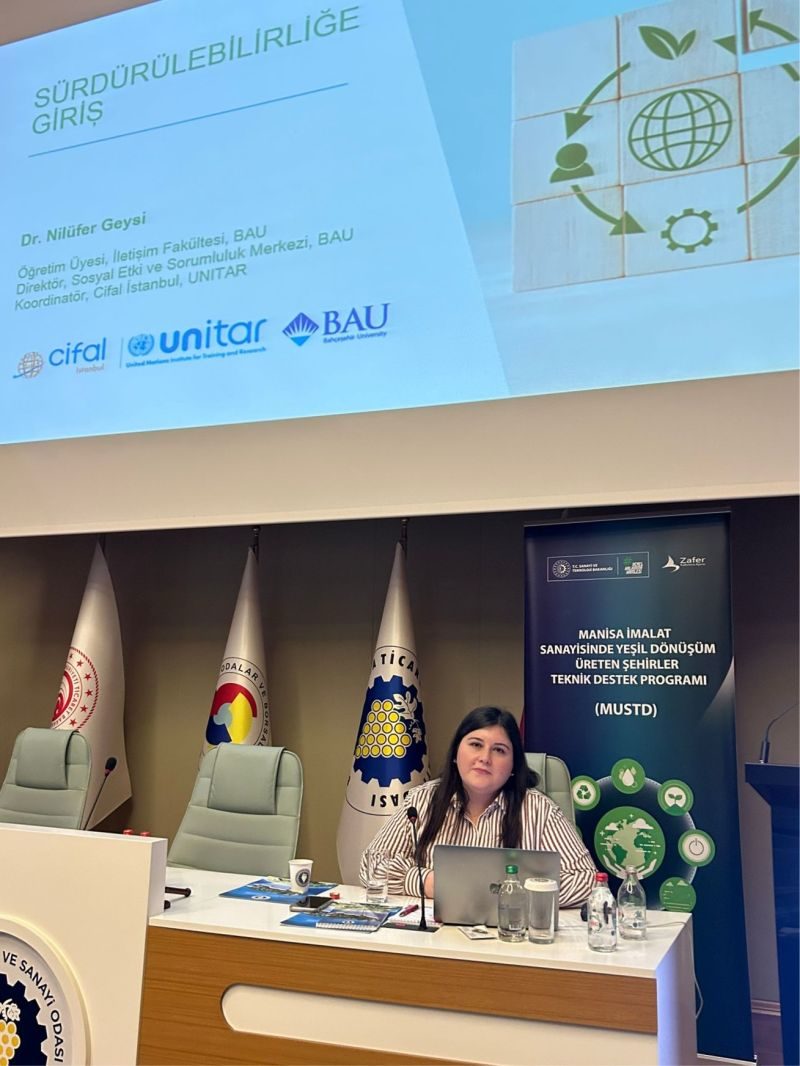
The 12 February 2025 kick-off event featured Prof. Dr. Çisil Sohodol, Director of CIFAL Istanbul, and an introductory six-hour interactive sustainability training session delivered by Asst. Prof. Dr. Nilüfer Geysi, Coordinator of CIFAL Istanbul. Following the launch, the programme continued through a series of specialized training sessions delivered by BAU faculty members from various disciplines, complemented by technical expertise from TÜBİTAK MAM.
Through this initiative, BAU provided local SME representatives with access to university-level sustainability education and professional development opportunities, strengthening regional capacity for sustainable business transformation. The programme contributed to SDG 4 (Quality Education), SDG 8 (Decent Work and Economic Growth), SDG 9 (Industry, Innovation and Infrastructure), SDG 12 (Responsible Consumption and Production), SDG 13 (Climate Action), and SDG 17 (Partnerships for the Goals) by combining community-based education, interdisciplinary knowledge sharing, and institutional collaboration.
The image below shows Dr. Nilüfer Geysi, Communications Faculty Member, from the launch of the training program, giving her presentation
13- Advancing Digital Literacy and Women's Empowerment Beyond Campus: Bahçeşehir University's Digital Skills Training for Women-Led Agricultural Cooperatives in Ankara (October 9, 2025)
The image below portrays a keynote speech from the programme, featuring the official poster of the event on the background:
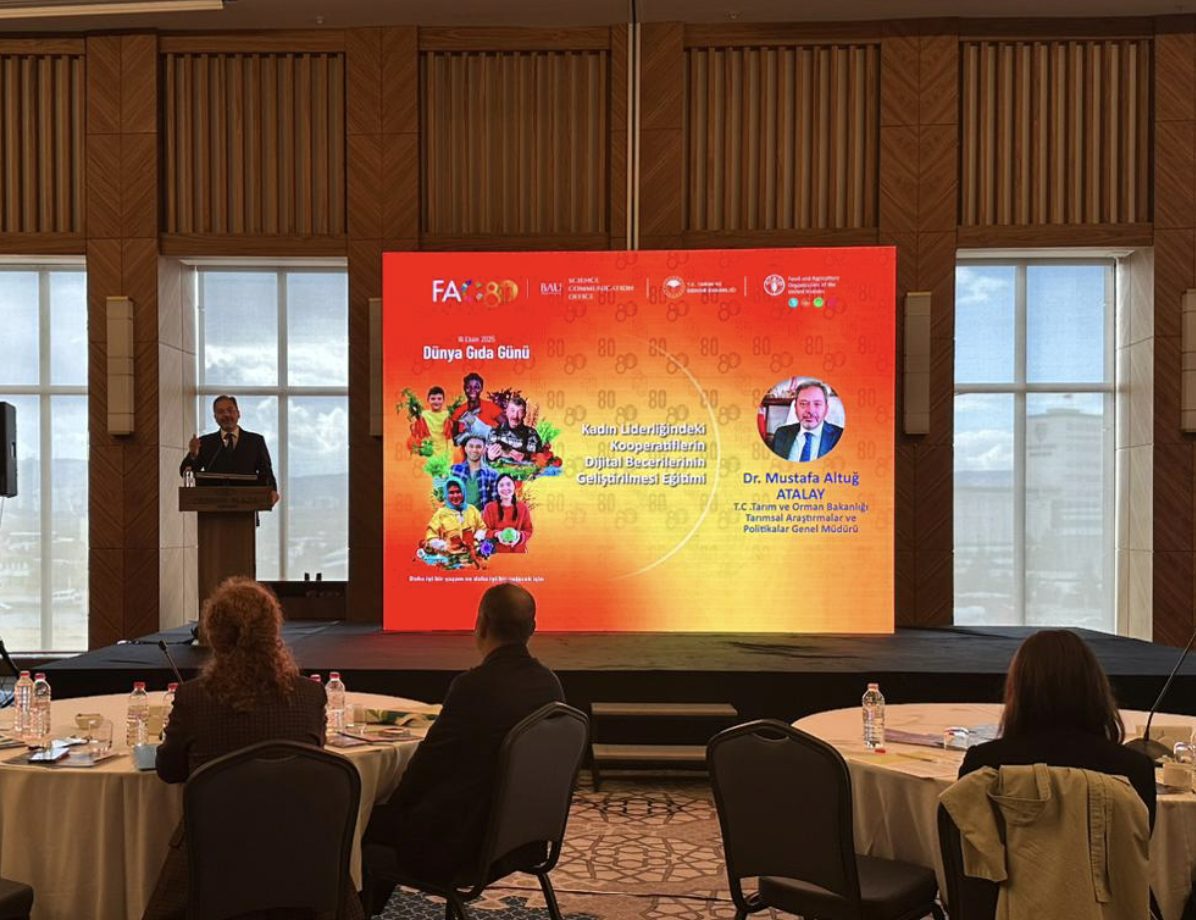
On October 9, 2025, Bahçeşehir University's (BAU) Science Communication Office and CIFAL Istanbul contributed to the design and delivery of the “Digital Skills Development Training for Women-Led Cooperatives”, held in Ankara as part of World Food Day activities. The training was organized within the framework of the Food and Agriculture Organization of the United Nations (FAO) Digital Villages Initiative (DVI), in collaboration with the Republic of Türkiye Ministry of Agriculture and Forestry and Bahçeşehir University.
The initiative aimed to strengthen the digital competencies of women producers, enhance their access to digital markets, and support the sustainable development of rural communities. By delivering educational activities directly to agricultural stakeholders outside the university environment, BAU extended its academic expertise and educational resources to women entrepreneurs and local producers, demonstrating its commitment to community-oriented education, knowledge transfer, and lifelong learning.
The training provided practical, hands-on learning opportunities focused on the effective use of digital tools, online sales and marketing strategies, and social media management. Through applied learning activities, participants explored how digital platforms could be used to promote agricultural products, improve online visibility, communicate with potential customers, and reach broader markets.
A central objective of the programme was to address the digital literacy needs of women-led agricultural cooperatives, particularly in rural communities where access to specialized training and technological resources may be limited. By introducing accessible digital tools and practical communication strategies, the initiative supported participants in developing competencies relevant to their entrepreneurial activities and everyday business operations.
Bahçeşehir University's contribution through its Science Communication Office and CIFAL Istanbul connected academic knowledge with the practical educational needs of women producers. Rather than limiting university-supported learning to formal degree programmes or campus-based activities, the training brought specialized knowledge directly to a community of agricultural entrepreneurs, enabling participants to engage with digital technologies in ways relevant to their professional activities.
The programme also demonstrated the importance of collaboration between universities, international organizations, and public institutions in expanding access to education. By combining FAO's rural development framework, the Ministry of Agriculture and Forestry's engagement with agricultural communities, and BAU's educational contribution, the initiative created a platform for knowledge exchange and practical skills development.
Importantly, the training was designed for women producers and cooperative members outside Bahçeşehir University's enrolled student population. Its emphasis on applied digital competencies and community-based delivery illustrates BAU's approach to educational outreach beyond campus, particularly for groups that can benefit from greater access to professional learning opportunities.
The initiative directly contributes to SDG 4 (Quality Education) by expanding access to practical digital skills training, supporting lifelong learning, and providing community-based educational opportunities beyond formal higher education. Through its focus on accessible and applicable knowledge, the programme demonstrates how universities can support the development of competencies that respond to the needs of different communities.
It also strongly aligns with SDG 5 (Gender Equality) by supporting women's digital competencies, entrepreneurship, and economic participation, and SDG 10 (Reduced Inequalities) by addressing digital skills gaps affecting rural communities. The programme further supports SDG 8 (Decent Work and Economic Growth) through its emphasis on entrepreneurship, digital market access, and sustainable business development.
Furthermore, cooperation among Bahçeşehir University, CIFAL Istanbul, FAO Türkiye, and the Republic of Türkiye Ministry of Agriculture and Forestry reflects SDG 17 (Partnerships for the Goals), highlighting the role of multi-stakeholder partnerships in delivering accessible education and supporting inclusive rural development.
Through the Digital Skills Development Training for Women-Led Cooperatives in Ankara, Bahçeşehir University demonstrates its commitment to extending educational opportunities beyond campus, strengthening digital literacy among women producers, and supporting inclusive economic participation through community-based learning. The initiative illustrates how university expertise can contribute to practical capacity-building and sustainable development within rural communities.
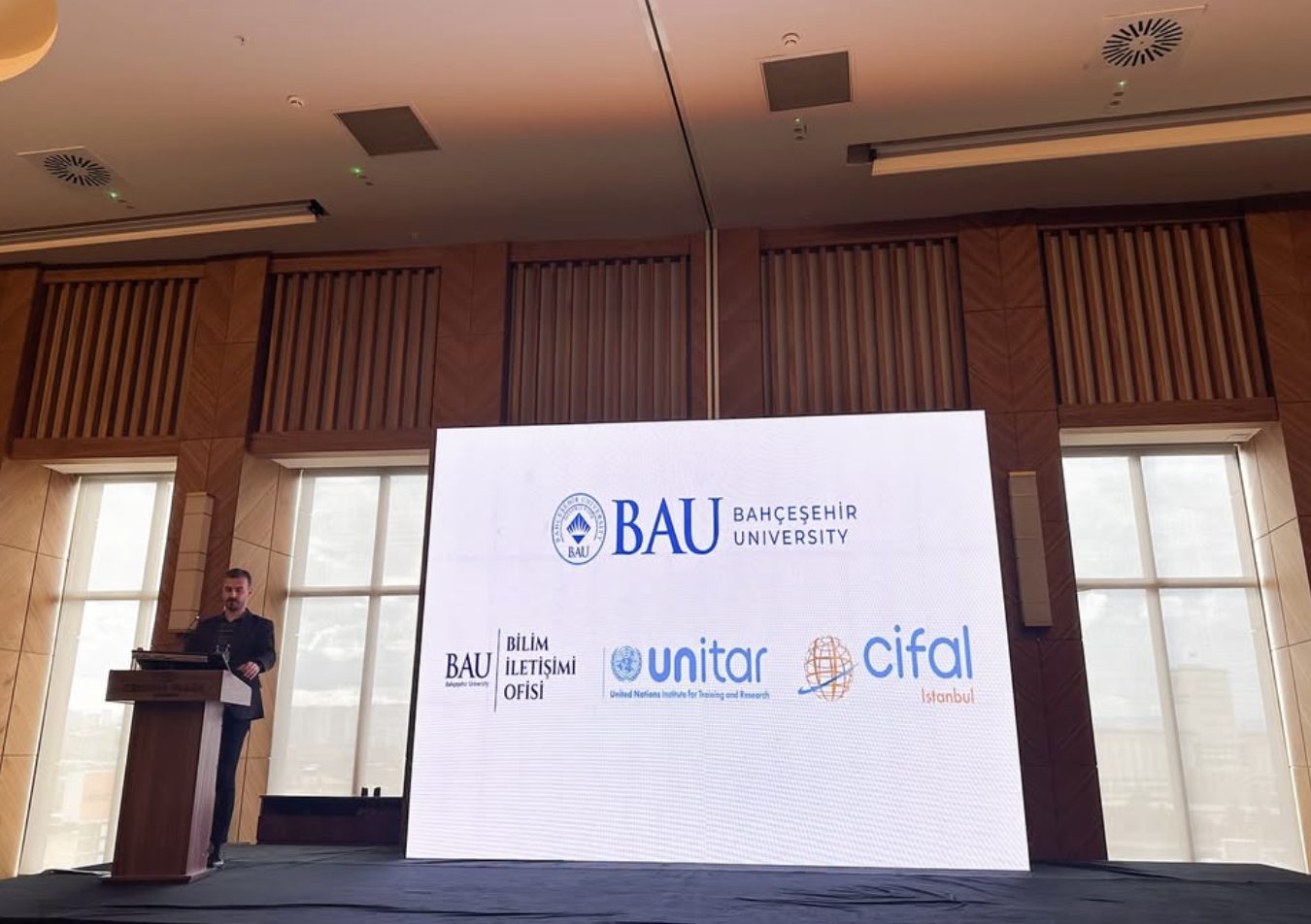
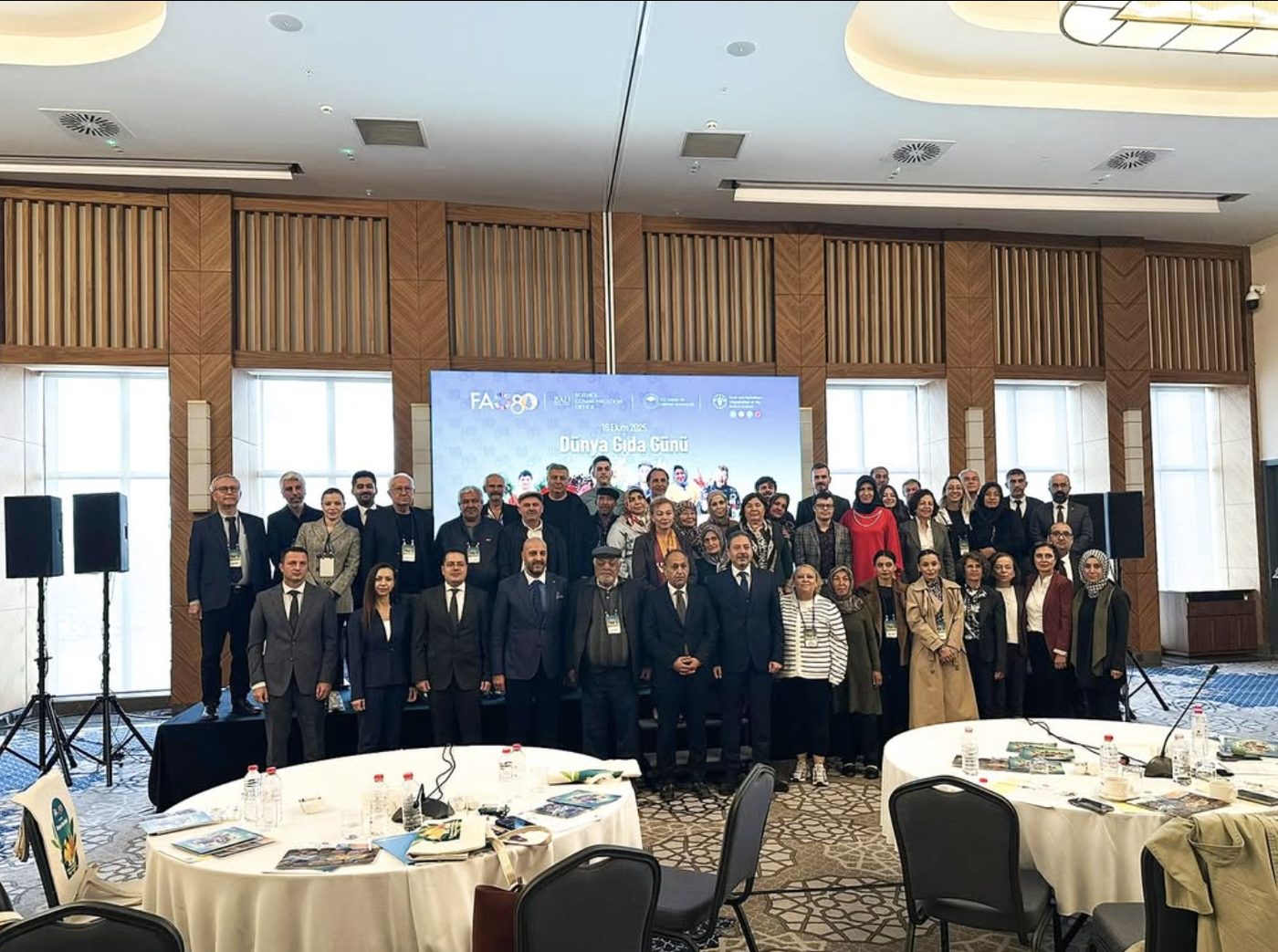
The pictures below portray highlights from the Digital Skills Training for Women-Led Agricultural Cooperatives program:
14- Expanding Women's Access to Technology Education Beyond Borders: Equal Opportunity in Technology Certificate Programme in Azerbaijan (2025)
The image below showcases the official promotional poster of the Equal Opportunity in Technology Certificate Programme:
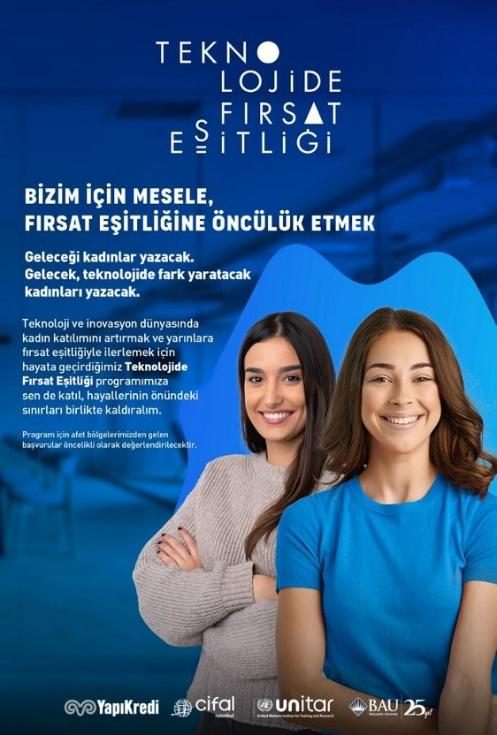
In 2025, Bahçeşehir University expanded its international educational outreach activities through the extension of the “Equal Opportunity in Technology” (Teknolojide Fırsat Eşitliği) Certification Programme to Azerbaijan, marking the initiative's first implementation outside Türkiye. Originally launched in 2023, the programme is implemented through a strategic collaboration between Bahçeşehir University, CIFAL Istanbul, affiliated with the United Nations Institute for Training and Research (UNITAR), and Yapı Kredi Bank. Building on its experience in providing free technology education to women across Türkiye, the initiative extended its geographical reach to Azerbaijan, making specialized digital learning opportunities available to women studying at eight different universities across the country. This international expansion represented an important milestone in Bahçeşehir University's commitment to extending academic expertise and educational opportunities beyond its own campuses and national borders, contributing to greater accessibility and inclusion in technology education.
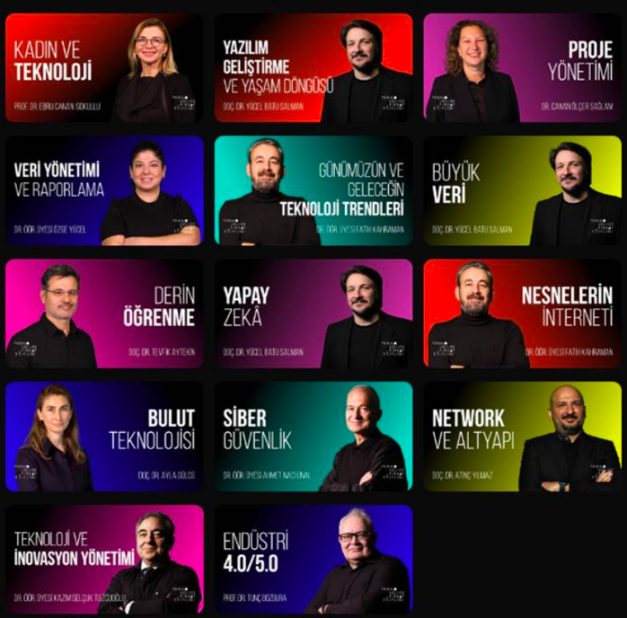
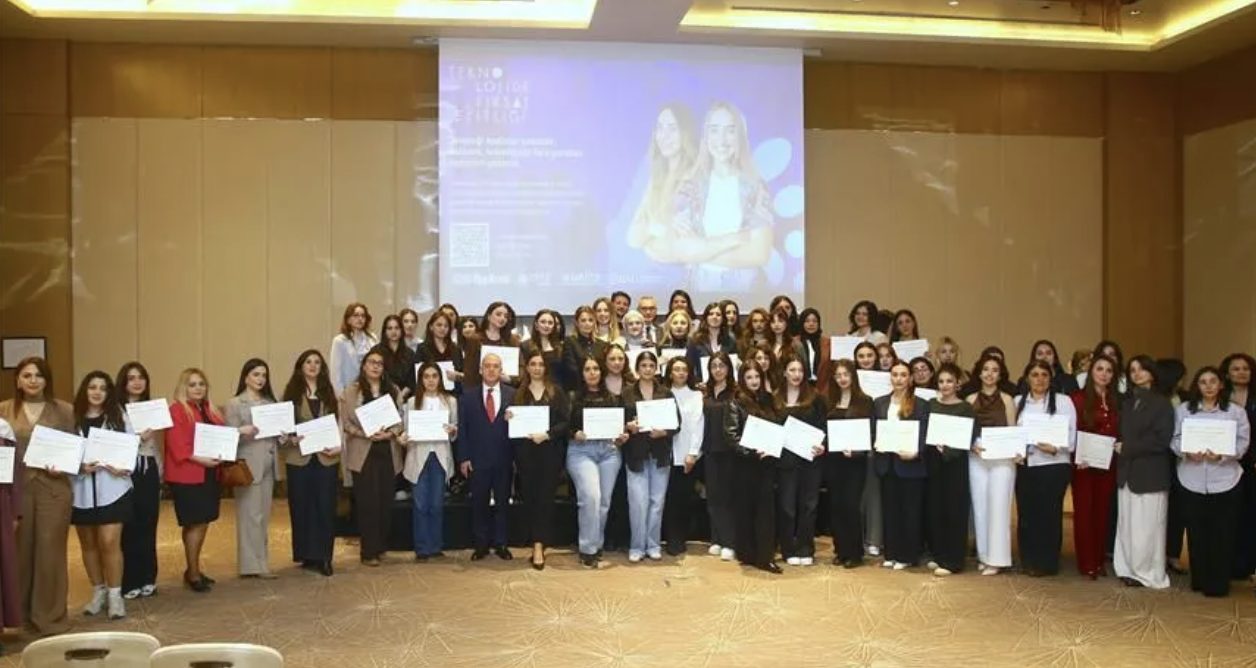
The Azerbaijan programme provided participants with 14 hours of specialized technology training, addressing emerging digital competencies and their applications in contemporary professional environments. Delivered through the expertise of the programme's academic and professional partners, the training covered areas including Big Data, Artificial Intelligence, Cloud Technologies, Cybersecurity, the Internet of Things (IoT), and emerging technology trends. The educational content was designed to strengthen participants' digital literacy, technological awareness, and understanding of rapidly evolving technological developments. By offering these learning opportunities free of charge to women from different higher education institutions in Azerbaijan, the initiative helped reduce financial and institutional barriers to specialized technology education. Participants who successfully completed the training received certificates at a ceremony held in Baku, formally recognizing their educational achievements and newly acquired competencies.
A central feature of the initiative was its emphasis on educational outreach beyond Bahçeşehir University's enrolled student population and Türkiye's geographical boundaries. Bahçeşehir University collaborated with international partners to extend educational resources to women from multiple universities in another country. Prof. Dr. Çisil Sohodol, Director of CIFAL Istanbul and faculty member at Bahçeşehir University's Faculty of Communication, participated in the programme's activities in Baku, highlighting the importance of increasing women's representation in technology-related fields and leadership positions. The initiative addressed the need to strengthen women's access to digital education, particularly in sectors where they remain underrepresented. By connecting academic expertise with international educational needs, the programme supported cross-border knowledge transfer, lifelong learning, and the development of future-oriented professional skills among women in Azerbaijan.
The international expansion also demonstrated the potential of university–industry partnerships to create accessible educational opportunities across different countries. Through cooperation among Bahçeşehir University, CIFAL Istanbul, UNITAR, Yapı Kredi Bank, and Yapı Kredi Bank Azerbaijan, the programme connected higher education expertise with private-sector resources and international training perspectives. Its implementation across eight Azerbaijani universities enabled the dissemination of technology-related knowledge to a wider academic community while creating opportunities for participants to strengthen their preparedness for technology-driven careers. By combining free educational provision with internationally oriented institutional cooperation, the initiative illustrated how higher education institutions can contribute to reducing educational disparities and supporting women's participation in digital transformation beyond national boundaries.
The initiative made a significant contribution to SDG 4: Quality Education by expanding access to free, specialized technology training and supporting lifelong learning opportunities for women outside Bahçeşehir University's institutional and national boundaries. Its implementation in Azerbaijan demonstrated the university's capacity to extend educational outreach internationally, providing learners from different universities with access to academic knowledge and practical digital competencies. The programme also strongly aligned with SDG 5: Gender Equality by supporting women's participation and professional development in technology-related fields, and SDG 10: Reduced Inequalities by addressing barriers to digital education associated with gender, institutional access, and geographical location. Furthermore, it supported SDG 8: Decent Work and Economic Growth by strengthening skills relevant to employment in the digital economy, and SDG 17: Partnerships for the Goals through international cooperation among academic institutions, international organizations, and private-sector partners. Through the Azerbaijan expansion of the Equal Opportunity in Technology Programme, Bahçeşehir University reinforced its commitment to making quality education accessible beyond borders and empowering women through international educational outreach, contributing to a more inclusive and equitable digital future.
The pictures below portrays the official certificate ceremony of the programme, held in Baku, Azerbaijan, as well as the contents of the certificate programme:
15- Strengthening Post-Disaster Psychosocial Support Beyond Campus: Professional Capacity Building in Gaziantep
The pictures below showcases relevant highlights from the capacity-building programme in Gaziantep:
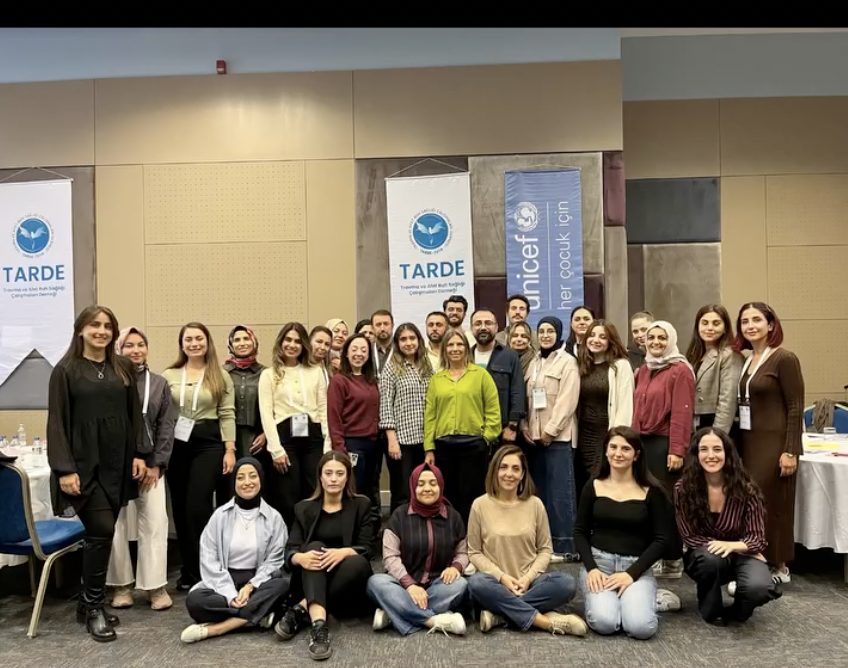
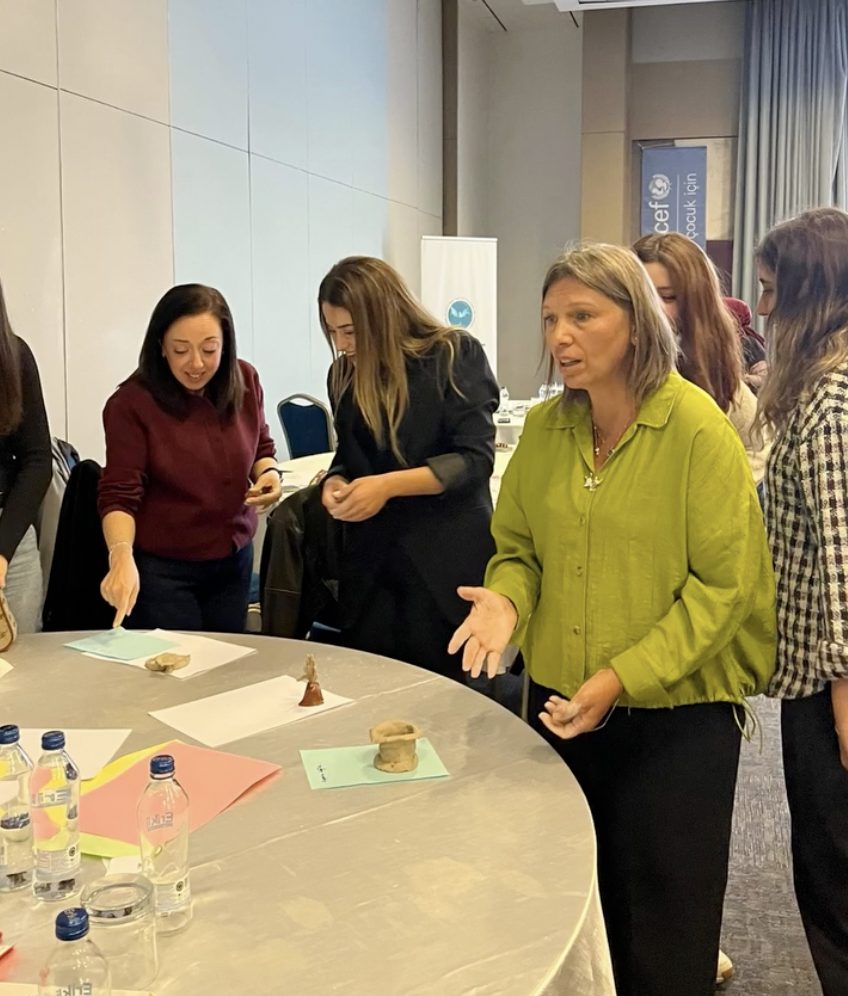
On 16 November 2025, Prof. Dr. Özlem Karaırmak, representing Bahçeşehir University and the Trauma and Disaster Mental Health Studies Association (TARDE), delivered a specialized training session titled “Fundamentals of Psychosocial Work with Traumatized Children” in Gaziantep, Türkiye. The training brought together field practitioners working across earthquake-affected provinces, focusing on strengthening their professional knowledge and competencies in providing trauma-informed psychosocial support to children affected by disasters. Drawing on cognitive and somatic awareness approaches, Prof. Dr. Karaırmak addressed the importance of understanding children's psychological and emotional responses to traumatic experiences and introduced methods for responding to their post-disaster psychosocial needs. By delivering this specialized training directly in an earthquake-affected region, Bahçeşehir University extended its academic expertise beyond its campus to professionals working with vulnerable communities.
The initiative represented an important educational outreach and professional capacity-building activity, connecting university-level psychological expertise with the practical needs of professionals supporting disaster-affected children and families. Through Prof. Dr. Karaırmak's training, participants explored trauma-sensitive approaches intended to strengthen their ability to recognize children's psychosocial needs and provide appropriate support during recovery processes. The programme emphasized the importance of equipping local practitioners with specialized knowledge applicable to community-based psychosocial services and child-focused recovery activities. By bringing professional education directly to practitioners in Gaziantep, the initiative facilitated knowledge transfer beyond formal higher education settings and supported the development of local capacities for long-term psychosocial recovery.
The initiative directly contributed to SDG 4: Quality Education by providing specialized professional development opportunities, promoting lifelong learning, and strengthening practitioners' competencies in trauma-informed approaches that can support children's emotional well-being and educational development. It demonstrated Bahçeşehir University's commitment to making academic knowledge accessible to professionals outside the university community, particularly those working in regions experiencing significant social and educational challenges. Furthermore, the programme strongly aligned with SDG 3: Good Health and Well-Being by supporting psychosocial recovery and mental health awareness, and SDG 11: Sustainable Cities and Communities by contributing to the development of resilient community support systems in earthquake-affected areas. Through this initiative, Bahçeşehir University reinforced its role in connecting academic expertise with community needs and supporting sustainable, inclusive post-disaster recovery through education.
16- Bringing Responsible AI Education to School Communities Across Türkiye: Bahçeşehir University's Multi-City Seminar Series
The image below is the official poster of the “Responsible AI: Facing the Future with Confidence in the Digital Age” Seminar Series, specifically the one that took place in Ankara, Türkiye:
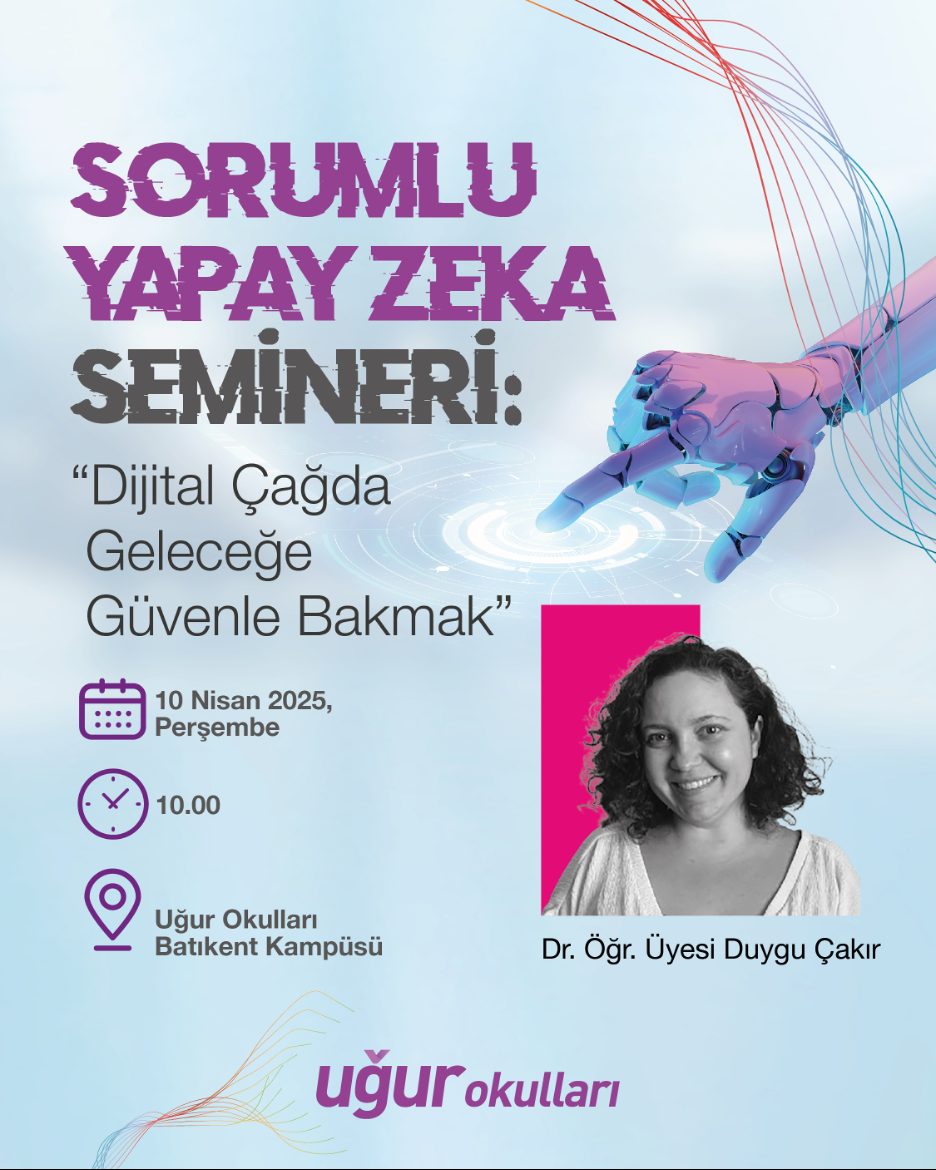
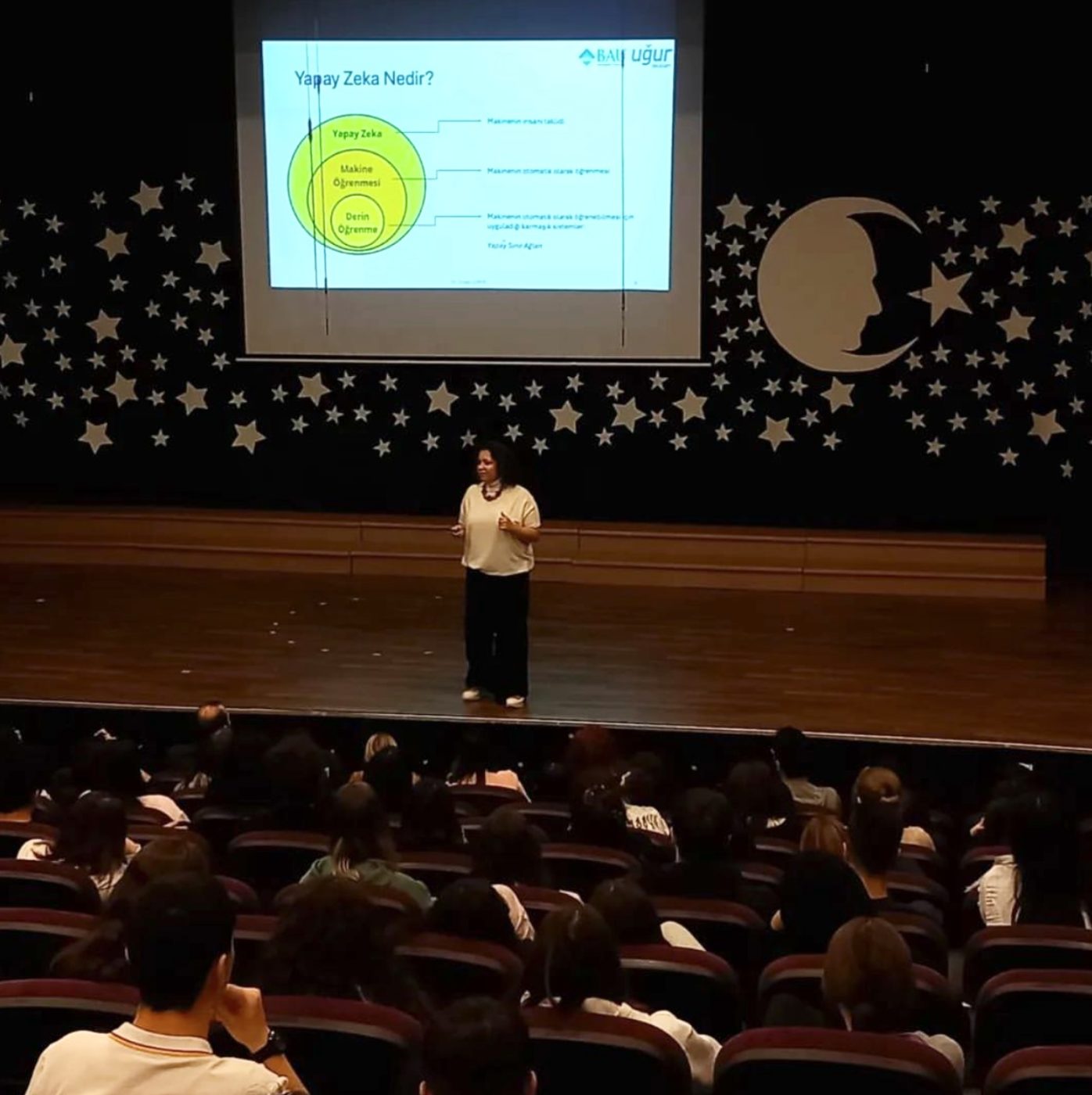
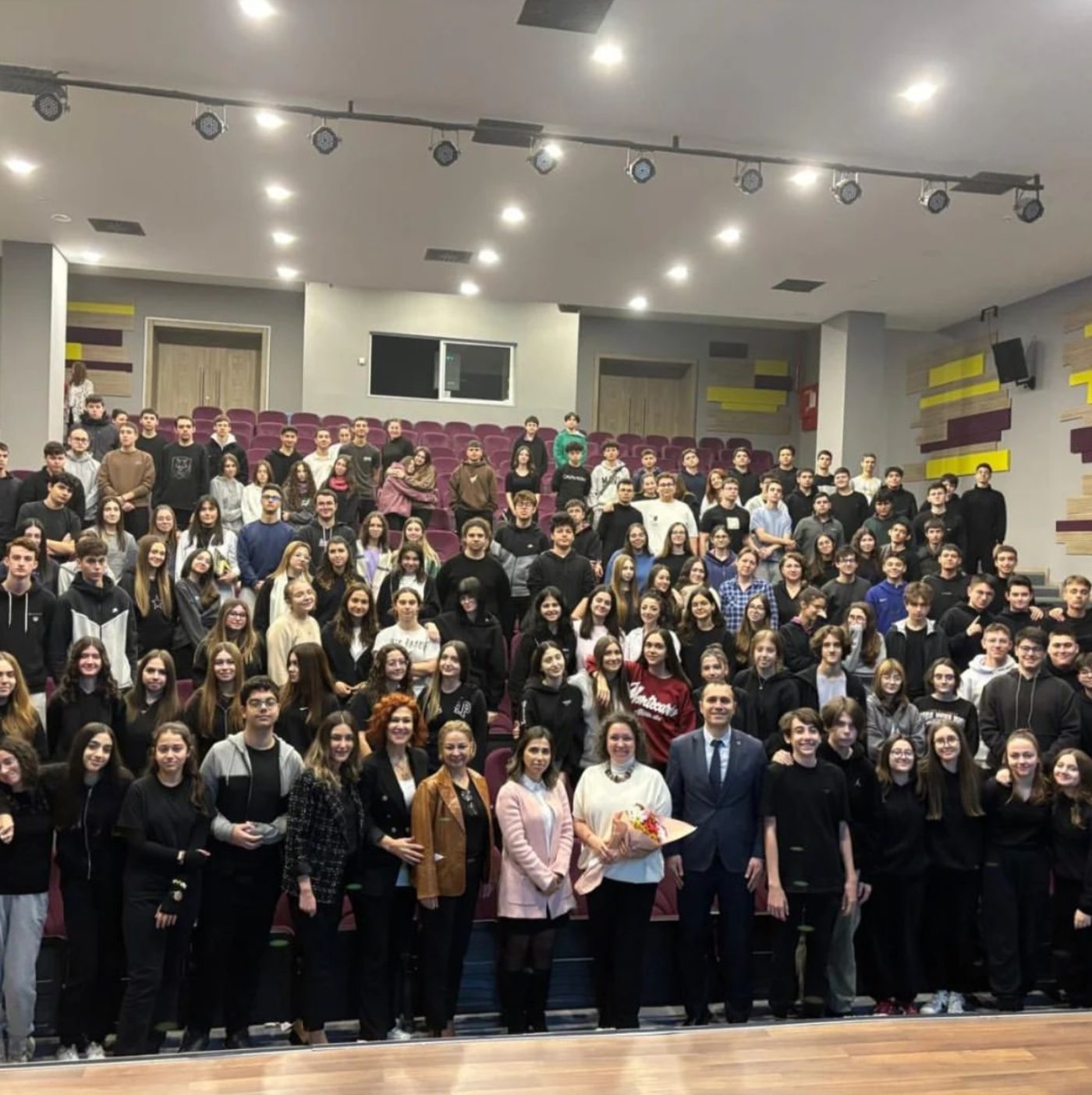
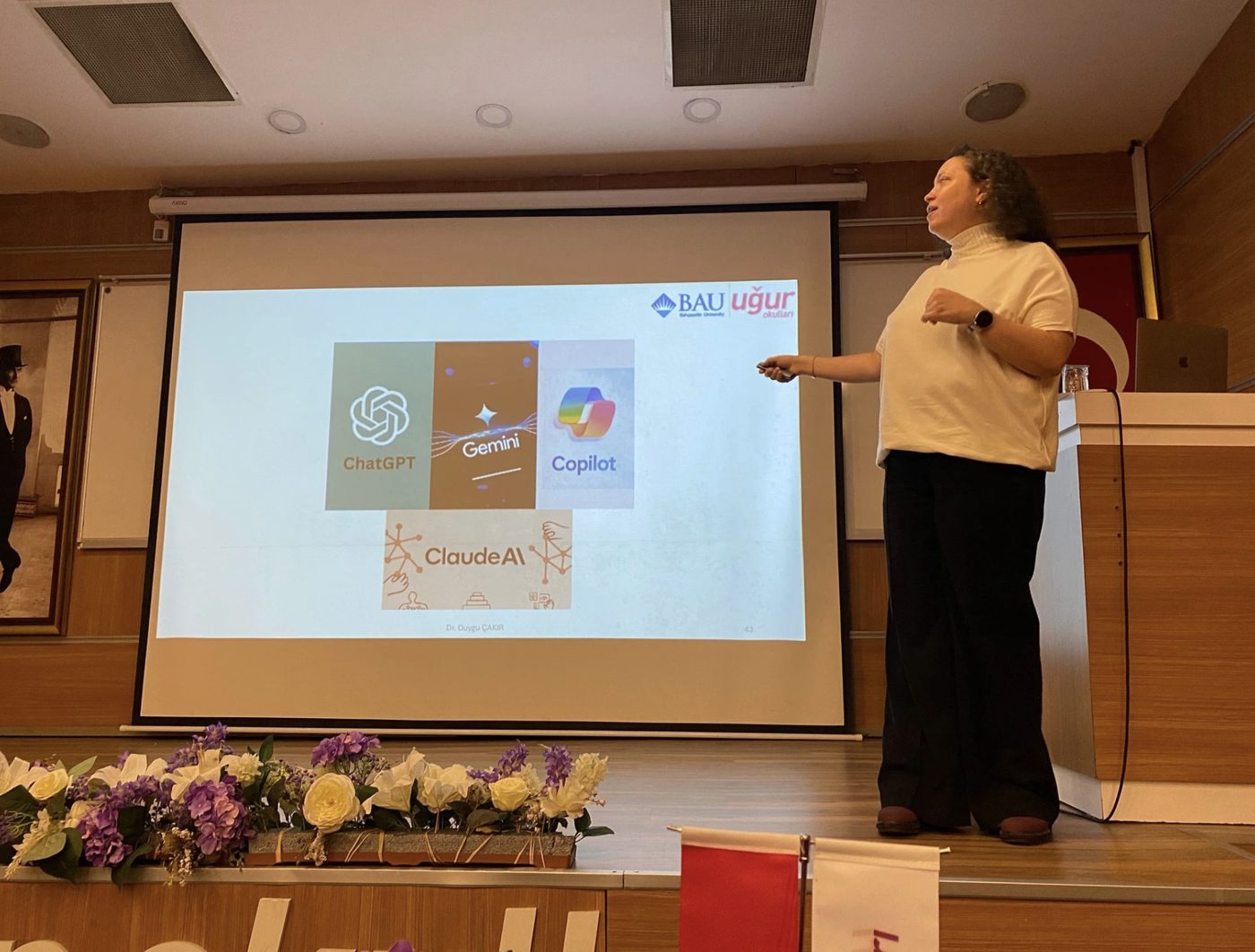
Asst. Prof. Duygu Çakır from Bahçeşehir University delivered a comprehensive seminar series titled “Responsible AI: Facing the Future with Confidence in the Digital Age” across eight Uğur Schools campuses in six cities throughout Türkiye between 5 December 2024 and 10 April 2025. Extending beyond Istanbul to İzmir, Samsun, Giresun, Antalya, and Ankara, the initiative brought Bahçeşehir University's academic expertise directly into school communities across different regions. Through visits to Uğur educational institutions, Asst. Prof. Dr. Çakır conducted separate educational sessions tailored to students, teachers, and school personnel, including administrators, addressing their distinct needs and responsibilities in an increasingly AI-driven world. This multi-city initiative demonstrated the university's commitment to sharing specialized knowledge beyond its own campus and making technology education accessible to wider educational communities.
The seminar series focused on developing responsible AI literacy, strengthening digital awareness, and encouraging the ethical and informed use of emerging technologies. Sessions designed for students emphasized critical engagement with AI-generated content, awareness of technological limitations, and responsible digital citizenship. For teachers, the discussions highlighted the importance of understanding AI technologies and their implications for educational practices, supporting educators' capacity to guide students in navigating digital learning environments. Sessions for school administrators and personnel addressed broader considerations surrounding the responsible use of artificial intelligence within educational institutions. Across these different audiences, the programme also incorporated discussions on gender equality, algorithmic fairness, and potential biases in AI systems, encouraging participants to consider how technological developments can affect individuals and society.
A defining feature of the initiative was its community-oriented educational approach, extending university-level learning opportunities to individuals outside Bahçeşehir University's enrolled student population. Bahçeşehir University actively transferred its expertise to primary and secondary educational environments across Türkiye. By delivering sessions directly at different Uğur Schools campuses, the programme enabled students, educators, and school personnel to engage with contemporary AI-related knowledge within their own educational settings. Its geographically distributed structure broadened the reach of the university's educational activities, while the audience-specific sessions made the content more relevant to participants' educational and professional responsibilities. The initiative also supported continuing professional learning among teachers and school staff, strengthening connections between higher education expertise and school-level educational needs.
The initiative directly contributed to SDG 4: Quality Education by expanding access to AI literacy education, supporting teachers' professional development, and promoting responsible digital citizenship among younger learners. Its delivery across eight campuses in six cities highlighted Bahçeşehir University's role in extending educational opportunities beyond its institutional boundaries and contributing to the wider dissemination of academic knowledge. Furthermore, the programme aligned with SDG 5: Gender Equality and SDG 10: Reduced Inequalities by raising awareness of gender-related biases, fairness, and the importance of inclusive participation in AI-driven environments. Through this sustained, multi-city educational initiative, Bahçeşehir University demonstrated how academic expertise can be translated into practical learning opportunities for diverse school communities, strengthening digital competencies and encouraging the responsible use of emerging technologies across different educational levels.
The table below illustrates the dates, cities and the Uğur Schools campuses where the “Responsible AI: Facing the Future with Confidence in the Digital Age” Seminar Series took place:
| Date | Campus | City |
|---|---|---|
| 5 December 2024 | Bornova | İzmir |
| 5 December 2024 | Gaziemir | İzmir |
| 26 December 2024 | Bakırköy | İstanbul |
| 13 February 2025 | Canik | Samsun |
| 14 February 2025 | Giresun | Giresun |
| 8 April 2025 | Çallı | Antalya |
| 10 April 2025 | Batıkent | Ankara |
| 10 April 2025 | Yaşamkent | Ankara |
The pictures below show relevant highlights from some of the seminars: