EN
4.3.2 - General Public Lectures, Community Educational Events
Bahçeşehir University (BAU) regularly hosts a diverse range of public lectures, seminars, workshops, conferences, and community educational events on its campuses that are open to the general public, including individuals who are not students or staff of the University. These activities reflect BAU's commitment to quality education, lifelong learning, community engagement, and sharing academic knowledge and expertise with the wider community.
Throughout the 2024–2025 academic year, BAU's faculties, research centers, academic departments, and student organizations organized a wide range of public lectures, educational seminars, workshops, and cultural events. These activities provide inclusive learning opportunities for members of the general public, regardless of their educational background or institutional affiliation, enabling individuals outside the University to engage with academics, experts, and professionals across different fields.
Hundreds of open-access educational and community engagement activities are organized annually at Bahçeşehir University, many of which are open to the general public and free of charge. These initiatives contribute to SDG 4: Quality Education by extending learning opportunities beyond formal university education and promoting access to knowledge, public dialogue, and lifelong learning.
The following sections present selected examples of public lectures and community educational events held during the 2024–2025 academic year. Additional activities are documented in the University's comprehensive SDG reports and institutional records. Promotional posters and photographs accompanying each example are provided as supporting evidence, demonstrating Bahçeşehir University's ongoing efforts to host educational events that are open to the general public.
1- BAU Conservatory Open Classes: Free Performing Arts Education for High School Students
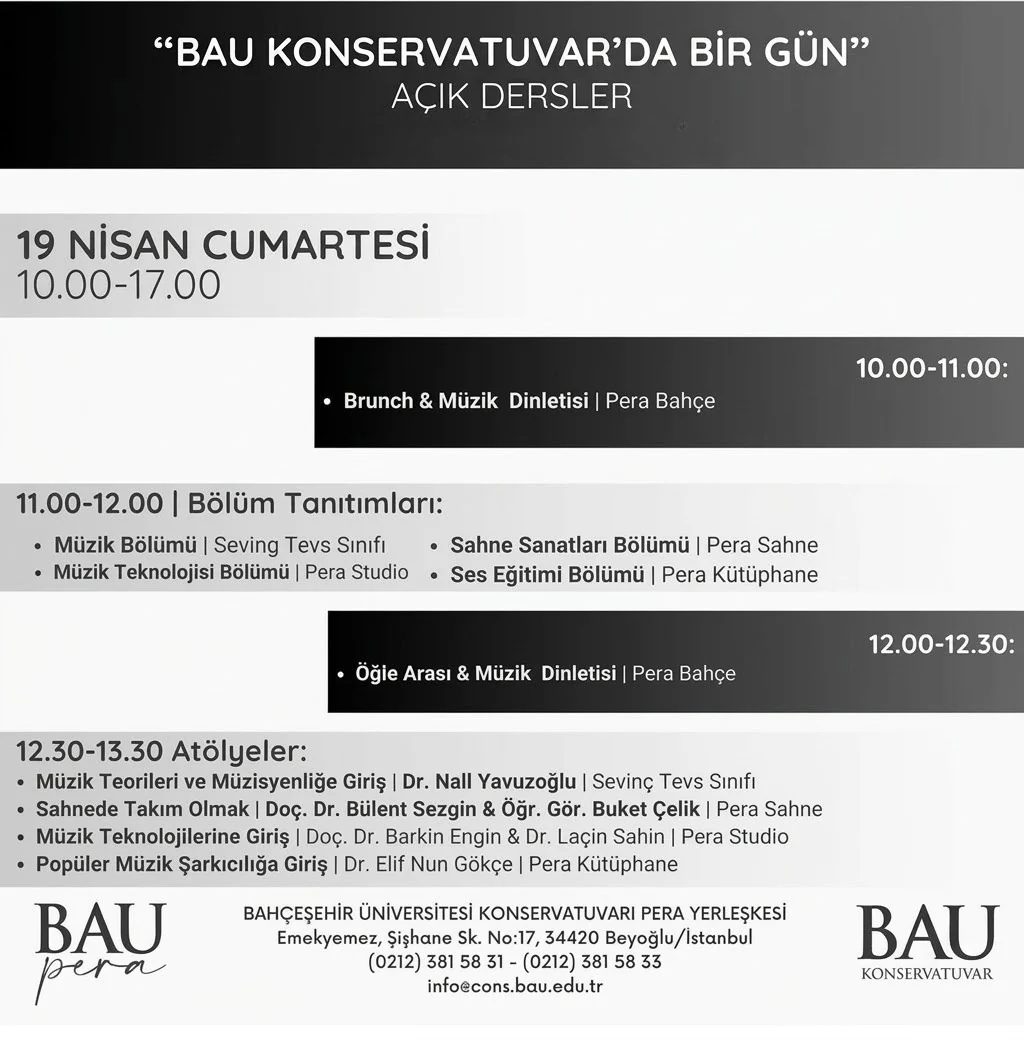
The image below presents the official schedule poster for the BAU Conservatory Open Classes, highlighting the dates, times, and educational sessions offered to participants from outside the University.
As part of its commitment to expanding free public access to educational and cultural activities, Bahçeşehir University (BAU), through its Conservatory, continued organizing Open Classes in 2025, providing high school students from outside the University with opportunities to participate in free university-level performing arts education.
The initiative aims to extend the University's educational expertise beyond its enrolled student population, encourage artistic awareness, and promote wider community engagement with theatre, music, and the performing arts. By welcoming prospective learners into an authentic conservatory environment, the Open Classes provide opportunities to experience academic instruction, interact directly with university faculty, and explore different artistic disciplines free of charge and without requiring formal university enrollment.
In 2025, BAU Conservatory expanded the range of Open Classes offered through its Department of Performing Arts, creating additional opportunities for young participants to engage with different forms of artistic expression and professional performing arts training.
During the 2025 Spring Term, the Conservatory organized the following free and publicly accessible Open Classes at BAU Pera Campus on April 19, 2025:
Acting Art, led by Assoc. Prof. Uluç Esen
Shakespeare Theatre, led by Assoc. Prof. Dr. Elif Baş
Musical Theatre, led by Lecturer Adnan Ata Yiğit
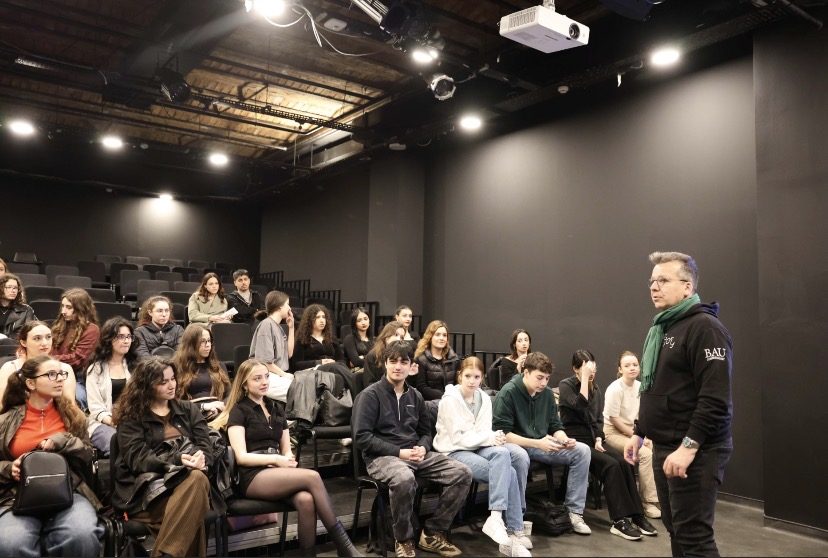
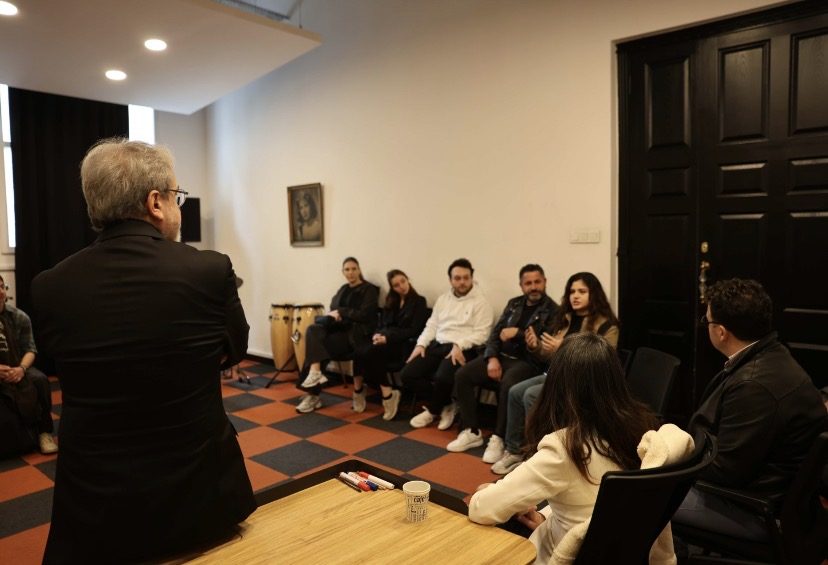
These sessions provided participating high school students with direct exposure to acting techniques, theatrical interpretation, stage performance, and musical expression. Through practical learning experiences and interaction with BAU's academic staff, participants gained insight into conservatory education while developing their understanding and appreciation of the performing arts.
By opening its academic learning environment to students outside the University, BAU Conservatory demonstrates its commitment to public educational engagement and the accessibility of arts education beyond formal degree programs. These activities contribute to SDG 4 (Quality Education) by broadening opportunities for free and inclusive educational participation and encouraging young people to explore artistic learning and cultural development.
The images below present highlights from BAU Conservatory's Open Classes held on April 19, 2025, illustrating the participation of high school students in university-level performing arts education and their engagement with BAU academic staff.
2- Public Educational Seminar: The Emotions of Populism – Anger, Resentment and Identity
The image below presents the official promotional poster for the public educational seminar “The Emotions of Populism: Anger, Resentment and Identity,”
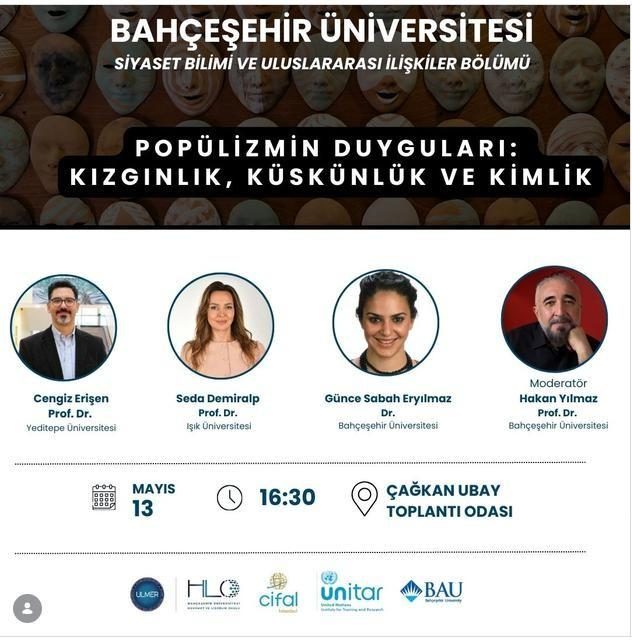
On May 13, 2025, Bahçeşehir University (BAU), through its Department of Political Science and International Relations, organized a public educational talk titled “The Emotions of Populism: Anger, Resentment and Identity” held on the University's campus. Open to the general public, including individuals beyond the BAU academic community, the event provided an opportunity to explore the emotional dimensions of contemporary politics and their implications for democratic governance, political participation, and social cohesion.
The talk examined how anger, resentment, and collective identity shape political attitudes, public discourse, and patterns of political participation. Drawing on political science perspectives, the discussion explored the emotional foundations of populist politics and the ways in which political actors may mobilize shared grievances, perceptions of exclusion, and collective identities to influence public opinion.
Particular attention was given to the relationship between political emotions, social polarization, institutional trust, and democratic debate. Participants were encouraged to consider how emotional appeals can influence political engagement, shape perceptions of political institutions, and affect relationships between different groups within society. The discussion provided a critical framework for understanding these dynamics without reducing complex political developments to individual attitudes or isolated events.
Importantly, the event was publicly accessible and not restricted to Bahçeşehir University students or staff, extending opportunities for political education and academic discussion beyond formal university curricula. By making research-based perspectives on populism and democratic participation available to the wider community, the talk supported political literacy, critical thinking, and informed public dialogue.
The initiative contributes directly to SDG 4 (Quality Education) by providing publicly accessible educational opportunities that strengthen understanding of contemporary political developments, democratic participation, and the relationship between emotions and political behavior. It also supports SDG 16 (Peace, Justice and Strong Institutions) by encouraging informed reflection on inclusive governance, constructive political dialogue, institutional accountability, and the conditions that sustain resilient democratic societies.
3- Free Public Technology Talks: Strengthening Digital Competencies and Lifelong Learning
The image below shows the registration portal for one of the sessions of the Extracurricular Tech Talk Series:
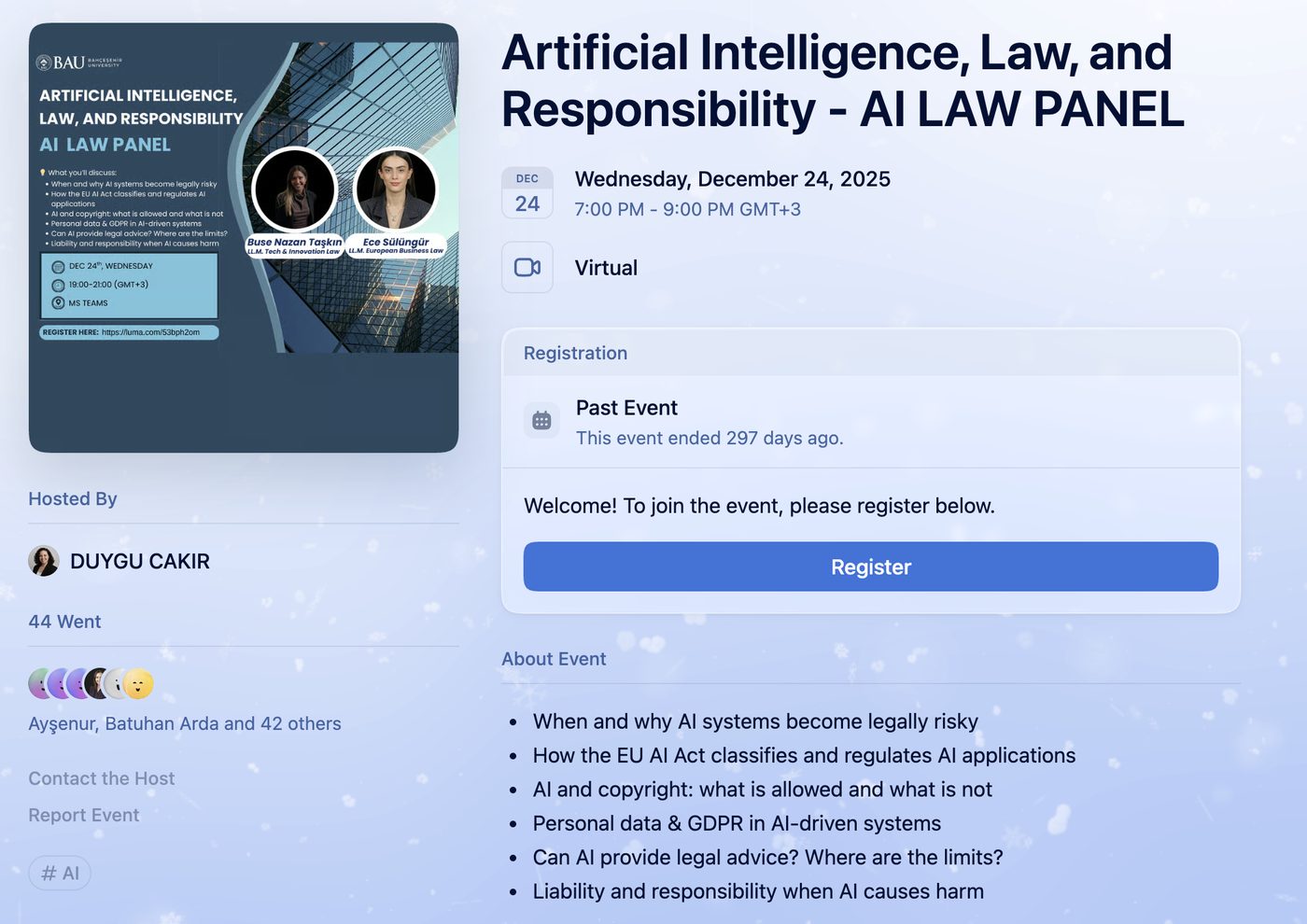
Between October 17 and December 24, 2025, Bahçeşehir University (BAU), through an initiative organized and hosted by Dr. Duygu Çakır, delivered the Extracurricular Tech Talks, a series of eight online educational workshops and expert-led discussions focusing on emerging technologies and digital skills development.
The program was open to the general public, including individuals without any enrollment or affiliation with Bahçeşehir University, as well as current BAU students and alumni. By extending participation beyond the University's academic community, the initiative provided opportunities for individuals from diverse educational and professional backgrounds to engage with industry experts and develop competencies in rapidly evolving technological fields.
Conducted online via Microsoft Teams, with sessions scheduled between 19:00 and 21:00 Türkiye time, the program offered accessible learning opportunities beyond conventional classroom settings. Its online and evening format enabled interested participants to engage with specialized technology education regardless of their university affiliation, supporting broader participation in lifelong learning and professional development.
The program consisted of eight educational sessions, addressing contemporary technological developments and their practical applications. Through these sessions, participants explored artificial intelligence, software development, cybersecurity, game development, distributed systems, software testing, and the legal and ethical dimensions of emerging technologies. The program combined expert knowledge with practical industry perspectives, helping participants better understand technological developments and their applications in professional environments.
Importantly, the Extracurricular Tech Talks were publicly accessible and not restricted to BAU students or graduates, demonstrating the University's commitment to sharing educational resources and academic opportunities with the wider community. By creating a platform for direct engagement with technology professionals, BAU supported the development of digital literacy, technical knowledge, and career-relevant skills among participants beyond its formal student population.
This initiative contributes directly to SDG 4 (Quality Education) by expanding access to publicly available educational activities, supporting digital skills development, and promoting inclusive lifelong learning. It also supports SDG 9 (Industry, Innovation and Infrastructure) by encouraging technological literacy, innovation, and knowledge exchange between academia, industry professionals, and the wider public.
The table below presents the eight sessions of the BAU Extracurricular Tech Talks, including their dates, topics, and invited speakers, illustrating the range of publicly accessible educational opportunities offered in emerging technologies and digital skills development.
| Date | Session | Speaker or speakers |
|---|---|---|
| 17 Oct 2025 | Next-Generation AI: The Agentic Approach | Hayriye Anıl |
| 24 Oct 2025 | MCP: The USB-C for AI | Enes Başbuğ |
| 31 Oct 2025 | Cybersecurity: Offensive Penetration Testing | Gani Nazar |
| 7 Nov 2025 | 2D Game Development: From Design to Go-Live | Aylin Görgün |
| 19 Nov 2025 | Fullstack Development: Python Web Application | Mehmet Önal |
| 4 Dec 2025 | Parallel & Distributed Systems: Foundations and Modern Practices | Emre Barış |
| 18 Dec 2025 | Test Engineering: Modern Test Automation Practices | Mehmet Kılıç and Sevde Kuzu Sivaslı |
| 24 Dec 2025 | Artificial Intelligence, Law, and Responsibility | Buse Nazan Taşkın and Ece Sülüngür |
4- Open Educational Panel: The Epistemic and Development Dimensions of Gender – International Women’s Day
The image below presents the official promotional poster for the public panel “The Epistemic and Development Dimensions of Gender”
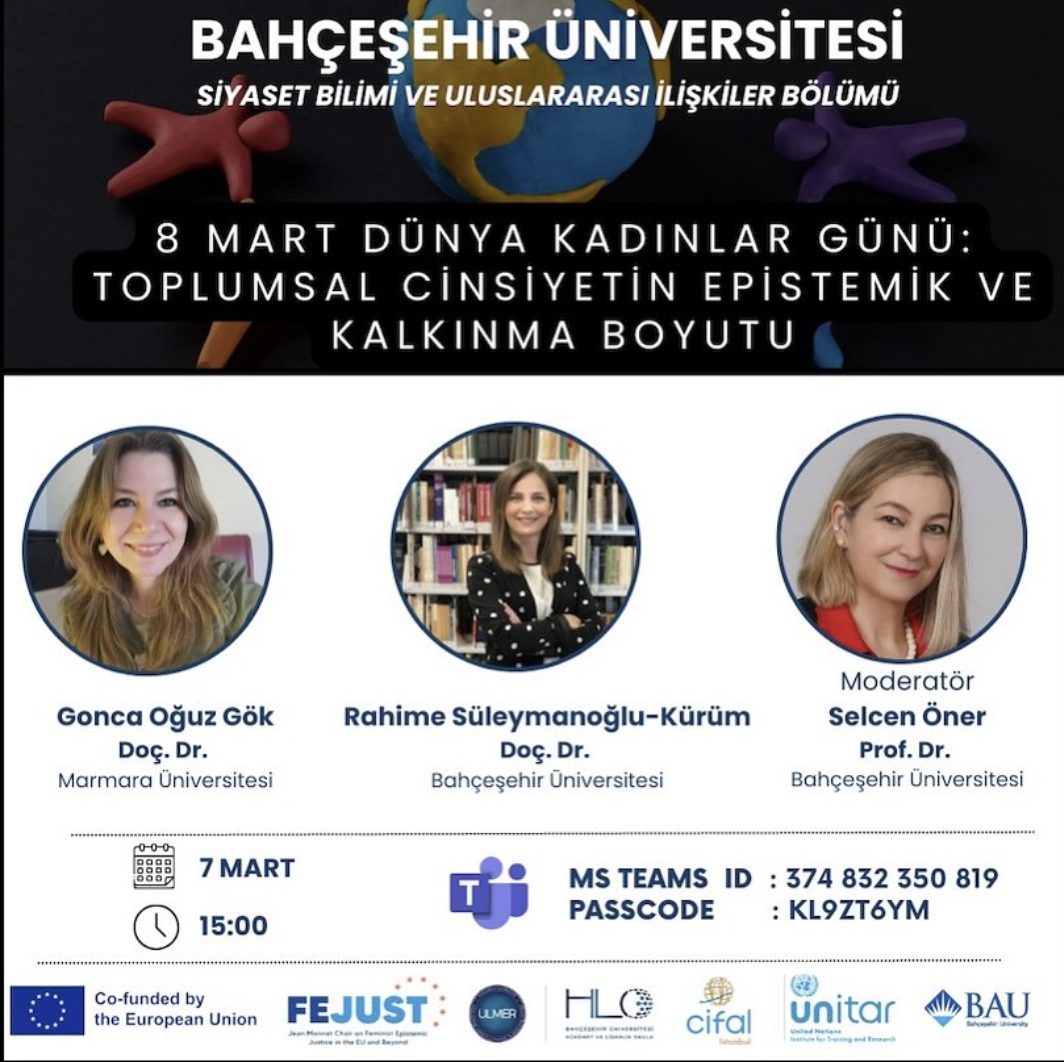
On March 7, 2025, in recognition of International Women’s Day, Bahçeşehir University (BAU), through its Department of Political Science and International Relations, organized a public educational panel titled “The Epistemic and Development Dimensions of Gender.” Open to the general public, including individuals beyond the BAU academic community, the event provided an opportunity to explore the relationship between gender equality, knowledge production, and social and economic development.
The panel examined how gender influences the production, recognition, and dissemination of knowledge, as well as the ways in which gender inequalities shape development processes and opportunities for participation. Particular attention was given to the importance of recognizing women's experiences, perspectives, and contributions in academic, social, and institutional contexts.
By addressing the epistemic dimensions of gender, the discussion encouraged participants to reflect on whose knowledge is recognized, whose perspectives are represented, and how gender-based inequalities may influence the creation and application of knowledge. The development dimension further highlighted the importance of women's empowerment, equal participation, and inclusive approaches to social and economic progress.
Importantly, the panel was open to the wider public and was not restricted to Bahçeşehir University students or staff, extending access to academic discussions on gender equality beyond formal university curricula. Through this public learning opportunity, BAU contributed to raising awareness of gender-related inequalities and encouraging informed dialogue among individuals from different educational and professional backgrounds.
The initiative contributes directly to SDG 4 (Quality Education) by providing publicly accessible educational opportunities, promoting critical thinking, and supporting lifelong learning on gender equality and inclusive development. It also strongly supports SDG 5 (Gender Equality) by advancing awareness of women's empowerment, equal participation, and the recognition of women's knowledge and contributions. Additionally, the panel aligns with SDG 10 (Reduced Inequalities) by addressing structural barriers to inclusion and equitable participation in knowledge production and development processes.
By making academic perspectives on gender and development accessible to the broader community, Bahçeşehir University reinforced its commitment to public education, inclusive knowledge-sharing, and the promotion of gender equality beyond the classroom.
5- Public Educational Seminar: Legal Protection Mechanisms in Combating Modern Slavery
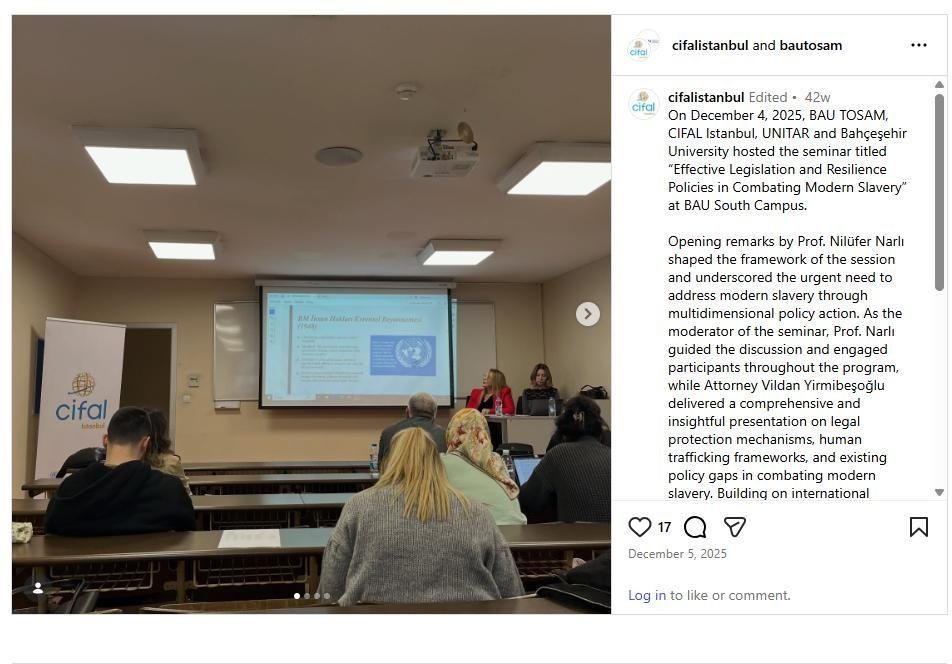
The image below presents the official promotional poster for the public seminar “Legal Protection Mechanisms in Combating Modern Slavery,” held on December 4, 2025, highlighting the event's speakers, institutional collaboration, and educational focus.
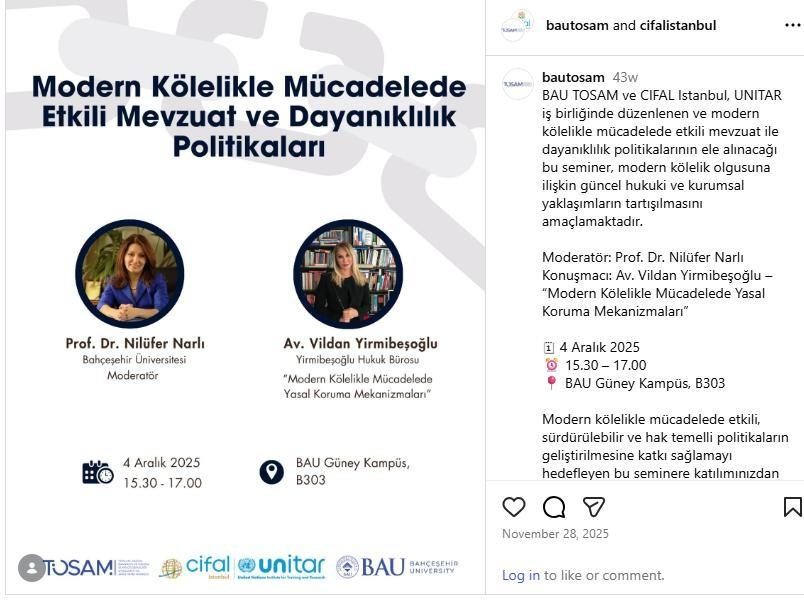
On December 4, 2025, Bahçeşehir University (BAU), through BAU TOSAM, in collaboration with CIFAL Istanbul and the United Nations Institute for Training and Research (UNITAR), organized a public educational seminar titled “Legal Protection Mechanisms in Combating Modern Slavery” held on the University's campus and open to the general public, including individuals beyond the BAU academic community. The event provided an opportunity to engage with important legal, social, and human rights issues, extending access to specialized knowledge beyond formal university education.
Moderated by Prof. Dr. Nilüfer Narlı, the seminar featured attorney Vildan Yirmibeşoğlu, who shared her expertise on legal protection mechanisms, human trafficking, victim rights, and the prevention of modern slavery. The discussion examined the legal and institutional frameworks designed to protect vulnerable individuals from exploitation, highlighting both existing safeguards and challenges in their implementation.
Particular attention was given to victim protection, access to justice, human trafficking legislation, and gaps in existing policies. Through expert perspectives and practical legal considerations, participants gained a deeper understanding of the relationship between human rights, legal accountability, and the institutional responsibilities involved in preventing exploitation and forced labour.
The seminar also included an interactive question-and-answer session, allowing participants to engage directly with the speaker, raise questions about legal challenges, and explore possible responses to contemporary forms of exploitation. This interactive format encouraged critical discussion and promoted greater public awareness of the legal mechanisms available to protect individuals and uphold fundamental rights.
As a publicly accessible educational event, the seminar reflected Bahçeşehir University's commitment to sharing academic and professional expertise with the wider community. By bringing together university-based knowledge, legal expertise, and international institutional perspectives, the initiative contributed to public legal literacy, human rights awareness, and lifelong learning beyond the traditional classroom.
The event directly supports SDG 4 (Quality Education) by expanding access to public educational activities on legal rights, social justice, and human rights protection. It also contributes to SDG 16 (Peace, Justice and Strong Institutions) by promoting awareness of legal safeguards and access to justice, SDG 8 (Decent Work and Economic Growth) through its focus on combating forced labour and exploitation, and SDG 17 (Partnerships for the Goals) through institutional collaboration.
The image below presents highlights from the seminar “Legal Protection Mechanisms in Combating Modern Slavery,” documenting the expert presentations, interactive discussions, and knowledge-sharing activities that contributed to raising public awareness of human rights and legal protection mechanisms.
6- Public Game Development Event: BUG Fall Jam'25 (November 28–30, 2025)
The image below portrays the official promotional poster for the public game development event “BUG Fall Jam’25:
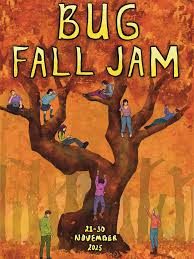
Between November 28 and 30, 2025, Bahçeşehir University (BAU) organized BUG Fall Jam'25, held at BAU Galata Campus, an intensive 48-hour game development marathon designed to provide practical learning opportunities for undergraduate and graduate students interested in digital game design and development.
The event was open to students from all universities, rather than being restricted to Bahçeşehir University's enrolled student population, creating an inclusive, inter-university learning environment. A total of 200 participants, including 30 international students representing five countries, took part in the initiative, bringing together individuals from diverse academic, cultural, and educational backgrounds.
Throughout the 48-hour event, participants worked collaboratively in teams to conceptualize, design, develop, and present playable game prototypes. The program provided an opportunity to apply theoretical knowledge in a practical setting, integrating essential competencies in game design, programming, digital art, creative storytelling, teamwork, and project management.
Working under real-world development constraints, participants experienced the stages of game production, from initial concept development to prototype completion. This hands-on format encouraged creative problem-solving, interdisciplinary collaboration, time management, and technical skill development, while providing valuable experience relevant to the digital games industry.
Importantly, BUG Fall Jam'25 extended access to university-organized educational activities beyond BAU students, welcoming eligible participants from other higher education institutions. By bringing together students from different universities and countries, the event supported broader access to practice-oriented learning, peer-to-peer knowledge exchange, and collaborative skills development outside formal academic coursework.
The initiative contributes directly to SDG 4 (Quality Education) by expanding access to extracurricular educational opportunities and supporting practical, industry-relevant skills development. It also contributes to SDG 9 (Industry, Innovation and Infrastructure) through digital innovation and creative technology development, and SDG 17 (Partnerships for the Goals) by fostering inter-university and international collaboration.
7- Public Seminar and Documentary Photography Exhibition: Displaced & Dispossessed – Stories from the Border
The image below presents the official promotional poster for the public seminar and documentary photography exhibition “Displaced & Dispossessed: Stories from the Border,” held on October 21, 2025, highlighting the event's educational focus and invited speakers.
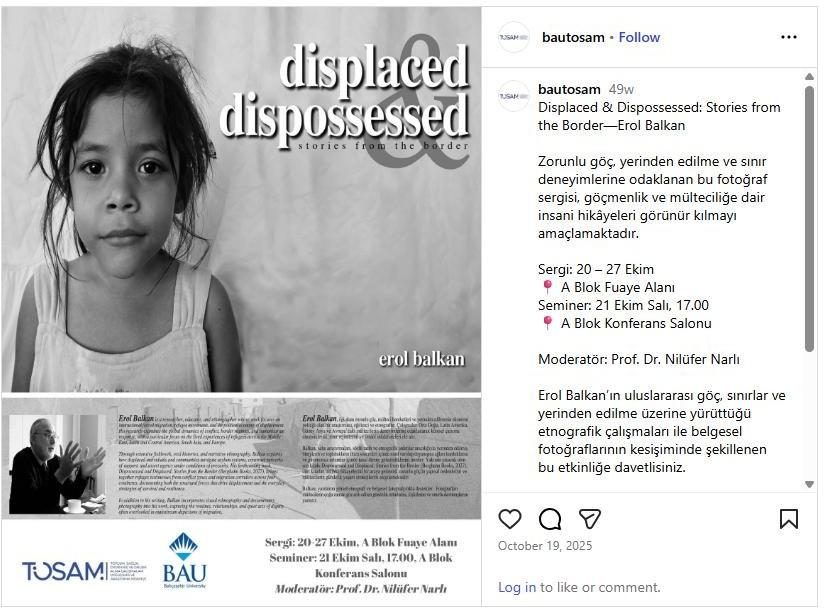
On October 21, 2025, Bahçeşehir University (BAU) hosted “Displaced & Dispossessed: Stories from the Border” on its campus, a seminar and documentary photography exhibition open to the general public, including individuals beyond the University's students and staff, exploring forced migration, displacement, and the human experiences of people living and travelling across borders. The event brought together academic research, documentary photography, and public discussion to raise awareness of migration-related challenges and their wider social, environmental, and human rights implications.
Designed as a public educational and cultural event, the seminar and exhibition provided an opportunity to engage with issues of international migration, inequality, and human security beyond formal classroom settings. By combining scholarly perspectives with visual storytelling, the initiative made complex global challenges more accessible to a wider audience and encouraged informed public dialogue.
Moderated by Prof. Dr. Nilüfer Narlı, the seminar featured Prof. Dr. Erol Balkan, who presented findings from his ethnographic research alongside documentary photographs capturing the experiences of migrants travelling along La Bestia, a dangerous freight train route used by migrants crossing Mexico. Through personal narratives and visual documentation, the presentation highlighted the risks, uncertainties, and vulnerabilities encountered by individuals forced to leave their homes in search of safety and better living conditions.
The discussion examined the interconnected factors driving migration from Central America, including climate-related pressures, gang violence, socioeconomic inequalities, and threats to human security. By placing individual experiences within broader structural and political contexts, the event encouraged participants to consider the complex causes and consequences of displacement, as well as the challenges faced by migrants in accessing safety, protection, and fundamental rights.
The accompanying documentary photography exhibition extended the educational experience beyond the seminar itself. Through visual accounts of migrants' journeys, the exhibition offered an additional opportunity for reflection, helping audiences engage with the human dimensions of displacement and the lived realities behind global migration debates.
As a publicly accessible seminar and exhibition, the initiative contributed to SDG 4 (Quality Education) by providing learning opportunities outside formal academic curricula and promoting public understanding of migration, human rights, and global social challenges. It also supported SDG 10 (Reduced Inequalities) by drawing attention to the vulnerabilities and inequalities experienced by displaced populations, SDG 13 (Climate Action) by exploring climate-related drivers of migration, and SDG 16 (Peace, Justice and Strong Institutions) through its focus on violence, human security, and the protection of fundamental rights.
Through this combination of academic knowledge, documentary evidence, and public engagement, Bahçeşehir University reinforced its role in making research-based knowledge accessible to the general public, including individuals outside the University, and fostering lifelong learning on pressing global issues.
8- Open Educational Talk: Understanding South Korean Politics and Its Recent Crisis
The image below presents the official promotional poster for the public educational talk “Understanding South Korean Politics and Its Recent Crisis,”
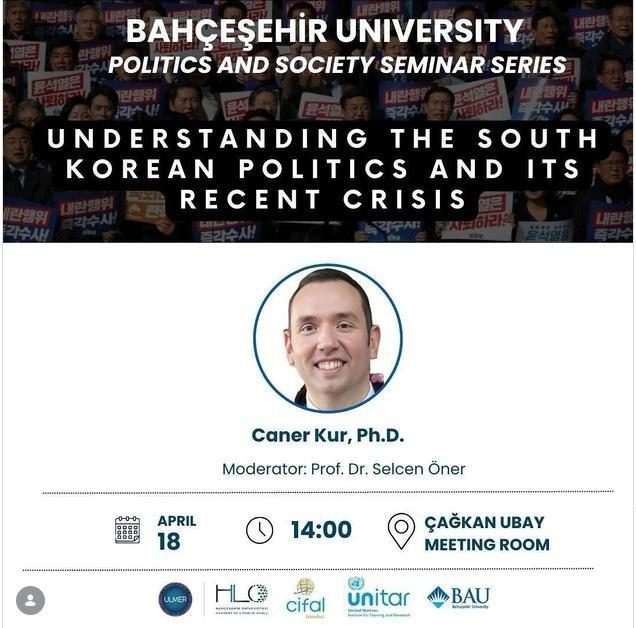
On April 18, 2025, Bahçeşehir University (BAU), through its Department of Political Science and International Relations, organized a public educational talk titled “Understanding South Korean Politics and Its Recent Crisis” on its campus. Open to the general public, including individuals beyond the BAU academic community, the event provided an opportunity to explore South Korea's contemporary political landscape, recent institutional challenges, and the broader implications of political instability for democratic governance.
The talk examined the political and institutional dynamics underlying South Korea's recent crisis, encouraging participants to consider how democratic institutions respond to periods of uncertainty and political tension. Particular attention was given to the importance of constitutional principles, the rule of law, political accountability, and institutional checks and balances in maintaining democratic stability.
By placing developments in South Korea within a broader political science perspective, the discussion encouraged participants to reflect on the relationship between democratic governance, institutional resilience, and public trust. The event also provided an opportunity to develop a deeper understanding of how political systems respond to institutional challenges and the mechanisms available to safeguard democratic processes.
Importantly, the talk was publicly accessible and not restricted to enrolled BAU students, extending opportunities for political education and informed discussion beyond formal university curricula. By sharing academic perspectives on international political developments with the wider community, the initiative supported public understanding of democratic institutions, critical thinking, and lifelong learning.
The event contributes directly to SDG 4 (Quality Education) by providing publicly accessible educational opportunities focused on political literacy, democratic governance, and international affairs. It also strongly supports SDG 16 (Peace, Justice and Strong Institutions) by promoting awareness of the rule of law, accountable governance, and the importance of resilient institutions in responding to political crises.
Through this public educational initiative, Bahçeşehir University reinforced its role in making academic knowledge accessible beyond the university community and encouraging informed engagement with contemporary political and institutional challenges.
9- Public Educational Panel: Transforming Consumption Culture – Sustainable Choices and Impacts
The image below presents the official promotional poster for the public educational panel “Transforming Consumption Culture: Sustainable Choices and Impacts,” highlighting its speakers, date, and focus on sustainability education and responsible consumption.
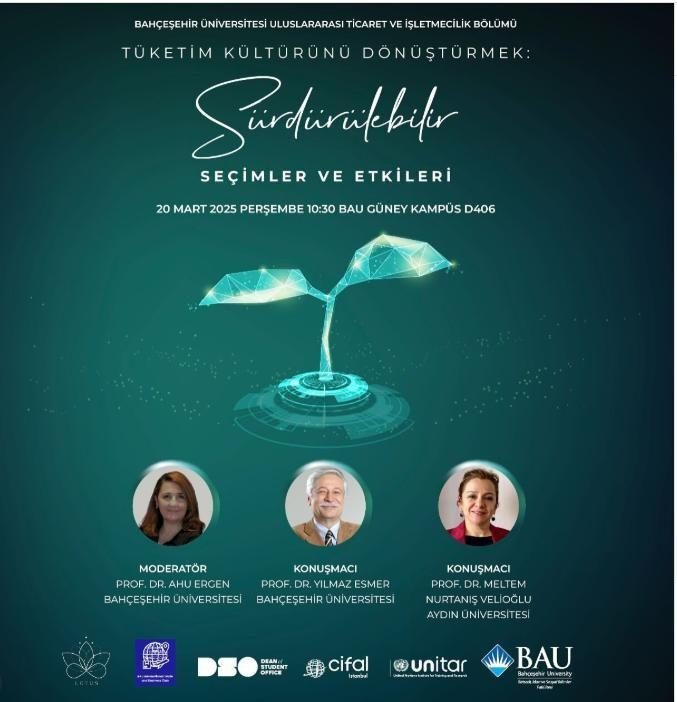
On March 20, 2025, Bahçeşehir University (BAU), through its Department of International Trade and Business, organized a public educational panel titled “Transforming Consumption Culture: Sustainable Choices and Impacts.” Held on BAU’s campus, the panel was open to the general public, including individuals beyond the BAU community, and provided an opportunity to explore the relationship between consumption habits, cultural values, sustainability, and their implications for environmental and societal well-being.
Moderated by Prof. Dr. Ahu Ergen, the panel featured Prof. Dr. Yılmaz Esmer and Prof. Dr. Meltem Nurtanış Velioğlu, who shared academic perspectives on changing consumption patterns, societal values, and the importance of sustainable choices. Through expert presentations and discussion, participants examined how consumption behaviors are shaped by cultural expectations and evolving attitudes toward environmental and social responsibility.
The panel addressed responsible consumption, ethical decision-making, and sustainable lifestyles, encouraging participants to reflect on the long-term consequences of everyday consumption choices. The discussion also explored the connections between individual behavior, collective well-being, and the broader environmental and social impacts of consumption.
Importantly, the event was accessible to the wider public and was not restricted to enrolled BAU students, extending opportunities for sustainability education beyond formal university curricula. By making academic expertise available to individuals from different educational and professional backgrounds, the panel supported public awareness, critical thinking, and lifelong learning on issues directly relevant to everyday life.
The initiative contributes directly to SDG 4 (Quality Education) by providing publicly accessible educational opportunities and promoting education for sustainable development. It also supports SDG 12 (Responsible Consumption and Production) by encouraging awareness of sustainable consumption patterns and responsible choices, and SDG 3 (Good Health and Well-being) through its consideration of the relationship between consumption practices and long-term societal well-being.
Through this public educational initiative, Bahçeşehir University reinforced its commitment to sharing academic knowledge beyond the university community and promoting informed, responsible participation in building a more sustainable society.
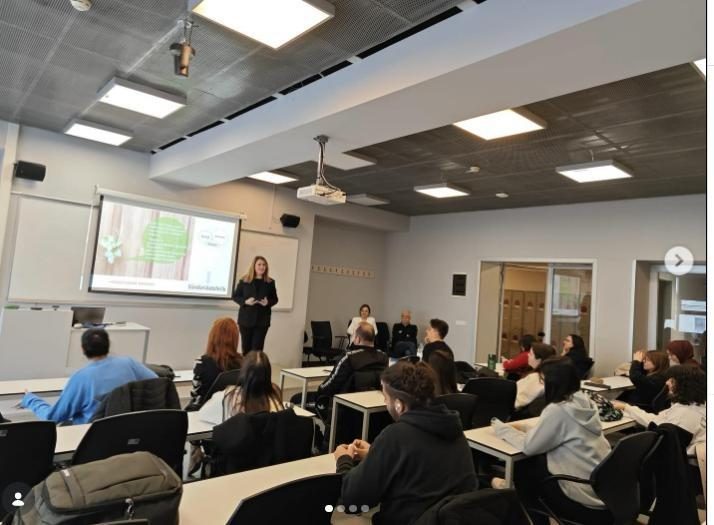
The image below presents highlights from the public panel, documenting the expert presentations, discussions, and knowledge-sharing activities aimed at promoting awareness of sustainable consumption and responsible choices among participants.
10- Open Lecture: “What Is Social Benefit?
The images below present the promotional materials and highlights from the open lecture "What Is Social Benefit?", organized by Bahçeşehir University in collaboration with the Community Volunteers Foundation (TOG).
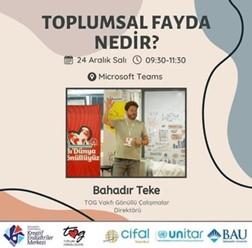
In the 2024-2025 academic year, as part of its commitment to providing public access to educational activities and promoting lifelong learning beyond formal university education, Bahçeşehir University (BAU), in collaboration with the Community Volunteers Foundation (TOG), organized the open lecture "What Is Social Benefit?" The event was hosted on BAU's campus and was open to the general public, welcoming students and members of the wider community to engage in discussions on social responsibility, volunteering, and civic participation.
The lecture explored key concepts related to social benefit, social impact, volunteerism, and community engagement, highlighting how individuals, institutions, and civil society organizations can contribute to addressing societal challenges. Through discussions and practical examples, participants were introduced to different approaches to collective action, social inclusion, and sustainable community development.
By organizing the lecture in collaboration with a civil society organization and making it accessible to individuals outside the University's enrolled student population, BAU extended opportunities for knowledge exchange and public learning beyond the formal classroom. The event also encouraged dialogue between the academic community and wider society, strengthening awareness of the role of volunteering and civic engagement in addressing social challenges.
Through such publicly accessible educational events, Bahçeşehir University reinforces its commitment to sharing knowledge with the wider community, encouraging active citizenship, and supporting inclusive lifelong learning opportunities, directly contributing to SDG 4 (Quality Education).
11- Sustainability and New Technologies in Creative Industries: 3D Printing Open Workshop
The image below presents the official promotional poster for Bahçeşehir University's open workshop, “Sustainability and New Technologies in Creative Industries: 3D Printing,” highlighting the University's commitment to providing publicly accessible educational opportunities in sustainable design and emerging technologies.
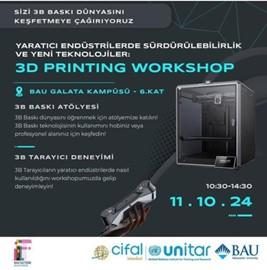
During the 2024–2025 academic year, Bahçeşehir University (BAU) hosted the “3D Printing and Innovation” Open Workshop at its Galata Campus. Organized as part of the University's commitment to expanding public access to educational activities, promoting technological literacy, and supporting lifelong learning, the workshop introduced participants to the fundamentals of 3D printing technology and its applications in sustainable production and design. The workshop was open to both BAU students and members of the general public, with no university enrollment or affiliation requirements, providing free access to practical, university-level learning opportunities for individuals from diverse educational and professional backgrounds.
Through a combination of theoretical instruction and hands-on activities, participants explored the key stages of the 3D printing process, from digital design and modeling to prototype development and production. The workshop also introduced environmentally conscious approaches to additive manufacturing, including the use of sustainable materials and techniques aimed at improving resource efficiency.
By opening practical technology education to the wider public free of charge, BAU enabled individuals beyond its enrolled student population to engage directly with emerging technologies, develop new competencies, and benefit from the University's academic expertise. The initiative demonstrates Bahçeşehir University's commitment to removing financial and institutional barriers to educational participation and extending learning opportunities beyond the traditional classroom.
Through this publicly accessible educational initiative, BAU contributes directly to SDG 4 (Quality Education) by expanding opportunities for inclusive, practice-oriented lifelong learning, while also supporting SDG 9 (Industry, Innovation and Infrastructure) and SDG 12 (Responsible Consumption and Production) through its focus on sustainable technological innovation and responsible production practices.
12- Bahcesehir University Radio Fest: Open Seminar on Animal Welfare in the Context of Sustainable Development Goals
The image below presents the official promotional material for the “Animal Welfare in the Context of the SDGs” session held during BAU Radio Fest, documenting the University's public educational engagement on animal welfare and sustainable development.
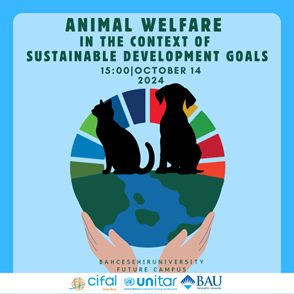
In the 2024-2025 academic year, as part of BAU Radio Fest, Bahçeşehir University (BAU), in collaboration with CIFAL Istanbul, UNITAR, and HAÇİKO, organized a free and publicly accessible educational session titled “Animal Welfare in the Context of the SDGs” at BAU Future Campus. The session was open to both BAU students and members of the general public, providing an opportunity for individuals beyond the University's enrolled student population to engage in discussions on animal welfare, sustainability, and social responsibility without any participation fee or university affiliation requirement.
The session explored the relationship between animal welfare and sustainable development, examining how ethical responsibility, compassion, and community engagement contribute to more inclusive, sustainable, and livable urban environments. Particular attention was given to the protection and welfare of stray animals, responsible coexistence between humans and animals, and the importance of public awareness in addressing animal welfare challenges.
Through discussions connecting animal welfare with the United Nations Sustainable Development Goals (SDGs), participants gained insights into the role of individuals, civil society organizations, and local communities in promoting responsible and sustainable practices. The session particularly highlighted the relevance of SDG 11 (Sustainable Cities and Communities) and SDG 15 (Life on Land), encouraging participants to consider how civic participation and collective action can contribute to more sustainable communities.
By welcoming members of the general public to an educational event hosted on its campus,BAU extended opportunities for learning and knowledge exchange beyond formal university education. The event brought together academic perspectives and civil society engagement, helping participants develop a broader understanding of the connections between animal welfare, environmental sustainability, and social responsibility.
This initiative reflects Bahçeşehir University's commitment to SDG 4 (Quality Education) by providing free, publicly accessible learning opportunities that promote sustainability literacy, ethical awareness, and active citizenship.
13- Open Seminar on Walt Disney World Orlando’s 2025 Marketing Strategy
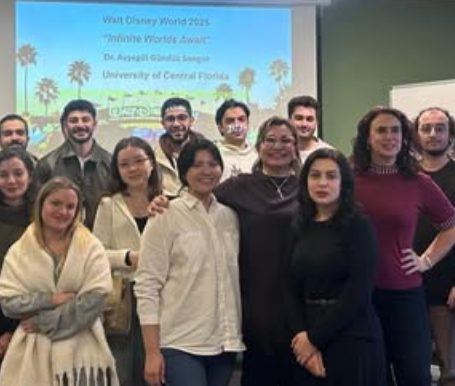
As part of the BAU Advertising TADA Events, Bahçeşehir University (BAU) organized a publicly accessible guest lecture hosted by Assoc. Prof. Dr. Hande Bilsel, featuring Dr. Ayşegül Gündüz Songur from the University of Central Florida's Rosen College of Hospitality Management. Held on BAU's campus in connection with the Advertising and Popular Culture course, the event extended opportunities for academic learning and international knowledge exchange beyond conventional classroom instruction.
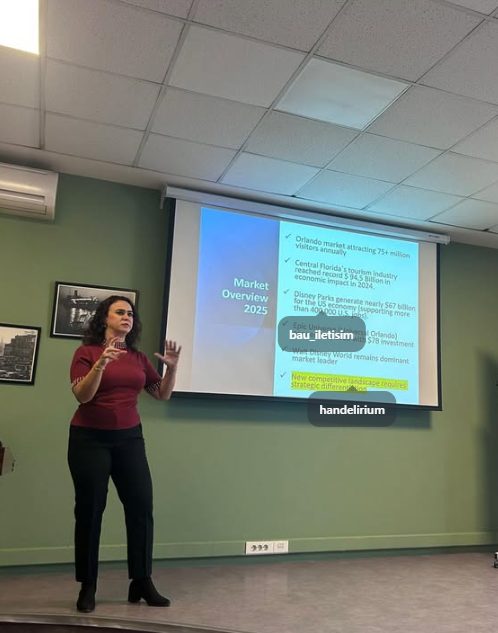
The lecture explored Walt Disney World Orlando's 2025 marketing strategy, providing participants with insights into contemporary advertising practices, strategic marketing communication, tourism marketing, and the relationship between popular culture and brand development. Drawing on an internationally recognized industry example, Dr. Gündüz Songur examined how marketing strategies respond to evolving consumer expectations, audience engagement, and developments in the entertainment and tourism sectors.
By connecting academic perspectives with practical industry examples, the session offered participants an opportunity to deepen their understanding of marketing strategy and the broader communication landscape. The discussion encouraged critical thinking about the relationship between advertising, entertainment, tourism, and popular culture while introducing approaches relevant to both academic learning and professional development.
As a public educational event, the lecture reflected BAU's commitment to sharing academic expertise and facilitating access to international perspectives on communication and marketing. By creating opportunities for knowledge exchange beyond regular course instruction, the initiative supported broader engagement with university-level educational content and professional insights.
The event contributed to SDG 4 (Quality Education) by promoting publicly accessible educational activities, practice-oriented learning, and knowledge sharing. It also supported SDG 17 (Partnerships for the Goals) through international academic exchange between Bahçeşehir University and a faculty member from the University of Central Florida.
The images below present highlights from the BAU Advertising TADA guest lecture, featuring Dr. Ayşegül Gündüz Songur's session on Walt Disney World Orlando's 2025 marketing strategy and illustrating the knowledge-sharing and educational engagement fostered through this public event.
14- Bahcesehir University Innovation Focus Open Training Program 2024 - 2025
The images below present the official promotional posters for the 7th and 8th editions of the BAU Innovation Focus Open Training Program, highlighting the speakers, session schedules, and educational content offered through these free and publicly accessible training opportunities.
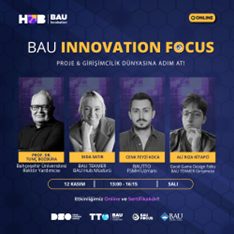
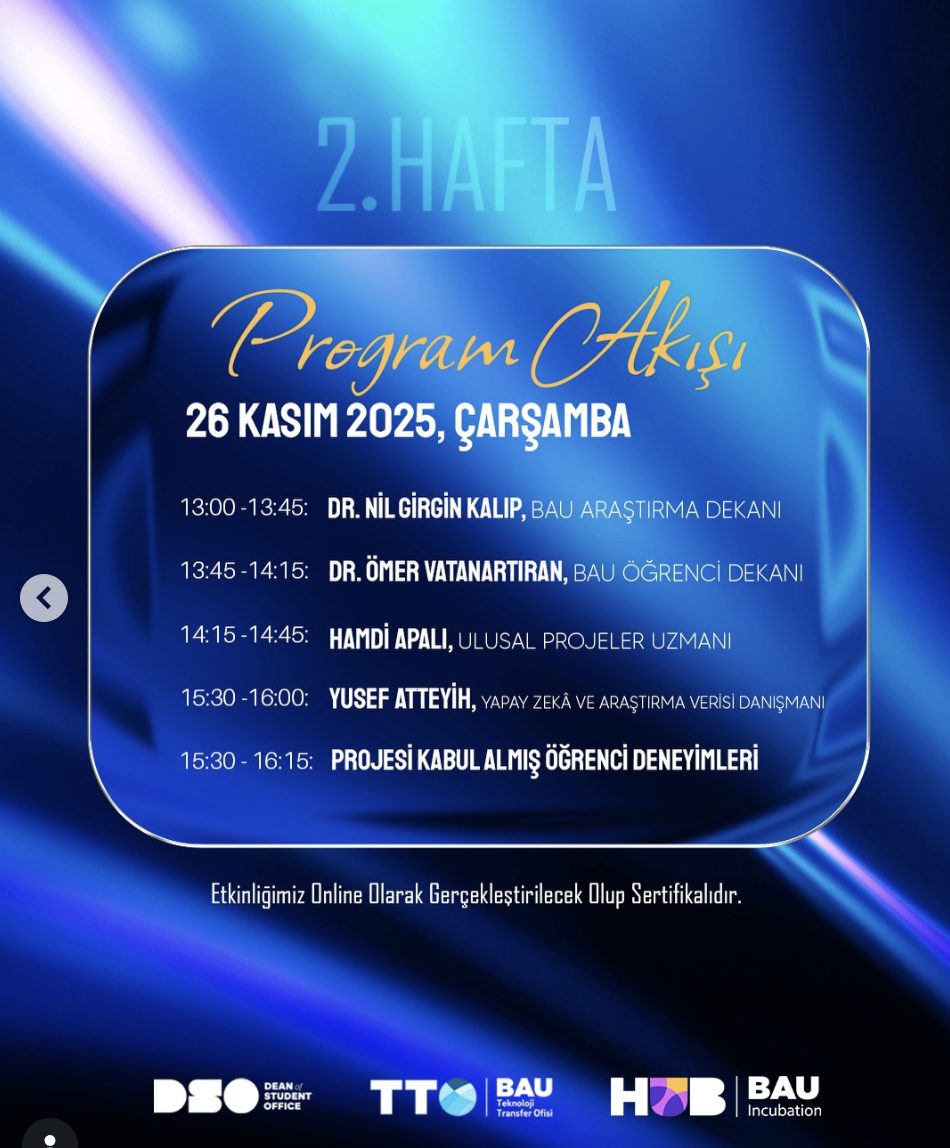
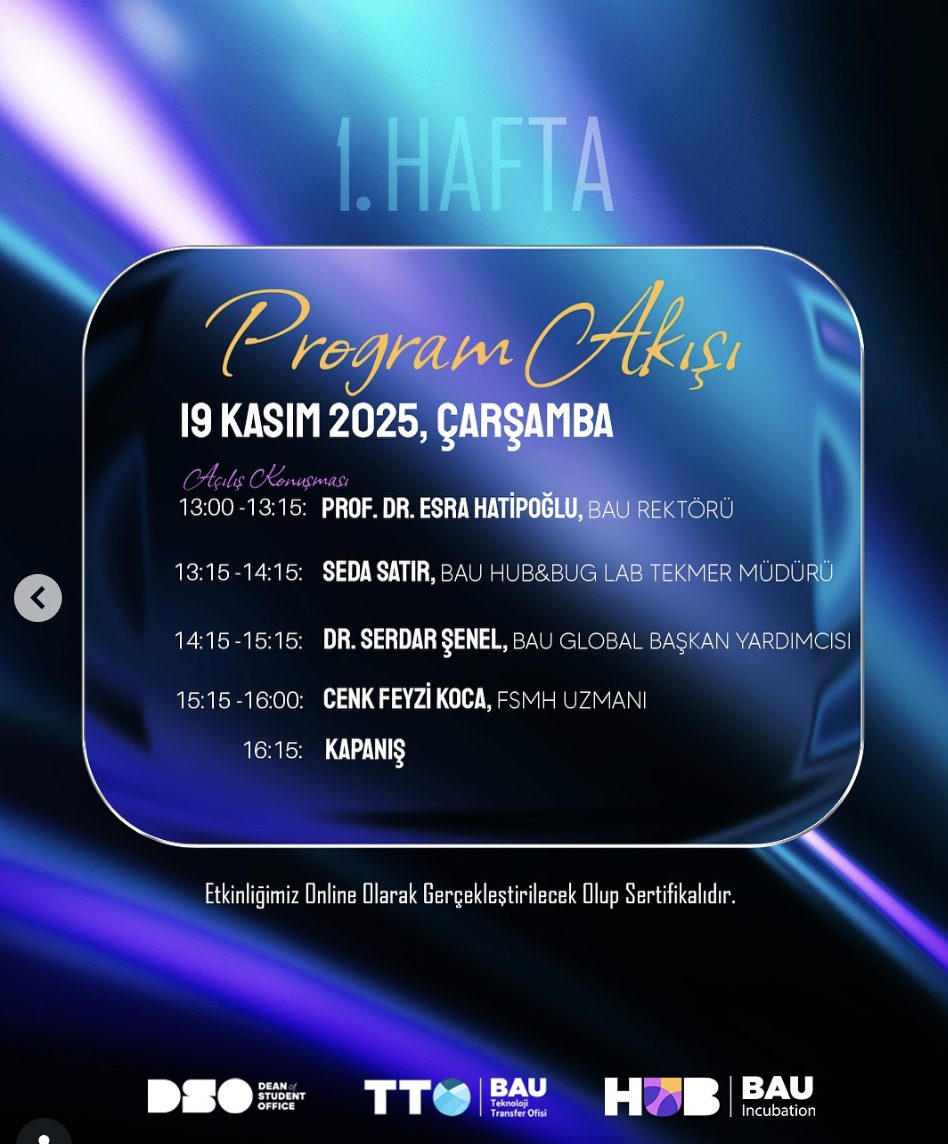
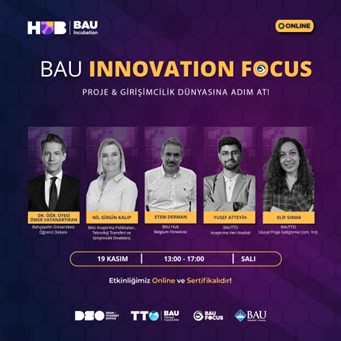
During the 2024–2025 academic year, Bahçeşehir University (BAU), through its BAU Hub Incubation Center and in collaboration with the BAU Technology Transfer Office (TTO), organized the 7th and 8th editions of the BAU Innovation Focus Program. Offered free of charge and accessible to participants beyond the University's enrolled student population, the program provided educational opportunities for students, young professionals, aspiring entrepreneurs, and members of the wider community interested in entrepreneurship and innovation.
The program aimed to expand public access to practical knowledge and expertise in entrepreneurship, innovation, project development, intellectual property, patent application processes, and available funding and support mechanisms. Through interactive presentations, training sessions, and experience-sharing activities, participants were introduced to essential concepts and practical approaches for transforming innovative ideas into viable projects and entrepreneurial initiatives.
The 7th and 8th editions of the BAU Innovation Focus Program were held on November 12, 2024, and November 19- 26, 2025, respectively, offering free and publicly accessible training sessions on entrepreneurship, innovation, and project development.
The two editions, held during the reporting period, provided educational sessions addressing key aspects of entrepreneurship and innovation, including:
Idea generation and validation: Identifying innovative opportunities and evaluating their potential.
Project development: Structuring ideas and preparing effective project proposals.
Entrepreneurship and business modeling: Understanding the fundamentals of establishing and developing entrepreneurial initiatives.
Funding and intellectual property: Exploring available incentives, financial support mechanisms, and patent application processes.
Practical experience and knowledge sharing: Learning from entrepreneurial experiences, including examples involving BAU entrepreneurs and alumni.
By combining theoretical knowledge with practical guidance and real-world experiences, the program enabled participants to develop entrepreneurial competencies, creative problem-solving skills, and a better understanding of the innovation ecosystem. Its interactive format also encouraged dialogue, knowledge exchange, and connections among individuals with different educational and professional backgrounds.
Importantly, participation was completely free and did not require enrollment at or affiliation with Bahçeşehir University, extending access to university-based entrepreneurship education beyond formal academic programs. Through this initiative, BAU shared its institutional expertise and innovation resources with the wider community, supporting individuals seeking to develop new skills, explore entrepreneurial opportunities, and participate in the knowledge economy.
The BAU Innovation Focus Program demonstrates the University's commitment to SDG 4 (Quality Education) by providing free, publicly accessible lifelong learning opportunities, while also contributing to SDG 8 (Decent Work and Economic Growth) and SDG 9 (Industry, Innovation and Infrastructure) through entrepreneurship education and innovation capacity building.
15- Netflix x Bahcesehir University: Collaborative Pathways for Innovation in Communication and Media
The image below presents the official promotional poster for the “Netflix x Bahçeşehir University: Collaborative Pathways for Innovation in Communication and Media” open lecture, highlighting the event's educational focus and university–industry collaboration.
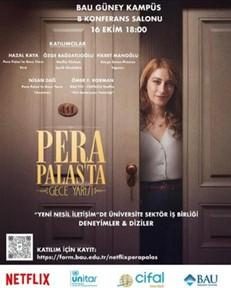
In the 2024-2025 academic year, Bahçeşehir University (BAU), in collaboration with Netflix, organized an open educational lecture exploring the growing importance of partnerships between universities and the communication and media industries. Held on university premises and designed to extend learning opportunities beyond formal university education, the event welcomed BAU students, young professionals, and members of the wider general public interested in communication, digital media, creative industries, and technological innovation.
The lecture examined how collaboration between academia and industry contributes to innovation, knowledge exchange, and professional development within the rapidly evolving communication sector. Discussions addressed the transformative impact of emerging communication technologies, the relationship between academic research and industry practices, and the role of creative content, including television series and digital productions, in shaping new approaches to communication, storytelling, and audience engagement.
Through insights shared by industry professionals, participants gained a deeper understanding of current developments in the media and entertainment sectors, emerging professional opportunities, and the skills required to navigate an increasingly digital communication landscape. The session also highlighted how partnerships between universities and leading industry organizations can bridge theoretical knowledge and practical experience, encouraging innovation and creative problem-solving.
Importantly, the lecture was open to individuals beyond BAU's enrolled student population, providing an opportunity for members of the wider community to engage with industry expertise, explore developments in communication and media, and benefit from university-organized educational activities. By facilitating direct interaction between academic and industry perspectives, BAU supported public knowledge sharing and lifelong learning beyond the traditional classroom.
This initiative reflects Bahçeşehir University's commitment to SDG 4 (Quality Education) by expanding access to publicly available educational events and professional knowledge, while also supporting SDG 9 (Industry, Innovation and Infrastructure) and SDG 17 (Partnerships for the Goals) through university–industry collaboration and innovation-oriented knowledge exchange.
16- Sustainable Logistics and Supply Chain Open Panel
The image below presents the official poster for the BAU “Sustainable Logistics and Supply Chain Open Panel.”
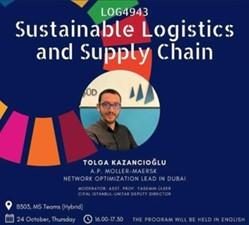
During the 2024–2025 academic year, Bahçeşehir University (BAU), in collaboration with CIFAL Istanbul and the United Nations Institute for Training and Research (UNITAR), organized a public educational panel focusing on sustainable logistics and supply chain management. Held on BAU's campus in a hybrid format, the event was open to the general public, welcoming both in-person attendees and online participants, including individuals beyond the University's academic community.
The panel focused on the importance of sustainable practices in logistics and supply chain management. Discussions explored strategies to reduce carbon emissions, enhance resource efficiency, and promote innovative logistics solutions addressing key challenges in the sector. Participants also examined the role of sustainable supply chains in advancing responsible production, climate action, biodiversity protection, and sustainable infrastructure development.
By hosting this publicly accessible educational event on its campus while also enabling online participation, Bahçeşehir University extended opportunities for knowledge-sharing and lifelong learning beyond formal university education. The initiative contributes to SDG 4 (Quality Education) by promoting public access to educational activities, while also supporting SDG 9 (Industry, Innovation and Infrastructure), SDG 12 (Responsible Consumption and Production), and SDG 13 (Climate Action) through its focus on sustainable logistics and environmentally responsible business practices.
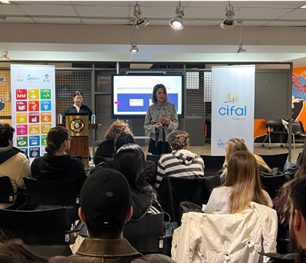
17-Zero Tolerance for Violence: A Campus-Based Seminar Series Open to Students from All Universities
The images below show the promotional posters of the “Zero Tolerance for Violence on My Campus” seminar series organized by Bahcesehir University in collaboration with CIFAL Istanbul, UNITAR and Yanındayız Association.
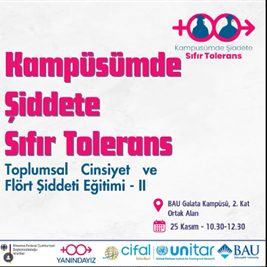
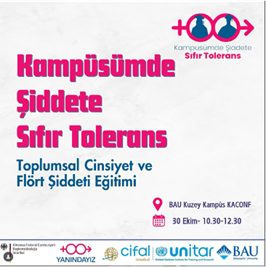
Held during the 2024-2025 academic year, the project “Zero Tolerance to Violence on My Campus”, hosted by Bahcesehir University (BAU) in collaboration with CIFAL Istanbul and UNITAR, and supported by the Yanındayız Association and the Consulate General of the Federal Republic of Germany in Istanbul, aimed to raise awareness about dating violence and to promote gender-sensitive approaches within higher education environments.
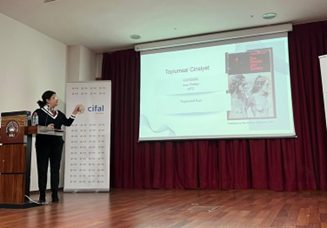
All three sessions of the initiative were held on Bahçeşehir University's campus, comprising interactive training sessions, workshops, and a public panel open to students from all universities, including those outside the BAU academic community. These activities created a participatory platform for developing concrete solutions, encouraging gender equality, reducing inequalities, and fostering cooperation across institutions and communities.
The images illustrate the implementation of the “Zero Tolerance for Violence on My Campus” seminar series, showcasing awareness-raising and capacity-building sessions conducted within the framework of the project.
18- Politics and Society Seminar Series: A Public Discussion on Justice and Gender in Istanbul’s Local Governance Through Studying Up and Scorecard Analysis
The image below illustrates the poster of the “Politics and Society Seminar Series” event held at Bahcesehir University, focusing on gender justice and inclusive local governance.
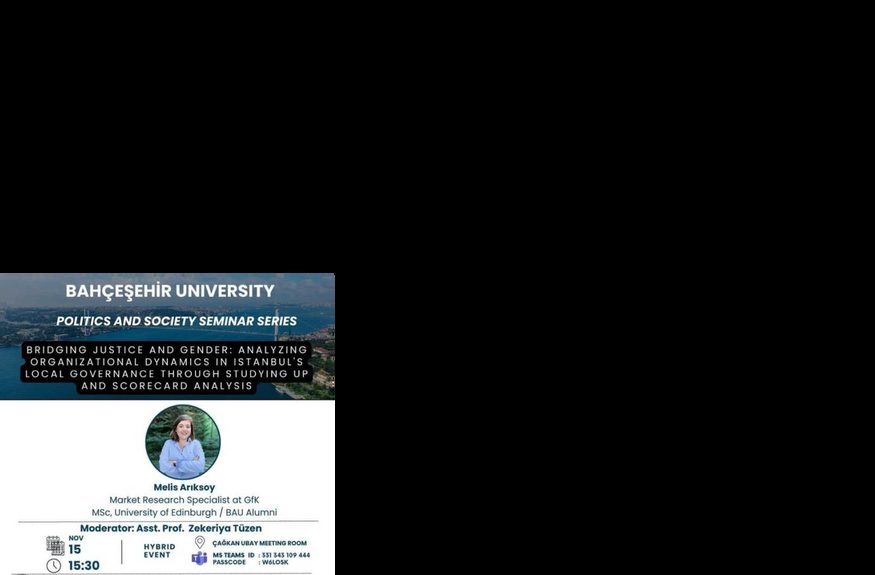
During the 2024–2025 academic year, Bahçeşehir University (BAU) organized a public seminar on its campus, focusing on gender justice and the organizational dynamics within local governments. Held in a hybrid format and open to the general public, the event welcomed in-person attendees while also enabling interested individuals to participate online. The seminar provided a learning platform for local government representatives, policymakers, academics, students, and members of the wider community.
With BAU alumna Melis Arıksoy as guest speaker, the session explored the relationship between fairness in governance structures, gender equality, and the creation of inclusive decision-making environments. Discussions highlighted how equitable representation and transparent processes contribute to stronger democratic governance.
The seminar also emphasized the role of education, dialogue, and institutional capacity-building in advancing gender-sensitive policies at the local level. By engaging practitioners, academics, public officials, and members of the general public, the event aimed to strengthen awareness, promote cooperation, and encourage practical strategies for building inclusive and gender-responsive institutions.
19- Invisible Chains: Multidimensional Strategies To End Modern Slavery Open Panel
The image below shows the promotional poster of the open panel “Invisible Chains: Multidimensional Strategies to End Modern Slavery.”
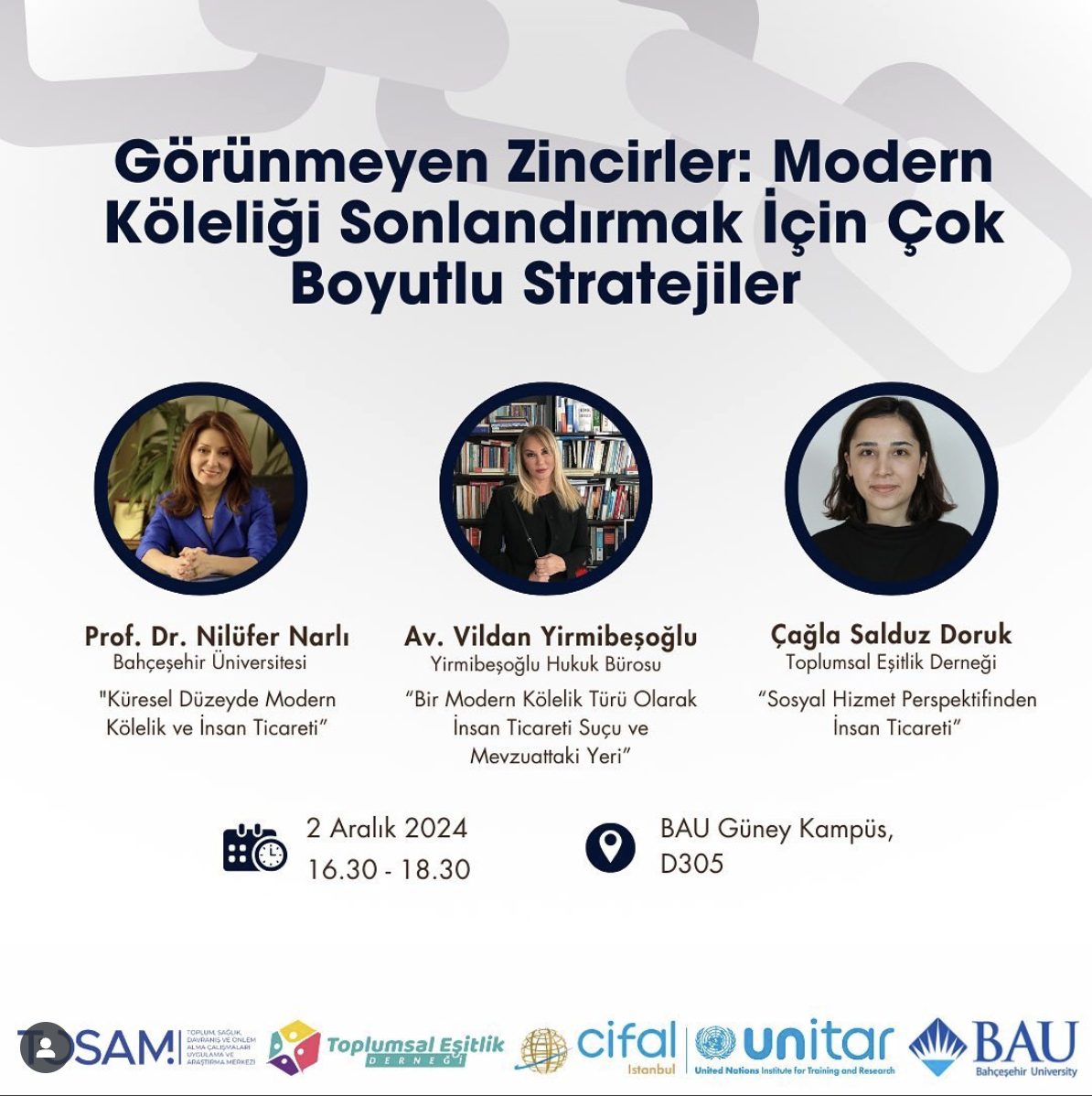
During the 2024–2025 academic year, Bahçeşehir University (BAU), in collaboration with the Social Equality Association, organized an educational event in recognition of the International Day for the Abolition of Slavery. Held on BAU's campus and open to the general public, including individuals outside the University community, the event addressed human trafficking and modern slavery from a multidimensional and policy-oriented perspective, bringing together students, academics, policymakers, and members of the wider community for an open and educational discussion.
Speakers explored the global and local dimensions of these critical issues, emphasizing the importance of reducing inequalities, promoting peace and justice, and strengthening institutional frameworks to combat exploitation. The panel also provided participants with valuable educational insights into the social, economic, and legal aspects of modern slavery, fostering awareness and collaboration across sectors in the fight for human dignity and equality.
20- Open Panel: Politics and Society Seminar Series: A Second Trump Term, What It Means For The US and The World
The image below shows the promotional poster of the “Politics and Society Seminar Series” open panel titled “A Second Trump Term: What It Means for the US and the World.”
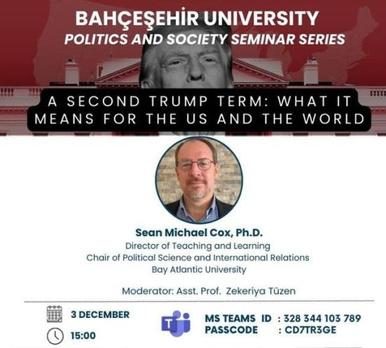
During the 2024-2025 academic year, organized by Bahcesehir University and held on its campus during the 2024-2025 academic year, this seminar examined the potential impacts of a second Trump administration on both domestic politics and international affairs. The event provided an analytical platform for discussing how a renewed U.S. leadership under Donald Trump could influence global governance, peace, and justice, as well as the broader dynamics shaping international stability.
Held as a free and public seminar open to all interested participants, the session encouraged open dialogue and critical reflection on contemporary political developments, fostering a deeper understanding of their implications for global order and democratic values.
21- Women' s Human Rights and Participatory Democracy
The image below shows the promotional poster of Women’s Human Rights and Participatory Democracy webinar.
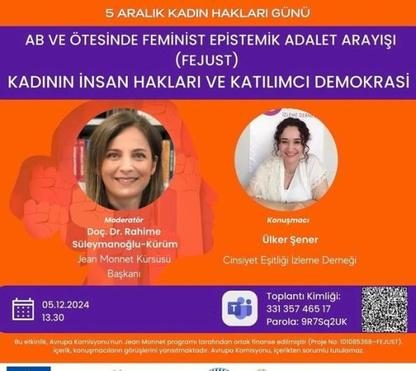
As part of Women’s Rights Day, Bahcesehir University (BAU), CIFAL Istanbul, UNITAR, the Gender Equality Monitoring Association (FEJUST), and BAU’s Political Science and International Relations Club jointly organized the webinar “Women’s Rights and Participatory Democracy” during the 2024-2025 academic year.
The event explored the interconnections between women’s rights and inclusive democratic participation, highlighting the importance of empowering women in civic and political life. Through engaging discussions and expert contributions, the webinar encouraged strategies to reduce inequalities, promote active citizenship, and strengthen democratic inclusion.
Held as a free and public event, the session fostered awareness and dialogue among students, academics, and professionals committed to advancing gender equality and participatory governance.
22- Bahcesehir University Open Discuss: Sexual Health Talks – Session I: Media, Representation, and Social Awareness
The images below show the promotional poster and a group photo of the first session of the “Sexual Health Talks” series titled “Media, Representation, and Social Awareness.
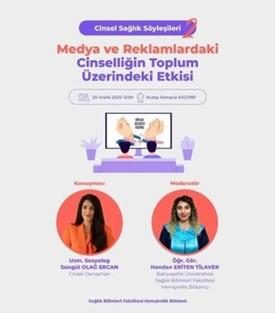
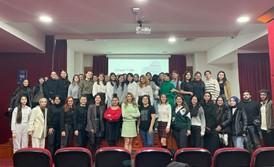
During the 2024–2025 academic year, the first session of the Sexual Health Talks, organized by CIFAL Istanbul, the United Nations Institute for Training and Research (UNITAR), and Bahçeşehir University's Faculty of Health Sciences, Department of Nursing, was held on BAU's campus. The event brought together Sociologist Songül Olağ Ercan and Lecturer Handan Eriten Tilaver for an insightful discussion on how sexuality is represented in media and advertising and how these portrayals influence social perceptions and behaviors.
The session emphasized the critical importance of accurate information, open dialogue, and comprehensive education in promoting sexual health and well-being. Participants explored the relationship between media narratives and public attitudes, discussing how education and awareness can challenge stereotypes and foster healthier perspectives on sexuality.
Held as a free and public event open to everyone, the session aimed to increase social awareness and understanding around sexual health, supporting inclusive education, public engagement, and community well-being in alignment with the United Nations' Sustainable Development Goals.
23- FEASS Research Seminars: Supervising In The Age Of AI, Navigating Student Use Of ChatGPT In Graduate and Undergraduate Work
The image below shows the promotional poster of the “FEASS Research Seminars” session titled Supervising in the Age of AI: Navigating Student Use of ChatGPT in Graduate and Undergraduate Work.
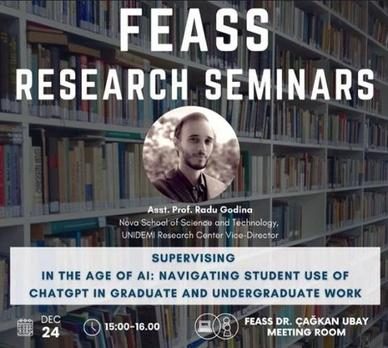
In the 2024-2025 academic year, on 24 December, as part of its commitment to providing free and publicly accessible educational activities and promoting lifelong learning, Bahçeşehir University (BAU) organized an open educational session at its campus on the integration of artificial intelligence (AI) into academic advising and higher education. The event was free of charge and open to the general public, including BAU students, students from other institutions, and individuals interested in educational technologies, extending opportunities for learning and knowledge exchange beyond the University's enrolled student population.
The session explored the opportunities and challenges of integrating AI tools into academic advising, focusing on how emerging technologies can enhance learning experiences, improve access to academic guidance, and support innovative approaches to education and research. Speakers discussed the transformative potential of artificial intelligence in higher education, from personalized learning and data-driven student support to the ethical considerations surrounding its implementation.
Through expert discussions and practical examples, participants gained insights into how AI can strengthen the relationship between technology and pedagogy, improve educational accessibility, and contribute to more inclusive learning environments. The session also encouraged critical reflection on responsible AI adoption, including issues related to data privacy, fairness, human oversight, and the appropriate use of emerging technologies in academic decision-making.
By making the session freely accessible to the wider public without requiring enrollment at or affiliation with Bahçeşehir University, BAU extended access to university-level knowledge and expertise beyond formal academic programs. The event provided an opportunity for students, educators, and interested members of the community to develop their understanding of artificial intelligence and its growing role in education.
Through this free and publicly accessible educational initiative, Bahçeşehir University reinforced its commitment to SDG 4 (Quality Education) by promoting lifelong learning, digital literacy, critical thinking, and inclusive access to knowledge.
The images below present the official promotional materials for the free public session on Artificial Intelligence in Academic Advising, highlighting the educational topics and learning opportunities made available to the wider community.
24- Bahcesehir University Open Workshop Newton and the Global Legacy of Newtonianism
The image below shows the promotional poster of the Newton and the Global Legacy of Newtonianism Open Workshop.
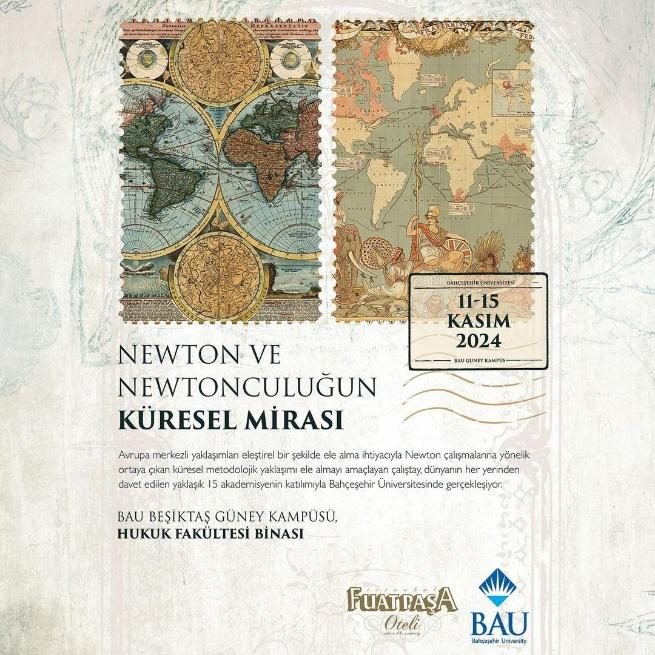
In the 2024–2025 academic year, Bahçeşehir University (BAU) hosted the international workshop “Newton and the Global Legacy of Newtonianism” between 11–15 November 2024 at its Beşiktaş South Campus, Faculty of Law Building. The workshop was open to the general public, welcoming interested individuals beyond the University's academic community.
The event brought together approximately 15 international scholars from diverse disciplines to critically examine Eurocentric approaches to Newtonian studies and to explore global methodological perspectives emerging in the field.
Through presentations and discussions, participants reflected on the cultural, philosophical, and scientific dimensions of Newtonianism, highlighting its enduring influence across different world regions. The workshop demonstrated Bahçeşehir University’s commitment to fostering international academic dialogue and advancing inclusive, cross-cultural perspectives in the history of science.
25- Bahcesehir University Creative Drama Workshop in Education
The image below shows the promotional poster of the “Creative Drama Workshop in Education,” organized by Bahcesehir University.
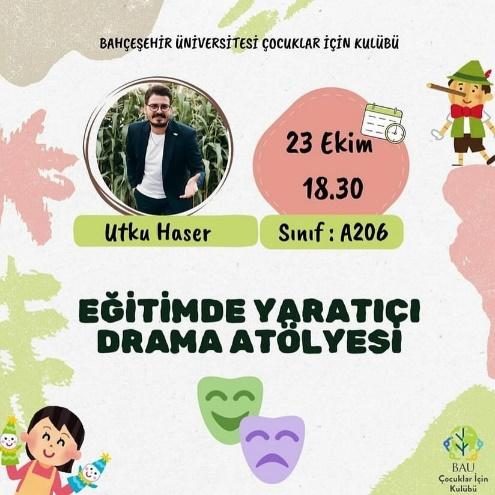
During the 2024–2025 academic year, Bahçeşehir University's (BAU) Children's Club organized the “Creative Drama Workshop in Education” on 23 October 2024 at BAU's Beşiktaş South Campus. Open to the general public, including participants from outside the University community, the workshop offered an opportunity to explore creative approaches to teaching and learning.
The session, led by Utku Haser, focused on the use
of creative drama as an innovative pedagogical method to enhance
learning experiences and student engagement.
The workshop provided participants with practical tools to integrate
drama techniques into educational contexts, fostering creativity,
communication, and emotional expression in teaching.
26- Open Panel: “War and Women: Examining Human Rights Violations in the Syrian Civil War”
The image below displays the official promotional poster for the open panel “War and Women: Examining Human Rights Violations in the Syrian Civil War,”
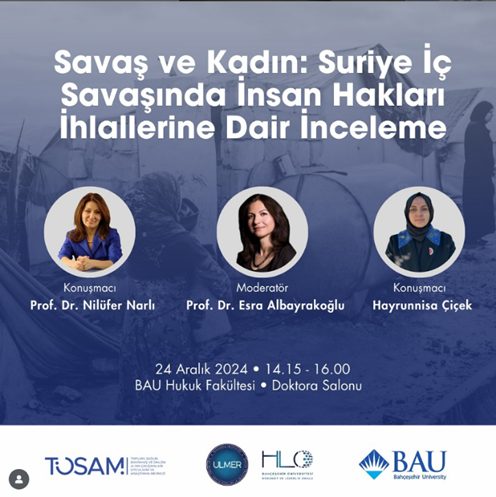
During the 2024–2025 academic year, on 24 December 2024, Bahçeşehir University (BAU) hosted a public panel at its Faculty of Law, jointly organized by BAU TOSAM (Center for Health, Society, Behavior, and Prevention Studies) and ULMER-HLO (Human Rights and Law Organization). Open to the general public, including individuals outside the University community, the panel examined the gendered dimensions of human rights violations during the Syrian Civil War. Moderated by Prof. Dr. Esra Albayrakoğlu, the event convened experts, academics, and practitioners to discuss the systemic effects of war on women’s rights and wellbeing.
Prof. Dr. Nilüfer Narlı presented an analysis of human rights violations against women during forced displacement, exploring the physical, psychological, and social impacts of armed conflict. Hayrunnisa Çiçek complemented this perspective with insights drawn from field research, shedding light on issues such as sexual violence, forced migration, and the long-term social marginalization of affected women.
By fostering an evidence-based dialogue on protection, justice, and empowerment, the panel directly contributed to SDG 5 by advocating for women’s rights and equality in conflict settings, SDG 10 by addressing the vulnerabilities and disparities faced by displaced populations, and SDG 16 by promoting human rights, accountability, and peacebuilding efforts through interdisciplinary collaboration and policy engagement
27- Promoting Lifelong Learning, Political Literacy and Civic Engagement: Bahçeşehir University Politics School 2025 Certificate Programme (2025)
The images below illustrate the promotional posters of the Politics School Certificate Programme, showcasing various guest speakers from different sessions.
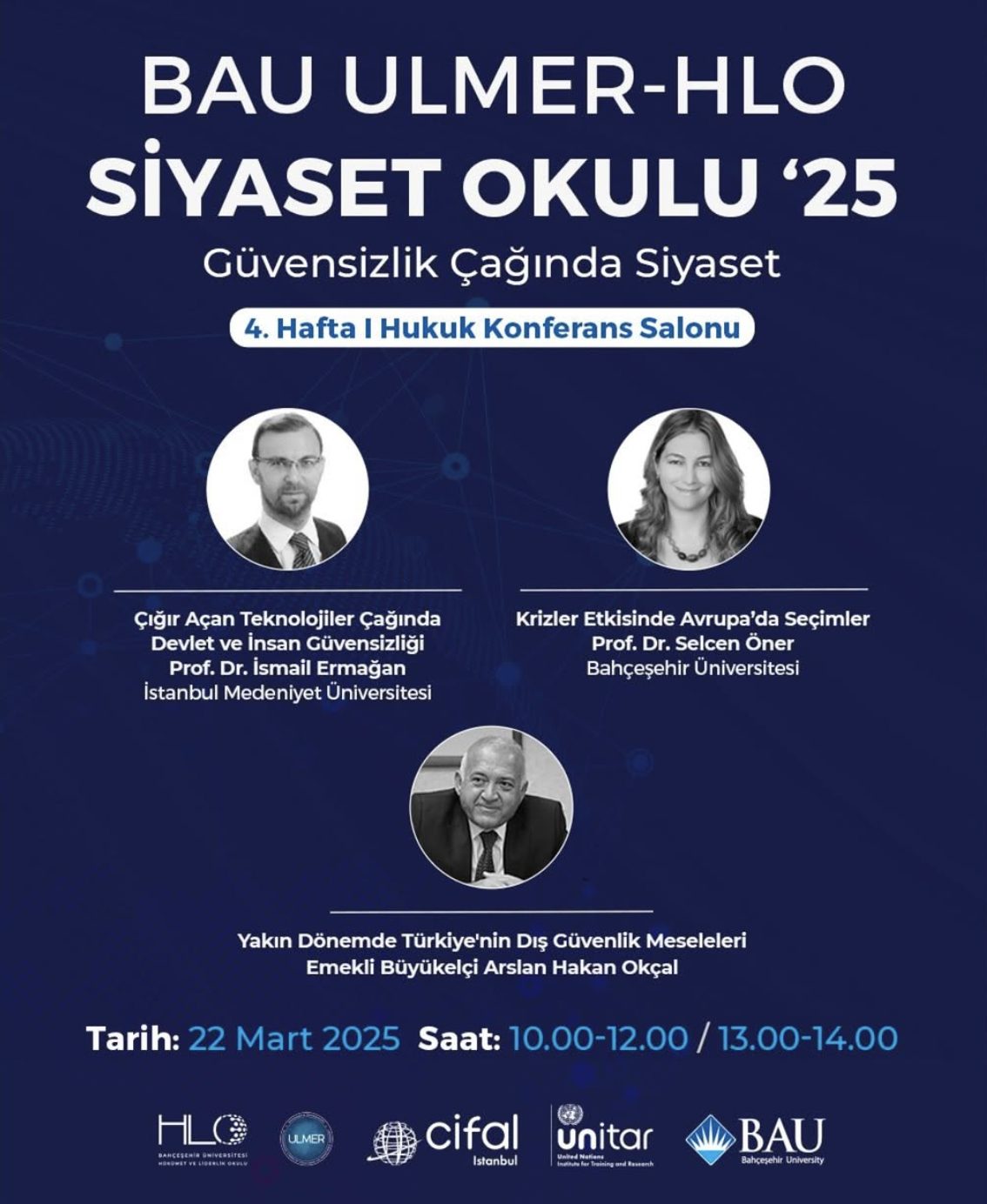
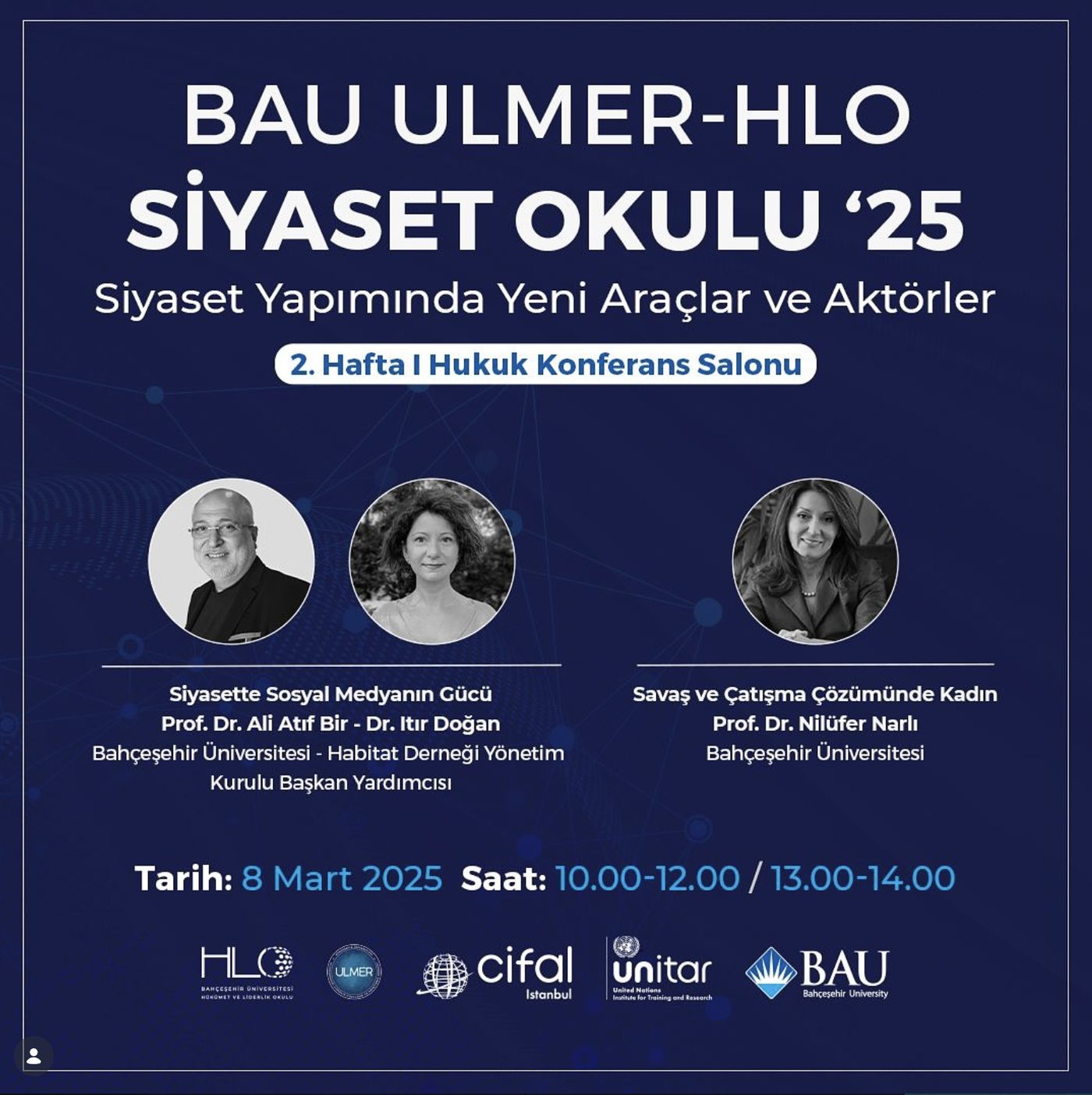
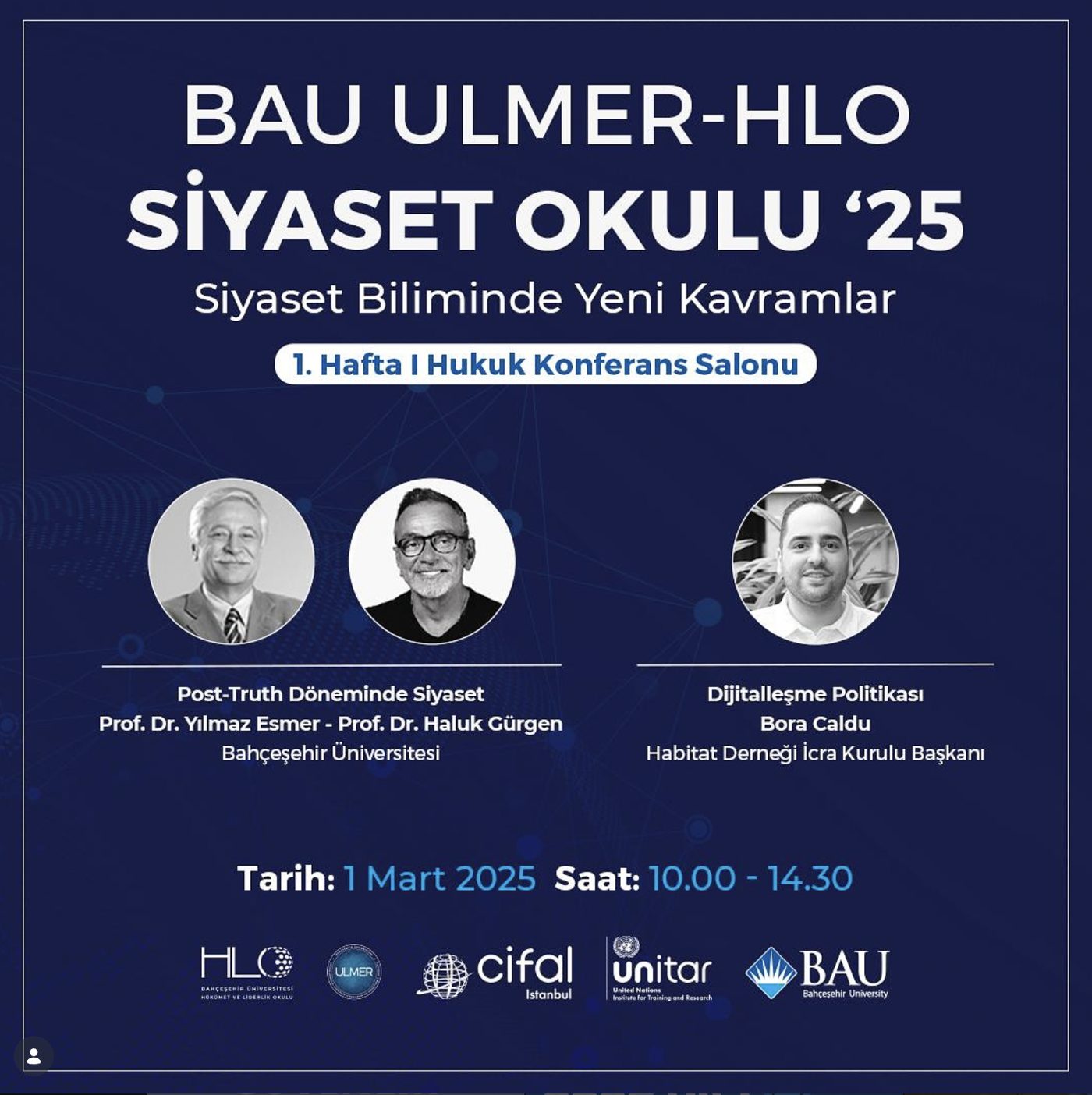
Bahçeşehir University continued its longstanding commitment to civic education and lifelong learning through the Politics School 25 (Siyaset Okulu 25) Certificate Programme, organized annually by the University's International Leadership Research and Application Center (ULMER) Government Leadership School. Established as a pioneering educational initiative in Türkiye, the programme brings together distinguished political figures, academics, diplomats, economists, business leaders, and public intellectuals to share their knowledge and experiences with participants. Over the years, Politics School has hosted presidents, prime ministers, ministers, ambassadors, members of parliament, and influential experts, providing a platform for examining political institutions, governance, leadership, and contemporary social challenges. The 2025 edition commenced on 1 March 2025 at Bahçeşehir University's South Campus, Faculty of Law, continuing the programme's tradition of connecting academic knowledge with practical insights from individuals experienced in public administration and decision-making.
A defining feature of Politics School is its inclusive and publicly accessible educational model. The programme is open to individuals of all ages, educational backgrounds, and professional experiences, without restricting participation to Bahçeşehir University students or members of the academic community. Anyone interested in politics, governance, public affairs, or leadership can apply through the programme's registration process, making it an important opportunity for lifelong learning and civic education beyond formal degree programmes. Conducted in Turkish during March and April, the programme consists of weekly Saturday sessions covering different aspects of political history, contemporary governance, and leadership. Each session includes an interactive question-and-answer component, allowing participants to engage directly with experienced speakers, raise questions, and develop a deeper understanding of political and societal issues.
The programme adopts an interdisciplinary and practice-oriented educational approach, combining theoretical knowledge with firsthand perspectives from individuals who have participated in political, diplomatic, economic, and administrative decision-making. Rather than examining Türkiye's political history and contemporary developments solely through academic frameworks, Politics School encourages participants to understand the causes, consequences, and broader implications of major political events and institutional decisions. This educational model aims to strengthen political literacy, critical thinking, analytical reasoning, and informed civic participation while encouraging participants to evaluate public affairs through objective information and evidence-based discussion. Participants who meet the 80% attendance requirement and successfully complete the final assessment are eligible to receive a certificate. Since Politics School 22, programme certificates have also been verifiable through Türkiye's e-Government system, providing formal recognition of participants' educational achievements.
The initiative makes a significant contribution to SDG 4: Quality Education by expanding access to continuing education, promoting lifelong learning, and providing structured educational opportunities for individuals beyond the university's enrolled student population. Its open-registration model enables people from diverse age groups and educational backgrounds to engage with academic expertise and practical knowledge on governance and public affairs. By connecting experienced public figures and scholars with the wider community, Bahçeşehir University supports the dissemination of knowledge, the development of critical thinking skills, and the accessibility of non-degree educational opportunities. The programme demonstrates how universities can contribute to society by making specialized educational content available to a broad public audience and encouraging continuous intellectual and personal development.
28- Public Educational Seminar: Dating Violence and Stalking – Legal Protection, Prevention, and Awareness
The image below presents the official promotional poster for the public seminar “Dating Violence and Stalking,” held on November 6, 2024, highlighting the invited speaker, organizing institutions, and hybrid participation format.
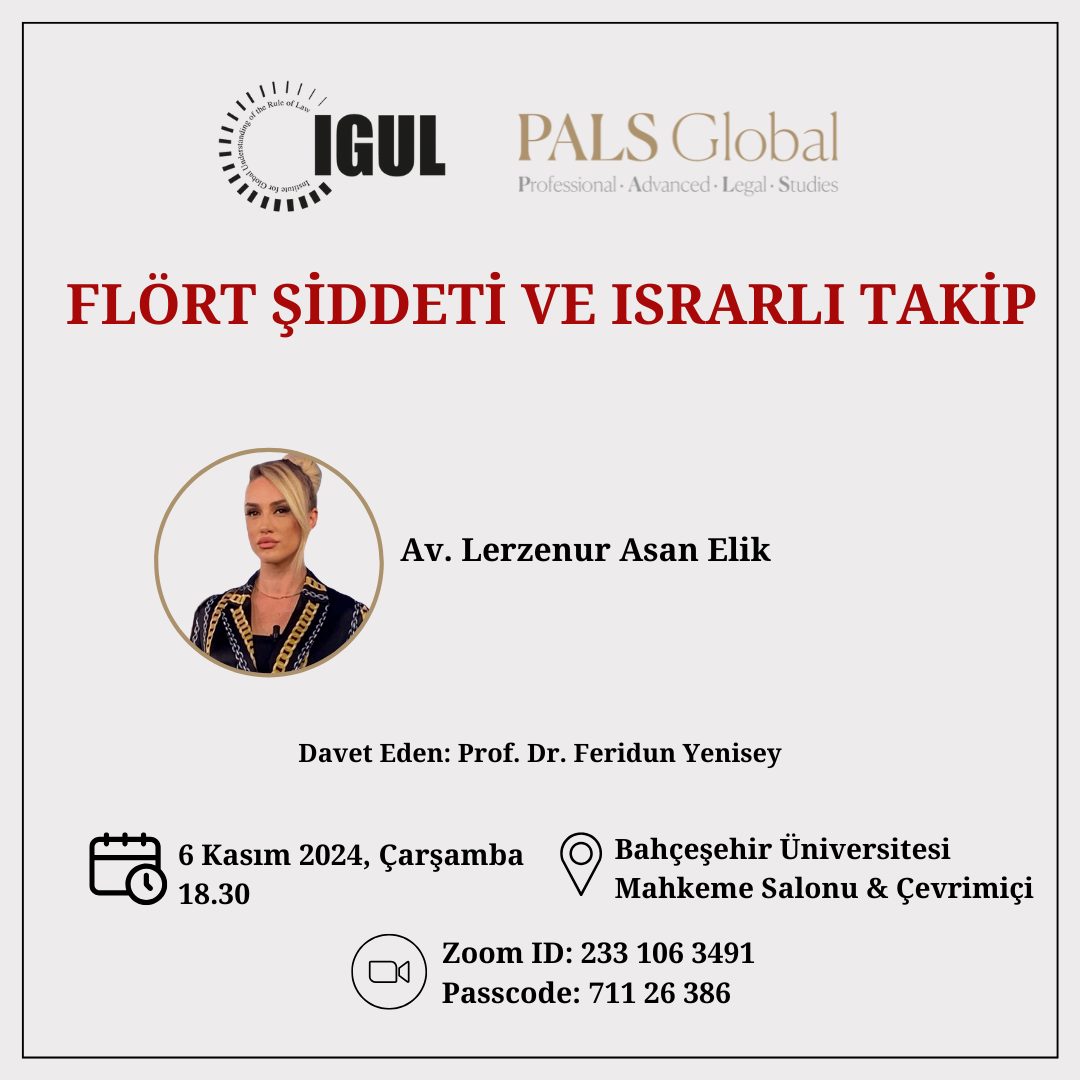
During the 2024-2025 academic year, Bahçeşehir University (BAU) hosted a public educational seminar titled “Dating Violence and Stalking,” organized by IGUL and PALS Global upon the invitation of Prof. Dr. Feridun Yenisey. Held in a hybrid format at the Bahçeşehir University Court Hall, the seminar provided an opportunity to explore the legal, social, and human rights dimensions of dating violence and stalking.
The event was designed to extend awareness and educational engagement beyond formal university coursework, bringing an important issue of public concern into an accessible learning environment. Through its in-person and online formats, the seminar offered opportunities for students, legal professionals, and interested members of the wider public to engage with expert perspectives on gender-based violence and legal protection.
The seminar was delivered by Attorney Lerzenur Asan Elik, who examined the nature and consequences of dating violence and stalking, with particular emphasis on prevention mechanisms, victim protection, legal remedies, and access to justice. Drawing on real-life cases and relevant legislative frameworks, the presentation explored how different forms of violence and persistent harassment can affect individuals' safety, autonomy, and fundamental rights.
The discussion also highlighted the importance of recognizing early warning signs, understanding available legal protections, and strengthening gender-sensitive responses within the justice system. By connecting legal knowledge with practical social challenges, the seminar encouraged participants to reflect on the responsibilities of individuals, legal professionals, and institutions in preventing violence and protecting those at risk.
As a publicly accessible educational activity, the seminar contributed to raising awareness of gender-based violence beyond the University's student population. Its hybrid delivery format supported wider access to specialized legal knowledge and encouraged lifelong learning on issues directly affecting personal safety, equality, and human rights.
The initiative contributes directly to SDG 4 (Quality Education) by providing public educational opportunities focused on legal literacy, human rights awareness, and the prevention of violence. It also strongly supports SDG 5 (Gender Equality) by addressing violence against women and promoting awareness of protective legal frameworks, and SDG 16 (Peace, Justice and Strong Institutions) through its emphasis on access to justice, prevention, legal protection, and institutional accountability.
Through this seminar, Bahçeşehir University contributed to making specialized legal expertise accessible to a wider audience, supporting informed public discussion and greater awareness of the legal and social mechanisms needed to prevent dating violence and stalking.
29- Public Education and Information Day on Architecture and Design: BAU Faculty of Architecture and Design Open Day
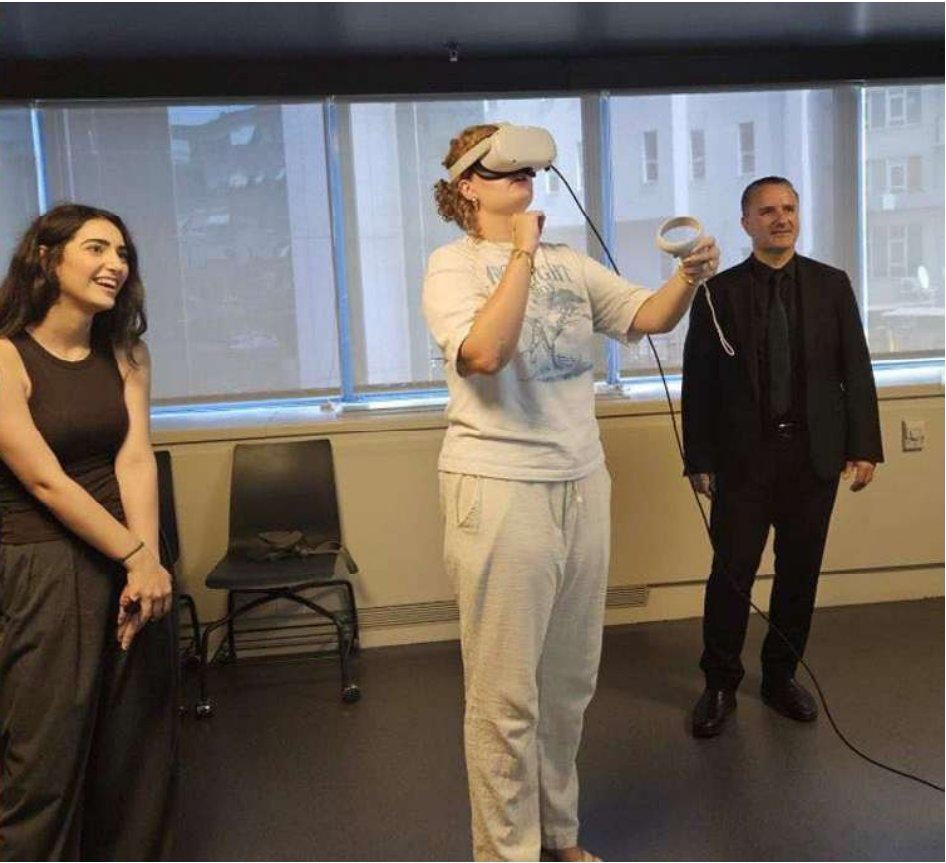
The image below displays a highlight from the BAU Faculty of Architecture and Design Open Day:
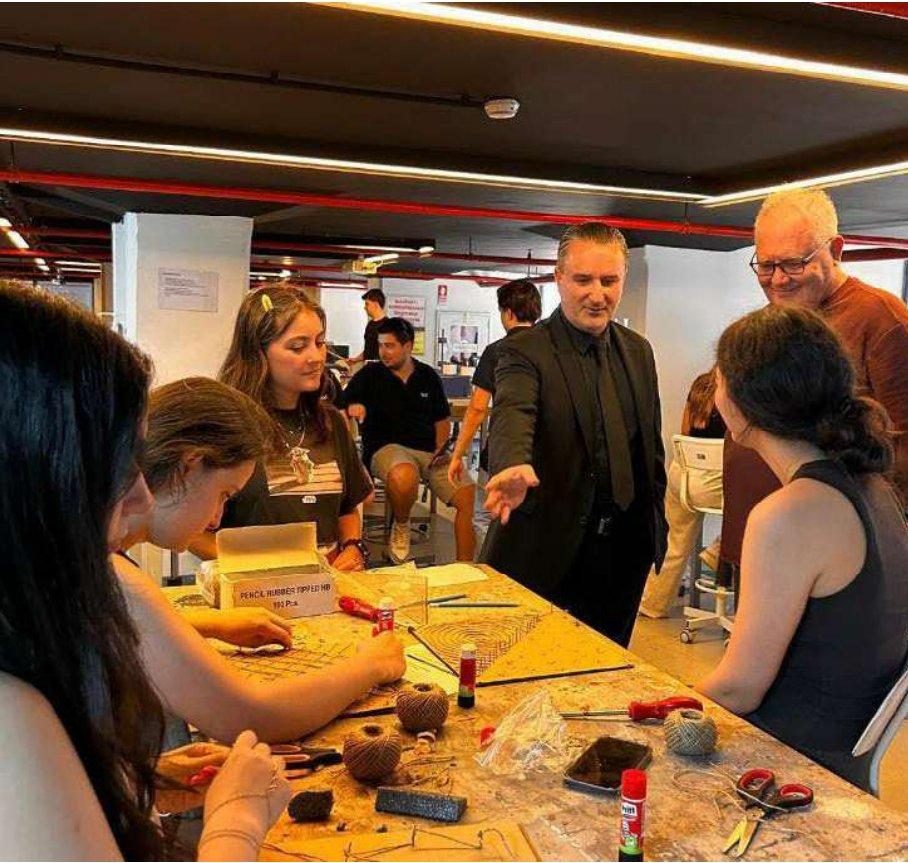
Bahçeşehir University's Faculty of Architecture and Design organized an Open Day on 29 January 2025, welcoming members of the general public interested in architecture, design, and related professional fields. The open day, held on Bahçeşehir University’s campus, provided an opportunity for individuals considering future education or careers in these disciplines to explore the Faculty's academic departments, educational programmes, projects, and professional pathways. Through interactive model-making workshops, a virtual reality (VR) laboratory experience, and guided campus tours, participants gained firsthand insights into the Faculty's educational approach and the practical dimensions of architecture and design education. The activities also introduced visitors to the interior architecture profession, highlighting its creative, technical, and interdisciplinary characteristics.
The event formed part of the Faculty's broader initiative, “Meeting the Interior Architecture Profession,” which aims to increase public awareness of architecture and design education and help individuals make informed decisions about their academic and professional futures. By opening its educational facilities and learning environments to interested members of the community, Bahçeşehir University created opportunities for participants to engage with university-level education, explore different fields of study, and develop a clearer understanding of the skills and competencies required in architecture and design professions.
The initiative directly contributed to SDG 4: Quality Education by promoting public access to information about higher education, academic disciplines, and professional development opportunities. Its open and interactive format supported informed educational decision-making and encouraged wider community engagement with university learning environments. By welcoming individuals interested in exploring architecture and design, regardless of their current affiliation with the university, Bahçeşehir University reinforced its commitment to making educational knowledge and career guidance more accessible to the general public.
The image below displays a highlight from the BAU Faculty of Architecture and Design Open Day:
30- Open Public Informational Seminar: Art as a Tool for Psychosocial Healing—Gaza Stop-Motion Animation Seminar for Solidarity
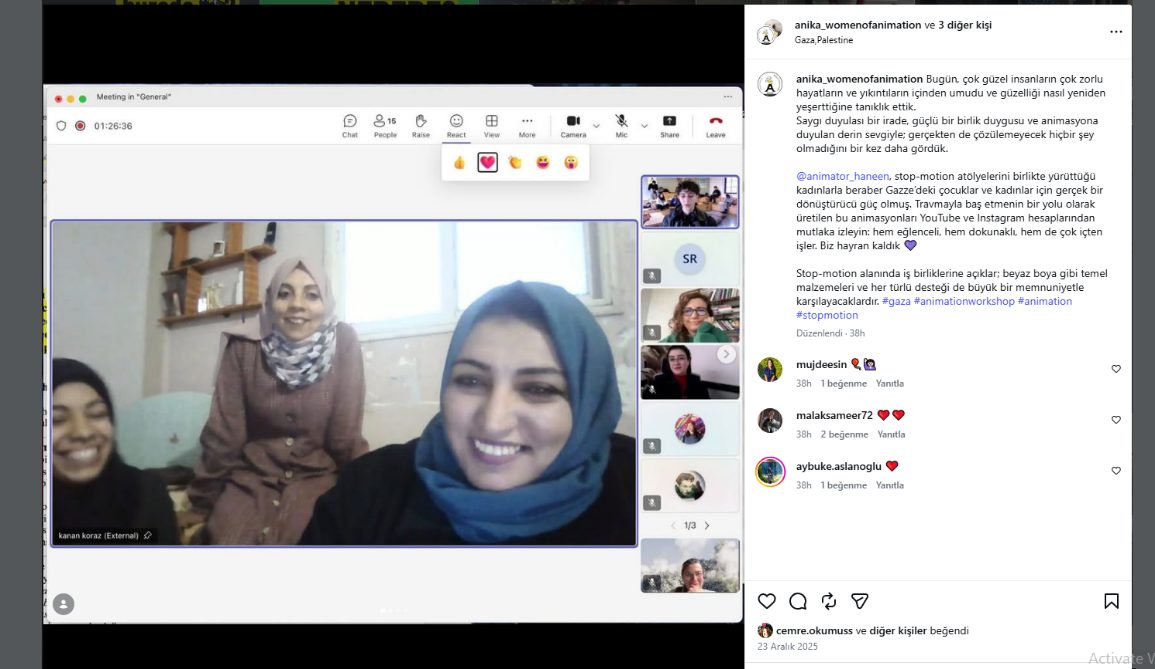
In the 2024–2025 academic year, Bahçeşehir University organized the Art as a Tool for Psychosocial Healing: Gaza Stop-Motion Animation Seminar for Solidarity as an educational event open to the general public, including individuals outside the University community. The session focused on humanitarian stop-motion workshops led by animator Haneen for displaced children and women in Gaza. The open seminar explored how animation and participatory art practices can support emotional expression, trauma processing, and psychosocial relief in communities affected by conflict, while also drawing attention to the mental health needs of vulnerable groups in humanitarian crises.
By framing creative production as a pathway for healing, dignity, and resilience, the session contributed to SDG 3: Good Health and Well-Being, particularly through its emphasis on mental health, psychosocial support, and trauma-informed approaches. The event also reflected Bahçeşehir University’s broader commitment to socially engaged education and global responsibility by connecting artistic practice with SDG 4: Quality Education, SDG 5: Gender Equality, SDG 10: Reduced Inequalities, and SDG 16: Peace, Justice and Strong Institutions, while mobilizing support for access to essential art materials as tools for recovery and solidarity.
The image below displays a screenshot of the Open Public Informational Seminar: Art as a Tool for Psychosocial Healing: Gaza Stop-Motion Animation Seminar for Solidarity