





 EN
17.2.3 - PARTICIPATION in INTERNATIONAL COLLABORATION on GATHERING/MEASURING DATA for SDGs
Bahçeşehir University (BAU) actively participates in international research partnerships and collaborative initiatives involving the collection, analysis, comparison, and evaluation of data relevant to the United Nations Sustainable Development Goals (SDGs). Through cooperation with universities, research institutions, and international organizations, BAU contributes to the generation and exchange of scientific and institutional evidence that supports the understanding and assessment of SDG-related challenges across different countries and contexts.
These collaborations address SDG-related challenges in areas including health, education, gender equality, innovation, cultural heritage, and institutional sustainability. By contributing to international research and evaluation frameworks, BAU helps strengthen the evidence base for understanding these challenges and assessing approaches to addressing them.
Examples of BAU's international collaborations involving research data, comparative analysis, and SDG-related measurement and reporting are presented below.
1. Bahcesehir University and International Partners in RETORNA Project: Advancing Biotechnological Innovation for Sustainable Health Solutions: Sustainable Development Goal 3 and 9
The image below shows a screenshot from the official website of the RETORNA Project, indicating Bahçeşehir University's partnership with international institutions.
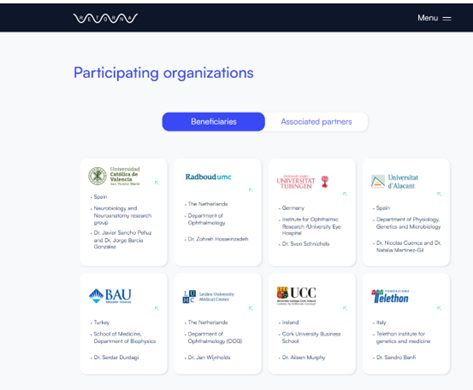
Bahçeşehir University (BAU) participates in the RETORNA Project, an international, interdisciplinary research initiative funded under the European Union's framework, aimed at developing RNA-based therapies to restore sight and advance innovation in vision science. The name RETORNA, meaning “to give something back” in Latin, reflects the project's mission to restore sight through scientific excellence and technological progress, which supports SDG 3 (Good Health and Well-being) and SDG 9 (Industry, Innovation and Infrastructure).
The project brings together leading European universities and research centers—including Bahçeşehir University (BAU, Türkiye), Universidad Católica de Valencia (Spain), Radboud University Medical Center (The Netherlands), University of Tübingen (Germany), Universitat d'Alacant (Spain), Leiden University Medical Center (The Netherlands), University College Cork (Ireland), and Telethon Institute of Genetics and Medicine (Italy).
In addition to advancing biomedical innovation, the project also examines the potential economic and social impact of RNA-based health technologies across European countries. This dimension explores how biotechnology and research-driven innovation can contribute to sustainable economic growth, employment opportunities, and equitable access to healthcare solutions. The project's international research framework also supports the collection and comparative analysis of scientific data across participating institutions, generating evidence relevant to assessing progress in health-related research and innovation under SDG 3 and SDG 9.
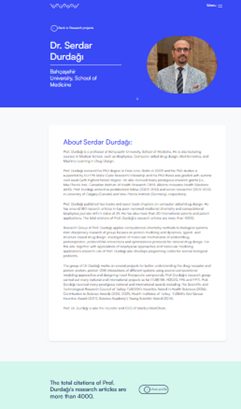
Representing Türkiye, Bahçeşehir University's School of Medicine, Department of Biophysics, led by Dr. Serdar Durdagi, contributes to the scientific coordination and implementation of RNA-based therapeutic research. BAU's involvement in scientific coordination and research quality processes contributes to the collaborative evaluation of research findings and the development of a shared international evidence base relevant to these SDGs.
The images below show screenshots from the official website of the RETORNA Project, indicating the participation of Bahçeşehir University's Prof. Dr. Serdar Durdagi as a member of the project's Quality Board.
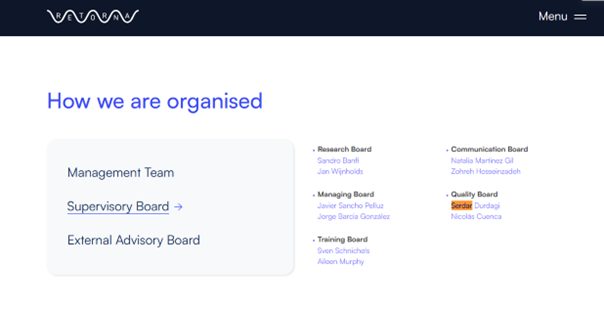
Within this 36-month project programme, partners from across Europe conduct pioneering research projects under the supervision of leading scientists, including Bahçeşehir University faculty members. RETORNA promotes innovation in biotechnology by integrating cutting-edge research with advanced training in scientific and transferable skills, preparing the next generation of researchers for impactful careers in academia, industry, and the public sector.
The initiative exemplifies international collaboration in research and innovation, uniting universities, research institutes, and non-academic partners in developing sustainable technological solutions for global health challenges. By bringing together international partners in collaborative scientific data generation, research assessment, and evidence-based evaluation, RETORNA strengthens the international knowledge base for understanding and assessing sustainable health innovation, contributing to SDG 9 (Industry, Innovation and Infrastructure) and SDG 3 (Good Health and Well-being).
2. HI-GLOBE Project: Global Citizenship through Language Learning – SDG 4 (Quality Education) and SDG 17 (Partnerships for the Goals)
The image below shows the homepage of the official website of the HI-GLOBE Project.
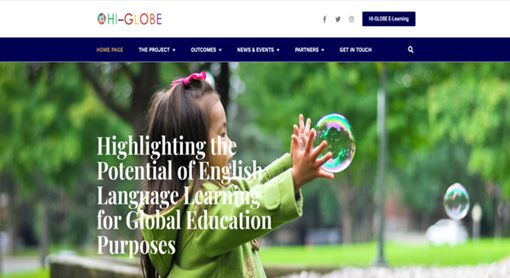
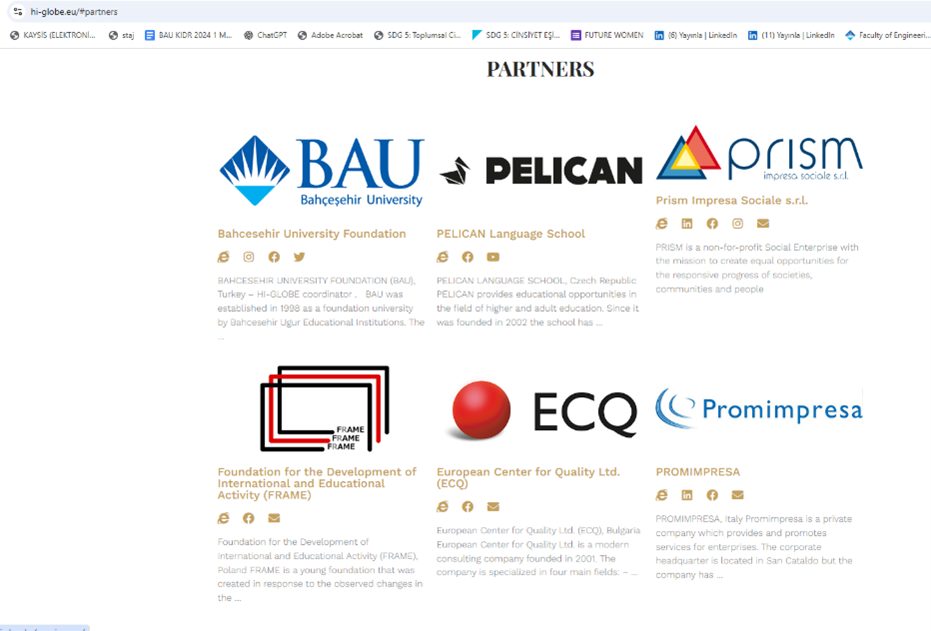
The HI-GLOBE Project is an international research and educational development initiative implemented in partnership with Bahçeşehir University (Türkiye), PELICAN Language School (Czech Republic), PRISM (Italy), the Foundation for the Development of International and Educational Activity (FRAME, Poland), the European Center for Quality Ltd. (ECQ, Bulgaria), and PROMIMPRESA (Italy).
The image below shows a screenshot from the official website of the HI-GLOBE Project, displaying Bahçeşehir University and other international partner institutions.
In today's interconnected world, there is a growing need for responsible, informed, and globally minded citizens. The HI-GLOBE Project harnesses the potential of English language learning as a means of promoting civic engagement, social awareness, and global responsibility among adult learners.
Its central aim is to identify and develop innovative pedagogical approaches that transform language learning from a mere educational goal into a tool for personal growth and sustainable societal development in the context of Sustainable Development Goal 4 (Quality Education). Through international cooperation, the project also provides opportunities for comparative research and the exchange of educational evidence across participating countries, supporting a shared understanding of inclusive adult learning and global citizenship education.
Grounded in the socio-cognitive approach to second-language acquisition, the project emphasizes that language learning should not be an isolated cognitive process, but rather a collaborative, interactive, and experiential journey.
The interactive and innovative HI-GLOBE learning modules developed through this partnership are designed to enhance learners' global citizenship competences while simultaneously improving their linguistic proficiency.
The project's international research and educational development activities provide a framework for collecting and comparing data on adult learning needs, teaching methodologies, and global citizenship competencies across participating countries. Such comparative evidence can support the assessment of educational quality, inclusion, and lifelong learning outcomes relevant to SDG 4 (Quality Education).
By creating a holistic, socio-cognitive learning environment, HI-GLOBE empowers individuals to become active, conscious participants in building a more inclusive and sustainable world. Through international collaboration on educational research, data collection, and comparative analysis, the project contributes to developing an evidence base for assessing SDG-related educational outcomes, while advancing SDG 17 (Partnerships for the Goals).
3. STE²AM: Shaping the Future through Interdisciplinary and Entrepreneurial Project – SDG 4, SDG 9 and SDG 17
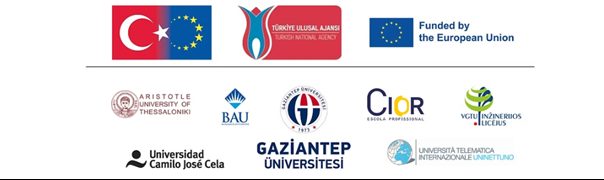
The image below shows a screenshot from the official website of the STE²AM Project, displaying Bahçeşehir University and other international partner institutions.
The STE²AM Project — integrating Science,
Technology, Engineering, Arts, Mathematics, and
Entrepreneurship — embraces an interdisciplinary
approach to education that links creativity, innovation, and
practical problem-solving.
By combining analytical and artistic disciplines with entrepreneurial
thinking, the project seeks to nurture future-ready leaders and
innovators who can design sustainable and impactful solutions
for global challenges.
The project partners include Gaziantep University (Türkiye), Vilnius Gediminas Technical University (Lithuania), Centro de Enseñanza Universitaria SEK SA – Camilo José Cela University (Spain), Escola Professional CIOR (Portugal), Bahçeşehir University – Bahcesehir University (BAU - Türkiye), International Telematic University UNINETTUNO (Italy), and Aristotle University of Thessaloniki (Greece). The initiative is supported by the European Union’s Erasmus+ Program.
Through research, comparative analysis, and the exchange of international best practices, STE²AM contributes to improving the quality and inclusivity of education in STEAM fields, while promoting a learning culture rooted in innovation, sustainability, and cross-border collaboration. The project's international research and comparative analysis activities provide a framework for gathering and examining educational data, identifying differences in interdisciplinary teaching practices, and assessing approaches to entrepreneurship-oriented education across participating countries.These research and comparative analysis activities connect the educational experiences of partner institutions across different countries, providing a basis for examining interdisciplinary teaching practices and entrepreneurship-oriented learning approaches within an international research framework.
By supporting the international comparison of educational practices and research findings, STE²AM contributes to an evidence base relevant to evaluating progress towards SDG 4 (Quality Education) and SDG 9 (Industry, Innovation and Infrastructure). Its cross-border collaboration also supports SDG 17 (Partnerships for the Goals) through shared research, knowledge exchange, and evidence-informed educational development.
4. REACH OUT: Empowering Teachers to Build Trauma-Sensitive Schools Project – SDG 3, SDG 4 and SDG 10
The image below shows a screenshot from the official website of the REACH OUT Project, indicating Bahcesehir University’s partnership with international institutions
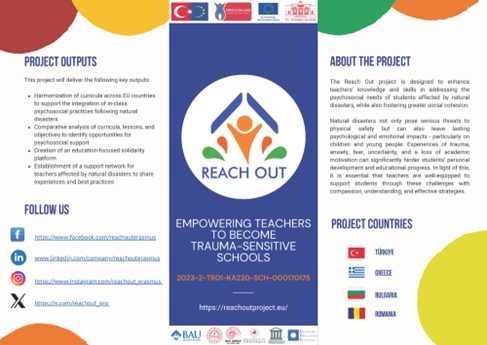
The REACH OUT Project seeks to strengthen teachers’ capacity to address the psychosocial needs of students affected by natural disasters and to foster social cohesion and emotional recovery in school communities. Supported under the Erasmus+ Program, the project emphasizes the vital role of teachers not only as educators but also as key agents of psychological resilience and social inclusion.
Empowering Teachers to Become Trauma-Sensitive Schools project brings together Bahçeşehir University (Türkiye) - Bahcesehir University - the University of Thessaly (Greece), the School Inspectorate of Teleorman County (Romania), and the Center for Educational Initiatives (Bulgaria), with key partners including the Istanbul Governor’s Office (Türkiye), Koç Schools (Türkiye), and Eyyübiye District Directorate of National Education (Türkiye).
Recognizing that natural disasters can cause profound psychological and emotional impacts—such as trauma, anxiety, fear, and loss of academic motivation—the project equips teachers with knowledge, pedagogical tools, and coping strategies to create supportive and trauma-sensitive learning environments.
Teachers are empowered to manage post-disaster crises, provide psychological first aid, and strengthen their own well-being while guiding students toward recovery.
The initiative brings together partners from multiple countries and involves comparative research and curriculum analysis across participating education systems. Through the review of national curricula, best practices, and training needs, REACH OUT develops an evidence-based framework and adaptable educational modules that can be applied across different contexts in Europe.
These collaborative research activities provide a basis for gathering and comparing data and information on teacher training needs, existing educational responses, and trauma-sensitive practices across partner countries. The resulting comparative evidence supports the identification of educational gaps and the assessment of approaches to inclusive and resilient learning environments, particularly in relation to SDG 4 (Quality Education).
By integrating psychosocial awareness into teacher training, Bahçeşehir University (BAU) and its international partners aim to contribute to inclusive and sustainable education systems, directly supporting SDG 3 (Good Health and Well-being), SDG 4 (Quality Education), and SDG 10 (Reduced Inequalities). Through international research collaboration, comparative educational analysis, and evidence-based assessment, the project also contributes to the knowledge base relevant to evaluating SDG-related challenges in education, student well-being, and social inclusion.
5. FUTURE WOMEN: Creating New Opportunities for Women in Digital and STEM Economies Project: SDG 5 (Gender Equality), SDG 8 (Decent Work and Economic Growth), and SDG 17 (Partnerships for the Goals)
The image below shows screenshots from the official website of the FUTURE WOMEN Project, displaying the home page and the official logo of the project
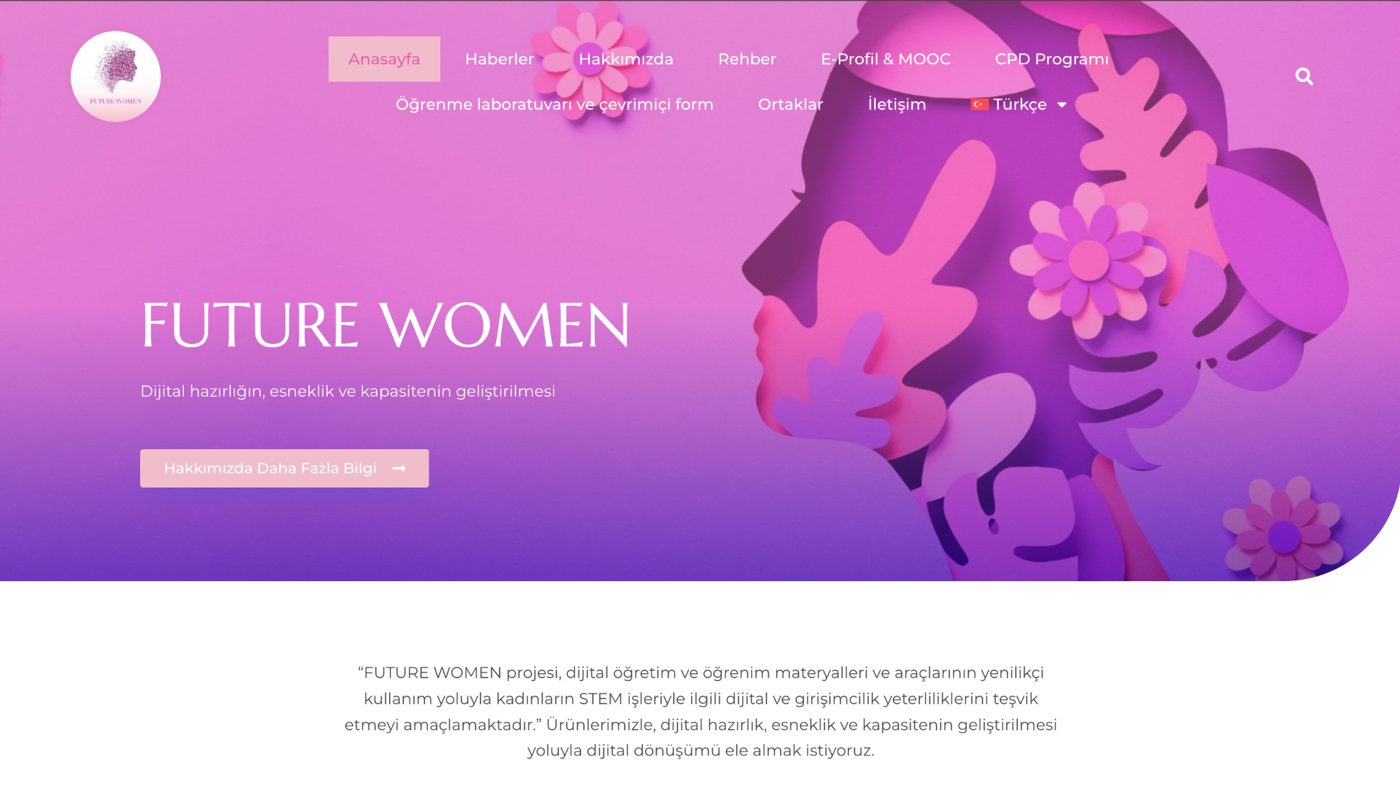
The Future Women Project is an international research and best practice development initiative, supported by the European Union’s Erasmus+ Programme, The project is implemented in partnership with Bahçehir University (Türkiye), Business Foundation for Education (Bulgaria), Danmar Computers (Poland), Found.ation (Greece), Mindshift Talent Advisory (Portugal), Oulu University of Applied Sciences (Finland), VivaFemina (Poland), and the University of Chemical Technology and Metallurgy (Bulgaria).
The image below shows screenshots from the official website of the FUTURE WOMEN Project, displaying Bahcesehir University and other international partner institutions.
The project aims to strengthen the participation and leadership of women in the digital and STEM sectors, where female representation remains limited. By combining research-based evidence with applied training models, the initiative advances both policy innovation and capacity-building in the field of gender equality and digital transformation. Its international research framework supports the collection and comparative analysis of information on gender disparities, career development barriers, and women's participation in STEM and digital employment across participating countries, generating evidence relevant to SDG 5 (Gender Equality) and SDG 8 (Decent Work and Economic Growth).
As part of the project, the Continuing Professional Development (CPD) Programme has been designed for career counsellors seeking to adapt to the evolving realities of STEM and digital economy careers.
Grounded in comparative research and field analysis, the programme introduces innovative methods and tools to better support female students in pursuing technology-related careers. The use of comparative research findings and field-based evidence helps identify gaps in career guidance practices and informs the development of more inclusive educational and professional pathways for women.
The CPD Program includes five key learning modules:
Career Counselling for the Digital Economy and STEM Careers
Integrating Academic and Career Development
Gender Issues and Career Planning
New Career Methods and Techniques
Social Media in Career Guidance
Through its dual focus on research, best practices development and practical implementation, Future Women contributes directly to SDG 5 (Gender Equality), SDG 8 (Decent Work and Economic Growth), and SDG 17 (Partnerships for the Goals) by promoting inclusive participation, evidence-based policymaking, and gender-responsive innovation in education and employment.
By bringing together international partners to examine research findings, compare gender-related challenges, and develop evidence-informed educational approaches, the project also strengthens the shared knowledge base relevant to assessing progress towards gender equality and women's economic participation under the SDGs.
6. DIGICULTGAME: Innovative Tools to Digitize the East and West Cultural Heritage Project: SDG 4 (Quality Education), SDG 9 (Industry, Innovation and Infrastructure), and SDG 11 (Sustainable Cities and Communities)
The image below illustrates a team picture from the DIGICULTGAME Project

The DIGICULTGAME Project is an international research and innovation initiative that develops digital tools and methodologies to preserve and transfer tangible and intangible cultural heritage to future generations through digital game design.
Recognizing that cultural heritage—threatened by natural disasters and human activities—is a shared value that must be sustained, the project aims to digitize cultural assets and transform them into engaging interactive game narratives for young audiences.
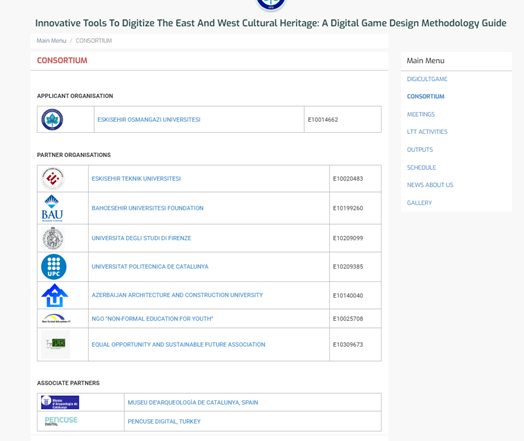
Innovative Tools to Digitize the East and West Cultural Heritage project is carried out in partnership with Bahçeşehir University (Türkiye) – Bahcesehir University, Universitat Politècnica de Catalunya (Spain), University of Florence (Italy), NGO “Non-Formal Education for Youth” (Ukraine), Eskişehir Osmangazi University (Türkiye), Azerbaijan University of Architecture and Construction (Azerbaijan), Eskişehir Technical University (Türkiye), and the Equal Opportunity and Sustainable Future Association (Türkiye).
The image below shows a screenshot from the official website of the DIGICULTGAME Project, displaying Bahcesehir University and other international partner institutions collaborating to digitize and preserve Eastern and Western cultural heritage.
The project combines research, data collection, and applied design methodologies. It conducts background analyses, case studies, and player awareness assessments to inform the development of innovative training modules and a comprehensive e-learning platform. Through these activities, international project partners contribute to gathering and examining research data on cultural heritage preservation, digital learning practices, and young people's awareness of cultural heritage. This collaborative approach supports the development of comparative evidence relevant to SDG 4 (Quality Education) and SDG 11 (Sustainable Cities and Communities), particularly in relation to cultural heritage education and preservation.
These digital resources—featuring e-learning videos, documentary materials, and an e-book—support the creation of games that promote cultural awareness and intercultural understanding among youth.
By integrating research outcomes into practical learning environments, DIGICULTGAME contributes to evidence-based approaches to cultural heritage preservation and digital education, connecting research findings with the development and assessment of innovative educational resources.
The project directly supports SDG 4 (Quality Education), SDG 9 (Industry, Innovation and Infrastructure), and SDG 11 (Sustainable Cities and Communities) through evidence-based knowledge generation and open educational access. Its international collaboration on data collection, case studies, and awareness assessments also strengthens the shared research evidence relevant to understanding and evaluating SDG-related challenges in cultural heritage protection, education, and digital innovation.
7. MIXAP: Developing Research-Based Innovative Pedagogical Practices through Mixed Reality in Education Project – SDG 4, SDG 9 and SDG 17
The image below represents the official logo of the MIXAP Project

Bahçeşehir University (Türkiye) is a partner in the MIXAP (Mixed Reality in Education) project, an co-funded international research and best practice initiative coordinated by Le Mans Université (France), in collaboration with the Technical University of Denmark (Denmark)
The image below shows a screenshot from the official website of the MIXAP Project, displaying Bahcesehir University and other international partner institutions collaborating to develop research-based innovative pedagogical practices through mixed reality in education.
The project aims to empower teachers to design, implement, and evaluate Mixed Reality (MR) learning experiences, fostering a new pedagogical framework that combines technology, creativity, and evidence-based research. Through a co-design methodology, the consortium engages educators in participatory workshops, classroom pilots, focus groups, and cross-country collaboration to develop and refine interactive, inclusive, and impactful teaching practices. These activities provide opportunities for international partners to collect and analyse educational data, including teacher feedback, classroom experiences, and findings from pilot implementations. The resulting evidence supports comparative assessment of technology-enhanced teaching practices and their potential contribution to inclusive and quality education under SDG 4.
MIXAP also contributes to academic research through peer-reviewed publications and conference presentations in the fields of educational technology, cognitive learning, and augmented pedagogy. Its practical outputs include the development of an easy-to-use AR authoring tool, open-access learning resources, and a sustainable international teacher community that shares innovative applications of MR in education. The project's research and evaluation activities further support the exchange and assessment of findings across participating institutions, contributing to a shared international evidence base on digital innovation and educational effectiveness.
By advancing both research-based evidence and scalable best practices, the project directly supports SDG 4 (Quality Education), SDG 9 (Industry, Innovation and Infrastructure), and SDG 17 (Partnerships for the Goals), shaping the future of inclusive and technology-enhanced learning. Through collaborative data collection, classroom-based evaluation, and international research exchange, MIXAP strengthens the evidence available for assessing educational innovation and SDG-related learning outcomes across different educational contexts.
8. Bahçeşehir University’s Commitment to the SDG Accord and International Collaboration on SDGs Data
The image below shows the official document confirming Bahcesehir University’s commitment to the SDG Accord and participation in international collaboration on SDG data.
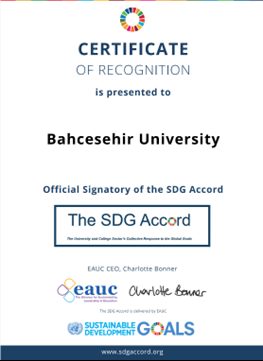
Bahçeşehir University is a proud member and signatory of the SDG Accord, which reinforces the vital role of higher education in achieving the United Nations Sustainable Development Goals (SDGs). Through this commitment, BAU actively participates in international collaborations focused on gathering, measuring, and reporting data related to the SDGs. The SDG Accord provides a shared international framework through which higher education institutions can document their sustainability commitments, report progress, and contribute institutional information to collective assessments of SDG implementation.
The university contributes to global sustainability networks, shares progress and best practices annually, and takes part in the presentation of updated metrics at the UN High-Level Political Forum on Sustainable Development. Through this international reporting process, BAU supports the collection and exchange of SDG-related institutional data, contributing to a broader evidence base for tracking sustainability progress across higher education institutions worldwide.
Through the SDG Accord, Bahçeşehir University participates in an international higher education initiative that supports the sharing of institutional sustainability information and the collective assessment of progress towards the Sustainable Development Goals. The Accord's reporting framework connects participating institutions with broader international efforts to gather and communicate evidence of SDG implementation.
This ongoing engagement reflects BAU's dedication to advancing sustainable development within the global higher education community. By participating in internationally coordinated SDG reporting and knowledge-sharing mechanisms, the university contributes to collaborative efforts to measure progress, identify implementation gaps, and strengthen evidence-based approaches to achieving the SDGs.
9. Bahcesehir University – United Nations Institute for Training and Research (UNITAR): International Collaboration on SDG Data, Measurement and Policy Development through CIFAL Istanbul
The image below shows the signing of the Memorandum of Understanding (MoU) between Bahcesehir University and the United Nations Institute for Training and Research (UNITAR), formalizing collaboration through CIFAL Istanbul for SDG policy development and international research
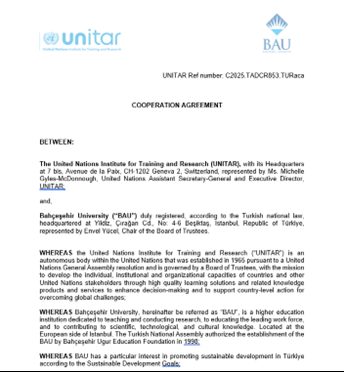
Bahçeşehir University (BAU) serves as the institutional host of CIFAL Istanbul, the International Training Centre for Authorities and Leaders, established in partnership with the United Nations Institute for Training and Research (UNITAR).
CIFAL Istanbul is part of the UNITAR Global CIFAL Network, a worldwide framework dedicated to capacity development, policy dialogue, and SDG-oriented training for government officials, policymakers, and local leaders. This international network also provides opportunities for exchanging country-level experiences, research findings, and evidence relevant to assessing SDG implementation across different institutional and regional contexts.
Under the renewed Cooperation Agreement (2023–2025), BAU and UNITAR jointly design, implement, and evaluate programmes that directly contribute to national and regional SDG policy development. The cooperation also establishes an institutional framework for international knowledge exchange, collaborative assessment, and the use of research-based evidence in evaluating SDG-related initiatives.
These activities include identifying systemic challenges, developing strategies for sustainable governance, modelling future policy scenarios, and monitoring the implementation of SDG-related interventions at local and regional levels. Such activities provide opportunities to gather and analyse information on implementation challenges, institutional practices, and progress towards sustainability objectives, supporting evidence-informed monitoring and policy evaluation.
Through CIFAL Istanbul, BAU engages in international collaboration and research that strengthens Türkiye's and the broader Eastern European and MENA regions' capacity to integrate the Sustainable Development Goals (SDGs) into policy and institutional frameworks. By connecting international research perspectives with local and regional experiences, the partnership supports comparative analysis and the exchange of SDG-related evidence across different contexts.
Training and research programmes focus on economic development, social inclusion, climate action, and digital transformation, with the goal of fostering data-driven policymaking and adaptive management practices across different levels of governance.
CIFAL Istanbul's annual programmes — comprising workshops, seminars, e-learning, and blended courses — reach local and national authorities, civil society representatives, international organizations, and private sector actors, creating a neutral platform for SDG-focused dialogue and knowledge exchange.
The Centre's work contributes to advancing SDG 17 (Partnerships for the Goals) by strengthening international cooperation for sustainable development; SDG 16 (Peace, Justice and Strong Institutions) by improving governance capacities; and cross-cuttingly supports SDGs 4, 8, 11, and 13 through education, innovation, and climate-oriented policy learning.
Within this international cooperation framework, the collection and evaluation of programme-related information, including participation records, training needs, and learning outcomes, can provide evidence for assessing capacity-building activities and identifying areas for improvement in SDG-oriented education and institutional development.
Through this sustained partnership with the United Nations, Bahçeşehir University not only contributes to policy development and monitoring mechanisms for the SDGs, but also promotes international best practices, comparative research, and collaborative governance. The partnership provides a framework for international collaboration on SDG-related information gathering, comparative assessment, and evidence-based evaluation, strengthening the connection between research, measurement, and sustainable development policy. This positions CIFAL Istanbul as a regional hub of excellence for sustainable development capacity-building and evidence-based policy support.











