





 EN
17.4.2 - Sustainability Education at Bahçeşehir University
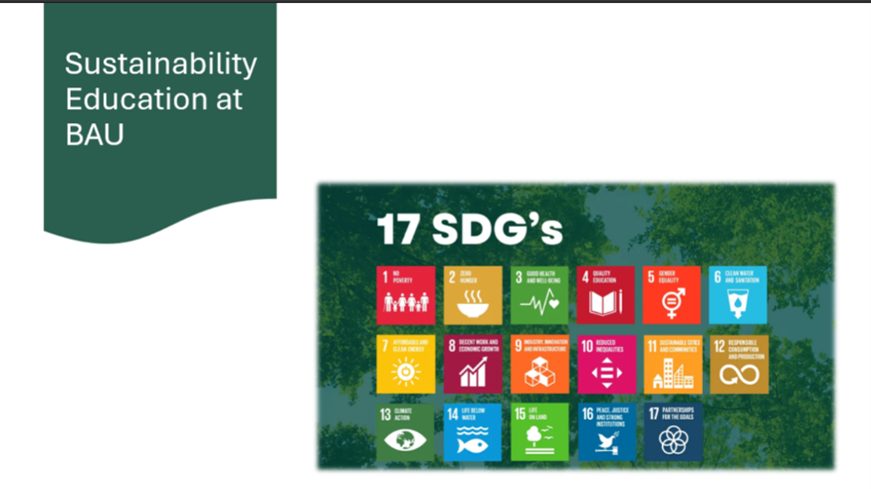
Bahçeşehir University (BAU) places sustainability and the United Nations Sustainable Development Goals (SDGs) at the core of its educational approach, in alignment with its institutional mission and vision of advancing academic excellence, innovation, and meaningful contributions to society. Guided by its definition of the "BAU Educated Person," the University adopts a holistic and interdisciplinary educational model that emphasizes not only academic and professional competencies but also sustainability literacy, ethical awareness, global perspectives, and the knowledge and skills needed to contribute to the achievement of the SDGs.
Within this framework, sustainability education is systematically integrated into BAU's academic curriculum through a university-wide mandatory graduation requirement. All students, regardless of their faculty, department, or field of study, are required to successfully complete at least one sustainability-focused course as part of their General Education Electives before graduation. This institutional requirement ensures that sustainability and sustainable development form fundamental components of the educational experience of every undergraduate student across BAU's academic disciplines.
Beyond this common foundation, BAU further integrates the SDGs into faculty-based compulsory and elective courses across undergraduate and postgraduate programmes, enabling students to explore sustainability challenges through the perspectives of their respective disciplines. This approach is complemented by interdisciplinary EDR certificate programmes, specialized sustainability-oriented training and certificate programmes, and online sustainability education, including educational initiatives developed in collaboration with CIFAL Istanbul and the United Nations Institute for Training and Research (UNITAR).
Together, these interconnected educational components combine theoretical knowledge, practical applications, interdisciplinary learning, and additional professional competencies, creating multiple pathways for students to develop a comprehensive understanding of the environmental, social, and economic dimensions of sustainable development.
Through this comprehensive and institutionally embedded approach to Education for Sustainable Development (ESD), Bahçeşehir University ensures that sustainability education extends across its academic programmes and learning opportunities, preparing students to understand global challenges, apply sustainability principles within their disciplines, and contribute to advancing the United Nations 2030 Agenda and its 17 Sustainable Development Goals.
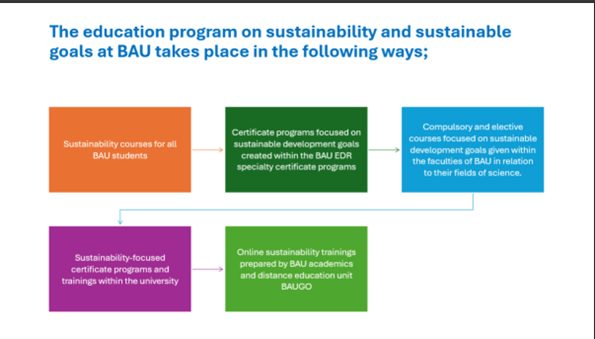
The university’s sustainability education model operates through the following key components:
University-Wide Sustainability Courses:
Mandatory sustainability courses for all Bahcesehir University students, forming part of the general education framework.Faculty-Based SDG Courses:
Core and elective courses integrated into faculty curricula, connecting sustainability with discipline-specific knowledge and practice.EDR Certificate Programs on the Sustainable Development Goals:
Specialized certification programs developed within the BAU EDR framework to provide focused training on SDG-related themes.Sustainability-Oriented Training and Certificate Programs:
Campus-wide professional and academic training sessions designed to build sustainability competencies.Online Sustainability Education:
Distance-learning sustainability modules created by BAU faculties and offered through the BAUGO digital learning platform.
The image below shows the structure of sustainability and Sustainable Development Goals (SDG) education programs at Bahcesehir University.
1- Sustainability Education as a Mandatory Graduation Requirement for All Students
As part of its institutional commitment to sustainability and the United Nations Sustainable Development Goals (SDGs), Bahçeşehir University (BAU) has made sustainability education a mandatory component of its graduation requirements for all students, regardless of their faculty, department, or field of study.
This requirement is embedded within the University's General Education Electives framework, which has been developed in alignment with BAU's institutional mission, vision, and definition of the "BAU Educated Person." The framework reflects BAU's commitment to educating individuals who possess not only disciplinary expertise but also interdisciplinary knowledge, critical thinking skills, ethical awareness, sustainability literacy, a comprehensive understanding of the United Nations Sustainable Development Goals (SDGs), and the competencies needed to contribute to their achievement.
BAU organizes its General Education Electives into structured thematic course pools designed to support students' intellectual, personal, professional, and social development. These pools provide opportunities for students to engage with different fields of knowledge and develop competencies beyond their primary academic disciplines.
Under Bahçeşehir University's graduation requirements, every student must successfully complete five General Education Elective courses, at least one of which must be selected from the sustainability-focused course pool. This requirement applies to all students across the University, irrespective of their academic programme. Students cannot fulfil their graduation requirements without successfully completing at least one designated sustainability course.
By establishing sustainability education as a compulsory element of the general education framework, BAU ensures that every undergraduate student receives formal education on sustainability and sustainable development before graduation.
The sustainability-focused courses provide students with a broad, interdisciplinary understanding of sustainable development, emphasizing the interconnected environmental, social, and economic dimensions of sustainability. Students explore contemporary local, national, and global challenges, examine the United Nations 2030 Agenda and the Sustainable Development Goals, and consider how individuals, institutions, businesses, and communities can contribute to a more sustainable future.
These courses are designed not only to develop theoretical knowledge but also to strengthen students' ability to connect sustainability principles with practical decision-making, responsible citizenship, and their future professional lives.
Key areas of learning include:
The concept, principles, and historical evolution of sustainability.
The environmental, social, and economic dimensions of sustainable development.
The United Nations 2030 Agenda and the 17 Sustainable Development Goals (SDGs).
Global and local sustainability challenges and their interconnected impacts.
Individual, institutional, and collective responsibilities in advancing sustainable development.
Upon successful completion of a sustainability-focused course, students are expected to be able to:
Identify and explain key sustainability issues and their broader social, economic, and environmental contexts.
Apply academic research and scholarly literature to sustainability discussions and projects.
Develop and propose creative, balanced solutions to sustainability challenges.
Incorporate sustainability principles into their personal and professional lives.
Engage actively in initiatives that promote sustainability within the University and the wider community.
Sustainability-focused courses within the General Education Electives framework include:
GEP0320 – Introduction to the 2030 Agenda: A New Agenda for a Sustainable World
GEP0366 – Practicing Sustainability
GEP0631 – Sustainability and Climate Action
GEP1379 – Sustainability and Ethics
All undergraduate students are required to successfully complete at least one of these designated sustainability-focused courses as part of their General Education Electives before graduation.
Through this university-wide mandatory requirement, Bahçeşehir University systematically integrates Sustainable Development Goals into its curriculum, ensuring that sustainability literacy, awareness of the SDGs, and responsible citizenship form part of the educational experience of every undergraduate student.
This approach demonstrates BAU's institutional commitment to preparing graduates who can understand sustainability challenges, recognize their individual and professional responsibilities, and contribute to achieving the Sustainable Development Goals across different sectors of society.
2- Integration of Sustainability and the Sustainable Development Goals into Faculty-Based Compulsory and Elective Courses
Beyond the university-wide mandatory sustainability education requirement, Bahçeşehir University (BAU) systematically integrates sustainability and the United Nations Sustainable Development Goals (SDGs) into the compulsory and elective courses offered across its undergraduate and postgraduate academic programmes.
Through this discipline-specific approach, sustainability education extends beyond the General Education Electives framework and becomes an integral part of students' specialized academic learning. Faculties and academic departments address relevant environmental, social, economic, and ethical dimensions of sustainable development within their respective fields, enabling students to understand how the SDGs relate to their disciplines and future professions.
These courses cover a broad range of sustainability-related subjects, including climate change, renewable energy, environmental protection, sustainable design, responsible business practices, public health, gender equality, social inclusion, sustainable food systems, and innovation.
By embedding sustainability-related content into both compulsory and elective courses, BAU ensures that students have opportunities to develop discipline-specific knowledge and competencies for addressing sustainability challenges, alongside the foundational sustainability education required of all undergraduate students.
The following list presents examples of sustainability- and SDG-related compulsory and elective courses offered by BAU's academic departments during the 2024–2025 academic year. Course codes and titles are provided, while detailed course descriptions are available through the University's official academic curriculum.
The following section provides a comprehensive overview of sustainability- and SDG-related compulsory and elective courses offered across Bahçeşehir University's undergraduate and postgraduate academic programmes during the 2024–2025 academic year. Courses are presented with their official course codes and titles, as documented in the University's academic curriculum, and classified into seven thematic areas reflecting their contributions to the United Nations Sustainable Development Goals (SDGs). This classification demonstrates the systematic integration of sustainability education across academic disciplines. Detailed course descriptions and learning outcomes are available through the University's official academic course catalogue.
Theme 1. Environmental Sustainability, Climate Action and Clean Energy
Relevant SDGs: SDG 6, SDG 7, SDG 12, SDG 13, SDG 15
ESE4103 – Energy Efficiency, Economy & Environment
ESE3103 – Alternative & Renewable Energy Systems I
ESE4207 – Alternative & Renewable Energy Systems II
GEP0633 – Environment and Sustainable Development
COP4401 – Schneider Electric - Energy Efficiency and Savings
ESE4008 – Wind Energy
ESE4102 – Energy Efficiency in Buildings
ENV4401 – Environmental Impact and Risk Assessment
MBG4054 – Ecology
CEN4197 – Groundwater Engineering
ESE5502 – Sustainable Energy Systems
COP4907 – Hasen- Energy Politics and Strategies
COP4405 – Nature - Health and Safety Management
Theme 2. Sustainable Cities, Architecture and Urban Development
Relevant SDGs: SDG 9, SDG 11, SDG 12, SDG 13
ARC3964 – Issues in Sustainability
LAW3004 – International Maritime Law and Sustainability
COP4453 – Proline – Safe and Smart Cities
ARC2082 – Environmental Control Systems
ARC2933 – Earth Architecture
INT2061 – Human Factors and Universal Design
INT3904 – Sustainable Design
INT3921 – People and Environment
ARC5406 – Critical Thinking in Sustainable Design
ARC3965 – Green Architecture
GEP0201 – City and Culture
Theme 3. Health, Well-Being and Sustainable Food Systems
Relevant SDGs: SDG 2, SDG 3, SDG 6, SDG 12
DENT1006 – Preventive Dentistry & Introduction to Public Oral and Dental Health
BES4079 – Sustainable Nutrition
BES3062 – Intercultural Differences in Nutrition
HEM3001 – Women's Health and Diseases Nursing
COP3433 – FAO - Sustainable Food Systems
DYZ2006 – Nutrition
TDS2003 – Public Health
ECO3577 – Health Economics
ECE3104 – Child's Mental Health
NTD2101 – Nutritional Biochemistry I
NTD3170 – Nutrition Education and Counseling
NTD3105 – Assessment of Nutritional Status in Society
NTD4005 – Food Legislation and Control
NTD3069 – Geriatric Nutrition
TDS2005 – Health Tourism
COP4414 – Siemens - Biomedical Technology Management
SGS5016 – Agricultural Production Systems and Sustainable Farming
ALD5019 – Child Health and Care
COP4331 – Tazefikir Health Communication
GEP1634 – Exploring the Future of Agriculture
Theme 4. Gender Equality, Human Rights and Social Inclusion
Relevant SDGs: SDG 5, SDG 10, SDG 16
POL4144 – Politics of Gender
SOC3005 – Sociology of Gender and Family
LAW3081 – Women's Rights
ACL4001 – Introduction to Women’s Studies
SOC3057 – Readings in Sociology of Gender
PSY4058 – Psychology of Gender
SOC3072 – Sociology of Migration
ECE4050 – Teaching Children’s Rights
KHK5236 – Gender Mainstreaming
SOH5015 – Social Gender and Social Services
Theme 5. Quality Education, Educational Innovation and Lifelong Learning
Relevant SDGs: SDG 4, SDG 5, SDG 10
CET3052 – Selected Topics in Educational Sciences
ECE1002 – Health, Nutrition and Resilience
ECE4040 – Educational Administration in Early Childhood
EDS4010 – New Media and Media Literacy in Education
ECE3202 – Environmental Education in Early Childhood
ECE3207 – School Experience
ECE4105 – School Adaptation and Early Literacy Education
ECE3105 – Approaches to Teaching in Early Childhood
EAP5105 – World Educational Systems
CET4054 – Adult Education
EAP5103 – Finance and Governance in Educational Institutions
EDS4011 – Special Topics in Education I
EDT5001 – Educational Technology Field, Theory and Profession
CET3054 – Game Based Learning
ECE3001 – Language, Arts and Literature for Young Children
EAP5104 – Conflict Management in Educational Institutions
GAD5106 – Games and Education
ECE2201 – School Readiness and Programs for Elementary Education
ECE3202 – Environmental Education in Early Childhood
ECE3104 – Child's Mental Health
COP4119 – Play and Art Based Development in Early Childhood
Theme 6. Sustainable Business, Responsible Consumption and Social Impact
Relevant SDGs: SDG 8, SDG 9, SDG 12, SDG 17
PRL4537 – Strategic Communication and Sustainability
COP4338 – Tazefikir-Creative Thinking and Innovation
ADV4638 – Innovation and Entrepreneurship
BA3568 – Sustainable Management
BA4023 – Industrial Ecology
BA4455 – Social Impact Management
BA4453 – Corporate Social Responsibility
ADV3618 – Advertising and Society
PRL4532 – Corporate Social Responsibility
PRL4537 – Strategic Communication for Sustainability
VCD1112 – Art, Culture and Society
Theme 7. Technology, Innovation and Sustainable Development
Relevant SDGs: SDG 4, SDG 9, SDG 11, SDG 17
COP4604 – Learning Design With Microsoft Technology
CET2202 – Educational Video Design
CET120 – Information Technologies in Education
BME3980 – Information Technologies in Medicine
BME2063 – Biomaterials
ENM4103 – Technology and Innovation Management
The breadth of sustainability-related courses across BAU's academic programmes demonstrates the University's commitment to integrating the SDGs into discipline-specific teaching and learning. By addressing sustainability through engineering, architecture, health sciences, law, education, communication, business, and technology, BAU provides students with opportunities to understand sustainable development challenges from multiple disciplinary perspectives.
Together with the mandatory sustainability-focused General Education Elective requirement, these faculty-based compulsory and elective courses establish a comprehensive educational approach that combines foundational sustainability literacy with specialized academic knowledge, supporting the University's contribution to Education for Sustainable Development (ESD) and the United Nations 2030 Agenda.
3- EDR Certificate Programs Focused on Sustainable Development Goals
EDR is an education model designed by Bahcesehir University that aims to equip BAU students with diverse perspectives, problem-solving abilities, future-oriented competencies, and innovative thinking—enabling them to become globally preferred individuals, regardless of their field of study.
Through the EDR model, students closely follow sustainability, global changes, and technological developments. They quickly adapt to the dynamics of the digital world while gaining opportunities to work with national and international brands in their chosen sectors. As an interdisciplinary model, EDR supports BAU students in becoming active, research-oriented, entrepreneurial, responsible, and leadership-driven individuals throughout their education.
Sustainability Related EDR Programs:
Health Communication Management Program: SDG 3
This program aims to prepare professionals capable of conducting
effective communication studies in the health sector. Students receive
training on basic health literacy from the Faculty of Health Sciences
and health communication from the Faculty of Communication, as well as
insights into social media dynamics. Graduates acquire strong
communication management skills essential for the healthcare field.
Healthy Living Competency Program: SDG 3
This program aims to help individuals and society establish lasting
positive changes in lifestyle and health. Students completing the
program gain knowledge in first aid, exercise practices, and proper
nutrition methods essential for maintaining a healthy life.
Nutritional Psychology Program: SDG 3
This program prepares professionals to understand and analyze the
connection between nutrition and mental health. Students completing the
program develop a multidisciplinary approach to addressing and treating
eating disorders.
Interactive Methods in Improvement Competency Program: SDG
3
The program provides students with tools to manage business processes
effectively through individual and group interaction. It introduces
gamification and creative methods to train healthcare professionals who
apply interdisciplinary and interactive approaches in their field.
Design, Innovation and Environmental Issues: SDG
11
This program raises awareness about design, innovation, and
environmental sustainability, enabling students to orient themselves
toward these fields and engage in academic research and creative
solutions.
Family Law Program: SDG 5
Students who complete courses on contemporary family law issues receive
the Family Law Certificate. Topics include causes and
consequences of divorce, property regimes, lineage, and guardianship,
supporting a deep understanding of legal mechanisms affecting
families.
Sustainability Program: SDG 1 – SDG 7 – SDG 9
This program offers in-depth knowledge on sustainability, sustainable
development, energy, and agricultural policies. Combining theory and
practice, it provides students with comprehensive training, culminating
in a Certificate in Sustainability upon successful
completion.
Intellectual and Industrial Rights Program: SDG
9
Organized by the Faculty of Law, this program trains students in
industrial property law, copyright and artistic works law, and
competition law. Graduates who complete the courses successfully receive
an Intellectual and Industrial Property Rights Certificate,
enhancing their specialization in this field.
Volunteering and Social Responsibility Program: SDG
17
Volunteering and social responsibility initiatives are vital to
achieving the Sustainable Development Goals. This program enhances
students’ awareness and understanding of how individuals, NGOs, and the
private sector contribute to these goals. Successful participants
receive a Volunteering and Social Responsibility
Certificate alongside their diploma. The program is open to all BAU
students.
4- Sustainability-Oriented Training and Certificate Programs
These certificate programmes are additionally offered to students as part of selected courses within Bahçeşehir University's academic curriculum. Designed to complement and enrich course content, they provide students with additional learning opportunities, practical knowledge, and specialized competencies, while supporting the achievement of course learning outcomes and strengthening the integration of sustainability-related topics into formal education.
BAU – CIFAL Istanbul, United Nations Institute for Training and Research (UNITAR) Sustainability School
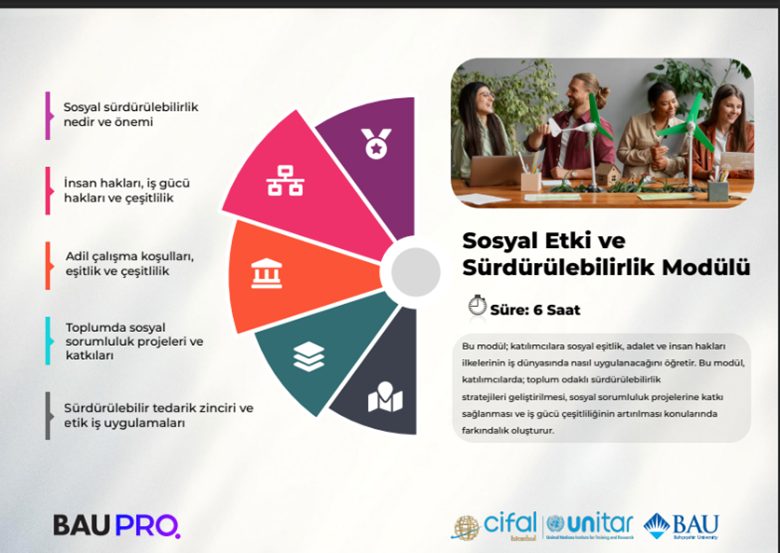
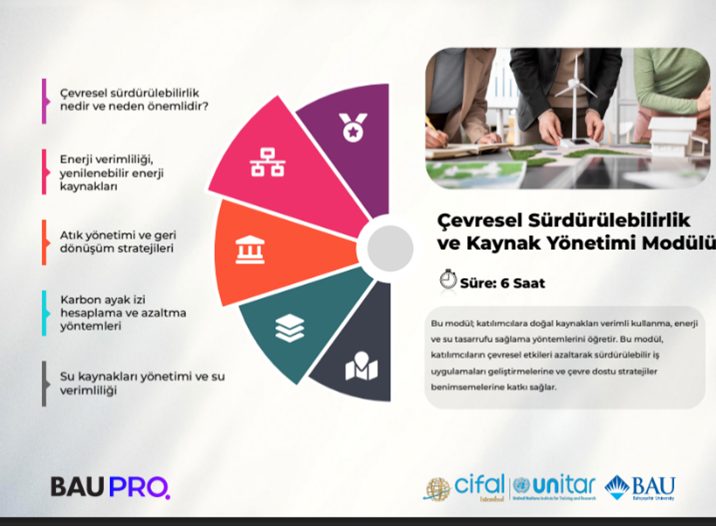
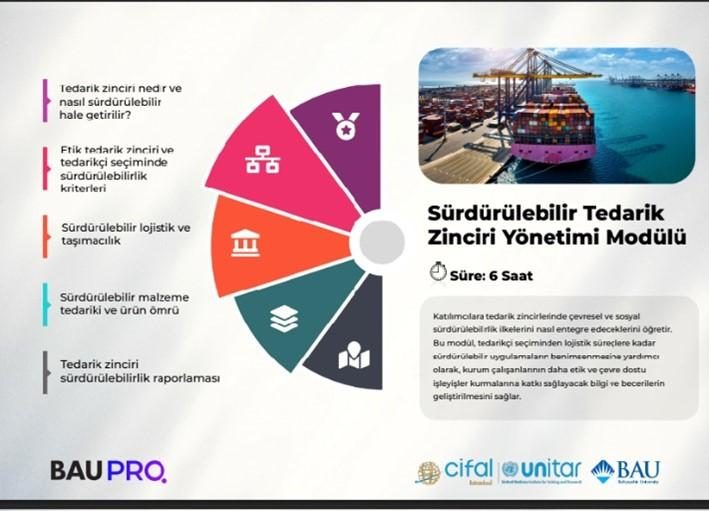
The image below shows the promotional material of the BAU – CIFAL Istanbul, United Nations Institute for Training and Research Sustainability School.
The Sustainability School, jointly developed by Bahcesehir (Bahçeşehir) University (BAU), CIFAL Istanbul, and the United Nations Institute for Training and Research (UNITAR), is one of the university’s flagship education and research initiatives promoting sustainability literacy and leadership. The program equips participants with the knowledge and skills to integrate sustainability principles into professional, academic, and community contexts.
The comprehensive curriculum, designed and delivered by BAU faculty members, is based on a hybrid and lifelong learning model that combines online flexibility with interactive, experience-based education.
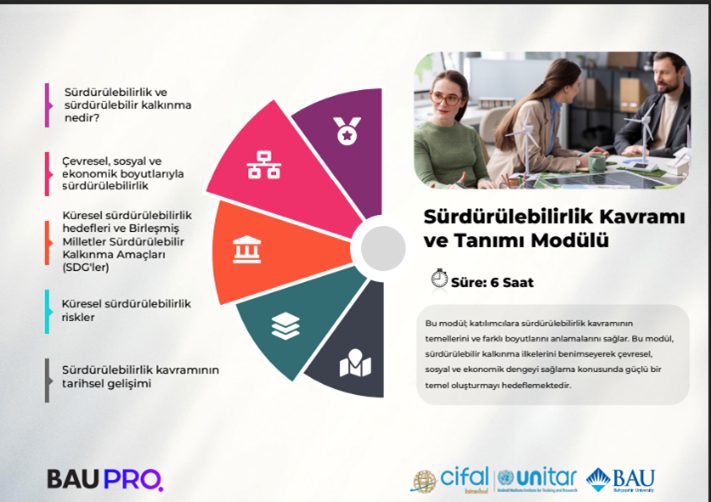
Participants engage in a total of 12 modules (48 hours) covering key topics such as environmental and social sustainability, circular economy, green innovation, ESG management, sustainable finance, responsible supply chains, and sustainability communication.
The program is conducted entirely in partnership with UNITAR and awards a jointly accredited international certificate, signed by Bahçeşehir University, CIFAL Istanbul, and UNITAR. This ensures global recognition of learners’ credentials in sustainable development education.
Through its applied learning approach, the Sustainability School empowers professionals, educators, entrepreneurs, students, and the general public to become sustainability leaders—capable of designing innovative and responsible strategies for a more resilient future.
Detailed information about the program and its modules can be accessed via the BAUPRO Sustainability School website.
The images below show images explaining different modules of the Sustainability School
BAU Sustainability Literacy Certificate Program
The images below show the homepage and registration page of the BAU Sustainability Literacy Certificate Program.
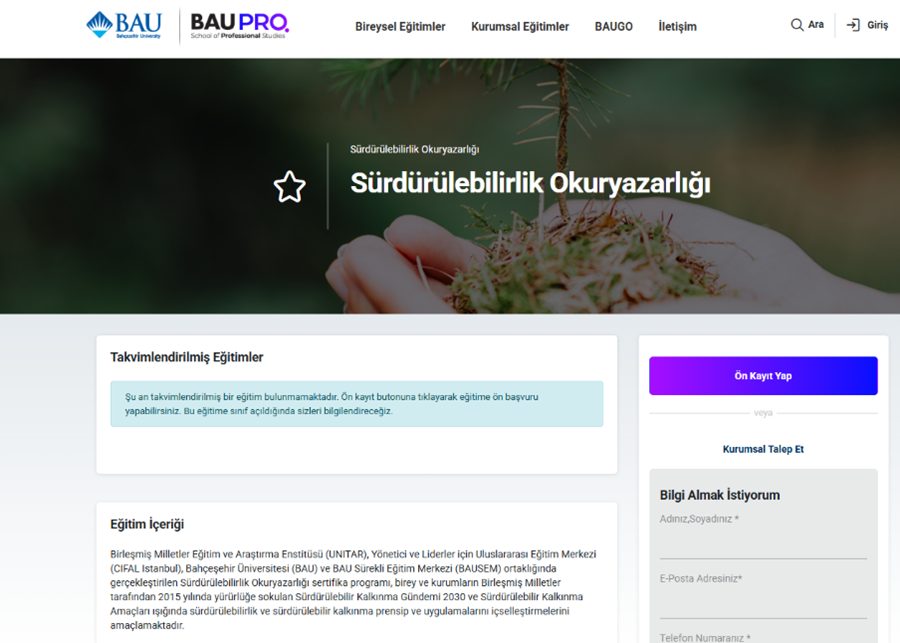
Bahcesehir (Bahçeşehir) University (BAU), in partnership
with UNITAR–CIFAL Istanbul and the BAU
Continuing Education Center (BAUSEM), offers
the Sustainability Literacy Certificate Program to enhance
awareness and understanding of the United Nations 2030 Agenda
for Sustainable Development.
The program aims to help individuals and institutions internalize the
principles and practices of sustainability by providing foundational
knowledge on the Sustainable Development Goals
(SDGs) and their implementation across various sectors.
BAU Sustainable Living Certificate Program
The images below show the homepage and registration page of the BAU Sustainable Living Certificate Program.
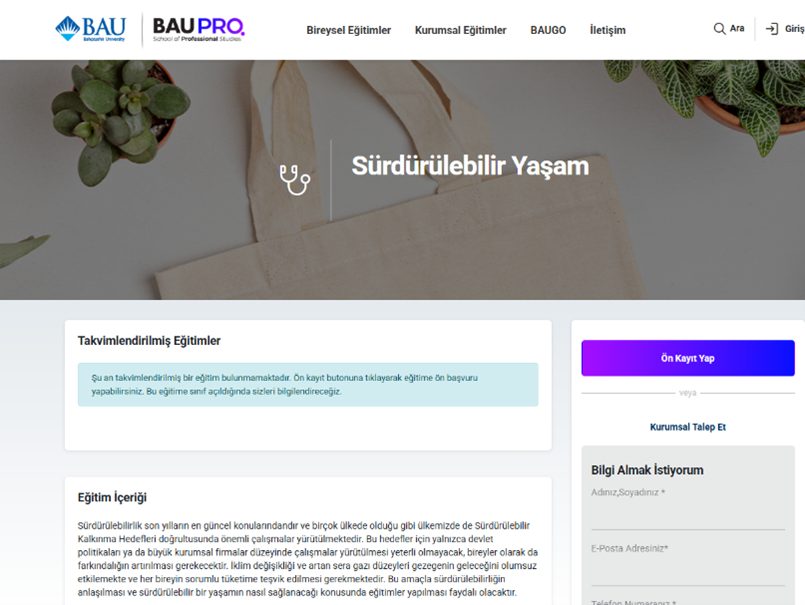
Bahçeşehir University (BAU) offers the Sustainable Living
Certificate Program, designed to raise individual and
collective awareness on sustainability and responsible lifestyle
practices.
The program provides participants with a comprehensive understanding of
how everyday choices impact the planet and highlights the importance of
sustainable behaviors in achieving the United Nations
Sustainable Development Goals (SDGs).
Through this training, participants explore key topics such as climate change, resource efficiency, and environmentally responsible consumption. The program encourages individuals to take an active role in building a more sustainable society and promotes the adoption of lifelong sustainable habits that contribute to a healthier planet.
Bahcesehir Sustainable Marketing and Sustainable Brands Certificate Program
The images below show the homepage and registration page of the BAU Sustainable Marketing and Sustainable Brands Certificate Program.
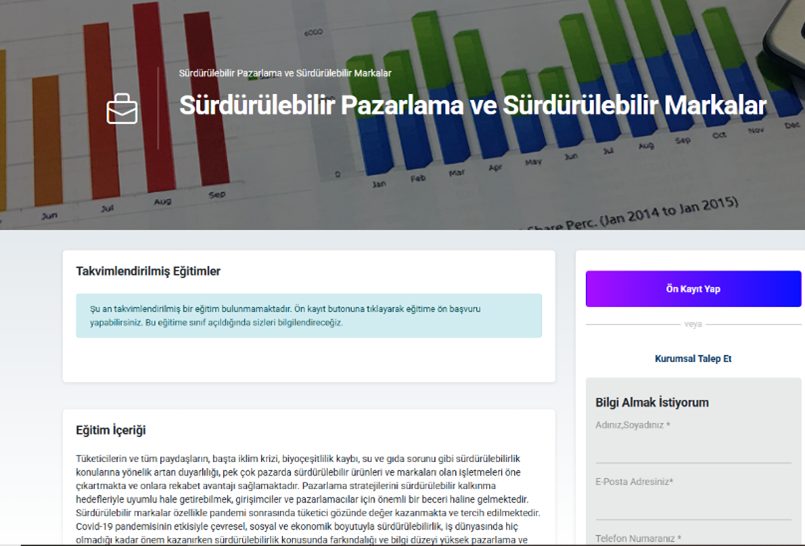
Bahçeşehir University (BAU) offers the Sustainable Marketing and Sustainable Brands Certificate Program, developed to enhance understanding of sustainability-driven marketing strategies and their role in today’s global business environment.
The program explores how sustainability principles can be integrated into brand management and marketing practices to create long-term value for both businesses and society. Participants learn how sustainable approaches can strengthen corporate reputation, build consumer trust, and drive competitiveness in increasingly conscious markets.
5- Online Sustainability Education
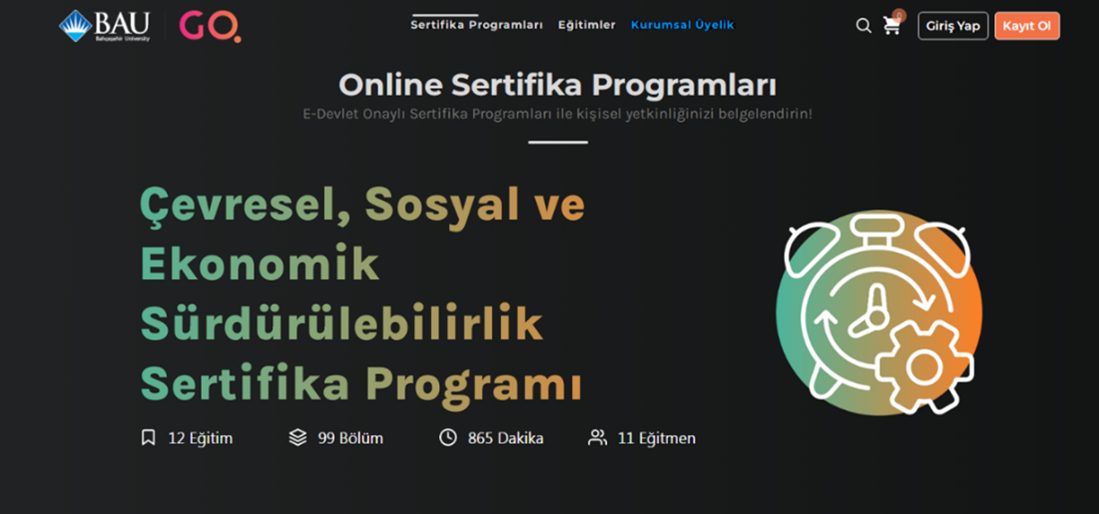
The images below show the homepage and registration page of the BAU Environmental, Societal and Economic Sustainability Certificate Program.
Sustainability-oriented training programs developed by Bahçeşehir University (BAU) faculty members and the university’s Distance Education Unit (BAUGO) aim to enhance students’ awareness and understanding of sustainability. Conducted annually in collaboration with BAU, CIFAL Istanbul, and the United Nations Institute for Training and Research (UNITAR), these courses are offered free of charge to BAU students. Participants who successfully complete all course requirements receive an official certificate, demonstrating their competence and commitment to sustainability education.
These trainings provide comprehensive insights into the principles and practices of sustainable development, covering its environmental, social, and economic dimensions. Designed to equip students with the knowledge and skills necessary to address 21st-century challenges, the programs emphasize both theoretical understanding and the practical application of sustainability concepts.
A collection of sustainability training videos is made available to all BAU students, offering accessible and engaging learning materials that support both academic and personal growth.
This comprehensive Sustainability Certificate Program, developed by Bahcesehir University (BAU) academics, provides a structured and engaging learning experience that deepens participants’ understanding of sustainable development and the United Nations Sustainable Development Goals (SDGs).
The program explores the environmental, social, and economic dimensions of sustainability, combining theoretical knowledge with practical applications to build the skills necessary for tackling complex sustainability challenges.
Comprising 12 modules and 99 sections, the training offers an integrated framework for understanding sustainability from multiple perspectives—linking global principles with local practices. Upon completion, participants strengthen their sustainability literacy, gain actionable insights, and enhance their capacity to contribute effectively to sustainable transformation in both professional and personal contexts.











