





 EN
17.2.4 - International Collaboration and Research: Review Comparative Approaches and Develop International Best Practice on Tackling the SDGs
Bahçeşehir University (BAU) actively participates in international research collaborations that bring together institutions from different countries to review comparative approaches, exchange expertise, and jointly develop best practices for addressing challenges related to the United Nations Sustainable Development Goals (SDGs). Through collaborative research, pilot initiatives, and the development of shared methodologies and practical resources, BAU contributes to identifying, testing, and adapting approaches that can support sustainable development across different national and institutional contexts.
In the section below, examples of international collaborations and research projects conducted by Bahçeşehir University (BAU) during the reporting year are presented. These initiatives illustrate how BAU contributes to reviewing comparative approaches and developing international best practices in addressing the Sustainable Development Goals (SDGs).
1- STExperiMents Project: Developing International Best Practices in STEM Education through Comparative Research and Collaboration – SDG 4 and SDG 9
The image below shows a screenshot from the official website of the STExperiMents Project, displaying Bahcesehir University and other international partner institutions collaborating to develop best practices in STEM education through comparative research.
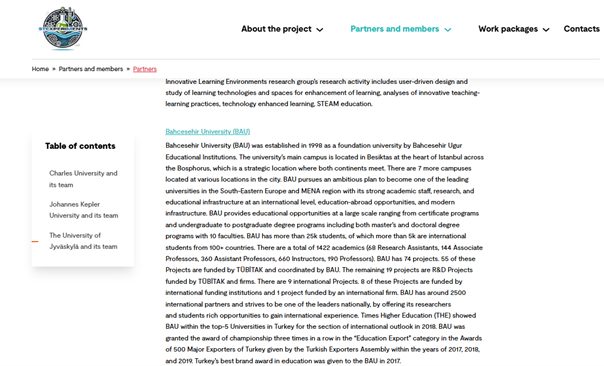
Bahçeşehir University (BAU) participates in an international research and best practice innovation project designed to advance STEM and STEAM education through comparative analysis and cross-sector collaboration among European universities and teacher training institutions. The project is implemented in partnership with Bahçeşehir University (Türkiye), Charles University (Czech Republic), Johannes Kepler University (Austria), and the University of Jyväskylä (Finland). This international partnership enables participating institutions to review and compare STEM teaching approaches across different European education systems and jointly develop educational practices that address shared challenges in quality education.
The project responds to the increasing demand for STEM skills in the European labor market and addresses skill shortages in science, technology, and digital competencies. Its central objective is to develop and test best practice real and virtual STEM experiments that help teachers integrate meaningful, hands-on science and technology learning into their classrooms.
Each partner institution develops two experimental activities—one real and one virtual—along with corresponding assessment methodologies. These activities are piloted, reviewed, and refined collaboratively among partner universities to ensure relevance across different national education systems. Through this process of international comparative review, pilot testing, and collaborative evaluation, the consortium identifies effective approaches and develops shared, transferable best practices for STEM teaching and learning.
The research outcomes are consolidated into a freely available best practice digital toolkit, featuring detailed guidelines, methodologies, and best practices for enhancing student learning performance and teacher competence in STEM fields. The toolkit represents a practical outcome of the international collaboration, translating comparative research findings and jointly evaluated teaching methods into accessible resources that can be adapted and implemented across different educational contexts.
Through international comparative research, pilot testing, and shared evaluation to create best practice solutions, the project establishes a framework for continuous professional development and innovation in education. Its open-access outputs and dissemination strategy—via academic publications, conferences, and digital networks—contribute to global knowledge exchange.
This initiative directly supports SDG 4 (Quality Education), SDG 9 (Industry, Innovation and Infrastructure), and SDG 17 (Partnerships for the Goals) by promoting cross-border collaboration, educational innovation, and the development of international best practices in STEM education. By moving beyond the exchange of existing practices to the collaborative development, testing, and dissemination of internationally applicable educational solutions, STExperiMents directly contributes to reviewing comparative approaches and developing international best practices for tackling SDG-related challenges in education.
2- AI in ADU: Artificial Intelligence in Adult Education and Self-Learning Project: SDG 4 (Quality Education), SDG 9 (Industry, Innovation and Infrastructure)
The image below represents the official logo for the AI in ADU Project
Bahçeşehir – Bahcesehir University (Türkiye) is a partner in the AI in Adult Education and Self-Learning (AI in ADU) project — an international research and best practice development initiative supported by the European Union’s Erasmus+ Program.
The project aims to enhance adult education by developing personalized, flexible, and AI-supported learning experiences. Through comparative research — including literature reviews, focus groups, surveys, and mapping of AI-powered learning platforms — the consortium identifies key opportunities and challenges in integrating artificial intelligence into lifelong learning. This comparative research enables international partners to review existing approaches to AI-supported adult education across different national and institutional contexts, identify common challenges and effective practices, and establish a shared evidence base for developing internationally applicable educational solutions.
Building on this evidence base, the project designs practical guidelines, video tutorials, and methodological resources for both educators and self-learners, enabling them to adopt AI-based learning tools and to develop internationally transferable best practices in digital education. These jointly developed resources reflect the transition from reviewing and comparing existing educational approaches to developing practical, research-informed best practices that can be adapted and implemented across different countries and learning environments.
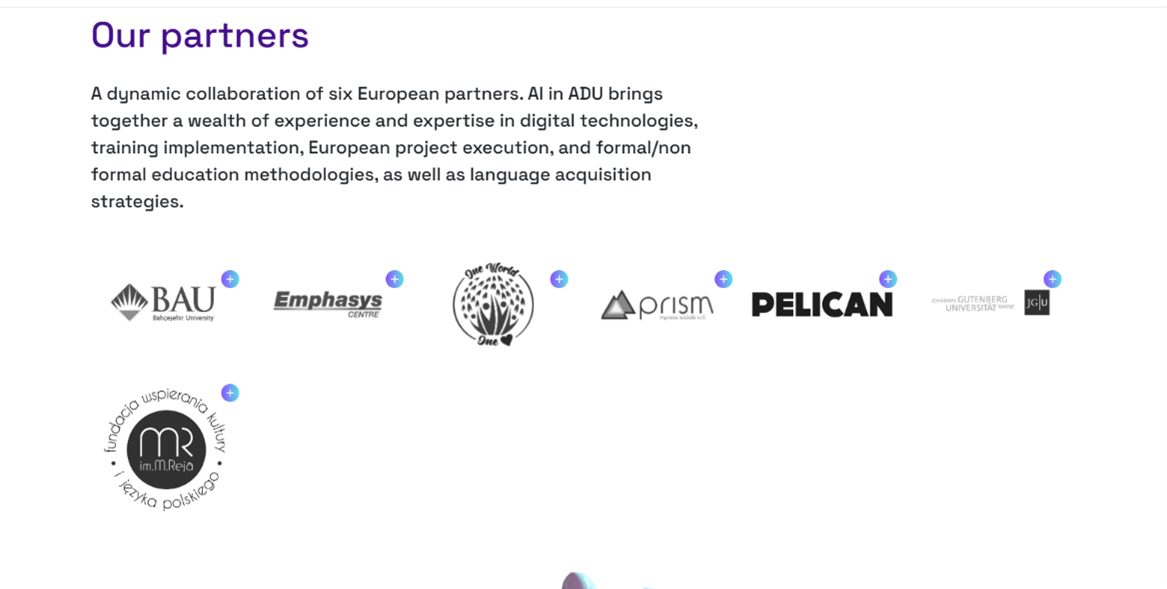
The consortium brings together six European organizations: Bahçeşehir University – Bahcesehir (Türkiye), Emphasys Centre (Cyprus), One World One Heart (Poland), PRISM Impresa Sociale (Italy), Bupnet GmbH (Germany), and KulturLife gGmbH (Germany). Through this international collaboration, the participating institutions combine their research findings, educational experiences, and technological expertise to develop shared approaches to inclusive, AI-supported lifelong learning.
By promoting innovation, inclusion, and open-access learning across Europe, the AI in ADU project directly advances SDG 4 (Quality Education), SDG 9 (Industry, Innovation and Infrastructure), and SDG 17 (Partnerships for the Goals), contributing to a more sustainable and digitally empowered society. By combining international comparative research with the collaborative development and dissemination of internationally transferable best practices, AI in ADU contributes to addressing SDG-related challenges in quality education, digital inclusion, and lifelong learning through solutions informed by experiences across multiple European countries.
The image below shows a screenshot from the official website of the AI in ADU Project, displaying Bahcesehir University and other international partner institutions.
3- MIXAP: Developing Research Based Innovative Pedagogical Practices through Mixed Reality in Education Project
The image below represents the official logo of the MIXAP Project

Bahçeşehir University (Türkiye) is a partner in the MIXAP (Mixed Reality in Education) project, a co-funded international research and best practice initiative coordinated by Le Mans Université (France), in collaboration with the Technical University of Denmark (Denmark). This international partnership brings together educational research expertise from different national contexts to review innovative teaching approaches and collaboratively develop transferable best practices in technology-enhanced education.
The image below shows a screenshot from the official website of the MIXAP Project, displaying Bahcesehir University and other international partner institutions collaborating to develop research-based innovative pedagogical practices through mixed reality in education.
The project aims to empower teachers to design, implement, and evaluate Mixed Reality (MR) learning experiences, fostering a new pedagogical framework that combines technology, creativity, and evidence-based research. Through a co-design methodology, the consortium engages educators in participatory workshops, classroom pilots, focus groups, and cross-country collaboration to develop and refine interactive, inclusive, and impactful best practice teaching systems. These collaborative research and testing activities enable international partners to review and compare different pedagogical approaches, examine their applicability across educational settings, and jointly refine innovative teaching practices based on classroom experiences and educator feedback.
MIXAP also contributes to academic research through peer-reviewed publications and conference presentations in the fields of educational technology, cognitive learning, and augmented pedagogy. Its practical output includes the development of an easy-to-use AR authoring tool, open-access learning resources, and a sustainable international teacher community that shares innovative applications of MR in education. By translating findings from international research, classroom pilots, and collaborative evaluation into practical tools and open-access resources, the project supports the development and dissemination of internationally adaptable best practices for Mixed Reality in education.
By advancing both research-based evidence and scalable best practices, the project directly supports SDG 4 (Quality Education), SDG 9 (Industry, Innovation, and Infrastructure), and SDG 17 (Partnerships for the Goals), shaping the future of inclusive and technology-enhanced learning. Through the comparative review of educational approaches and the collaborative development of research-informed teaching methodologies, MIXAP demonstrates how international research partnerships can contribute to tackling SDG-related challenges in inclusive and innovative education.
4- SOLEATECH: AI-Based Sustainable Agriculture Research Collaboration Between Türkiye and Malta: SDG 2 (Zero Hunger), SDG 9 (Industry, Innovation and Infrastructure), SDG 12 (Responsible Consumption and Production)
The image below shows the promotional poster of the ‘AI-Based Sustainable Agriculture Research Collaboration Between Türkiye and Malta
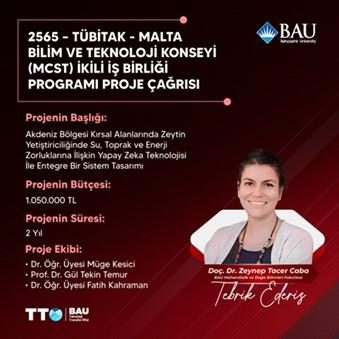
An international research and best practice development project titled “Designing an Integrated System Using Artificial Intelligence Technology to Address Water, Soil, and Energy Challenges in Olive Cultivation in Rural Areas of the Mediterranean Region” has been launched under the joint leadership of Assoc. Prof. Dr. Zeynep Tacer Caba from Bahçeşehir University (Türkiye) and Barbara Bracone, Director of Malta Wes Trade Ltd. (Malta). The collaboration brings together research expertise and practical experience from two Mediterranean countries to review different approaches to sustainable agriculture and jointly develop solutions to shared environmental and agricultural challenges.
Supported through the Bilateral Cooperation Support Program by the Scientific and Technological Research Council of Türkiye (TÜBİTAK) and the Malta Council for Science and Technology (MCST), the initiative aims to develop an AI-driven sustainable agricultural model that integrates climate-smart practices to optimize water, soil, and energy management in olive cultivation. The project specifically focuses on evaluating and implementing the best practices of both countries in addressing these challenges. By comparing agricultural practices, resource management approaches, and technological applications in Türkiye and Malta, the partners seek to identify effective methods that can inform the development of internationally transferable best practices for sustainable olive cultivation.
The project emphasizes mutual evaluation and transfer of best practices between Türkiye and Malta, drawing on the expertise and local innovations of both countries. Through comparative research, data-driven modeling, and applied field studies, the collaboration seeks to generate scalable solutions for sustainable rural development in the Mediterranean region. This combination of comparative research and applied innovation supports the joint assessment, adaptation, and development of best practices that respond to common challenges in water efficiency, soil management, and energy use. The resulting research-based approaches are intended to inform sustainable agricultural practices that may be applicable in other Mediterranean contexts facing similar environmental pressures.
This institutional framework is particularly significant because the research addresses areas of direct relevance to public policy, including sustainable agriculture, water resource management, climate adaptation, rural development, and technological innovation. By supporting collaborative research in these fields, TÜBİTAK and MCST facilitate the development of scientific knowledge and technological solutions relevant to national and regional sustainability priorities.
A central dimension of the collaboration is the comparative evaluation, exchange, and application of best practices from Türkiye and Malta. By bringing together expertise, technological approaches, and practical experiences from both countries, the project supports mutual learning and the development of innovative solutions that may be adapted to similar agricultural and environmental conditions across the Mediterranean region.
This cross-border exchange of experience and expertise demonstrates how international research cooperation can contribute to the identification, development, and potential dissemination of SDG-related best practices, strengthening the capacity of participating institutions to address common sustainability challenges.
By combining artificial intelligence, environmental science, and cross-border policy dialogue, the project contributes directly to SDG 2 (Zero Hunger), SDG 9 (Industry, Innovation and Infrastructure), SDG 12 (Responsible Consumption and Production), and SDG 17 (Partnerships for the Goals). Through the systematic comparison of national practices and the collaborative development of an AI-supported agricultural model, the project demonstrates how international research partnerships can review comparative approaches and develop shared best practices for tackling SDG-related challenges in sustainable food production and resource management.
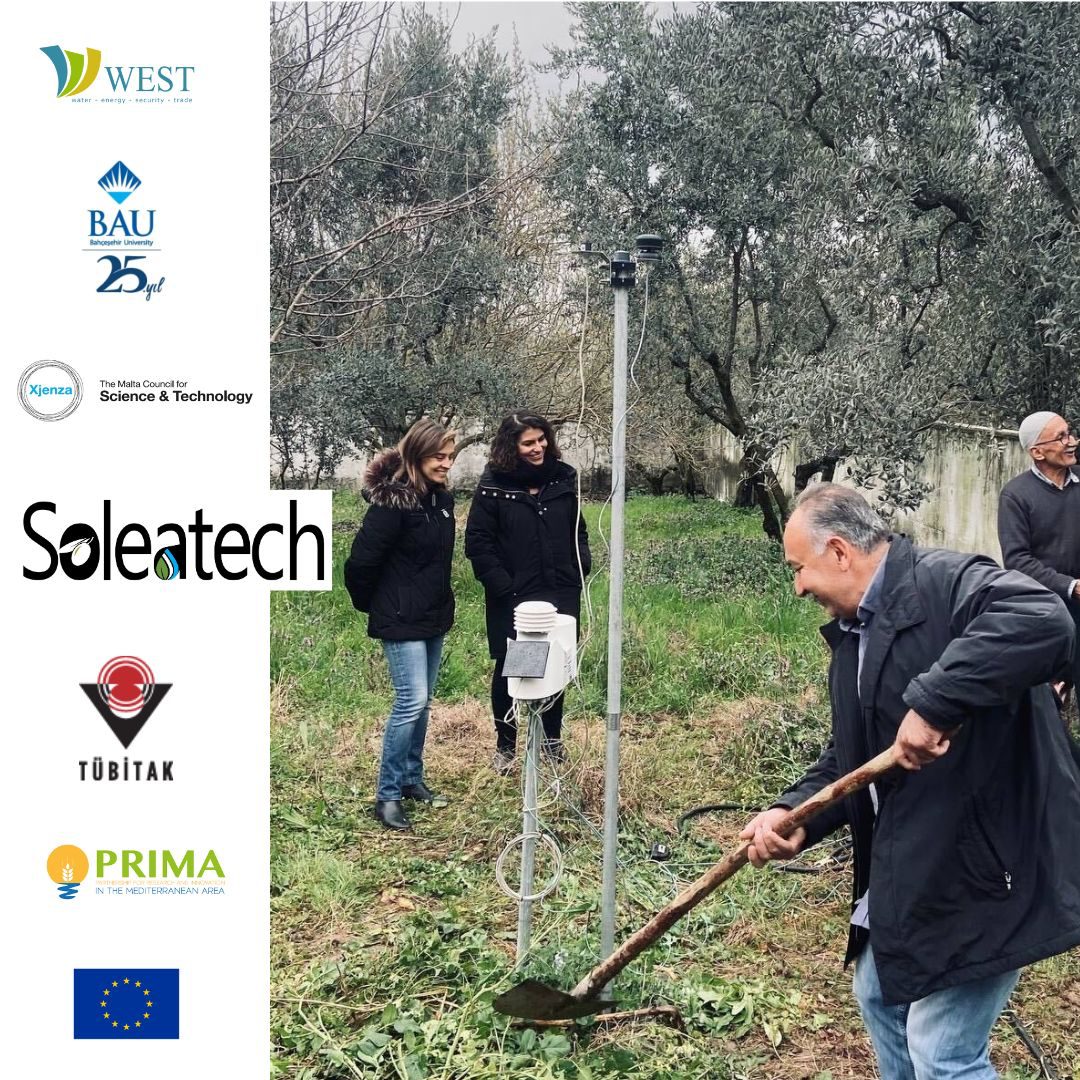
The image below portrays a highlight from the project as well as the partnering institutions:
5- FUTURE WOMEN: Creating New Opportunities for Women in Digital and STEM Economies Project: SDG 5 (Gender Equality), SDG 8 (Decent Work and Economic Growth), and SDG 17 (Partnerships for the Goals)
The image below shows screenshots from the official website of the FUTURE WOMEN Project, displaying the home page and the official logo of the project
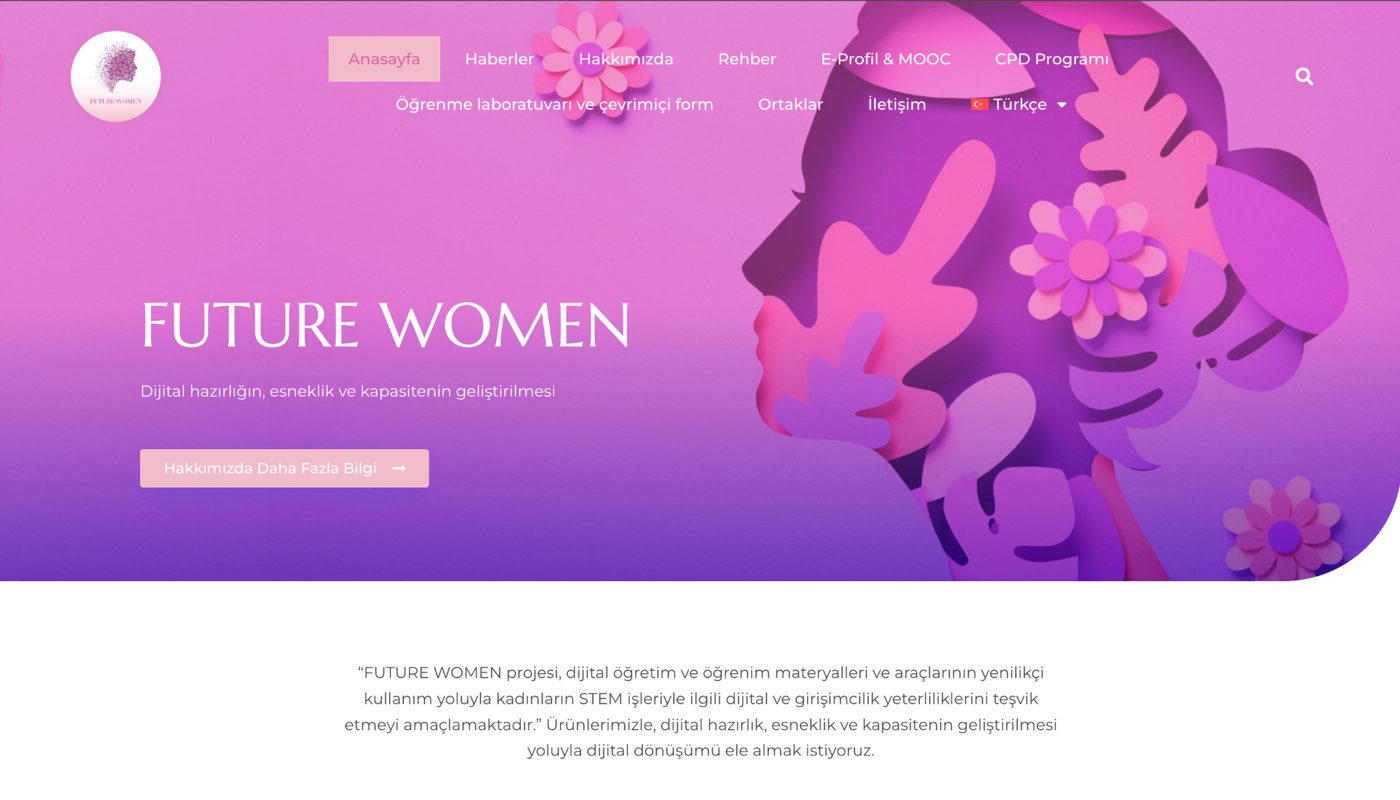
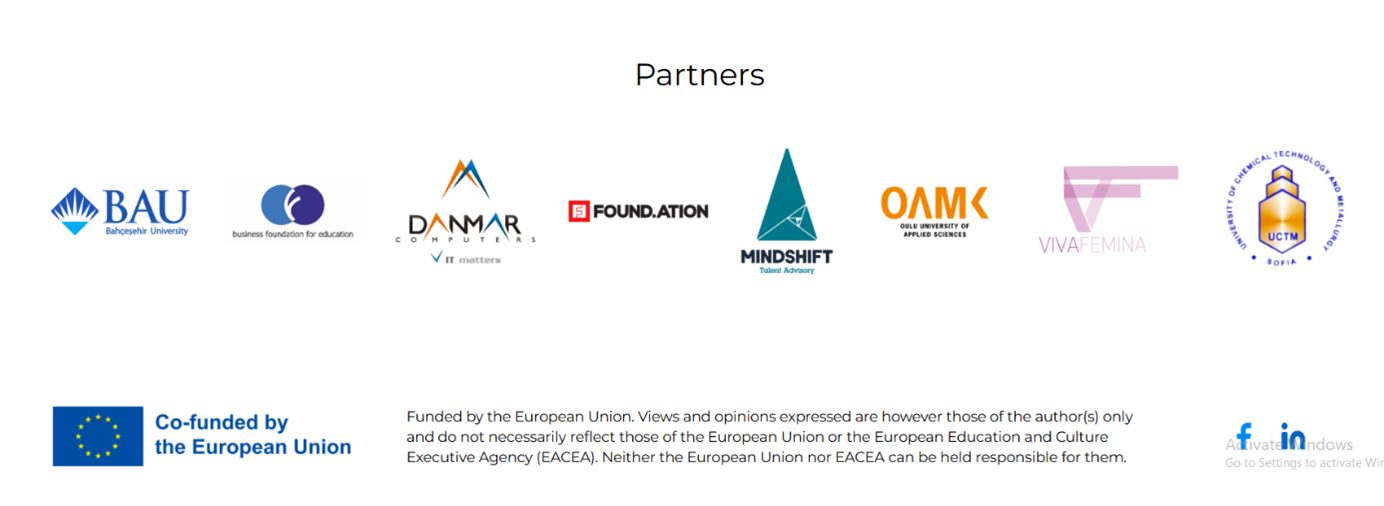
The Future Women Project is an international research and best practice development initiative, supported by the European Union’s Erasmus+ Programme. The project is implemented in partnership with Bahçeşehir University (Türkiye), Business Foundation for Education (Bulgaria), Danmar Computers (Poland), Found.ation (Greece), Mindshift Talent Advisory (Portugal), Oulu University of Applied Sciences (Finland), VivaFemina (Poland), and the University of Chemical Technology and Metallurgy (Bulgaria).
The project aims to strengthen the participation and leadership of women in the digital and STEM sectors, where female representation remains limited. By combining research-based evidence with applied training models, the initiative advances both policy innovation and capacity-building in the field of gender equality and digital transformation.
Its international research framework supports the collection and comparative analysis of information on gender disparities, career development barriers, and women's participation in STEM and digital employment across participating countries, generating evidence relevant to SDG 5 (Gender Equality) and SDG 8 (Decent Work and Economic Growth). Through this comparative research, international partners can also review different national approaches to career guidance, identify effective practices, and examine their applicability across educational and professional contexts.
As part of the project, the Continuing Professional Development (CPD) Program has been designed for career counselors seeking to adapt to the evolving realities of STEM and digital economy careers.
Grounded in comparative research and field analysis, the program introduces innovative methods and tools to better support female students in pursuing technology-related careers.
The use of comparative research findings and field-based evidence helps identify gaps in career guidance practices and informs the development of more inclusive educational and professional pathways for women. By translating international research findings into practical career counselling methodologies, the CPD Program contributes to the development of internationally transferable best practices for supporting women in STEM and digital careers.
The CPD Program includes five key learning modules:
Career Counselling for the Digital Economy and STEM Careers
Integrating Academic and Career Development
Gender Issues and Career Planning
New Career Methods and Techniques
Social Media in Career Guidance
These modules provide a common educational framework through which research-informed approaches and best practice tools can be shared, adapted, and applied across participating countries, supporting the international development and dissemination of gender-responsive career guidance practices.
Through its dual focus on research, best practices development and practical implementation, Future Women contributes directly to SDG 5 (Gender Equality), SDG 8 (Decent Work and Economic Growth), and SDG 17 (Partnerships for the Goals) by promoting inclusive participation, evidence-based policymaking, and gender-responsive innovation in education and employment.
By bringing together international partners to examine research findings, compare gender-related challenges, and develop evidence-informed educational approaches, the project also strengthens the shared knowledge base relevant to assessing progress towards gender equality and women's economic participation under the SDGs. At the same time, its combination of comparative research, international knowledge exchange, and the collaborative development of practical career guidance resources demonstrates how international partnerships can review different approaches and develop shared best practices for addressing SDG-related challenges in gender equality and economic participation.
The image below shows a screenshot from the official website of the FUTURE WOMEN Project, displaying Bahcesehir University and other international partner institutions.
6- Migration, Diversity and Governance (MiDiGo) Project: SDG 4 (Quality Education), SDG 10 (Reduced Inequalities), and SDG 17 (Partnerships for the Goals)
The image below displays the official logo of the MiDiGo Project
The image below shows a screenshot from the official website of the Migration, Diversity and Governance (MiDiGo) Project, displaying Bahcesehir University and other international partner institutions within the project consortium
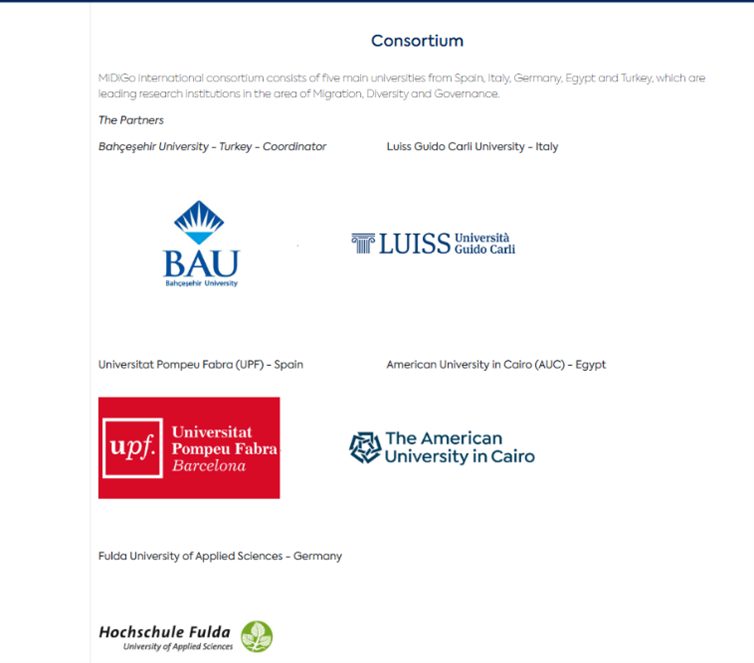
The Migration, Diversity and Governance (MiDiGo) project brings together a consortium of five leading universities from Spain, Italy, Germany, Egypt, and Türkiye, each recognized for their academic and research excellence in the fields of migration, diversity, and governance. This international partnership provides a framework for reviewing and comparing academic approaches, institutional practices, and educational methodologies across different national contexts, with the aim of developing shared international best practices in migration and governance education.
Funded by the European Union, MiDiGo aims to develop and implement best practices for internationalized higher education in migration studies by designing a joint transnational master's program—the Master's in Migration, Diversity and Governance (MiDiGo)—with a particular focus on the Mediterranean region. Through international academic collaboration, the project brings together different disciplinary perspectives and educational experiences to identify effective approaches to addressing the complex challenges of migration, diversity, and social inclusion.
The project seeks to establish a common academic framework and quality assurance mechanism among partner universities to facilitate mutual recognition of degrees and credits, ensuring academic coherence and international comparability. The development of this shared framework involves reviewing different national and institutional approaches to postgraduate education and working towards common standards and internationally transferable practices.
Through this collaboration, MiDiGo contributes to shaping a standardized and globally adaptable model for postgraduate education on migration and governance. By transforming the comparative review of educational approaches into a jointly developed transnational academic model, the project demonstrates how international collaboration can contribute to the development of best practices applicable across different higher education systems.
Upon completion, the initiative will deliver a modern, integrated, and interdisciplinary curriculum, fostering a new generation of professionals equipped to address migration and refugee issues across academia, government, and civil society. By strengthening academic excellence and transnational cooperation, the project supports the advancement of SDG 4 (Quality Education), SDG 10 (Reduced Inequalities), and SDG 17 (Partnerships for the Goals). Its collaborative approach to curriculum development, academic quality assurance, and international comparability contributes to the development of shared educational practices that support inclusive education and strengthen institutional capacities to address migration-related challenges in line with the SDGs.











