


 TR
Memory and the Seven Sins of Memory
What Is Memory?
In its simplest definition, memory refers to all the processes used to encode, store and retrieve information.
The Multiple Memory Systems Model (Schacter & Tulving, 1984)
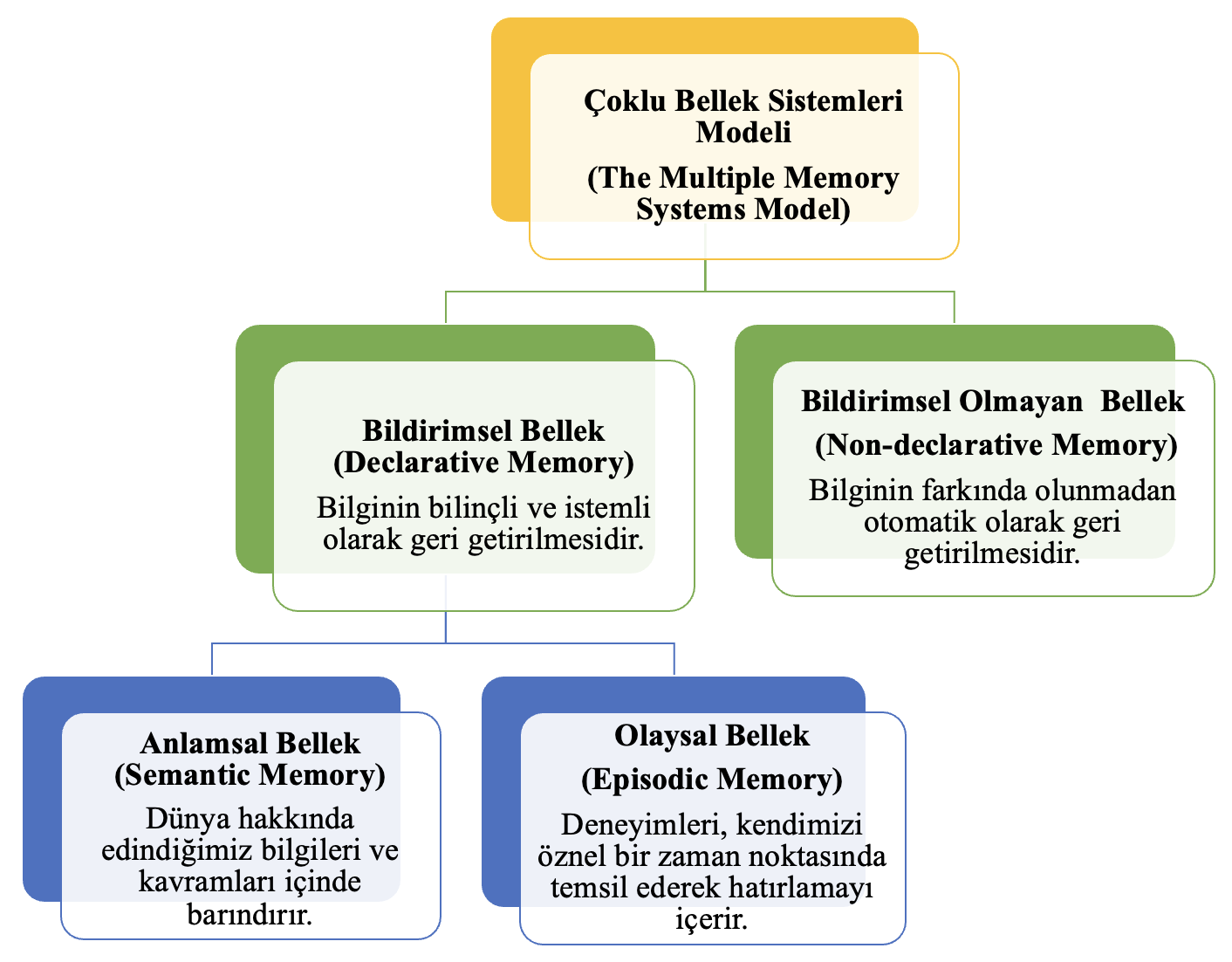
Memory errors can arise from information in semantic memory. In addition, under certain conditions, information in episodic memory can also form the basis of memory errors.
The Seven Sins of Memory and Examples from Daily Life
In a landmark study, Schacter (1999) discusses the "Seven Sins of Memory". In this study, which points to the errors of memory, the first three memory errors involve forgetting. The next three are distortion errors. The seventh and final error involves not a problem in accessing information but, on the contrary, the involuntary and frequent retrieval of information.
1. Transience
The first of these errors is the forgetting of information due to the passage of time since learning. For example, we may keep a phone number we are told in mind for a few seconds, until we save it on our phone, but we may not remember it a few minutes later.
2. Absent-mindedness
The second error shows that information may not be remembered later because attention was not sufficiently focused during the encoding stage. For example, if we are performing a second task while trying to learn target information, our attention will be divided between the two tasks and we may not remember the target information well.
3. Blocking
Third, target information that needs to be remembered may not be recalled because of exposure to similar information. In this process, one of the main causes of forgetting, similar pieces of information compete with one another and make it difficult to recall the target information. Being unable to recall information that is on the tip of our tongue, or saying another similar name instead of someone's name, are examples of this memory error.
4. Misattribution
The first of the distortion errors involves forgetting the source of information and attributing it to a different source, resulting in false recall. For example, remembering a news story we heard on television that day as if we had heard it from a friend is this type of error.
5. Suggestibility
In the second distortion error, the target information is distorted due to exposure to false information after the target information that should be remembered. Hearing someone else's inaccurate comments about an event we witnessed and distorting the details of the event with what we heard is this type of memory error.
6. Bias
In the third error under this heading, the knowledge we have previously acquired about the world and people, as well as our beliefs and emotions, can cause us to remember information incorrectly. For example, knowledge we have previously acquired about a politician can lead us to distort their statements with our past knowledge and remember them incorrectly.
7. Persistence
In some cases, information we do not want to remember, such as an event or a conversation, may frequently come to mind against our will. This often occurs in people who have had traumatic experiences such as war or abuse.