





 TR
16th UFBMEK Congress
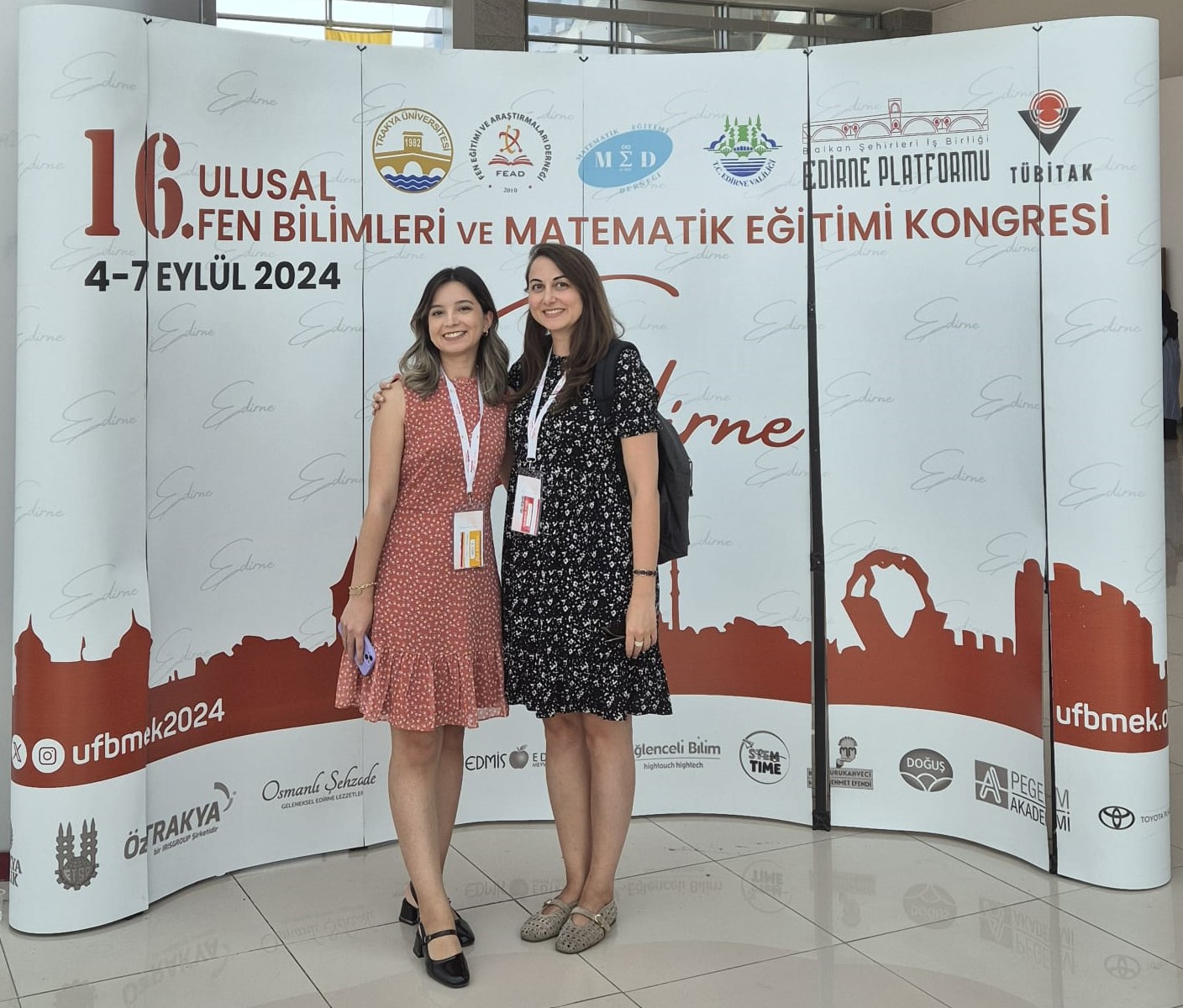
The 16th National Congress on Science and Mathematics Education (UFBMEK2024) was held in person in Edirne on 4-7 September 2024, organized by the Department of Mathematics and Science Education of the Trakya University Faculty of Education in collaboration with Trakya University, the Science Education and Research Association, and the Mathematics Education Association.
The theme of the congress was set as "Quality Science and Mathematics Education for Sustainable Development Goals," with the aim of finding effective solutions to global challenges. The congress aimed to discuss diverse perspectives in science and mathematics education, share current research findings, and create opportunities for new collaborations. The topics of the congress included science education, mathematics education, biology education, physics education, chemistry education, astronomy education, environmental education, teacher education, good practices in science education, good practices in mathematics education, and science and mathematics education in the Balkans.
On the first day of the congress, an opening ceremony was held at the Trakya University Balkan Congress Center, featuring opening speeches and invited speakers. On the second day, Thursday, 5 September 2024, a paper was presented at the Tunca Hall of the Trakya University Balkan Congress Center from the project "Design and Implementation of a Climate Change Teaching Module Based on the Socioscientific Issues-Based Teaching Approach," led by Assoc. Prof. Dr. Nilay Öztürk. The oral presentation titled "The Development Process of a Socioscientific Issues-Based Teaching Module in Climate Change Education and Teacher Views" was delivered between 14:50 and 16:30 by SOBİD Project Scholar Nazmiye Ertuğrul. Following the presentation, questions from the participants were answered.
To access the congress homepage, click here.
To access the congress program,click here.
Authors of the Paper: Nilay Öztürk, Yasemin Özdem Yılmaz, Gaye Defne Ceyhan, Nazmiye Ertuğrul (TR), Ayşe Gül Çelenk, Naz Fulya Çibik, Zeynep Aydin
Abstract of the Paper: As stated in the Sixth Assessment Report published by the Intergovernmental Panel on Climate Change in 2022, unless the world's states take decisive measures within the next decade to keep the average temperature increase from exceeding 1.5 degrees, certain environmental disasters will become inevitable (IPCC, 2022). At a time when we witness the effects of climate change accelerating every day, integrating climate change into curricula ranks among the foremost measures that can be taken for adaptation to climate change. To this end, this study shares the results of an ongoing research project that aims to support effective climate change education through the socioscientific issues-based teaching approach (Sadler et al., 2017; Sadler & Zeidler, 2005). The purpose of this study is to examine the changes in science and social studies teachers' knowledge and views on the socioscientific issues-based teaching approach following an in-service professional development program. The project has two main objectives. The first is to develop the pedagogy of teachers working at public middle schools in Istanbul for climate change education using the socioscientific issues-based teaching approach. The second objective is to design a climate change teaching module together with the teachers in the context of selected socioscientific issues and to implement it in the classroom. In line with these objectives, a five-day professional development program was conducted twice in 2024 for a group of 30-35 science and social studies teachers. The first professional development program included sessions providing information on socioscientific issues and climate change, as well as the development of a draft version of the climate change teaching module by the teachers together with the project team. After the first program, the teachers implemented the draft teaching module they had developed in their classrooms. In the second professional development program, classroom implementation experiences were shared and the parts of the teaching module deemed necessary were revised. During data collection, teachers' knowledge and views on socioscientific issues-based teaching were assessed with an instrument of 5 open-ended questions, administered as a pre-test at the beginning of the first program and as a post-test at the end of the second program. At the congress, the results of the content analysis of the data obtained from the teachers' answers to the open-ended questions will be shared. Ultimately, this study is expected to help teachers develop their pedagogical skills in climate change education using the socioscientific issues-based teaching approach. In this way, students in the participating classrooms may gain a more comprehensive and critical understanding of climate change. In addition, the climate change teaching module developed will serve as a resource that other teachers can use and will contribute to the dissemination of climate change education.











