





 TR
Managing Migration at the Local Level
The United Nations defines a refugee as “a person who, owing to a well-founded fear of being persecuted for reasons of race, religion, nationality, membership of a particular social group or political opinion, has left their country and is unable or, owing to such fear, unwilling to return.” According to UNHCR data, as of 2020 there are approximately 26.3 million refugees worldwide.[1] These figures once again underline the importance of considering the management of migration at the international, national and local levels. Meanwhile, World Refugee Day has been observed on 20 June since 2001 to raise public awareness of the problems refugees have to struggle with. The observance of World Refugee Day also makes it possible to evaluate policies and practices of migration management and creates an opportunity to put forward recommendations for improvement.
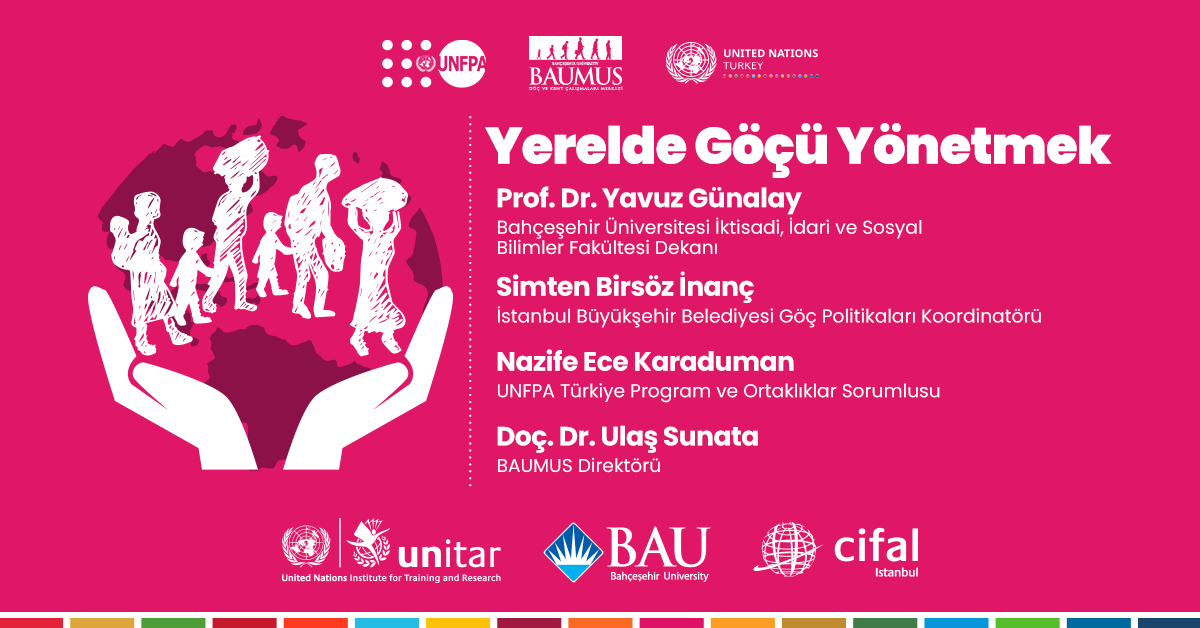
Türkiye, which became the country hosting the largest number of refugees in the world as of 2015, still ranks first in this area according to the latest data.[2] Managing migration flows soundly, ensuring integration and preventing rights violations are of great importance for Türkiye and its region. In this context, it is essential not only to implement national migration policies but also to emphasize the active roles in migration management of local governments and civil society organizations, which have strong access to the field. Local governments and civil society, which both complement the gaps left by integration policies and act as intermediaries in the implementation of practices, and identify needs and design new projects, are the main actors of migration management. In this context, the Managing Migration at the Local Level event, which aimed to enable an assessment of the current situation while developing recommendations for the future, was coordinated on Sunday, 20 June, within the scope of World Refugee Day 2021, in cooperation with the United Nations Population Fund (UNFPA), the Bahçeşehir University Center for Migration and Urban Studies (BAUMUS) and CIFAL Istanbul, the International Training Center for Authorities and Leaders affiliated with the United Nations Institute for Training and Research (UNITAR). Bringing together names actively involved in local governments and civil society organizations, the event aimed to analyze migration management by drawing on the field experience of its guests. The event was held with the participation of Prof. Dr. Yavuz Günalay, Dean of the Faculty of Economics, Administrative and Social Sciences at Bahçeşehir University; Simten Birsöz İnanç, Migration Policies Coordinator at the Istanbul Metropolitan Municipality; Nazife Ece Karaduman, UNFPA Türkiye Programme and Partnerships Officer; and Assoc. Prof. Dr. Ulaş Sunata, Director of BAUMUS at Bahçeşehir University.
[1] UNHCR. (2020). “Refugee Data Finder”. Retrieved from: https://www.unhcr.org/refugee-statistics/ (Accessed: 11 June 2021)
[2] OM. (2019). World Migration Report 2020: Migration and Migrants: A Global Overview. IOM Publications. https://publications.iom.int/books/world-migration-report-2020-chapter-2











