


 TR
TR
PLURIEX Dialogues
PLURIEX Dialogues is a flexible and outward-facing activity stream designed to connect PLURIEX with ongoing debates, projects, and communities beyond its core programme. Through collaborative panels, roundtables, public talks, and joint workshops, PLURIEX Dialogues brings together scholars, practitioners, students, and civil society actors to reflect on pressing questions of EU governance, knowledge production, and epistemic plurality. Rather than operating as standalone events, Dialogues are embedded in wider academic and policy ecosystems, allowing PLURIEX to remain responsive, relational, and open to emerging conversations.
By partnering with other research projects, international organisations, networks, and universities, PLURIEX Dialogues creates low-threshold spaces for experimentation, exchange, and mutual learning. These activities foreground dialogue over output-driven formats, encouraging critical reflection, interdisciplinary encounters, and the circulation of diverse knowledges. In doing so, PLURIEX Dialogues strengthens the project’s commitment to epistemic pluriversality while amplifying its visibility, reach, and collaborative impact across academic and policy communities.
Repositioning Türkiye in Europe’s Defence Landscape: Insights from the
Türkiye–Italy Partnership
Moderator: Prof. Dr. Selcen Öner
Host: PLURIEX – Jean Monnet Centre of Excellence on Epistemic Pluriversality, in collaboration with Politics and Society Seminar Series, Department of Political Science and International Relations, Bahçeşehir University
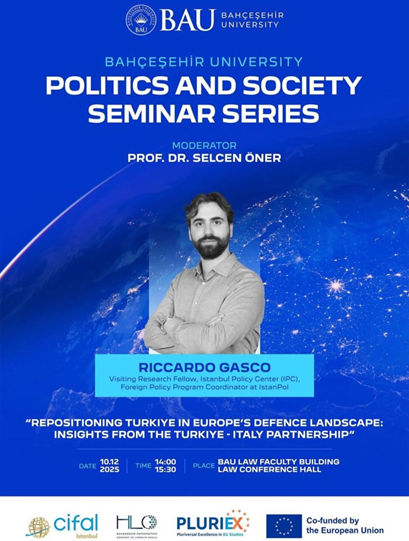
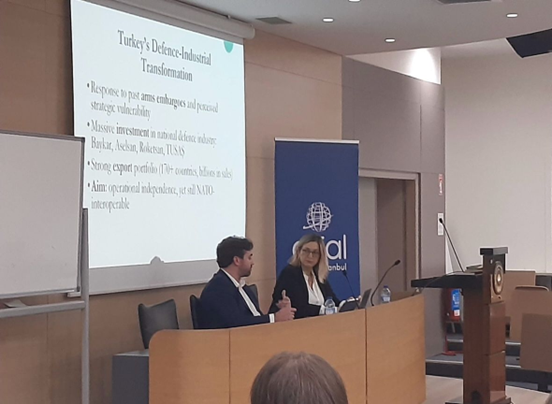
Seminar Overview This seminar explored Türkiye–Italy cooperation in defence and security as a critical entry point for understanding Europe’s evolving new security architecture beyond EU-centric and core-dominated perspectives. Rather than treating European security as a unified institutional project, the discussion examined how bilateral partnerships and middle-power strategies actively shape Europe’s defence landscape. Adopting a pluriversal analytical lens, the seminar highlighted how European defence governance is co-produced across multiple geopolitical sites — including NATO, the EU, defence-industrial cooperation, bilateral cooperations and regional alliances. Türkiye–Italy relations were discussed as a case that challenges binary framings of EU vs. non-EU and core vs. periphery, revealing instead a polycentric and negotiated security order.
About the Speaker Riccardo Gasco is the Foreign Policy Program Coordinator at IstanPol Institute and a PhD Candidate in International Relations at the University of Bologna. His doctoral research examines Türkiye’s foreign policy behaviour as a regional power navigating between NATO and Russia.
Key Discussion Points During the seminar, participants discussed how Türkiye–Italy defence cooperation reflects broader shifts toward strategic autonomy, flexible alliances and defence-industrial partnerships in Europe.
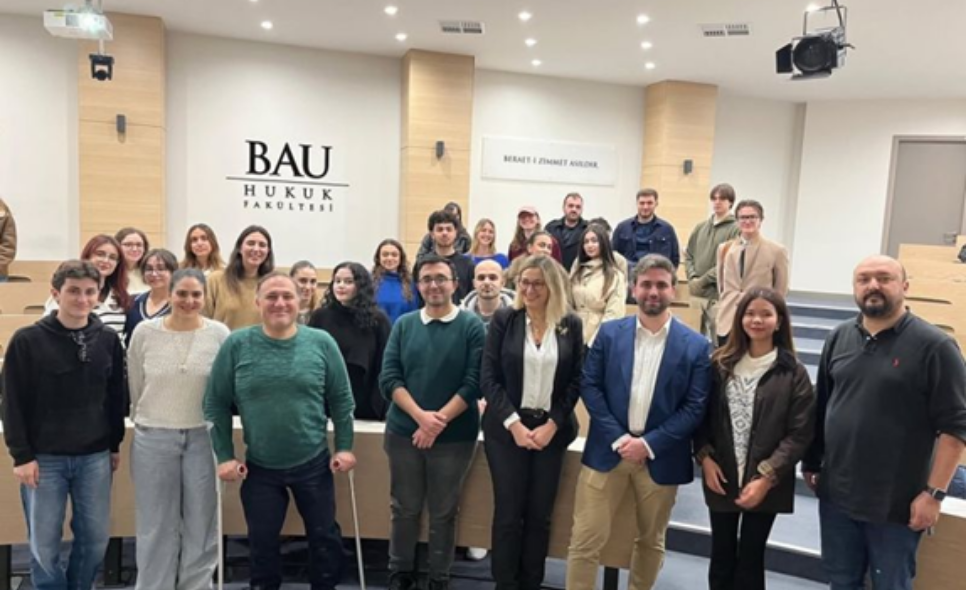
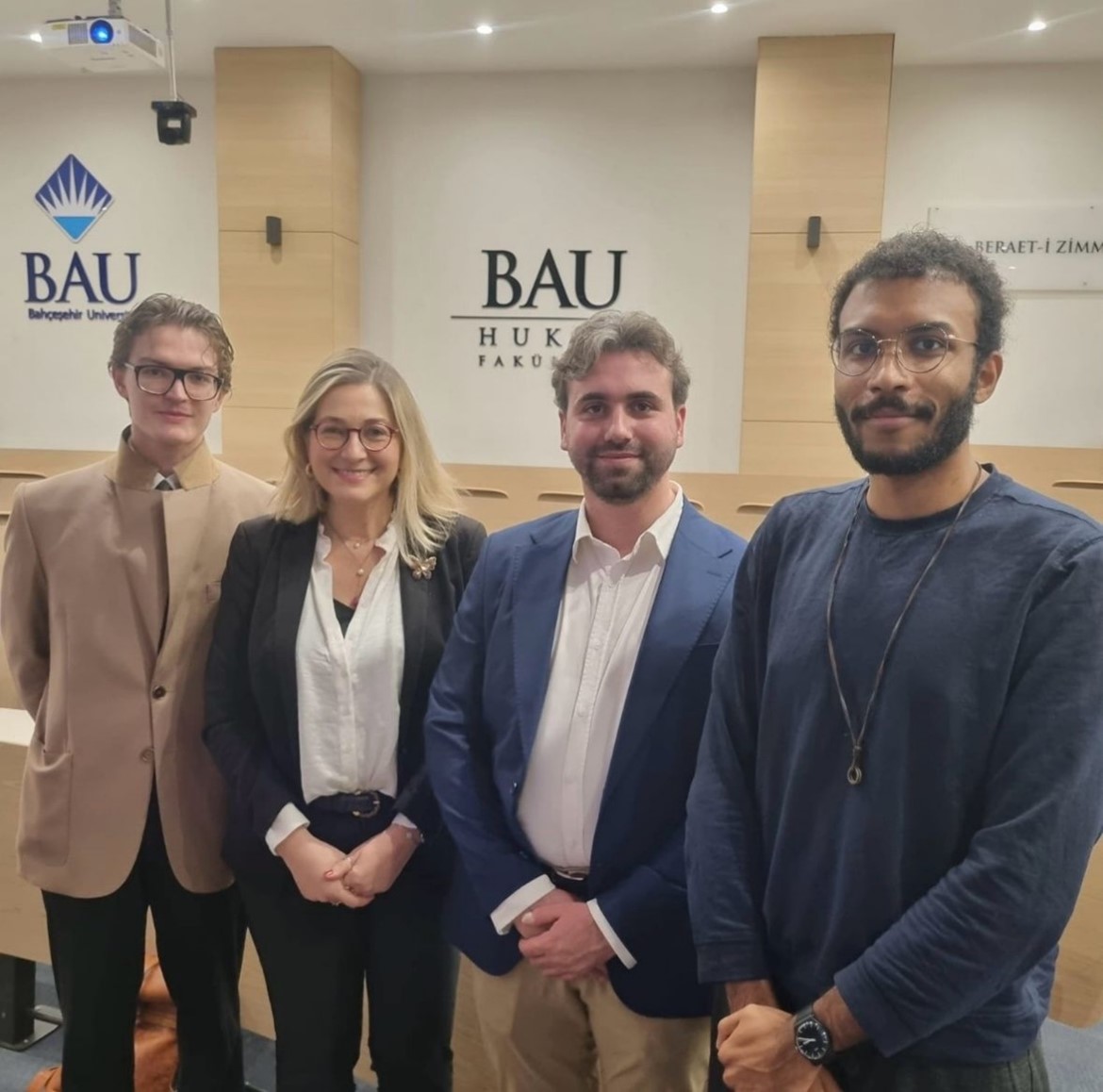
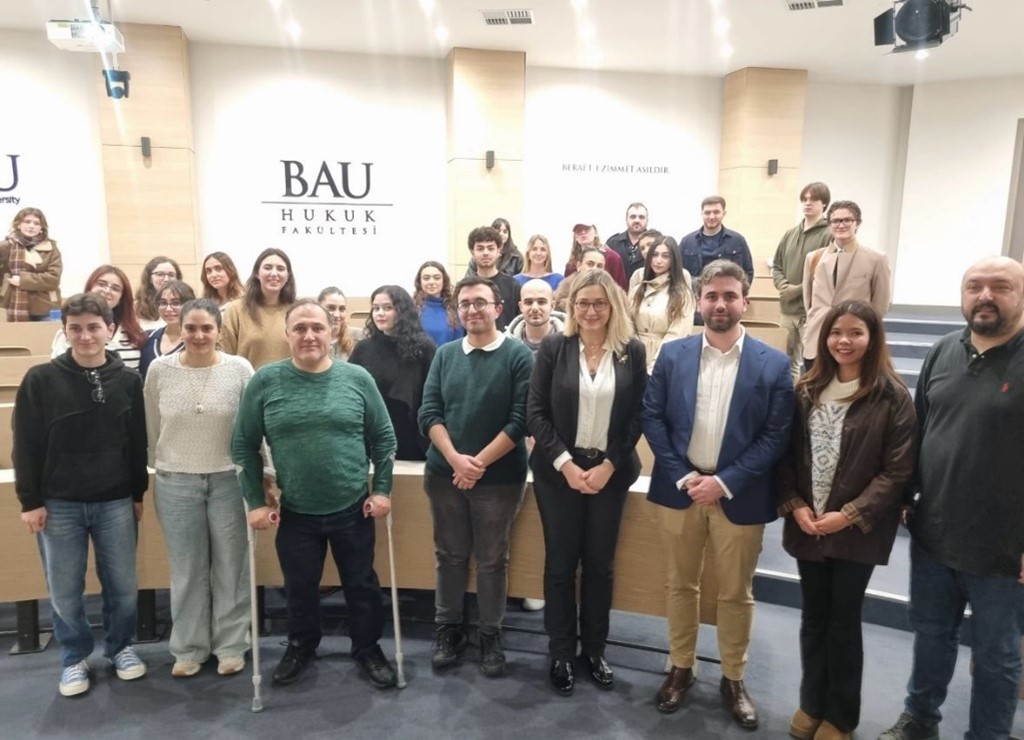
Audience & Discussion The seminar brought together academics, researchers, policymakers, practitioners from international organisations, representatives from CIFAL Istanbul and students from BAU.
PLURIEX at the IKV 60th Anniversary Meeting: Plural, Cross-Sectoral
Dialogue on Türkiye–EU Relations
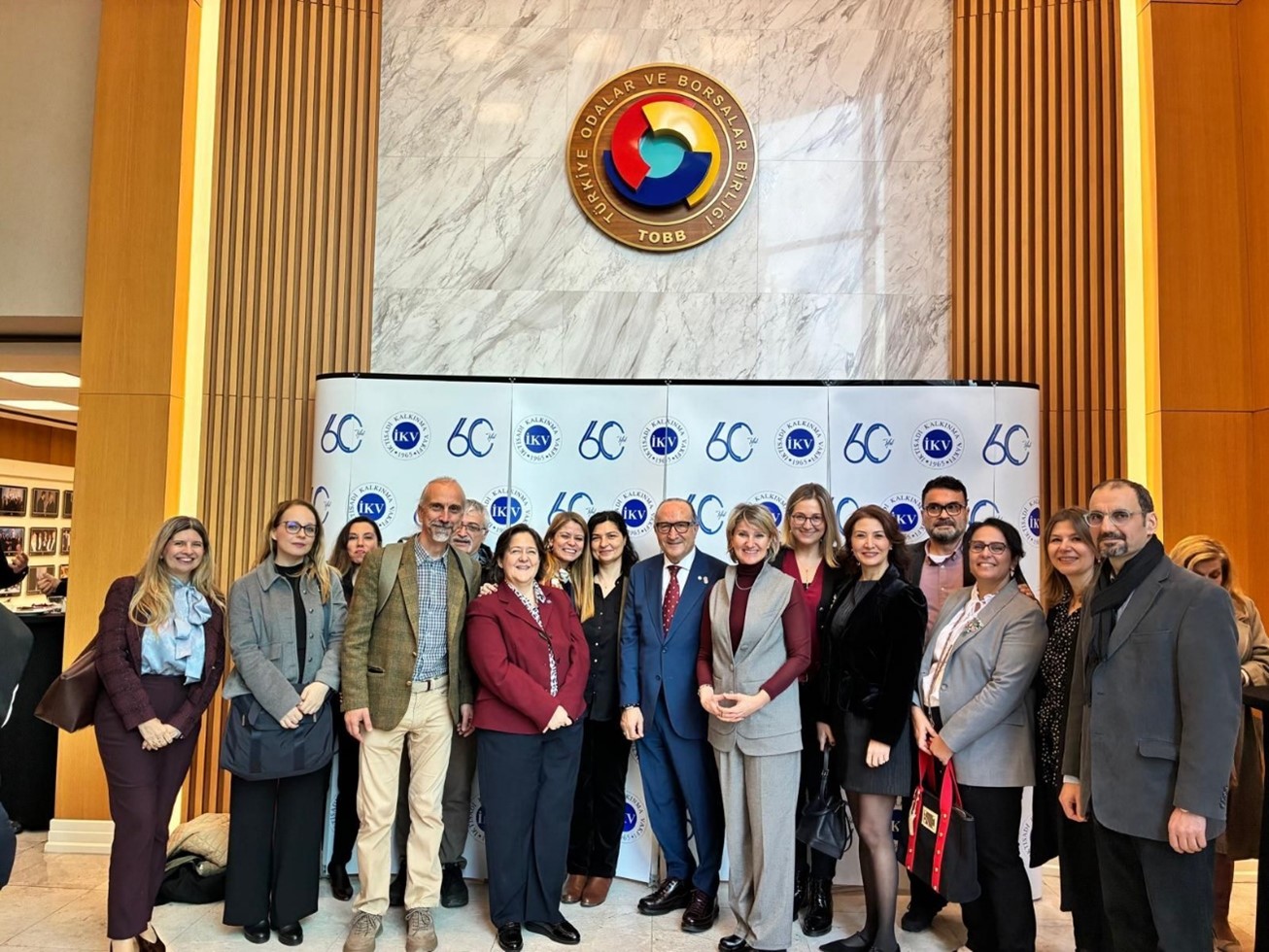
The 60th anniversary meeting of the Economic Development Foundation (İktisadi Kalkınma Vakfı – IKV), titled “Türkiye–EU Relations: The Way Forward and the Role of IKV”, convened a broad and highly engaged community of academics, civil society representatives, policy practitioners, and think-tank experts working on Türkiye–EU relations. The meeting served as an important space for dialogue at a moment when Türkiye–EU relations continue to be shaped by overlapping political, economic, and security dynamics and by debates over the EU’s evolving institutional and policy architecture.
Across the sessions, participants reflected on both the structural challenges facing Türkiye–EU relations and the possibilities for renewed engagement. Discussions addressed the roles of civil society and policy institutes in sustaining dialogue and expertise, as well as the need for stronger cooperation between knowledge-producing communities and policy actors. A recurring theme was the value of people-to-people contacts and bringing together different sectors—academia, civil society, and the policy community—to ensure that debates on Türkiye–EU relations remain analytically grounded, inclusive, and responsive to changing regional and global conditions.
Importantly, the meeting enabled wide-ranging discussion across key policy domains central to Türkiye–EU relations, including:
- the EU’s changing institutional architecture and the implications for Türkiye’s place in Europe’s future;
- debates on differentiated and flexible integration and what these might mean for accession and partnership models;
- migration and mobility governance, and the wider politics of borders and responsibility-sharing;
- shifting debates on security and defence cooperation, alongside Europe’s evolving strategic environment, increasing necessity for Europe’s geostrategic autonomy;
- the place of social policy, culture, and cultural diplomacy in sustaining societal connections; and
- challenges raised by Türkiye’s alignment with emerging EU frameworks, including discussions around SAFE and related policy constraints.
PLURIEX – Pluriversal Excellence in EU Studies was represented at the meeting by Prof. Dr. Selcen Öner, PLURIEX Communication and Knowledge Dissemination Lead. Her participation supported PLURIEX’s wider commitment to strengthening connections between scholarly expertise and policy-facing debates, the interactions and collaboration between academics and civil society and to ensuring that discussions of Europe are not confined to a single institutional or geographic viewpoint.
The meeting also reaffirmed IKV’s long-standing role as a key convenor in Türkiye–EU relations—bringing together business, civil society, and academic communities and sustaining a shared space for informed discussion. The strong participation of scholars working on EU-related issues in Türkiye—alongside postgraduate and doctoral researchers—demonstrated the vitality of the field and the continued need for forums that enable collective reflection and cross-sectoral engagement.
In line with PLURIEX’s mission of epistemic pluriversality, this event strengthened a knowledge space where multiple perspectives on Europe—across disciplines, sectors, and geopolitical experiences—can meet, contest, and co-produce more inclusive understandings of Türkiye–EU relations.
Krizler Çağında Feminist Epistemik Adalet ve Direniş: Afetlerde Kadın
Deneyimleri ve Dayanıklılık (Feminist Epistemic Justice and Resistance
in the Age of Crises: Women’s Experiences and Resilience in Disasters)
Kayıt-Recording: Recap: Krizler Çağında Feminist Epistemik Adalet ve Direniş 09 March | Meeting | Microsoft Teams
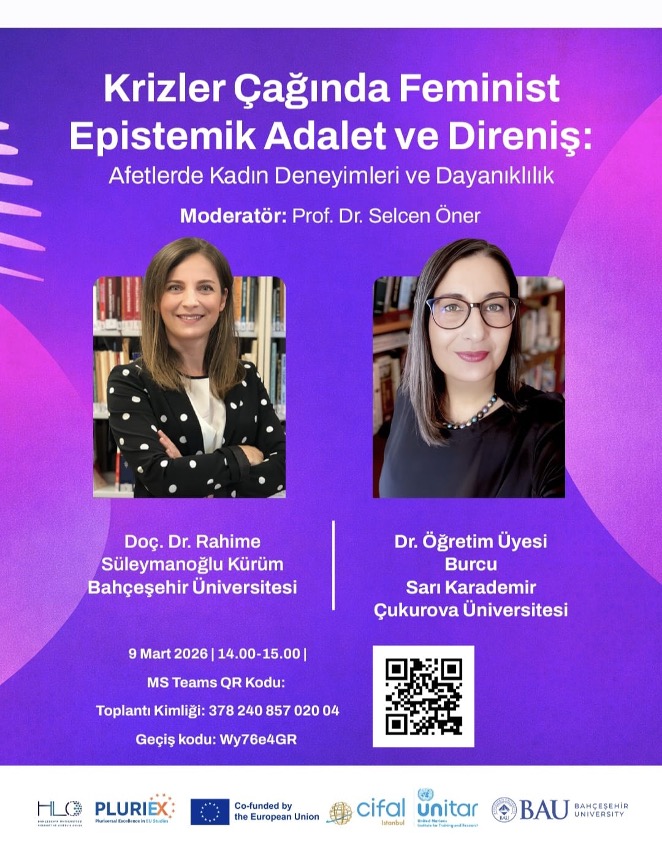
Feminist Epistemic Justice and Resistance in the Age of Crises: Women’s Experiences and Resilience in Disasters As part of the International Women’s Day (8 March) events, the online seminar titled “Feminist Epistemic Justice and Resistance in the Age of Crises: Women’s Experiences and Resilience in Disasters” was held on 9 March 2026 within the framework of the Bahçeşehir University Department of Political Science and International Relations Seminar Series. The event was moderated by Prof. Dr. Selcen Öner and featured presentations by Assoc. Prof. Dr. Rahime Süleymanoğlu-Kürüm (Bahçeşehir University) and Dr. Burcu Sarı Karademir (Çukurova University). The seminar was organized within the scope of the PLURIEX – Pluriversal Excellence in EU Studies Jean Monnet Centre of Excellence project. Supported by the European Commission’s Jean Monnet Programme and co-funded by Bahçeşehir University, the project aims to promote plural and inclusive perspectives in EU Studies and foster critical academic dialogue. The event was organized with the contributions of the School of Government and Leadership (HLO) at Bahçeşehir University, CIFAL Istanbul (UNITAR), and Bahçeşehir University. The seminar explored disasters not only as technical or environmental events but also through the lenses of gender, knowledge production, and power relations. In her presentation, Assoc. Prof. Dr. Rahime Süleymanoğlu-Kürüm introduced the concept of feminist epistemic justice, highlighting how the experiences and knowledge of women and marginalized groups are often excluded or undervalued in knowledge production and decision-making processes. In the second presentation, Dr. Burcu Sarı Karademir examined disasters from a human security and gender perspective. She emphasized that disasters tend to deepen pre-existing gender inequalities and vulnerabilities that women already face in economic, social, and political spheres. The seminar demonstrated that feminist epistemic justice is not only a critical analytical framework but also an important approach for developing more inclusive, rights-based, and gender-sensitive disaster policies.
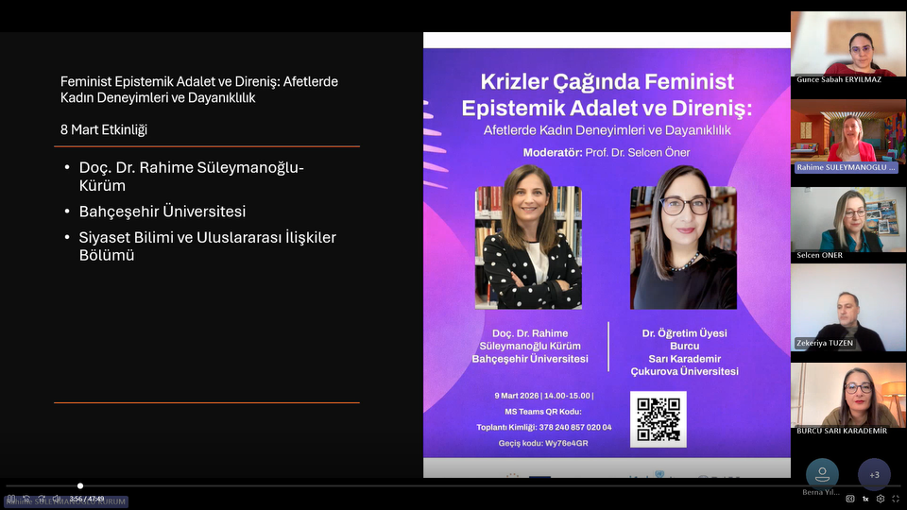
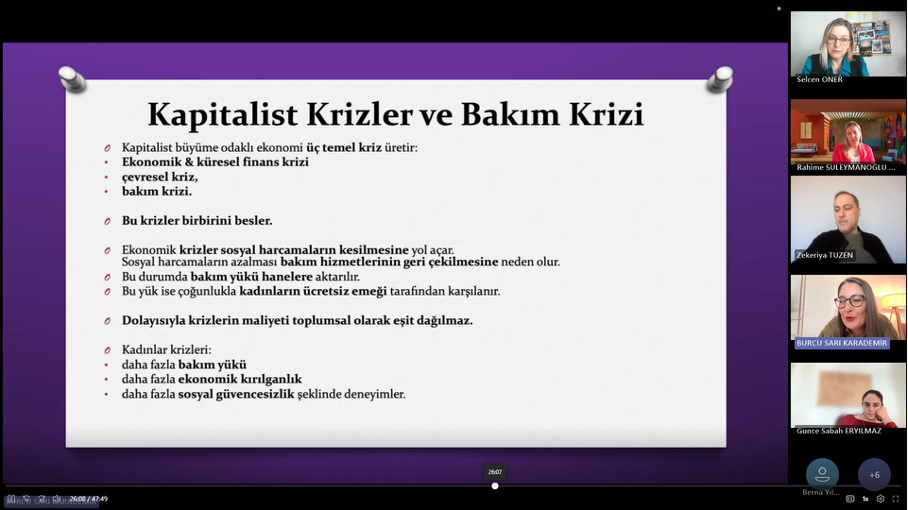
The seminar also contributed directly to the objectives of the PLURIEX – Pluriversal Excellence in EU Studies Jean Monnet Centre of Excellence, which seeks to promote plural and inclusive perspectives in EU Studies. By discussing disasters through the lenses of gender, knowledge production, and feminist epistemic justice, the event highlighted the importance of integrating women’s experiences and marginalized perspectives into debates on Europe.
Krizler Çağında Feminist Epistemik Adalet ve Direniş: Afetlerde Kadın Deneyimleri ve Dayanıklılık 8 Mart Dünya Kadınlar Günü kapsamında düzenlenen “Krizler Çağında Feminist Epistemik Adalet ve Direniş: Afetlerde Kadın Deneyimleri ve Dayanıklılık” başlıklı çevrim içi seminer, 9 Mart 2026 tarihinde Bahçeşehir Üniversitesi Siyaset Bilimi ve Uluslararası İlişkiler Bölümü seminerleri kapsamında gerçekleştirildi. Etkinlik, Bahçeşehir Üniversitesi bünyesinde yürütülen PLURIEX – Pluriversal Excellence in EU Studies Jean Monnet Centre of Excellence projesi kapsamında düzenlendi. Seminerde afetlerin yalnızca teknik ve fiziksel boyutlarıyla değil, aynı zamanda toplumsal cinsiyet, bilgi üretimi ve güç ilişkileri bağlamında nasıl anlaşılması gerektiği ele alındı. Dr. Öğr. Üyesi Burcu Sarı Karademir ise konuşmasında afetleri insan güvenliği ve toplumsal cinsiyet eşitsizlikleri çerçevesinde değerlendirdi. Seminer, feminist epistemik adaletin yalnızca eleştirel bir kavramsal çerçeve değil, aynı zamanda daha kapsayıcı, hak temelli ve toplumsal cinsiyet eşitliğini önceleyen afet politikaları geliştirmek için önemli bir yaklaşım sunduğunu ortaya koydu.
Bu etkinlik, PLURIEX – Pluriversal Excellence in EU Studies Jean Monnet Centre of Excellence projesinin temel amaçlarından biri olan Avrupa çalışmalarında farklı bilgi perspektiflerinin görünür kılınması ve çoğulcu bilgi üretiminin teşvik edilmesi açısından önemli bir katkı sağlamıştır.