


 TR
TR
Early Career Researcher Workshops (ECRW)
PLURIEX’s research agenda explores how diverse forms of knowledge shape EU policymaking. Led by an interdisciplinary team, the project will create collaborative research opportunities for undergraduate, master’s, and doctoral students, including co-authorship, research training, and engagement with experts working on EU governance. The research component supports PLURIEX’s broader mission of fostering epistemic diversity and strengthening academic–policy linkages.
Broadening the Horizons of EU Scholarship
PLURIEX will organise annual, full-day Early Career Researcher Workshops designed to bring fresh perspectives into EU studies and strengthen interdisciplinary engagement. Held once a year, these workshops will feature multiple sessions throughout the day and will welcome participants from BAU as well as universities across Istanbul and Turkey.
A core aim of the ECRWs is to involve faculties and departments that rarely intersect with EU-focused scholarship—such as engineering, architecture, law, agriculture, environmental studies, business administration, science, technology, and public administration. Because many EU policy areas are deeply technical, the participation of these disciplines is essential for moving EU debates beyond narrow political, security, or migration frames.
The workshops will serve as collaborative spaces where early career researchers can interact with academic and non-academic stakeholders, including policymakers at local, national, and EU levels, civil servants, civil society actors, educators, and media representatives. This dialogue is crucial for generating new insights that can support evidence-based EU policymaking and strengthen the EU’s role in a globalised and interconnected world.
In addition to cultivating interdisciplinary exchange, ECRWs will help build networks with other Jean Monnet Modules, Chairs, and Centres of Excellence in Turkey. Introducing diverse disciplines to EU-related discussions and to existing Jean Monnet initiatives will also contribute to increasing the visibility and attractiveness of Jean Monnet Actions across a wider academic community.
PLURIEX welcomes early career researchers who wish to participate, present their work, or explore collaboration opportunities.
From Bean to Cup and Beyond: Rethinking Europe as a Relational Space through Coffee Culture and Blue Anatolianism
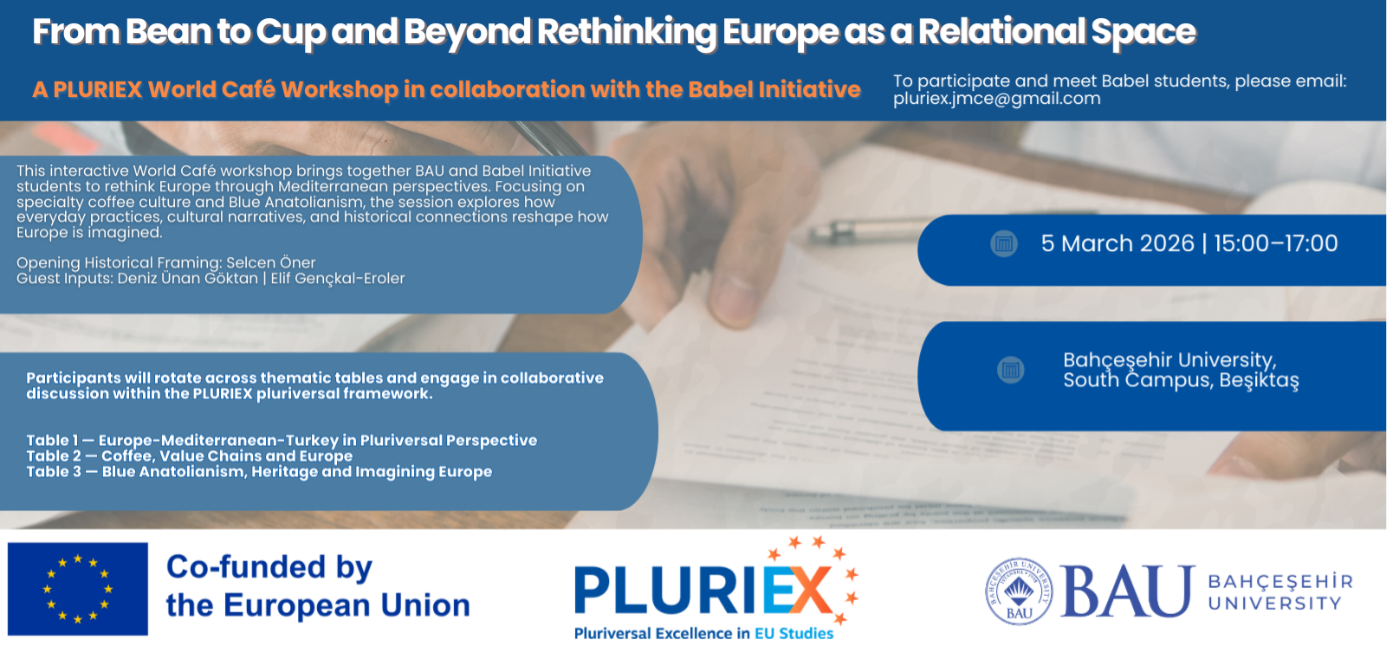
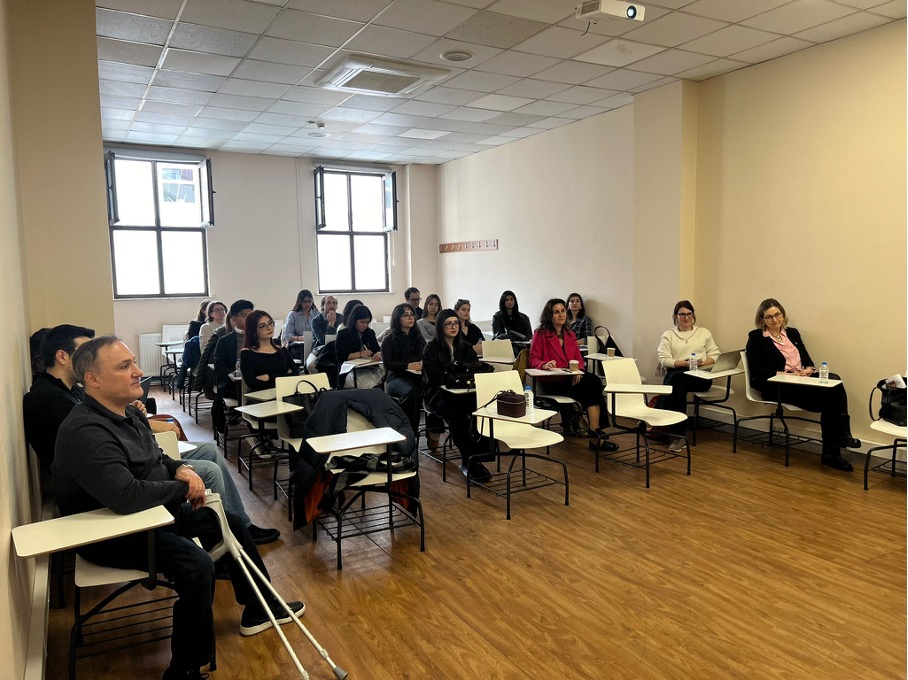
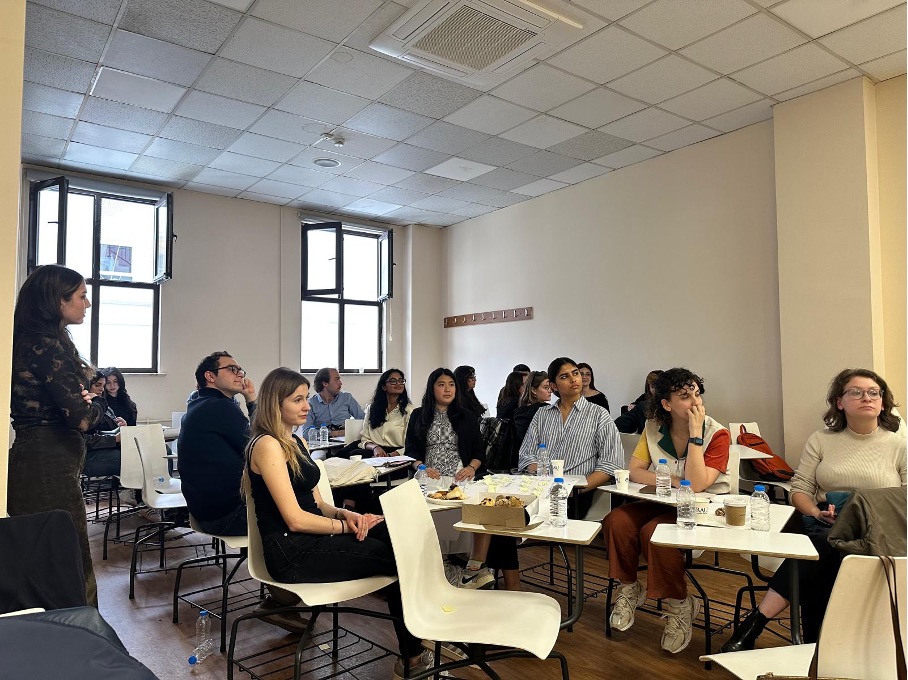
Opening Remarks The event began with opening remarks from representatives of both PLURIEX and the Babel Initiative. Assoc. Prof. Damla Bayraktar Aksel, Deputy Director for Research & Policy Impact of PLURIEX and member of the Department of Political Science and International Relations at Bahçeşehir University, introduced the overall framework of the programme. In her speech, Dr. Bayraktar Aksel explained that the event was designed around a relational understanding of space, which served as a conceptual bridge between the objectives of the Babel Initiative and the PLURIEX Jean Monnet Centre of Excellence. Rather than approaching Europe as a fixed geographical entity, the workshop invited participants to consider how Europe is produced and understood through relationships, exchanges, and everyday practices across the Mediterranean and beyond. Through discussions on coffee cultures, heritage narratives, and intellectual traditions such as Blue Anatolianism, the programme aimed to explore how Europe emerges through global value chains, cultural encounters, and knowledge flows. In this way, the event linked Babel’s field-based student research with PLURIEX’s broader aim of diversifying EU Studies by foregrounding Mediterranean perspectives and relational connections between Europe and its surrounding regions. Dr. Bayraktar Aksel was followed by the project coordinator of PLURIEX, Assoc. Prof. Rahime Süleymanoğlu-Kürüm, who presented the aims and intellectual approach of the project. In her remarks, she highlighted the distinction between universal and pluriversal ways of thinking. While universal approaches tend to frame knowledge production from a single centre and perspective, the pluriversal approach seeks to broaden knowledge production by incorporating multiple epistemological perspectives and diverse experiences. She emphasized that PLURIEX aims to move research and education beyond traditional academic boundaries by bringing together insights from different disciplines as well as experiences from different regions. Dr. Süleymanoğlu-Kürüm also underlined that the workshop was designed as an interactive space for dialogue between BAU students and the visiting researchers from the Babel Initiative. The opening session also included remarks by Loowit Morrison, President of the Babel Initiative at Sciences Po Paris, Menton Campus. Morrison introduced the Babel Initiative as a diverse and inclusive student network that brings together participants from around the world. She outlined the mission and history of the initiative and explained the “World Café” concept frequently used in its activities to facilitate collaborative dialogue and exchange. Morrison also shared the purpose of the group’s visit to Türkiye and reflected on the countries the initiative has explored in previous years. Each year, Babel selects a country from the Mediterranean or the MENA region as its focus and develops a pluriversal research perspective on that country through a series of events and field-based activities organized throughout the year. This year’s focus country is Türkiye. These opening remarks provided an opportunity for participants from both institutions to become familiar with each other’s institutional backgrounds, research approaches, and ongoing projects, establishing a shared framework for the discussions that followed.
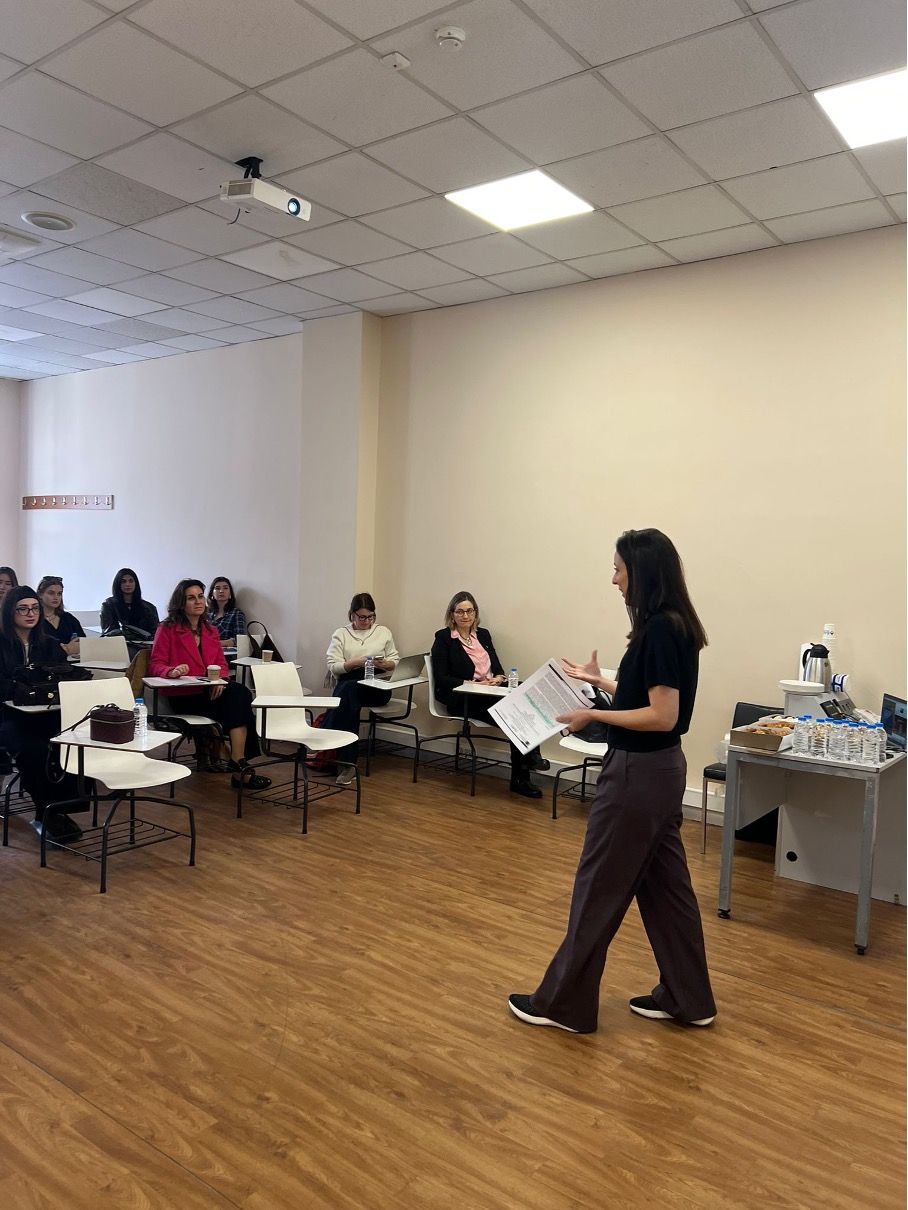
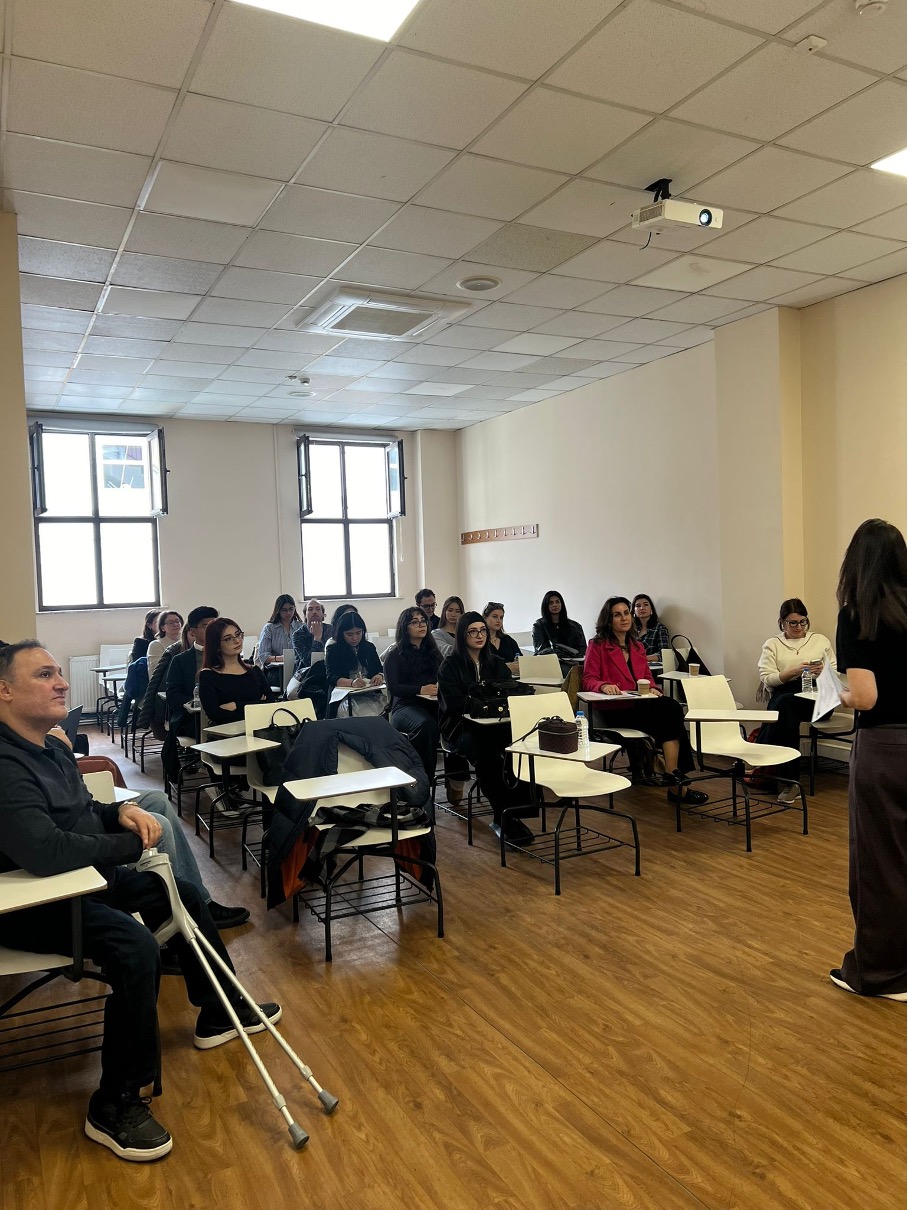
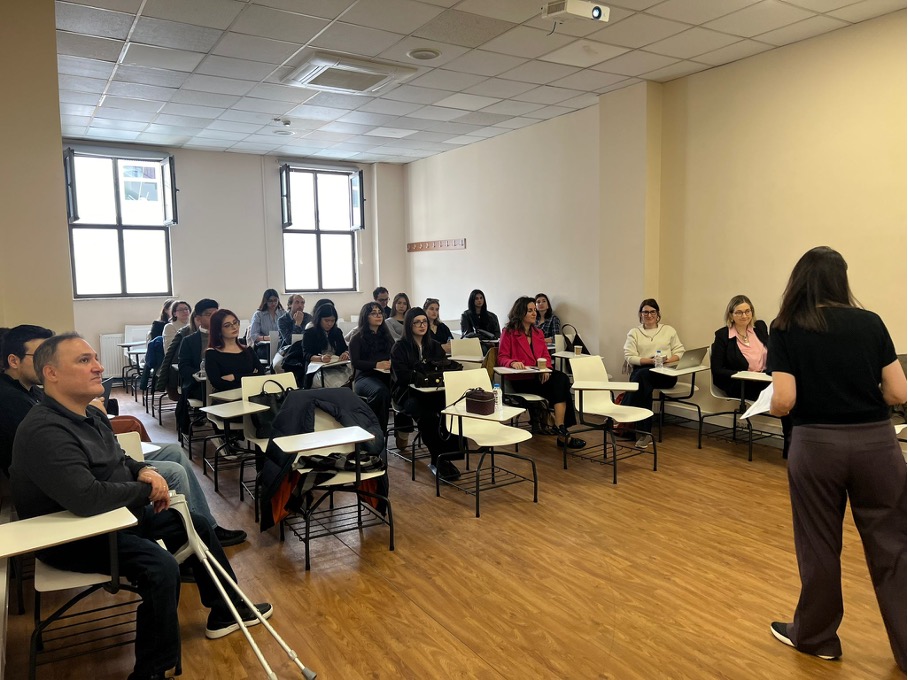
Input Presentations Following the opening remarks, the event continued with three thematic presentations that provided the conceptual input for the interactive World Café session that followed. Each presentation addressed a different dimension of the relationship between Europe and the Mediterranean, offering complementary perspectives that would later inform the group discussions. The first presentation was delivered by Prof. Dr. Selcen Öner, Communications & Knowledge Dissemination Lead of the PLURIEX project and a member of the Department of Political Science and International Relations at Bahçeşehir University. Her talk examined Turkey–Europe relations through the lens of cultural interaction. Prof. Öner emphasized that relations between Turks and Europeans have often been narrated through mutual processes of “othering” throughout history. However, she underlined that these relations cannot be understood solely through conflict and confrontation; they have also been shaped by curiosity, exchange, and mutual cultural influence. To illustrate this argument, the presentation discussed several examples of historical interaction between the Ottoman Empire and Europe. The visit of Yirmisekiz Mehmed Çelebi to Europe and the curiosity shown by Europeans toward the Ottoman ambassador were highlighted as notable moments of diplomatic and cultural encounter. Other examples included the relations established by Sultan Mehmed II with Europe, the visit of Kara Mehmed Ağa and the interaction between mehter music and European musical traditions, and the emergence of the “Alla Turca” fashion in Europe. Prof. Öner also referred to cultural exchanges in theatre and visual arts, such as Antoine’s role in contributing to the development of theatre in the Ottoman Empire and the artworks of Abdülmecid Efendi influenced by European artistic traditions. The presentation concluded by emphasizing that Turkey–Europe relations should be examined not only through political developments but also through cultural fields such as art, literature, fashion, and music. In this perspective, the modernization process of the Republican period was interpreted as an effort to integrate Anatolia’s cultural heritage with modern forms of cultural and intellectual production. The second presentation was delivered by Dr. Ayşe Deniz Ünan Göktan affiliated with Acıbadem University and Özyeğin University, who discussed the historical transformation of coffee and coffeehouse culture from the Ottoman period to contemporary Turkey. Her talk traced the journey of coffee from the Ottoman Empire to Europe. Accordingly, coffeehouses became an integral component of urban life in the sixteenth and seventeenth centuries and may be regarded as precursors to what would later be conceptualized as the bourgeois public sphere. Yet, because they were also perceived by the sultanate as potential threats to social order, they were periodically subjected to restrictions. Later within the broader framework of Ottoman modernization, these establishments re-emerged under the name kıraathane (reading houses). Unlike earlier coffeehouses, however, these venues addressed a more limited audience. In this respect, the trajectory of coffee, from its movement from Ethiopia to Istanbul and the consolidation of a coffee culture there, to the diffusion of coffeehouses across Europe where they became prominent spaces of the public sphere, and finally to its symbolic return to Istanbul from the West during the Ottoman modernization process, constitutes an example of cultural circulation and interaction across an expansive geography. During the Republican period, particularly from the 1950s onward, the consumption of instant coffee increased alongside the long-standing tradition of Turkish coffee. Nevertheless, it can be argued that coffee consumption in Turkey entered a new phase with the opening of Starbucks in 2003. Instant granulated coffees can be understood as representing the first wave of coffee consumption, while global chains such as Starbucks exemplify the second wave. Both waves are characterized by processes of standardization and mass production. In recent years, however, third-wave coffee culture has gained prominence. This wave conceptualizes coffee not merely as a beverage but as a lifestyle practice. It represents a new approach that emphasizes care, expertise, and respect throughout every stage of the coffee’s trajectory, from cultivation to consumption. It foregrounds themes such as fair trade, transparency, and growing concerns regarding the health and ethical implications of mass production. On the other hand, the third-wave coffee sector in Turkey can also be said to embody tensions. These tensions manifest around issues such as the challenges of standardization, the lack of comprehensive professional training in specialty coffee, the instability of working conditions, and structural problems within the supply chain. The final presentation of the session was delivered by Assoc. Prof. Elif Gençkal Eroler from Istanbul Topkapı University, who introduced the intellectual perspective of Blue Anatolianism. This approach challenges the conventional view that the roots of European civilization lie solely in Ancient Greece and instead argues that these cultural foundations are deeply connected to Anatolia. The presentation highlighted the contributions of key thinkers such as Cevat Şakir Kabaağaçlı, known as the Fisherman of Halicarnassus, and Sabahattin Eyüboğlu, who played significant roles in shaping this intellectual tradition. From this perspective, Turkey’s process of Westernization can be interpreted not simply as an attempt to “join the West,” but rather as a reconnection with a cultural heritage that already constitutes one of the historical foundations of Western civilization. Blue Anatolianism therefore invites us to reconsider Turkey not as a peripheral part of Europe, but as a geography that has played a central role in the formation of European culture. The presentation also emphasized the need to reassess Eurocentric approaches to knowledge production, highlighting how this perspective resonates with the pluriversal understanding of knowledge promoted by the PLURIEX project. These three presentations provided the intellectual groundwork for the World Café discussions that followed. By addressing cultural interaction, everyday practices such as coffee culture, and alternative civilizational narratives from the Mediterranean, the presentations offered complementary perspectives that encouraged participants to rethink Europe through relational and pluriversal lenses. This structure was intentionally designed to support the interactive format of the workshop and to enable participants to engage more productively in the World Café discussions.
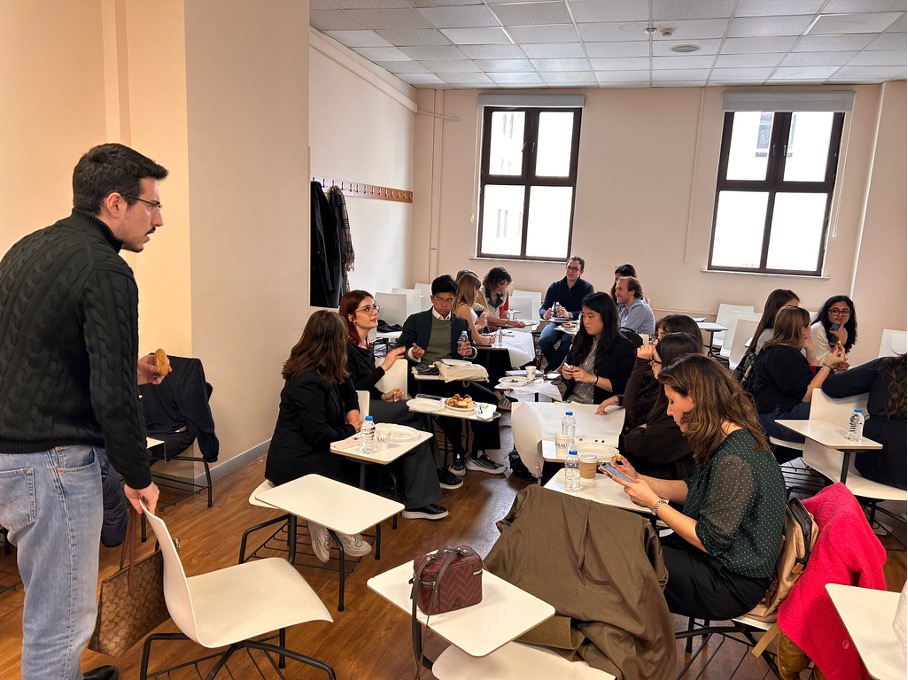
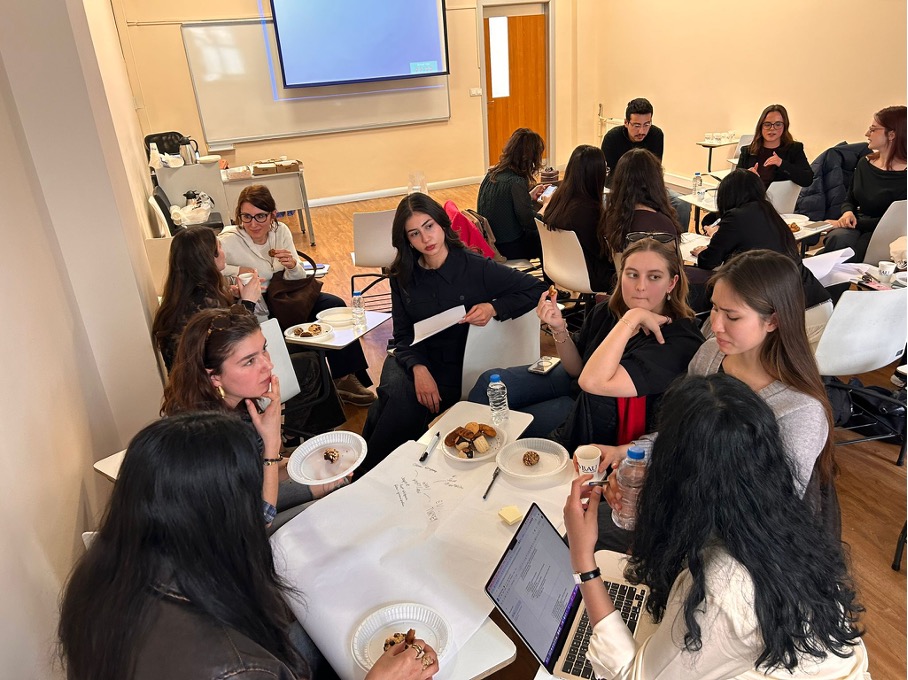
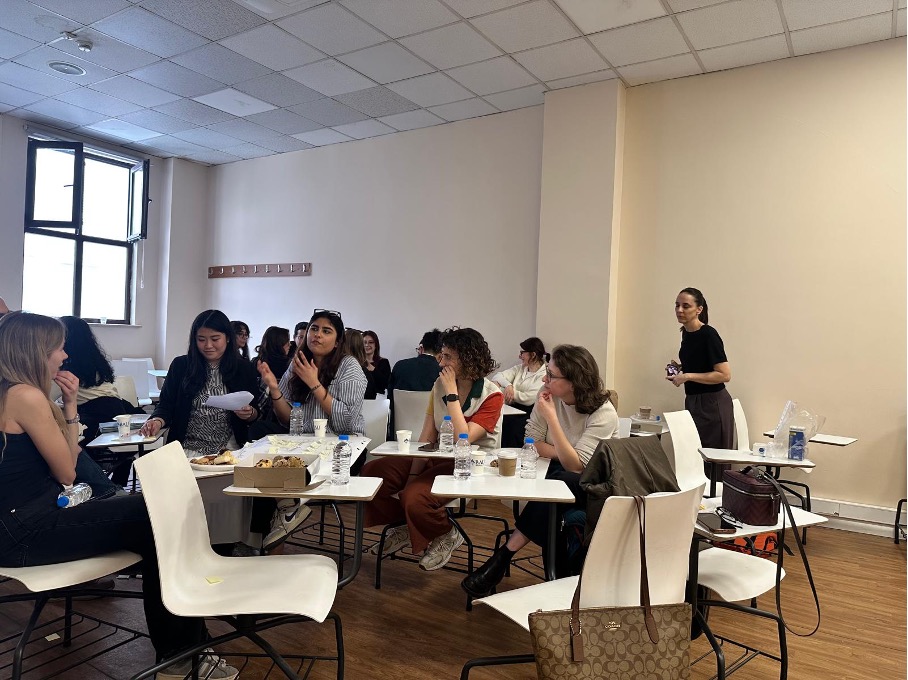
World Café Discussions Following the presentations, participants took part in an interactive workshop organized in the World Café format. Students from Bahçeşehir University and members of the Babel Initiative were divided into mixed groups and invited to rotate across three thematic tables. Each table focused on a specific theme that had been introduced during the presentations: Europe–Mediterranean–Turkey in a Pluriversal Perspective, Coffee, Value Chains and Europe, and Blue Anatolianism, Heritage and Imagining Europe. The World Café structure allowed participants to move between tables and engage with each theme from multiple perspectives. At each station, students discussed guiding questions related to the topic and collectively recorded their reflections. This rotating format encouraged participants to build on the ideas developed in previous discussions, allowing different viewpoints and disciplinary backgrounds to intersect throughout the session. At the first table, participants reflected on how Turkey, Europe, and the Mediterranean can be understood through a pluriversal perspective, questioning dominant narratives that position Europe as the sole center of knowledge production. Students discussed how alternative intellectual traditions and regional experiences might contribute to diversifying the ways Europe and the European Union are studied. The second table focused on coffee culture and global value chains, building on the presentation about the transformation of coffee culture in Turkey. Participants explored how everyday practices such as coffee consumption can reveal broader economic and cultural connections between Europe and the Mediterranean. Discussions highlighted the social role of coffeehouses as spaces of interaction and public debate, as well as the tensions between globalization, standardization, and the preservation of cultural traditions. The third table addressed the theme of Blue Anatolianism and its implications for understanding European civilization and cultural heritage. Participants examined how this intellectual perspective challenges Eurocentric narratives by emphasizing Anatolia’s historical contributions to the foundations of European culture. Discussions also touched upon the role of archaeology, literature, and intellectual history in reshaping how cultural identities and civilizational connections are interpreted. Throughout the workshop, students exchanged ideas, reflected on the themes presented by the speakers, and produced collective notes summarizing their discussions. The interactive format enabled participants from different universities and cultural backgrounds to engage directly with one another’s perspectives, creating a collaborative learning environment that combined academic dialogue with informal exchange. Overall, the World Café session successfully translated the conceptual inputs of the presentations into a participatory discussion space. By bringing together students from Bahçeşehir University and the Babel Initiative, the workshop provided both an academic and a social platform that contributed to advancing the objectives of the PLURIEX project and to fostering dialogue across different perspectives on Europe and the Mediterranean. We would like to thank the Babel Initiative from Sciences Po Menton and the students of our university for their active participation and engagement in this event.
Click here for the full programme.
Early Career Researcher Workshop (ECRW) — PLURIEX PechaKucha Research Workshop 2025–2026
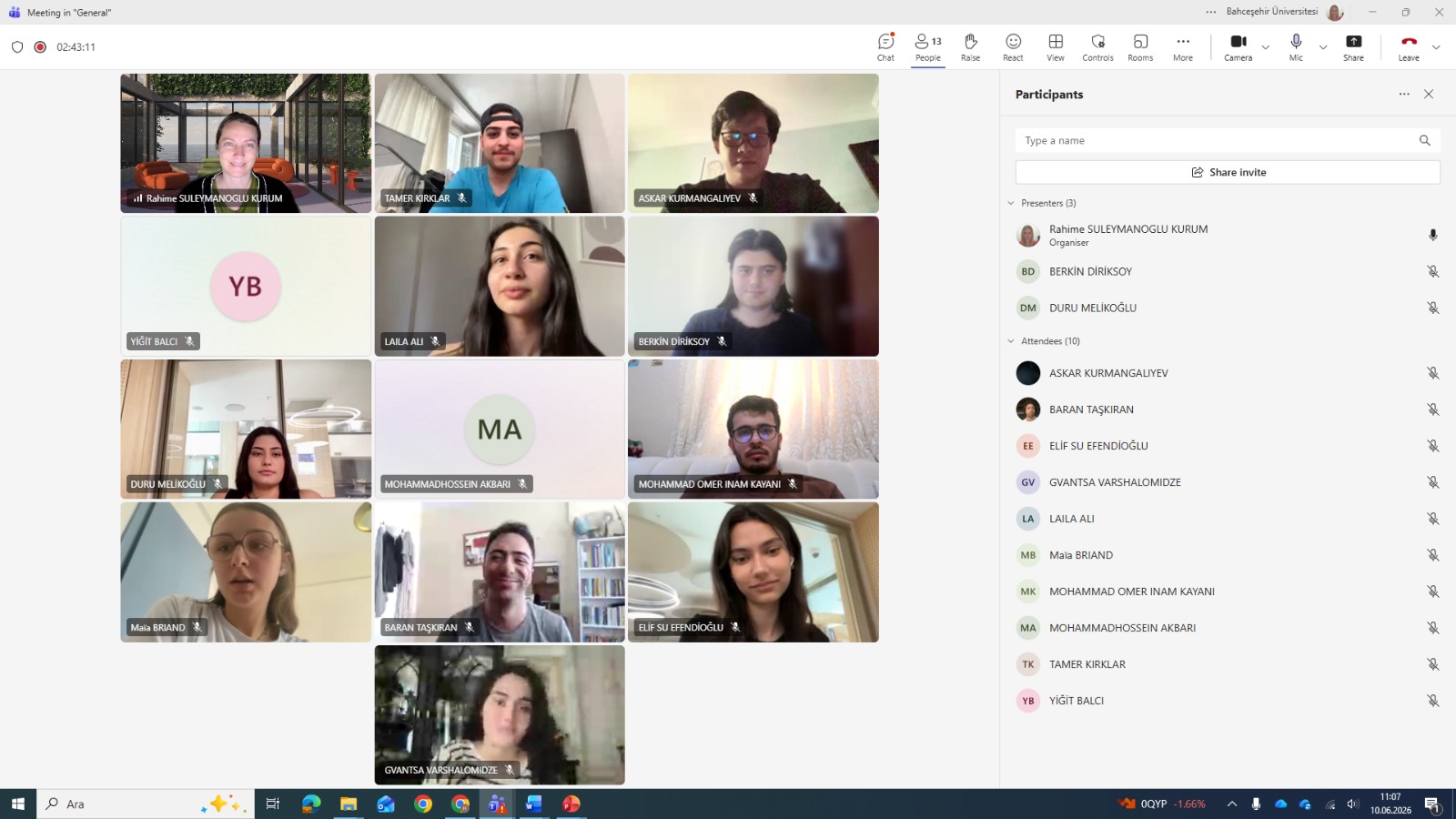
The PLURIEX Early Career Researcher Workshop (ECRW) 2025–2026 was held across three online sessions on 10 and 17 June 2026, bringing together undergraduate and postgraduate students from the Department of Political Science and International Relations at Bahçeşehir University. Students enrolled in Gender in EU Politics (POL2333) and Gender Politics in the EU (GLA5104) presented original research in PechaKucha format — 20 slides, 20 seconds each, 6 minutes and 40 seconds total — as part of a student conference simulation designed to cultivate the next generation of pluriversal EU Studies scholars.
The PLURIEX ECRW is built on a straightforward but consequential premise: EU Studies has long been produced from a narrow set of disciplinary, geographical, and epistemological standpoints. The workshop invites students to ask not only what EU policies do, but whose knowledge shapes them, whose perspectives are absent from dominant frameworks, and what the EU looks like from outside its own self-image.
By applying the three PLURIEX analytical lenses (disciplinary framing, geo-epistemic positioning, and knowledge production and representation) to concrete EU policy instruments, students bring underrepresented traditions, Global South perspectives, and interdisciplinary scholarship into conversation with mainstream EU governance debates.
This year's presentations spanned six policy sectors: Climate, Energy and Green Transition; Digital Governance and AI; Migration, Borders and Reproductive Governance; Democratic Backsliding and Anti-Gender Politics; Security, Women, Peace and Security and External Action; and Agriculture and Political Economy.
Research topics ranged from the gendered architecture of the EU AI Act and the extractive logic of the Carbon Border Adjustment Mechanism, to the implementation paradox of Women, Peace and Security in Gaza and anti-gender politics as an instrument of authoritarian state-building.
Across all three sessions, students showed that diversifying EU Studies is not an add-on: it changes what we see, what we ask, and what counts as evidence.
Click here for the full report.
PLURIEX Workshop: Europe Otherwise
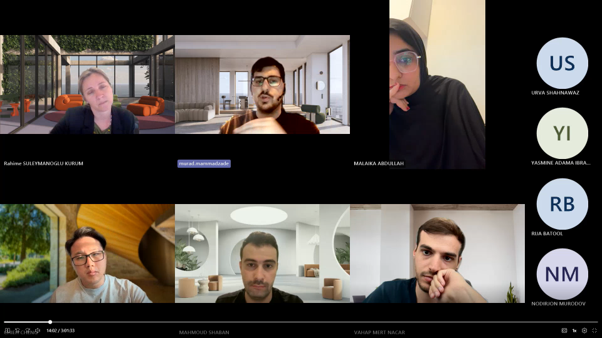
This workshop brings together participants of the PLURIEX Residential Writing Retreat (Kazdağları, April 2026) alongside scholars who joined through an open call for papers, united by a shared commitment to epistemic pluriversality in EU Studies. Contemporary knowledge production about Europe remains uneven. While EU Studies has broadened thematically, its dominant disciplinary formations, canonical theoretical lineages, and institutional centres of authority have proven more resistant to transformation (Bettecken et al., 2022; Alpan and Diez, 2022). Certain knowledges are rendered legible, fundable, and authoritative, while others remain peripheral, fragmented, or only partially visible within prevailing frameworks.
Drawing on the principle of building “a world where many worlds fit” (Escobar, 2018), and engaging pluriversality as cosmopraxis (Querejazu, 2026), the workshop proceeds from the premise that knowledge about Europe is always produced from somewhere: from particular disciplinary formations, geo-epistemic locations, and situated experiences that shape what can be seen and what remains invisible (Fricker, 2007; Mignolo, 2021). It brings into conversation diverse theoretical traditions, including decolonial and pluriversal theory, feminist standpoint epistemology, heterodox political economy, and postcolonial IR, alongside scholarship emerging from geo-epistemic locations beyond the Euro-Atlantic core.
The workshop is organised around three interrelated dimensions of epistemic pluriversality. Disciplinary plurality expands EU Studies beyond its traditional political science and IR core. Geo-epistemic diversity foregrounds the multiplicity of ways in which Europe is known and interpreted across different world regions and intellectual traditions. Authorship and positional diversity draws attention to who produces and is recognised as producing authoritative knowledge on Europe. Together, these dimensions reorient analysis towards a Europe understood not as a fixed epistemic reference point, but as a historically situated and continuously negotiated formation within a wider pluriversal field.
References
Alpan, B., & Diez, T. (2022). Teaching and Learning ‘Europe’ in ‘the Periphery’: Disciplinary, Educational and Cognitive Boundaries of European Studies. Journal of Contemporary European Research, 18(2).
Bettecken, J., Klöckner, A. C., Kurch, C., & Schneider, G. (2022). Under-represented, cautious, and modest: the gender gap at European Union Politics. European Political Science, 21(3), 462-475.
Escobar, A. (2018). Designs for the pluriverse: Radical interdependence, autonomy, and the making of worlds. Duke University Press.
Fricker, M. (2007). Epistemic injustice: Power and the ethics of knowing. Oxford University Press.
Mignolo, W. D. (2021). The politics of decolonial investigations. Duke University Press.
Querejazu, A. (2026). Pluriversality as methodology. Third World Quarterly, 47(3), 629-640.