





 TR
Turkish Scientists Develop a Fully Domestic Respiratory Robot
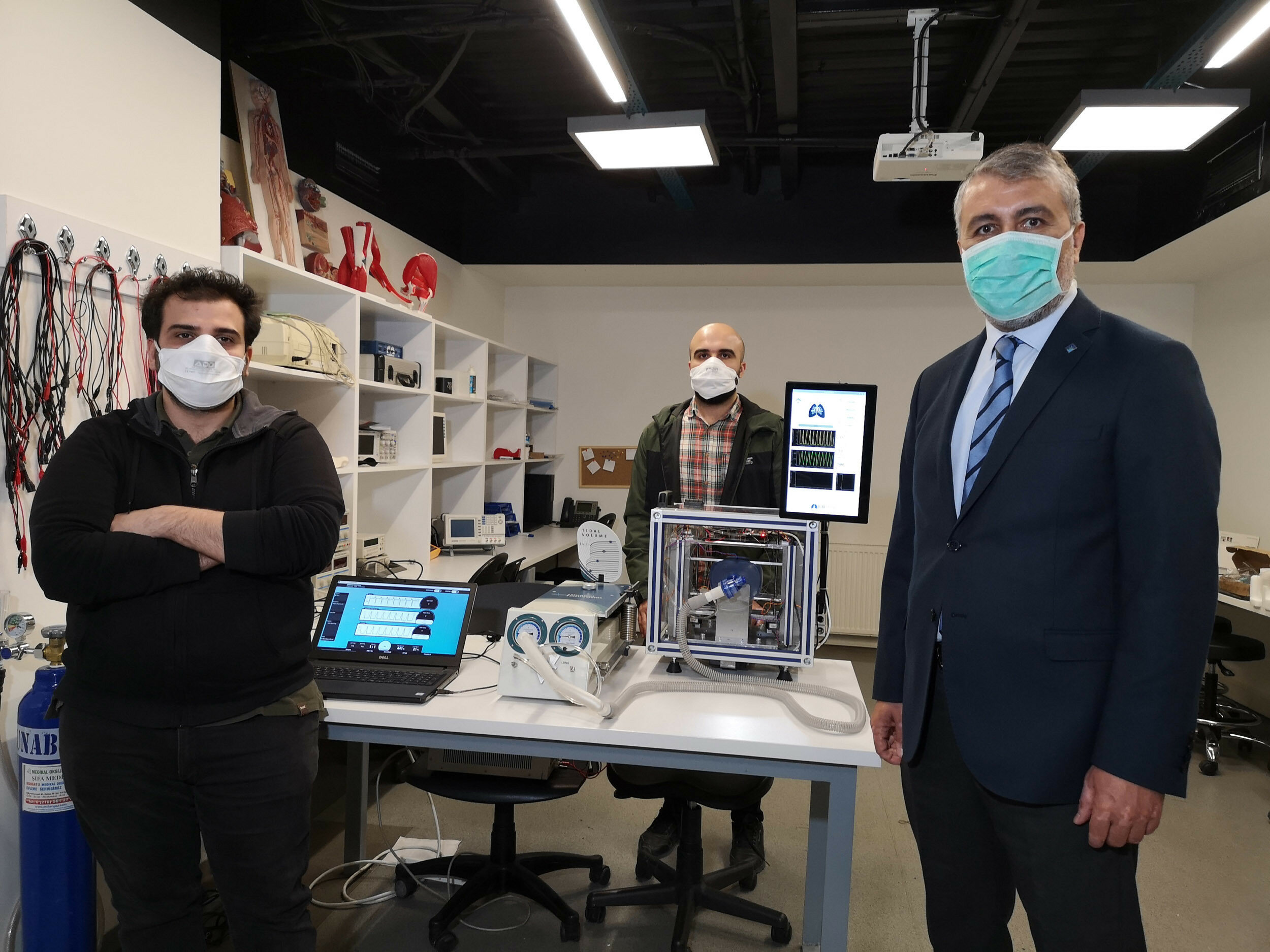
The laboratory testing of the prototypes developed within the 'BAUVENT - AutomaticArtificial Respiration Robot' project, carried out in partnership between the Bahçeşehir University Department of Biomedical Engineering and BAU Innovation and Consultancy Inc., has been completed. Prof. Dr. Nafiz Arıca said that the necessary applications have been made to move to mass production, adding: "BAUVENT can easily be used in field settings without intensive care units, in ambulances and in hospital rooms outside intensive care units."
Ventilators have been on the agenda since the first day the coronavirus outbreak emerged in Türkiye. Because the disease affects the lungs, respiratory support becomes a necessity. Having started work three weeks ago, the Bahçeşehir University Faculty of Engineering and Natural Sciences Department of Biomedical Engineering and BAU Innovation and Consultancy Inc. have completed the 'BAUVENT - Automatic Artificial Respiration Robot' project. The laboratory testing of the prototypes, designed and developed 100 percent domestically by a team of about 10 people, has been completed.
Noting that the robot delivers a pressure-limited air-oxygen mixture to the patient via a sterile Ambu bag, Prof. Dr. Nafiz Arıca, Dean of the Bahçeşehir University Faculty of Engineering and Natural Sciences, said: "This device, which we call BAUVENT, is an automatic artificial respiration robot. The ventilator developed in our country is a product designed for use in very comprehensive intensive care units and has every kind of function.
The product we have developed lies between very simple respiratory devices and the highly comprehensive ones developed for intensive care units, and it can perform the main functions. This means it is a system that mixes oxygen and air at the desired ratio and in which the necessary parameters at the desired pressure and volume can be measured, tested and verified through testing."
Explaining that the respiratory robot, named BAUVENT, can easily be used in places without intensive care units, especially field settings, ambulances and hospital rooms outside intensive care units, Prof. Dr. Nafiz Arıca said: "We are automating the respiration function that healthcare personnel perform with an Ambu bag and ensuring its continuity at the same set rate. This prevents healthcare personnel from becoming infected during the outbreak. We are talking about a product for which all validation tests have been completed. We prepared 2 prototypes in 3 weeks. After these 2 prototypes, our goal is to obtain the permits and certificates of conformity with international standards (CE) required to produce health products, and then the necessary approvals from the Ministry of Health. After that, we will be able to move to mass production."
Prof. Dr. Arıca shared the following information about how the respiratory device works:
"Oxygen is delivered to the patient at the desired ratio from behind the Ambu bag we have developed. Oxygen is also delivered to the patient at the desired pressure and volume with the set parameters. The lung simulation in the prototype has the same function as a human's lungs. The values we set here are delivered after the device verifies the rate at which they reach the patient. In other words, we are trying to minimize the risk to the patient."
Kaan Alper, a Bahçeşehir University doctoral student on the team that developed the respiratory robot, said: "The system gives a warning as soon as there is a problem with the patient's general condition. It is very important that the system gives such a warning. A system that alerts healthcare personnel, especially if air is not reaching the patient's lungs, is indispensable in devices of this kind. Most of the necessary work has been completed. With the support of Enver Yücel, Chairman of the BAU Board of Trustees, we will complete the second device as well." The BAUVENT - Automatic Artificial Respiration Robot also stands out because it can be used in places without positive and negative hospital air pressure, that is, where ventilators cannot be used, and because it costs much less than a ventilator.











