





 TR
Artificial Intelligence Will Guide Diabetes Patients
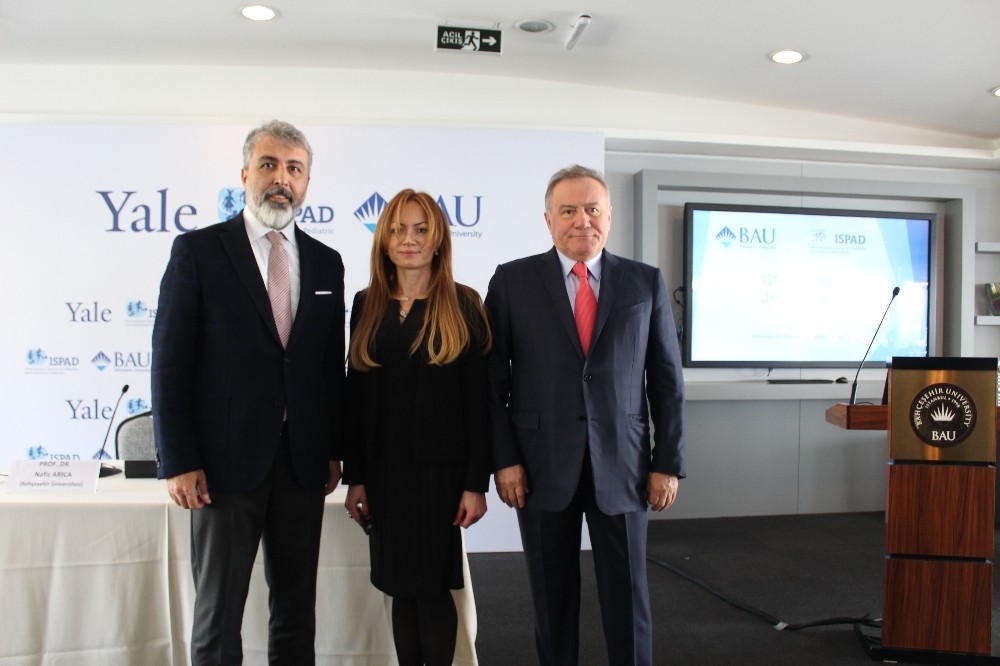
Bahçeşehir University, Yale University and the International Society for Pediatric and Adolescent Diabetes (ISPAD) are joining forces to develop a mobile application that will serve as a guide in the field of diabetes.
The "ISPAD Mobile Application" project, which will guide diabetes patients by combining health and technology in the fight against diabetes, has been introduced to the public. With this mobile application, the data of the International Diabetes Federation will be accessible to everyone.
Bahçeşehir University (BAU), Yale University and the International Society for Pediatric and Adolescent Diabetes (ISPAD) are joining forces to develop a mobile application that will guide diabetes patients. Introduced to the public at a launch held at Bahçeşehir University, the application will provide a roadmap for diabetes patients and doctors working in this field in Türkiye and around the world. The application, whose software development will be carried out by the BAU Faculty of Engineering, will serve the treatment and monitoring of type 1 diabetes.
The application aims to be a personal health advisor that enables patients and doctors to quickly access all information and developments related to diabetes and receive effective and accurate guidance, supporting healthy decision-making in the face of diabetes and providing information on proper nutrition, medication use, the latest treatment methods and guidance training.
"IT IS A SOURCE OF PRIDE TO BRING THE APPLICATION TO LIFE IN TÜRKİYE"
 Prof. Dr. Eda Cengiz, faculty member at the Yale University Department of Pediatric Endocrinology and Diabetes and scientific lead of the application, said: "There was no smartphone application in this field, and that is what we are trying to build. For me, the proudest part is that we will do this with a team from Türkiye. Once this application is used worldwide, we will be serving both those who treat diabetes and patients and their families, and solving their problems. Another great aspect is that the data in the application will not be one-size-fits-all. Using artificial intelligence, the application will provide training tailored to each person."
Diabetes training will be provided
Stating that they will also provide diabetes training through the application, Cengiz said: "We had previously developed certain projects to train people who were not diabetes specialists. Unfortunately, we did not have diabetes technology at that time. Last year in India, we tried to provide training that would raise awareness of diabetes among many doctors and nurses and enable them to help patients. However, the conditions for training were very limited. At times we even struggled to find paper and pens. Yet every one of them had a phone in their hands. This idea partly came from there. What we are trying to do is tailor training to everyone. With artificial intelligence, our application will provide diabetes training in a form that village doctors can also use. In this way, we will raise awareness so that diabetes can be diagnosed early and the diagnosis shared with a diabetes center. Through this application, we will provide training on how to do all this."
"DIABETES IS INCREASING DAY BY DAY"
Noting that there are 422 million people with diabetes in the world, Cengiz said: "Unfortunately, we cannot control diabetes. We can neither manage blood sugar levels as we would like nor prevent its increase. There are methods that have achieved some success, but they require a great deal of effort. We should not expect different results by doing the same things. We believe that with this application we can at least raise awareness about preventing diabetes."
Cengiz, who also conducts research on artificial pancreas systems, said she would like to see this work carried out in Türkiye as soon as possible: "In Türkiye we have very knowledgeable doctors, nurses and dietitians in this field, and they are working actively. I hope these systems will be approved in Türkiye just as they were approved in the United States. We have a very capable workforce that can achieve this. Our diabetes patients are also very interested in this area. We are continuing our work so that our people can also benefit from all developments around the world."
THE APPLICATION WILL BE AVAILABLE WITHIN 6 MONTHS
 Prof. Dr. Nafiz Arıca, Dean of the BAU Faculty of Engineering, who is leading the application's software development, provided information about its content. Stating that the application will be available and kept up to date on Android and iOS, Arıca said: "The application will serve 5 different users: patients, patients' relatives, teachers, doctors and specialist doctors. Using a remote smart education system, we aim to identify users' knowledge gaps through features such as a question of the day and quizzes, and to provide training and raise awareness accordingly. The application's interface will be very simple. It will be a continuously evolving application. With its support, ISPAD will ensure that the data is always up to date, and we will build the user interface with that data. The application is currently in the software development phase. We aim to release the BETA version within 6 months. Initially, the application will be in English, but the training content will also be translated into other languages."











