





 TR
The Social Construction of Disaster Published in Time for the Anniversary of the February 6 Earthquakes
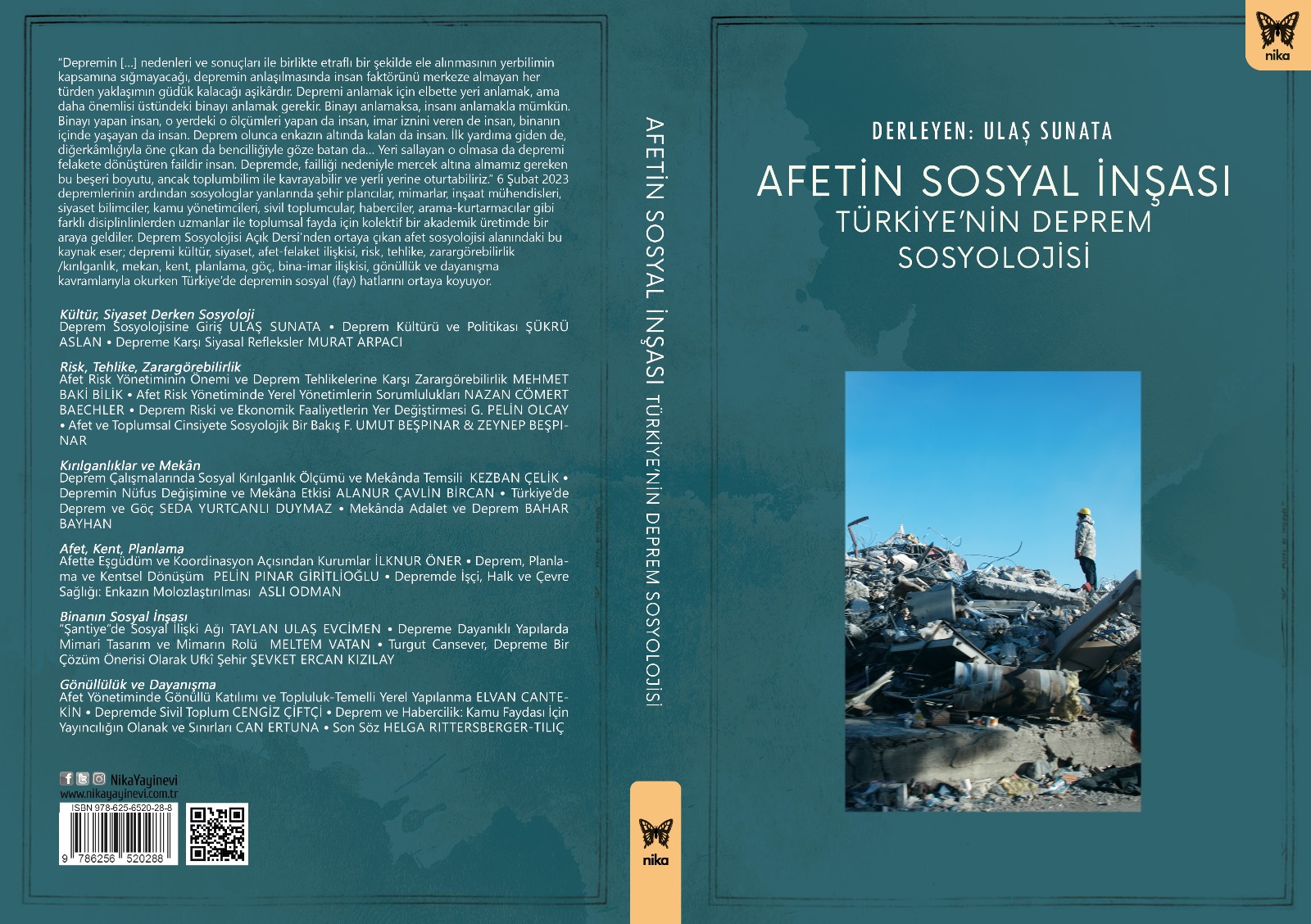
The Social Construction of Disaster in Türkiye: The Sociology of Earthquakes in Türkiye Book Published!
The book The Social Construction of Disaster in Türkiye: The Sociology of Earthquakes in Türkiye, compiled by Prof. Dr. Ulaş Sunata, Founding Director of the Bahçeşehir University Migration and Urban Studies Research and Application Center (BAUMUS), and published by Nika Publishing, has reached its readers.
Compiled by BAUMUS Founding Director Prof. Dr. Ulaş Sunata, The Social Construction of Disaster in Türkiye: The Sociology of Earthquakes in Türkiye was printed by Nika Publishing in January 2024 and has taken its place on the shelves. The booknot only draws attention to how, after the February 6 earthquake, sociologists came together with experts from different disciplines such as urban planners, architects, civil engineers, political scientists, public administrators, civil society representatives, journalists and search and rescue teams for a collective academic production for the public good, but also reveals the social (fault) lines of earthquakes in Türkiye by reading the earthquake in the field of disaster sociology through the concepts of culture, politics, the relationship between hazard and disaster, risk, danger, vulnerability, space, the city, planning, migration, the relationship between buildings and zoning, volunteering and solidarity.
In addition, the book draws attention to the connection between buildings and people, stating: "To understand an earthquake, one must of course understand the ground, but more importantly, the building on it. Understanding the building, in turn, is only possible by understanding people. It is people who construct the building, people who take the measurements on that ground, people who grant the zoning permit and people who live in the building. When an earthquake strikes, it is people who are trapped under the rubble. It is also people who rush to give first aid, who stand out for their altruism and who stand out for their selfishness... Even if they do not shake the ground, people are the agents who turn an earthquake into a disaster."
Consisting of six main sections, which are expanded and detailed with subsections, the work explains the sociology of earthquakes in Türkiye to readers while also addressing earthquakes from many different perspectives such as migration, justice and planning.











