





 TR
Joint Workshop by TÜMBİKON and Bahçeşehir University
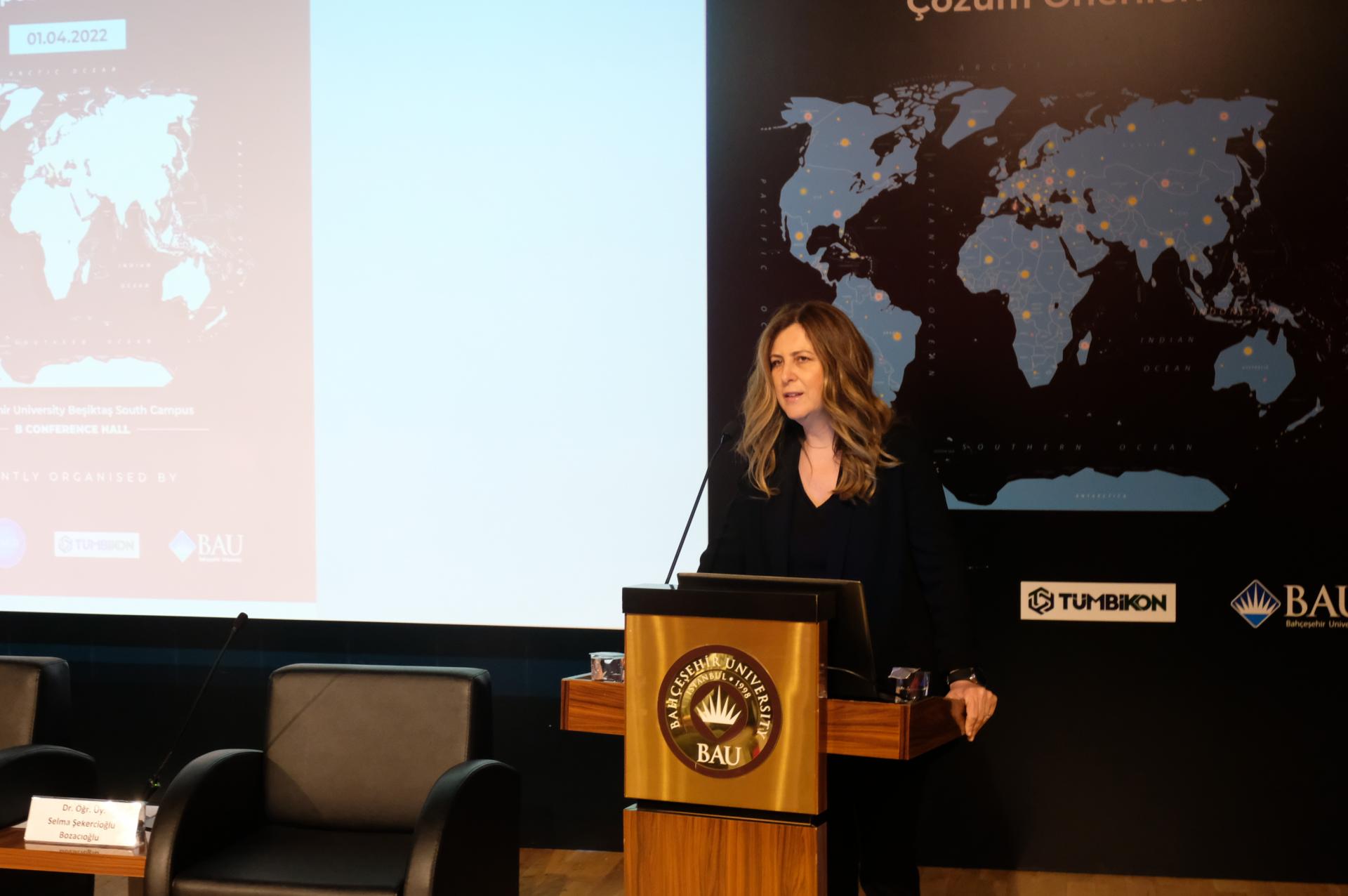
The Confederation of All Bureaucrats and Businesspeople (TÜMBİKON) and Bahçeşehir University organized a joint workshop. Academics and experts from Türkiye and abroad attended the international workshop. TÜMBİKON Chair Cevdet Akay: "We are contributing to solving the country's problems through science and reason."
Held on 1 April 2022 at Bahçeşehir University's Beşiktaş Campus, the workshop titled"International Workshop: Türkiye's Current Geopolitical and Social Issues and Policy Recommendations"brought together a distinguished group of participants, including academics from the United Kingdom, France and universities in various provinces of Türkiye, as well as experts from non-governmental organizations working on migration and strategy. In front of an engaged and large audience, papers were presented addressing our country's migration and other geopolitical and social problems in the global environment in light of current developments.
In his speech, TÜMBİKON Chair Cevdet Akay stated that Türkiye is experiencing various problems due to migrants and asylum seekers from Syria and other countries, and that they aim to address the country's problems in various fields in cooperation with scientists and universities and to convey the resulting views and recommendations to the relevant authorities.
The program, organized by TÜMBİKON Executive Board Chair Arif Ekşi and TÜMBİKON Executive Board Acting Vice Chairs Ayşe Çebi and Assoc. Prof. Dr. Nur Ündey, began at 10:00 in the morning and continued until the evening in four sessions. Another opening speech of the workshop was delivered by Can Çobanoğlu, Director of the TÜMBİKON National and International Social and Economic Strategic Research Center and TÜMBİKON Acting Vice Chair. Çobanoğlu emphasized that it is necessary to look at Türkiye's problems from a strategic perspective.
Prof. Dr. Esra Hatipoğlu, Advisor to the President of Bahçeşehir University and Director of the International Leadership Application and Research Center ULMER School of Government Leadership, stated that international relations are going through a process in which the meaning and function of geopolitics are changing.
Prof. Dr. Nilüfer Narlı, Head of the Department of Sociology at Bahçeşehir University and Director of the Society, Health, Behavior and Prevention Center TOSAM, said that they were pleased to collaborate with TÜMBİKON, an NGO umbrella organization, and pointed to the necessity of thoroughly researching the various effects of migration problems on the social structure and developing solutions by drawing on expert opinions.She also stated that all this research should be conducted in line with 21st-century sociology, that is, with the awareness that we are in a new sociological era, and that studies detached from a geopolitical perspective would be insufficient.
Delivering the last of the opening speeches, Bahçeşehir University Vice President Prof. Dr. Tunç Bozbura expressed his satisfaction that the university was hosting such a workshop, and, referring to the complexity of problems in the social field, emphasized the importance of benefiting from the views of the distinguished academics and experts attending the workshop.
The workshop sessions were held under the following four headings:
- Session: "Geopolitical Issues in the Context of the Post-COVID-19 New Normal"
The session moderated by Prof. Dr. Esra Hatipoğlu was attended by Assoc. Prof. Dr. Uğur Yasin Asal from Istanbul Commerce University, Prof. Dr. Sedat Aybar from Bahçeşehir University, Assist. Prof. Dr. Selma Şekercioğlu Bozacıoğlu from Istanbul Arel University and Prof. Dr. Nuray Ekşi from Özyeğin University.
- Session: "Geopolitical and Social Risks in the Context of Transnational Human Mobility"
In this session moderated by Murah Lehimler from Istanbul Topkapı University, Assist. Prof. Dr. Zeynep Banu Dalaman from Istanbul Topkapı University, Prof. Dr. İbrahim Sirkeci from International British School, United Kingdom, and Prof. Dr. Orhan Deniz from Van Yüzüncü Yıl University presented their papers.
- Session: "The Geopolitics of Social Inclusion, Adaptation and Prevention Policies"
Prof. Dr. Catherine WIHTOL DE WENDEN from Sciences Po, Paris, was the first to join this session via Zoom. The other participants were Assoc. Prof. Dr. Gülay Uğur Göksel from Istanbul Bilgi University, Prof. Dr. Melih Görgün from Yeditepe University and Attorney Mahmut İsal, Secretary General of the Istanbul Bar Association Refugee and Migrant Rights Center.
- Session: "Capital and Labor Flows from Syria to Türkiye: Economic Opportunities and Risks"
This final session was moderated by Can Çobanoğlu. Ömer Kadkoy from the Economic Policy Research Foundation of Türkiye (TEPAV) and Assist. Prof. Dr. Çağatay Sarp from Kırıkkale University presented their papers. A virtual presentation by Ahmet Hüseyin Abay from the Hatay Reyhanlı Chamber of Commerce was also viewed.
The issues emphasized and underlined in all four sessionswere mainlythat solutions should be sought by approaching climate change, the food crisis and social cohesion from a geopolitical perspective, that the world order is changing, that geopolitics is taking on new meanings and functions and its definition may even change, that migration and regional and global problems are changing and transforming the economic and social structures of countries, that there are more losers than winners in these changes, and that countries should develop strategic approaches and policies instead of palliative and tactical ones.
Delivering the closing speech of the workshop, Prof. Dr. Nilüfer Narlı said that the workshop process had been productive and that the papers would be published as a book. Narlı also emphasized that, drawing on the views and papers presented at the workshop, she would make the necessary introductions and presentations of the proposed solutions in this work and in her other academic articles.
Thanking the scientists, experts, NGO executives and everyone who contributed to the workshop, TÜMBİKON Chair Cevdet Akay stated that, with the continued support of science and of the TÜMBİKON Academic Board of more than 200 professors, they will continue tirelessly to carry out work aimed at finding solutions to the country's problems.













