





 TR
South Korean Chefs and Turkish Students Meet in the Same Kitchen
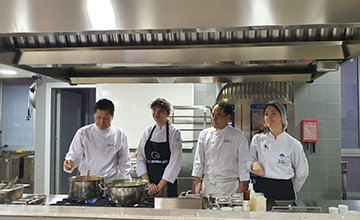
Ahead of the Turkish Cuisine Week to be held in South Korea on 10-15 February, South Korean chefs came to Istanbul and cooked with Turkish students. During Turkish Cuisine Week, faculty members and students of the Department of Gastronomy aim to introduce South Koreans to many Turkish flavors, from hünkarbeğendi to baklava, and from pickled cherries to olive oil dishes.
Seung Wook Shim and Sang Kuk An, who came to Istanbul yesterday to introduce South Korean dishes ahead of the Turkish Cuisine Week to be held in South Korea on 10-15 February, entered the kitchen with Bahçeşehir University Gastronomy students and prepared their thousand-year-old traditional dishes. The dishes were served with appetizers and sauces unique to South Korea. The tasting event was attended by Consul General of the Republic of Korea in Istanbul Jessy Yeunju Jang, Bahçeşehir University (BAU) Chair of the Board of Trustees Enver Yücel, BAU President Prof. Dr. Şirin Karadeniz, faculty members and guests.
3 MAIN DISHES, 3 APPETIZERS
Pumpkin porridge, beef marinated with onions, and beef and seaweed soup were prepared as main dishes, while spicy pickled cabbage, pickled green plums, fried dried anchovies and rice were prepared as side dishes. The chefs, who came to Istanbul to tell students about and introduce the flavors of South Korea, said the young people were very hardworking, friendly and responsible in the kitchen.
 "I FEEL VERY CLOSE TO TURKISH CUISINE"
Chef Seung Wook Shim said they prepared three main dishes and three appetizers. Noting that they have built strong relations with the Turkish Consulate in recent years, Shim said, "This way we saw Turkish dishes up close and studied how they are made. I feel very close to Turkish cuisine. I think Turkish dishes are healthy. But there are also many differences from our dishes. For example, we have no desserts like baklava at all. Also, you eat spinach and yogurt together; we don't use yogurt in our dishes. I am very curious about spinach with yogurt."
"I LOVE KEBAB"
Shim, who has been in Türkiye for 2 days, said he was very pleased with the visit: "As Lotte Hotel, we make Turkish food at least 3 times a year. The Turkish consulate brings us kebab and we try it. It is so delicious and good that I love it. The most important thing when cooking in the kitchen is to be hardworking and sincere. I found the Turkish students very sincere. They are also very hardworking."
TURKISH CUISINE WEEK TO BE HELD IN KOREA
Ecem Aslay, a faculty member of the BAU Department of Gastronomy, said they want to represent Turkish cuisine abroad and aim to open new horizons for students: "We will organize a 'Turkish Cuisine Week' in South Korea on 10-15 February. At this event, we will introduce dishes from 7 regions. That is why the South Korean chefs wanted to come to our school before the event to introduce their own cuisine. We, in turn, will prepare our traditional and very old dishes in South Korea. We will take many ingredients from Türkiye there. Starting with hünkarbeğendi, we will go with regional flavors such as Giresun's famous pickled cherries and Gaziantep's baklava. We will also make an olive oil platter from the Aegean Region. We will take products such as bulgur and tarhana as well. With these products, we will try to introduce each region. We will bring Koreans together with Turkish cuisine."
JANG: MY FAVORITES ARE TURKISH MEZE AND BREAKFAST
Stating that South Korea and Türkiye have a deep relationship, Consul General of the Republic of Korea in Istanbul Jessy Yeunju Jang emphasized that such events are very important. Jang said, "We call our relations with Türkiye 'blood brotherhood'. I really love Turkish cuisine; meze is my favorite. Besides meze, I also love Turkish breakfast, because it has protein, vegetables and honey to help you maintain your diet and health. It is a balanced combination of rich foods, which is why I love it so much."
Noting that the biggest common ground between Turkish and South Korean cuisine is the use of fresh produce, Jang said that both cuisines reflect a long history and offer richness and diversity.













