





 TR
Best Paper of the Year Award Goes to BAU
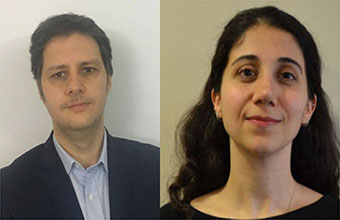
The award given by the OR Society, one of the world's most prestigious academic organizations, to the most important research of the year has this time gone to Turkish academics. The subject of the research that brought the award to Türkiye for the first time in history is carbon emissions.
The award given to the best work in its field by the Journal of the OR Society, a UK-based journal published for 70 years, went to a Turkish research group. The TÜBİTAK-funded research titled "Risk-Averse Investment Strategies for a Firm Generating Electricity in a Carbon-Constrained Environment", led by Bahçeşehir University, was selected as the best paper of the year and received the award.
The winners of the award that brought academic success to Türkiye are Prof. Dr. Semra Ağralı and Dr. Ethem Çanakoğlu and Dr. Esra Adıyeke, faculty members of the Bahçeşehir University Department of Industrial Engineering. The research included studies and evaluations of the carbon market, one of the measures that can be taken against global warming.
"OFFERING ALTERNATIVES FOR CARBON EMISSIONS BROUGHT THE AWARD"
Stating that their study focused on global warming, Dr. Ethem Çanakoğlu said they evaluated the consequences of the decisions an electricity firm investing in the carbon market would make.
Çanakoğlu said: "Our aim in this study is to present methods for reducing carbon emissions. Using data from the Turkish electricity market, we investigated to what extent firms making new investments would turn to clean energy alternatives if carbon restrictions were introduced. As a result, we showed that carbon restriction practices and firms' risk perception affect their decisions to invest in renewable energy, and that with strict carbon policies, firms can switch to renewable energy without increasing their risks. Considering that global warming will be the most important problem of the future, academia needs to include practical approaches to the possible effects and solutions of this problem in its research. The award was given to this study precisely because it sought solutions to such an important problem through operations research approaches."
"WE RECEIVED THE AWARD ONLINE"
Speaking about the importance of the award, Dr. Ethem Çanakoğlu said:
"Sometimes a study can take years. While it is rewarding in itself for the results of a study to be published in highly prestigious journals and appreciated by the academic world, having the study recognized with such an award at the end is an indescribable source of pride. It is an honor that the award bears the name of Sir Charles Goodeve. I am very happy to follow in the footsteps of the founders of the field, to apply the methods they pioneered to solving today's problems, and to be rewarded with a medal given in their name. Winning this award for a study on carbon emissions is very meaningful in a world where global warming is today's most important problem. While this award is normally announced at the annual OR conference, this year it had to be announced online. Not being able to attend the conference in the year we won the award was another misfortune brought by the pandemic."
"CARBON EMISSIONS ARE EXPECTED TO BE LIMITED"
Dr. Esra Adıyeke of the BAU Department of Industrial Engineering, another recipient of the award, said: "In this research, we developed production and investment planning models aimed at reducing carbon emissions, which are known to have a significant share among the causes of climate change, a global problem. In the problem we addressed, we modeled technology, fuel and production capacity choices that would reduce the carbon gas released by electricity generation activities under various price uncertainties. Among these uncertainties, we considered not only product and fuel prices but also carbon prices. In this way, the model can provide decision support that helps stakeholders create activity plans resilient to various market risks. A Voluntary Carbon Market based on social responsibility is currently operating in Türkiye, and preparations are being made for our country to join emissions trading markets in the coming years. This means that carbon emissions will be limited as a legal obligation in the years ahead. Therefore, the fact that the models were developed within a carbon-constrained framework is important in providing stakeholders with information about the processes of the coming years now."











