

 TR
TR
Panel on “The Impact of Geopolitical Developments in the Middle East on Türkiye” Held at BAU
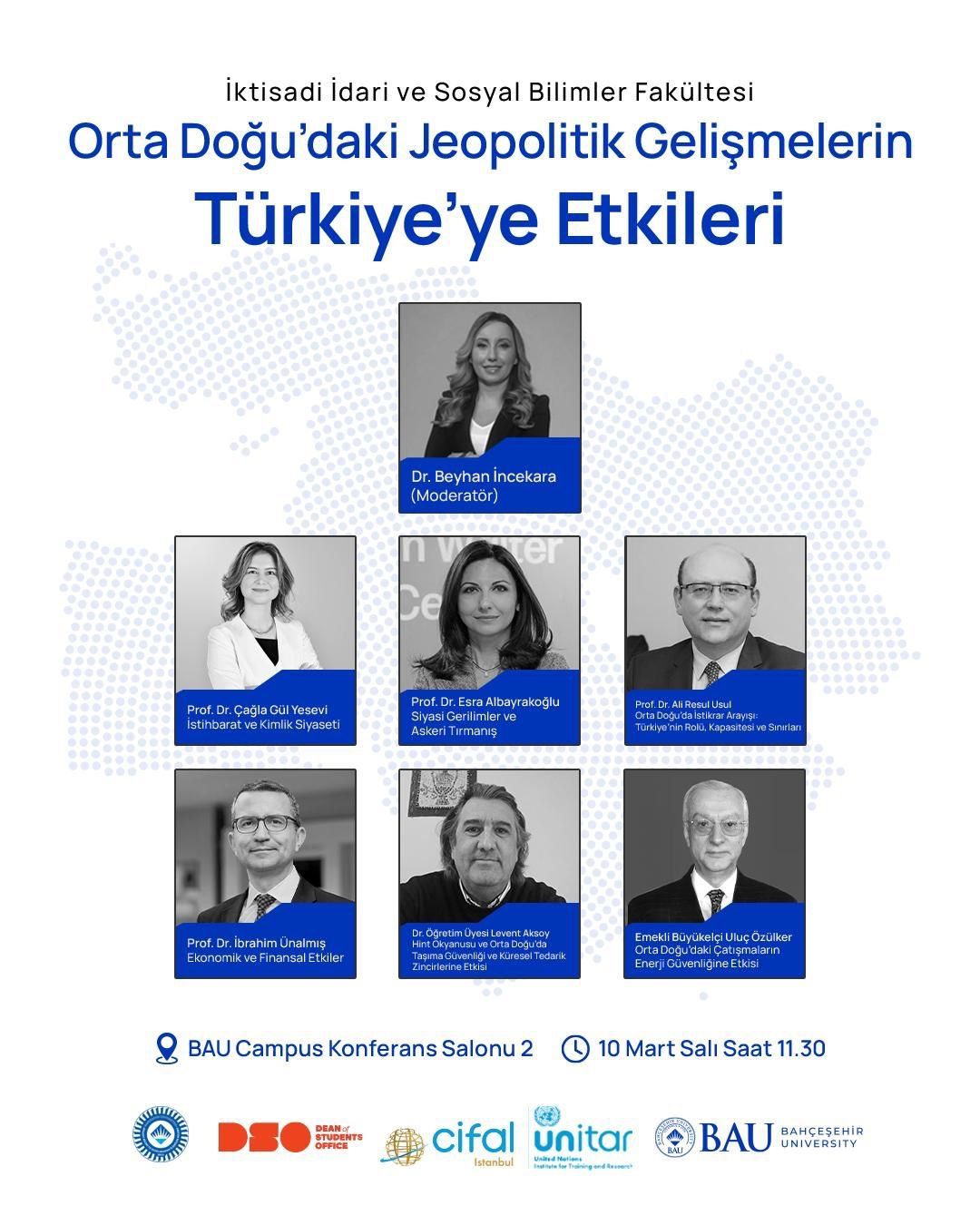
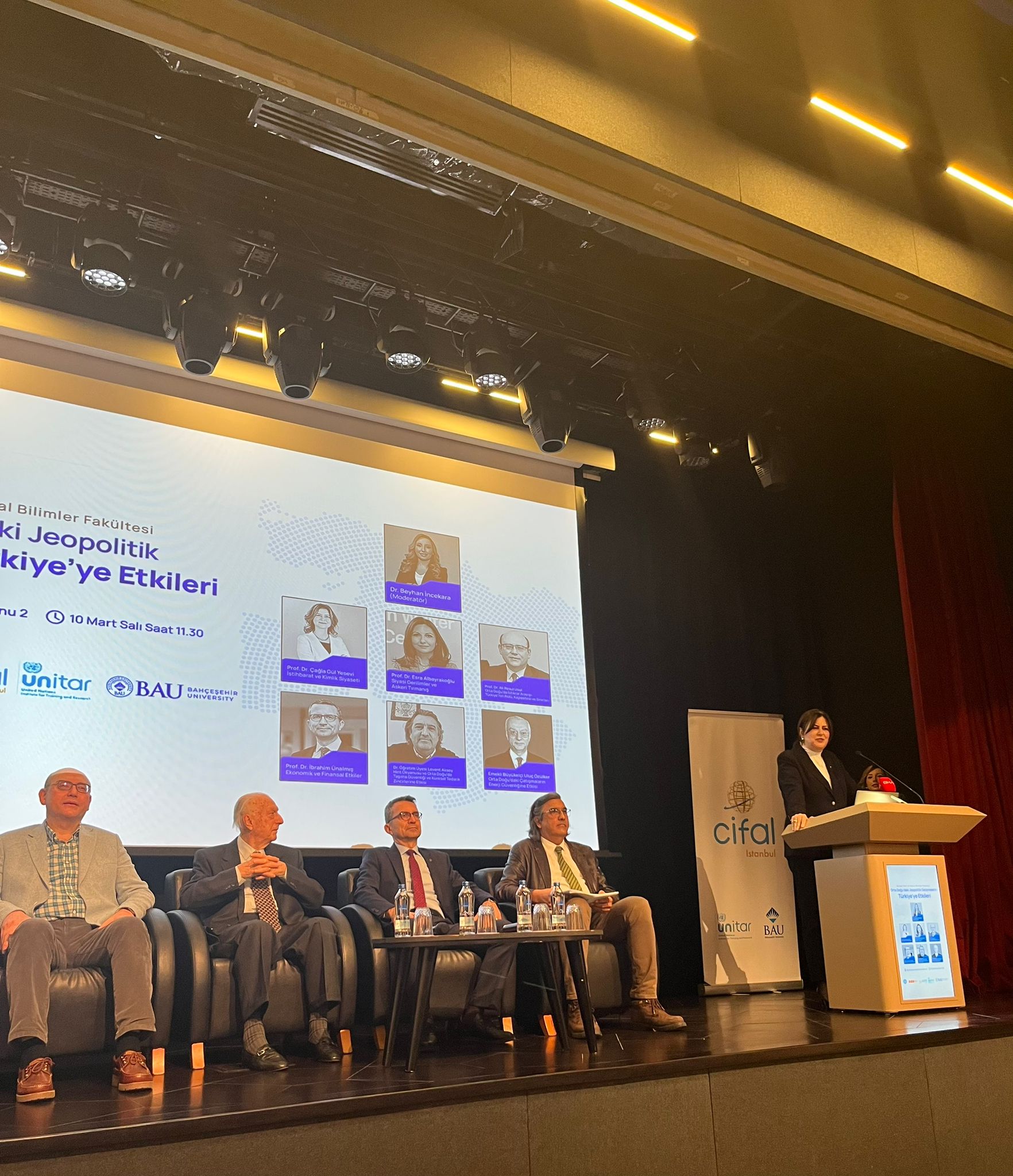
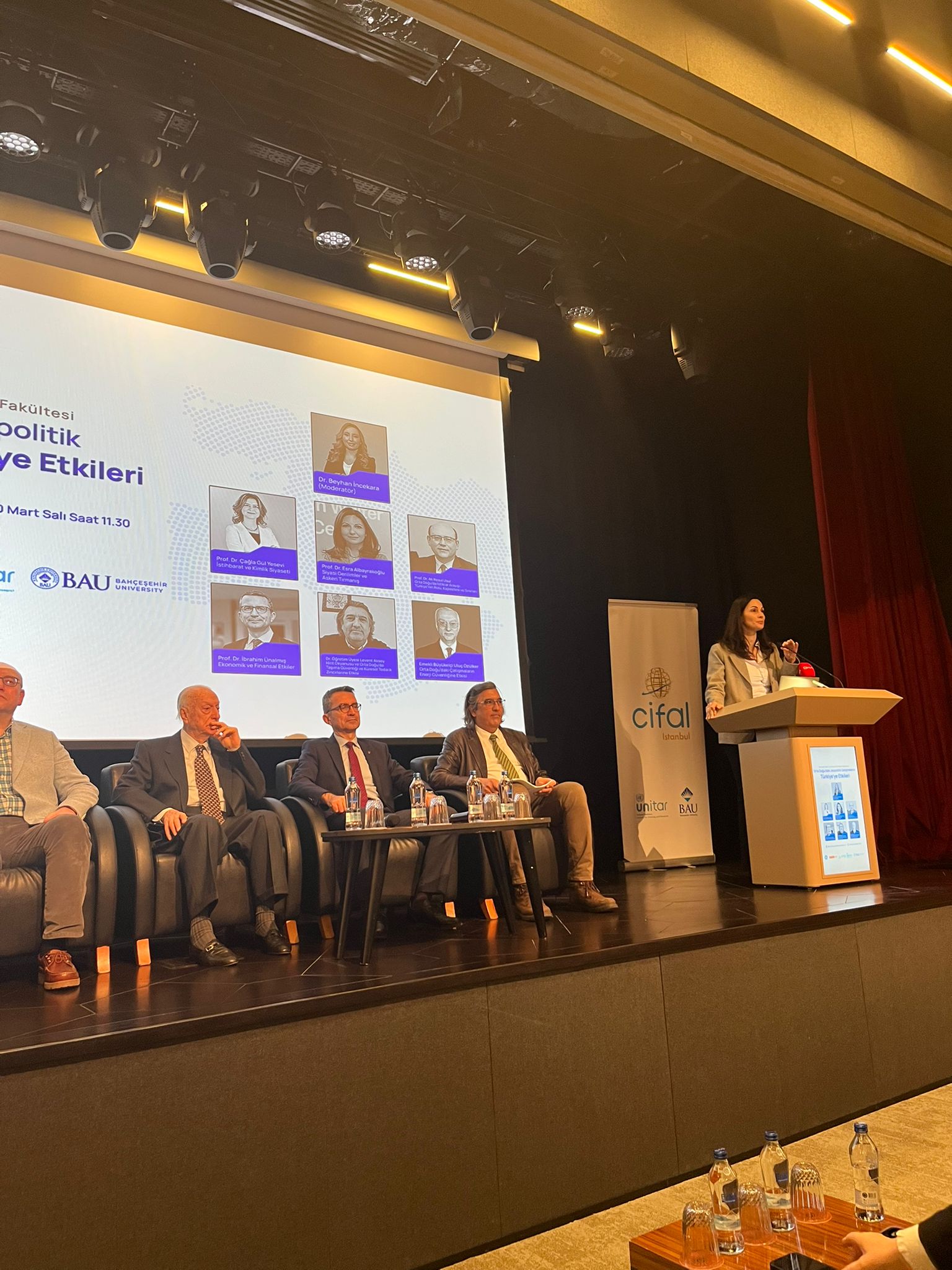
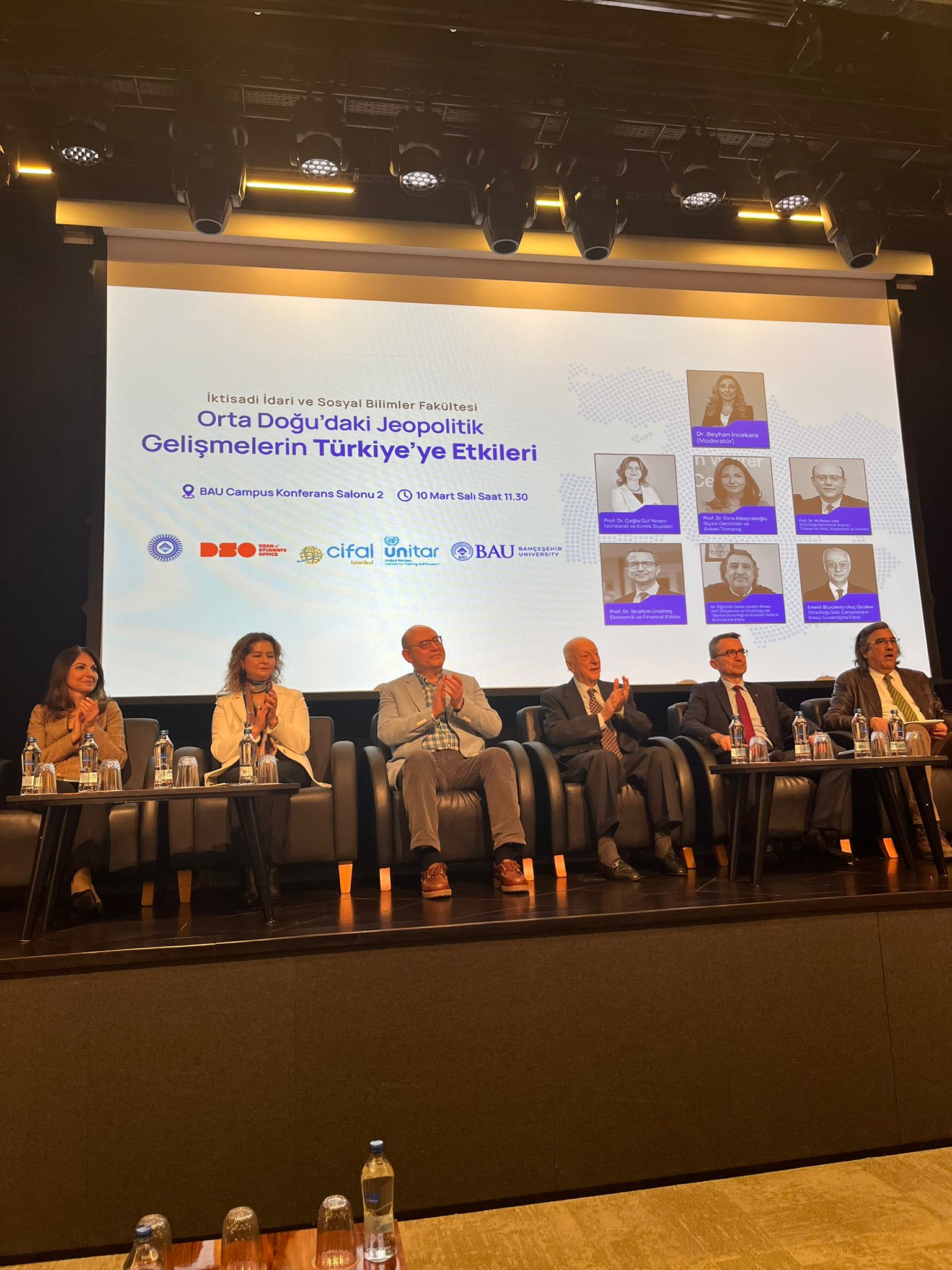
The panel titled “The Impact of Geopolitical Developments in the Middle East on Türkiye,” organized by the Faculty of Economics, Administrative and Social Sciences at Bahçeşehir University, was held on March 10 at the BAU Campus Conference Hall 2 with strong participation from academics, students, and interested attendees. The event brought together experts from different disciplines to discuss recent geopolitical developments in the Middle East from a multidimensional perspective.
The opening remarks were delivered by the Rector of Bahçeşehir University Prof. Esra Hatipoğlu and the Dean of the Faculty of Economics, Administrative and Social Sciences Hümeyra Adıgüzel. In their speeches, they emphasized that geopolitical transformations in the Middle East have significant implications not only for the region but also for the global system, highlighting the important role of academia in analyzing these developments and informing the public.
The panel was moderated by Dr. Beyhan İncekara, and featured distinguished speakers who evaluated the political, military, economic, and energy-related dimensions of developments in the region and their potential implications for Türkiye.
During the panel:
Prof. Dr. Çağla Gül Yesevi discussed intelligence and identity politics, examining how regional developments shape evolving security dynamics in the Middle East.
Prof. Dr. Esra Albayrakoğlu analyzed political tensions and military escalation in the region and their implications for regional stability.
Prof. Dr. Ali Resul Usul provided a comprehensive assessment of Türkiye’s role, capacity, and limitations in the search for stability in the Middle East.
Prof. Dr. İbrahim Ünalmış addressed the economic and financial impacts of regional developments, highlighting potential risks and opportunities for Türkiye and the global economy.
Dr. Levent Aksoy evaluated transport security in the Indian Ocean and the Middle East and its effects on global supply chains.
Ambassador (R) Uluç Özülker shared insights on the impact of conflicts in the Middle East on energy security, drawing on his extensive diplomatic experience.
Throughout the panel, participants engaged in discussions on regional power dynamics, energy security, global supply chains, and Türkiye’s foreign policy options. The event concluded with an interactive Q&A session, where students and attendees contributed to the discussion, offering further reflections on how developments in the Middle East shape Türkiye and the broader international system.