

 TR
TR
“Pluriversality of the Concept of Peace” with 2025/2026 Rotary Peace Fellows Cohort
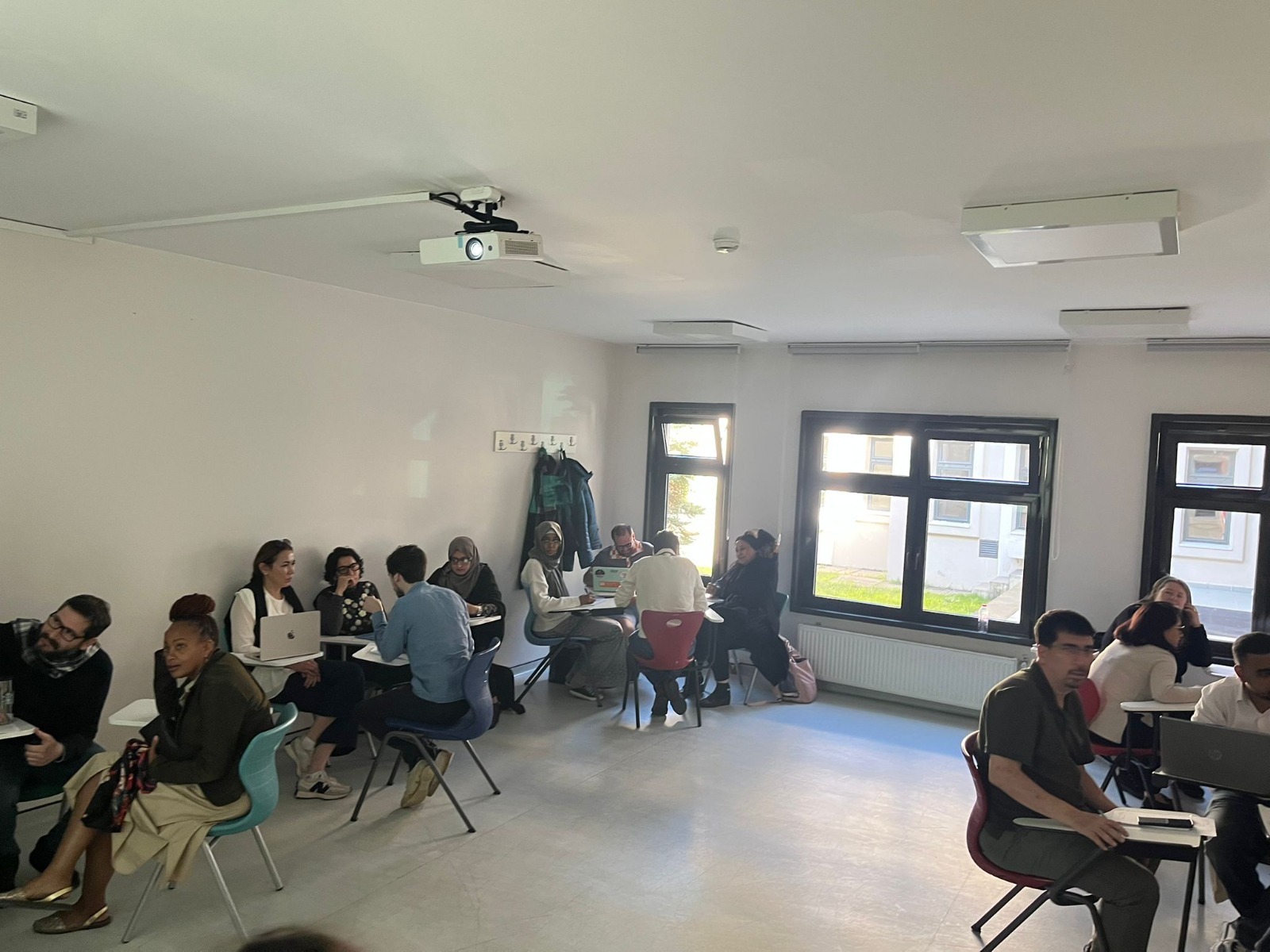
Date: 20 February 2026 | Time: 14:00–16:00 | Place: BAU Future Campus
Speakers: Rotary Peace Fellows (2025/2026 Cohort)
Moderator: Rahime Süleymanoğlu Kürüm (Jean Monnet Chair, PLURIEX Director), Yüksel Alper Ecevit (Executive Director, The Otto and Fran Walter Rotary Peace Center, Senor, PLURIEX Senior Fellow for EU Policy & Institutional Engagement), Firuze Simay Sezgin (Academic Director, The Otto and Fran Walter Rotary Peace Center)
Host: PLURIEX – Pluriversal Excellence in EU Studies (Jean Monnet Centre of Excellence at Bahçeşehir University, Department of Political Science and International Relations)
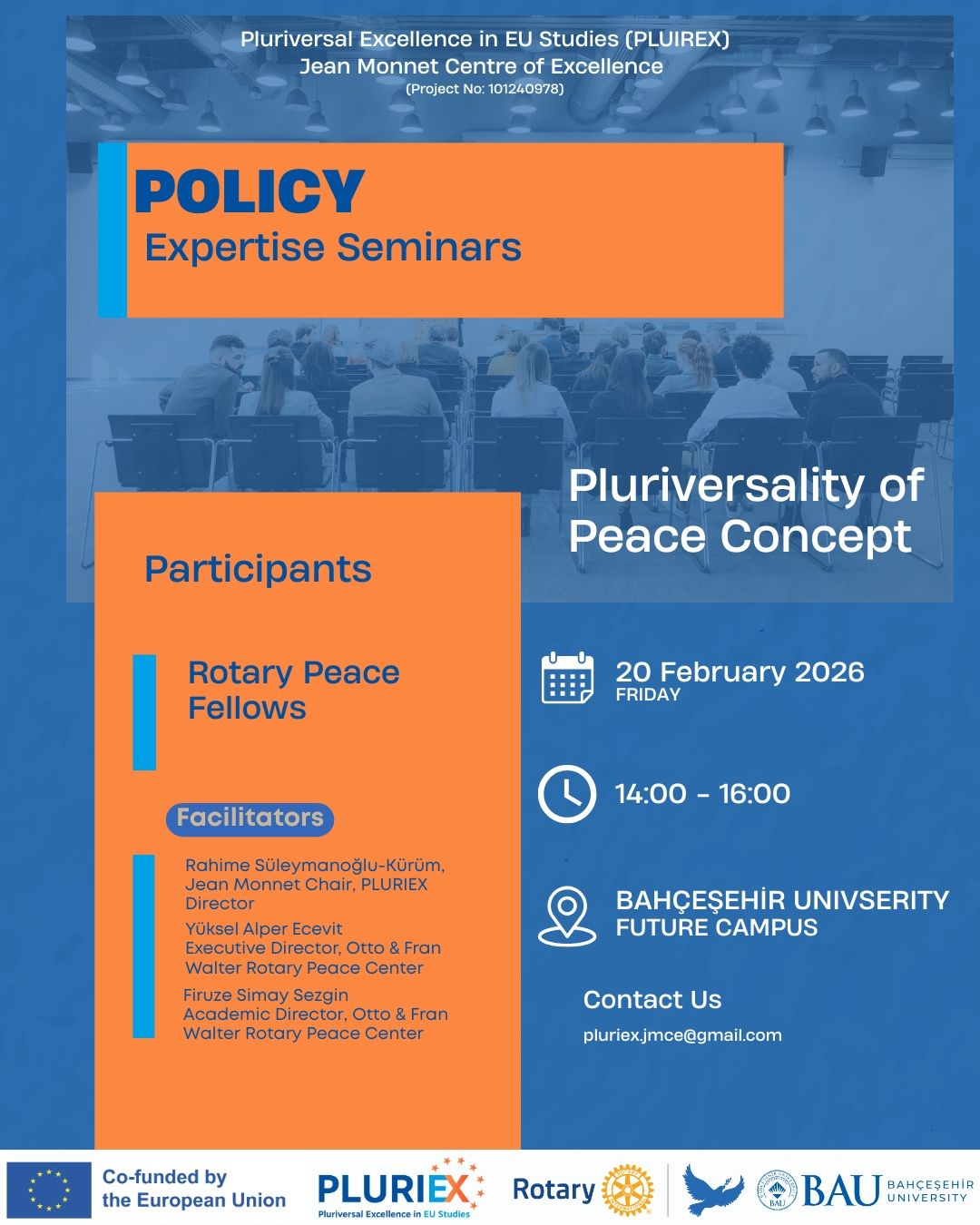
PLURIEX Policy Expertise Seminar: “Pluriversality of the Concept of Peace” with 2026 Rotary Peace Fellows Cohort
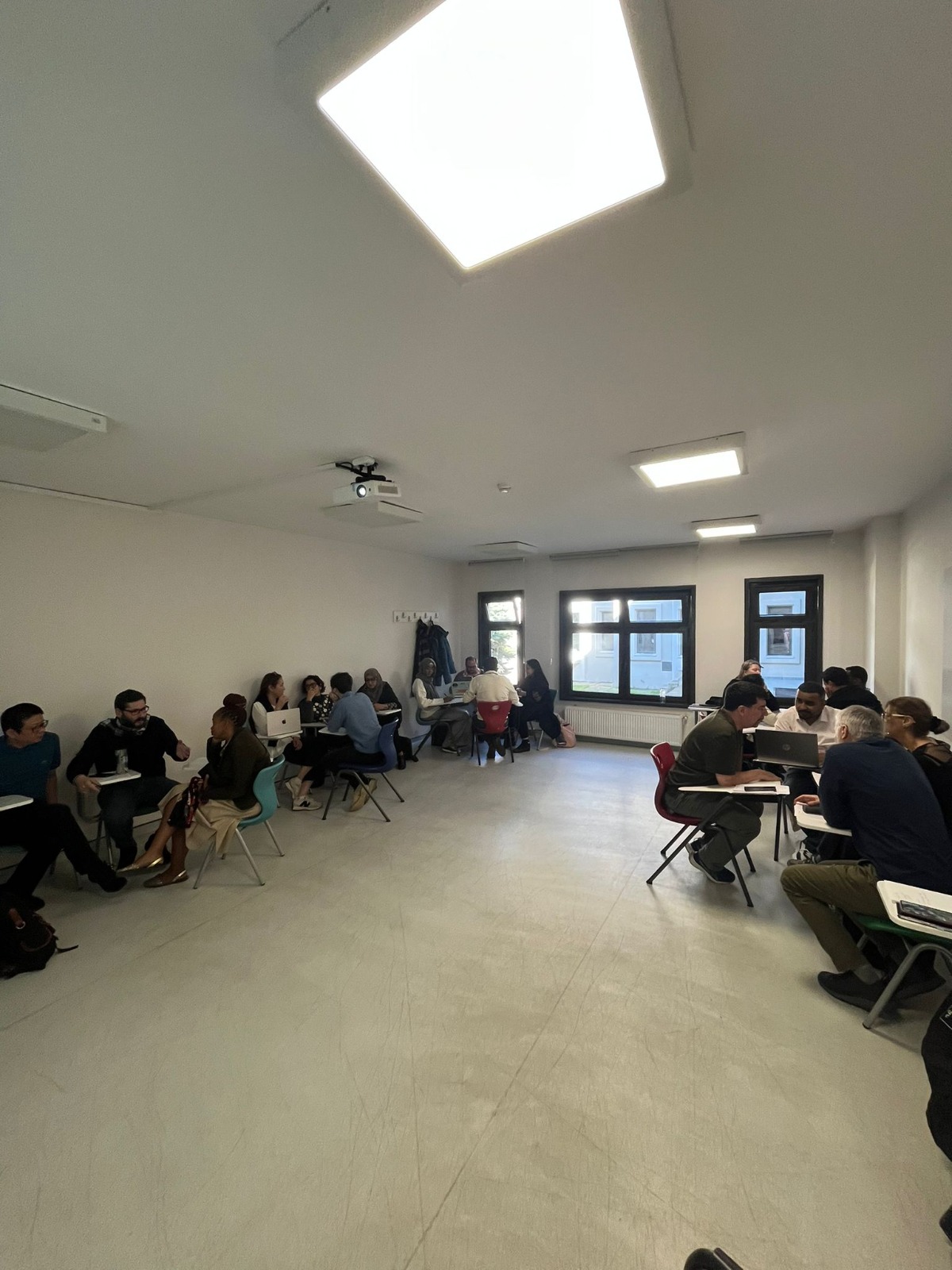
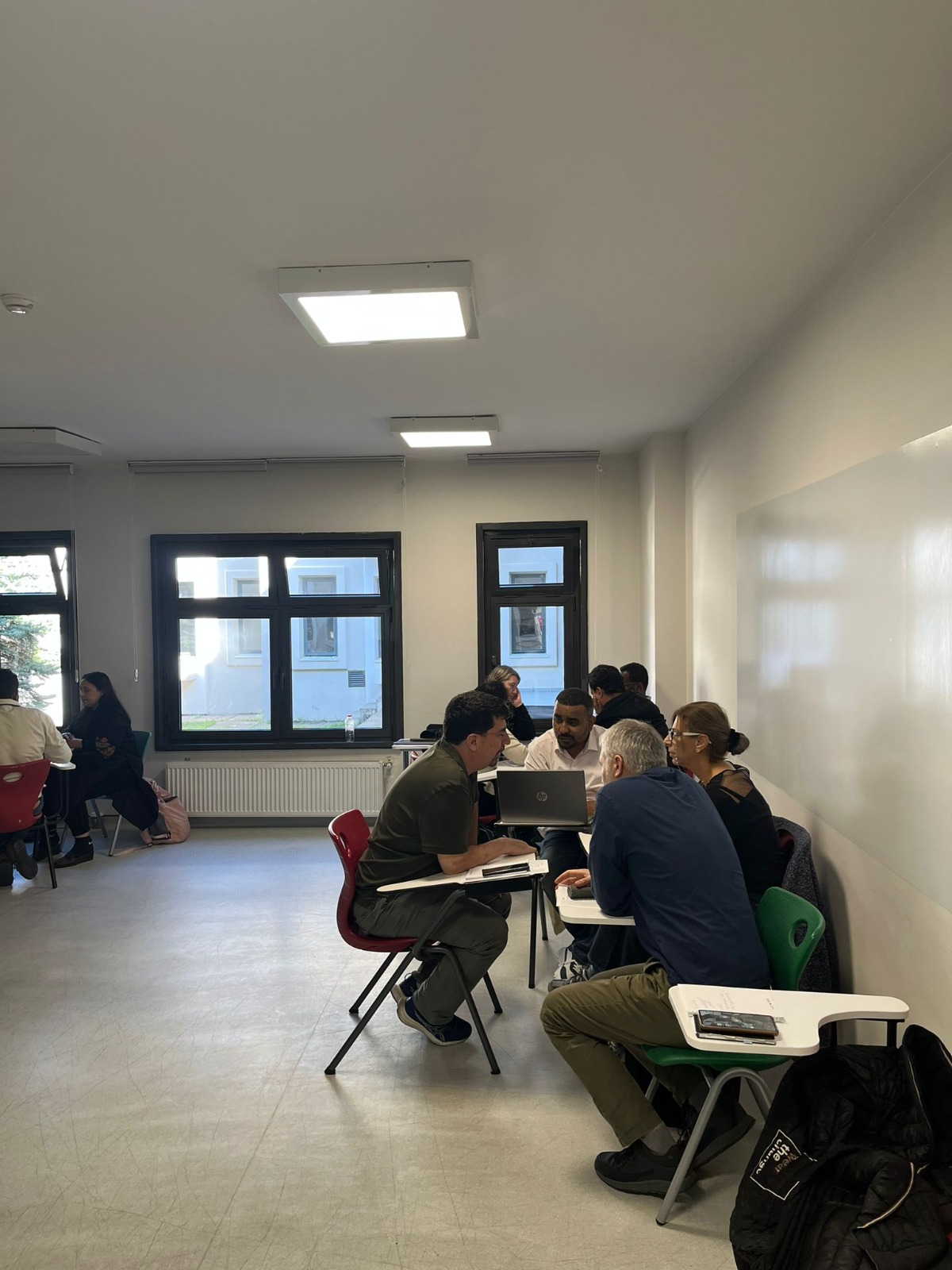
The first Policy Expertise Seminar of the Pluriversal Excellence in EU Studies (PLURIEX) Jean Monnet Centre of Excellence at Bahçeşehir University was held on 20 February 2026 (14:00–16:00) at BAU Future Campus. The seminar brought together Rotary Peace Fellows from 17 countries — including Australia, Lebanon, Afghanistan, Pakistan, Brazil, Trinidad and Tobago, Slovenia, Yemen, Palestine, Turkmenistan, and China — creating a genuinely pluriversal dialogue space on contemporary peacebuilding.
At a moment when Europe’s own historical experience continues to be widely interpreted as a peace project grounded in cooperation across difference, the seminar provided a timely platform to critically reflect on how peace is conceptualised, practiced, and contested across diverse global contexts.
The cohort reflected an unusually rich concentration of senior practitioners, scholars, and policy professionals working across multiple peace- and development-relevant sectors. Participants included programme leaders managing large-scale public health and inclusion portfolios; education development specialists expanding equitable access to schooling; academic researchers in political science and anthropology; legal and human rights experts engaged in judicial reform processes; practitioners working on community-based prevention of violent extremism; refugee protection officers supporting housing, land and property rights and legal identity access; gender-based violence specialists delivering survivor-centred programming; monitoring and evaluation professionals strengthening evidence-based interventions; environmental campaign organisers mobilising grassroots advocacy; and social impact strategists advancing arts-based community resilience initiatives.
Crucially, many fellows brought direct operational experience from conflict-affected, fragile, or structurally unequal settings. Others contributed policy, academic, and transnational advocacy perspectives. This multi-layered professional composition was not merely descriptive but epistemically consequential for the seminar design. It enabled the session to function as a genuinely dialogical space rather than a one-directional knowledge transfer exercise. The fellows’ situated and practice-based insights became a central analytical resource, supporting the collective exploration of more expansive and context-sensitive understandings of peace that extend beyond conventional policy frameworks and resonate strongly with PLURIEX’s commitment to epistemic plurality and cross-sector knowledge co-production.
Reframing Peace Through Epistemic Justice
The seminar opened with the PLURIEX conceptual framework, introducing epistemic injustice (Fricker, 2007) as a key lens for analysing power asymmetries in knowledge production. Particular attention was paid to testimonial injustice (credibility deficits) and hermeneutical injustice (interpretive gaps), and how these dynamics continue to shape whose knowledge counts in global governance and peacebuilding.
Building on this foundation, the session engaged with the Decolonising the University literature and movements such as Rhodes Must Fall, which were discussed as forms of resistance against entrenched epistemic hierarchies. Participants collectively reflected on how similar patterns of exclusion may also structure dominant understandings of peace.
A central proposition emerging from the seminar was that mainstream definitions of peace may themselves reproduce epistemic injustice. Participants collectively examined how mainstream peacebuilding frameworks often operate through:
• technocratic universalism
• externally imposed policy templates
• elite-driven negotiation formats
• insufficient engagement with local epistemologies
In this respect, the workshop argued that peace studies itself requires epistemic pluralisation and decolonisation.
The presence of Rotary Peace Fellows from highly diverse geopolitical and socio-cultural contexts — as well as from a wide range of professional fields and thematic areas of expertise — was therefore not incidental but methodologically integral to the event design. Their participation operationalised PLURIEX’s commitment to multiple standpoints, epistemic plurality, epistemic diversity, and cross-regional knowledge co-production. This multidimensional diversity created what the seminar conceptualised as a living pluriversalclassroom, where peace was examined as a situated and contested concept rather than a universal given.
Interactive Dialogue: Surfacing Visible and Invisible Peaces
During the brainstorming and mapping exercises, participants reflected on what peace looks like in their own contexts and who has the authority to define it. Group discussions focused on silenced or invisible peace. The discussions revealed strong cross-regional convergence around the idea that many locally embedded, gendered, and minority peace practices remain structurally under-recognised within formal peace architectures. Participants repeatedly emphasised that dominant peace narratives tend to privilege the perspectives of elite decision-makers, international organisations, and powerful global actors, while the experiences of women, minorities, and marginalised communities are often rendered invisible.
Through scenario-based discussion, fellows identified multiple contemporary manifestations of epistemic injustice in peacebuilding, including:
• international NGOs entering post-conflict settings with ready-made models
• women’s informal mediation being overlooked in formal negotiations
• indigenous conflict resolution practices being labelled merely “traditional” and sidelined
These exchanges reinforced the need to rethink peacebuilding through more context-sensitive and epistemically inclusive frameworks. The session concluded by opening a forward-looking discussion on what pluriversal peace practice might entail. Participants were invited to reflect — as a “food for thought” — on how peacebuilding could be reimagined if greater attention were paid to who speaks, who decides, what knowledge counts as well as how local context is incorporated. This closing reflection underscored PLURIEX’s broader commitment to fostering more inclusive, context-aware, and plural approaches to peace.
The seminar demonstrated in practice that advancing sustainable peace requires moving beyond singular universal models toward epistemically just and pluriversal approaches. By convening Rotary Peace Fellows from diverse regions and disciplinary backgrounds, the event contributed to ongoing efforts to pluralise and decolonise peace studies.