

 TR
TR
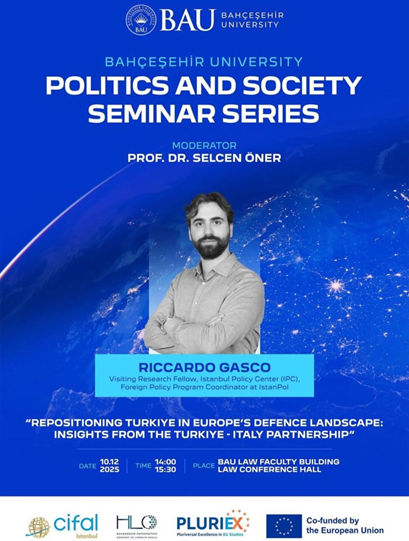
Repositioning Türkiye in Europe’s Defence Landscape: Insights from the Türkiye–Italy Partnership
Date: 10 December 2025
Time: 14:00–15:30
Place: BAU Law Faculty Building, Law Conference Hall
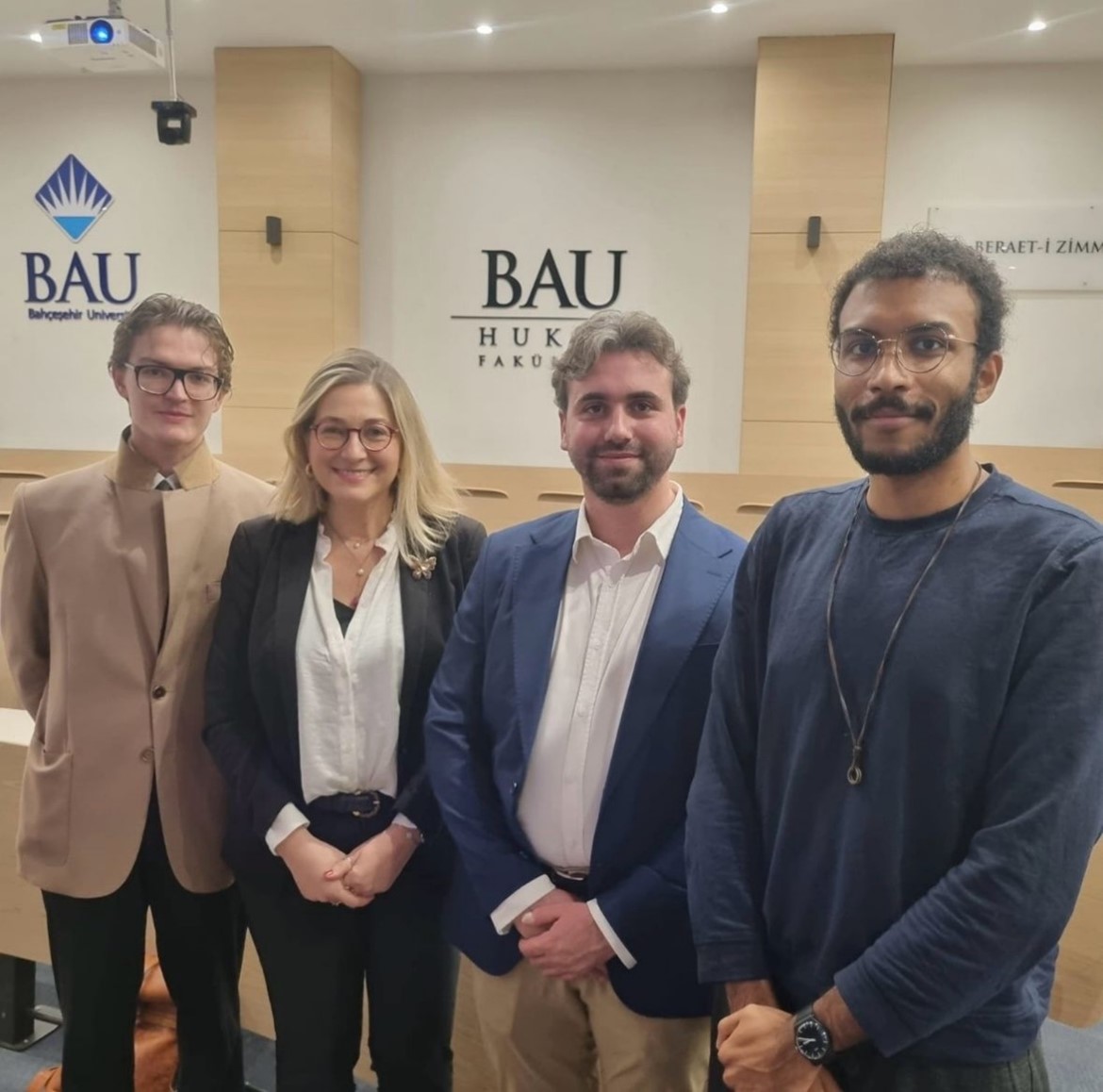
Speaker: Riccardo Gasco (IstanPol Institute / University of Bologna)
Moderator: Prof. Dr. Selcen Öner
Host: PLURIEX – Jean Monnet Centre of Excellence on Epistemic Pluriversality, in collaboration with Politics and Society Seminar Series, Department of Political Science and International Relations, Bahçeşehir University
Date: 10 December 2025
Time: 14:00–15:30
Place: BAU Law Faculty Building, Law Conference Hall
Speaker: Riccardo Gasco (IstanPol Institute / University of Bologna)
Moderator: Prof. Dr. Selcen Öner
Host: PLURIEX – Jean Monnet Centre of Excellence on Epistemic Pluriversality, in collaboration with Politics and Society Seminar Series, Department of Political Science and International Relations, Bahçeşehir University
Seminar Overview
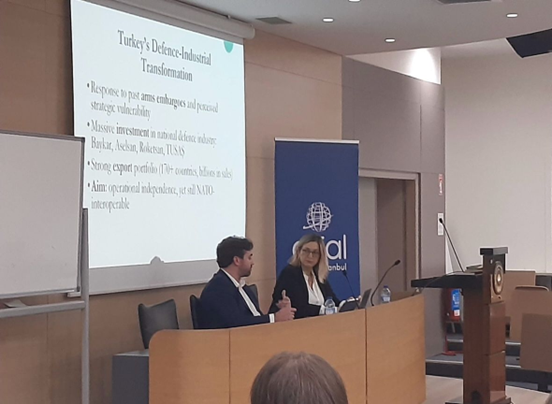
This seminar explored Türkiye–Italy cooperation in defence and security as a critical entry point for understanding Europe’s evolving new security architecture beyond EU-centric and core-dominated perspectives. Rather than treating European security as a unified institutional project, the discussion examined how bilateral partnerships and middle-power strategies actively shape Europe’s defence landscape.
Adopting a pluriversal analytical lens, the seminar highlighted how European defence governance is co-produced across multiple geopolitical sites — including NATO, the EU, defence-industrial cooperation, bilateral cooperations and regional alliances. Türkiye–Italy relations were discussed as a case that challenges binary framings of EU vs. non-EU and core vs. periphery, revealing instead a polycentric and negotiated security order.
As PLURIEX, we were pleased to host a discussion aligned with our core mission of epistemic pluriversality: recognising multiple strategic rationalities, geopolitical experiences and knowledge sites in the study of Europe. The seminar provided an interdisciplinary space where Europe’s recent security challenges were analysed through relational, comparative and non-hierarchical perspectives.
About the Speaker
Riccardo Gasco is the Foreign Policy Program Coordinator at IstanPol Institute and a PhD Candidate in International Relations at the University of Bologna (Department of Political and Social Sciences). His doctoral research examines Türkiye’s foreign policy behaviour as a regional power navigating between NATO and Russia, drawing on neoclassical realism and Foreign Policy Analysis to analyse alliance strategies, strategic autonomy and balancing practices.
Based in Istanbul since 2019, he is currently a Visiting Research Fellow at the Istanbul Policy Center (IPC) and has previously held a visiting fellowship at Sabancı University. His research interests include alliance politics, middle-power behaviour, Turkish–Russian relations, transatlantic security and the transformation of the international order in a multipolar era. Methodologically, he employs process tracing, discourse analysis and elite interviews.
In addition to academic research, Riccardo regularly contributes policy analysis and commentary to Turkish, Italian and international media on European security, Turkish foreign policy and Middle Eastern geopolitics.
Key Discussion Points
During the seminar, participants discussed how Türkiye–Italy defence cooperation reflects broader shifts toward strategic autonomy, flexible alliances and defence-industrial partnerships in Europe. The discussion underscored how middle powers exercise agency within overlapping security architectures, complicating conventional EU-centred narratives. In addition, the challenges of Turkiye’s exclusion from the SAFE programme were discussed and how it may contribute to new European security architecture were evaluated as well.
The seminar concluded with an engaged Q&A session focusing on the implications of pluriversality for studying European defence, alliance politics and the future of European security governance.
Audience & Discussion
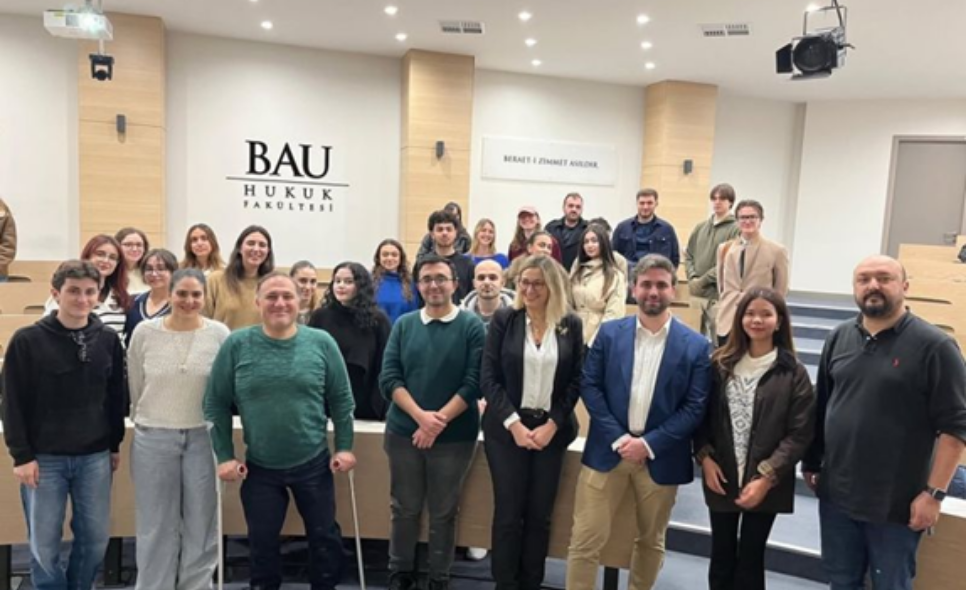
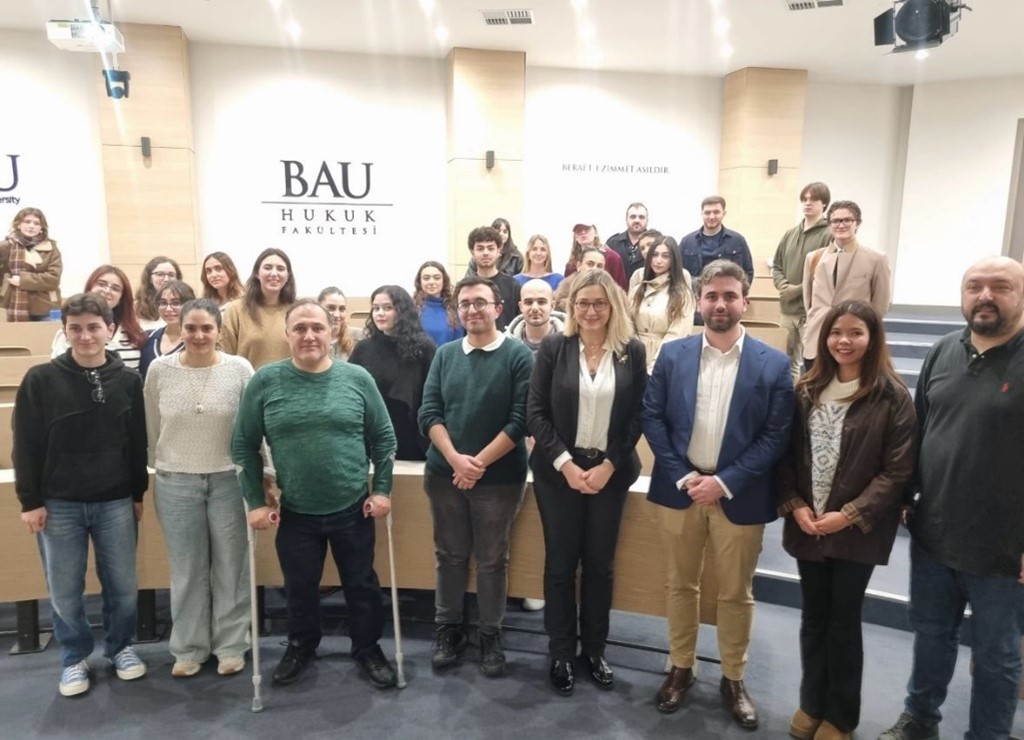
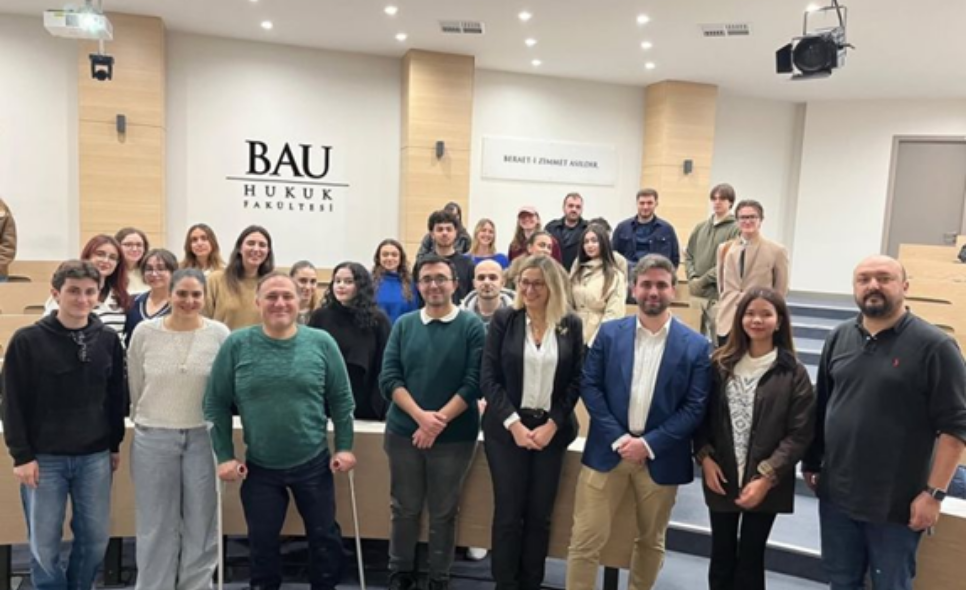
The seminar brought together a highly diverse audience, including:
- academics and researchers in international relations, EU studies, and security studies
- policymakers and practitioners from international organisations and policy think tanks
- representatives from CIFAL Istanbul
- undergraduate, MA and PhD students from BAU
This diversity enabled a genuinely interdisciplinary and cross-sectoral exchange, reflecting PLURIEX’s commitment to connecting academic knowledge, policy practice, and student learning. The Q&A session addressed issues such as defence industrial cooperation, the recent regional and global challenges in Europe’s security and defence, EU–NATO relations, and the implications of strategic autonomy for Europe’s peripheries.