

 TR
TR
About the Department of Industrial Design
Department Mission
The Department of Industrial Design at the Faculty of Architecture and Design of Bahçeşehir University aims to educate professionals who adopt a global perspective in problem solving by using technology to contribute to the development of society, while respecting local values, cultural differences, individual and social rights, and the principles of universal design. Through interdisciplinary and innovative initiatives, the department employs and develops pioneering educational methodologies that consider the well-being and benefit of people and the environment, in line with the Sustainable Development Goals (SDGs) declared by the United Nations.
Program Content
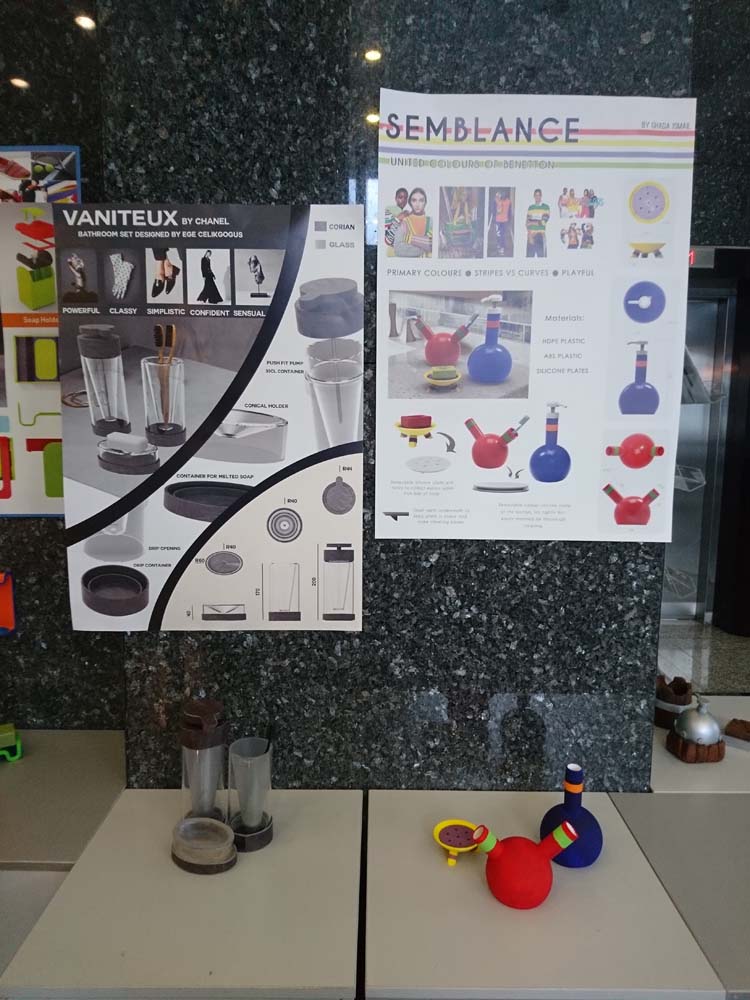
Industrial Design is a strategic problem-solving process aimed at designing innovative products, systems, services, and experiences that enable commercial success and improve living conditions while opening the door to creative design. The curriculum of our department focuses on developing an interdisciplinary approach within the design process. Design studios, which form the foundation of the program, are supported by courses focusing on materials and production methods, visual communication, engineering sciences, and business management. Throughout the design process, students are expected to receive training in a wide range of areas, including user research, design methodologies, innovative idea development, prototyping, computer-aided design, and design management.
INDUSTRIAL DESIGN DEPARTMENT PROGRAM LEARNING OUTCOMES
Graduates of the program:
Possess theoretical and practical knowledge of the field of Industrial Product Design.
Apply professional knowledge in the development of products, services, and experiences.
Understand, use, interpret, and evaluate design concepts, professional culture, and terminology.
Know research methods in the field of Industrial Product Design; collect information using these methods, interpret the collected data, and apply it.
Define industrial design problems, evaluate the conditions and requirements of the problem, and develop solution proposals.
Develop proposed solutions in Industrial Product Design by considering social, cultural, environmental, economic, and human values, while being sensitive to individual differences and levels of ability.
Possess the ability to communicate design concepts and solutions through written, oral, and visual presentation methods.
Define and apply the relationships between materials, form, detailing, service, and production methods related to design solutions.
Use computer-aided information and communication technologies at a level sufficient to present industrial design solutions and applications.
Possess the knowledge and methods from related fields such as business, engineering, psychology, ergonomics, and visual communication that support design solutions within the interdisciplinary structure of industrial design; when necessary, have the ability to research, acquire, and apply knowledge from these fields.
Demonstrate proficiency in a foreign language relevant to the field of industrial product design and communicate with colleagues from different cultures.
Follow and evaluate new design topics and trends required by the profession in line with technological and scientific developments.
Plan, manage, and carry out the design process individually and as part of a team.
International Opportunities and Extracurricular Activities
Various national and international professional networking opportunities provided to students, along with environments that support the development of their knowledge and skills through communication and collaboration, contribute to our program’s goal of graduating competent professionals with global awareness, professional practice, and intellectual depth. In this context, students are offered a range of experiences through international bilateral collaborations (Erasmus, Austria Winter School), workshops and competition organizations (Cyprus International Workshop, Light Up/Light Upper/Light Down), university–industry collaborations and events (Fakir Electrical Home Appliances collaboration, Hettich Furniture Accessories company visit), and extracurricular talks (ArchiDesign Talks).
Career Opportunities (What Do Graduates of the Industrial Design Department Do?)
The fields of practice for industrial designers include product design, system design, service design, and experience design. Product design encompasses a wide range of industrial products such as furniture, transportation vehicles, packaging, electronic products, electrical home appliances, medical products, home and office equipment, display stands, lighting, toys, baby and children’s products, personal care products, sports equipment, and jewelry.
System design includes topics such as product–product or product–service systems, product life cycle design, visual identity design for products or product series, and visual and three-dimensional designs for retail, exhibitions, museums, and events. Service design covers the integration of products and systems into services, service process design, customer experience mapping, and service delivery design. Experience design includes user interface design, user experience design, and interaction design.
Industrial designers may work in design, implementation, research and development, inspection and supervision, consultancy, expert witness services, and educational activities in both public and private institutions related to these fields, as well as in their own design firms. Graduates interested in the field of education may continue their academic careers by pursuing master’s and doctoral studies at universities in Turkey or abroad.
Prof. Elçin Tezel
Head, Department of Industrial Design