


 TR
Could Happy the Elephant Follow Ecuador's Monkey in Gaining Legal Personhood?
US attorney Steven Wise has long advocated for the recognition of animals as legal persons with rights.
What separates a human from an animal? For years, it was believed that animals could not recognize themselves in a mirror, could not feel, could not make decisions and could not perceive their past and future. Eventually, a series of studies showed that these myths ofmindlessnessdo not hold, at least in the case of chimpanzees, elephants and dolphins, with more species likely to follow. So what meaningful distinction remains?
According to US attorney Steven Wise, the most important difference is rights: humans have them and nonhumans do not. Wise and his colleagues have fought in every case for their nonhuman clients' status to be recognized as legal persons. Wise and other attorneys argue that the path ofhabeas corpusshould be opened for animals and that this harmful captivity should end; however, they had not won in nine years.
Now this losing streak has begun to change. Last month, the Constitutional Court of Ecuador ruled in favor of the rights of a woolly monkey. Although Wise finds the victory "interesting" for a number of reasons, especially because the monkey died during the proceedings, he says it is a game-changing decision. The Constitutional Court of Ecuador became the second judicial authority in the world in which a high court declared that at least some animals have "real legal rights" (the first was the Supreme Court of India in 2014).
A monkey named Estrellita, illegally captured in the wild, had lived as a pet for 18 years in the home of a librarian named Ana Beatriz Burbano Proaño in Ecuador. Ana claims that during this time the monkey became part of the family: Estrellita copied the family's behavior, learned to communicate through gestures and sounds, and picked up the family's habits. In 2019, Ecuadorian authorities seized Estrellita and placed her in a zoo. Estrellita died within a month of sudden cardiac arrest.
At this stage, unaware of Estrellita's death, Ana had filed ahabeas corpuspetition on Estrellita's behalf against Ecuador's Ministry of Environment, the owner of Ecozoo where Estrellita was being held, and the Provincial Attorney General's Office. Ana asked for Estrellita to be returned home and emphasized the distress she was likely experiencing due to the sudden relocation. After learning of the death, Ana requested, among other things, that Estrellita's body be handed over and that it be established that Estrellita's right to life had been violated.
When the case came before the Constitutional Court of Ecuador in December 2021, there were a number of questions for the judges to consider. In particular, what is the scope of the rights of nature in the Ecuadorian Constitution? Can wild animals qualify as subjects of rights? And were Estrellita's rights violated? The result: by a vote of seven to two, the Court ruled in favor of the monkey's rights.
The detailed ruling was issued in light of Ecuador's recent constitutional amendment recognizing nature's general rights "to exist, flourish and evolve." Accordingly, although animals cannot be equated with humans and humans are allowed to consume and domesticate other living beings, wild animals were guaranteed the right to exist and, most importantly, the right to behave freely.
As a result, the Court concluded that the state had "violated" the monkey's right to integrity by failing to take the monkey's specific needs into account when placing her in the zoo. The judges also said, however, that Estrellita's rights had been put at risk from the very beginning, when she was illegally captured and then raised in inadequate conditions. The Court then set new minimum standards for the protection of wild animals.
TheNonhuman Rights Project(NhRP), an initiative founded by Wise in 2007, and theAnimal Law & Policy Program at Harvard Law Schoolhad submitted a file to the court in Estrellita's case offering impartial advice known as an "amicus curiae brief." This brief called on the Court to recognize the legal rights of animals, and the judges' subsequent ruling added momentum to their broader campaign.
As Wise explained by phone from his office in the US, the fact that animals have not had legal rights for thousands of years does not mean that this should not change, even in places that lack Ecuador's almost unique constitutional protections.
Wise said that many people are still recognized as persons under the law even though they are too young or disabled to perform duties or responsibilities. Moreover, he argued that the concept of "personhood" itself is a legal fiction and that everything from corporations to ships already enjoys this privilege. "We are not saying that high cognitive abilities and autonomy are required to be a person with rights, but if an animal had just one of them, it would be a person too," Wise said.
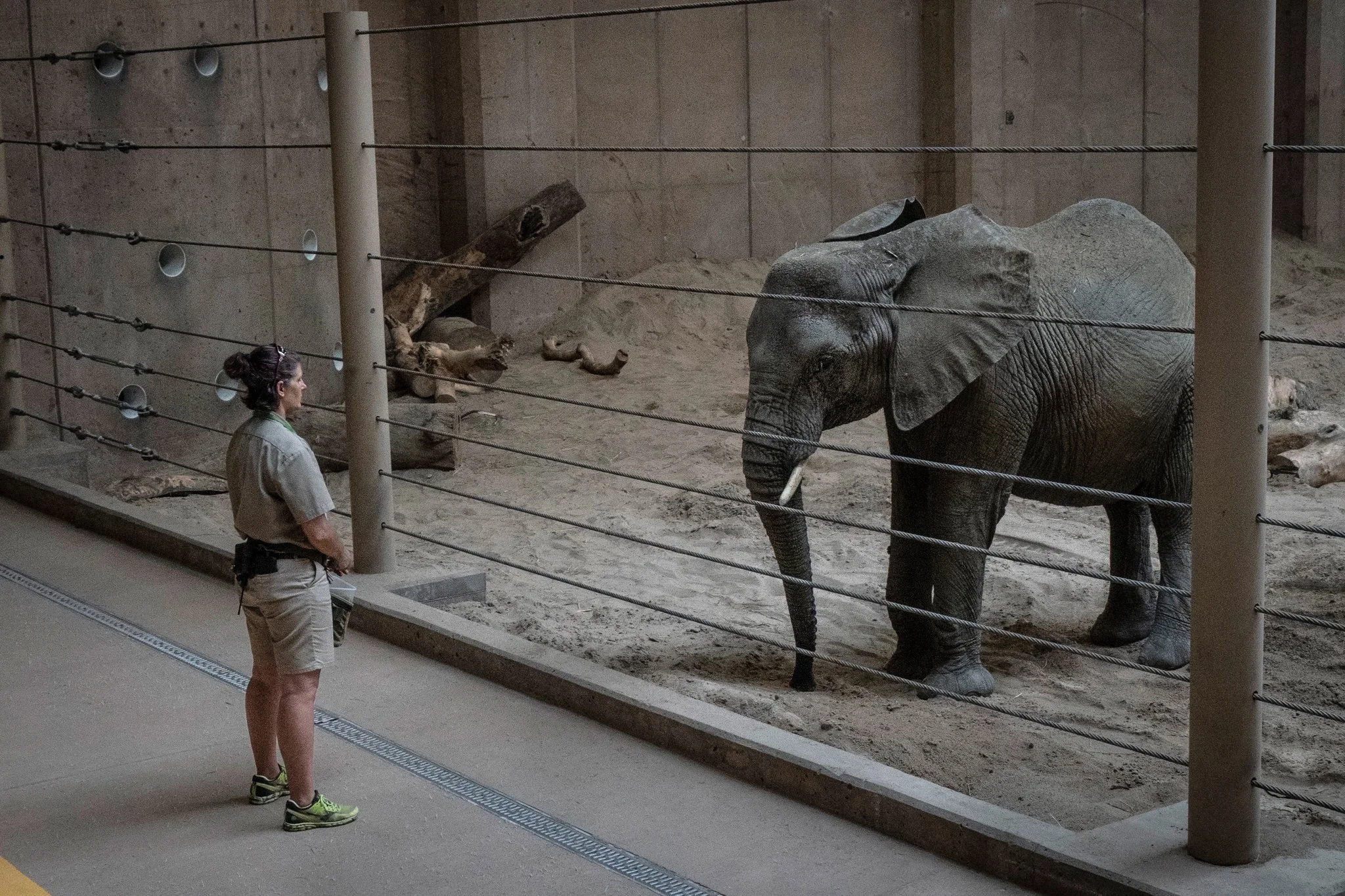
With each hearing, Wise's claims come one step closer to being upheld in US common law. Later this year, ahabeas corpusclaim brought on behalf of an animal will reach the highest English-speaking court yet.The petition was first filed in 2018by Wise's organization on behalf of Happy, a 47-year-old Asian elephant kept alone at the Bronx Zoo in New York. In 2020, a sympathetic New York Supreme Court judge ruled "regretfully" against Happy,while expressing the viewthat Happy "may be entitled to liberty." The case will be the first of its kind to be heard by the court's appellate division.
Seeing Happy's rights recognized will not be easy. The Bronx Zoo has dismissed the case as a public relations stunt and has not taken it seriously. To support its position, the zoo has gathered an extensive list ofamicusbriefs, together with the Wildlife Conservation Society and backed by advocacy groups such as Protect the Harvest and the New York Farm Bureau.
Wise insists that his team is not seeking to overhaul humanity's entire relationship with animals; he insists only on focusing on the recognition of the personhood of an individual, autonomous and intelligent being, in this case an elephant. "We are seeking a common-law-protected right to bodily liberty. Once that is accepted, Happy will automatically be a person, not a 'thing,'" Wise explained.
"As for what might come next, who knows. People are always in dispute over what new rights humans should have, and the same goes for animals. We are trying to say that at least some animals should have rights, and come on, let's talk about it."
Source:The New Statesman
This news article was translated into Turkish by Hazal Gültekin.