


 TR
Code Red: An Analysis of the Latest Climate Risk Report by the Intergovernmental Panel on Climate Change
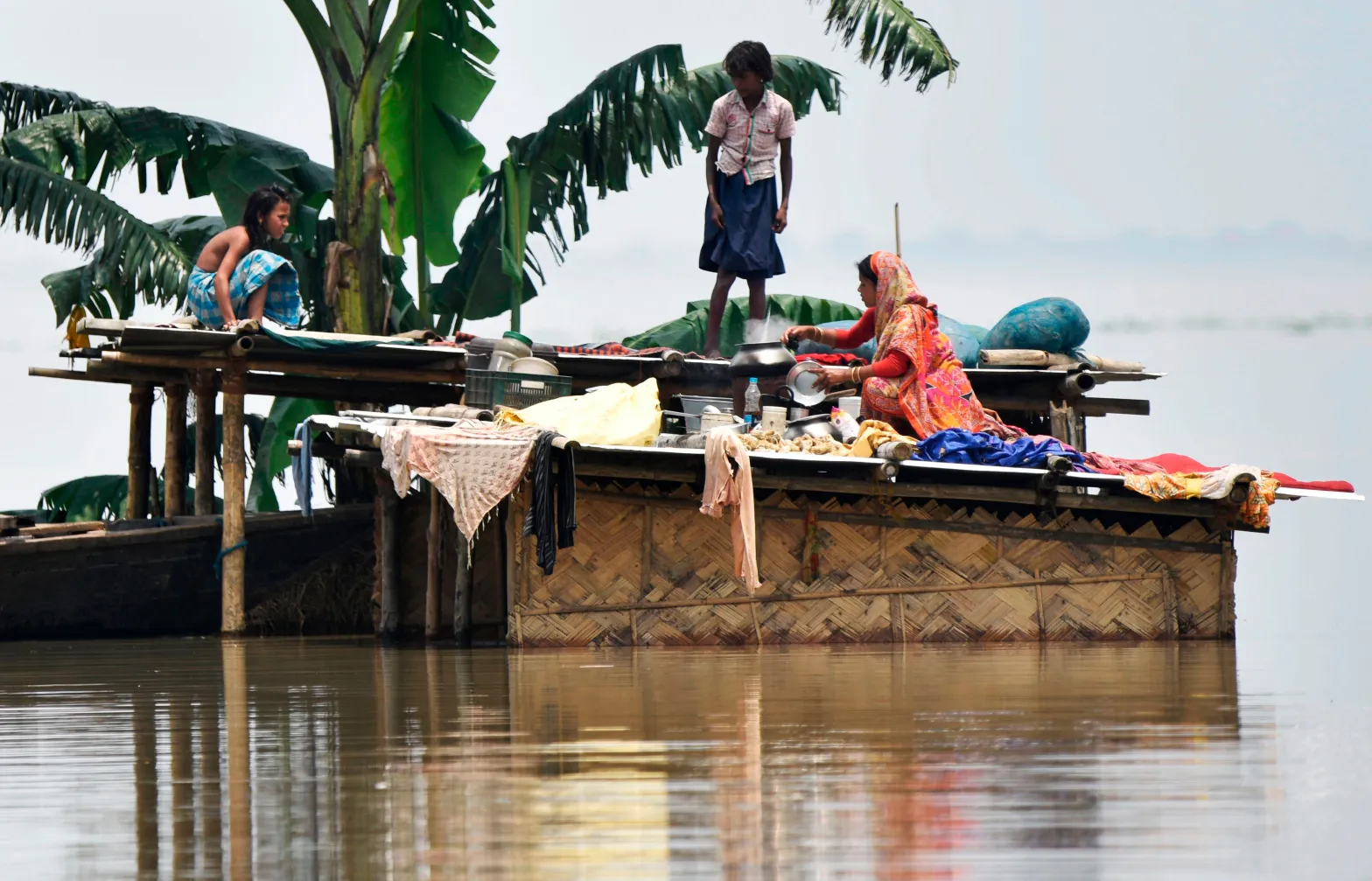
The ongoing war between Russia and Ukraine has, in recent days, become almost the sole focus of the global media.
Although it is deeply unfortunate to live at a time that has witnessed the emergence of an extraordinary military and humanitarian crisis, what this latest report points to, warning that an irreversible planetary crisis has been created with regard to climate change, deepens the disappointment even further.
A few days ago, the Intergovernmental Panel on Climate Change (IPCC) publisheda 3,500-page reporton the scale of the climate threat facing the world. Although most climate reports are thought to always describe the worst-case scenario, this latest report stands out in more than one respect.
Among reports prepared by a United Nations (UN)-backed body, this is probably the first to definitively establish that the effects of climate change are now "irreversible," and it is also the first to assess the regional and sectoral impacts of climate change. The report also points to previously unspoken truths about climate change that are very hard to ignore and too big to confront.
Here are the key takeaways from the report and explanations of what is at stake.
The Rescue Phase Is Now Over
The report's findings show that the climate crisis is unfolding faster than expected and that the window for action will soon close. As they say, we are now in a "Code Red" period, because this crisis draws us in deeper with every passing second.
From a numerical perspective, the crisis looks like this:
- Corresponding to roughly 45 percent of the world's population,3.5 billion peoplelive in regions highly vulnerable to climate change.
- Some losses, such as the consequences of coral reef death or glacier melt, have now reachedan irreversible point.
- Even if efforts had been made since pre-industrial timesto keep warming to 1.5 degrees Celsius, multiple climate disasters would still be very likely to occur globally by 2040.
- If the average temperature rise exceeds the projected 1.5 degrees Celsius, even temporarily, this will lead toeven more severe impacts.
Here are some of the details the report mentions specifically for India:
- By 2050, the impacts of climate change willerode 2% of the gross domestic product (GDP).
- of South Asian countries, including India."Lethal" heatwavesin the Indus and Ganges river basins could potentially rise to levels exceeding the limits of human survivability.
- The sensitivity of crops to temperature changeswill be felt most in countries in tropical regions. India, for example, could see a 25 percent decline in maize production in response to a 1 degree Celsius temperature increase.
- Without adaptation measures, by 2080India's GDP losses due to sea-level risewill rank second, right after China.
- Cities in India remain the most vulnerable to climate risks.Mumbaiis at high risk of flooding and sea-level rise.Chennai,, Bhubaneswar,, PatnaandLucknoware among the cities approaching dangerous levels of heat and humidity.
- If temperatures continue to rise, the production of some commercially important species such asHilsa shadandBombay duckis expected to decline significantly.
In fact, it is no longer a matter of waiting for climate change to happen. It has already happened, its effects are widely felt, and in some cases there is no turning back.
What Is New?
It should be understood that this is the second part of the report published last year. The first part was released in August 2021 and focused mainly on the physical science of climate change. The second part clearly deals with the impacts, risks, vulnerabilities and adaptation options of climate change.
In fact, here is what we know about IPCC reports: Thefirst of these reportswas published in 1990. At the time, the report's outline was quite simple and it merely identified emerging risk areas.
To be honest, each assessment report does not say significantly new things. Over the years, each report builds on the work of the previous one, adding more data and evidence so that the findings carry a higher level of specificity and clarity. However, the accumulated risk from the data in successive reports builds up over time and gains a critical mass that requires charting an entirely new course. This also explains why the 1990 report is so different from the 2022 report.
Recently, however, there has been a break in this trend. In 2014, theFifth Assessment Report, on which a great deal of ink was spilled regarding the projected impacts of climate change, was published. The 2022 report we are now reading is theSixth Assessment Report.
, with pages devoted to events that have already occurred. Such a major change in the nature of two reports published back to back in less than a decade is further proof of the climate projection that has been underlined. This report also brings several new dimensions of climate change to light. For example, in addition to a regional risk assessment being carried out for the first time, identifying the coastal areas around the world, and particularly in India, that are directly exposed to the threat of climate change is also an important finding. Previous reports did not contain such detailed information.
The report also focuses increasingly on the health impacts of climate change. It links climate instability to increases in waterborne and vector-borne diseases such as dengue fever or malaria in subtropical regions, as well as in infant mortality, diabetes and circulatory disorders.
Finally, the report stands out by highlighting the failure of the adaptation measures implemented so far to combat climate disruption. The fact that clear gaps in adaptation have emerged as a result of a lack of political will, funding and commitment is the red flag that this report clearly draws attention to.
Wait, Don't Panic!
Yes, the report is alarming. Yes, the situation is dire. Yes, we should pay close attention to this heavy and tedious climate report compiled by 900 authors from around the world, and not use it as a melatonin supplement.
But shall we try to find a more optimistic angle on this, if possible?
The first thing to remember is that, believe it or not, we are currently witnessing an unprecedented level of climate consensus at the international level. Within a year, three major climate summits were held, namely the White House Leaders Summit on Climate, the 2021 G7 Summit in Cornwall and COP26 in Glasgow; moreover, none of them produced decisions defining their own era.
After playing a very dark gamble during the Trump administration, the US is showing more commitment than ever to achieving its climate goals. Developing states such as India, although constrained by their growth curve, are taking determined steps to achieve radical targets such as net-zero emissions.
It may sound reductionist, but everything comes down to best individual practices, coordinated mitigation targets and increasing investment in the green industrial sector. If every individual pledges to criticize anti-climate and anti-conservation practices, fluctuations in global awareness will be minimized.
Also, the most important thing to remember is that, at the end of the day, the shortcomings in adaptation measures create not cracks but voids. Phasing out emissions takes time, and time is limited. But if there is one thing to remember about human intervention in climate risk management, it is that it is achievable and, as with the healing of ozone layer depletion, it has been achieved before.
Let this story repeat itself…
Source:The Analysis
This news article was translated into Turkish by Doğan Yiğit Şahin.